How to Prepare for Hegel’s Phenomenology of Spirit is principally a question about Kant, Hegel’s method of immanent testing, and the book’s shifting relation between consciousness, history, and social life. Serious preparation helps, but completing German idealism first does not. The intelligent route is selective: learn a small conceptual grammar, choose a reliable translation, and let the book itself do much of the teaching.
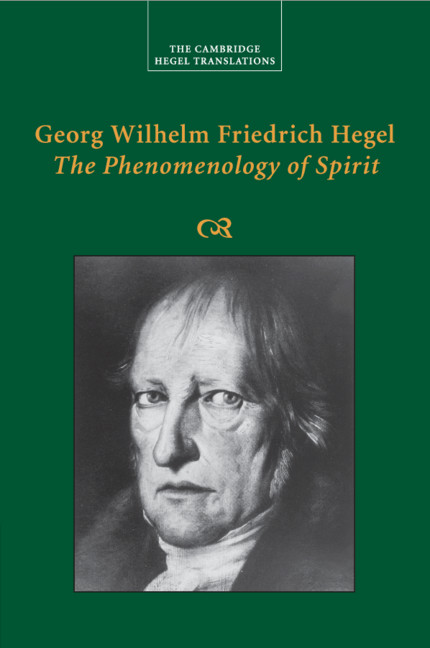
Target text
The Phenomenology of Spirit: The Best Main Edition for a First Serious Reading
Author: G. W. F. Hegel
Translator or editor: Translated and edited by Terry Pinkard; edited by Michael Baur
Edition: Cambridge University Press paperback, 2018; ISBN 9781108730082
Dependency level: Target text
Why this edition: Pinkard aims for conceptual clarity without flattening Hegel’s technical vocabulary. The introduction, paragraph numbering, glossary, and further-reading apparatus make the book practical for independent study and seminar discussion.
Main limitation: No translation can preserve every resonance of Geist, Aufhebung, Begriff, and Wirklichkeit. Scholarship written around A. V. Miller’s older translation sometimes requires terminological cross-checking.
Best suited to: Readers seeking a complete, academically responsible English text with enough apparatus to support a first encounter.
The Short Answer: How to Prepare for Hegel’s Phenomenology of Spirit
You do not need to read the whole history of philosophy before beginning Hegel. Learn the basic problem of Kant’s transcendental idealism, read Hegel’s Introduction carefully, understand immanent critique and determinate negation, and keep one dependable commentary nearby. Fichte, Schelling, Greek tragedy, Christian theology, and revolutionary history deepen the book, but most can be approached selectively while reading.
The minimum foundation is narrower than the book’s reputation suggests. You need to know why Kant made experience dependent on conceptual conditions and why his successors thought the remaining divisions between appearance and thing in itself, subject and object, freedom and nature were unstable. You must also grasp Hegel’s procedural wager: a position is not defeated by an objection imported from outside. It is allowed to state its own criterion of truth and then shown to alter that criterion through its own experience.
Begin with the Cambridge Pinkard edition. Read the Introduction before the Preface, then proceed through “Consciousness” without trying to decode every historical allusion. Return to the Preface only after the book’s movement has become visible. The central editorial judgment is therefore direct: prepare enough to recognize the problem and the method, but do not postpone Hegel until you have mastered his entire ancestry.
Why Phenomenology of Spirit Is Difficult
The book is difficult for several independent reasons, and background reading solves only some of them. Hegel’s sentences often hold their governing claim in suspension while qualifications accumulate. Familiar words—consciousness, reason, spirit, truth, actuality, experience—carry technical burdens that change as the argument advances. The same term may first name a limited standpoint and later reappear transformed within a more adequate one.
Its architecture is equally demanding. The 1807 text moves from sense-certainty, perception, and understanding to self-consciousness, reason, ethical life, culture, morality, religion, and absolute knowing. These are not items in an encyclopaedia. Each is a “shape of consciousness”: a way of organizing what counts as the subject, the object, and the standard connecting them. When a shape fails, the failure changes the terms of the relation. Later sections therefore reconstruct the meaning of earlier ones instead of merely adding new topics.
Hegel also writes from two perspectives at once. A shape of consciousness takes its own claims as authoritative; the phenomenological observer sees more of the transition than that shape can see. Readers who collapse these perspectives assume Hegel endorses every position he describes. Readers who separate them too sharply miss the fact that the observer’s knowledge must emerge from the experience being narrated, not hover above it as unexplained omniscience.
Historical compression adds another obstacle. “The law of the heart,” “the spiritual animal kingdom,” “the unhappy consciousness,” “the beautiful soul,” and “absolute freedom and terror” condense literary types, religious structures, philosophical controversies, and political events. The text rarely supplies the contextual lecture a modern reader wants. The Stanford Encyclopedia of Philosophy’s account of Hegel provides a reliable preliminary map, but no overview removes the need to reconstruct transitions line by line.
Translation creates a final layer. Geist can mean mind or spirit; Aufheben means cancelling, preserving, and raising; Begriff is more than a subjective “notion.” The best translation is not the smoothest one, but the one that remains readable while keeping technical distinctions visible.
The Dependency Map at a Glance
Essential Before Reading
Kant’s critical problem—not the whole Kantian system
Essential before reading
Hegel’s project begins inside a philosophical field transformed by Kant. Experience is not the passive reception of a fully formed world: sensibility and understanding contribute forms through which objects can appear and be judged. Yet Kant preserves boundaries that post-Kantian thinkers found hard to stabilize. The thing in itself seems required and unknowable; reason seeks unity yet is divided into theoretical and practical employments; the subject supplies conditions of experience but also belongs to nature.
For Hegel, the decisive lesson is not that Kant was simply wrong. It is that reason must account for the authority of its distinctions without appealing to an inaccessible beyond. The Phenomenology radicalizes this demand by allowing consciousness to test its own criterion of knowledge. Learn the problem from a sound introduction and selected passages in the Guyer–Wood Cambridge edition of Kant. Do not spend months mastering the complete Critique of Pure Reason before beginning Hegel.

Essential prerequisite
Critique of Pure Reason: The Problem Hegel Inherits
Author: Immanuel Kant
Translator or editor: Translated and edited by Paul Guyer and Allen W. Wood
Edition: Cambridge University Press paperback, 1999; ISBN 9780521657297
Dependency level: Essential before reading
Why it matters: Kant establishes the transcendental problem: experience depends on forms and concepts supplied by cognition, yet knowledge appears bounded by distinctions between appearance and thing in itself, receptivity and spontaneity, and subject and object.
How much to read: Use the introductions and a reliable account of the Transcendental Deduction. A complete reading of both editions of the Critique is not required before Hegel.
The Introduction inside the target book
Essential before reading
The shortest indispensable preparatory text is already part of the Phenomenology. Read the Introduction before the Preface on a first encounter. The Preface was composed after the main body and announces systematic claims whose force becomes clearer retrospectively. The Introduction presents the procedure more directly: consciousness distinguishes what it takes to be knowledge from what it takes to be truth, then discovers through experience that the distinction itself changes.
“Experience” here does not mean a sequence of private impressions. It is the transformation produced when a standpoint cannot sustain its own account of the object. The result is not a skeptical void. The failure has determinate content and generates a new configuration of knowing and known. Read the Introduction slowly, summarize its account of criterion and testing in your own words, then return to it after completing “Consciousness.” That second reading often supplies more preparation than another general book on Hegel.
Strongly Recommended Background
The post-Kantian demand for a self-grounding philosophy
Strongly recommended
Fichte sharpened the claim that philosophy should derive its fundamental distinctions from self-conscious activity rather than leave the thing in itself as an unexplained remainder. Schelling sought a unity of subjectivity and objectivity capable of overcoming rigid opposition. Hegel shared the demand for unity but opposed solutions that seemed merely to announce an absolute principle. The identity of subject and object had to be earned through a path that exhibited why finite standpoints failed.
This controversy matters more than the complete works of either predecessor. A reader needs to recognize the question: can philosophy begin from an immediately certain foundation, or must its standpoint emerge through the education of ordinary consciousness? Hegel’s 1801 Difference Between Fichte’s and Schelling’s System of Philosophy is a revealing but demanding bridge. Read it selectively, aware that Hegel had not yet reached the position of 1807.

Strongly recommended
The Difference between Fichte’s and Schelling’s System of Philosophy: Hegel Before the Phenomenology
Author: G. W. F. Hegel
Translator or editor: Translated by H. S. Harris and Walter Cerf
Edition: State University of New York Press, 1977; ISBN 9780873953368
Dependency level: Strongly recommended
Why it matters: This early text shows Hegel attacking fixed oppositions and merely asserted first principles while still working near Schelling’s position. It clarifies why the standpoint of philosophy must be achieved rather than announced.
How much to read: Read the opening discussion of the “need of philosophy” and the central comparison of Fichte and Schelling. The entire book is most useful for readers studying Hegel’s development.
A correct idea of dialectic
Strongly recommended
The popular sequence “thesis, antithesis, synthesis” is a poor reading instrument. It encourages readers to impose a diagram instead of asking what claim a particular shape makes, what standard it accepts, and how its own activity transforms that standard. Hegel’s dialectic is neither a debate trick nor the assertion that contradictions are magically true. It is the movement by which a finite determination exposes the relations it tried to exclude.
The scholarly overview of Hegelian dialectics is sufficient for orientation. Readers who want a short primary supplement should consult the preliminary account of understanding, dialectical reason, and speculative reason in the Encyclopaedia Logic. Because that text belongs to Hegel’s mature system, use it as a corrective lens, not as a chronological prerequisite.

Strongly recommended
The Encyclopaedia Logic: A Compact Corrective to the Three-Step Myth
Author: G. W. F. Hegel
Translator or editor: Translated by T. F. Geraets, W. A. Suchting, and H. S. Harris
Edition: Hackett Publishing hardcover, 1991; ISBN 9780872200715
Dependency level: Strongly recommended
Why it matters: Its preliminary sections distinguish understanding, the dialectical moment, and speculative reason more accurately than the familiar “thesis–antithesis–synthesis” formula.
How much to read: Read the introduction and the short account of the three sides of the logical. Do not treat the complete Encyclopaedia Logic as an entrance examination for the Phenomenology.
Helpful but Optional Context
Revolution, Jena, and the problem of modern freedom
Helpful background
The book was composed in the aftermath of the French Revolution and completed in Jena as Napoleonic power was reorganizing central Europe. These facts matter because the later chapters ask how universal freedom can acquire durable social form. “Absolute Freedom and Terror” examines the destructive logic of a universality that treats every determinate institution and interest as betrayal. Hegel’s criticism is not a nostalgic defence of the ancien régime; it concerns the passage from abstract freedom to differentiated institutions capable of sustaining agency.
A concise political history from 1789 to 1806 is enough; detailed military narrative is not. More useful is an account connecting theological debate, university culture, republican hopes, and the changing state system. Terry Pinkard’s Cambridge biography of Hegel supplies that context without treating life events as mechanical explanations.

Helpful background
Hegel: A Biography: The Best Historical Frame Without Reducing Philosophy to Life
Author: Terry Pinkard
Translator or editor: Not applicable
Edition: Cambridge University Press paperback, 2001; ISBN 9780521003872
Dependency level: Helpful background
Why it matters: Pinkard reconstructs Hegel’s theological education, Jena years, intellectual alliances, institutional ambitions, and political environment while keeping the philosophy in view.
How much to read: The chapters on Tübingen, Frankfurt, and Jena are the relevant preparation. The full biography is rewarding but unnecessary before opening the target book.
Greek ethical life and Antigone
Helpful background
Hegel’s account of the “ethical world” draws on the Greek polis and on Sophocles’ Antigone. What matters is not mythological completeness but the structure of ethical conflict. Antigone and Creon embody legitimate powers—family and state, divine and human law—that become guilty through one-sided action. Reading the tragedy before the “Spirit” chapter gives the argument dramatic clarity, but it is not needed for the opening third of the book.
Christianity, Enlightenment, and reconciliation
Helpful background
The “Unhappy Consciousness” and “Religion” sections presuppose Christian patterns of incarnation, estrangement, sacrifice, death, community, and reconciliation. Hegel transforms rather than merely repeats them. A conceptual overview of these doctrines is enough for a first reading; neither confessional commitment nor a complete history of theology is required. Likewise, the Enlightenment conflict with faith should be understood as a struggle over what counts as rational authority, not as a simple contest between intelligence and superstition.
Concepts to Learn First
Immanent critique
Immanent critique evaluates a standpoint by the commitments it recognizes. Consciousness proposes a criterion and an object that supposedly satisfies it; its own experience then reveals that the relation cannot be maintained as first conceived. This is more exact than accusing a position of inconsistency from outside. The contradiction must arise from what the position does in attempting to be what it claims.
Determinate negation
A failed shape leaves a specific result. Its negation identifies the inadequacy and preserves the relations disclosed through failure. The next shape is therefore not an arbitrary replacement. “Determinate” means that negation has content. Preliminary knowledge of the term helps, but its real sense is learned by tracing transitions such as sense-certainty to perception or lordship to the labour of the bondsman.
Aufhebung
Aufhebung combines cancellation, preservation, and elevation. A form is rejected as self-sufficient while elements of it remain operative within a more complex form. “Synthesis” is too tidy because it implies an external reconciliation of two equal propositions. Hegel’s movements are often asymmetrical, and what survives is determined by the particular failure, not by a universal recipe.
Recognition
Self-consciousness cannot secure independence through an inert object; it requires another self-consciousness whose response has authority. Yet recognition loses its value if the other is reduced to a dependent thing. The lordship-and-bondage episode stages this instability, but it is not Hegel’s final theory. Recognition later concerns practices, norms, institutions, mutual accountability, and the social conditions of freedom.
Geist
Geist is neither a ghostly substance nor simply an individual mind. It names minded life as embodied in language, customs, law, work, social roles, religion, and collective self-interpretation. “Spirit” preserves historical and theological resonances; “mind” emphasizes intelligibility and agency. Keep the German term mentally available and let its scope expand as the book moves from self-consciousness to social worlds.
In itself, for itself, and for us
“In itself” marks what a determination is beyond its explicit self-understanding; “for itself” concerns a relation made explicit to the subject; “in and for itself” comprehends both dimensions. “For us” marks what the observer sees but the shape does not yet see. These are relational signals, not separate metaphysical realms.
The speculative proposition
Ordinary subject–predicate grammar treats the subject as fixed and the predicate as an added property. Hegelian propositions can transform the subject through the predicate, forcing thought to revise what it took the sentence to be about. This helps explain why some sentences seem to reverse their own grammar. Learn the warning before reading; do not expect a compact definition to remove the difficulty.
The Texts You Do Not Need to Read First
The complete Critique of Pure Reason is not a compulsory gateway. Kant is essential as a problem, not as a 700-page initiation rite. The same rule applies more strongly to Fichte’s Wissenschaftslehre and Schelling’s several systems. Their arguments clarify the post-Kantian field, but a reliable intellectual history and a few selected passages are enough for a first reading.
You do not need Hegel’s Science of Logic first. It can illuminate the mature system, yet using it as preparation reverses the practical order and replaces one difficult book with another. Nor must you read all of Hegel’s earlier writings chronologically. The Difference essay is useful because it isolates a live controversy; the early theological manuscripts are specialist background, not a minimum dependency.
Kojève, Hyppolite, Marx, Lacan, Sartre, Adorno, Fanon, and contemporary recognition theory belong principally to the book’s afterlife. Their readings are powerful enough to become obstacles when encountered too early. Kojève can make the entire work appear to culminate in desire, struggle, and history; Marx can make “alienation” seem already materialist; contemporary social theory can turn recognition into a settled institutional doctrine. Read Hegel before letting any descendant decide what the text must mean.
Biographies, Napoleonic histories, theological surveys, and every Greek source named by commentators can enrich research, but they are not excuses for deferral. The book teaches many concepts through its transitions; overpreparation can obscure that design.
The Full Scholarly Preparation Route
- Reconstruct the Kantian problem. Study the Transcendental Deduction, apperception, categories, appearances and things in themselves, and the relation between theoretical and practical reason. The aim is to identify the tensions inherited by post-Kantian philosophy, not to settle every dispute in Kant scholarship.
- Map the post-Kantian field. Read a scholarly history of Reinhold, Fichte, and Schelling, followed by selected primary passages. Add Hegel’s Difference essay to see how he frames reflection, identity, and the need for philosophy before 1807.
- Study the Jena development. Use Pinkard’s biography and specialist work on Hegel’s early philosophy to understand the relation among logic, metaphysics, nature, spirit, and the projected role of phenomenology. Keep the evolution of Hegel’s plan distinct from the final architecture of the published book.
- Prepare the historical middle. Review Greek ethical life and Antigone, Roman legal personality, Enlightenment critique, Kantian morality, and the French Revolution. Each context should answer a textual problem; avoid an indiscriminate syllabus.
- Prepare the theological vocabulary. Study incarnation, kenosis, alienation, sacrifice, reconciliation, Trinity, and community as conceptual forms relevant to “Unhappy Consciousness” and “Religion.” Distinguish Hegel’s philosophical reconstruction from orthodox doctrine.
- Read with parallel apparatus. Use Pinkard as the main text, Inwood for lexical and historical commentary, and Stern or Houlgate for argumentative reconstruction. Compare translations only where a term bears substantial interpretive weight.
- Enter specialist debates afterward. Once the book is complete, study disagreements over metaphysics versus non-metaphysical readings, recognition, skepticism, sociality, religion, historical necessity, and absolute knowing. At this stage Hyppolite, Pippin, Pinkard, Westphal, and the Cambridge critical essays become productive rather than prematurely directive.
Recommended Companions While Reading
A commentary should help recover the argument without replacing it. The practical rule is to read Hegel first, write a provisional account of the transition, and consult the companion afterward. This preserves the reader’s encounter with the text while still preventing local confusion from accumulating into a false picture of the whole.
Stephen Houlgate’s reader’s guide is particularly strong on the logical pressure within the opening sequence. Its limitation is proportion: readers seeking equal detail on every later chapter will need another guide. Robert Stern’s Routledge guidebook offers the best continuous first companion, balancing historical context with philosophical reconstruction.

Recommended companion
Hegel’s “Phenomenology of Spirit”: A Reader’s Guide: The Clearest Guide to the Opening Movement
Author: Stephen Houlgate
Translator or editor: Not applicable
Edition: Bloomsbury Academic hardback, 2012; ISBN 9780826485106
Dependency level: Strongly recommended
Why it matters: Houlgate patiently reconstructs the logic of the opening chapters and explains why apparently simple positions such as sense-certainty undo themselves.
How much to read: Use the contextual chapters first, then read the section-by-section discussion after the corresponding Hegel passages. Its strongest coverage is the early movement of the book.

Recommended companion
The Routledge Guidebook to Hegel’s Phenomenology of Spirit: The Best Continuous First Companion
Author: Robert Stern
Translator or editor: Not applicable
Edition: Routledge paperback, second edition, 2013; ISBN 9780415664462
Dependency level: Strongly recommended
Why it matters: Stern follows the argument across the whole work, states the philosophical stakes plainly, and resists turning lordship and bondage into the book’s single centre.
How much to read: Read each guidebook chapter after the corresponding section of Hegel. Reading the commentary straight through first would substitute Stern’s map for the terrain.
Michael Inwood’s Oxford translation is the most useful supplementary edition when a local allusion, German term, or translation choice becomes decisive. His extensive commentary can interrupt reading if consulted after every sentence, so use it selectively. Terry Pinkard’s 2023 guide is more interpretively committed: its organization around social self-consciousness, authority, and freedom is illuminating, but it should be read alongside rather than instead of a continuous commentary.
Advanced readers may add the Cambridge critical guide edited by Dean Moyar and Michael Quante. Its essays address disputed problems rather than escorting a beginner through the text. It belongs during a second reading, in graduate study, or when a particular chapter becomes the object of research.
Suggested Reading Sequence
- Initial preparation: complete the minimum route, select Pinkard’s translation, and create a notebook with four recurring questions: What does this shape claim? What is its criterion? What experience undermines it? What survives in the transition?
- First encounter: read the Introduction, then “Sense-Certainty,” “Perception,” and “Force and the Understanding.” Do not consult commentary until you have attempted to state each transition.
- First strategic pause: reread the Introduction and use Houlgate or Stern on “Consciousness.” Revise your account of immanent critique before entering self-consciousness.
- Second strategic pause: after “Unhappy Consciousness,” review recognition, Stoicism, skepticism, and the relevant Christian structures. Resist treating lordship and bondage as a detachable political parable.
- Historical preparation in motion: before “Spirit,” read Antigone and a concise account of the French Revolution. Add context only when the corresponding chapter requires it.
- Completion: read “Religion” and “Absolute Knowing” without expecting a final inventory of doctrines. Ask how representation becomes conceptual comprehension and how the path is recollected within the result.
- Immediate post-reading: return to the Preface. Then compare one continuous guide with one ambitious interpretation. How to Prepare for Hegel’s Phenomenology of Spirit is now a less interesting question than how to reread it.
What to Read Afterward
Better read afterward
Jean Hyppolite’s commentary is the natural first step into the twentieth-century afterlife. It reconstructs the entire work around life, desire, history, alienation, and the emergence of spirit. The book’s influence on French philosophy is part of its importance, but also the reason to postpone it: Hyppolite’s synthesis is powerful enough to make one retrospective architecture seem inevitable. The Northwestern edition is best approached after the primary text has established its own proportions.

Better read afterward
Genesis and Structure of Hegel’s Phenomenology of Spirit: The Great Retrospective Commentary
Author: Jean Hyppolite
Translator or editor: Translated by Samuel Cherniak and John Heckman
Edition: Northwestern University Press paperback, 1979; ISBN 9780810105942
Dependency level: Better read afterward
Why it matters: Hyppolite offers a commanding reconstruction of the book’s unity around life, desire, history, alienation, and the movement from consciousness to spirit. It also shaped twentieth-century French Hegel reception.
How much to read: Read after completing Hegel, either continuously or by returning to the chapters that correspond to your most difficult sections.
Marx provides a different transformation. In the 1844 manuscripts, alienation is relocated within labour, property, species-being, and material social relations. Marx’s famous discussion of Hegelian dialectic is neither a simple rejection nor a neutral summary. Reading the Penguin Early Writings afterward allows the difference between Hegelian spirit and materialist critique to remain visible.

Better read afterward
Early Writings: Alienation After Hegel
Author: Karl Marx
Translator or editor: Translated by Rodney Livingstone and Gregor Benton; introduction by Lucio Colletti
Edition: Penguin Classics paperback, 1992; ISBN 9780140445749
Dependency level: Better read afterward
Why it matters: The 1844 manuscripts relocate alienation within labour, property, species-being, and material social relations while explicitly wrestling with Hegelian dialectic.
How much to read: Read “Estranged Labour” and the critique of Hegelian dialectic after finishing the Phenomenology; otherwise Marx’s transformation can be mistaken for Hegel’s own position.
From there, choose an afterlife according to the problem that now interests you. Kojève radicalizes desire, struggle, labour, and historical completion. Fanon reworks recognition under colonial and racial domination. Adorno turns negative dialectics against affirmative reconciliation. Contemporary recognition theory asks how freedom depends on social institutions and relations of mutual accountability. These descendants reveal consequences and limitations; none should be retrofitted as the single key to the 1807 text.
Sources and Further Reading
Primary Texts and Editions
G. W. F. Hegel. The Phenomenology of Spirit. Translated and edited by Terry Pinkard; edited by Michael Baur. Cambridge University Press, 2018. Principal target edition, used for structure, terminology, translation policy, and apparatus. Cambridge edition record.
G. W. F. Hegel. Hegel: The Phenomenology of Spirit. Translated with introduction and commentary by Michael Inwood. Oxford University Press, 2018. Consulted for translation alternatives, historical allusions, and lexical commentary. Oxford edition page.
Immanuel Kant. Critique of Pure Reason. Translated and edited by Paul Guyer and Allen W. Wood. Cambridge University Press, 1998; paperback 1999. Used for transcendental idealism, apperception, categories, and the limits of cognition. Cambridge edition page.
G. W. F. Hegel. The Difference between Fichte’s and Schelling’s System of Philosophy. Translated by H. S. Harris and Walter Cerf. State University of New York Press, 1977. Used for Hegel’s early critique of reflection and asserted first principles. Exact-edition record.
G. W. F. Hegel. The Encyclopaedia Logic. Translated by T. F. Geraets, W. A. Suchting, and H. S. Harris. Hackett, 1991. Used for the mature distinction among understanding, dialectical reason, and speculative reason. Exact-edition record.
Intellectual and Historical Context
Paul Redding. “Georg Wilhelm Friedrich Hegel.” Stanford Encyclopedia of Philosophy. Used for Hegel’s development, systematic position, and major interpretive disputes. Scholarly entry.
Julie E. Maybee. “Hegel’s Dialectics.” Stanford Encyclopedia of Philosophy. Used to distinguish Hegelian dialectic from the thesis–antithesis–synthesis caricature. Scholarly entry.
Terry Pinkard. Hegel: A Biography. Cambridge University Press, 2000; paperback 2001. Used for the Jena context, composition history, institutions, and political environment. Cambridge publisher page.
Frederick C. Beiser. German Idealism: The Struggle Against Subjectivism, 1781–1801. Harvard University Press, 2002. Used to map the transition from Kant through Fichte and Schelling without assuming a simple linear succession. Harvard University Press page.
Commentaries and Interpretive Studies
Stephen Houlgate. Hegel’s “Phenomenology of Spirit”: A Reader’s Guide. Bloomsbury Academic, 2012. Used for the logical reconstruction of the opening chapters and the book’s pedagogical sequence. Bloomsbury edition page.
Robert Stern. The Routledge Guidebook to Hegel’s Phenomenology of Spirit. Second edition. Routledge, 2013. Used as the principal continuous introductory commentary. Routledge edition page.
Terry Pinkard. Hegel’s Phenomenology of Spirit: A Guide. Oxford University Press, 2023. Used for the interpretation of social self-consciousness, authority, recognition, and freedom. Oxford Academic record.
Terry Pinkard. Hegel’s Phenomenology: The Sociality of Reason. Cambridge University Press, 1994. Consulted for the account of reason as socially instituted and historically articulated.
Dean Moyar and Michael Quante, editors. Hegel’s Phenomenology of Spirit: A Critical Guide. Cambridge University Press, 2008. Consulted for specialist disputes concerning recognition, reason, spirit, morality, religion, and absolute knowing.
Kenneth R. Westphal. Hegel’s Epistemological Realism. Kluwer, 1989. Consulted for the epistemological structure of the Introduction and Hegel’s response to skepticism.
Jean Hyppolite. Genesis and Structure of Hegel’s Phenomenology of Spirit. Translated by Samuel Cherniak and John Heckman. Northwestern University Press, English paperback 1979. Used for the French reconstruction of the book’s unity and historical movement. Northwestern University Press page.
Reception and Influence
Karl Marx. Early Writings. Translated by Rodney Livingstone and Gregor Benton; introduction by Lucio Colletti. Penguin Classics, 1992. Used for the materialist transformation of alienation and Marx’s explicit critique of Hegelian dialectic. Penguin edition page.
Alexandre Kojève. Introduction to the Reading of Hegel. Lectures assembled by Raymond Queneau; edited by Allan Bloom; translated by James H. Nichols Jr. Cornell University Press, English paperback 1980. Used to identify the influential anthropological and historical interpretation that belongs after, not before, a first reading. Cornell University Press page.
Image Credits
The Phenomenology of Spirit, Cambridge University Press paperback, 2018; Terry Pinkard translation, edited with Michael Baur. Cover image served by Cambridge University Press; exact edition documented on the publisher’s edition page.
Critique of Pure Reason, Cambridge University Press paperback, 1999; translated and edited by Paul Guyer and Allen W. Wood. Cover image served through Open Library; exact edition documented by Cambridge University Press.
The Difference between Fichte’s and Schelling’s System of Philosophy, State University of New York Press, 1977; translated by H. S. Harris and Walter Cerf. Cover image served through Open Library; the exact 1977 hardcover edition is documented by SUNY Press.
The Encyclopaedia Logic, Hackett Publishing hardcover, 1991; translated by T. F. Geraets, W. A. Suchting, and H. S. Harris. Cover and exact-edition metadata from Open Library.
Hegel: A Biography, Cambridge University Press paperback, 2001, by Terry Pinkard. Cover image served through Open Library; exact edition documented by Cambridge University Press.
Hegel’s “Phenomenology of Spirit”: A Reader’s Guide, Bloomsbury Academic hardback, 2012, by Stephen Houlgate. Cover image served through Open Library; exact format documented by Bloomsbury Academic.
The Routledge Guidebook to Hegel’s Phenomenology of Spirit, second-edition paperback, 2013, by Robert Stern. Cover image served through Open Library; exact edition documented by Routledge.
Genesis and Structure of Hegel’s Phenomenology of Spirit, Northwestern University Press paperback, 1979; translated by Samuel Cherniak and John Heckman. Cover image served through Open Library; exact edition documented by Northwestern University Press.
Early Writings, Penguin Classics paperback, 1992, by Karl Marx; translated by Rodney Livingstone and Gregor Benton. Cover image served through Open Library; exact edition documented by Penguin Random House.