Illustration by Bookinlight Art Desk
Liberalism, Conservatism, Socialism, Communitarianism
Six Books on Judith Shklar and the Liberalism of Fear
A guide to the books that make Shklar’s anti-utopian liberalism intelligible: cruelty, injustice, law, failed political faith, and the fragile institutions that keep fear from becoming a civic destiny.
By Bookinlight



Liberalism After Disappointment
Judith Shklar’s liberalism begins where many political philosophies prefer not to look: with cruelty, intimidation, humiliation, arbitrary power, and the ordinary wish not to be at the mercy of another person or office. The best books on liberalism of fear therefore cannot be read as a ladder toward optimism. They are better understood as a discipline of political sobriety. Shklar did not ask liberalism to perfect human beings, reconcile all values, or redeem history. She asked whether institutions could be arranged so that people would have less reason to fear each other and, above all, less reason to fear the state. That modesty is easily mistaken for thinness. These six books show the opposite: the liberalism of fear is not a retreat from moral judgment, but a stringent account of what politics must never be allowed to normalize.
Why the Best Books on Liberalism of Fear Still Matter
Shklar’s work is newly legible in an age of emergency politics, punitive populism, administrative cruelty, and public exhaustion with grand ideological promises. Her liberalism offers no paradise; it offers a priority rule. Before citizens debate perfection, virtue, identity, destiny, or national greatness, they must ask whether coercive power is being limited, whether vulnerable people are being exposed to intimidation, and whether law is becoming an instrument of fear. These books belong together because they reconstruct a whole moral psychology of politics. They move from anti-utopian suspicion to the study of vice, from trials and legality to the experience of injustice, and finally to a contemporary interpretation of Shklar’s political theory.
The Reading Lens
Fear Is Not a Mood but a Political Measurement
To read Shklar well is to stop treating fear as a private emotion and begin treating it as evidence. Who is afraid, of whom, under what rules, and with what possibility of appeal? Her thought converts liberalism from a doctrine of self-congratulation into a diagnostic practice. These books do not defend weakness; they defend vigilance. They ask how societies talk themselves into cruelty, how law can hide domination, and why injustice is often first recognized by those who suffer it.
Central Question
What would liberal politics look like if its first duty were to prevent cruelty rather than to promise harmony?
Historical Pressure
The twentieth century shattered confidence in political salvation and made cruelty by institutions a central problem of liberal thought.
Why These Books
Together they trace Shklar’s movement from anti-utopian critique to a liberalism grounded in cruelty, legality, injustice, and restraint.
Six Books for Reading Shklar Seriously
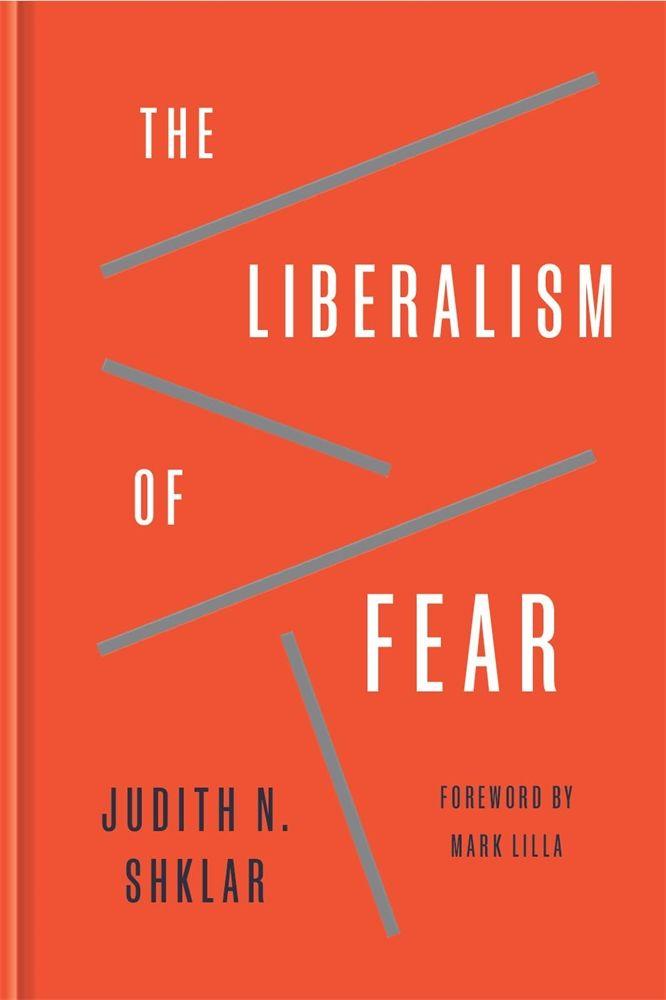
The Liberalism of Fear
Judith N. Shklar
Best for: Readers who want the central statement before entering the larger body of work.
Difficulty: General to Intermediate
Intellectual role: The compact manifesto of Shklar’s negative, anti-cruelty liberalism.
Bookinlight Rating: ★★★★★
This essay gives Shklar’s most memorable formulation of liberalism: not as the politics of moral perfection, but as the politics of preventing cruelty and fear. Its force lies in its refusal of triumphalism. Shklar’s liberalism is historical, chastened, and institutionally alert. She knows that liberal orders can flatter themselves while leaving people exposed to official intimidation. Read as a stand-alone work, it becomes less an introduction than a test: any liberal theory that cannot explain arbitrary power, humiliation, and fear has missed the ground beneath politics.
Critical Reception
“Liberalism is a means of survival, not the road to utopia.“
Bookinlight Note: Read this first, then return to it after The Faces of Injustice; its apparent simplicity becomes more severe.
Ordinary Vices
Judith N. Shklar
Best for: Readers interested in moral psychology, cruelty, hypocrisy, betrayal, and political judgment.
Difficulty: Intermediate
Intellectual role: The ethical anatomy behind the liberalism of fear.
Bookinlight Rating: ★★★★★
Ordinary Vices is indispensable because it explains why cruelty has priority in Shklar’s political imagination. The book does not offer a sermon against wickedness. It studies the everyday moral failures that make domination plausible: snobbery, hypocrisy, misanthropy, betrayal, and the habits by which people excuse harm when it is socially convenient. Shklar’s prose is unusually alert to the relation between private vice and public structure. Cruelty becomes politically central because it is never merely an emotion; it is a relation of power in which one person can make another suffer without adequate answer.
Critical Reception
“The seven deadly sins of traditional Christianity represent the abysses of human character.“
Bookinlight Note: Pair this with contemporary debates on online humiliation; Shklar helps distinguish moral criticism from organized cruelty.
Legalism
Judith N. Shklar
Best for: Readers of law, political trials, constitutionalism, and the moral limits of legality.
Difficulty: Advanced
Intellectual role: The book that complicates any easy faith in law as liberal salvation.
Bookinlight Rating: ★★★★★★
Legalism is essential because Shklar never treats legality as automatically humane. Law may restrain cruelty, but legal forms can also disguise political vengeance, depersonalize suffering, or convert moral conflict into procedure. The book’s value lies in its refusal of both cynicism and worship. Shklar understands law as one of liberalism’s necessary instruments, yet she also asks what happens when legal institutions forget the social world they claim to judge. For readers of the liberalism of fear, Legalism clarifies a crucial point: institutions matter because power needs limits, but limits themselves require moral scrutiny.
Critical Reception
“An open challenge to reconsider the fundamental question of the relationship of law to society.“
Bookinlight Note: Use this book for a seminar question: when does legal neutrality become a mask for political force?
After Utopia
Judith N. Shklar
Best for: Readers who want the historical background to Shklar’s anti-redemptive liberalism.
Difficulty: Advanced
Intellectual role: The anti-utopian prehistory of the liberalism of fear.
Bookinlight Rating: ★★★★★★
After Utopia should be read as Shklar’s early reckoning with the collapse of political faith. It studies the decline of grand systems and the suspicion that moral philosophy can no longer command history from above. The book is denser than her later essays, but it reveals the soil from which the liberalism of fear grows. Shklar’s anti-utopianism is not laziness or resignation. It is a lesson drawn from the damage caused when politics imagines itself authorized by final truths. The book teaches readers why her later liberalism is deliberately modest and fiercely anti-cruel.
Critical Reception
“A political philosophy classic from one of the foremost political thinkers of the twentieth century.“
Bookinlight Note: Read this after the central essay, not before; its difficulty becomes productive once Shklar’s political priority is clear.
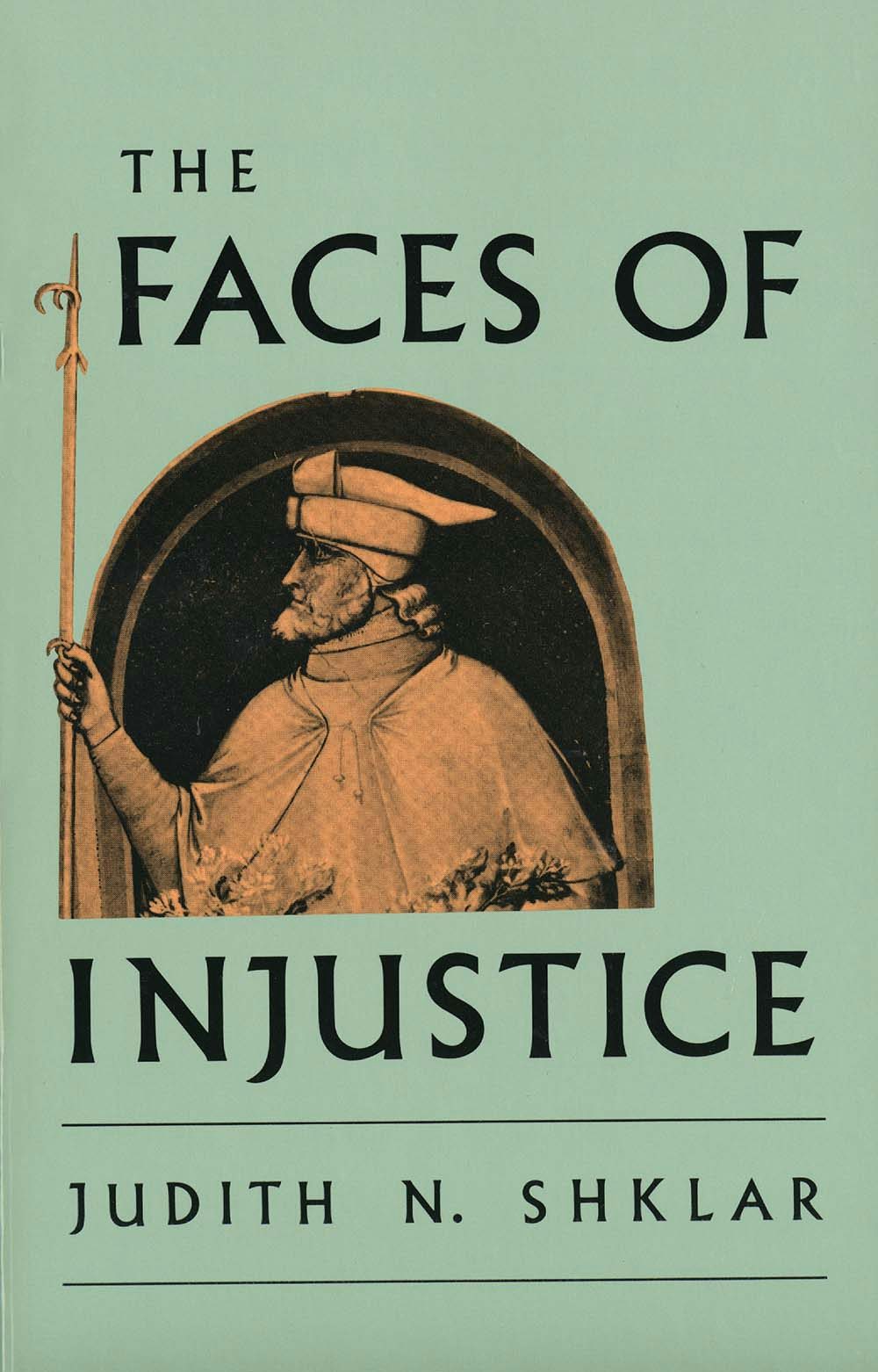
The Faces of Injustice
Judith N. Shklar
Best for: Readers concerned with victimhood, misfortune, civic voice, and moral recognition.
Difficulty: Intermediate
Intellectual role: The mature account of how injustice is perceived, denied, and politically minimized.
Bookinlight Rating: ★★★★★
The Faces of Injustice may be the most powerful companion to The Liberalism of Fear. Shklar turns from the prevention of cruelty to the recognition of wrong. She is especially interested in the border between misfortune and injustice: when does suffering become a political matter rather than a private tragedy? The book matters because liberal societies often preserve their self-image by redescribing injustice as accident, complexity, or unfortunate necessity. Shklar insists that the victim’s perception cannot be dismissed as mere complaint. Liberal politics begins by listening to fear, but it continues by refusing to erase injury.
Bookinlight Note: This is the best book for connecting Shklar to journalism, public testimony, transitional justice, and civic mourning.
Judith Shklar and the liberalism of fear
Allyn Fives
Best for: Readers who want a systematic contemporary interpretation of Shklar’s political theory.
Difficulty: Advanced
Intellectual role: The secondary guide that tests the coherence and limits of Shklar’s liberalism.
Bookinlight Rating: ★★★★★★
Allyn Fives’s study is the best companion for readers who want to move from admiration to analysis. It asks what kind of political theory Shklar actually offers, how her skepticism works, and whether the liberalism of fear can address domination without becoming merely defensive. The book is especially useful because it treats Shklar not as a slogan but as a theorist of conflict, cruelty, and pluralism. It also helps readers see why her thought remains difficult to classify: liberal, anti-utopian, moral, historical, and yet wary of moralism.
Critical Reception
“A provocative discussion of the liberalism of fear and a thoughtful analysis of the nature of political theory itself.“
Bookinlight Note: Use Fives after reading at least two Shklar books; it is strongest as a map of tensions, not as a first entrance.
How These Books Speak to One Another
The sequence matters. The Liberalism of Fear gives the principle: cruelty is the first political evil. Ordinary Vices explains why cruelty is so easily domesticated in everyday moral life. Legalism shows that even law, liberalism’s favorite instrument, can become morally evasive. After Utopia reveals Shklar’s deeper suspicion of political faiths that promise completion. The Faces of Injustice turns the argument toward recognition: who gets to say that a wrong has occurred? Fives then gives readers the secondary architecture needed to assess the whole project. Together, these books make Shklar less a theorist of pessimism than a theorist of disciplined attention.
The Reading Map
| Book | Difficulty | Rating | Why It Matters |
|---|---|---|---|
| The Liberalism of Fear | General to Intermediate | ★★★★★ | Defines cruelty as liberalism’s first danger. |
| Ordinary Vices | Intermediate | ★★★★★ | Shows how vice becomes political harm. |
| Legalism | Advanced | ★★★★★★ | Tests law against society and power. |
| After Utopia | Advanced | ★★★★★★ | Explains the anti-utopian background. |
| The Faces of Injustice | Intermediate | ★★★★★ | Makes injury and recognition central. |
| Judith Shklar and the liberalism of fear | Advanced | ★★★★★★ | Systematizes Shklar’s theory today. |
Where to Begin
- Entry point: Begin with The Liberalism of Fear for Shklar’s defining political priority.
- Historical background: Move to After Utopia to understand her distrust of redemptive politics.
- Conceptual foundation: Read Ordinary Vices for the moral psychology of cruelty.
- Critical perspective: Turn to Legalism to complicate faith in courts and procedure.
- Contemporary relevance: Read The Faces of Injustice for the politics of injury and recognition.
- Advanced reflection: Finish with Judith Shklar and the liberalism of fear for systematic interpretation.
External Sources for Further Reading
Harvard University Press on The Liberalism of Fear
Yale University Press on The Faces of Injustice
De Gruyter Brill on Judith Shklar and the liberalism of fear
The Last Margin
The best books on liberalism of fear leave readers with a demanding form of restraint. They do not ask us to abandon justice, equality, or civic hope. They ask us to measure every political promise against the suffering it may authorize and the people it may silence. Shklar’s greatness lies in this discipline of suspicion. She reminds us that liberalism is not most serious when it celebrates itself. It is most serious when it looks directly at fear, cruelty, and injustice, then builds institutions humble enough to know why they are needed.