Illustration by Bookinlight Art Desk
Modern History
Seven Books That Explain the Meiji Restoration
The Meiji Restoration was neither a simple Westernization story nor a sudden national awakening. These seven books reveal it as a political collapse, an intellectual revolution, a regional struggle, a global negotiation, and a long argument over what modern Japan should mean.
By Bookinlight
Bookinlight
The Making of Modern Japan
Marius B. Jansen

Bookinlight
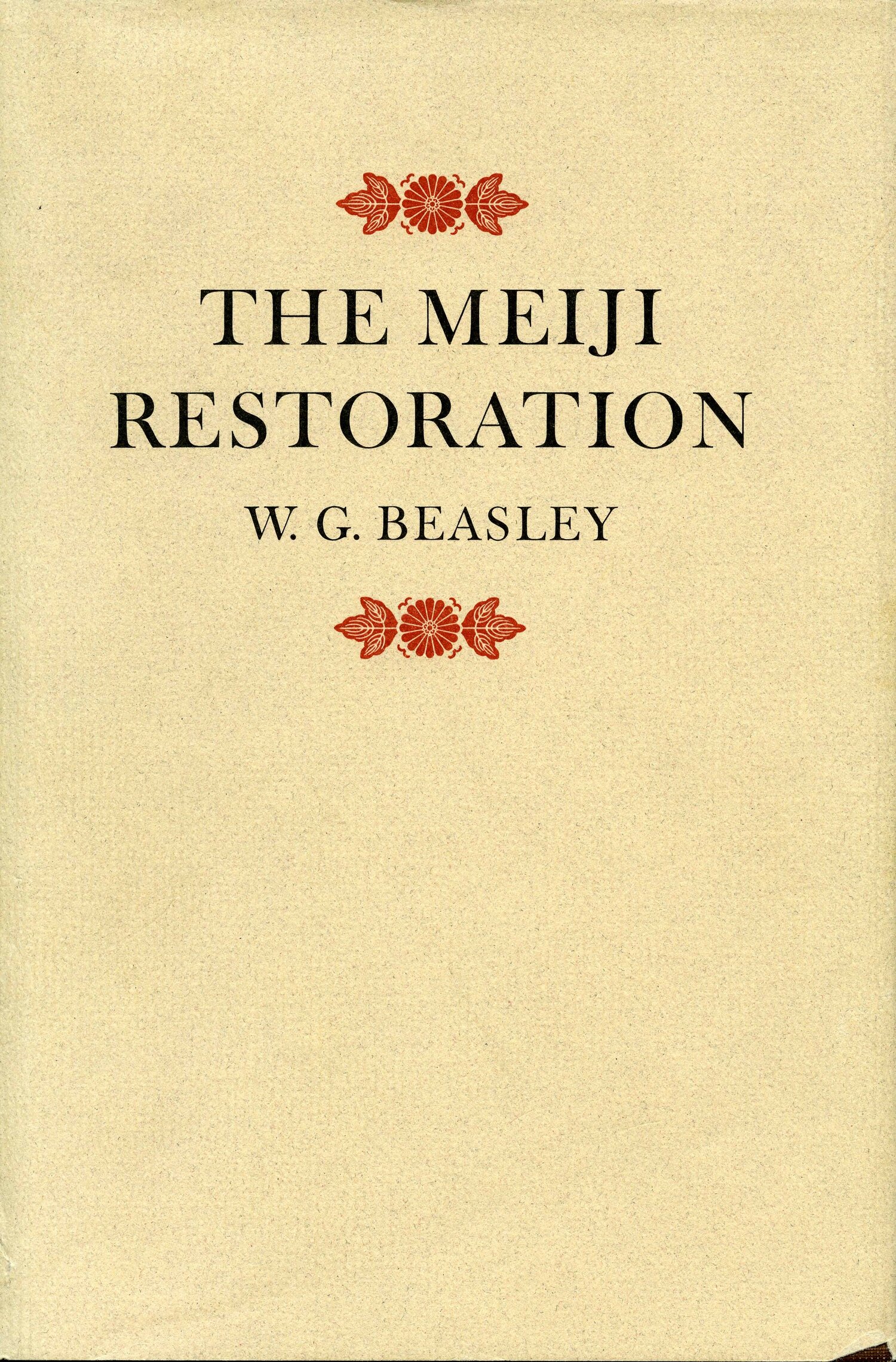
The Meiji Restoration
W. G. Beasley
Bookinlight
To Stand with the Nations of the World
Mark Ravina

Bookinlight Edition
Choshu in the Meiji Restoration
Albert M. Craig
Bookinlight
Toward Restoration
H. D. Harootunian

Bookinlight
Japan’s Modern Myths
Carol Gluck

Bookinlight
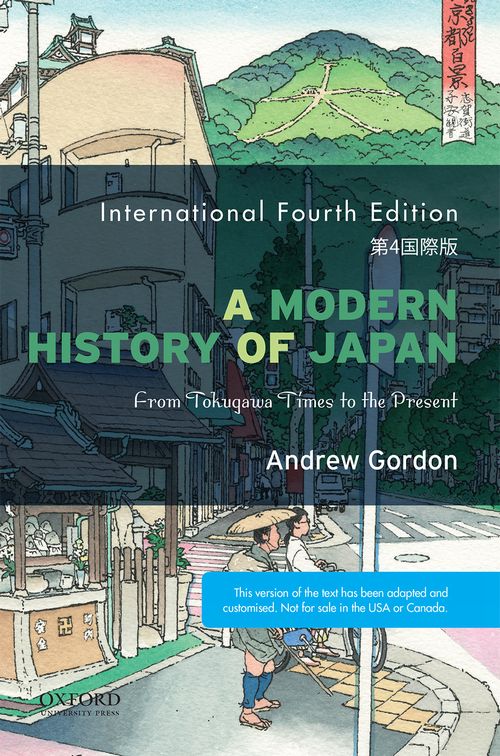
A Modern History of Japan
Andrew Gordon
A Revolution That Refused to Look Like One
The best books on Meiji Restoration history begin by complicating the word restoration itself. In 1868, power was formally returned to the emperor, yet the historical result was not a simple revival of antiquity. The Tokugawa order had already been strained by foreign pressure, regional politics, fiscal problems, samurai discontent, and new arguments about loyalty, knowledge, and national survival. What followed was a transformation of sovereignty, institutions, social status, diplomacy, education, military organization, and political imagination.
These books belong together because each refuses a single-cause explanation. Some emphasize domain politics; others place Japan in world history; others examine ideology, intellectual consciousness, and long social change. Read together, they show the Restoration as a disciplined reinvention of authority: old symbols were used to authorize new institutions, and new institutions were justified as the recovery of an older national essence.
Why the Best Books on Meiji Restoration History Still Matter
The Meiji Restoration remains one of the most powerful cases in modern history because it raises a question that still haunts political development: how can a society transform rapidly without describing itself as merely imitative? Japan’s nineteenth-century revolution was made under pressure from imperial powers, yet its leaders did not simply copy the West. They translated foreign models into a language of national survival, imperial legitimacy, and administrative centralization. That is why serious reading must move between narrative history, regional study, intellectual history, state formation, ideology, and global comparison.
The Reading Lens
Restoration as Political Translation
The Meiji Restoration is best read as a political translation machine. It converted crisis into legitimacy, foreign threat into national pedagogy, samurai frustration into state service, and imperial symbolism into administrative power. These books show that modern Japan did not emerge by abandoning the past. It emerged by reorganizing the past into usable authority, then forcing that authority into schools, armies, ministries, diplomacy, industry, and public language.
Central Question
How did a movement speaking the language of restoration produce one of the nineteenth century’s most consequential modern states?
Historical Pressure
Foreign coercion, domain rivalry, fiscal instability, and intellectual ferment pushed late Tokugawa politics beyond repair.
Why These Books
Together they move from grand synthesis to political mechanism, regional agency, intellectual background, ideology, and global context.
Seven Books for Understanding the Meiji Restoration
Bookinlight
The Making of Modern Japan
Marius B. Jansen
The Making of Modern Japan
Marius B. Jansen
Best for: Readers who want the broadest historical architecture.
Difficulty: Intermediate
Intellectual role: The grand synthesis.
Bookinlight Rating: ★★★★★
Jansen’s masterpiece is not only a narrative of the Restoration but a long account of the social and institutional world that made it possible. Its strength lies in scale: Tokugawa order, village life, urban growth, samurai ethics, foreign intrusion, Meiji state-building, and later modernity appear as connected developments rather than isolated episodes. For readers entering the subject seriously, this is the book that prevents the Restoration from becoming a dramatic but thin story about a few great men.
Bookinlight Note: Read Jansen first for chronology, then return to him after the specialized studies; his synthesis becomes sharper once the regional and ideological debates are visible.
Bookinlight
The Meiji Restoration
W. G. Beasley
The Meiji Restoration
W. G. Beasley
Best for: Readers seeking the classic political account.
Difficulty: Intermediate
Intellectual role: The canonical narrative of political transition.
Bookinlight Rating: ★★★★★★
Beasley remains essential because he gives the Restoration its political skeleton: the weakening of Tokugawa authority, the role of court politics, the anti-foreign crisis, domain alignments, and the difficult sequence by which imperial restoration became state reconstruction. The book’s emphasis is older than some recent scholarship, but that is part of its value. It teaches the reader how the classic political problem was framed before newer work expanded the map.
Critical Reception
“A comprehensive account of the origins, development, and immediate aftermath.“
Bookinlight Note: Pair Beasley with Craig to see how national political narrative changes when viewed through a single domain.
Bookinlight
To Stand with the Nations of the World
Mark Ravina
To Stand with the Nations of the World
Mark Ravina
Best for: Readers interested in globalization and comparative state formation.
Difficulty: General to Intermediate
Intellectual role: The global reframing.
Bookinlight Rating: ★★★★★★
Ravina gives the Restoration a wider stage. Instead of treating Japan’s transformation as an exceptional miracle, he places it within the long nineteenth century of empires, nation-states, diplomatic recognition, and competitive modernization. The book is especially useful because it clarifies the paradox at the center of Meiji politics: leaders invoked native antiquity while deliberately adopting foreign practices. The result is a study of modernity as selective borrowing, not passive imitation.
Critical Reception
“Explains the paradox of the Restoration through the forces of globalization.“
Bookinlight Note: Use this book to connect Meiji Japan to Germany, Britain, the Qing, and the politics of recognition in a world of unequal power.
Bookinlight Edition
Choshu in the Meiji Restoration
Albert M. Craig
Choshu in the Meiji Restoration
Albert M. Craig
Best for: Readers who want political change from inside a domain.
Difficulty: Advanced
Intellectual role: The regional mechanism.
Bookinlight Rating: ★★★★★★
Craig’s book narrows the lens to Choshu, but the narrowing expands the explanation. The Restoration was not a national event floating above local structures; it was built through domains, factions, finances, military reform, ideological conflict, and leadership contests. Craig is especially important for challenging interpretations that reduce the movement to lower samurai resentment. He shows how old values and old institutions helped produce the new state.
Bookinlight Note: Craig is the best corrective to vague phrases like “samurai revolution.” He asks exactly which samurai, in which domain, under which pressures.
Bookinlight
Toward Restoration
H. D. Harootunian

Toward Restoration
H. D. Harootunian
Best for: Readers drawn to political thought and intellectual history.
Difficulty: Advanced
Intellectual role: The prehistory of political consciousness.
Bookinlight Rating: ★★★★★★
Harootunian asks what had to happen in thought before restoration could become action. Rather than beginning with institutional breakdown alone, he reconstructs the growth of political consciousness in late Tokugawa discourse: Mito learning, Sakuma Shozan, Yoshida Shoin, Yokoi Shonan, sectionalism, and the imagination of national unity. This book is demanding, but it gives the Restoration philosophical depth by showing how political language made new action thinkable.
Critical Reception
“The first intellectual history of the Meiji Restoration in English.“
Bookinlight Note: Read this alongside Craig: one shows political practice in a domain; the other shows how language and consciousness prepared the field of action.
Bookinlight
Japan’s Modern Myths
Carol Gluck
Japan’s Modern Myths
Carol Gluck
Best for: Readers studying ideology after political victory.
Difficulty: Advanced
Intellectual role: The ideology of modern nationhood.
Bookinlight Rating: ★★★★★
Gluck shifts attention from overthrow to meaning-making. Late Meiji ideology was not simply imposed from above as a finished doctrine; it was produced through education, public language, civic morality, imperial symbolism, and repeated attempts to define the nation. This book matters for understanding what the Restoration became after the regime consolidated itself. It shows how modernity needed myths, and how myths needed modern institutions to circulate.
Critical Reception
“The best book on Meiji ideology we are likely to have for some time.“
Bookinlight Note: Gluck is the bridge between Restoration history and the later politics of imperial nationalism, civic instruction, and official memory.
Bookinlight
A Modern History of Japan
Andrew Gordon
A Modern History of Japan
Andrew Gordon
Best for: Students who need a modern survey with social history.
Difficulty: General to Intermediate
Intellectual role: The accessible modern frame.
Bookinlight Rating: ★★★★★★
Gordon is the clearest route for readers who want the Meiji Restoration placed inside the longer arc from Tokugawa society to contemporary Japan. Its value lies in balance: political elites are present, but so are social change, women and men in everyday life, economic transformation, education, empire, war, occupation, and postwar reconstruction. It is especially useful as a teaching companion to the denser monographs in this list.
Critical Reception
“The best all-around textbook for modern Japanese history on the market.“
Bookinlight Note: Begin here if you are teaching yourself modern Japanese history and need a map before entering specialist debates.
How These Books Speak to One Another
The sequence matters. Gordon and Jansen give the long road; Beasley gives the political turning point; Craig shows that the turning point was built inside regional structures; Harootunian explains the intellectual formation of political action; Ravina places the whole process inside nineteenth-century globalization; Gluck shows how the new order narrated itself after victory. Together, they replace the old formula of “Japan modernized quickly” with a more exact proposition: Japan modernized by translating crisis into institutions and institutions into national meaning.
The Reading Map
| Book | Difficulty | Rating | Why It Matters |
|---|---|---|---|
| The Making of Modern Japan | Intermediate | ★★★★★ | Best overall synthesis. |
| The Meiji Restoration | Intermediate | ★★★★★★ | Classic political frame. |
| To Stand with the Nations of the World | General to Intermediate | ★★★★★★ | Globalizes the story. |
| Choshu in the Meiji Restoration | Advanced | ★★★★★★ | Reveals domain politics. |
| Toward Restoration | Advanced | ★★★★★★ | Explains political thought. |
| Japan’s Modern Myths | Advanced | ★★★★★ | Tracks ideology after victory. |
| A Modern History of Japan | General to Intermediate | ★★★★★★ | Most teachable survey. |
Where to Begin
- Entry point: Start with A Modern History of Japan for a clear survey.
- Historical background: Move to The Making of Modern Japan for the broader architecture.
- Conceptual foundation: Read Toward Restoration for political consciousness.
- Critical perspective: Use Choshu in the Meiji Restoration to test national narratives against local mechanism.
- Contemporary relevance: Read To Stand with the Nations of the World for globalization and recognition.
- Advanced reflection: Finish with Japan’s Modern Myths to see how the new order explained itself.
External Sources for Further Reading
Harvard University Press: The Making of Modern Japan
Stanford University Press: The Meiji Restoration
The Last Margin
The best books on Meiji Restoration history show that 1868 was not merely a date when one regime replaced another. It was a turning point in the way political legitimacy could be made, narrated, institutionalized, and exported into everyday life. These books are demanding because the event itself is demanding: it asks readers to think about continuity inside revolution, invention inside tradition, and global pressure inside national self-definition. The Restoration becomes most intelligible when we stop asking whether Japan became Western and begin asking how Japan made modern power speak in a Japanese historical voice.