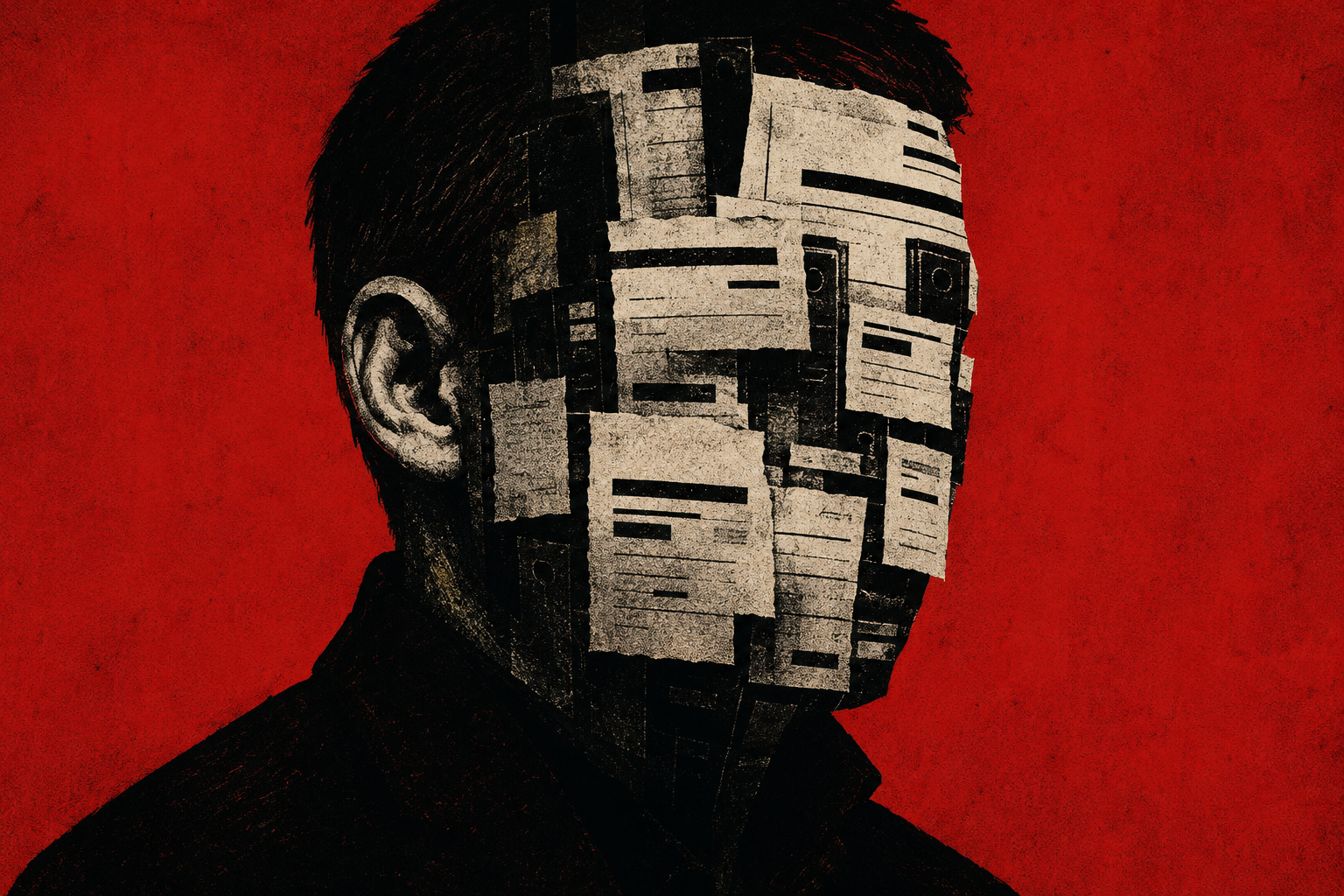
Illustration by Bookinlight Art Desk
Ethics & Moral Philosophy
Five Books on Moral Luck
A serious reading path through the unsettling thought that character, blame, responsibility, and even moral identity may be shaped by what no one fully controls.
By Bookinlight
Moral Luck: Philosophical Papers 1973–1980
Bernard Williams
Not the original published cover
Mortal Questions
Thomas Nagel
Not the original published cover
Moral Luck
Daniel Statman
Not the original published cover
The Unnatural Lottery: Character and Moral Luck
Claudia Card
Not the original published cover
In Defense of Moral Luck
Robert J. Hartman
Not the original published cover
When Judgment Meets Fortune
The best books on moral luck begin from a provocation that looks almost impossible to absorb: we judge people morally for lives, actions, consequences, and characters that are partly made by accident. Two drivers may be equally careless; only one strikes a pedestrian. Two people may have similar dispositions; only one is born into circumstances that expose cruelty, courage, complicity, or restraint. Moral judgment wants control, intention, and responsibility. Moral life gives us timing, inheritance, social position, historical accident, and results that arrive after intention has already left the scene.
These five books belong together because they do not treat moral luck as a small puzzle in analytic ethics. They show it as a fracture running across modern moral thought: between Kantian aspiration and tragic experience, between agency and circumstance, between formal equality and unequal formation, between blame and the accidents that make blame feel inevitable.
Why the Best Books on Moral Luck Still Disturb Ethics
Moral luck matters because it reveals how little of ethical life can be cleanly separated into inner will and outer circumstance. Bernard Williams gives the problem its modern intensity; Thomas Nagel gives it its classic taxonomy; Daniel Statman gathers the debate into a philosophical archive; Claudia Card forces the issue into gender, race, violence, and social formation; Robert J. Hartman offers a contemporary defense that refuses to dissolve the puzzle into mere confusion. Read together, they shift moral luck from a paradox about unlucky drivers into a demanding question about how human beings become answerable in a world they never fully authored.
The Reading Lens
Responsibility After the Collapse of Control
The moral luck debate is not merely about whether consequences matter. It is about whether moral philosophy can preserve a pure image of responsible agency once history, embodiment, social power, and accident enter the room. These books show a field moving from paradox to diagnosis: first exposing the instability of blame, then asking whether responsibility can survive without pretending that human beings stand outside contingency.
Central Question
Can we judge people fairly when what they become and what they cause are partly matters of luck?
Historical Pressure
The debate emerges from modern ethics’ tension between the ideal of autonomous agency and the visible force of circumstance.
Why These Books
Together they trace moral luck from conceptual shock to social critique and contemporary defense.
Five Essential Books on Moral Luck
Moral Luck: Philosophical Papers 1973–1980
Bernard Williams
Not the original published cover
Moral Luck: Philosophical Papers 1973–1980
Bernard Williams
Best for: Readers who want the modern philosophical origin of the problem.
Difficulty: Advanced
Intellectual role: The founding provocation.
Bookinlight Rating: ★★★★★
Williams is indispensable because he makes moral luck feel less like a technical exception and more like a wound in moral theory itself. The famous essay resists the comforting thought that morality can be insulated from contingency. His examples of artistic risk, political decision, and retrospective judgment ask whether success, failure, history, and outcome can transform the moral meaning of what someone has done. Williams is especially valuable for readers who sense that moral life is more tragic, more historically exposed, and less rule-governed than tidy theories allow.
Critical Reception
“Centres on questions of moral philosophy and the theory of rational action.“
Bookinlight Note: Read Williams as a philosopher of moral retrospect: he asks how later facts can alter the moral atmosphere of earlier choices.
Mortal Questions
Thomas Nagel
Not the original published cover
Mortal Questions
Thomas Nagel
Best for: Readers seeking the clearest map of moral luck’s categories.
Difficulty: Intermediate
Intellectual role: The analytic framework.
Bookinlight Rating: ★★★★★
Nagel’s essay on moral luck remains the most elegant entry into the problem’s structure. Where Williams intensifies the tragic pressure, Nagel clarifies the forms: resultant luck, circumstantial luck, constitutive luck, and causal luck. The essay’s force lies in its calmness. It shows that the problem is not marginal, because nearly every moral judgment seems exposed to one or more kinds of contingency. Mortal Questions also helps readers see why moral luck belongs beside death, absurdity, war, and value: it is one of the places where philosophical abstraction touches ordinary anxiety.
Critical Reception
“Explores some fundamental issues concerning the meaning, nature and value of human life.“
Bookinlight Note: Pair Nagel with Williams and ask: does moral luck expose a contradiction in morality, or only in our expectations of morality?
Moral Luck
Daniel Statman
Not the original published cover
Moral Luck
Edited by Daniel Statman
Best for: Readers who want a concentrated debate rather than a single authorial line.
Difficulty: Advanced
Intellectual role: The debate archive.
Bookinlight Rating: ★★★★★★
Statman’s collection matters because moral luck is a dispute, not a doctrine. The volume gathers major figures and counterpositions, allowing the reader to watch the problem move through responsibility, agency, justification, and moral assessment. Its value is cumulative: one sees how the same example can generate incompatible intuitions, and how quickly the debate crosses into free will, virtue, punishment, and social life. This is the book for readers who want to understand the philosophical terrain after Williams and Nagel rather than simply admire the opening shock.
Bookinlight Note: Use this volume as a seminar engine: assign one essay for moral luck, one for resistance, and one for revision.
The Unnatural Lottery: Character and Moral Luck
Claudia Card
Not the original published cover
The Unnatural Lottery: Character and Moral Luck
Claudia Card
Best for: Readers who want moral luck connected to oppression and social formation.
Difficulty: Intermediate
Intellectual role: The feminist and social expansion.
Bookinlight Rating: ★★★★★★
Card’s book is crucial because it refuses to leave moral luck at the level of stylized thought experiments. She asks how character itself is formed under unequal social conditions: violence, gendered expectation, racial privilege, sexuality, class pressure, and survival. The result is one of the most humane expansions of the debate. Card does not simply ask whether people are lucky in what happens to them; she asks how luck shapes the virtues available to them, the harms they may suffer, and the forms of responsibility they can still cultivate.
Critical Reception
“The Unnatural Lottery explores moral luck as mediated by gender, race, social class, and sexual passions.“
Bookinlight Note: Card is the essential corrective to overly abstract moral luck: she makes social position philosophically visible.
In Defense of Moral Luck
Robert J. Hartman
Not the original published cover
In Defense of Moral Luck: Why Luck Often Affects Praiseworthiness and Blameworthiness
Robert J. Hartman
Best for: Readers ready for a contemporary argument that moral luck is real.
Difficulty: Advanced
Intellectual role: The modern defense.
Bookinlight Rating: ★★★★★★
Hartman brings the debate into sharper contemporary form by defending the claim that resultant, circumstantial, and constitutive luck can affect praiseworthiness and blameworthiness. His book is valuable because it does not merely repeat the classic examples; it reconstructs the contradiction in ordinary moral thought and argues through the major lines of denial. Readers who have absorbed Williams, Nagel, Statman, and Card will find here a disciplined attempt to say why moral luck is not a regrettable illusion, but a feature of moral assessment we must learn to understand.
Critical Reception
“This book is not the last word on moral luck, but it is a valuable contribution.“
Bookinlight Note: Read Hartman last: the book works best after the reader has felt both the attraction and the danger of denying moral luck.
How These Books Speak to One Another
Williams and Nagel should be read as paired origins: one gives moral luck its tragic and anti-systematic force, the other gives it durable analytic shape. Statman then opens the conversation into a field of disagreement. Card changes the scale by showing that moral luck is not only about outcomes after action, but about the unequal formation of character before action. Hartman returns to the problem with argumentative pressure, asking whether the best response is not denial but disciplined acceptance. The movement is therefore from shock to map, from map to archive, from archive to social critique, and from critique to renewed defense.
The Reading Map
| Book | Difficulty | Rating | Why It Matters |
|---|---|---|---|
| Moral Luck: Philosophical Papers 1973–1980 | Advanced | ★★★★★ | The original provocation. |
| Mortal Questions | Intermediate | ★★★★★ | The clearest taxonomy. |
| Moral Luck | Advanced | ★★★★★★ | The essential debate. |
| The Unnatural Lottery: Character and Moral Luck | Intermediate | ★★★★★★ | The social expansion. |
| In Defense of Moral Luck | Advanced | ★★★★★★ | The contemporary defense. |
Where to Begin
- Entry point: Begin with Nagel for the categories and the cleanest conceptual map.
- Historical background: Move to Williams to feel why the problem became philosophically explosive.
- Conceptual foundation: Use Statman’s collection to see the disagreement unfold across multiple positions.
- Critical perspective: Read Card when the question of character must be tied to social formation and injustice.
- Contemporary relevance: Turn to Hartman for the strongest modern defense of moral luck’s reality.
- Advanced reflection: Revisit Williams after Hartman and ask whether accepting moral luck makes ethics more honest or more dangerous.
External Sources for Further Reading
Stanford Encyclopedia of Philosophy: Moral Luck
The Last Margin
The best books on moral luck do not teach resignation. They teach moral seriousness under conditions of exposure. If luck enters action, outcome, character, and circumstance, then ethical judgment must become more careful, not less necessary. These books leave us with a difficult discipline: to judge without pretending that people are self-created, to understand without dissolving responsibility, and to admit that morality lives not above contingency, but inside it.