
Illustration by Bookinlight Art Desk
Metaphysics & Epistemology
Seven Books on Personal Identity
A serious reading path through memory, embodiment, narrative, moral agency, and the fragile question of what makes a person the same person over time.
By Bookinlight
Personal Identity, Second Edition
John Perry
Not the original published cover

Reasons and Persons
Derek Parfit
Not the original published cover

Sources of the Self
Charles Taylor
Not the original published cover
The Constitution of Selves
Marya Schechtman
Not the original published cover
The Human Animal
Eric T. Olson
Not the original published cover
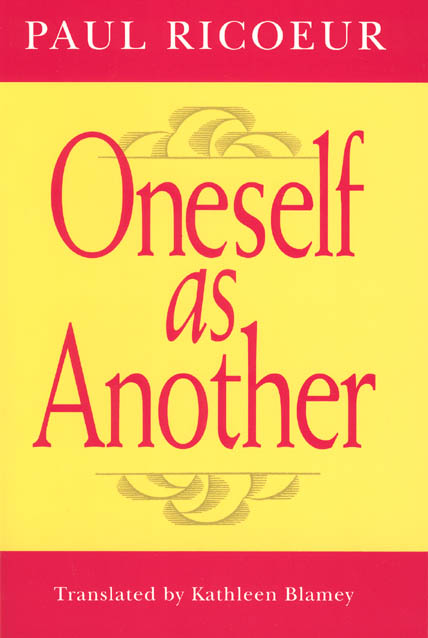
Oneself as Another
Paul Ricoeur
Not the original published cover
Self-Constitution
Christine M. Korsgaard
Not the original published cover
Why Personal Identity Is Never Just One Question
The best books on personal identity do not merely ask whether a person at one time is the same as a person at another. They ask what kind of question that is. Is identity a matter of memory, bodily continuity, narrative coherence, biological life, moral responsibility, or practical self-authorship? The subject begins as metaphysics, but it immediately spills into ethics, law, psychology, politics, and ordinary grief. To ask whether someone survives is also to ask what we owe to a future self, what punishment presupposes, whether character can be remade, and why first-person life feels more unified than theory can easily explain.
These seven books belong together because they refuse to leave the self in a single discipline. They move from classic analytic puzzles to modern moral history, from biological animalism to hermeneutics and Kantian agency. The result is not one doctrine of identity, but a disciplined map of rival answers.
Best Books on Personal Identity for Readers Who Want More Than Thought Experiments
A weak reading list on this subject usually repeats the same puzzle: memory, teleportation, brain exchange, duplication. Those puzzles matter, but they can become sterile when detached from embodied life and moral agency. This selection begins with the canonical debate, then widens the frame. John Perry gives the reader the historical and analytic workshop. Derek Parfit radicalizes the question by suggesting that identity may not be what matters. Charles Taylor places modern selfhood inside a moral history. Marya Schechtman gives narrative shape to personhood. Eric Olson resists psychological accounts by defending animalism. Paul Ricoeur turns personal identity toward ethics and interpretation. Christine Korsgaard asks how agency itself can constitute a self.
The Reading Lens
The Self as Continuity, Creature, Story, and Task
The strongest way to read these books is to treat personal identity as a pressure point between four vocabularies. One vocabulary asks what persists. A second asks what kind of living thing we are. A third asks how a life becomes intelligible as a story. A fourth asks how an agent becomes answerable for action. None cancels the others. Together they show that the self is not a single object waiting to be found, but a contested meeting point between metaphysics, memory, embodiment, narration, and responsibility.
Central Question
What must remain continuous for a human life to count as one life?
Historical Pressure
Modern individualism makes identity morally urgent while modern science makes the self metaphysically unstable.
Why These Books
They stage the central dispute between psychological continuity, moral narrative, embodied life, and practical agency.
Seven Essential Books on Personal Identity
Personal Identity, Second Edition
John Perry
Not the original published cover
Personal Identity, Second Edition
John Perry
Best for: Readers who want the classic debate in one disciplined volume.
Difficulty: General to Intermediate
Intellectual role: The historical and analytic foundation.
Bookinlight Rating: ★★★★★★
Perry’s anthology is still one of the best gateways into the philosophical problem because it lets the reader watch the debate unfold rather than receive it pre-digested. Locke, Hume, Reid, Butler, Williams, Shoemaker, and others appear as live interlocutors. The book is especially useful because personal identity is a problem with inherited pressure: later arguments often make sense only when one sees how memory, consciousness, bodily continuity, and responsibility first became entangled.
Critical Reception
“vital contributions of distinguished past and contemporary philosophers“
Bookinlight Note: Read this first with a pencil, not for agreement, but to build a vocabulary for every later disagreement.
Reasons and Persons
Derek Parfit
Not the original published cover

Reasons and Persons
Derek Parfit
Best for: Readers ready for the most famous modern challenge to common-sense identity.
Difficulty: Advanced
Intellectual role: The reductionist provocation.
Bookinlight Rating: ★★★★★
Parfit’s great achievement is to make personal identity feel less like a metaphysical possession and more like a relation that can weaken, divide, or lose its central importance. His famous thought experiments about fission, psychological continuity, and survival do not simply entertain; they press readers to ask whether the deep fact of being the same person is really what we care about. The book also connects identity to rationality, morality, and future generations, which is why it remains indispensable.
Critical Reception
“some of our deepest beliefs about rationality, morality, and personal identity“
Bookinlight Note: Pair Parfit with Ricoeur if you want the sharpest contrast between reduction and narrative selfhood.
Sources of the Self
Charles Taylor
Not the original published cover
Sources of the Self
Charles Taylor
Best for: Readers who want identity placed inside moral and cultural history.
Difficulty: Advanced
Intellectual role: The genealogy of modern selfhood.
Bookinlight Rating: ★★★★★★
Taylor shifts the discussion from numerical identity to the moral sources that make modern selfhood intelligible. His book is not a technical treatise on persistence conditions; it is a vast account of inwardness, ordinary life, authenticity, and the goods by which modern persons understand themselves. That makes it essential for readers who suspect that personal identity cannot be solved only through puzzle cases. Taylor teaches that selves are also historical achievements, not only metaphysical continuants.
Bookinlight Note: Use Taylor to ask what a culture must believe before the modern individual can appear obvious to itself.
The Constitution of Selves
Marya Schechtman
Not the original published cover
The Constitution of Selves
Marya Schechtman
Best for: Readers interested in narrative identity and person-life coherence.
Difficulty: Intermediate
Intellectual role: The narrative alternative.
Bookinlight Rating: ★★★★★★
Schechtman’s importance lies in her refusal to treat personal identity merely as reidentification: how to tell whether a later person is numerically identical with an earlier one. She asks instead what makes a life attributable to a person as that person’s life. This narrative emphasis changes the emotional temperature of the debate. Identity becomes connected with intelligibility, ownership, development, and the shape of a life that can be claimed from within.
Bookinlight Note: A strong seminar question: can a life be metaphysically continuous but narratively broken?
The Human Animal
Eric T. Olson
Not the original published cover
The Human Animal
Eric T. Olson
Best for: Readers who want the biological challenge to psychological continuity.
Difficulty: Advanced
Intellectual role: The animalist objection.
Bookinlight Rating: ★★★★★
Olson’s animalism is bracing because it challenges the assumption that we are essentially psychological beings. If we are human animals, then persistence may be grounded in biological continuity rather than memory, personality, or consciousness. This is a powerful antidote to accounts that make the self too mental, too narrative, or too first-personal. Olson forces the reader to ask whether the animal sitting in the chair is not merely related to the person, but is the person.
Bookinlight Note: Read Olson after Parfit to feel how dramatically the debate changes when the body stops being a mere vehicle.
Oneself as Another
Paul Ricoeur
Not the original published cover
Oneself as Another
Paul Ricoeur
Best for: Readers drawn to hermeneutics, ethics, and narrative identity.
Difficulty: Advanced
Intellectual role: The ethical hermeneutic of selfhood.
Bookinlight Rating: ★★★★★★
Ricoeur gives the identity debate a different grammar. His distinction between sameness and selfhood allows readers to see why identity over time is not only a matter of identical properties. A person is also a being who promises, acts, interprets, suffers, and becomes responsible before others. Ricoeur is especially valuable because he refuses the split between analytic clarity and existential depth. The self appears here as capable, fragile, narrated, and ethically exposed.
Bookinlight Note: Ricoeur is the book to choose when identity feels inseparable from promise, guilt, memory, and moral address.
Self-Constitution
Christine M. Korsgaard
Not the original published cover
Self-Constitution
Christine M. Korsgaard
Best for: Readers interested in agency, integrity, and practical identity.
Difficulty: Advanced
Intellectual role: The practical account of becoming a self.
Bookinlight Rating: ★★★★★★
Korsgaard’s book belongs on this list because it turns identity toward action. The self is not merely something that persists; it is something constituted through practical reason, choice, and integrity. Drawing on Plato, Aristotle, and Kant, Korsgaard asks how an agent becomes unified enough to act at all. This gives personal identity an ethical architecture: to be someone is not only to continue through time, but to govern oneself under principles that can make action genuinely one’s own.
Bookinlight Note: A contemporary application is obvious: digital life multiplies profiles, but agency still demands a unified will.
How These Books Speak to One Another
The central conversation is not simply between memory and body. Perry shows why the old debate matters. Parfit asks whether identity may be less important than psychological continuity. Olson replies that psychological continuity may describe what we care about, but not what we are. Schechtman and Ricoeur shift the issue toward intelligibility, narrative, and ethical selfhood. Taylor gives the cultural genealogy behind the modern person who finds inwardness meaningful in the first place. Korsgaard then turns the question into a problem of action: a self is not only found across time, but made through agency. Together, these books make the best books on personal identity because they reveal identity as persistence, interpretation, embodiment, and responsibility at once.
The Reading Map
| Book | Difficulty | Rating | Why It Matters |
|---|---|---|---|
| Personal Identity, Second Edition | General to Intermediate | ★★★★★★ | The classic debate in one place. |
| Reasons and Persons | Advanced | ★★★★★ | Identity may not be what matters. |
| Sources of the Self | Advanced | ★★★★★★ | Modern selfhood has a moral history. |
| The Constitution of Selves | Intermediate | ★★★★★★ | Narrative gives identity shape. |
| The Human Animal | Advanced | ★★★★★ | The person may be an organism. |
| Oneself as Another | Advanced | ★★★★★★ | Selfhood becomes ethical interpretation. |
| Self-Constitution | Advanced | ★★★★★★ | Agency makes the self accountable. |
Where to Begin
- Entry point: Begin with Personal Identity, Second Edition to learn the classic arguments without losing the history of the debate.
- Historical background: Move to Sources of the Self for a cultural account of modern inwardness and moral identity.
- Conceptual foundation: Read Reasons and Persons when you are ready for the strongest reductionist challenge.
- Critical perspective: Use The Human Animal as the most direct resistance to psychological accounts.
- Contemporary relevance: Read The Constitution of Selves and Oneself as Another together for narrative and ethical identity.
- Advanced reflection: End with Self-Constitution, where identity becomes a problem of agency and integrity.
External Sources for Further Reading
Personal Identity — Stanford Encyclopedia of Philosophy
Personal Identity — Internet Encyclopedia of Philosophy
Theories of Personal Identity — PhilPapers Bibliography
Personal Identity and Ethics — Stanford Encyclopedia of Philosophy
The Last Margin
The best books on personal identity leave the reader with a productive discomfort. The self is not simply memory, not simply body, not simply story, and not simply will. Yet without memory, embodiment, narrative, and agency, we would barely know what we meant by a person. The serious lesson of these books is that identity is not one solved problem but a set of overlapping human necessities. We need persistence to speak of responsibility, narrative to make a life intelligible, embodiment to avoid fantasy, and agency to become answerable for what we do. That is why personal identity remains one of philosophy’s most intimate public questions.