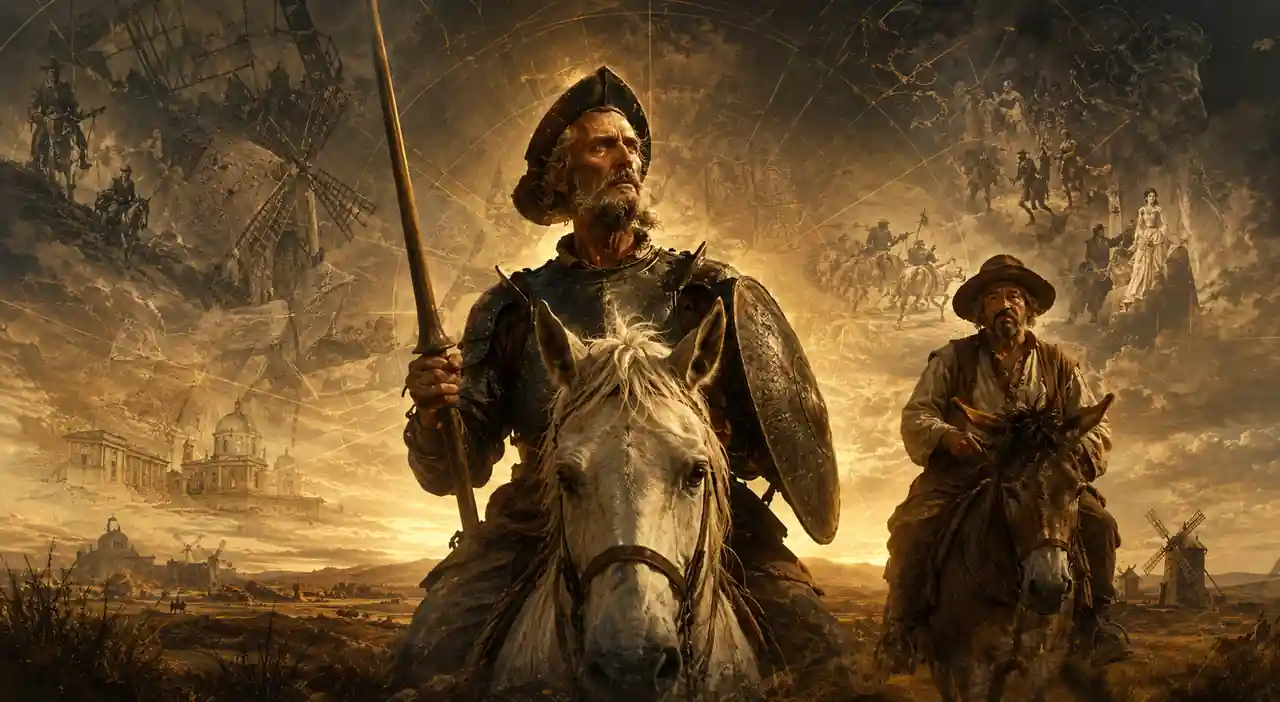
Best Translation of Don Quixote is, for most readers, Edith Grossman’s: it combines contemporary clarity with enough formal gravity to preserve the comic distance between Cervantes’s narrator, his deluded knight, and the world that keeps answering fantasy with bruising fact. John Rutherford is the livelier alternative, James H. Montgomery the strongest study text, and the Norton Critical Edition the most useful teaching package. The decisive trade-off is not “accuracy versus readability” in the abstract; it is how each translator handles unstable tone—high chivalric rhetoric, proverbial speech, narrative irony, bawdy comedy, and sudden pathos—across a work first published in Spanish in 1605 and 1615.
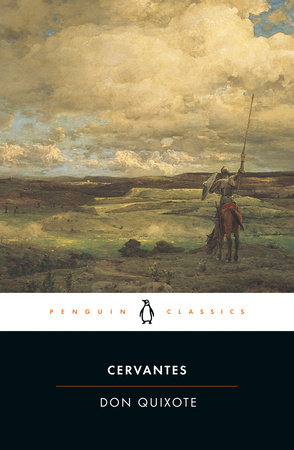
John Rutherford — Best Readable Translation
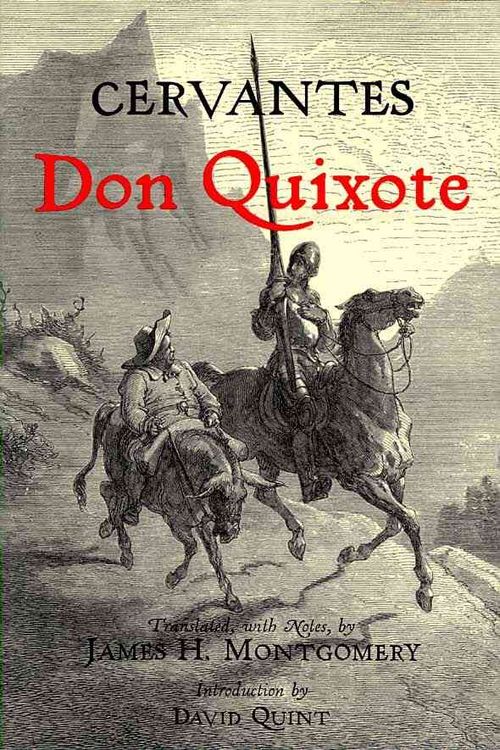
James H. Montgomery — Best For Close Study
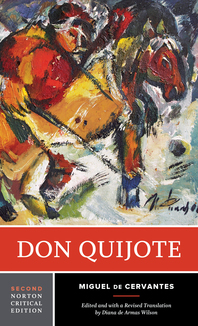
Burton Raffel, lightly revised for this edition — Best Annotated Edition
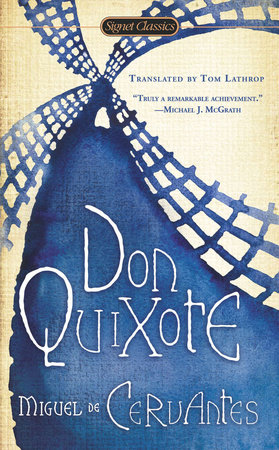
Tom Lathrop — Best Budget Edition

Charles Jarvis; spelling and text modernized for the Oxford edition — Best For Comparing Translations
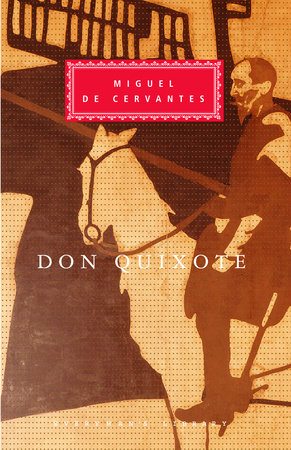
P. A. Motteux — Historically Important Translation
If You Just Want the Answer: Best Translation of Don Quixote
Best overall: Edith Grossman’s 2015 Ecco deluxe paperback. It is the most persuasive compromise between literary energy, modern readability, tonal range, and long-form stamina.
Best readable alternative: John Rutherford’s Penguin Classics translation, especially for readers who want the comedy to move quickly and the dialogue to bite.
Best for close study: James H. Montgomery’s Hackett edition, with David Quint’s introduction and practical notes.
Best for teaching: Burton Raffel in the second Norton Critical Edition, edited by Diana de Armas Wilson.
Most common mistake: buying a cheap “complete” reprint without checking whether it contains both Parts I and II, names the translator, and supplies an ISBN that actually matches the listing.
No one version wins every category. Grossman is the default reading recommendation; Montgomery is better when notes and citation discipline matter; Norton is better when the edition must carry a course’s critical materials; Jarvis and Motteux are valuable only when historical English is itself part of the reason for reading.
How to Choose the Right Edition or Translation
For the Best Translation of Don Quixote, the first bibliographical question is completeness. Cervantes published the first part as El ingenioso hidalgo don Quijote de la Mancha in 1605 and the second as Segunda parte del ingenioso caballero don Quijote de la Mancha in 1615. A book containing only the 1605 part may still look substantial. For an ordinary first reading, “complete” should mean both parts, not merely every chapter of Part I. The Biblioteca Virtual Miguel de Cervantes presentation of the 1605 and 1615 text makes that two-part architecture explicit.
Next comes register. Don Quixote does not speak like Sancho, and neither speaks like the narrators who interrupt, qualify, cite supposed historians, and cast doubt on their own documentary authority. A translation that makes everyone sound equally modern loses comedy and social texture. One that makes every sentence antique turns the book into a museum piece. Grossman separates voices without theatrical archaism; Rutherford pushes comic contrast harder; Montgomery stays comparatively unobtrusive; Lathrop aims for intimacy and directness.
Notes matter, but their placement and density matter too. The novel assumes familiarity with chivalric romances, devotional language, proverbs, legal formulas, social hierarchy, and early modern Spanish geography. Beginners need enough annotation to understand a joke or allusion without being told what every episode “means.” Hackett and Penguin manage this balance well. Norton is stronger when the reader needs historical documents and critical essays, but its apparatus can pre-interpret a first encounter.
Physical form is not trivial in a book that regularly exceeds nine hundred pages. A mass-market paperback lowers cost but narrows margins and concentrates weight at the spine. A large paperback is easier to annotate. A hardcover may survive repeated use, yet an older translation in a handsome binding is not automatically the best reading text. Format, translator, and editorial apparatus must be checked separately.
Main Comparison Table
Individual Edition Profiles
The seven profiles below show why the Best Translation of Don Quixote changes with reading purpose: uninterrupted pleasure, close study, teaching, budget ownership, translation comparison, or historical reception
BEST READABLE TRANSLATION
Don Quixote: John Rutherford’s brisk and comic Penguin Classics version
Author: Miguel de Cervantes
Translator: John Rutherford
Editor or introducer: Roberto González Echevarría, introduction; translation and notes by Rutherford
Edition: Penguin Classics, paperback, 2003; ISBN 9780142437230; 1,072 pages Exact edition record.
Complete or abridged: Complete, unabridged translation of Parts I and II
Best suited to: Readers who prize comic momentum, clear narrative movement, and a strong scholarly introduction
Principal strength: Fast, alert English with an especially good ear for comic timing, social register, and the conversational friction between knight and squire
Main limitation: Its British idiom can occasionally feel more conspicuous to North American readers, and the translation sometimes prefers comic force over lexical closeness
Why choose it: Rutherford’s version understands that the novel is not merely a monument but a comedy built from timing, repetition, interruption, and linguistic mismatch. The prose is often more buoyant than Grossman’s. González Echevarría’s introduction supplies a serious account of the novel’s historical and literary architecture, while Rutherford’s notes clarify without turning each chapter into a seminar.
Who should avoid it: Readers who want the least marked contemporary English, or who need a denser teaching apparatus, may prefer Grossman or Norton.
Translator or editor background: John Rutherford is a Hispanist and literary translator associated with the University of Oxford. He also translated Leopoldo Alas’s La Regenta, and his work on Cervantes reflects long engagement with Spanish prose, humor, and regional speech.
BEST FOR CLOSE STUDY
Don Quixote: James H. Montgomery’s precise, unobtrusively modern Hackett edition
Author: Miguel de Cervantes
Translator: James H. Montgomery
Editor or introducer: David Quint, introduction
Edition: Hackett Classics, paperback, 2009; ISBN 9780872209589; 896 pages Exact edition record.
Complete or abridged: Complete, unabridged translation of Parts I and II
Best suited to: Undergraduates, independent scholars, close readers, and courses needing strong notes at a moderate price
Principal strength: A careful balance of semantic precision, readable syntax, useful notes, and a concise but substantial historical introduction
Main limitation: The prose is less immediately distinctive than Grossman’s or Rutherford’s, and the physical volume is dense
Why choose it: Montgomery is the most practical study edition in the set. His English is modern without making the seventeenth century disappear, and his handling of comic language has been specifically praised by Cervantes scholars. David Quint’s introduction is compact enough to assign yet broad enough to orient readers in chivalric romance, imperial Spain, narrative form, and the difference between the two parts. Hackett also publishes corrections to the first printing, a welcome sign of editorial transparency.
Who should avoid it: Readers seeking the most luxurious object, the lightest portable copy, or a large anthology of criticism should look elsewhere.
Translator or editor background: James H. Montgomery is a retired university librarian and Cervantes translator. David Quint, the introducer, is a scholar of comparative literature whose work ranges across epic, empire, Renaissance literature, and Cervantes.
BEST ANNOTATED EDITION
Don Quijote: A Norton Critical Edition: the strongest teaching and criticism package
Author: Miguel de Cervantes
Translator: Burton Raffel, lightly revised for this edition
Editor or introducer: Diana de Armas Wilson
Edition: Second Norton Critical Edition, paperback, 2020; ISBN 9780393617474; 864 pages Exact edition record.
Complete or abridged: Complete translation with critical and contextual materials
Best suited to: University teaching, seminar discussion, research essays, and readers who want primary contexts plus major criticism in one volume
Principal strength: The most substantial integrated apparatus: revised footnotes, contexts, chronology, bibliography, and fifteen critical essays
Main limitation: Its critical materials and compact page architecture can crowd a first encounter with the novel; Raffel’s compressed, highly shaped English is more interpretive than neutral
Why choose it: The Norton is the best one-volume teaching instrument, not the best uninterrupted reading copy. Wilson’s editorial work gives students access to debates about authorship, gender, race, genre, madness, and reception without requiring a separate course packet. Raffel’s translation has rhythmic nerve and often creates a recognizably “Cervantine” English, but its verbal decisions are assertive enough that comparison with Grossman or Montgomery is worthwhile.
Who should avoid it: A first-time reader who wants to live inside the narrative before encountering critical frameworks should postpone this edition or ignore the essays until after Part II.
Translator or editor background: Burton Raffel was a prolific literary translator known for versions of Beowulf, medieval French works, and major European classics. Diana de Armas Wilson is a distinguished Cervantes scholar whose editorial revision expands both the explanatory notes and the critical range of the Norton edition.
BEST BUDGET EDITION
Don Quixote: Tom Lathrop’s complete Signet Classics translation
Author: Miguel de Cervantes
Translator: Tom Lathrop
Editor or introducer: Tom Lathrop, translator’s introduction and notes
Edition: Signet Classics, mass-market paperback, 2011; ISBN 9780451531810; 1,072 pages Exact edition record.
Complete or abridged: Complete and unabridged
Best suited to: Budget-conscious readers, commuters, and students who need an identifiable modern translator in an inexpensive complete edition
Principal strength: Direct, intimate diction and a clearly identified, complete text at a usually low price
Main limitation: The small mass-market trim makes a thousand-page novel physically cramped, and the apparatus is lighter than Hackett or Norton
Why choose it: Lathrop deliberately sought a plain, conversational English that would restore the familiarity of Cervantes’s voice. This can make the novel surprisingly approachable, especially in dialogue. The edition is also a useful corrective to anonymous bargain reprints: translator, completeness, ISBN, and publisher are all explicit. Its chief compromise is not textual but physical. A compact mass-market binding is economical, yet long sessions may be less comfortable.
Who should avoid it: Readers who annotate heavily, need stable wide margins, or prefer a durable library copy should choose a larger-format edition.
Translator or editor background: Tom Lathrop was a Cervantes scholar and translator who wrote directly about why another English Quixote was needed after Raffel, Rutherford, and Grossman. His approach emphasizes the work’s straightforward, intimate quality rather than decorative archaism.
BEST FOR COMPARING TRANSLATIONS
Don Quixote de la Mancha: the Charles Jarvis tradition in Oxford World’s Classics
Author: Miguel de Cervantes
Translator: Charles Jarvis; spelling and text modernized for the Oxford edition
Editor or introducer: E. C. Riley, introduction and notes
Edition: Oxford World’s Classics, paperback, 2008 reissue; ISBN 9780199537891; 1,008 pages Exact edition record.
Complete or abridged: Complete translation of Parts I and II
Best suited to: Readers comparing historical and modern English, students of reception, and those who want Riley’s classic Cervantes scholarship
Principal strength: A readable modernization of an important eighteenth-century translation, supported by an authoritative introduction and notes
Main limitation: Jarvis’s 1742 English belongs to a different translation culture and should not be treated as the most philologically current rendering
Why choose it: This Oxford volume earns its place because it lets readers hear how an influential older English Quixote differs from twenty-first-century versions without forcing them into an unedited facsimile. Jarvis is less wild than Motteux and more orderly in sentence movement. Riley’s apparatus explains the novel’s form and reception with unusual economy. Read beside Grossman or Rutherford, it reveals how modernization, idiom, and historical taste alter the same comic scene.
Who should avoid it: Readers buying one copy for a first and only reading should choose a modern translation unless they positively want period flavor.
Translator or editor background: Charles Jarvis’s translation first appeared in 1742 and became one of the durable English versions of the novel. E. C. Riley was a major twentieth-century Cervantes scholar, best known for work on Cervantes’s theory and practice of the novel.
HISTORICALLY IMPORTANT TRANSLATION
Don Quixote: P. A. Motteux in Everyman’s Library
Author: Miguel de Cervantes
Translator: P. A. Motteux
Editor or introducer: A. J. Close, introduction
Edition: Everyman’s Library hardcover, 1991; ISBN 9780679407584; 1,112 pages Exact edition record.
Complete or abridged: Complete Motteux translation tradition in one hardcover volume
Best suited to: Collectors, readers studying English reception, and those who want a durable older translation with a major Cervantes scholar’s introduction
Principal strength: Exuberant historical English, a handsome long-term format, and A. J. Close’s intellectually serious framing
Main limitation: Motteux is free, domesticating, and at times more eighteenth-century English performance than close representation of Cervantes’s Spanish
Why choose it: Motteux can be wonderfully alive. His version helped shape the English-speaking afterlife of Don Quixote, and its comic gusto still has readers. Yet that vitality comes with intervention: diction, jokes, and social tone may be recast for an English audience. The Everyman edition is therefore best understood as a historical translation worth reading alongside a modern one, not as the default text for quotation or close philological argument.
Who should avoid it: Beginners who want transparent access to Cervantes, and students whose instructors expect a modern translation, should not buy this merely because the hardcover is attractive.
Translator or editor background: Peter Anthony Motteux was a translator, dramatist, and editor active in late seventeenth- and early eighteenth-century England. A. J. Close was a leading Cervantes scholar whose work challenged romantic idealizations of Don Quixote and restored attention to comedy and historical context.
Translation Philosophy: What Changes Between Versions
The Best Translation of Don Quixote cannot be identified by counting how many Spanish words survive in English. Cervantes’s accuracy problem is theatrical. The translator must reproduce who is speaking, what verbal costume that speaker has put on, and how far the narrator believes—or pretends to believe—the costume. Don Quixote’s chivalric diction should sound elevated enough to explain his self-conception, but not so antique that the reader misses how calculated and bookish it is. Sancho’s proverbs should feel abundant and socially grounded, yet a translator who replaces them with conspicuously modern English sayings risks domesticating the world too aggressively.
Grossman favors continuity. Her sentences generally retain the amplitude of the Spanish while being punctuated for modern English reading. The gain is sustained narrative flow; the occasional cost is that some verbal oddity is absorbed into elegant prose. Rutherford is more willing to sharpen a joke or make social friction audible. His version often feels faster and funnier, though the translator’s presence can be easier to hear. Montgomery avoids showiness. His greatest virtue is proportion: enough historical color to keep distance, enough modern syntax to prevent fatigue.
Raffel’s choices are more visibly literary. He compresses and shapes English with a strong rhythmic hand, producing passages of considerable force. That makes the Norton edition valuable for comparison, because it demonstrates how fidelity can involve recreation rather than lexical mirroring. Lathrop travels in the opposite direction, preferring a more direct and familiar surface. His own essay, “¿Se necesita otra nueva traducción del Quijote en inglés?”, explicitly situates his work after Raffel, Rutherford, and Grossman.
Jarvis and Motteux reveal another kind of difference: translation history. Their English carries the assumptions of eighteenth-century prose, including different standards of decorum, comic expansion, and readerly familiarity. Jarvis, especially in Oxford’s modernized presentation, is comparatively controlled. Motteux is more exuberant and freer. Neither should be dismissed, but neither should be cited as though it transparently represents current Cervantes scholarship.
Names and titles are a small but telling test. Modern translations usually retain familiar forms while negotiating whether to translate honorifics, preserve Spanish social terms, or explain them in notes. The best choice is often contextual consistency, not rigid foreignization. Notes can compensate for what fluent prose cannot carry, but too much compensation turns a comic novel into a glossary.
Annotated, Scholarly, and Companion Editions
Choosing the Best Translation of Don Quixote also means deciding how much annotation should accompany the first reading. Most first-time readers need annotation, though not a full textual apparatus. The indispensable notes explain chivalric references, proverbs, historical offices, monetary units, religious practices, and moments when Cervantes is parodying a recognizable narrative convention. Penguin, Hackett, and Oxford all provide useful support. Grossman’s edition gives a strong reading text but is less compelling as a stand-alone research instrument.
The Norton Critical Edition is the correct choice when the book must function as text, sourcebook, and miniature critical anthology. Wilson’s revised footnotes and expanded introduction sit beside contextual material and fifteen critical essays. That is unusually efficient for a course, but it changes the tempo of reading. A student can move from an episode to an interpretive debate before the novel’s own second part has revised the meaning of the first. For a first reading, the essays are better consulted after completing a substantial sequence of chapters, or after finishing the novel.
Hackett is the better compromise for close reading without a critical anthology. David Quint’s introduction establishes the historical and formal problems, while Montgomery’s notes remain subordinate to the text. Oxford is especially useful for translation history because E. C. Riley’s introduction accompanies an older English version in modernized form. A bilingual edition can help readers with intermediate or advanced Spanish, but facing pages are not automatically superior: they increase bulk, and readers with little Spanish may merely double the visual noise.
A companion volume is most useful after the reader has met the major narrative voices. Read before the novel, a dense critical companion can make Don Quixote seem like an abstract argument about modernity. Read during Part II, it can clarify the extraordinary fact that characters have encountered the printed story of Part I and that Cervantes’s sequel responds to the unauthorized continuation published under the name Avellaneda. That textual self-consciousness is not background decoration; it is part of the comedy’s machinery.
What to Avoid
When searching for the Best Translation of Don Quixote, avoid any listing that does not name the translator. “Unabridged” is not enough. It may identify only the absence of cuts within a public-domain text, and marketplace pages sometimes combine reviews, covers, formats, and ISBNs from different editions. Confirm the translator on the title page or publisher page, then match the ISBN.
Do not mistake Part I for the complete novel. Some editions advertise “the original 1605 novel” and omit the 1615 continuation. That can be legitimate for a specialized course, but it is not the ordinary complete Don Quixote. Also be cautious with student adaptations that retell the windmills, the inn, and a few famous episodes while removing the interpolated stories and much of Part II’s metafiction.
Public-domain translations are not worthless. John Ormsby, Motteux, Jarvis, and Shelton each belong to the history of English Cervantes. The danger lies in corrupted digital copies, silent modernization, missing notes, and reprints that conceal the source text. An older translation is best chosen knowingly, not because a print-on-demand cover makes it look new.
Finally, do not buy the Norton Critical Edition merely because “critical” sounds superior. It is superior for teaching and research tasks that use its apparatus. It is not superior for every first reading. Likewise, the Everyman hardcover is a fine object but carries Motteux, not Grossman or Rutherford. Cover, binding, and translation are separate decisions.
Reader Pathways
The Best Translation of Don Quixote depends most clearly on what the reader plans to do with the book after opening it.
I am reading the novel for the first time
Choose Grossman. Read her introduction after the first few chapters if you want the comedy to establish itself before receiving a large interpretive frame. Rutherford is the alternative when wit and speed matter more than having the least conspicuous translator.
I am studying it for university
Choose Montgomery if the syllabus does not specify an edition. It gives you an identifiable modern translation, strong notes, and a useful introduction without surrounding the novel with a second book’s worth of criticism. Choose Norton when the assigned essays and contexts are part of the course.
I want the most readable version
Rutherford is the most overtly buoyant, while Grossman is the more balanced long-distance reading experience. Lathrop is direct and economical, but the Signet format is a physical compromise.
I want to compare translations
Use Grossman or Montgomery as the modern baseline, then compare Jarvis for controlled eighteenth-century prose and Motteux for freer historical adaptation. Raffel is the most revealing modern contrast because his English is strongly shaped and rhythmically individual.
I am teaching the text
Norton is the most efficient all-in-one choice. For a course centered on narrative pleasure and close reading rather than critical-method survey, Hackett may produce a cleaner classroom experience.
I need a low-cost complete copy
Choose Lathrop’s Signet edition and verify ISBN 9780451531810. It is explicitly complete and unabridged. The compromise is small format, not anonymous textual provenance.
I want a durable shelf copy
The Everyman hardcover is durable and attractive, but buy it for Motteux’s historical translation and A. J. Close’s introduction. Do not assume the binding contains the modern translation you have read elsewhere.
Best Choice by Reader Type
These recommendations translate the Best Translation of Don Quixote into specific reader needs and make each trade-off explicit.
First-time general reader
Grossman, Ecco deluxe. The best balance of fluency, tonal control, and sustained readability. The trade-off is lighter annotation than Hackett or Norton.
Comedy-first reader
Rutherford, Penguin Classics. Brisk dialogue and excellent comic timing. Some British idiom is more visible than Grossman’s American English.
Close-reading student
Montgomery, Hackett. Precise prose, excellent notes, and a concise introduction. The dense paperback is less elegant as an object.
Teacher or seminar leader
Raffel/Wilson, Norton Critical Edition. Contexts and criticism are already assembled. The apparatus can dominate an unmediated first reading.
Budget-conscious reader
Lathrop, Signet Classics. Complete, identified, and usually inexpensive. The small trim is the price of portability.
Translation-history reader
Jarvis, Oxford World’s Classics. A major older version made usable by Riley’s scholarship. It should be paired with a modern translation.
Collector who will also read
Motteux, Everyman’s Library. Durable and historically significant. Its freedom from the Spanish makes it unsuitable as the sole scholarly text.
FAQ
Is an abridged Don Quixote ever worth reading?
Yes, for younger readers, a short course, or someone testing whether the premise appeals. It should be labeled as an adaptation, not treated as equivalent to the two-part novel. The omitted material often includes the very narrative experiments that make Cervantes more than the author of the windmill episode.
Does the Best Translation of Don Quixote need to preserve old-fashioned English?
No. Cervantes’s Spanish was not uniformly archaic to his first readers. What matters is differentiated register: Don Quixote’s book-learned grandeur, Sancho’s proverbial speech, and the narrators’ irony. Selective formality is more faithful than blanket antiquarian diction.
Can I read two translations in parallel?
Yes, but compare selected chapters rather than alternating every page. The opening, the windmills, Marcela’s speech, the cave of Montesinos, and episodes involving the printed history in Part II reveal differences in syntax, humor, gendered language, and narrative framing particularly well.
Will the ebook contain the same notes and page references as the print edition?
Not necessarily. Searchable notes may be easier to use digitally, but pagination can vary and some retailer listings attach one description to several formats. For coursework, confirm the ebook’s translator, publisher, ISBN or digital identifier, table of contents, and whether the assigned citation system depends on print pages.
Related BookInLight Reading Guides
Editorial research and authorship: This editions and translations guide was researched and written by the BookInLight Department of Literature and Comparative Humanities, with bibliographical review, edition verification, source checking, cover matching, image-access testing, and editorial fact-checking by the BookInLight research team. Readers who identify a factual correction, an overlooked edition, a bibliographical discrepancy, or a valuable interpretive possibility are warmly invited to share their comments and suggestions.
Art direction and rights: The editorial art direction, visual composition, cover selection, and presentation of images were developed by the BookInLight Art Department. Individual book covers remain the property of their respective publishers, designers, artists, and rights holders and are credited below. Complete republication, reproduction, translation, or reuse of this article, whether in print or digital form, is permitted only with prior written authorization from BookInLight.
Sources and Further Reading
Primary Text and Textual History
Biblioteca Virtual Miguel de Cervantes, Don Quixote (1605, 1615). Consulted for the two-part structure, original publication dates, and chapter architecture.
Anthony G. Lo Ré, “Las primeras ediciones inglesas de Don Quixote”. Used for the early English translation history, including the 1612 first part and 1620 second part.
Joseph L. Laurenti, “Fondos raros: ediciones y traducciones de Don Quijote de la Mancha”. Consulted for early printings, textual transmission, and the 1605/1615 edition record.
Editions and Translations
HarperCollins, Don Quixote Deluxe Edition, translated by Edith Grossman. Exact publisher page for the selected Ecco edition.
Antigone Books exact-edition record for ISBN 9780062391667. Used to confirm the BookSense cover asset, publication date, publisher, page count, and exact ISBN.
Penguin Random House, Rutherford Don Quixote. Used for ISBN, date, page count, translator, notes, and introducer.
Hackett Publishing, Montgomery Don Quixote. Used for edition identity, formats, ISBNs, page count, corrections, reviews, and contributor biographies.
W. W. Norton, Don Quijote, Second Norton Critical Edition. Used for Raffel’s revised translation, Wilson’s editorial apparatus, criticism count, chronology, bibliography, date, and ISBN.
Penguin Random House, Lathrop Don Quixote. Used for complete-and-unabridged status, Signet format, ISBN, page count, and publication details.
Oxford University Press, Jarvis/Riley Don Quixote de la Mancha. Used for the Oxford World’s Classics bibliographical identity and apparatus.
Penguin Random House, Motteux Don Quixote, Everyman’s Library. Used for translator, introducer, hardcover format, ISBN, dimensions, date, and page count.
Translator Method and Critical Context
Tom Lathrop, “¿Se necesita otra nueva traducción del Quijote en inglés?”. Used for Lathrop’s account of his project in relation to Raffel, Rutherford, and Grossman.
Instituto Cervantes, “Las traducciones”. Consulted for the longer English translation tradition and discussion of translation problems.
Cervantes Society of America bulletin material on Avellaneda’s continuation. Used for the publication context of the unauthorized 1614 sequel and Cervantes’s 1615 response.
Centro Virtual Cervantes, “Cervantes y el Quijote” research collection. Consulted for scholarship on narration, character construction, reception, and eighteenth-century translations.
Bibliographical and Cover Verification
Exact ISBN record for the Oxford World’s Classics Jarvis/Riley paperback. Used only to cross-check cover, dimensions, publisher, date, and ISBN against Oxford’s record.
Exact retail record for the Hackett Montgomery paperback. Used only to cross-check the cover asset, translator, page count, date, and ISBN against Hackett’s page.
Open Library Covers API documentation. Consulted as a fallback image-verification method; no Open Library cover endpoint is used in the final article.
Image Credits
Don Quixote Deluxe Edition, Edith Grossman, Ecco / HarperCollins, deluxe paperback, 2015: BookSense image server via the exact Antigone Books ISBN record; exact edition independently identified on the HarperCollins page. The same verified cover appears in the opening grid and the corresponding edition profile. Authoritative exact-edition page.
Don Quixote, John Rutherford, Penguin Classics, paperback, 2003: Penguin Random House cover server and exact Penguin Classics edition page. The same verified cover appears in the opening grid and the corresponding edition profile. Authoritative exact-edition page.
Don Quixote, James H. Montgomery, Hackett Classics, paperback, 2009: Thalia image server; bibliographical identity and exact edition verified against Hackett Publishing. The same verified cover appears in the opening grid and the corresponding edition profile. Authoritative exact-edition page.
Don Quijote: A Norton Critical Edition, Burton Raffel, lightly revised for this edition, Second Norton Critical Edition, paperback, 2020: W. W. Norton cover server and exact second-edition product page. The same verified cover appears in the opening grid and the corresponding edition profile. Authoritative exact-edition page.
Don Quixote, Tom Lathrop, Signet Classics, mass-market paperback, 2011: Penguin Random House cover server and exact Signet Classics edition page. The same verified cover appears in the opening grid and the corresponding edition profile. Authoritative exact-edition page.
Don Quixote de la Mancha, Charles Jarvis; spelling and text modernized for the Oxford edition, Oxford World’s Classics, paperback, 2008 reissue: Amazon image server used for the exact ISBN; edition identity verified against Oxford University Press. The same verified cover appears in the opening grid and the corresponding edition profile. Authoritative exact-edition page.
Don Quixote, P. A. Motteux, Everyman’s Library hardcover, 1991: Penguin Random House cover server and exact Everyman’s Library edition page. The same verified cover appears in the opening grid and the corresponding edition profile. Authoritative exact-edition page.