Bookinlight · Untranslated Books
Imperiofobia y leyenda negra, Elvira Roca Barea’s 2016 Spanish historical essay on empire, propaganda and the “Black Legend,” became a major publishing phenomenon and an unusually polarizing intervention in Spain’s argument with its imperial past. No complete English translation was located in Bookinlight’s verification conducted on 10 September 2026, although a complete German edition appeared in 2022. That absence leaves English-language readers unable to assess directly a book that has influenced Spanish public debate far beyond the academy.
Book at a Glance
Book at a glance
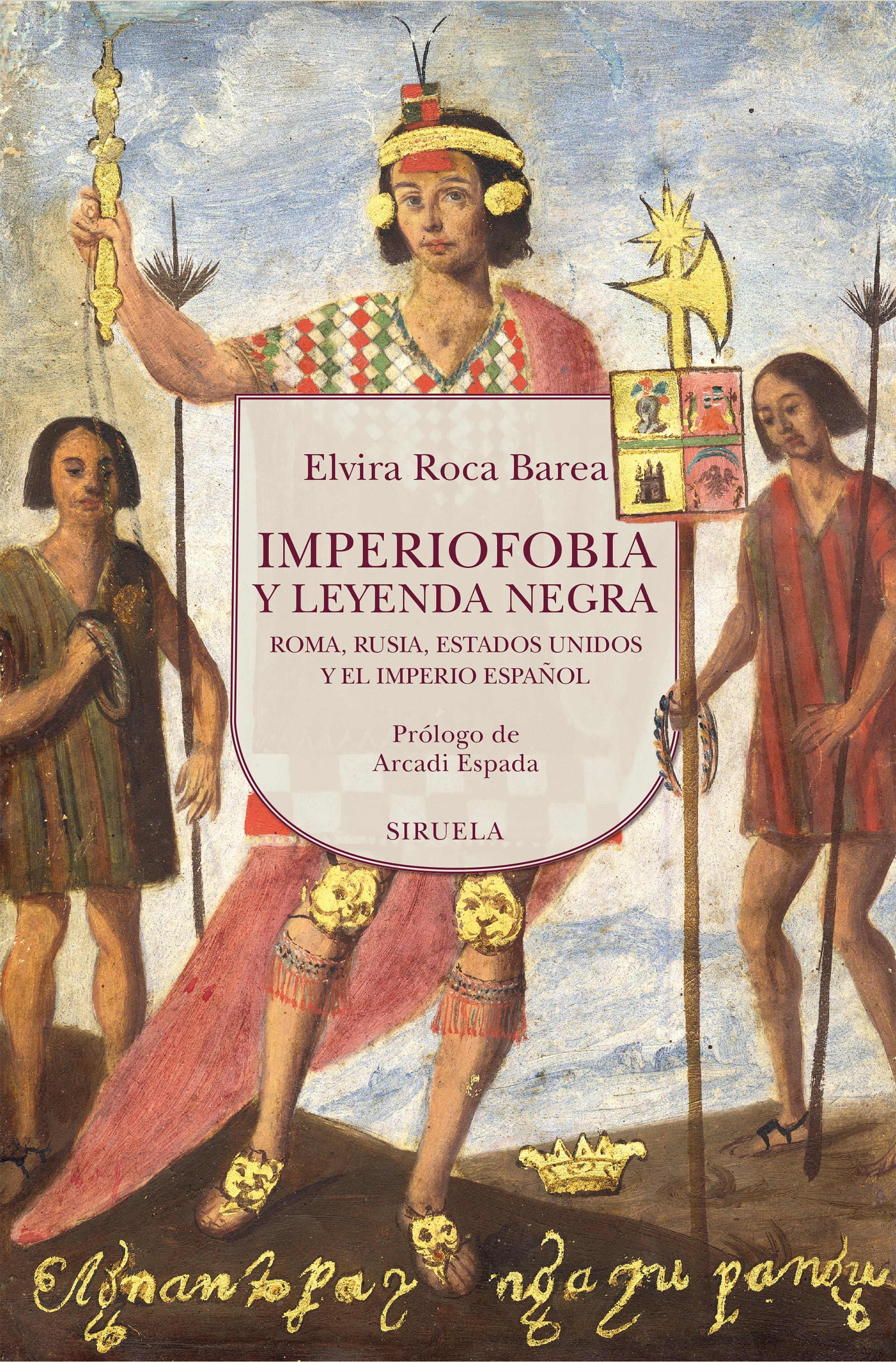
Original title: Imperiofobia y leyenda negra: Roma, Rusia, Estados Unidos y el Imperio español
Author: María Elvira Roca Barea
Original language: Spanish
Country: Spain
Original publisher: Ediciones Siruela
First published: 2016
Current edition: Revised and expanded hardback, 2nd edition, 2026; ISBN 978-84-19744-86-9
Format and length: Hardback, 616 pages, 160 × 240 mm
Current price: €39.95 from Ediciones Siruela; checked 10 September 2026
Introducing the Book
Imperiofobia y leyenda negra is not a conventional chronological history of the Spanish Empire. It is a large argumentative essay about how powerful states acquire enduring reputations for cruelty, fanaticism or moral corruption, and about the machinery by which those reputations can survive long after the conflicts that generated them.
Roca Barea begins comparatively, looking at Rome, Russia and the United States before devoting the greater part of the book to Spain. Her intended audience is the educated general reader rather than a specialist community. That choice helps explain both its extraordinary reach—Siruela now reports more than 150,000 readers—and the ferocity of the scholarly and political argument surrounding it.
The book appeared in 2016, when Spain was already revisiting questions of national identity, imperial inheritance and historical memory. It subsequently became a reference point in a wider public confrontation over whether criticism of Spain’s imperial history reflects evidence, inherited propaganda, modern political agendas, or some unstable mixture of all three.
What the Book Is About
Roca Barea’s organizing concept is imperiofobia: the tendency, in her account, for successful imperial powers to generate hostile narratives among rivals and subordinated communities. These narratives become “black legends” when accusations are repeated, systematized and culturally inherited until they acquire the status of unquestioned historical truth.
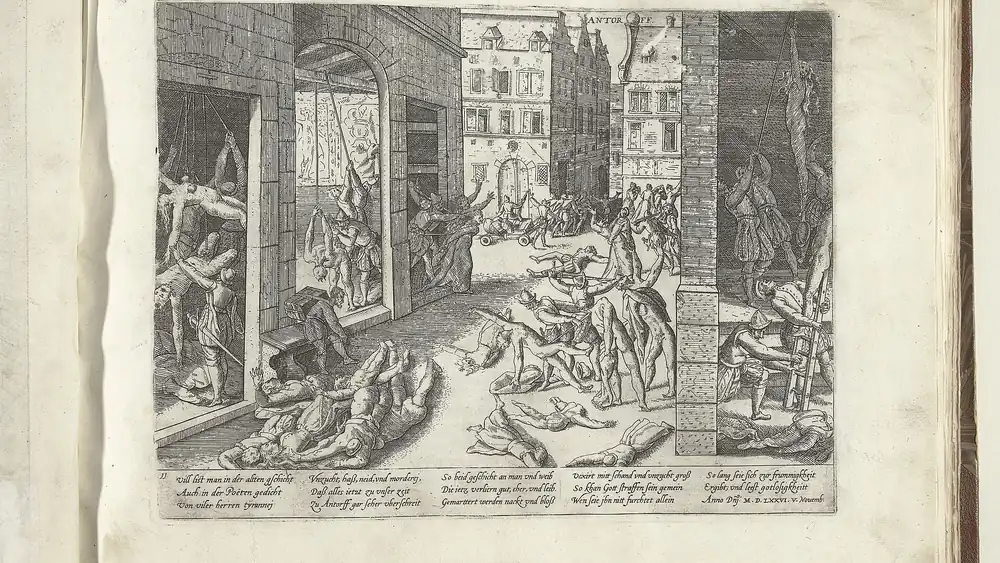
The comparative opening uses Rome, imperial Russia and the United States to suggest that this mechanism is recurrent rather than uniquely Spanish. The Spanish case then dominates the argument. Roca Barea follows anti-Spanish images through Renaissance Italy, the Protestant Reformation, the revolt of the Netherlands, England’s rivalry with Habsburg Spain, representations of the Inquisition and the conquest of the Americas, and later French Enlightenment criticism.
A particularly important step in her argument concerns internalization. A black legend, she proposes, can cease to be merely foreign propaganda when members of the criticized society adopt its categories themselves. In this reading, negative interpretations of Spain’s imperial history became embedded not only abroad but within Spanish intellectual culture.
The book’s central causal claim remains disputed. Its supporters see a forceful demonstration that political propaganda and selective memory distort accounts of imperial history. Critics argue that its broad comparisons sometimes collapse distinct historical situations, employ evidence selectively, or risk making imperial power itself appear primarily as the victim of hostile storytelling.
The book’s most consequential move is to shift attention from what empires did to how stories about empires are produced and inherited. That is also where the controversy begins: critics ask whether exposing propaganda can become a way of minimizing violence that is independently documented.
About the Author

María Elvira Roca Barea is a Spanish philologist and essayist trained in Classical and Hispanic Philology. According to Siruela, she completed a doctorate on medieval rhetoric and has worked as a translator and palaeographer while teaching Latin and Spanish language and literature in Spain and the United States.
Her scholarly background includes classical and medieval rhetoric, manuscript editing and chivalric literature. Her later public-facing books have concentrated increasingly on historical identity, empire and national self-perception. Imperiofobia made her a prominent participant in Spain’s contemporary argument about historical reputation; Fracasología, published later, extended related concerns about Spanish intellectual self-criticism.
Awards and Recognition
I Premio Los Libreros Recomiendan, Non-fiction, 2018
Spain’s independent booksellers, through the CEGAL-backed Los Libreros Recomiendan awards, selected Imperiofobia y leyenda negra for the inaugural non-fiction prize.
Medalla de Honor de San Telmo, 2018
The Real Academia de Bellas Artes de San Telmo awarded its Medal of Honour to Roca Barea with an official citation that explicitly highlighted Imperiofobia y leyenda negra. This was recognition of the author connected to the work, rather than a conventional book-prize category.
Why the Book Matters
The importance of Imperiofobia lies less in scholarly consensus—there is none—than in the scale at which it moved historiographical questions into public culture. Arguments about the Black Legend, the Inquisition, conquest and the moral vocabulary applied to empires reached an audience unusual for a long historical essay.
Its success also generated a literature of rebuttal. Philosopher José Luis Villacañas devoted Imperiofilia y el populismo nacional-católico to attacking its premises and method. Later scholarly work has treated the dispute as part of a broader Spanish “culture war” over empire and as an example of how narratives of the past operate as contemporary heritage and identity.
That afterlife makes the book historiographically significant even for readers who reject its conclusions. It illustrates how historical interpretation can leave specialist institutions, become mass-market nonfiction, and then return to academia as an object requiring explanation in its own right.
How the Book Was Received
Reception split unusually sharply. Admirers praised the readability of a heavily documented book and welcomed its challenge to inherited anti-Spanish stereotypes. Historians and philosophers who objected to it concentrated on conceptual generalization, evidentiary selection and the danger of replacing a “Black Legend” with an apologetic counter-narrative. Later scholarship has examined the controversy itself as a phenomenon of public memory.
EL PAÍS
Reviewer: Mario Vargas Llosa
Assessment: Vargas Llosa offered one of the book’s most influential endorsements in 2018, describing it as combative, profound, controversial and exceptionally readable, while accepting much of its case that ideological needs have distorted the historical image of Spain.
REVISTA DE LIBROS
Reviewer: Juan Eloy Gelabert
Assessment: Gelabert’s extensive “luces, sombras y claroscuros” treatment subjected the thesis to specialist historical scrutiny rather than either dismissing or embracing it wholesale, making the review an important early marker of the mixed academic response.
EL CULTURAL
Reviewer: Adolfo Carrasco
Assessment: Carrasco presented the book as a notable new contribution reopening an old debate about the Hispanic Monarchy and the first European colonial expansion, emphasizing its capacity to reactivate a long-running historiographical question.
EL BASILISCO
Reviewer: Luis Carlos Martín Jiménez
Assessment: This philosophical review examined the historiographical assumptions behind Roca Barea’s models, classifications, definitions and demonstrations, asking what conception of historical science, state, empire and Spain actually supports the book’s architecture.
EL PAÍS · CULTURA
Reviewer: José Luis Villacañas, discussed by Ferran Bono
Assessment: Villacañas mounted the most prominent book-length rebuttal, accusing Imperiofobia of lacking academic historical rigor and of turning an interpretation of national history into reactionary intellectual populism. The severity of his response shows how politically charged the reception had become.
EL PAÍS · BABELIA
Reviewer: Carlos Martínez Shaw
Assessment: Reviewing Villacañas’s response, historian Martínez Shaw directly challenged several propositions in Roca Barea’s book, especially its handling of the Inquisition and its concept of imperiofobia, arguing that major claims conflict with established historical research.
INTERNATIONAL JOURNAL OF HERITAGE STUDIES
Reviewer: José Manuel Barros García
Assessment: Barros García’s 2024 study treats the bestseller as a heritage narrative with a powerful myth-making structure. It notes controversy over factual veracity and argumentative coherence and asks how the book’s epic framing helps historical narratives function in contemporary political identity.
Translations into Other Languages
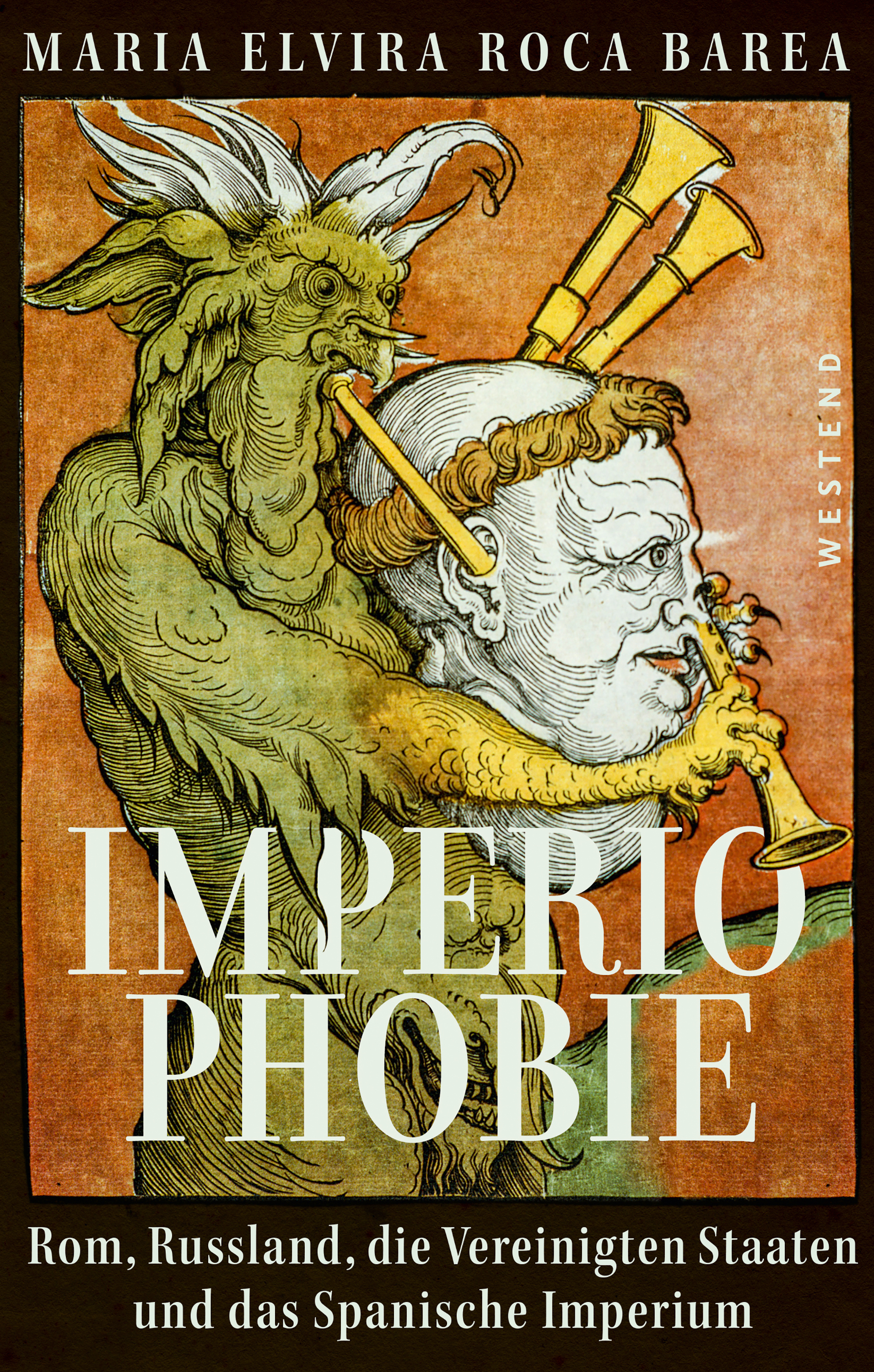
A complete German translation provides the clearest verified example of the book’s international circulation beyond Spanish.
GERMAN EDITION
Translated title: Imperiophobie: Rom, Russland, die Vereinigten Staaten und das Spanische Imperium
Translator: Christine Merz
Publisher: Westend Verlag, Germany
Published: March 2022; ISBN 978-3-86489-333-9
Status: Complete German translation; hardback, 640 pages
Why It Should Be Translated into English
The case for an Imperiofobia y leyenda negra English Translation does not require accepting Roca Barea’s argument. In fact, the controversy strengthens the case. English-language scholarship contains extensive work on the Spanish Empire, colonial violence, propaganda, the Inquisition and the Black Legend, yet Anglophone readers still encounter this major Spanish intervention largely through summaries, reactions and secondary discussion.
A full translation would allow historians, students and general readers to test the book’s comparisons and sources firsthand. It would also make available a revealing document of twenty-first-century European public history: a bestseller demonstrating how arguments about sixteenth- and seventeenth-century empire can become arguments about present-day identity.
The German edition proves that the work can travel into another major scholarly and trade market. For English publication, the strongest form would be the revised text accompanied by a substantial critical introduction and updated scholarly apparatus, enabling readers to distinguish Roca Barea’s theses from contested or contrary historiography.
An English edition would be valuable not because it could settle the Black Legend debate, but because it would finally let Anglophone readers examine one of the most influential, successful and disputed contemporary Spanish arguments about that debate in the author’s own full formulation.
English-Language Publishers That Should Consider It

Candidate 1
Yale University Press
Why it fits: Yale has a deep list in European, Atlantic and imperial history and can support a critically framed translation.
Relevant catalogue comparison: J. H. Elliott’s Empires of the Atlantic World, comparing Britain and Spain in the Americas.
Best edition type: Scholarly-trade hardback and paperback with expert introduction and notes.
Likely readership: Historians, Iberian and Atlantic studies, university courses, serious general readers.
Possible limitation: The evidentiary controversies would require particularly rigorous editorial contextualization.

Candidate 2
Princeton University Press
Why it fits: Princeton publishes comparative studies of empire, political history and the Iberian world at the boundary between specialist scholarship and broad intellectual readership.
Relevant catalogue comparison: Josep M. Fradera’s The Imperial Nation, a comparative study spanning Spanish and other imperial formations.
Best edition type: Annotated critical translation.
Likely readership: Historiography, empire studies, political thought and global-history courses.
Possible limitation: Princeton’s scholarly expectations could demand more extensive source apparatus than the Spanish trade edition provides.

Candidate 3
Verso Books
Why it fits: Verso has an international readership for contentious books about empire, ideology and historical interpretation and a substantial translation list.
Relevant catalogue comparison: Ellen Meiksins Wood’s Empire of Capital, which compares historical imperial forms with modern imperial power.
Best edition type: Serious-trade translation with a critical contextual essay.
Likely readership: Political history, critical theory, empire studies and intellectually engaged general readers.
Possible limitation: Roca Barea’s rehabilitative treatment of imperial reputations sits in tension with much of Verso’s political catalogue, making framing essential.
Sources
Bibliographic and publisher sources
- Imperiofobia y leyenda negra, Ediciones Siruela — verifies the revised 2026 hardback, ISBN, length, language and format.
- Imperiofobia y leyenda negra bibliographic record, WorldCat — verifies the 2016 Madrid publication by Siruela.
- Imperiofobia y leyenda negra, Open Library — corroborates the original 2016 edition and ISBN 978-84-16854-23-3.
Price and edition sources
- Current Siruela edition, Ediciones Siruela — lists the 2026 hardback at €39.95.
Author sources
- Elvira Roca Barea, Ediciones Siruela — verifies education, professional background and research fields.
Award sources
- I Premio Los Libreros Recomiendan, Las Librerías Recomiendan / CEGAL — verifies the 2018 non-fiction award.
- María Elvira Roca Barea, Medalla de Honor 2018 de San Telmo, Universidad de Málaga — documents recognition explicitly connected to the book.
Reviews and critical reception
- Historia y ficción, El País — Mario Vargas Llosa’s positive assessment.
- Imperiofobia: luces, sombras y claroscuros, Revista de Libros — Juan Eloy Gelabert’s specialist review.
- Review of Imperiofobia y leyenda negra, El Basilisco / Dialnet — Luis Carlos Martín Jiménez’s historiographical analysis.
- La historia de la leyenda negra, un asunto político de filias y fobias, El País — documents José Luis Villacañas’s major rebuttal.
- Contra el triunfo de la confusión, El País · Babelia — Carlos Martínez Shaw’s critical assessment.
- Heritage ambivalences: the aesthetics of fictionalised pasts in Roca Barea’s Imperiofobia, International Journal of Heritage Studies / Universitat Politècnica de València — peer-reviewed analysis of the book’s narrative and heritage function.
English-translation verification sources
- Current title and translation-rights record, Ediciones Siruela — current Spanish edition and listed translation-rights agency.
- WorldCat record, WorldCat — bibliographic verification used in the English-edition search.
- Je Suis Achbita!, International Journal of Constitutional Law, Oxford Academic — contemporary English-language discussion noting the prospect of a future English translation rather than citing an existing edition.
Other-language translation sources
- Imperiophobie, Westend Verlag — verifies the German hardback, year, ISBN, price and length.
- Imperiophobie bibliographic record, Deutsche Nationalbibliothek — verifies Christine Merz as translator and Westend as publisher.
Amazon edition sources
No exact Amazon product page for the selected 2026 Siruela hardback or the featured German hardback was sufficiently verified, so no Amazon button is displayed.
Publisher-comparison sources
- Empires of the Atlantic World, Yale University Press — catalogue comparison for comparative Spanish and British imperial history.
- History catalogue, Princeton University Press — includes Josep M. Fradera’s comparative imperial scholarship.
- Empire of Capital, Verso Books — verifies the relevant imperial-history catalogue comparison.
Image Credits
- Imperiofobia y leyenda negra, revised 2026 hardback cover: Ediciones Siruela.
- Elvira Roca Barea portrait: Ediciones Siruela author profile — photographer not credited on the source page.
- Imperiophobie, German hardback cover: Westend Verlag.
- Yale University Press logo: Wikimedia Commons file page — logo design attributed there to Paul Rand.
- Princeton University Press logo: Wikimedia Commons file page.
- Verso Books logo: Wikimedia Commons file page — file sourced from Verso’s official website branding.
Image credit: Frans Hogenberg — Source: Rijksmuseum / Wikimedia Commons — License: CC0 1.0 / Public Domain