The Master and Margarita Print vs Kindle vs Audiobook is best settled in favour of print for a serious first reading: Bulgakov’s shifting realities, translation-sensitive comedy, recurring motifs, and sudden returns to earlier scenes reward a page you can mark and revisit. The strongest companion is the official Penguin ebook using the same revised Pevear–Volokhonsky translation. Audio can be excellent, but the main caution is unusually important here: abridged recordings and unidentified digital translations can silently change the book you think you are reading.
Best Overall Format
The practical answer to The Master and Margarita Print vs Kindle vs Audiobook begins with the history of the text itself. Bulgakov wrote Мастер и Маргарита over many years between 1928 and 1940, but the novel first reached Soviet readers only posthumously, in a censored version published in Moskva in 1966–67. Fuller versions followed, while the English-language history began with two strikingly different translations in 1967: Mirra Ginsburg worked from the censored text available to her, whereas Michael Glenny’s version represented the first complete English translation. Later translators therefore inherited not only a stylistic problem but a textual one.
That history makes format unusually inseparable from edition. Print gives the reader a stable intellectual workspace: one can mark the Jerusalem chapters, recover a recurring name or phrase, compare Woland’s earlier remarks with later scenes, and consult notes without losing one’s place. The advantage is not nostalgia for paper. It is navigational control over a novel designed around echoes, reversals, interruptions, and multiple narrative planes.
Ebook comes closest to replacing print. A correctly identified modern ebook offers search, highlighting, adjustable type, and excellent portability. For readers who travel or need reflowable text, that may outweigh the loss of fixed page geography. Audiobook strengthens momentum, dialogue, pronunciation, and accessibility, but it makes distant comparison slower. A line that seems merely comic on first hearing may acquire significance two hundred pages later; on paper, finding it again takes seconds.
The best two-format strategy is therefore print plus the matching ebook. Audio should become the second format instead when listening is the reader’s principal mode of access or when a spoken version is what will keep the book alive through a commute. No format is automatically inferior, but each makes a different bargain with Bulgakov’s architecture.


Translation: Richard Pevear and Larissa Volokhonsky, newly revised for this 2016 edition. Penguin identifies it as made from the complete and unabridged Russian text. ISBN 9780143108276; 448 pages; foreword by Boris Fishman, introduction by Richard Pevear, illustrations by Christopher Conn Askew.
Why choose it: It is the safest one-volume default because textual provenance is unusually clear and the edition includes a note on the text, further reading, and notes. Pevear and Volokhonsky are not a universal consensus choice—some readers prefer Glenny’s velocity or Hugh Aplin’s approach—but the revised text and documentation make this edition particularly defensible for a first serious reading.
The current Vintage Classics paperback, ISBN 9780099540946, presents Michael Glenny’s translation with an introduction by Will Self. Penguin’s current listing records 448 pages and a 2024 publication date for this printing.
Why choose it: Glenny remains a persuasive reading translation because its English moves briskly and gives the novel considerable narrative energy. The trade-off is historical: later translators have had access to fuller textual and scholarly histories. Choose Glenny when momentum matters more than making the newest textual basis your primary concern.
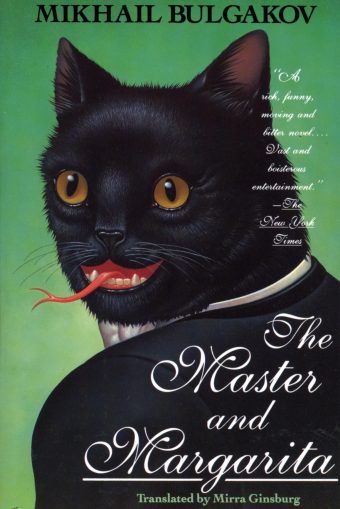
Grove continues to publish Mirra Ginsburg’s pioneering English translation under ISBN 9780802130112. It belongs to the earliest English reception of Bulgakov and remains important for readers interested in how the novel first entered Anglophone culture.
Main limitation: Ginsburg translated from the censored Moskva text available in 1967. Comparative translation scholarship notes that substantial passages had been removed from that Russian publication. That does not make Ginsburg uninteresting; it does make this a poor sole edition for a first reader who wants the complete novel.
Kindle and Ebook
Best for: readers who want the revised Pevear–Volokhonsky text in a searchable, portable file.
Why this over alternatives: ISBN 9781524704124 identifies the 2016 Penguin Publishing Group ebook, and Penguin describes it as the newly revised translation made from the complete and unabridged Russian text. Its table of contents includes the introduction, note on the text, further reading, and notes, so this is not merely a bare transcription.
Best for: readers who want a storefront listing that explicitly exposes file-level metadata rather than leaving the textual identity obscure.
Why it is useful: Kobo identifies Penguin Publishing Group, the June 2016 release, book ID 9781524704124, English language, and EPUB 3 download with Adobe DRM. That makes it easier to confirm that the file corresponds to the recommended Penguin edition rather than to an anonymous reissue.
Audiobook
Recorded Books · George Guidall
Naxos · Abridged · Use caution
Best for: listeners who want the most clearly documented complete recording among the options compared here.
Why this over alternatives: Naxos explicitly labels catalogue NAX93512 unabridged, identifies Julian Rhind-Tutt as reader, supplies a full track list, and records a November 2009 release. Library metadata gives a running time of 16:52:34, while specialist audio metadata identifies Michael Karpelson as translator. That combination of completeness and textual identification makes it the safest audio recommendation.
Best for: listeners who specifically want the Diana Burgin and Katherine Tiernan O’Connor translation in audio and prefer a contemporary commercial listing.
Apple Books identifies George Guidall as narrator, Recorded Books as publisher, an unabridged 17-hour-4-minute recording, and a March 2026 release. It is a serious alternative, but current storefronts have not been perfectly uniform about release metadata. The recording itself should therefore be selected by narrator and translation, not merely by date or storefront prominence.
Naxos also publishes a Julian Rhind-Tutt recording under catalogue NA693612 and barcode 9789626349366. The crucial word is abridged. Because the narrator and title overlap with the full recording, it is particularly easy to select the wrong one.
Who should choose it: only a listener consciously wanting a shortened adaptation. It should not be treated as the audiobook equivalent of reading Bulgakov’s complete novel.
Narrator preference cannot be established from catalogue metadata. The evidence above can tell us whether a recording is complete, which translation it uses, who reads it, and how long it runs; it cannot prove that one voice will suit every listener. Compare official samples before paying for an audiobook whenever the platform permits it.
Podcast and Companion Audio
Marina Warner and Adam Thirlwell’s July 2025 discussion places Bulgakov beside James Hogg and examines how fantastic fiction uses devilry, fanaticism, political pressure, and comic horror to test reality. It is a better companion than a generic “great books” chat because its interpretive question is specific.
When to use it: preferably after finishing, or at least after the novel’s major narrative strands have become familiar. Critical framing can be illuminating, but hearing an argument too early can narrow a first reading that benefits from uncertainty.
The BBC Programme Index documents a 1992 Radio 4 dramatization by Brian Wright, directed by David Hitchinson, with Daniel Massey as Woland, Michael Maloney as the Master, and Geraldine James as Margarita. It is valuable as a record of how the novel can be compressed and reimagined for radio.
Main trade-off: dramatization is adaptation. Dialogue, sequencing, and emphasis are necessarily reshaped, so use it after reading rather than as evidence that you have heard the complete book.
Free, Public-Domain, and Library Sources
Libby identifies the Penguin Publishing Group ebook by ISBN 9781524704124 and repeats the publisher’s description of the newly revised Pevear–Volokhonsky translation made from the complete Russian text. If a participating library holds it, this is the best free first-reading route because cost is reduced without surrendering the recommended textual basis.
OverDrive’s record is unusually helpful because it explicitly labels the recording unabridged, gives ISBN 9789626349359, identifies Julian Rhind-Tutt and Naxos AudioBooks, and links users toward library availability. That specificity protects against accidentally borrowing the separate abridged Naxos version.
WorldCat records the 2016 Penguin print edition under OCLC 910412975 and ISBN 9780143108276. Its value is bibliographic precision: instead of asking a library for “The Master and Margarita,” you can search for the exact translation and edition recommended here.
Historical scans and bibliographic records can still be valuable to researchers, but “free online” should not be confused with “best first-reading text.” The early English translations have their own copyright histories, and modern translations remain protected. Where legal status is uncertain, borrow an identified contemporary edition instead of downloading an unattributed file.
Critical, Student, and Collector Options
Best for: students and independent readers who want explanatory material within the reading edition itself.
Alma’s current ISBN 9781847497826 is described by the publisher as a newly revised and updated anniversary edition. Its 448 pages include what Alma calls an extensive critical apparatus, extra reading material, photographs, and notes. That integrated apparatus makes it a stronger classroom tool than editions whose main virtue is simply a famous translation.
Best for: serious study after, or alongside, the novel.
Edited by Laura Weeks and published in the AATSEEL Critical Companions series, this volume brings together scholarship, primary-source material, correspondence, diary material, and discussion of translation. It is not a substitute edition of Bulgakov’s novel; that separation is precisely its strength. The reader can keep interpretation beside the primary text rather than allowing an introduction to govern the first encounter.
Penguin’s 2023 hardback, ISBN 9780241552674, uses the Pevear–Volokhonsky translation and belongs to the Penguin Clothbound Classics series. The publisher records 432 pages and a substantial 554-gram hardback format; the series is associated with Coralie Bickford-Smith’s cloth-and-foil design approach.
Why choose it: for material pleasure, gifting, and a durable shelf copy. Why not choose it automatically: cloth, foil, and weight add object value rather than textual superiority. A first-time reader primarily concerned with the documented 2016 revision still has a stronger bibliographic case for the Deluxe paperback.
Final Recommendation
The final answer to The Master and Margarita Print vs Kindle vs Audiobook is not simply “paper is better.” Print wins because this particular novel rewards control over the text: rereading a phrase, checking where a name first appeared, comparing translations, consulting notes, and moving between its Moscow and Jerusalem narratives. The official ebook can replace print more successfully than audio can for most readers, provided the translation is identified. Audio becomes the right primary format when accessibility or sustained listening matters more than rapid textual retrieval.
The strongest value is therefore not the cheapest file but the cheapest identified good text: a library copy of the revised Penguin edition. If you intend to own one copy, buy print. If you intend to own two formats, add the matching ebook. Add audio when it solves a real problem—access, momentum, or listening time—rather than assuming that an audiobook is simply the novel with the pages removed.
FAQ
What does The Master and Margarita Print vs Kindle vs Audiobook comparison come down to?
Print provides the best combination of navigation, annotation, translation awareness, and rereading. Kindle or another official ebook is the strongest portable substitute. Audiobook is excellent for continuity and accessibility but less efficient when you need to recover a line, compare scenes, or inspect notes.
Which translation should a beginner choose?
The revised Pevear–Volokhonsky translation in Penguin’s 2016 Deluxe Edition is the safest general recommendation because Penguin explicitly identifies it as revised from the complete and unabridged Russian text. This is not a claim that every reader will prefer its style. Glenny remains attractive for speed, while Aplin is especially useful when notes and study material matter.
Is the audiobook suitable as the main format?
Yes, especially for readers whose primary access mode is audio. For close study, however, a searchable ebook or print copy is worth keeping nearby because Bulgakov’s recurring names, allusions, narrative echoes, and translation-dependent wording are easier to retrieve visually.
How do I avoid buying the abridged audiobook?
Check the catalogue identity, not only the narrator. The recommended Naxos unabridged recording is catalogue NAX93512, associated with barcode 9789626349359. Naxos also has an abridged Julian Rhind-Tutt version, NA693612 / 9789626349366. The shared narrator makes that distinction especially important.
Is there a good free public-domain English edition?
There is no single modern English translation that can safely be treated as a universally public-domain recommendation. Copyright status depends on the translation and jurisdiction. The more reliable zero-cost route is to borrow an identified modern ebook, audiobook, or print edition from a library.
Which edition is best for notes and study?
Hugh Aplin’s current Alma Classics edition is the strongest self-contained student option considered here because the publisher explicitly includes extensive critical apparatus, photographs, extra reading, and notes. Readers doing advanced research should add Laura Weeks’s Northwestern critical companion.
What should I verify before buying any edition?
Check the translator first, then publisher, ISBN or catalogue number, completeness, notes, and format. For audio, verify narrator, translation basis, publisher, and whether the recording is explicitly unabridged. For ebooks, avoid files whose product page makes the translator impossible to identify.
Related BookInLight Reading Guides
Penguin Classics: A Complete Guide to the Series — useful for understanding what the Penguin Classics imprint does well, and why the imprint name alone never eliminates the need to check a specific translation and apparatus.
The Red Spine and the Moving Canon: What Vintage Classics Is For — a useful companion to the Michael Glenny option, explaining Vintage Classics as a reading-focused trade library rather than a uniform scholarly-edition programme.
The Portable Inferno: Reading Dostoevsky’s Demons on Screen — a closely related guide to the same problem of Russian-classic translation identity, digital portability, notes, and the risks of unidentified ebook files.
This article was prepared by BookInLight’s humanities and scholarly editorial team. Bibliographic review, source verification, translation and edition comparison, audiobook metadata checking, library-source checking, and factual review were conducted against publisher, institutional, library, academic, and specialist records available at the verification date. Readers are invited to report factual corrections, overlooked editions, changed availability, interpretive suggestions, or other constructive feedback that would improve the guide.
Editorial art direction, visual composition, source-strip design, cover selection, and image presentation are credited to the BookInLight Art Department. Individual book covers, logos, trademarks, and third-party visual assets remain the property of their respective publishers, designers, artists, platforms, companies, and rights holders; their editorial presentation here does not transfer ownership to BookInLight.
Complete republication, reproduction, translation, adaptation, or reuse of this article requires prior written authorization from BookInLight.
Sources and Further Reading
Primary Text, Publication History, and Print Editions
Penguin Random House, The Master and Margarita, ISBN 9780143108276 — used for the 2016 Deluxe Edition’s translators, revision status, complete-text statement, publication details, page count, and contributors.
Penguin / Vintage Classics, ISBN 9780099540946 — used for Michael Glenny translation metadata, Will Self’s introduction, current printing details, and the publisher’s publication-history summary.
Grove Atlantic, Mirra Ginsburg translation — used to verify the continuing Grove edition, translator attribution, imprint, and ISBN 9780802130112.
Alma Books, Hugh Aplin translation, ISBN 9781847497826 — used for the revised anniversary-edition status and documented critical apparatus, photographs, extra reading, and notes.
Penguin Clothbound Classics, ISBN 9780241552674 — used for the 2023 hardback’s translation, series, publication date, page count, dimensions, and weight.
Ebook and Library Editions
Penguin Random House Secondary Education, ebook ISBN 9781524704124 — used to verify the ebook’s revised Pevear–Volokhonsky text and contents, including notes and further reading.
Rakuten Kobo, Penguin ebook 9781524704124 — used for EPUB 3, Adobe DRM, release date, publisher, and file-level metadata.
Libby, Penguin Classics ebook — used to verify library-discovery metadata for ISBN 9781524704124.
WorldCat, OCLC 910412975 — used to verify the exact 2016 Penguin print record and support library discovery.
Audiobook Recordings
Naxos AudioBooks, NAX93512 — used for unabridged status, Julian Rhind-Tutt, catalogue identity, barcode, release date, and track list.
OverDrive, Naxos unabridged audiobook — used for library availability, narrator, publisher, unabridged status, and edition identity.
Apple Books, Recorded Books / George Guidall recording — used for narrator, Recorded Books publisher identity, 2026 release listing, and 17-hour-4-minute runtime.
Naxos AudioBooks, NA693612 — used to distinguish the separate abridged Julian Rhind-Tutt recording from the recommended unabridged edition.
Critical and Companion Sources
London Review of Books, “Close Readings: James Hogg and Mikhail Bulgakov” — used for the recommended companion-audio discussion by Marina Warner and Adam Thirlwell, dated 2 July 2025.
BBC Programme Index, The Master and Margarita radio dramatization — used for the 1992 Radio 4 production record, cast, dramatist, and director.
Northwestern University Press, Master and Margarita: A Critical Companion — used for editor, series, publication identity, and description of the scholarly companion’s contents.
Translation Scholarship
Natalia Kaloh Vid, comparative study of English translations, Cadernos de Tradução — used for the history of the censored Moskva text, Ginsburg’s textual basis, and comparison of Glenny, Pevear–Volokhonsky, and Aplin.
Michael Wood, “Sympathy for the Devil,” London Review of Books — consulted for contemporary critical discussion of competing English translations and the problem of translating Bulgakov’s tonal instability.
Image Credits
1. Cover — opening Print comparison row: The Master and Margarita, Penguin Classics 50th-Anniversary Deluxe Edition, Richard Pevear and Larissa Volokhonsky translation, 2016, ISBN 9780143108276. Cover asset served by Penguin Random House. Authoritative source page.
2. Cover — opening Print comparison row: The Master and Margarita, Vintage Classics, translated by Michael Glenny, current ISBN 9780099540946. Cover asset served by Penguin UK / Vintage Classics. Authoritative source page.
3. Cover — opening Print comparison row: The Master and Margarita, Grove Press paperback, translated by Mirra Ginsburg, ISBN 9780802130112. Cover asset served by Grove Atlantic. Authoritative source page.
4. Cover — detailed Print profile: repeated exact asset for the Penguin Classics 50th-Anniversary Deluxe Edition, 2016, ISBN 9780143108276. Penguin Random House / Penguin Classics. Authoritative source page.
5. Cover — detailed Print profile: repeated exact asset for the Vintage Classics Michael Glenny edition, ISBN 9780099540946. Penguin UK / Vintage Classics. Authoritative source page.
6. Cover — detailed Print profile: repeated exact asset for the Grove Press Mirra Ginsburg edition, ISBN 9780802130112. Grove Atlantic / Grove Press. Authoritative source page.
Image credit: Unknown photographer, 1913 — Source: Wikimedia Commons — License: Public Domain