Walter Benjamin’s “The Work of Art” essay is easiest to find in Illuminations, where Harry Zohn translates it as “The Work of Art in the Age of Mechanical Reproduction.” Readers doing scholarly work should also consult the fuller second version in The Work of Art in the Age of Its Technological Reproducibility, and Other Writings on Media. The titles differ because the essay survives in several authorial versions and in distinct English translations.
Where Walter Benjamin’s “Work of Art” Essay First Appeared
The German title is “Das Kunstwerk im Zeitalter seiner technischen Reproduzierbarkeit.” Benjamin began the essay in Paris in 1935 and repeatedly revised it through the late 1930s. It is therefore misleading to speak of a single immutable text: editors commonly distinguish four versions, with meaningful differences in structure, emphasis, and political argument.
The first public appearance was not in German. Pierre Klossowski’s French translation, “L’œuvre d’art à l’époque de sa reproduction mécanisée,” appeared in 1936 in Zeitschrift für Sozialforschung, volume 5, number 1, pages 40–68. The journal’s editors intervened in the text, and the published French version does not simply reproduce every feature of Benjamin’s fuller German second version. A concise account of this publication history is available through the Yale Modernism Lab.
A later German version was published posthumously in the two-volume Schriften in 1955. The English text that established the now-familiar phrase “mechanical reproduction” appeared in Illuminations, edited by Hannah Arendt and translated by Harry Zohn. The 1968 Harcourt, Brace & World record identifies the first American English collection; Schocken’s paperback followed in 1969. Pagination changes across printings, so citations should always name the edition actually used.
Which English Collections Include “The Work of Art”?
Illuminations remains the most recognizable home of the essay. Its advantages are historical importance, Hannah Arendt’s substantial introduction, and a compact selection of Benjamin’s major essays. The current Bodley Head edition confirms the Zohn translation, 2015 publication date, and ISBN 9781847923868.

Broad reader’s edition
One-Way Street and Other Writings
Translator: J. A. Underwood
Introducer: Amit Chaudhuri
Publisher and year: Penguin Classics, 2009
ISBN: 9780141189475
Main advantage: a generous, readable selection at modest length
Best for: readers who want the essay beside “One-Way Street,” “Unpacking My Library,” photography, translation, violence, surrealism, and Kafka

Compact edition
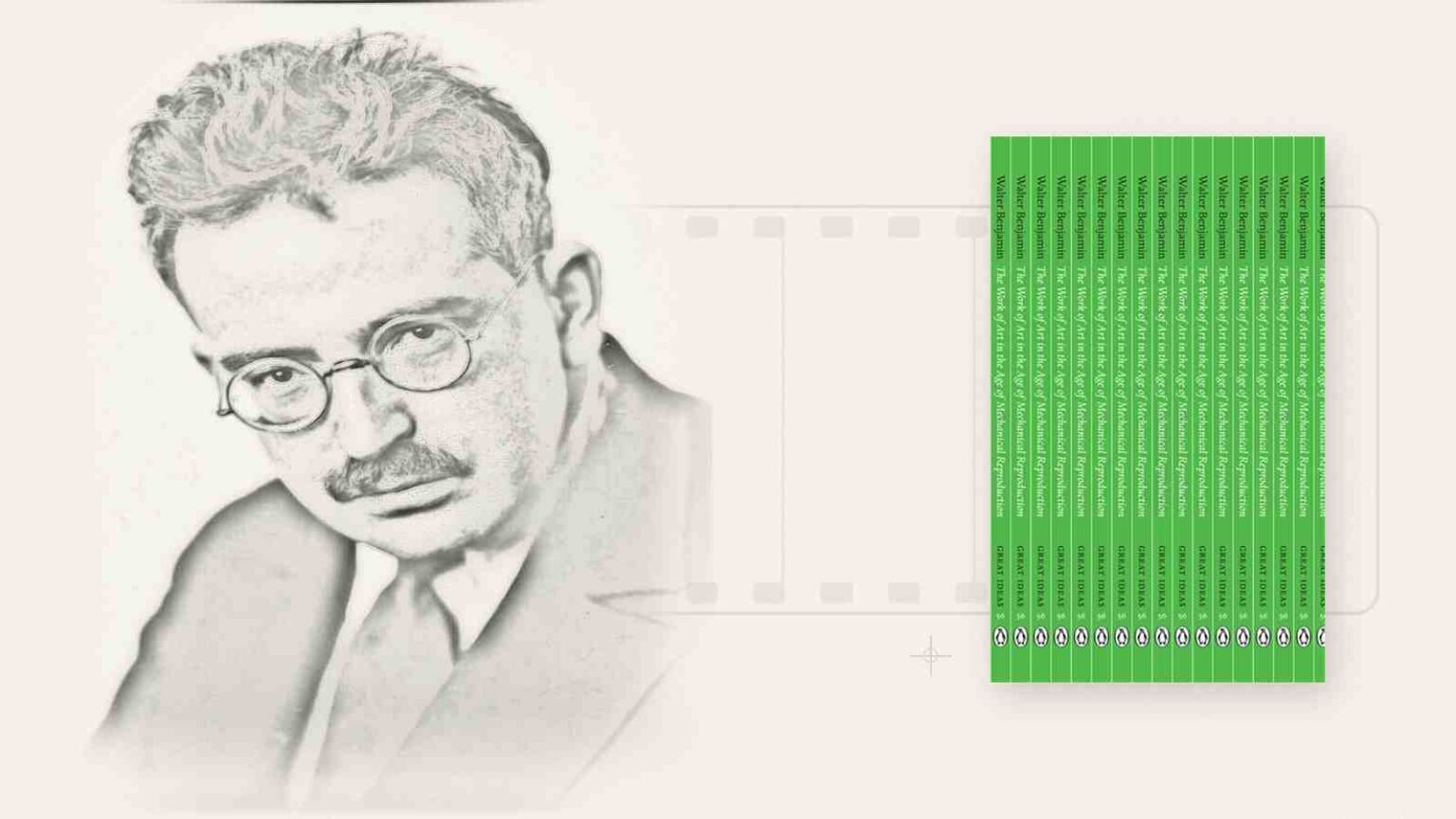
The Work of Art in the Age of Mechanical Reproduction
Translator: J. A. Underwood
Series: Penguin Great Ideas
Publisher and year: Penguin, 2008
ISBN: 9780141036199
Main advantage: the shortest practical route to the target essay
Best for: a portable first encounter rather than full scholarly apparatus
For research, the strongest single-volume choice is the 2008 Belknap Press media collection, edited by Michael W. Jennings, Brigid Doherty, and Thomas Y. Levin. It prints Edmund Jephcott’s translation of the “Second Version” on pages 19–55, supplies editorial framing, and situates the essay among Benjamin’s writings on film, radio, photography, literature, and painting. Walter Benjamin: Selected Writings, Volume 3: 1935–1938, edited by Howard Eiland and Michael W. Jennings, is the more comprehensive chronological option; the 2006 Belknap paperback carries ISBN 9780674019812 and prints the second version on pages 101–133.
| Edition | Text or translation | Main advantage | Best for |
|---|---|---|---|
| Media Writings (2008) | Jephcott; second version | Focused media context | Scholarship and citation |
| Selected Writings 3 | Jephcott; second version | Chronological breadth | Advanced Benjamin study |
| Illuminations | Zohn; familiar later version | Historical influence | First reading and reception |
| One-Way Street | Underwood; familiar title | Readable broad selection | General readers |
“Mechanical Reproduction” or “Technological Reproducibility”?
The title of Walter Benjamin’s “The Work of Art” essay differs between editions for substantive reasons, not cosmetic ones. Zohn’s “mechanical reproduction” became canonical in English and remains the phrase most often encountered in syllabi, criticism, and older citations. It directs attention toward the machinery that copies or disseminates art.
Jephcott’s “technological reproducibility” renders technische Reproduzierbarkeit more closely as a condition or capacity: the work exists in an age when technical means make reproduction structurally possible. The wording also signals that the Harvard text is a different authorial version, not merely a stylistic modernization of Zohn. The 2008 volume’s JSTOR record and table of contents explicitly identify the second version and its pages.
Underwood retains “mechanical reproduction,” giving general readers a smooth contemporary translation while preserving the title by which the essay is best known. For quotation, use the wording in the edition being cited; do not silently combine Zohn’s title with Jephcott’s page numbers.
How to Read the Essay Legally Online or Through a Library
Legal access to Walter Benjamin’s “The Work of Art” essay requires some care: no universally accessible, publisher-authorized free English full text was located for the principal modern translations. University course PDFs circulate, but their presence on an institutional server does not by itself establish permission for unrestricted republication. The dependable routes are institutional access, controlled digital lending, previews, ebooks, and library holdings.
Institutional access
JSTOR
The 2008 Harvard collection is available as a book record with chapter-level access where a university or library subscription permits it. The essay is identified as the second version, pages 19–55.
Borrow
Internet Archive controlled lending
The exact 2008 media-writings collection has an access-restricted borrowing record. Availability depends on account status and lending conditions; it is not an unrestricted public-domain download.
Limited preview
Google Books
The Harvard collection has a bibliographic preview. The visible pages vary by region and session, so it should not be described as guaranteed access to the complete essay.
For local print or ebook access, use the exact title, translator, and ISBN in a library catalogue. WorldCat is most useful for locating Illuminations and the Harvard volumes, while the Google Books record helps confirm the 2008 collection before requesting it through interlibrary loan.
Which Edition Should You Buy or Cite?
The most practical edition of Walter Benjamin’s “The Work of Art” essay for a first reading is Illuminations. It gives the historically influential Zohn translation and places the essay beside works that shaped Benjamin’s English-language reputation. Readers who want a larger but still approachable Penguin selection should choose One-Way Street and Other Writings; the compact Great Ideas volume is preferable only when portability and a low-cost entry point matter more than context.
For university citation, media studies, film theory, or research on the essay’s version history, the 2008 Harvard collection is stronger. It identifies the second version, supplies edition-specific pagination, and gathers the relevant media writings in one place. Researchers examining Benjamin’s intellectual development across 1935–1938 may prefer Selected Writings, Volume 3.
Recommended edition
Most readers: Illuminations. Scholarly work: The Work of Art in the Age of Its Technological Reproducibility, and Other Writings on Media. Cite the translator, edition, and page range you actually consulted.
Frequently Asked Questions
What book contains “The Work of Art in the Age of Mechanical Reproduction”?
The best-known English location is Walter Benjamin’s Illuminations, edited by Hannah Arendt and translated by Harry Zohn. The essay also appears in Penguin selections translated by J. A. Underwood and, under the title “The Work of Art in the Age of Its Technological Reproducibility,” in Harvard editions translated by Edmund Jephcott.
Why are there two English titles?
They reflect both translation choices and different textual versions. “Mechanical reproduction” is Harry Zohn’s historically influential wording. “Technological reproducibility,” used by Edmund Jephcott, is closer to the German phrase technische Reproduzierbarkeit and identifies the second version printed in the principal Harvard scholarly collections.
Which translation is best for academic citation?
For current scholarship, Jephcott’s second-version translation in the 2008 Harvard media collection is often the most useful because the version, editors, and pages are explicit. Zohn remains indispensable when discussing the essay’s older English reception. The correct choice depends on the argument, and the citation must identify the translator and edition.
Is there a legal free PDF of the complete essay?
No unrestricted, publisher-authorized free English edition of the principal modern translations was verified here. JSTOR may provide institutional access, Internet Archive offers controlled borrowing for the 2008 collection, and Google Books supplies a limited preview. Public web copies should not be assumed lawful or complete merely because they are easy to download.
Was the essay originally published in German?
No. Although Benjamin wrote the essay in German, its first public publication was Pierre Klossowski’s French translation in the 1936 Zeitschrift für Sozialforschung. A later German version appeared posthumously in Schriften in 1955. This unusual history is one reason readers encounter competing dates, titles, and textual forms.
Sources
Publication and version history
- “The Work of Art in the Age of Mechanical Reproduction”,
Yale Modernism Lab — supports the 1936 French publication and the later 1955 German publication. - The Work of Art in the Age of Its Technological Reproducibility, and Other Writings on Media,
JSTOR / Harvard University Press — verifies the four-version framework, editors, translators, 2008 publication, and second-version pagination.
English editions and contents
- Illuminations,
Penguin / The Bodley Head — verifies the 2015 edition, ISBN, length, and listed contents. - One-Way Street and Other Writings,
Penguin Classics — verifies translator, introducer, date, ISBN, and selection. - The Work of Art in the Age of Mechanical Reproduction,
Penguin Great Ideas — verifies the 2008 compact edition, ISBN, and length. - Walter Benjamin: Selected Writings, Volume 3: 1935–1938,
Belknap Press of Harvard University Press — verifies the 2006 paperback edition and ISBN. - Illuminations,
WorldCat — verifies the 1968 Harcourt, Brace & World English collection record.
Legal access
- The Work of Art in the Age of Its Technological Reproducibility,
Internet Archive — controlled-lending record for the 2008 collection. - The Work of Art in the Age of Its Technological Reproducibility,
Google Books — edition record and limited preview.
Image Credits
- Illuminations, The Bodley Head 2015 cover:
Penguin Books, exact edition page. - One-Way Street and Other Writings, Penguin Classics 2009 cover:
Penguin Books, exact edition page. - The Work of Art in the Age of Mechanical Reproduction, Penguin Great Ideas 2008 cover:
Penguin Books, exact edition page.