Bookinlight · Untranslated Books
José Luis Villacañas’s 2014 book is a 1,500-year anatomy of ruling classes, constitutional breakdown and the contested making of Spain. No complete Historia del poder político en España English translation—or officially announced edition—was located as of 4 August 2026. That absence matters because this is not another procession of monarchs and governments: it asks how elites acquired power, why they feared sharing it, and when the governed became a political people able to authorize it.
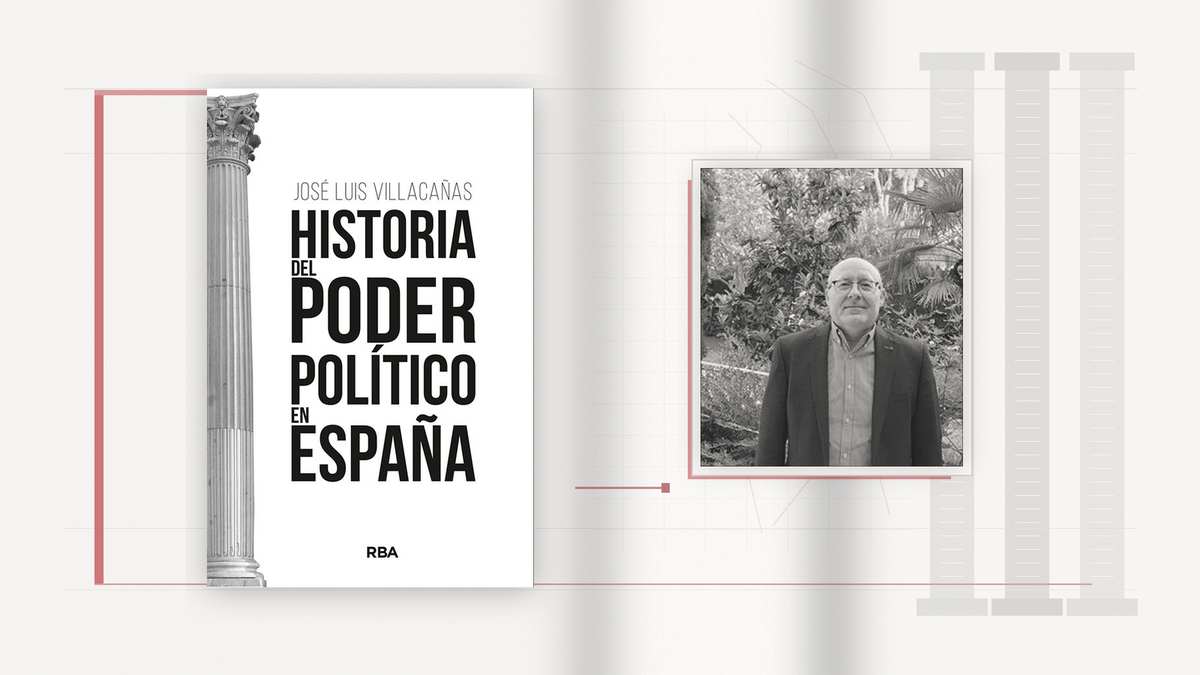
Book at a Glance
Book at a glance
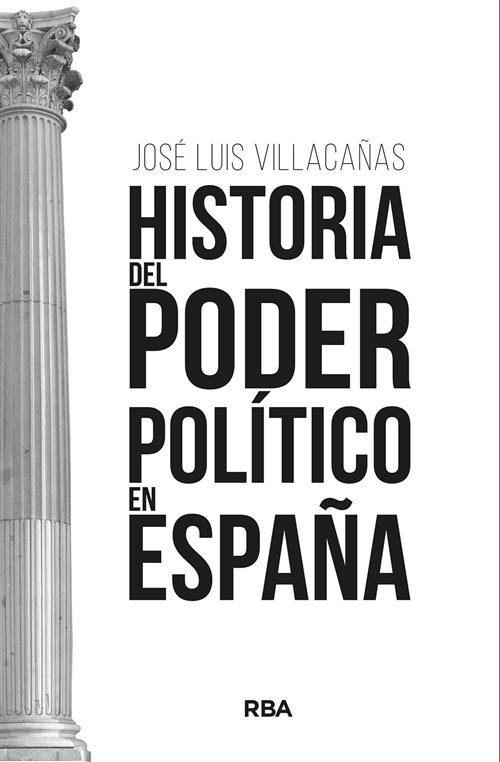
Original title: Historia del poder político en España
Author: José Luis Villacañas Berlanga
Original language: Spanish
Country: Spain
Original publisher: RBA
First published: 2014; ISBN 978-84-9056-132-4
Current edition: RBA No Ficción, 2023; ISBN 978-84-1132-326-0
Format and length: Paperback, 624 pages; 14 × 21.3 cm
Current price: €23.90 from RBA, checked 4 August 2026
Introducing the Book
Historia del poder político en España begins from a deceptively simple proposition: political history is not the same thing as the history of political power. Institutions, constitutions and dynasties matter, but only as temporary settlements within a field of competing forces. Villacañas therefore follows the changing relations between those who command and those who obey across the Iberian Peninsula, from the disintegration of Roman authority and the Visigothic kingdom to the constitutional order established in 1978.
Published by RBA in 2014 and reissued in 2023, the book joined Villacañas’s wider project of bringing political philosophy into Spanish intellectual and institutional history. Its audience is broader than specialists in Spain: historians of state formation, readers of Machiavelli, Schmitt and Gramsci, political theorists of hegemony, and anyone interested in why representative institutions sometimes fail to become genuinely public.
What the Book Is About
The book’s three large movements organize roughly fifteen centuries. The first, extending from about 450 to 1350, studies the fragmented “Hispanic spaces” produced by Visigothic rule, al-Andalus, Christian kingdoms, frontier warfare and rival religious-political legitimacies. The second, from 1350 to 1808, follows civil wars, dynastic concentration, the Catholic Monarchy, the Inquisition, Habsburg composite rule and Bourbon centralization. The third turns to the constitutional era from 1808 to 1978: liberal revolution, oligarchic state-building, republican experiments, dictatorship, Francoism and democratic constitution-making.
Across those periods, Villacañas traces a recurrent pathology. Ruling groups repeatedly behaved as owners of public power rather than servants of a public order. Fear of rivals and distrust of popular participation encouraged narrow coalitions, exclusion and coercive integration. The result was not an absence of state power but a weak capacity to build durable consent. His account treats the Inquisition as a political technology as well as a religious institution, interprets nineteenth-century liberalism through the Gramscian idea of “passive revolution,” and presents 1978 as the first Spanish constitution directly ratified by the people.
Villacañas’s central intervention is to replace a history of completed sovereignty with a history of powers struggling to become sovereign—and of the social exclusions built into each settlement.
The conclusion is deliberately unsettled. Democratic authorization in 1978 did not erase older habits of elite closure; it created a more legitimate framework whose survival still depends on inclusive institutions and a workable hegemonic bloc. Spain appears not as an eternal nation gradually discovering itself, but as a late and contested political construction. Yet that framing also produces the book’s sharpest controversy: whether its long narrative still projects the borders and dilemmas of present-day Spain too far backward.
About the Author

José Luis Villacañas Berlanga, born in Úbeda in 1955, is a Spanish philosopher and historian of political ideas. He earned his doctorate in philosophy at the University of Valencia and became professor of the history of philosophy at the Complutense University of Madrid.
His more than forty books move between German philosophy, political theology, republicanism and the long formation of Spanish political culture. He has also directed journals including Debats, Res Publica and Anales del Seminario de Historia de la Filosofía. That combination—conceptual history, institutional analysis and intervention in present debate—explains the unusual scale and argumentative pressure of this book.
Rather than treating Spain as a settled object, Villacañas asks how it became thinkable and governable. Historia del poder político en España is therefore a central synthesis of concerns that recur throughout his work: legitimacy, empire, elite formation, national plurality and the unfinished work of democratizing the state.
Why the Book Matters
The book matters because it changes the unit of analysis. Spain’s past is usually divided among medieval kingdoms, imperial monarchy, liberal nation-state, dictatorship and democracy. Villacañas instead asks what forms of elite cooperation, coercion and public authorization connected—or failed to connect—those regimes. The approach makes constitutional texts, religious institutions, territorial bargains and civil wars parts of one argument about the social organization of power.
It also forces a productive disagreement. Admirers see a rare synthesis capable of making political theory answerable to fifteen centuries of history. Critics question its peninsular focus, its relative neglect of the monarchy’s American and Asian worlds, and moments when the narrative seems to make the modern Spanish state the destination of earlier plural histories. Those objections do not diminish the book’s importance; they identify exactly where its account of Spain becomes a contestable theory of nation-building.
How the Book Was Received
The accessible reception is concentrated in Spanish philosophical and historical journals rather than mass-market reviewing. Critics broadly recognized the book’s erudition, scale and conceptual ambition. Their disagreements concern the territorial frame: how far a history centered on the peninsula can explain a composite imperial monarchy, and whether the narrative pluralizes Spain or ultimately makes Spanish unity appear historically necessary.
REVISTA DE LIBROS
Reviewer: José M. Portillo Valdés, 17 November 2014
Assessment: Portillo praises the distinction between political history and a history of power, and the book’s command of territorial conflict, Catholic monarchy and liberal weakness. His major reservation is that “Spain” is insufficiently distinguished from the earlier composite monarchy, whose American and Asian dimensions remain too peripheral.
PASAJES
Reviewer: Antonio De Murcia Conesa, 2014
Assessment: In a substantial essay titled “Filosofar con la historia,” De Murcia treats the book as philosophy conducted through historical narration: an attempt to test inherited accounts of Spain against changing structures of command, legitimacy and political imagination rather than merely arrange events chronologically.
RES PUBLICA
Reviewer: César Ruiz Sanjuán, 23 November 2015
Assessment: Ruiz Sanjuán offers the fullest systematic exposition of the book’s thesis. He emphasizes its history of ruling classes, the recurring fear of socially opening power, and the transformation of officeholders into “public lords.” The review is largely sympathetic to the book’s explanation of Spain as a late nation.
REVISTA DE HISPANISMO FILOSÓFICO
Reviewer: Rodolfo Gutiérrez Simón, 2015
Assessment: Gutiérrez Simón places the volume within philosophical Hispanism, recognizing it as an unusually broad synthesis of Spanish history through concepts of power and legitimacy. The review underscores the work’s interpretive ambition rather than reducing it to a conventional national survey.
ESPERIT
Reviewer: Frederic J. Porta and Josep Asensio, 1 December 2024
Assessment: The Catalan essay calls the book extraordinarily solid and influential, while mounting its sharpest territorial critique. It challenges the use of “Marca Hispánica,” the marginalization of extra-peninsular Catalan power, and a supposedly linear path toward the Spanish state. It nevertheless praises Villacañas’s analyses of Habsburg power and elite strategy.
Why It Should Be Translated into English
A complete Historia del poder político en España English translation would give Anglophone readers something currently difficult to obtain: a Spanish theorist’s internally argued, longue-durée account of state formation that crosses medieval, imperial, liberal and democratic history without treating 1936 or Francoism as the only explanatory center.
The book could deepen English-language debates about composite monarchy, passive revolution, constitutional legitimacy, center-periphery conflict and elite capture. It would also make disagreement possible on better terms. Portillo’s imperial objection and the Catalan critique from Esperit reveal a work that should not be imported as a definitive national story, but as a major proposition to be tested against Atlantic, Catalan, Basque and comparative European histories.
The strongest English edition would be complete, newly introduced and lightly annotated: a political-theory book with historical reach, not a neutral textbook on Spain.
Its natural readership includes Iberian studies, European history, political theory, constitutional studies and courses on nationalism or state formation. Its lasting value lies in the combination of scale and argument: even where readers reject Villacañas’s destination, they must confront the mechanisms by which he believes political powers became—or failed to become—a legitimate public order.
English-Language Publishers That Should Consider It

Candidate 1
Verso Books · UK / US
Why it fits: Verso was built around translations of European political and social theory and maintains a strong world-history list.
Relevant catalogue comparison: Perry Anderson’s The New Old World, another panoramic argument about European political structures.
Best edition type: Complete trade paperback and ebook with a translator’s introduction and concise notes.
Likely readership: Political theory, historical sociology, radical history and contemporary Spain.
Possible limitation: The 624-page scale and dense Spanish institutional references would require careful framing for crossover readers.

Candidate 2
Yale University Press · US / UK
Why it fits: Yale combines serious European history with accessible books on Spain, empire, monarchy and political imagination.
Relevant catalogue comparison: Henry Kamen’s Imagining Spain: Historical Myth and National Identity and Yale’s extensive J. H. Elliott list show an established audience for ambitious Spanish history.
Best edition type: Complete scholarly-trade hardback, followed by paperback, with chronology, maps and contextual introduction.
Likely readership: European historians, Hispanists, university courses and serious general readers.
Possible limitation: The translation cost and conceptual density may require institutional support and a specialist editor.

Candidate 3
Princeton University Press · US / UK
Why it fits: Princeton publishes theory-driven political history and important translated syntheses that cross history, sociology and political thought.
Relevant catalogue comparison: Abdallah Laroui’s The History of the Maghrib, an internally argued regional history shaped by social and political theory.
Best edition type: Complete academic-crossover edition with a new preface, translator’s note and index revised for English readers.
Likely readership: Comparative state formation, nationalism, historiography and political philosophy.
Possible limitation: Princeton’s list is less specifically Iberian than Yale’s, so the comparative contribution would need to lead the positioning.
Sources
Bibliographic and publisher sources
- Historia del poder político en España, RBA Libros — current edition, synopsis, ISBN, format, dimensions, pages and publication date.
- Historia del poder político en España, Dialnet — verifies the 2014 first edition, original ISBN, language and publisher.
- Book preview and contents, Digital Books — supports the three-part chronology and chapter structure.
Price and edition sources
- RBA current paperback listing, RBA Libros — official €23.90 retail price checked 4 August 2026.
- Current-edition retail record, Marcial Pons — independent confirmation of ISBN and edition availability.
Author sources
- José Luis Villacañas Berlanga, RBA Libros — biography, career and official portrait.
- Villacañas Berlanga, José Luis, Biblioteca Nacional de España — authority record, birth information, occupations and editions.
Reviews and critical reception
- “La otra historia”, Revista de Libros — Portillo’s praise and imperial-territorial critique.
- “Filosofar con la historia”, Pasajes — De Murcia’s extended philosophical review.
- Review by César Ruiz Sanjuán, Res Publica — detailed reconstruction of the thesis and ruling-class argument.
- Review by Rodolfo Gutiérrez Simón, Revista de Hispanismo Filosófico — philosophical-historiographic reception.
- “Villacañas i el poder polític a Espanya”, Esperit — later Catalan assessment and territorial critique.
English-translation verification sources
- José Luis Villacañas publication record, Complutense University of Madrid — records the work under its Spanish title.
- Spanish digital edition, Google Play Books — confirms the available digital text is Spanish.
- RBA, BNE, UCM and major library/bookseller catalogue searches were checked for alternate titles, collected editions and forthcoming announcements; no complete English edition was located by 4 August 2026.
Amazon edition sources
- RBA 2023 paperback product page, Amazon Spain — exact current-edition listing, ASIN 8411323269.
Publisher-comparison sources
- The New Old World, Verso Books — comparable panoramic European political history.
- Imagining Spain: Historical Myth and National Identity, Yale University Press — evidence of Yale’s serious-trade list on Spanish history and national identity.
- The History of the Maghrib, Princeton University Press — comparable translated, theory-informed regional synthesis.
Image Credits
- Main cover: 2023 RBA paperback of Historia del poder político en España, RBA Libros.
- Author portrait: José Luis Villacañas Berlanga, RBA Libros author page; photographer not identified on the source page.
- Verso Books logo: Wikimedia Commons file page, derived from Verso’s official site header.
- Yale University Press logo: Wikimedia Commons file page.
- Princeton University Press logo: Wikimedia Commons file page.