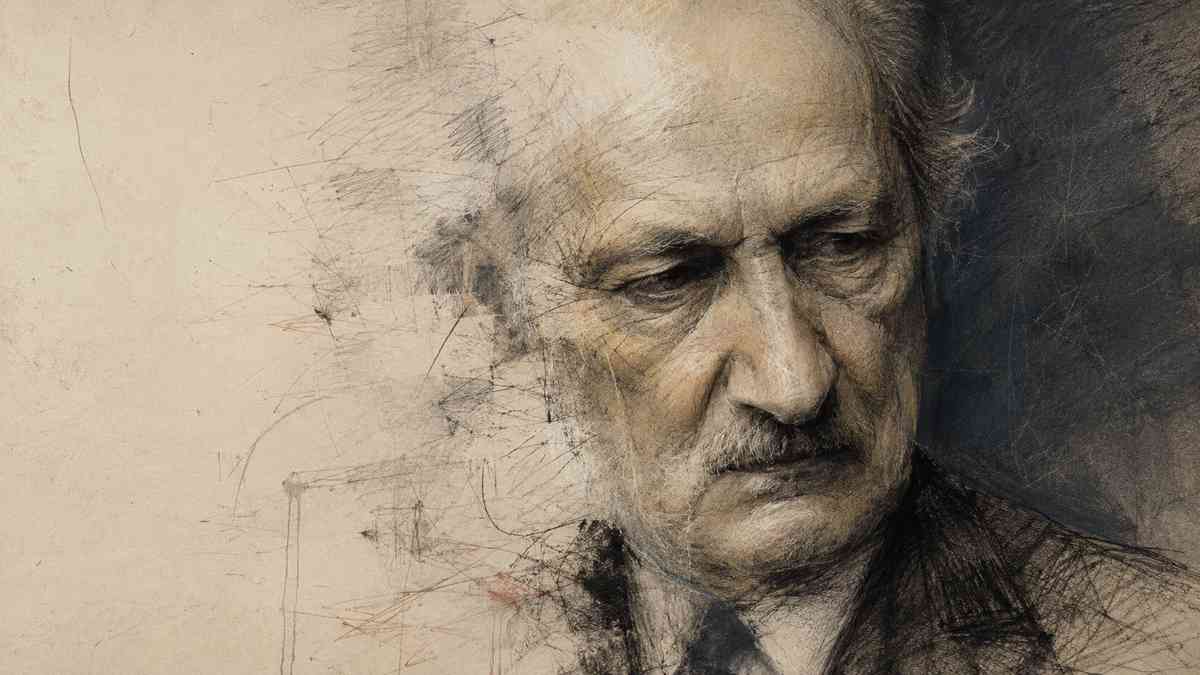
What to Read Before Being and Time is a smaller problem than Heidegger’s reputation suggests. The real preparation is not a march through the whole history of philosophy, but a disciplined grasp of phenomenology, the subject–object model he rejects, and the temporal structure of human existence. Read a few things selectively, learn the key distinctions, and begin the book before commentary hardens its questions into answers.

Target text
Being and Time: The standard English reference edition
Author: Martin Heidegger
Translators: John Macquarrie and Edward Robinson; foreword by Taylor Carman
Edition: Harper Perennial Modern Thought paperback, 2008; ISBN 9780061575594
Role: Target text
Why this edition: It retains the translation on which much Anglophone scholarship and classroom citation practice was built, while Carman’s foreword gives a lucid account of the project and its unfinished architecture.
Main limitation: Its English can be ungainly, and several famous choices—“ready-to-hand,” “present-at-hand,” “Being-towards-death”—are interpretive decisions rather than transparent equivalents. Keep a German glossary or the Stambaugh–Schmidt translation nearby when a term begins to carry too much argumentative weight.
The Short Answer
You do not need to read an entire philosopher before Being and Time. Learn Heidegger’s distinction between Being and beings, understand the Cartesian subject–object picture he opposes, acquire a basic sense of phenomenological description, and review Kant’s treatment of time. Husserl, Aristotle, Dilthey, and Kierkegaard deepen the reading, but none must be mastered first.
Any answer to What to Read Before Being and Time should reject the idea of a licensing examination. Readers often postpone Heidegger until they have finished Plato, Aristotle, Augustine, Descartes, Kant, Hegel, Kierkegaard, Nietzsche, and Husserl. That sequence may produce an education; it is not a sensible entrance requirement. Heidegger’s examples—using a hammer, following a sign, feeling anxiety, anticipating death—begin from ordinary involvement rather than prior system-building.
A serious first reading therefore needs a compact conceptual kit and a willingness to reread. The Harper Macquarrie–Robinson edition is still the safest common reference point, though no English translation removes the need to track German terms. Begin with Heidegger soon; consult predecessors at points where his argument actually demands them.
Why Being and Time Is Difficult
The book’s first difficulty is architectural. Published in 1927 as Sein und Zeit, it announced a project much larger than the text we possess. Only the first two divisions of Part One appeared. The projected Division Three, which would have moved from the temporality of Dasein to time as the horizon of the question of Being, never arrived; neither did Part Two’s planned “destruction” of decisive episodes in ontology. The reader is thus asked to judge an argument whose announced destination lies beyond the published road. The Stanford Encyclopedia’s account of Heidegger is especially useful here because it distinguishes the completed existential analytic from the larger unfinished program.
Its second difficulty is lexical. Heidegger does not merely attach private definitions to familiar words. He exploits German compounds, prefixes, etymologies, and ordinary idioms to make philosophical distinctions audible. Dasein, Befindlichkeit, Bewandtnis, Entschlossenheit, and Geworfenheit cannot be replaced by one stable English synonym without loss. The two major translations consequently create partly different English Heideggers. Macquarrie and Robinson give “state-of-mind,” “involvement,” and “resoluteness”; Joan Stambaugh, revised by Dennis J. Schmidt, often prefers “attunement,” “relevance,” and a plainer syntax. Neither is neutral.
A third difficulty is methodological. Heidegger does not first offer a theory and then apply it. He conducts phenomenological descriptions whose concepts emerge through repeated correction. A hammer is not introduced as a quaint example of pragmatism. It reveals that equipment is encountered within a referential whole—workshop, task, material, user, customer—before it becomes an isolated object bearing properties. When equipment breaks, its normally unobtrusive availability becomes conspicuous. The analysis is designed to dislodge the assumption that perception of present objects is the primary form of access to a world.
Finally, the book changes register. Division One analyzes everyday being-in-the-world, equipment, others, discourse, mood, understanding, and the anonymous “they.” Division Two reinterprets those structures through anxiety, death, conscience, resoluteness, temporality, and historicity. Treating the first as social phenomenology and the second as existential self-help misses the claim that care is intelligible through ecstatic temporality. The strain belongs to the book’s movement; preparation cannot eliminate it.
The Dependency Map at a Glance What to Read Before Being and Time
Essential Before Reading
Essential before reading No complete predecessor text belongs at this level. What is essential is a set of distinctions. First, “Being” is not another entity, the highest entity, a cosmic substance, or a synonym for existence in the ordinary sense. Heidegger asks about the intelligibility by which entities can show up as entities of determinate kinds. The difference between Being and beings is later called the ontological difference. The Introduction develops it; a reader need not arrive already fluent, but must resist translating the question into “What things exist?”
Second, understand the distinction between ontic and ontological. An ontic claim concerns entities and facts about them: this person is anxious; this tool is broken. An ontological analysis asks what structure makes anxiety, equipment, personhood, or usability possible as modes of being. Heidegger’s descriptions move back and forth between ordinary phenomena and the structures they disclose. Confusing the levels makes the book seem to generalize recklessly from anecdotes.
Third, learn the target of the critique. Descartes is important less as a book to finish than as a model to recognize: a thinking subject confronts an extended world whose reality and properties must be established. Heidegger argues that such detached cognition is derivative. We already find ourselves practically involved with meaningful surroundings, other people, language, tasks, and possibilities. Read the first two Meditations if desired, but a careful account of res cogitans, res extensa, representation, and doubt is enough.
Fourth, adopt phenomenological patience. “To the things themselves” does not mean naive realism or introspective reporting. It means suspending inherited explanations long enough to describe how a phenomenon gives itself. Heidegger revises Husserl by making the being of the questioner—historical, embodied, situated, practical—part of the inquiry. The indispensable preparation is therefore procedural: follow the description before deciding which familiar category it resembles.
One focused evening can cover these points. Read Heidegger’s Introduction, §§1–8, slowly; make a two-column note distinguishing Being from beings and ontological from ontic claims; then test the subject–object model against an ordinary activity such as cooking, repairing, or navigating. That preparation is more valuable than a hurried survey of ten canonical philosophers.
Strongly Recommended Background
Strongly recommended Husserl supplies the nearest methodological background, but the minimum useful dose is small. Learn intentionality: consciousness is consciousness of something, structured by ways in which objects are meant and given. Learn the phenomenological reduction as a disciplined shift from taking the world for granted to examining the conditions of its appearing. The five lectures collected as The Idea of Phenomenology are a better preparatory choice than all of Logical Investigations or Ideas I. Heidegger inherits the demand for rigorous description while rejecting the tendency to begin from transcendental consciousness.
Kant matters because Heidegger organizes his question around Being and time. For Kant, time is a pure form of sensible intuition, a condition under which appearances can be given. Heidegger radicalizes the issue: temporality is the ecstatic unity through which Dasein projects possibilities, inherits a past, and makes present a world. Read the Transcendental Aesthetic before beginning; a concise account of Kant’s views on space and time can clarify the context. Leave schematism and imagination for the scholarly route.

Strongly recommended
Critique of Pure Reason: The temporal problem Heidegger radicalizes
Author: Immanuel Kant
Translators and editors: Paul Guyer and Allen W. Wood
Edition: Cambridge Edition of the Works of Immanuel Kant, paperback, 1998; ISBN 9780521657297
Dependency level: Strongly recommended
Why it matters: Kant’s account of time as a condition of appearance gives Heidegger a decisive point of departure, while the transcendental project clarifies why Dasein is analyzed as the site where the meaning of Being becomes accessible.
How much to read: The B Preface and Introduction for orientation, then the Transcendental Aesthetic. Do not postpone Heidegger until you have read the entire Critique.
A shorter work by Heidegger himself can prepare the reader more efficiently than another large system. The 1925 Marburg lectures later published as History of the Concept of Time: Prolegomena rehearse the phenomenological starting point and develop being-in-the-world, worldhood, care, death, and conscience in a classroom register. They are not simpler in every paragraph, but they expose transitions that the compressed 1927 book often leaves implicit.

Strongly recommended
History of the Concept of Time: Heidegger’s more expansive rehearsal
Author: Martin Heidegger
Translator: Theodore Kisiel
Edition: Indiana University Press paperback, 2009; ISBN 9780253207173
Dependency level: Strongly recommended
Why it matters: The official Indiana University Press description identifies these summer 1925 lectures as an early version of Being and Time. They make the route from phenomenology to the analytic of Dasein unusually visible.
How much to read: Read the introductory methodological lectures and the analyses of worldhood and care. The whole volume is useful for advanced preparation, not mandatory for a first attempt.
Helpful but Optional Context
Helpful background Aristotle is the deepest historical interlocutor in the published and projected architecture, yet he is a poor gatekeeper. Heidegger inherits from him the question of being, categories of entity, substance, movement, actuality and possibility, and the analysis of time as connected with motion and counted through “nows.” For a first reading, Physics IV.10–14 is enough. It lets one see why Heidegger regards the ordinary sequence of present moments as derivative from more primordial temporality.

Helpful background
Physics: The inherited model of time as counted motion
Author: Aristotle
Translator: Robin Waterfield; introduction and notes by David Bostock
Edition: Oxford World’s Classics paperback, 2008; ISBN 9780199540280
Dependency level: Helpful background
Why it matters: The analysis of time in Oxford World’s Classics Physics supplies the classical position Heidegger seeks to derive from Dasein’s more original temporality.
How much to read: Book IV, chapters 10–14. Broader Aristotelian metaphysics belongs in the full scholarly route.
Dilthey clarifies another strand. His effort to ground the human sciences in lived experience, understanding, and historical life helps explain why Heidegger treats interpretation not as a technique added to consciousness but as a structure of existence. A specialist can follow this through Introduction to the Human Sciences and the later writings on the formation of the historical world. A first-time reader needs only the idea that human existence understands itself from inherited meanings and possibilities; it is never a timeless spectator.
Kierkegaard is useful for anxiety, possibility, death, repetition, and the singular individual’s relation to inherited public life. Yet Heidegger transforms these themes into fundamental ontology and strips them of much of their explicitly Christian framework. Reading The Concept of Anxiety or The Sickness unto Death first can make Division Two feel familiar, but it can also encourage a moral or theological interpretation before Heidegger’s ontological claim has become clear.
Augustine, Paul, and early Christian accounts of care, fallenness, conscience, and the decisive moment form an important background to Heidegger’s early lectures. They belong at Relevant only for specialists before a first reading. They become illuminating after the reader has encountered Heidegger’s own analyses and can distinguish documented inheritance from retrospective resemblance.
The immediate context matters in moderation: German university philosophy after the First World War, neo-Kantianism, Husserl’s movement, and disputes over historicism. Heidegger joined the Nazi Party in 1933, six years after publication; later material exposes antisemitic commitments that responsible scholarship must confront. That history is indispensable to ethical assessment, but it is not a prior cause explaining every analysis in the 1927 text.
Readers who want broader orientation may use BookInLight’s guide to five major books on phenomenology to place Heidegger between Husserl and later embodied and social phenomenologies. The point is placement, not another required syllabus.
Concepts to Learn First
Being, beings, and the ontological difference
A being is anything that is: a stone, number, tool, animal, institution, person. Being concerns the modes of intelligibility through which such entities are encountered. Heidegger does not posit a hidden object called Being behind visible objects. His question is formal and phenomenological: what does it mean for something to be, and why has the tradition repeatedly interpreted Being through presence? Preliminary clarity is necessary; mastery is impossible before the book performs the distinction.
Dasein
Dasein literally suggests “being-there,” but Heidegger uses it for the entity each of us is insofar as its own Being is an issue for it. It is not a Cartesian mind, a biological species definition, or a heroic authentic individual. Dasein is already in a world, with others, affected by moods, interpreting possibilities. Leave the word untranslated and learn it through its structures.
Being-in-the-world and worldhood
The hyphens matter. Being-in-the-world names a unitary phenomenon, not a subject located inside a spatial container. “World” is the meaningful context within which equipment, tasks, roles, and possibilities refer to one another. Worldhood is the ontological structure of that context. A frequent misreading turns Heidegger into an environmental philosopher of physical surroundings; the analysis is more basic, though later ecological readings can build upon it.
Readiness-to-hand and presence-at-hand
Macquarrie and Robinson’s “ready-to-hand” names the mode in which equipment is unobtrusively available within practice. “Present-at-hand” names entities encountered as occurrent objects with properties. These are not two physical classes: the same hammer can shift modes when it breaks, is inspected, or becomes an object of theory. Heidegger’s controversial claim is that detached observation is founded upon a more primordial practical disclosure, not that science is false.
Care, thrownness, projection, and falling
Care names the structural unity of Dasein: already delivered into conditions it did not choose, ahead of itself in possibilities, and absorbed among entities and public interpretations. Thrownness is facticity, not fatalism. Projection is the opening of possibilities, not a private mental plan. Falling is ordinary absorption in “the they,” not a doctrine of original sin. Learn the components beforehand; let §41 show why Heidegger unifies them.
Authenticity, anxiety, and being-toward-death
Authenticity does not mean expressing a unique inner personality or escaping society. It is a modified appropriation of one’s finite possibilities rather than unreflective surrender to public averageness. Anxiety discloses the instability of familiar significance; death individualizes as the nonrelational possibility that cannot be outstripped. These analyses are existential-ontological, not prescriptions for dramatic living. Avoid importing Sartre’s vocabulary too early.
Temporality and historicity
Primordial temporality is not clock time and not a sequence of inner experiences. Dasein comes toward itself from possibilities, has already been thrown, and makes entities present. Heidegger calls these dimensions “ecstases” because existence stands out into future, having-been, and present. Historicity follows: Dasein inherits possibilities and repeats them selectively. A preliminary sketch helps, but this is the concept most readers must learn through Division Two itself.
Disclosedness and truth
Truth is not abolished as correspondence. Heidegger argues that propositional correctness presupposes a more basic disclosedness: a world must already be open, and entities accessible, before a statement can match them. This depends on mood, understanding, interpretation, and discourse. The claim is about conditions of assertion, not permission to treat every interpretation as equally true.
The Texts You Do Not Need to Read First
You do not need all of Aristotle, Kant, or Husserl. That famous triad accurately names central intellectual inheritances, but it does not define a practical admissions test. Read Aristotle’s chapters on time, Kant’s Transcendental Aesthetic, and a concise Husserlian account of intentionality and reduction. Full systems can follow once Heidegger gives you a reason to return.
Hegel’s Phenomenology of Spirit is not a prerequisite. The shared word “phenomenology” conceals different projects, and Heidegger’s immediate methodological debt runs through Husserl. Nietzsche is indispensable for Heidegger’s later history of metaphysics, not for following the published argument of Being and Time. Plato’s Sophist supplies the epigraph and the ancient perplexity about Being, but its full dialectic need not precede the book.
Nor should later descendants be smuggled backward. Sartre’s Being and Nothingness recasts Heidegger through consciousness, freedom, bad faith, and relations with others. Gadamer develops philosophical hermeneutics from Heidegger’s account of understanding and historicity. Derrida, Levinas, Foucault, and deconstruction reveal consequences and limits. Reading them first can make Heidegger appear to be merely an early version of positions he did not formulate.
Specialist commentaries can also wait. Theodore Kisiel’s reconstruction of the book’s genesis is magnificent intellectual history, but its manuscripts and lecture-course chronology burden a first encounter. Dense line-by-line studies may settle interpretive disputes before the reader has felt why a passage is disputable. A biography is ethically important for the larger Heidegger question, especially after the publication of the Black Notebooks, yet biography cannot substitute for analysis of the text’s arguments.
Finally, you do not need to read every earlier Heidegger lecture chronologically. The route from religious phenomenology through Aristotle, factical life, and ontology is illuminating to scholars. For beginners it can obscure how deliberately Being and Time reorganizes those materials. Chronology is evidence about genesis, not automatically the best pedagogy.
The Full Scholarly Preparation Route
- Establish the ancient question. Read selected passages from Plato’s Sophist on the perplexity of Being, Aristotle’s Metaphysics on being said in many ways, and Physics IV on time. The aim is not mastery of Greek ontology but recognition of why presence, substance, and the “now” become Heidegger’s historical problem.
- Reconstruct the modern target. Read Descartes’s first six Meditations, then Kant’s Transcendental Aesthetic, Schematism chapter, and selected portions of the Transcendental Deduction. Track the transformation from substance ontology to transcendental conditions, especially the status of time, synthesis, and objectivity.
- Learn phenomenology from Husserl. Begin with The Idea of Phenomenology, then selected investigations on intentionality and categorial intuition, followed by the methodological sections of Ideas I. Ask what Heidegger preserves—description, givenness, formal indication—and what he displaces: transcendental consciousness as the privileged starting point.
- Add historical life and interpretation. Study Dilthey on lived experience and the human sciences, then a concise account of Schleiermacher’s hermeneutics. BookInLight’s reading map of seven books on hermeneutics can help distinguish the textual tradition Heidegger inherits from the ontological hermeneutics he inaugurates.
- Read the early Heidegger selectively. Use the 1925 History of the Concept of Time, the 1924 lecture “The Concept of Time,” and scholarship on the genesis of the project. Theodore Kisiel’s The Genesis of Heidegger’s Being and Time belongs here, where textual development has become an actual research question.
- Enter the 1927 text with competing translations. Use Macquarrie–Robinson as the citation base, Stambaugh–Schmidt as a check, and the German text for pivotal terms. Keep interpretation provisional until Division Two has retroactively reorganized the analyses of Division One.
Recommended Companions While Reading
A companion is useful, but it should answer a difficulty you have already encountered. Three books serve different readers. Michael Inwood gives the shortest orientation to Heidegger’s career and vocabulary. William Blattner offers the best compact guide to both published divisions, with particularly strong treatment of temporality. Hubert Dreyfus remains the most vivid guide to Division One’s practical world, though his influential interpretation should not become the text’s invisible substitute.

Recommended companion
Heidegger: A Very Short Introduction: Fast orientation without a miniature commentary
Author: Michael Inwood
Edition: Oxford University Press, second edition paperback, 2019; ISBN 9780198828662
Dependency level: Helpful background
Why it matters: The official Oxford second-edition page confirms a compact introduction designed to place Heidegger’s difficult vocabulary within the arc of his thought.
How much to read: Read the opening chapters before or alongside Heidegger’s Introduction; return to later chapters only after finishing Being and Time.

Recommended companion
Heidegger’s “Being and Time”: A Reader’s Guide: The best single-volume route through both divisions
Author: William Blattner
Edition: Bloomsbury Academic, second edition paperback, 2023; ISBN 9781350328099
Dependency level: Helpful background
Why it matters: Bloomsbury’s second-edition description notes its new treatment of temporality, historicality, and Heidegger’s relation to National Socialism. It is concise without stopping at Division One.
How much to read: Follow it section by section after completing each Heideggerian unit. Its strength is argumentative reconstruction; its interpretations remain positions to assess, not settled paraphrases.

Recommended companion
Being-in-the-World: The classic practical reading of Division One
Author: Hubert L. Dreyfus
Edition: The MIT Press / Bradford Books paperback, 1990; ISBN 9780262540568
Dependency level: Better read afterward
Why it matters: The MIT Press edition gives a philosophically forceful account of coping, equipment, skill, and worldhood, with examples that made Division One accessible to generations of readers.
How much to read: Start after Heidegger §§15–18. It covers Division One only and advances a distinctive interpretation influenced by debates in philosophy of mind; pair it with Blattner when temporality becomes central.
Suggested Reading Sequence
- Prepare the distinctions. Learn the ontic/ontological difference, the Cartesian model, intentionality, and Kant’s basic account of time. Stop there.
- Read the Introduction, §§1–8. On the second pass, outline the announced project, including the parts Heidegger never published. Mark every shift between the question of Dasein and the question of Being.
- Read §§9–18 without a line-by-line guide. Work through being-in-the-world, worldhood, equipment, breakdown, signs, and spatiality. Reconstruct one example from your own practical life; do not translate it immediately into “embodied cognition” or pragmatism.
- Pause after §§25–27 and §§35–38. Consult a companion on being-with, the “they,” idle talk, curiosity, ambiguity, and falling. Ask whether the analysis is descriptive, normative, or inseparably both.
- Complete Division One through §44. At this point read Dreyfus selectively and compare his practical interpretation with Heidegger’s account of mood, discourse, care, and truth.
- Read Division Two in larger units. Treat death, conscience, resoluteness, temporality, and historicity as a cumulative argument. Blattner is most useful here. Return to Kant and Aristotle only when the text’s contrast with ordinary time becomes explicit.
- After completion, reread §§65–69 and the Introduction. The opening question looks different once temporality has appeared. Only then move to later Heidegger, Gadamer, Sartre, Levinas, Derrida, Arendt, or the political and ethical controversies surrounding the broader corpus.
What to Read Afterward
Better read afterward Begin with Heidegger’s own later reorientation. “What Is Metaphysics?,” “On the Essence of Truth,” the “Letter on Humanism,” and the lecture “Time and Being” show which problems persist after the unfinished 1927 project and how the vocabulary changes. They should not be used to fill the missing Division Three as though the later “turn” merely completed an old outline.
Gadamer’s Truth and Method develops understanding, tradition, and historical situatedness. Sartre’s Being and Nothingness recasts the field around consciousness, freedom, bad faith, and the look. Their divergence shows how quickly Heidegger’s structures became resources for projects that changed their terms.
Levinas’s Totality and Infinity and later writings challenge the priority of ontology from the ethical relation to the other. Derrida’s essays on Heidegger examine presence, difference, spirit, and the instability of inherited metaphysical language. Arendt’s The Human Condition redirects questions of world, plurality, action, and mortality toward political life. None is an explanatory appendix; each exposes a decision in Heidegger by refusing it or carrying it elsewhere.
The political reckoning also belongs afterward, though not as a moral ornament. Read documentary scholarship on Heidegger’s rectorate, National Socialism, and antisemitism beside arguments about historicity, destiny, people, and rootedness. Specialists disagree about the degree and location of contamination. That disagreement should sharpen textual attention, not license exoneration or the claim that a party card interprets every page.
Finally, return to the predecessors. After Being and Time, Aristotle’s account of time, Kant’s schematism, Husserl’s intentionality, Dilthey’s historical understanding, and Kierkegaard’s anxiety become legible as precise sites of transformation. Intellectual ancestry is best studied when one can name what the descendant changed.
Sources and Further Reading
Primary Texts and Editions
- Martin Heidegger, Being and Time, trans. John Macquarrie and Edward Robinson, foreword Taylor Carman, Harper Perennial Modern Thought, 2008. Used for the displayed target edition, translation practice, and the book’s published structure.
- Martin Heidegger, Sein und Zeit, Max Niemeyer, 1927 and later editions. Used for German terminology, section numbering, and the distinction between a work and its English translations.
- Martin Heidegger, History of the Concept of Time: Prolegomena, trans. Theodore Kisiel, Indiana University Press, 2009 paperback. Used for the 1925 rehearsal of phenomenology, worldhood, care, death, and conscience.
- Edmund Husserl, The Idea of Phenomenology, trans. Lee Hardy, Kluwer Academic Publishers, 1999. Used for intentionality, reduction, and the proposed short route into Husserlian method.
- Immanuel Kant, Critique of Pure Reason, trans. and ed. Paul Guyer and Allen W. Wood, Cambridge University Press, 1998. Used for time as a form of intuition and the recommended selective reading route.
- Aristotle, Physics, trans. Robin Waterfield, introduction and notes David Bostock, Oxford University Press, 2008. Used for the classical analysis of time in Book IV.
- Wilhelm Dilthey, Introduction to the Human Sciences, eds. Rudolf A. Makkreel and Frithjof Rodi, Princeton University Press, 1989. Used for lived experience, understanding, and historical life.
Scholarly Studies and Companions
- William Blattner, Heidegger’s “Being and Time”: A Reader’s Guide, 2nd ed., Bloomsbury Academic, 2023. Used for temporality, historicality, overall reading sequence, and companion selection.
- Hubert L. Dreyfus, Being-in-the-World, MIT Press, 1990. Used for the practical interpretation of equipment, skill, coping, and Division One.
- Michael Inwood, Heidegger: A Very Short Introduction, 2nd ed., Oxford University Press, 2019. Used for concise orientation and terminology.
- Theodore Kisiel, The Genesis of Heidegger’s Being and Time, University of California Press, 1995. Used for the developmental history and the limits of chronological preparation.
- Taylor Carman, Heidegger’s Analytic: Interpretation, Discourse, and Authenticity in Being and Time, Cambridge University Press, 2003. Used for interpretation, discourse, truth, and the relation between everydayness and authenticity.
Reference Works and Intellectual Context
- “Martin Heidegger,” Stanford Encyclopedia of Philosophy. Used for the unfinished architecture, modes of Being, central interpretive disputes, and reception.
- “Phenomenology,” Stanford Encyclopedia of Philosophy. Used for method, intentionality, and the relation between Husserlian and Heideggerian phenomenology.
- “Edmund Husserl,” Stanford Encyclopedia of Philosophy. Used for reduction, transcendental phenomenology, and Heidegger’s inheritance.
- “Kant’s Views on Space and Time,” Stanford Encyclopedia of Philosophy. Used for the interpretation of time as a form of intuition.
- “Aristotle’s Natural Philosophy,” Stanford Encyclopedia of Philosophy. Used for motion, change, and the context of Physics IV.
- “Wilhelm Dilthey,” Stanford Encyclopedia of Philosophy. Used for historical consciousness, interpretation, and the human sciences.
Image Credits
- Being and Time, Harper Perennial Modern Thought paperback, 2008. Cover image delivered from Amazon’s exact-edition product asset; edition verified against the HarperCollins edition page.
- Critique of Pure Reason, Cambridge Edition paperback, 1998. Cover image delivered from Amazon’s exact-edition product asset; bibliographical correspondence verified against Cambridge University Press.
- History of the Concept of Time, Indiana University Press paperback, 2009. Cover image delivered from Amazon’s exact-edition product asset; edition verified against Indiana University Press.
- Physics, Oxford World’s Classics paperback, 2008. Cover image delivered from Amazon’s exact-edition product asset; edition verified against Oxford University Press.
- Heidegger: A Very Short Introduction, Oxford University Press second edition paperback, 2019. Cover image delivered from Amazon’s exact-edition product asset; edition verified against Oxford University Press.
- Heidegger’s “Being and Time”: A Reader’s Guide, Bloomsbury Academic second edition paperback, 2023. Cover image delivered from Bloomsbury Atlas Cloudinary and verified against the Bloomsbury exact-edition page.
- Being-in-the-World, MIT Press / Bradford Books paperback, 1990. Cover image delivered from Amazon’s exact-edition product asset; edition verified against The MIT Press.