
How to Start Reading Shakespeare: Five Plays for Beginners
By the BookInLight Culture, Literature & Political Thought Desk
How to start reading Shakespeare is less a question of finding his simplest play than of learning how dramatic language works. Begin with A Midsummer Night’s Dream, move through Macbeth and Romeo and Juliet, then add a history play before attempting Hamlet. The sequence below is designed to teach a different reading skill at each stage.
Shakespeare Is Difficult in a Particular Way
Shakespeare does not become easier simply because you learn more plot. The real adjustment is learning to read a script whose meaning is distributed among speech, rhythm, pauses, entrances, bodies, jokes, and things an audience can see. A difficult sentence on the page may become immediately intelligible when an actor stresses the operative word.
There is also no single untouched “original text” sitting behind every modern paperback. About half of Shakespeare’s plays had appeared in print by his death; the 1623 First Folio preserved eighteen plays that had not previously been printed and grouped the collection into comedies, histories, and tragedies. Early versions sometimes differ, which is why editorial choices matter. The Folger Shakespeare Library’s account of Shakespeare in print is a useful orientation to that textual history.
The best beginner sequence therefore does not pretend that “easy” and “hard” are permanent labels. It gradually increases the demands Shakespeare places on your ear, your tolerance for ambiguity, and your ability to infer character from language.
The Reading Order in Brief
If you want the shortest answer, read these five plays in this order. Do not read the complete works chronologically first.
| Order | Play | What It Teaches | Difficulty |
|---|---|---|---|
| 1 | A Midsummer Night’s Dream | Comic plotting, verse, stage action | Beginner |
| 2 | Macbeth | Imagery, soliloquy, dramatic momentum | Beginner |
| 3 | Romeo and Juliet | Lyric density, tonal change, speed | Moderate |
| 4 | Henry IV, Part 1 | History, political theatre, prose versus verse | Moderate |
| 5 | Hamlet | Ambiguity, metatheatre, sustained soliloquy | Demanding |
What to Know Before You Begin
Use an annotated single-play edition, not an unannotated complete Shakespeare. The Folger editions used here modernize spelling and punctuation while preserving Shakespeare’s language, place explanatory notes beside the text, and provide scene summaries. The Folger edition overview explains their editorial method. Readers comparing cheap alternatives may also find BookInLight’s guides to Signet Classics and Dover Thrift Editions useful.
Then change how you read. Before each scene, glance at a short synopsis. Read the scene aloud without stopping at every unfamiliar word. Consult notes where meaning actually breaks down. Then watch that scene in performance and reread the passages that changed when you heard them spoken. The Folger’s Shakespeare in performance archive makes the basic point visible: these texts have lives on stages, screens, and in adaptation.
Why A Midsummer Night’s Dream Should Come First
A Midsummer Night’s Dream is not linguistically trivial; that is precisely why it works as a first Shakespeare. It gives you lovers, rulers, fairies, artisans, high verse, verbal mistakes, physical comedy, and a play-within-the-play without making every misunderstanding fatal. You can learn to follow several language registers while the stage action continually restores your bearings.
Most importantly, it teaches the right beginner habit: do not translate every sentence into modern prose before allowing the scene to happen. Folger’s guide to the play’s language is especially useful for learning to recognize altered word order and delayed sentence structure rather than treating them as incomprehensible archaism.
Five Plays, in the Order to Read Them

A Midsummer Night’s Dream
Edited by Barbara A. Mowat and Paul Werstine · Folger Shakespeare Library · Simon & Schuster · Trade paperback, 2016 · 304 pp. · ISBN 9781501146213
Begin by tracking groups rather than memorizing every name: the Athenian lovers, Oberon and Titania’s fairy world, and Bottom’s amateur actors. Shakespeare lets these plots collide until love itself starts looking theatrical, unstable, and susceptible to suggestion. The verse can be intricate, but the physical situations repeatedly tell you what is happening.
Notice when rhythm makes an emotion easier to hear and when characters fail to understand what the audience already knows. The artisans are especially useful because their disastrous attempt at theatre teaches you how Shakespeare thinks about audiences, actors, illusion, and bad interpretation while keeping the lesson comic. Do not stop to research every mythological reference on a first reading. Follow the action, use the facing-page notes for words that genuinely block comprehension, and hear at least several scenes aloud. By the end, you should be comfortable allowing meaning to accumulate through performance rather than demanding total comprehension line by line.
Difficulty: Beginner
“The course of true love never did run smooth.”
— Lysander, 1.1 · Folger Shakespeare Library

Macbeth
Edited by Barbara A. Mowat and Paul Werstine · Folger Shakespeare Library · Simon & Schuster · Trade paperback, 2013 · 304 pp. · ISBN 9781451694727
Macbeth is the right second play because it tightens everything. The action moves rapidly from prophecy to temptation, murder, political terror, and collapse, while a small group of recurring images—blood, sleep, darkness, disease, unnatural weather—makes the language easier to follow as a system.
This is where you should begin listening carefully to soliloquies. Macbeth’s private speeches are not essays in which Shakespeare quietly tells you the correct interpretation. They stage thought under pressure: desire generates objections, fear produces images, and decisions are made while language is still changing shape. Watch, too, how equivocal predictions become dangerous because Macbeth hears what he wants to hear. Do not reduce the play to the slogan that “ambition is bad.” Ask how imagination contributes to action and why Macbeth can describe the horror of what he is about to do so precisely without stopping himself. After the comic multiplicity of Midsummer, this concentrated tragedy teaches you to follow motifs across an entire play.
Difficulty: Beginner
“Fair is foul, and foul is fair; / Hover through the fog and filthy air.”
— Witches, 1.1 · Folger Shakespeare Library
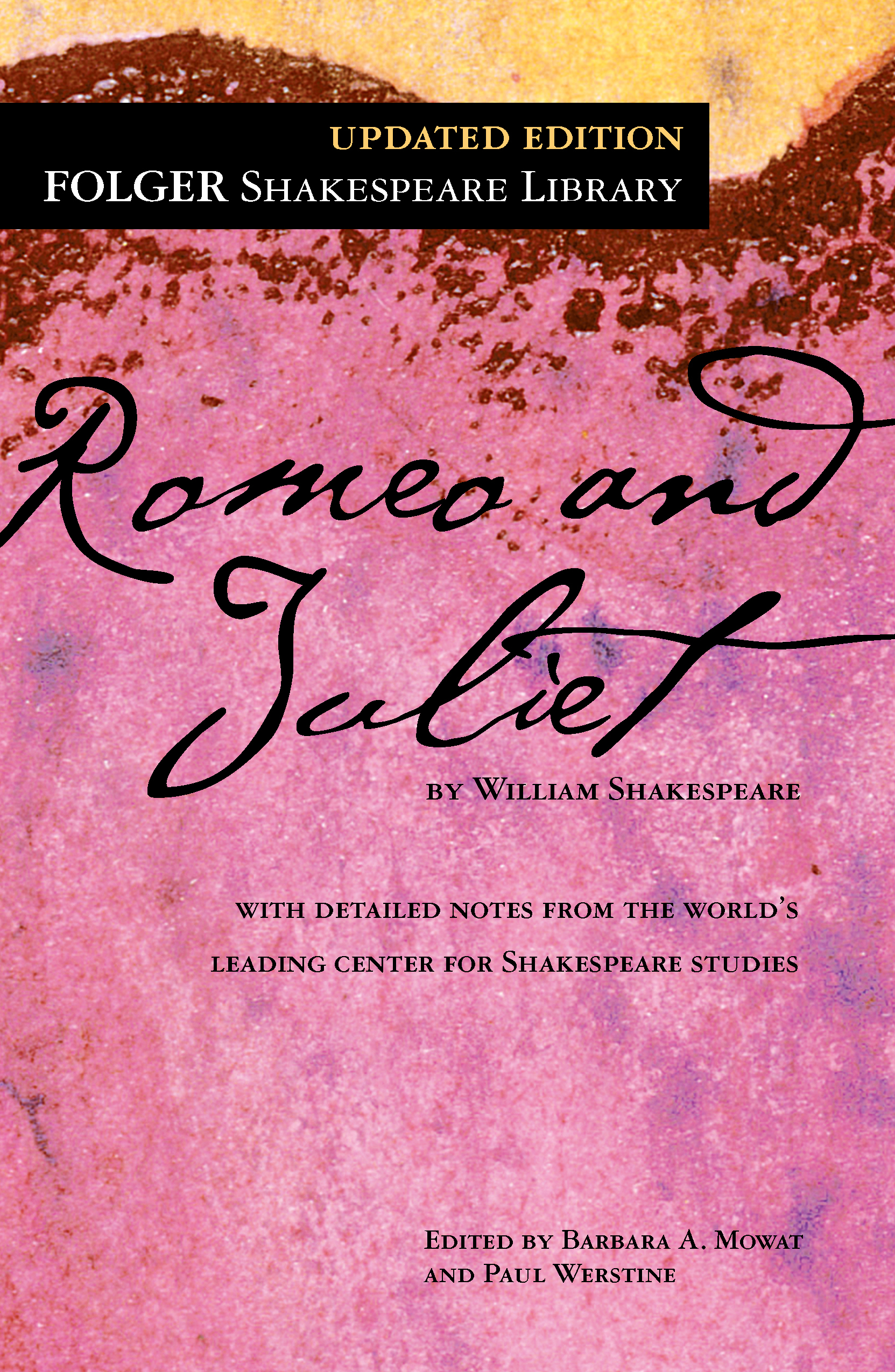
Romeo and Juliet
Edited by Barbara A. Mowat and Paul Werstine · Folger Shakespeare Library · Simon & Schuster · Trade paperback, 2011 · 368 pp. · ISBN 9781451621709
The advantage of reading Romeo and Juliet third is that you probably already know the destination. That familiarity frees attention for the language: rhyme, sonnet form, bawdy jokes, Mercutio’s verbal velocity, Juliet’s startling directness, and the repeated compression of time. The play moves far faster than its reputation as a solemn monument to romantic love suggests.
Listen for the collision of registers. Romeo initially speaks like a young man performing conventional love poetry; his first encounter with Juliet changes the quality of the verse. Around them, servants joke, Mercutio mocks romantic convention, the Nurse tells sprawling stories, and civic violence keeps interrupting private desire. That mixture matters because the tragedy does not simply replace comedy: comic energies remain active until consequences make them unbearable. A beginner who concentrates only on famous quotations misses the play’s speed. Read whole exchanges and ask who controls the rhythm of a scene. By this point you should also be able to let a difficult metaphor pass temporarily, then recover its meaning from the conversation around it.
Difficulty: Moderate
“For never was a story of more woe / Than this of Juliet and her Romeo.”
— Prince, 5.3 · Folger Shakespeare Library
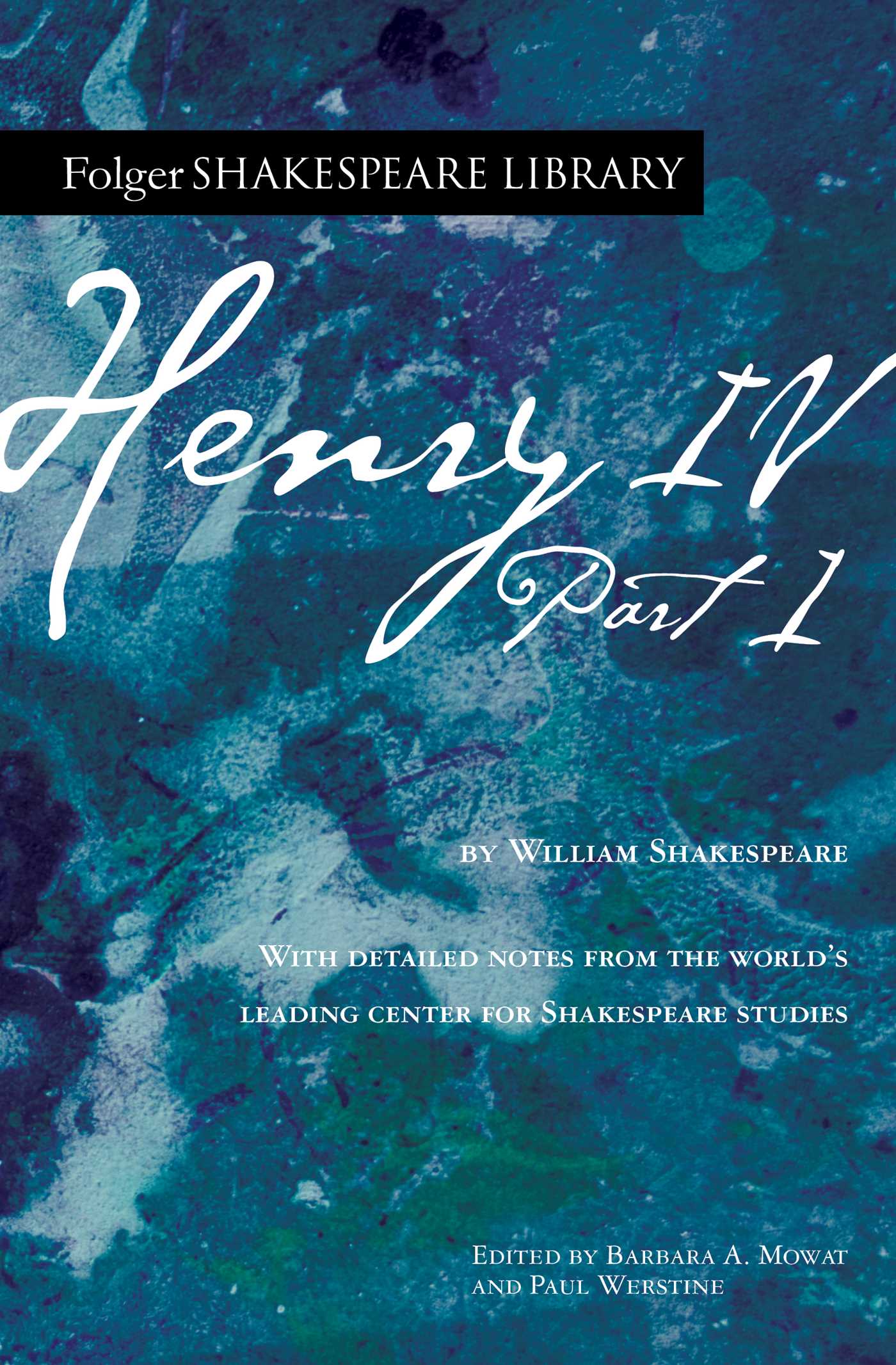
Henry IV, Part 1
Edited by Barbara A. Mowat and Paul Werstine · Folger Shakespeare Library · Simon & Schuster · Trade paperback, 2020 · 336 pp. · ISBN 9781982122515
Do not postpone the history plays until you have mastered a genealogy of English kings. For Henry IV, Part 1, the minimum background is enough: Henry Bolingbroke displaced Richard II and is now King Henry IV; his son Hal is heir to the throne; the Percy family rebels. Shakespeare supplies the political tensions through the drama itself.
What makes the play indispensable here is the contrast between worlds. The court speaks the language of legitimacy, rebellion, honour, and national crisis. Falstaff’s tavern turns solemn values into jokes, appetite, improvisation, and performance. Prince Hal moves between them. Pay particular attention to the movement between prose and verse: the change is not a simple code for “low” and “high” characters, but it repeatedly alters social pressure and theatrical energy. Hal’s private declaration that he understands his companions complicates any comforting story in which a careless youth simply matures. Read him as someone learning to stage kingship. After three plays dominated by love, murder, and family conflict, this history reveals how political identity itself can become a performance.
Difficulty: Moderate
“I know you all, and will awhile uphold / The unyoked humor of your idleness.”
— Prince Hal, 1.2 · Folger Shakespeare Library

Hamlet
Edited by Barbara A. Mowat and Paul Werstine · Folger Shakespeare Library · Simon & Schuster · Trade paperback, 2012 · 432 pp. · ISBN 9781451669411
Many readers start Shakespeare with Hamlet because it is famous. It is more rewarding after you have acquired the habits the previous four plays teach. By now, you can follow a soliloquy without treating it as Shakespeare’s final opinion, recognize dramatic irony, hear changes of register, and notice when acting becomes part of the plot.
Hamlet intensifies all of those problems. The Ghost may command justice or lure Hamlet into error; performed madness becomes difficult to separate from genuine disturbance; theatrical representation becomes a method of investigation; and apparently decisive statements are repeatedly revised by the next speech. The textual history also matters more visibly here: the Folger editors discuss the relationship between the Second Quarto and First Folio rather than pretending every surviving early witness says precisely the same thing. Do not try to solve “why Hamlet delays” as though the play were a puzzle with one missing answer. Follow how Hamlet tests evidence, stages situations, mistrusts appearances, and turns interpretation itself into action. It also becomes an important bridge forward: BookInLight’s guide to what to read before Ulysses shows how deeply Joyce later draws on it.
Difficulty: Demanding
“The play’s the thing / Wherein I’ll catch the conscience of the King.”
— Hamlet, 2.2 · Folger Shakespeare Library
Why This Reading Order Works
The sequence is deliberately not chronological. Each play adds a capability. Midsummer teaches you to trust staging and distinguish overlapping groups. Macbeth teaches you to follow imagery and hear thinking in soliloquy. Romeo and Juliet increases the density of lyric language and demonstrates how rapidly comic form can darken. Henry IV, Part 1 introduces political history, competing social registers, and the strategic self-fashioning of a future king. Only then does Hamlet ask you to keep multiple explanations alive simultaneously.
This also prevents a common distortion: reading Shakespeare as a collection of famous tragic quotations. Comedy, history, tavern prose, failed theatre, jokes, songs, political performance, and audience knowledge are not peripheral to Shakespeare. They are part of the machinery by which the tragedies become intelligible.
Five Mistakes That Make Shakespeare Harder
Starting with a Complete Works. A large collected edition is valuable later. For a beginner, a single-play edition with immediate notes and scene summaries reduces needless friction.
Stopping for every unknown word. Shakespearean sentences often become clear from their destination. Mark uncertainty, finish the exchange, and return only when the missing meaning matters.
Reading silently as if these were novels. Speaking a difficult passage exposes rhythm, emphasis, interruption, and comic timing. Watching a performance is interpretation, not cheating.
Treating a character’s speech as Shakespeare’s doctrine. Macbeth, Hamlet, Hal, Romeo, and Falstaff are dramatic voices with motives and blind spots. Eloquence does not guarantee authorial endorsement.
Assuming one modern edition is simply “the original.” Shakespeare survives through early quartos and folios whose readings may diverge. Most beginners need a responsible modernized edition, not a textual apparatus—but they should know that editors make consequential decisions.
Choose Your Next Shakespeare Path
For comedy: continue with Twelfth Night, then As You Like It, and later the more ethically uncomfortable Measure for Measure. For tragedy: move to Othello, King Lear, and then Antony and Cleopatra. For history: step back to Richard II, reread Henry IV, Part 1 in sequence, and continue through Henry IV, Part 2 to Henry V. For the late plays: try The Tempest and The Winter’s Tale, where loss, time, artifice, and improbable restoration change the emotional rules again.
You do not need to complete all four paths. The point of the first five plays is that you should now know which Shakespeare you want more of.
Frequently Asked Questions
Should I read Shakespeare before watching it?
Do both at scene level. Read a synopsis, read the scene, watch a strong performance, then revisit passages whose meaning changed. Watching first is also perfectly defensible when the page feels opaque.
What is the best Shakespeare play for a complete beginner?
A Midsummer Night’s Dream is the best all-purpose starting point here because it combines memorable stage action with enough linguistic and formal variety to teach skills transferable to later plays.
Should I use a modern-English translation?
Usually not as your main text. A well-annotated modern-spelling edition keeps Shakespeare’s language while explaining obsolete senses and difficult constructions. A paraphrase can be a backup, but replacing the language removes much of what you are learning to read.
Why not begin with Hamlet?
You can, but its length, textual complications, philosophical density, and deliberate uncertainty make it an inefficient teacher of basic Shakespeare-reading habits. It becomes richer when you already understand how his drama uses soliloquy, performance, irony, and unstable appearances.
Related BookInLight Reading Guides
What to Read Before Ulysses? — A selective prerequisite route in which Hamlet becomes one of Joyce’s most consequential literary contexts.
Entering James Joyce: A Four-Book Path from Dubliners to Finnegans Wake — Another author-centered sequence built around increasing formal difficulty.
Before the Dark Wood: A Reader’s Route into Dante’s Divine Comedy — A parallel guide to approaching a canonical writer without turning preparation into an obstacle.
Cheap, Portable, Uneven: The Enduring Case for Signet Classics — Includes the strengths and limits of Signet’s Shakespeare editions, including its Hamlet.
Sources and Further Reading
Folger Shakespeare Library, “Publishing Shakespeare” — First Folio, quartos, and later editorial history.
Folger, “The Publication of Shakespeare’s Plays” — Early printing and the 1623 collection.
Folgerpedia, Folger Shakespeare Library editions — Editorial principles, notes, spelling, and textual apparatus.
Folger, Shakespeare in Performance — Performance and adaptation resources.
Folger, “Reading Shakespeare’s Language: A Midsummer Night’s Dream” — Syntax and poetic language.
Folger digital text: A Midsummer Night’s Dream.
Folger digital text: Romeo and Juliet.
Folger digital text: Henry IV, Part 1.
Folger, “An Introduction to This Text: Hamlet” — Second Quarto, Folio, and editorial choices.
Simon & Schuster: A Midsummer Night’s Dream, ISBN 9781501146213.
Simon & Schuster: Macbeth, ISBN 9781451694727.
Simon & Schuster: Romeo and Juliet, ISBN 9781451621709.
Image Credits
A Midsummer Night’s Dream, Folger Shakespeare Library trade paperback, Simon & Schuster, 2016, ISBN 9781501146213. Cover: Simon & Schuster.
Macbeth, Folger Shakespeare Library trade paperback, Simon & Schuster, 2013, ISBN 9781451694727. Cover: Simon & Schuster.
Romeo and Juliet, Folger Shakespeare Library trade paperback, Simon & Schuster, 2011, ISBN 9781451621709. Cover: Simon & Schuster.
Henry IV, Part 1, Folger Shakespeare Library trade paperback, Simon & Schuster, 2020, ISBN 9781982122515. Cover: Simon & Schuster.
Hamlet, Folger Shakespeare Library trade paperback, Simon & Schuster, 2012, ISBN 9781451669411. Cover: Simon & Schuster.
How to Start Reading Shakespeare: 5 Plays for Beginners