What to Read Before Ulysses is a smaller question than the novel’s reputation suggests. Joyce’s book does not demand mastery of Western culture; it demands a workable sense of Homer, Stephen Dedalus, Edwardian Dublin, Irish Catholicism, and the freedom to miss an allusion without stopping. The right preparation is selective, and the wrong preparation can make the novel feel like an examination it was never meant to be.

Target text
Ulysses: the 1922 text in a reader-oriented scholarly edition
Author: James Joyce
Editor: Jeri Johnson
Edition: Oxford World’s Classics, second edition, 2022; ISBN 9780192855107
Why this edition: It presents the 1922 text with a substantial introduction, revised notes, appendices, and a clear account of the novel’s textual history. It is less likely than a bare public-domain reprint to leave a first reader stranded.
Main limitation: No single-volume apparatus can identify every Dublin reference or stylistic parody.
Best suited to: First-time readers who want a dependable text without beginning inside the Gabler–Kidd editorial controversy.
The Short Answer
You do not need to read a miniature Western canon before Ulysses. Learn the outline of Homer’s Odyssey, acquire basic context for Dublin in 1904, and know who Stephen Dedalus is. Reading A Portrait of the Artist as a Young Man is highly valuable; selected stories from Dubliners are nearly as useful. Keep one commentary nearby, but consult it after an episode rather than after every sentence.
That is the central judgment of this guide to What to Read Before Ulysses. The book’s difficulty comes from accumulation: changing narrative methods, unmarked quotations, local names, scraps of Latin, songs, newspaper language, theology, politics, advertising, medicine, and the private associative habits of its characters. Yet Joyce does not expect every reader to identify everything. Much of the novel’s life lies in the pressure between what is immediately intelligible and what remains half-heard.
The most damaging approach is to turn preparation into a security ritual. Reading the whole of Homer, Shakespeare, Dante, Aristotle, Aquinas, Vico, Irish history, Catholic theology, and a thousand-page annotation before opening Joyce would postpone the novel for months and still fail to eliminate uncertainty. A serious first reading should be informed, not pre-exhausted.
Edition choice is part of that proportion. Cheap reprints often reproduce a public-domain text without explaining which text they use, silently normalize punctuation, or omit the apparatus that tells a reader why a line looks strange. The Oxford World’s Classics second edition makes a defensible first-reading compromise: it returns to the 1922 text, identifies editorial choices, and supplies help without pretending that the novel can be stabilized beyond dispute. Readers studying textual transmission may later compare Hans Walter Gabler’s edited text, the first edition, and manuscript evidence. Beginners gain little by starting there. The practical question is not which edition ends every argument, but which one makes its principles visible while preserving Joyce’s deliberate irregularities.
Why Ulysses Is Difficult: What to Read Before Ulysses
Ulysses narrates one ordinary day—16 June 1904—through eighteen episodes, but each episode alters the contract between narrator and reader. “Telemachus” resembles a recognizable realist novel; “Proteus” tightens around Stephen’s philosophical perceptions; “Aeolus” interrupts itself with mock-newspaper headings; “Sirens” treats language musically; “Oxen of the Sun” parodies a procession of English prose styles; “Circe” becomes a hallucinatory drama; “Ithaca” adopts an impersonal catechism; “Penelope” releases punctuation and lets Molly Bloom’s thought move in great verbal tides. Calling all this “stream of consciousness” hides more than it explains.
The second difficulty is local density. Joyce reconstructed Dublin with street directories, newspapers, advertisements, tram routes, songs, gossip, ecclesiastical language, and political memories. The James Joyce Digital Archive shows how much compositional labor stands behind this apparent immediacy. A reader can follow Bloom’s day without identifying every shopkeeper, but cannot fully understand the book’s social intelligence while treating Dublin as a merely decorative setting.
The third difficulty is textual. Ulysses appeared after installments in The Little Review, was published in Paris by Sylvia Beach’s Shakespeare and Company on Joyce’s fortieth birthday, 2 February 1922, and accumulated corrections, variants, and editorial disputes. The digitized 1922 first edition is invaluable for history, while the Rosenbach’s manuscript collection and the digital archive illuminate revision. They are not, however, the easiest first-reading texts.
Finally, the novel is comic in ways that annotations can suffocate. Its learned scaffolding supports bodily life: breakfast, grief, work, digestion, desire, embarrassment, prejudice, music, mourning, parenthood, and the vulnerable hope of hospitality. Preparation should make those movements clearer, not replace them with a hunt for codes.
There is also a difficulty of scale. A sentence may carry a joke, a bodily sensation, a remembered advertisement, a political insult, and an echo of another book at once. Readers often respond by slowing every line to the speed of textual scholarship. That method is useful for rereading but destructive to narrative momentum. On a first pass, distinguish three levels: what literally happens, what a character seems to feel or avoid, and what formal device dominates the episode. Record unresolved allusions only when they obstruct one of those levels. The rest can remain as acoustic or cultural pressure. Joyce designed a book that rewards microscopic attention, but he also designed walks, conversations, meals, funerals, flirtations, and returns that need temporal movement.
The Dependency Map at a Glance
Essential Before Reading
Essential before reading The indispensable Homeric knowledge is structural, not philological. Know that Odysseus is trying to return to Ithaca after Troy; Telemachus searches for news of his absent father; Penelope resists her suitors; the journey includes Calypso, the Lotus-Eaters, Hades, the Sirens, Scylla and Charybdis, the Cyclops, and a disguised homecoming. Joyce’s correspondences are rarely one-to-one. They establish pressure, irony, enlargement, and comic disproportion.

Essential prerequisite
The Odyssey: learn the architecture, not a codebook
Author: Homer
Translator: Emily Wilson
Edition: W. W. Norton paperback, 2018; ISBN 9780393356250
Dependency level: Essential before reading
Why it matters: Wilson’s lucid, metrically alert translation makes the epic’s domestic stakes, disguises, hospitality tests, violence, and returns easy to retain.
How much to read: At minimum, a reliable synopsis and Books 1, 5–12, 19, and 23. Read the whole poem for pleasure, not because Joyce requires an examination in Homer.
The other essential preparation is a compact understanding of Ireland under British rule, the cultural authority of the Catholic Church, the afterlife of Charles Stewart Parnell, tensions within nationalism, and the ambiguous position of a Jewish Dubliner such as Leopold Bloom. One good historical introduction is enough. You need not reconstruct every parliamentary faction. You do need to recognize why arguments about nation, betrayal, empire, religion, language, and belonging keep entering taverns, classrooms, newspaper offices, and private thought.
The Parnell background deserves particular emphasis because it joins public politics to family memory. Parnell’s fall after the O’Shea divorce scandal divided nationalist loyalties and exposed the force of clerical and moral judgment; Joyce had already dramatized the wound in A Portrait. In Ulysses, the memory survives as accusation, nostalgia, and a model of betrayal. Learn the broad sequence, not every parliamentary date. Likewise, understand that “Irishness” in the novel is contested rather than possessed. Bloom can be patriotic, cosmopolitan, culturally Irish, religiously unorthodox, and treated as alien by men who define the nation through masculinity, ancestry, and exclusion. That contradiction is central to “Cyclops” and to the book’s ethical contrast between violent certainty and imperfect hospitality.
A street map is equally practical. The novel’s geography gives shape to simultaneity: people cross, narrowly miss one another, and circulate through institutions. The free Joyce Project can clarify locations and allusions during reading, but use it episodically. A map should restore movement, not turn each walk into cartographic homework.
Strongly Recommended Background
The best prior Joyce is not an anthology of critical theory. It is Joyce himself in smaller forms. A Portrait of the Artist as a Young Man explains Stephen’s education, religious fear, aesthetic ambition, family decline, and declaration of exile. Ulysses begins after that heroic self-conception has been damaged by poverty, guilt over his mother’s death, compromised friendship, and a return to a country he has not escaped intellectually.
The value of A Portrait of the Artist as a Young Man is not merely continuity of character. It lets the reader hear the difference between Stephen’s youthful theory of artistic autonomy and the exhausted, defensive intelligence encountered at the Martello tower. His arguments in Ulysses are impressive, but they are also performances staged before rivals, patrons, dead parents, and imagined judges. Without the earlier novel, a reader may mistake brilliance for authorial endorsement. With it, Stephen becomes legible as a young man trapped inside the style by which he once hoped to become free.

Strongly recommended
A Portrait of the Artist as a Young Man: Stephen before disillusionment
Author: James Joyce
Editor: Jeri Johnson
Edition: Oxford World’s Classics, 2008; ISBN 9780199536443
Dependency level: Strongly recommended
Why it matters: The first three episodes of Ulysses become emotionally and intellectually sharper when Stephen’s formation is known.
How much to read: Ideally the whole novel. Under severe time pressure, read a careful summary, the sermon sequence in Chapter III, the aesthetic discussion, and the final pages of Chapter V.
Dubliners performs a different service. It trains the ear. Its speech, frustrated ambitions, clerical authority, cramped rooms, pubs, offices, family rituals, and recurrent sense of paralysis create the social atmosphere from which Ulysses expands. Several figures reappear, but recognition is a pleasure rather than a plot requirement.
The Dubliners collection also corrects a common misconception: Joyce’s Dublin is not a symbolic backdrop waiting for myth to confer importance. Before the Homeric parallels arrive, the city already contains distinct professions, accents, humiliations, moral evasions, and economic limits. Reading the stories first makes it harder to treat Bloom’s neighbors as mere functions in an epic scheme. It also prepares the tonal shift by which a phrase can be funny, cruel, socially exact, and painfully self-deceiving at the same time.

Strongly recommended
Dubliners: the city before Joyce makes it encyclopedic
Author: James Joyce
Editor: Jeri Johnson
Edition: Oxford World’s Classics, 2008; ISBN 9780199536436
Dependency level: Strongly recommended
Why it matters: It supplies social scale, idiom, institutions, and the ordinary lives that Ulysses will place inside a modern epic.
How much to read: “The Sisters,” “Araby,” “A Little Cloud,” “Counterparts,” “Grace,” and “The Dead” form an excellent compact route; the complete collection is better if time allows.
Helpful but Optional Context
Helpful background Shakespeare’s Hamlet matters most in “Scylla and Charybdis,” where Stephen constructs a dazzling and unstable biographical theory of the play. Reading the Folger text of Hamlet will sharpen that episode, but the entire Shakespeare canon is unnecessary. Acts I, III, and V, plus knowledge of the Ghost, usurpation, mourning, paternity, and theatricality, are enough.
Catholic liturgy and doctrine permeate Stephen’s language and Dublin’s institutions. Learn the basic shape of the Mass, confession, transubstantiation, original sin, the Trinity, and the difference between a priestly formula and ordinary speech. Do not read the whole catechism first. Joyce repeatedly converts sacred formula into parody, memory, guilt, verbal music, or bodily joke; excessive doctrinal preparation can miss the transformation.
The Bible, Dante, Aristotle, Aquinas, Giambattista Vico, George Berkeley, and contemporary psychology all appear, but none is a universal prerequisite. Their relevance is episodic. Similarly, a little knowledge of Irish Revival figures—Yeats, Synge, Lady Gregory, Douglas Hyde—and disputes over cultural nationalism helps explain Stephen’s position, yet a history of the Revival can wait until the novel has made the problem concrete.
Music is unusually rewarding context. Songs do not merely decorate the book; they organize memory, erotic feeling, nationalism, performance, and verbal rhythm. A first reader need not identify every melody, but reading aloud and listening to recorded songs can reveal structures that silent annotation cannot.
Concepts to Learn First
Homeric correspondence
A correspondence is not a solved allegory. Bloom may occupy the Odyssean position without behaving like a bronze-age warrior; Molly may correspond to Penelope while undoing the ideal of static fidelity; Stephen may be Telemachus without Bloom becoming a replacement father in any simple sense. The parallels enlarge daily life and expose the violence, vanity, and exclusions inside heroic models.
Interior monologue and free indirect discourse
Interior monologue gives relatively direct access to verbalized thought; free indirect discourse lets a third-person narration absorb a character’s idiom without quotation marks or a reporting clause. Joyce moves among these and other modes. The practical lesson is to ask whose language a sentence carries, not to label every unusual passage “stream of consciousness.”
Parody and pastiche
Parody exposes or mocks a style; pastiche imitates and recombines styles, sometimes affectionately. Ulysses uses both. In later episodes the style can become an acting character, distorting what can be perceived. Readers who search only for plot will feel that the novel has abandoned them precisely when form becomes the event.
Colonial modernity
Dublin is a capital without sovereignty, culturally intimate with Britain and politically subordinated to it. English is Joyce’s material and a history of domination; Irish revivalism can resist empire while enforcing its own tests of authentic identity. Bloom’s Jewishness complicates any easy equation between nation and inherited blood.
Parallax
In astronomy, parallax is an apparent displacement produced by a change in viewpoint. Bloom wonders about the word, and the novel turns it into method: the city, marriage, fatherhood, history, and bodily life shift as different consciousnesses approach them. No single perspective becomes the neutral center.
The episode as experiment
Each episode imposes a fresh formal problem. Do not expect a technique mastered in “Calypso” to carry you through “Oxen of the Sun.” Before each new episode, reset your expectations. Confusion may signal not missing information but a deliberate change in the machinery of narration.
The Texts You Do Not Need to Read First
You do not need the complete Iliad, the full Shakespeare canon, Dante’s three-part Comedy, Aristotle’s corpus, Aquinas’s Summa, Vico’s New Science, or a history of every Irish political movement. Each may illuminate a passage; none is the gatekeeper to the novel.
You also do not need Joyce’s Finnegans Wake. It was published seventeen years later and represents a further linguistic transformation. Reading it first would make Ulysses look like a preliminary exercise rather than allowing its own formal progression to emerge. Nor should a beginner start with the apparatus of the 1984 critical and synoptic edition unless textual editing is itself the object of study.
Richard Ellmann’s biography, Hugh Kenner’s criticism, and major postcolonial, feminist, psychoanalytic, genetic, and queer readings are intellectually important. They belong largely after a first encounter. A brilliant interpretation can become a pair of tinted glasses: it helps one see, but it may prevent the first discovery of what one would have noticed unaided.
The Full Scholarly Preparation Route
- Read Joyce’s earlier Dublin. Complete Dubliners and A Portrait, noting the movement from social paralysis to artistic self-fashioning.
- Read Homer completely. Attend especially to hospitality, recognition, disguise, storytelling, domestic fidelity, violence, and the ethical ambiguity of return.
- Build the historical city. Study Irish politics from Parnell through the Revival, urban institutions, popular journalism, Catholic culture, and Jewish life in Ireland. Keep the distinctions among British rule, unionism, constitutional nationalism, cultural nationalism, and separatism clear.
- Add selective intertexts. Read Hamlet; review the Mass and key biblical narratives; sample Yeats and Synge; consult Aristotle and Aquinas only around Stephen’s aesthetics and metaphysics.
- Study publication and composition. Compare the 1922 text with serial and manuscript evidence through the Modernist Journals Project’s Little Review archive and the digital compositional archive.
- Only then enter specialist disputes. Examine the Gabler edition, John Kidd’s objections, genetic criticism, and competing political interpretations. This stage is justified for research, teaching, editing, or sustained rereading—not for earning permission to start.
Recommended Companions While Reading
A first reader needs two kinds of help: a reference work that answers “What is this?” and a running guide that answers “What is happening, and why does this episode feel different?” No companion should become a second novel laid over the first. Read an episode, reconstruct its basic action, then investigate the details that seem structurally or emotionally important.
The distinction between the two tools matters. Ulysses Annotated is closer to a specialized encyclopedia: it identifies what the text assumes a contemporary Dubliner, classicist, Catholic, newspaper reader, or music-hall audience might know. The Cambridge Companion to Ulysses asks larger interpretive questions. Confusing these functions produces frustration: an annotation rarely explains why an episode matters, while an essay may leave a single Latin tag unidentified. Use a running summary first when action is obscure, a reference work when a detail blocks comprehension, and criticism after you can state your own provisional account of the episode.

Recommended companion
Ulysses Annotated: the reference desk
Authors: Don Gifford with Robert J. Seidman
Edition: University of California Press, revised and expanded edition, paperback 2008; ISBN 9780520253971
Dependency level: Relevant only for specialists as comprehensive preparation; highly useful during reading
Why it matters: It glosses places, slang, institutions, politics, religion, legends, rhetoric, and literary allusions with extraordinary range.
How much to read: Never continuously. Look up details after completing a page or episode, and accept that many references can remain unresolved.

Recommended companion
The New Bloomsday Book: recover the action after the experiment
Author: Harry Blamires
Edition: Routledge digital edition of the third edition; eISBN 9781134773046
Dependency level: Helpful background
Why it matters: Blamires offers a continuous episode-by-episode account of narrative movement and thematic structure.
How much to read: Read each section after the corresponding episode. Reading ahead can flatten surprise and turn interpretive proposals into presumed facts.
Recommended companion
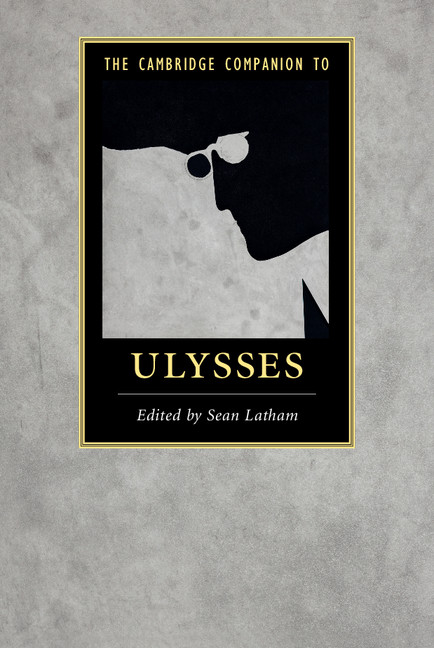
The Cambridge Companion to Ulysses: arguments after orientation
Editor: Sean Latham
Edition: Cambridge University Press paperback, 2014; ISBN 9781107423909
Dependency level: Relevant only for specialists before reading; strongly useful after orientation
Why it matters: Its essays address composition, narrative, history, bodies, politics, and reception without pretending that one master interpretation settles the book.
How much to read: Begin with overview and episode-oriented chapters; postpone strongly theoretical essays until after the relevant passages or the first complete reading.
Suggested Reading Sequence
- Learn the Homeric outline and the minimum Irish context.
- Read A Portrait, or its compressed route, and selected Dubliners stories.
- Read “Telemachus,” “Nestor,” and “Proteus” without attempting to solve every philosophical phrase. Then consult a guide.
- At “Calypso,” begin again in Bloom’s more bodily, practical register. Let the novel teach you how differently it can think.
- After each episode, write a two-sentence account of what literally happened before checking commentary. This preserves your own reading.
- Pause before “Scylla and Charybdis” for Hamlet; before “Oxen of the Sun,” accept that a prose-history guide may be useful; before “Circe,” review the day’s unresolved desires and humiliations.
- Finish “Penelope” before reading a summary. Its rhythm and retrospective corrections deserve an uninterrupted first encounter.
- Only after completion, revisit What to Read Before Ulysses as a question of rereading: historical scholarship, textual variants, political critique, and Joyce’s later work will now have an object to illuminate.
What to Read Afterward
After the first reading, return to T. S. Eliot’s “Ulysses, Order, and Myth,” Stuart Gilbert’s early schematizing study, and Frank Budgen’s account of Joyce at work. They help explain how the novel’s Homeric organization became central to its reception, though none should be allowed to reduce it to a chart.
Then read criticism that tests what celebratory modernist accounts leave out: Enda Duffy on colonial subjection, feminist work on gender and narrative authority, studies of race and Jewish identity, and scholarship on print culture, disability, sexuality, and the body. These approaches are most powerful once the reader can distinguish Joyce’s text from the critical vocabulary brought to it.
Virginia Woolf, Samuel Beckett, William Faulkner, Ralph Ellison, Salman Rushdie, and many later novelists reveal the book’s afterlife, but influence should not be treated as simple descent. Their works select, resist, provincialize, or reinvent different Joycean possibilities.

Better read afterward
Finnegans Wake: Joyce after the limits of the day
Author: James Joyce
Editor and introduction: Edited by Andrew Gibson; introduction by Brian Fox
Edition: Penguin Modern Classics paperback, 2026; ISBN 9780241405925
Dependency level: Better read afterward
Why it matters: It shows Joyce extending multilingual pun, cyclical history, dream logic, and unstable identity far beyond the still-recognizable day of Ulysses.
How much to read: After Ulysses, begin with the opening pages and a guide. Do not treat completion as a test; recurrent, communal, and partial reading suits the work.
Related BookInLight Reading Guides
- Oxford World’s Classics: A Complete Guide to the Series — explains the editorial character of the series and discusses Jeri Johnson’s centenary-era Ulysses edition.
- Penguin Classics: A Complete Guide to the Series — useful for thinking about translation, canonical framing, and the editorial decisions behind modern editions of Homer and Joyce.
Editorial research and authorship: This reading guide was researched and written by the BookInLight Department of Literature and Comparative Humanities, with bibliographical review, source verification, and editorial fact-checking by the BookInLight research team. Readers who identify a factual correction, an overlooked source, an interpretive suggestion, or another constructive possibility are warmly invited to share it.
Art direction and rights: The editorial art direction, visual composition, cover selection, and presentation of images were developed by the BookInLight Art Department. Individual book covers remain the property of their respective publishers, designers, artists, and rights holders and are credited below. Complete republication, reproduction, translation, or reuse of this article, in print or digital form, requires prior written authorization from BookInLight.
Sources and Further Reading
Primary Texts and Editions
- James Joyce, Ulysses, ed. Jeri Johnson, Oxford World’s Classics, 2nd ed., 2022 — reading text, notes, and textual framing.
- James Joyce, A Portrait of the Artist as a Young Man, ed. Jeri Johnson, Oxford World’s Classics, 2008 — Stephen Dedalus’s formation.
- James Joyce, Dubliners, ed. Jeri Johnson, Oxford World’s Classics, 2008 — social, linguistic, and urban preparation.
- Homer, The Odyssey, trans. Emily Wilson, W. W. Norton, paperback 2018 — accessible Homeric framework.
- William Shakespeare, Hamlet, Folger Digital Text — the principal Shakespearean intertext.
Textual History and Research Resources
- James Joyce Digital Archive: Ulysses — compositional documents, editions, variants, and chronologies.
- The Rosenbach, James Joyce’s Ulysses — manuscript history and collection context.
- Modernist Journals Project, The Little Review — the serialization context.
- James Joyce, Ulysses, 1922 first edition, Internet Archive — bibliographical comparison, not the preferred first-reading copy.
Companions and Scholarly Studies
- Don Gifford with Robert J. Seidman, Ulysses Annotated, revised and expanded ed., University of California Press, 2008 — detailed allusive reference.
- Harry Blamires, The New Bloomsday Book, Routledge digital edition of the third edition, eISBN 9781134773046 — continuous episode guide.
- Sean Latham, ed., The Cambridge Companion to Ulysses, Cambridge University Press, 2014 — current thematic and historical essays.
- Stuart Gilbert, James Joyce’s Ulysses: A Study, 1930 — foundational early account of the schemata and episode structure, used critically.
- Frank Budgen, James Joyce and the Making of Ulysses, 1934 — first-hand compositional recollection and interpretive testimony.
- Richard Ellmann, James Joyce, rev. ed., Oxford University Press, 1982 — biographical chronology and literary context.
- Enda Duffy, The Subaltern Ulysses, University of Minnesota Press, 1994 — colonial and postcolonial interpretation.
- Margot Norris, Virgin and Veteran Readings of Ulysses, Palgrave Macmillan, 2011 — first-reading knowledge, rereading, and interpretive authority.
- Kevin Birmingham, The Most Dangerous Book: The Battle for James Joyce’s Ulysses, Penguin, 2014 — publication, censorship, and legal reception.
Image Credits
- Ulysses, Oxford World’s Classics, second edition, 2022 — cover image for ISBN 9780192855107; edition source: Oxford University Press.
- The Odyssey, translated by Emily Wilson, W. W. Norton paperback, 2018 — cover image for ISBN 9780393356250; edition source: W. W. Norton.
- A Portrait of the Artist as a Young Man, Oxford World’s Classics, 2008 — cover image for ISBN 9780199536443; edition source: Oxford University Press.
- Dubliners, Oxford World’s Classics, 2008 — cover image for ISBN 9780199536436; edition source: Oxford University Press.
- Ulysses Annotated, revised and expanded edition, University of California Press, 2008 — cover supplied by the press; source: University of California Press.
- The New Bloomsday Book, Routledge digital edition of the third edition, eISBN 9781134773046 — cover supplied by VitalSource for the exact digital edition; bibliographical source: Google Books exact-edition record.
- The Cambridge Companion to Ulysses, paperback, Cambridge University Press, 2014 — cover image for ISBN 9781107423909; source: Cambridge University Press.
- Finnegans Wake, Penguin Modern Classics paperback, 2026 — cover image for ISBN 9780241405925; source: Penguin Books.