Print is the best first format for Notes from Underground. The Notes from Underground Print vs Audiobook choice turns on rereading: Dostoevsky’s speaker contradicts himself, changes argumentative direction, and makes single words carry philosophical weight. A modern print translation lets you stop, mark, and compare. Audio is the strongest companion because the book is also an act of voice. The main caution is textual provenance: a named narrator does not guarantee that the recording identifies the translation you are hearing.
Best Overall Format: Notes from Underground Print vs Audiobook
The case for print is unusually strong even though the book is short. Notes from Underground is not difficult because a reader must remember dozens of characters or traverse hundreds of pages; it is difficult because the Underground Man performs thought in real time. He advances a proposition, mocks it, anticipates your objection, reverses himself, then returns to a word whose meaning has shifted. A stable page makes those turns inspectable.
Audio reveals something print can mute: the prose is addressed. The narrator imagines listeners, heckles them, withdraws, boasts, apologizes, and resumes. A continuous spoken reading can therefore expose the work’s theatrical pressure. But that gain comes with a specific loss. When a listener wants to ask, “Did he not say the opposite five minutes ago?”, a printed page is far faster than scrubbing a track.
That is why the Notes from Underground Print vs Audiobook verdict is not “paper good, audio bad.” Use print as the governing text and audio as a second encounter. If print is inaccessible or physically uncomfortable, reverse the hierarchy: choose a fully documented unabridged recording and keep a searchable ebook nearby. The formats can substitute for one another when access requires it, but they are not functionally identical for close reading.
Translation also changes the format decision. Michael R. Katz, Richard Pevear and Larissa Volokhonsky, Ronald Wilks, Kirsten Lodge, and older translators such as Constance Garnett do not produce interchangeable English sentences. If you alternate between text and audio, match the translation whenever possible—and verify the edition as well as the translator.
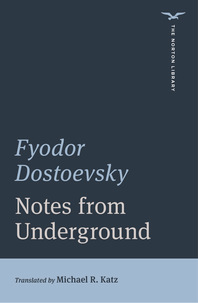
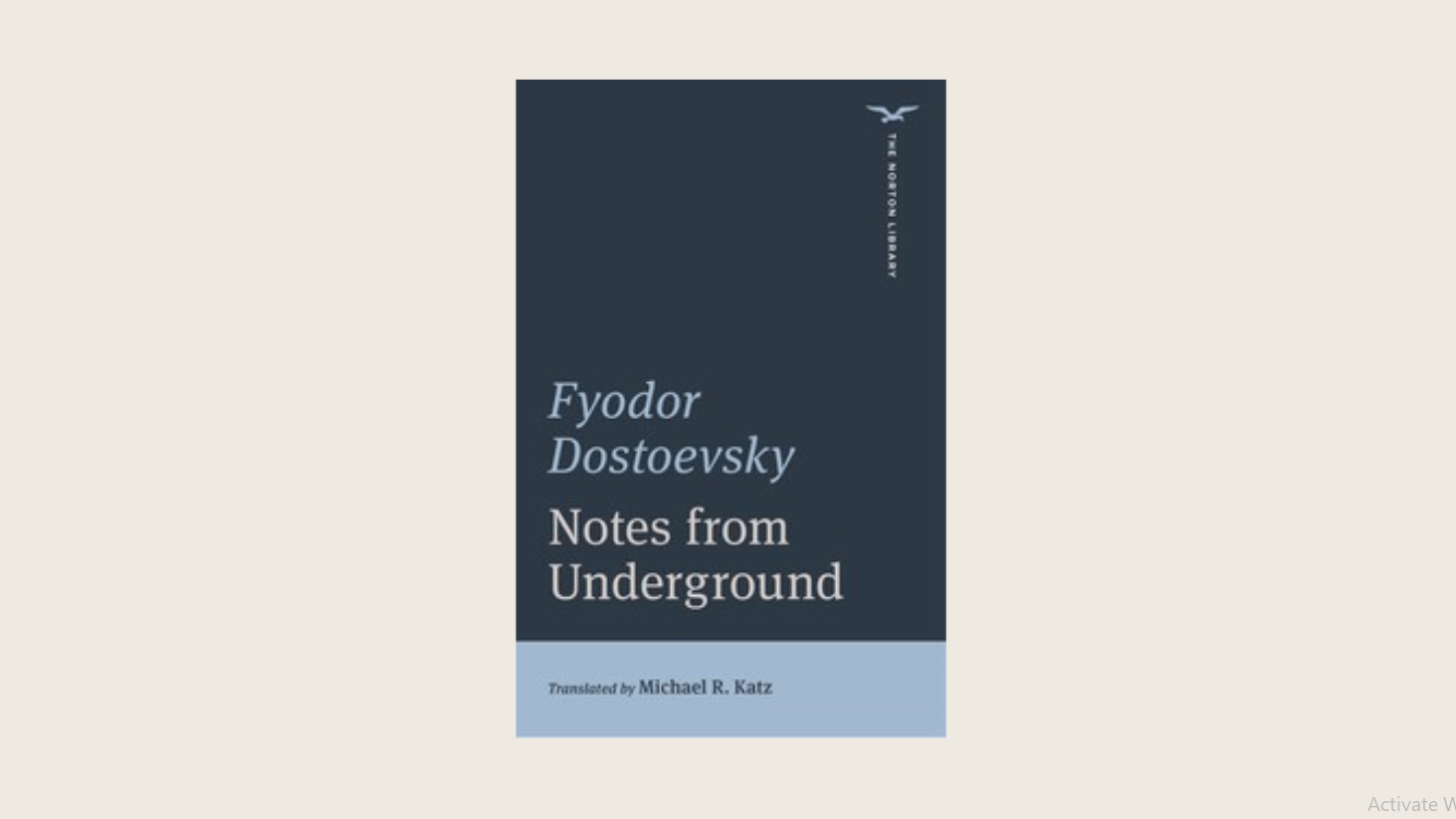
W. W. Norton / Norton Library — Michael R. Katz. Norton lists this standalone paperback at 176 pages, ISBN 9780393870862, published 14 December 2021. The value of this edition is proportion: it gives you a modern Katz translation in a compact reading volume without turning a short, volatile novella into a course packet.
Why choose it: Katz is the safest default for a serious beginner because his contemporary English keeps the speaker’s reasoning legible while preserving the need to stop and argue with him. Main trade-off: readers who need documents, criticism, or extensive contextual apparatus should move to Norton Critical or Broadview rather than expect this reading edition to do both jobs.
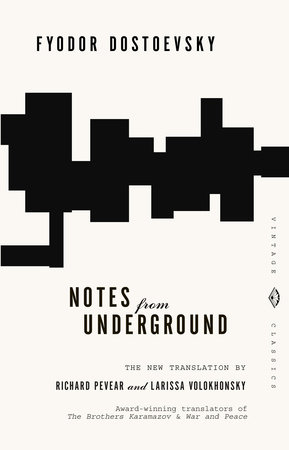
Vintage Classics — Richard Pevear and Larissa Volokhonsky. The paperback is ISBN 9780679734529, first issued in Vintage Classics in 1994. Penguin Random House’s current trade record describes the presently supplied text as a second edition with translation updates made for Dostoevsky’s bicentenary.
Why choose it: this is the natural print route for readers who specifically want the Pevear–Volokhonsky approach and who may also sample the 2026 Alan Turton audio. Main trade-off: do not assume exact line-for-line synchronization with that recording. The audio metadata cites the 1993 translation copyright, while the current print record says the translation has since been updated.
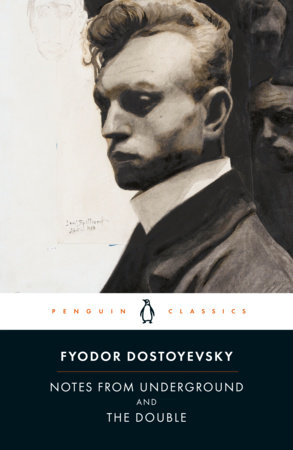
Penguin Classics — Ronald Wilks, with The Double. This 2009 paperback, ISBN 9780140455120, runs to 352 pages and pairs the two shorter works. Penguin also identifies an introduction by Robert Louis Jackson, chronology, bibliography, table of ranks, and notes.
Why choose it: it is stronger than a bare standalone if you want to place the Underground Man beside Dostoevsky’s earlier experiments in divided consciousness. Main trade-off: it is a larger book than you need for one novella, and its audio ecosystem does not give you the same clean translation match now documented for Pevear–Volokhonsky.
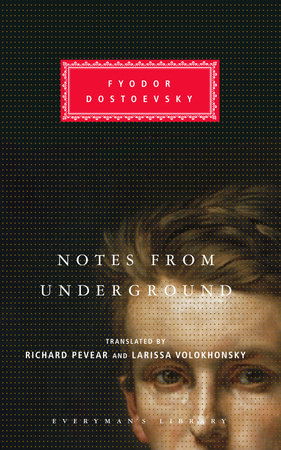
Everyman’s Library — Pevear and Volokhonsky. Penguin Random House identifies this as a 160-page hardcover, ISBN 9781400041916, published 23 March 2004, with an introduction by Richard Pevear.
Why choose it: it gives a reader who already wants the Pevear–Volokhonsky text a dedicated hardcover rather than a disposable study copy. Main trade-off: the higher-production format does not give you a different translation from Vintage, so the extra value is material and library-oriented, not a new textual argument.
Best inside this format: the Norton Library Michael R. Katz edition, because it gives most first-time readers the best balance of contemporary English, compactness, and textual seriousness. Choose Vintage if Pevear–Volokhonsky is your translation priority, Penguin if you want The Double and notes in the same volume, and Everyman’s if the object itself matters.
Kindle and Ebook
Vintage ebook — Pevear and Volokhonsky. Penguin Random House identifies ISBN 9780307784643, published 12 January 2011. An exact OverDrive record lists Kindle Book, OverDrive Read, and EPUB formats under Knopf Doubleday, with both translators named. Best for: broad digital access to a modern translation. Trade-off: because the ebook predates the publisher’s later “second edition” wording for the paperback, do not assume every digital file contains the newest print revisions.
Best inside this format: the official Vintage Pevear–Volokhonsky ebook, because its publisher, translators, ISBN, and library formats are all explicit, making it the safest broadly portable modern English file. If you have chosen Katz in print, use Norton’s Katz ebook instead so your quotations and searches match.
Audiobook
Naxos / Nicholas Boulton
Recorded Books / George Guidall
LibriVox / Bob Neufeld
Echo Point Books & Media — Alan Turton, Pevear–Volokhonsky translation. Apple Books names Turton, Echo Point, the translators, and a 23 March 2026 release; OverDrive independently labels the edition unabridged, gives ISBN 9798349136917, and records a runtime of 5:25:41. Why it leads: it is the most completely documented modern-translation recording found in current listings. Trade-off: narrator preference remains subjective, and metadata cannot tell you whether Turton’s vocal choices suit your ear.
Best inside this format: Alan Turton’s Echo Point recording, because its narrator, audio publisher, Pevear–Volokhonsky basis, unabridged status, ISBN, release date, and runtime are all documented. Compare the official sample before buying or borrowing, because metadata cannot settle voice preference.
Podcast and Companion Audio
Best inside this format: the LRB Close Readings episode, because it is tightly focused on the exact work and places form, intellectual history, and the Underground Man’s voice in the same critical conversation. Use it after reading, when interpretation becomes a second pass rather than a substitute first pass.
Free, Public-Domain, and Library Sources
Standard Ebooks is the best free reading file. It takes the Garnett text and does what a public-domain digital edition should do: identify the translator, document its sources, provide multiple device formats, and give the book a coherent contents structure. Project Gutenberg #600 is the better utility source when you want plain text, broad compatibility, or a simple canonical download record. Wikisource is useful when you want page-linked historical context rather than the smoothest reading interface.
For a modern translation at library cost, search by translator and ISBN, not title alone. WorldCat’s record for OCLC 31124008 identifies the 1994 Vintage Pevear–Volokhonsky print edition; an exact OverDrive record identifies the 2011 P&V ebook and its Kindle/EPUB formats. Your local holdings will differ. The cited OverDrive page proves that this exact digital edition exists in the library ecosystem, not that every library licenses it.
Readers who know Russian can also consult the Russian Wikisource text, which records the work’s 1864 publication in Epoch, nos. 1–2 and 4. That is a reference route, not an English beginner edition.
Best inside this format: Standard Ebooks, because it gives the Garnett translation the cleanest documented free ebook production among the sources compared. For a modern translation, the better no-purchase route is a library search by exact edition through WorldCat and your local OverDrive/Libby catalogue.
Critical, Student, and Collector Options
Best for serious study: Norton Critical Edition, second edition. Norton identifies Michael R. Katz as editor, ISBN 9780393976120, 272 pages, and a 2000 second edition. It combines Katz’s annotated translation with “Backgrounds and Sources,” responses, eleven critical interpretations, chronology, and bibliography. That density is exactly why it is excellent for a seminar and unnecessary for many first recreational readings.
Best for classroom context: Broadview, translated and edited by Kirsten Lodge. Broadview identifies a 2014 edition, ISBN 9781554812219, 176 pages, with a contemporary translation and contextual materials including Fourier, Chernyshevsky, Dostoevsky’s letters and other writings, Russian critical reception, and period images. It is the strongest choice when the assignment is not merely “read the novella” but “understand what it was arguing against.” Broadview’s current official cover endpoint failed verification during this article’s image audit, so the edition is discussed without reproducing its cover.
Best collector-oriented option: Everyman’s Library. The value is straightforward: a dedicated hardcover presentation of the Pevear–Volokhonsky translation with Pevear’s introduction. It is not more authoritative merely because it is a hardcover; choose it when you want a long-term shelf copy of that translation, not because premium format substitutes for critical apparatus.
Best inside this format: the Norton Critical Edition for serious study, because it joins a named modern translation to the documentary and critical material required to test interpretations rather than merely receive them. Broadview is the better classroom-context alternative; Everyman’s is the collector pick.
Final Recommendation
The practical answer to Notes from Underground Print vs Audiobook is to make print your base text unless accessibility or circumstance points elsewhere. The work is short enough that you lose little portability and gain a great deal of control over rereading. Audio is most illuminating as a second pass, when hearing the Underground Man as an addressed voice can expose pressures that silent reading flattened.
First-time reader: Norton Library / Katz in print, because it is a modern standalone reading copy that keeps the verbal argument easy to revisit.
Student: Norton Critical Edition, because its Katz text is surrounded by sources, responses, criticism, chronology, and bibliography.
Serious rereader: Vintage P&V print plus the Alan Turton audio, because comparing visual and spoken versions of the same translation lineage makes rhetorical differences audible—while the edition-update caveat keeps the comparison honest.
Casual reader: the official Vintage ebook, because it is portable, searchable, clearly attributed, and less cumbersome than a critical edition.
Commuter or listener: Alan Turton / Echo Point, because it is unabridged and its P&V basis, narrator, runtime, and publisher are all documented.
Budget reader: Standard Ebooks / Garnett, because it is a carefully produced free file; use a library search when a modern translation matters more than zero cost.
Collector: Everyman’s Library P&V hardcover, because it adds a dedicated hardcover format without pretending that material presentation changes the translation.
Accessibility-focused reader: the unabridged Turton audiobook as main text plus the official Vintage ebook for search and adjustable type, because the pair preserves access to both continuous voice and retrievable wording.
FAQ
What does Notes from Underground Print vs Audiobook come down to?
Print is better for a first serious encounter because you can stop, annotate, and compare contradictions immediately. Audiobook is better for continuous vocal pressure. If you can use both, print should govern the wording and audio should test how the voice changes when spoken.
Which translation should a beginner choose?
Michael R. Katz is the strongest default here because the Norton Library edition gives a contemporary standalone reading text without heavy apparatus. Pevear and Volokhonsky are the better choice if you specifically want their translation lineage or want to compare with the 2026 Alan Turton recording.
Can the audiobook replace print?
Yes when accessibility, commuting, or listening preference makes audio the practical main format. For close study, no: audio makes quotation recovery and rapid comparison slower. Pairing an unabridged recording with a searchable ebook recovers much of what audio alone loses.
Is the Alan Turton audiobook definitely the same text as the current Vintage paperback?
Do not assume that. The audiobook metadata identifies Pevear and Volokhonsky and cites the 1993 translation copyright; Penguin Random House now describes the current paperback as a second edition with translation updates. The translation lineage matches, but exact wording may not.
Is the free Project Gutenberg version complete?
Project Gutenberg presents a standalone complete English text and explicitly identifies Constance Garnett as translator. The issue is not missing chapters; it is that Garnett’s 1918 English is historically older and the edition has less apparatus than modern study editions.
Which edition has the best notes for students?
Choose the Norton Critical Edition for the broadest integrated critical dossier, because it combines Katz’s text with backgrounds, responses, criticism, chronology, and bibliography. Choose Broadview when nineteenth-century polemical context and classroom source materials are the priority.
Is the Everyman’s Library edition worth it?
It is worth considering if you already want the Pevear–Volokhonsky translation in a dedicated hardcover. It is not the best student edition and does not add a new translation, so its value is ownership and format rather than extra textual authority.
Related BookInLight Reading Guides
The Karamazov Choice: Why Print Should Lead and Audio Should Follow — a larger-scale Dostoevsky case study in why navigation, translation provenance, and audio matching matter.
The Kindle Verdict on Crime and Punishment — useful for understanding how a Dostoevsky ebook should be checked for translator identity rather than judged by storefront alone.
The Portable Inferno: Reading Dostoevsky’s Demons on Screen — a companion guide to the gains and losses of reflowed digital Dostoevsky.
The Price of a Classic: What Dover Thrift Editions Give—and Withhold — relevant when comparing cheap public-domain access with modern translation and editorial apparatus.
This guide was prepared for BookInLight’s Philosophical Literature editorial desk. Bibliographic review, source verification, edition comparison, audiobook-metadata review, link checking, and factual cross-checking were conducted against publisher records, library catalogues, public-domain repositories, and identified companion-audio sources available at the time of publication. Factual corrections, overlooked editions, updated availability information, interpretive suggestions, and constructive reader feedback are welcome.
Editorial art direction, visual composition, source-strip design, cover selection, and image presentation are credited to the BookInLight Art Department. Individual book covers and provider identities remain the property of their respective publishers, designers, artists, platforms, companies, and rights holders; BookInLight does not claim authorship of those original assets. Complete republication, reproduction, translation, or reuse of this article requires prior written authorization from BookInLight.
Sources and Further Reading
Primary Text and Publication History
Russian Wikisource: Записки из подполья — consulted for the Russian title and the 1864 Epoch publication record, nos. 1–2 and 4.
Project Gutenberg, ebook #600 — consulted for Garnett attribution, file formats, update record, and U.S. public-domain status.
Print Editions and Translations
W. W. Norton: Norton Library / Michael R. Katz — consulted for translator, date, ISBN, page count, dimensions, ebook ISBN, and cover source.
Penguin Random House Retail: Vintage Classics / Pevear–Volokhonsky — consulted for ISBN, publication record, current second-edition wording, and cover correspondence.
Penguin Classics: Ronald Wilks, Notes from Underground and The Double — consulted for translator, introduction, ISBN, date, page count, notes and supporting apparatus.
Everyman’s Library: Pevear–Volokhonsky hardcover — consulted for format, introduction, ISBN, date, page count, and cover source.
Norton Critical Edition, second edition — consulted for Katz text, edition status, ISBN, page count, backgrounds, responses, criticism, chronology, and bibliography.
Broadview Press: Kirsten Lodge edition — consulted for translator/editor, ISBN, date, page count, and contextual contents.
Ebook, Free, and Library Sources
Vintage ebook, ISBN 9780307784643 — consulted for publisher, translators, release date, and edition identity.
OverDrive record for the Vintage ebook — consulted for Kindle Book, OverDrive Read, EPUB, ISBN, publisher, and translator metadata.
Standard Ebooks: Garnett edition — consulted for source text, device formats, production history, and copyright-jurisdiction warning.
WorldCat OCLC 31124008 — consulted for the 1994 Vintage print edition identity and library discovery route.
Audiobook Recordings
Apple Books: Alan Turton / Echo Point — consulted for narrator, P&V basis, audio publisher, release date, runtime display, and translation copyright statement.
OverDrive: Alan Turton / Echo Point — consulted for unabridged status, ISBN 9798349136917, release date, and 05:25:41 duration.
Naxos AudioBooks NA0340 — consulted for Nicholas Boulton, Constance Garnett, unabridged bundle status, release, track list, and current catalogue availability notice.
OverDrive: George Guidall / Recorded Books — consulted for narrator, publisher, unabridged status, and library presence.
LibriVox Version 2: Bob Neufeld — consulted for reader, runtime, catalogue date, and section structure.
Podcasts and Companion Materials
London Review of Books, Close Readings — consulted for episode date, participants, scope, and subscriber-access limitation.
The Slavic Literature Pod: “Notes from Underground (w/ Dr. Kaitlin Shirley)” — consulted for episode date, guest credentials, and thematic scope.
Image Credits
- Cover, visual comparison row: Notes from Underground, Norton Library paperback, Michael R. Katz translation, W. W. Norton, 2021. Source: W. W. Norton edition page. Cover rights remain with the publisher and respective rights holders.
- Cover, visual comparison row: Notes from Underground, Vintage Classics paperback, Richard Pevear and Larissa Volokhonsky translation, ISBN 9780679734529. Source: Penguin Random House Retail edition page. Cover rights remain with the publisher and respective rights holders.
- Cover, visual comparison row: Notes from Underground and The Double, Penguin Classics paperback, Ronald Wilks translation, 2009. Source: Penguin Random House edition page. Cover rights remain with Penguin Classics and respective rights holders.
- Cover, visual comparison row: Notes from Underground, Everyman’s Library hardcover, Pevear–Volokhonsky translation, 2004. Source: Penguin Random House edition page. Cover rights remain with Everyman’s Library and respective rights holders.
- Cover, detailed print profile: Notes from Underground, Norton Library paperback, Michael R. Katz translation, W. W. Norton, 2021. Source: W. W. Norton edition page. Repeated intentionally for edition recognition.
- Cover, detailed print profile: Notes from Underground, Vintage Classics paperback, Pevear–Volokhonsky translation, ISBN 9780679734529. Source: Penguin Random House Retail edition page. Repeated intentionally for edition recognition.
- Cover, detailed print profile: Notes from Underground and The Double, Penguin Classics paperback, Ronald Wilks translation, 2009. Source: Penguin Random House edition page. Repeated intentionally for edition recognition.
- Cover, detailed print profile: Notes from Underground, Everyman’s Library hardcover, Pevear–Volokhonsky translation, 2004. Source: Penguin Random House edition page. Repeated intentionally for edition recognition.