The Best Format for Reading The Decline and Fall of the Roman Empire is print, preferably David Womersley’s complete three-volume Penguin Classics edition, because Gibbon’s scale, footnotes, recurring arguments, and long chronological movement reward stable page navigation and deliberate rereading. A searchable complete ebook is the strongest companion. First-time readers who are unlikely to finish several thousand pages should choose Womersley’s one-volume abridgment instead, while avoiding anonymous bargain editions and audio recordings whose abridgement status is unclear.
Quick verdict
Best overall format
Print. It gives Gibbon’s notes, chapter architecture, names, dates, and long arguments the physical stability they need.
Best source inside that format
Penguin Classics, edited by David Womersley. Choose the complete three-volume set for the full work or his abridgment for a realistic first reading.
Best companion format
A complete searchable ebook. The Modern Library collection is the strongest paid option; Standard Ebooks is the best free reading copy.
Use caution with
Unlabelled one-volume editions and short audio versions. Many omit large portions of the text, notes, or connective argument.
Best Overall Format: Best Format for Reading The Decline and Fall of the Roman Empire
Gibbon’s history was originally issued in six volumes, and modern editions solve that scale in radically different ways. Some preserve the whole work in three or six physical volumes. Others select representative chapters, excerpts, or narrative bridges. The shortened title The Decline and Fall of the Roman Empire can therefore identify either a complete text or a severe abridgment; the title alone does not establish what is inside.
Print wins because this is not merely a linear narrative. Gibbon repeatedly pauses for footnotes, source criticism, religious controversy, institutional description, geography, and retrospective judgment. A physical edition allows the reader to keep a place in the main narrative while checking notes, maps, introductions, chronology, and earlier passages. The work’s long sentences also benefit from a stable page that does not reflow whenever the font size changes.
Ebooks are nevertheless unusually useful here. Search can locate an emperor, city, theological dispute, or recurring phrase across thousands of pages in seconds. The ideal arrangement is therefore not print instead of digital, but a reliable print text for sustained reading and a complete ebook for search, travel, quotation checking, and accessibility.
Audiobook editions help readers sustain momentum through a work that may take months, but audio suppresses the visual hierarchy between narrative and notes. Names, dates, dynasties, and geographical transitions can pass too quickly without a printed reference. Podcast and lecture material is best used to frame Gibbon’s intellectual world rather than replace the book.
Use caution: Gibbon should be read as a monumental work of Enlightenment history, argument, and prose—not as a substitute for current scholarship on late antiquity, Christianity, Islam, Byzantium, or the fall of the western empire.
For most serious readers, the Best Format for Reading The Decline and Fall of the Roman Empire is the complete Womersley print edition supported by a searchable digital text. For readers testing whether Gibbon’s style and scale suit them, Womersley’s abridged paperback is the more intelligent starting point.
Format verdict: Print is the strongest main format because it preserves orientation across Gibbon’s chapters, notes, chronology, and multi-century narrative. The decisive choice is whether to read the complete work or a responsible abridgment.
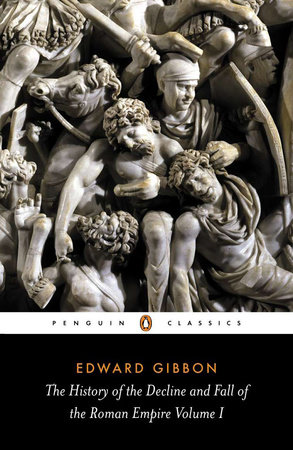
Penguin Classics Complete Edition — David Womersley
Best for: Serious first-hand reading of the complete work, academic use, quotation, and long-term reference.
Why this over alternatives: Womersley’s edition presents the entire six-volume history in three substantial Penguin volumes with modern editorial framing. It is the clearest default when textual completeness and informed reading matter more than portability.
Main trade-off: Each paperback is physically thick, and the full set demands a major commitment of time, shelf space, and attention.
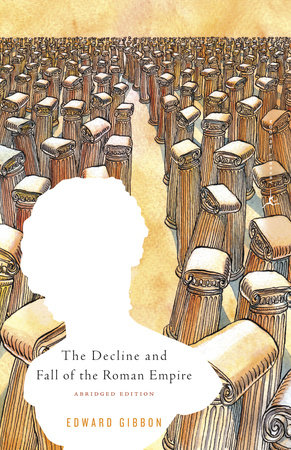
Modern Library Abridged Edition — Hans-Friedrich Mueller
Best for: Courses, book groups, and readers who want the historical sweep in one substantial volume.
Why this over alternatives: Mueller’s abridgment is designed to retain the overall trajectory while giving particular attention to religion and the rise of Islam. Its single-volume structure is easier to assign and finish than the complete work.
Main trade-off: It is still an abridgment. Readers studying Gibbon’s exact structure, full documentation, or complete rhetorical development need a complete edition.
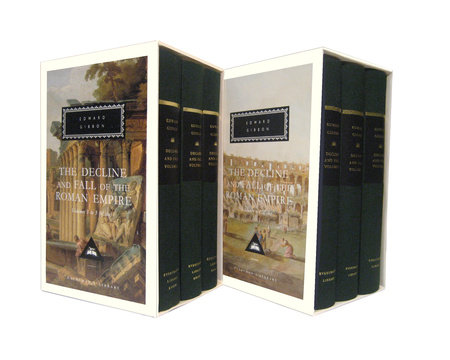
Everyman’s Library Six-Volume Edition — Hugh Trevor-Roper
Best for: Collectors, gift buyers, durable rereading, and readers who prefer shorter individual volumes.
Why this over alternatives: The six-volume arrangement is easier to hold than the thick Penguin paperbacks. Publisher specifications include sewn cloth bindings, acid-free paper, ribbon markers, maps, tables, indices, appendices, Gibbon’s notes, and Trevor-Roper’s introductory material.
Main trade-off: It is the expensive choice, and its editorial basis is less attractive than Womersley’s for readers whose priority is modern textual scholarship rather than physical production.
Best inside this format: The complete Penguin Classics edition edited by David Womersley, because it best combines textual completeness, modern editorial authority, and practical availability. Readers who are unsure about committing should begin with Womersley’s separate one-volume abridgment rather than an unverified cheap reprint.
Kindle and Ebook
Kindle / Ebook
Format verdict: Ebook is the best companion format and a credible main format for readers who need search, adjustable type, screen-reader support, and one-device portability. It weakens stable pagination and makes complicated notes easier to lose.
Modern Library Complete and Unabridged Ebook
Best for: Readers who want a complete commercial ebook with a clearly identified editorial basis.
Why this over alternatives: This collection brings the complete work into one digital package and identifies the J. B. Bury editorial tradition. It includes Gibbon’s notes, Bury’s introduction and index, and a later introduction by Daniel J. Boorstin. Searchability makes it especially effective beside a print edition.
Main drawback: A file of this scale can feel unwieldy on small screens, and ebook pagination may not correspond with printed citations.
Penguin Abridged Ebook — David Womersley
Best for: A first reading on Kindle, Kobo, tablet, or phone when completion matters more than textual comprehensiveness.
Why this over alternatives: Womersley’s selection uses bridging commentary to preserve a sense of the complete argument and movement of the history. That editorial mediation is more valuable than a random low-cost “complete” ebook whose text, notes, and navigation are poorly documented.
Main drawback: It cannot support research requiring omitted chapters or the complete texture of Gibbon’s argument.
Standard Ebooks Complete Edition
Best for: Budget readers who want a clean, complete, downloadable digital reading copy.
Why this over alternatives: Standard Ebooks concentrates on typography, navigation, semantic structure, and device-friendly packaging. It is generally more pleasant for continuous reading than an older raw public-domain conversion.
Main drawback: It remains a public-domain textual presentation rather than a substitute for Womersley’s modern editorial work or a current scholarly introduction.
Best inside this format: The Modern Library complete and unabridged ebook, because it supplies a clearly identified complete text, notes, index, and introductions in one searchable package. Standard Ebooks is the better choice when free access and cleaner device formatting matter more than modern scholarly framing.
Audiobook
Audiobook
Format verdict: Audiobook is valuable for continuity, commuting, and accessibility, but it is weaker than print for names, dates, footnotes, source disputes, and navigation. Use it as a companion unless listening is your primary accessible format.
Charlton Griffin — Audio Connoisseur
Best for: Listeners determined to hear the entire work through one comprehensive listing.
Why this over alternatives: The publisher metadata identifies this production as unabridged, narrated by Charlton Griffin, and approximately 126 hours 31 minutes long. The single complete listing reduces the risk of accidentally purchasing only one segment of a multi-volume production.
Main drawback: A narrator accompanies the reader for more than one hundred hours, so vocal compatibility matters enormously. Listen to the sample before purchasing; metadata cannot settle personal listening preference.
David Timson — Naxos AudioBooks
Best for: Readers who prefer to buy and complete Gibbon in clearly divided stages.
Why this over alternatives: Naxos distributes Timson’s unabridged reading as a sequence of volumes. The structure can make the project psychologically manageable and allows readers to alternate individual audio volumes with print.
Main drawback: The complete production must be assembled from separate parts. Confirm that all required volumes are available in your region before beginning.
Philip Madoc — Naxos Abridged Production
Best for: Sampling Gibbon’s narrative voice and historical sweep without committing to a complete 100-plus-hour production.
Why this over alternatives: The listing clearly identifies Part 1 as abridged and gives a runtime of roughly 7 hours 54 minutes. That transparency makes it safer than short recordings that do not explain what has been omitted.
Main drawback: It is not the complete work and should never be cited or represented as though it were.
Best inside this format: The Charlton Griffin Audio Connoisseur recording is the safest complete-audio recommendation because the listing explicitly identifies it as unabridged and provides a full-work runtime. Compare its sample with David Timson’s before buying, because narrator preference is inseparable from a project of this length.
Podcast and Companion Audio
Podcast / Companion Audio
Format verdict: Companion audio is useful for understanding Gibbon as an Enlightenment historian, the controversy surrounding religion, and the historical problems behind “decline.” It cannot reproduce the book’s evidence, prose, or architecture.
BBC In Our Time — Edward Gibbon
Best for: Listening before starting the book.
Why this over alternatives: The discussion focuses directly on Gibbon’s life, ideas, intellectual setting, and most famous work rather than offering a generic survey of Rome. It gives new readers a framework for understanding why the history was written as it was.
Main drawback: It introduces the historian more than it guides the reader chapter by chapter.
Oxford Podcasts — Urbane Skepticism: Gibbon vs. Watson
Best for: Readers approaching Gibbon’s treatment of Christianity, scepticism, and religious controversy.
Why this over alternatives: The lecture places Gibbon’s religious criticism within English Deism and considers Bishop Richard Watson’s response. It is therefore most useful alongside the controversial early-Christian chapters rather than as general Roman history.
Main drawback: Its focus is narrow and theological; it does not map the complete historical narrative.
BBC In Our Time — The Roman Empire’s Collapse in the Fifth Century
Best for: Historical context after reading Gibbon’s account of the western empire.
Why this over alternatives: It addresses the problem of Roman collapse directly and helps readers distinguish the modern historical question from Gibbon’s eighteenth-century formulation.
Main drawback: It concerns the fifth-century western collapse rather than the whole span of Gibbon’s history, which continues through Byzantium and the fall of Constantinople.
Best inside this format: BBC In Our Time’s episode on Edward Gibbon, because it addresses the author, the work, and the intellectual assumptions a reader must recognize before treating the history as either literature or historical argument.
Free, Public-Domain, and Library Sources
Free / Public Domain / Library
Format verdict: Free sources are excellent for searching, sampling, backup access, and budget reading. The chief risk is assuming that every free text represents the same editorial version, notes, navigation, and proofreading standard.
Standard Ebooks
Best for: Free continuous reading on an ereader, tablet, or accessible digital device.
Why this over alternatives: It provides a complete, carefully packaged ebook with stronger typography and navigation than most raw public-domain files. It is the most frictionless free starting point for ordinary reading.
Main drawback: Readers needing Womersley’s editorial analysis or a current scholarly apparatus still need a modern edition.
Project Gutenberg
Best for: Download flexibility, browser reading, text search, and access to the Milman-commentary tradition.
Why this over alternatives: Gutenberg offers multiple downloadable formats and a complete contents route. It is useful when a reader needs plain text, older-device support, or a dependable no-cost backup.
Main drawback: Formatting and navigation can vary among files, and the editorial basis is historical rather than current.
Wikisource — J. B. Bury Edition
Best for: Browser-based consultation, chapter linking, and checking a public-domain Bury text.
Why this over alternatives: Wikisource connects transcribed text to edition-specific page scans and identifies the Bury edition. That is useful for readers who want to inspect where a passage sits in a historical printed source.
Main drawback: It is less comfortable than a dedicated ebook for reading thousands of pages sequentially.
Internet Archive — Bury Facsimile
Best for: Examining scans, original pagination, title pages, notes, and the physical arrangement of an older scholarly edition.
Why this over alternatives: A scan preserves bibliographic evidence that reflowable text removes. It is therefore stronger for verification than for casual reading.
Main drawback: Page-image reading is slower, particularly on phones and accessibility devices.
WorldCat and Libby
Best for: Borrowing a modern print or ebook edition without purchasing it.
Why this over alternatives: WorldCat helps locate specific editions in library catalogues, while Libby may provide the complete Modern Library ebook through participating libraries. Borrowing is especially sensible before committing to a multi-volume print purchase.
Main drawback: Holdings, licences, waiting lists, and regional access vary by library.
Gibbon’s original text is in the public domain in many jurisdictions, but readers should still check local copyright rules and the usage terms attached to a specific digital edition or platform.
Best inside this format: Standard Ebooks, because its complete text, clean design, and device-ready navigation make it the strongest free reading copy. Use Wikisource or Internet Archive when edition-specific verification and scanned pagination matter more than comfort.
Critical, Student, and Collector Options
Critical / Student / Collector
Format verdict: There is no single edition equally suited to classroom completion, complete textual study, and luxury collecting. The correct choice depends on whether the reader needs selection, full documentation, or durable physical production.
Best Student Starting Edition — Womersley Abridged
Best for: Undergraduate reading, structured self-study, and a first encounter with Gibbon.
Why this over alternatives: The edition is abridged by a major modern editor of the complete text and uses bridging commentary rather than pretending that selected passages constitute the whole book. It gives readers a defensible path through Gibbon’s argument.
Main drawback: It is unsuitable when an assignment, quotation, or research question requires omitted material.
Best Complete Study Edition — Womersley Penguin Classics
Best for: Graduate study, historiography, close reading, and complete citation.
Why this over alternatives: It preserves the complete work while supplying modern editorial guidance from the scholar responsible for both the complete and abridged Penguin versions. Readers can therefore move from the abridgment to the full text without changing editorial perspective.
Main drawback: Its three thick paperbacks are less elegant and less comfortable in the hand than the six-volume Everyman arrangement.
Best One-Volume Course Alternative — Modern Library
Best for: A course emphasizing the complete historical arc, religion, and Islam within a single assignable volume.
Why this over alternatives: The Mueller abridgment is more expansive in physical size than Womersley’s shorter selection and is explicitly designed for readers and classes needing the sweep of the work within one term.
Main drawback: The selection principles differ from Womersley’s, and neither abridgment can replace the complete text for serious source work.
Best Collector Edition — Everyman’s Library
Best for: A permanent home library, gifting, repeated reading, and readers who value binding quality.
Why this over alternatives: The cloth bindings, sewn construction, acid-free paper, ribbons, and six-volume division make it the edition most likely to remain pleasant after years of handling.
Main drawback: It is a premium acquisition and should not be purchased merely to discover whether the reader enjoys Gibbon.
Best inside this format: Womersley’s Penguin Classics editions, because the abridged and complete versions together create the strongest progression from first reading to advanced study. Choose Everyman’s only when physical quality and collectability outweigh the need for Womersley’s modern editorial framework.
Final Recommendation
The Best Format for Reading The Decline and Fall of the Roman Empire remains a dependable print edition paired with searchable digital access. The exact edition should follow the reader’s purpose rather than a universal assumption that complete is always better or that shorter is always easier.
First-time reader
Penguin’s Womersley abridgment in print. Its selection and connective commentary offer the best chance of finishing while understanding the work’s shape.
Student
Use the edition assigned by the course. Without an assigned text, choose Womersley abridged for survey work and Womersley complete for research.
Serious rereader
Complete Womersley Penguin plus a searchable ebook. This combination gives the best balance of textual authority, navigation, and quotation checking.
Casual reader
Womersley abridged or Mueller’s Modern Library abridgment. Choose Womersley for compactness and editorial bridges; choose Mueller for a broader one-volume course-style treatment.
Commuter / listener
Charlton Griffin’s unabridged Audio Connoisseur recording with an ebook nearby. Audio maintains momentum; digital search restores names and context.
Budget reader
Standard Ebooks plus library borrowing. Read the complete free text and borrow a Womersley or Modern Library introduction when available.
Collector
Everyman’s Library six-volume set. Its smaller volumes, sewn cloth bindings, paper, ribbons, maps, and reference materials justify the premium.
Accessibility-focused reader
Modern Library complete ebook or Standard Ebooks, supported by unabridged audio. Adjustable text and screen-reader compatibility should take priority over fixed print pages.
The decisive recommendation is simple: buy the complete Womersley Penguin edition when you intend to study and finish Gibbon over time; buy Womersley’s abridgment when you want the strongest realistic first encounter; use the Modern Library complete ebook or Standard Ebooks as the searchable companion.
FAQ
What is the Best Format for Reading The Decline and Fall of the Roman Empire?
Print is best for the main reading experience because Gibbon requires stable navigation between narrative, notes, names, dates, and long arguments. A complete searchable ebook is the best companion. Audio is most effective when paired with print or digital reference access.
Should a first-time reader choose an abridged edition?
Usually, yes. Womersley’s one-volume Penguin abridgment is a responsible entry because its selection and bridging commentary disclose that material has been removed while preserving the overall movement of the work. A reader who enjoys it can proceed to the complete edition.
Which modern print edition is complete?
David Womersley’s Penguin Classics edition presents the complete work across three physical volumes. The Everyman’s Library edition is also complete and divides the text into six hardcover volumes. Verify that a listing includes every required volume before purchasing a used or partial set.
What is the best Kindle edition of Gibbon?
The Modern Library complete and unabridged collection is the safest paid Kindle recommendation because the publisher identifies its editorial basis and included notes, index, and introductions. Readers wanting a shorter first reading should consider Womersley’s Penguin abridgment instead.
What is the best audiobook of The Decline and Fall of the Roman Empire?
Charlton Griffin’s Audio Connoisseur production is the safest complete recommendation because its listing clearly identifies it as unabridged and approximately 126 hours 31 minutes long. David Timson’s Naxos production is a strong alternative distributed in separate volumes. Compare narrator samples before committing.
Is Standard Ebooks better than Project Gutenberg for Gibbon?
Standard Ebooks is better for most continuous reading because its typography, navigation, and device packaging are more refined. Project Gutenberg is better when a reader wants additional download options, plain text, older-device compatibility, or access to its specific Milman-based presentation.
Should I choose Audible or Libro.fm?
Choose the recording before choosing the platform. Narrator, publisher, completeness, and whether the book is divided into separate volumes matter more than the retailer. Audible carries complete unabridged options; Libro.fm also lists Gibbon recordings, including clearly labelled abridgments. Regional catalogues may differ.
Is Gibbon still reliable as modern Roman history?
Gibbon remains essential for the history of historical writing, Enlightenment thought, literary prose, and later arguments about empire. He should not be the reader’s only authority on Roman decline, Christianity, late antiquity, Islam, or Byzantium. Pair him with recent scholarship appropriate to the period being studied.
Source Notes and Editorial Method
This guide compared publisher records for the complete and abridged Penguin Classics editions, the Modern Library print and ebook editions, and the Everyman’s Library set; retailer and audio-publisher metadata for audiobook narrator, runtime, and abridgement status; and direct records from Standard Ebooks, Project Gutenberg, Wikisource, Internet Archive, WorldCat, Libby, BBC-distributed podcast listings, and Oxford Podcasts. Links and availability were checked in July 2026, but prices, regional rights, library access, and retailer inventory can change.
The Best Format for Reading The Decline and Fall of the Roman Empire was determined by textual completeness, editorial transparency, navigation, physical usability, accessibility, source verification, and the likelihood that the intended reader will actually complete and understand the chosen version.
Illustration credit: Bookinlight