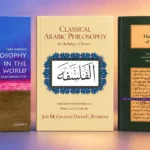
Illustration by Bookinlight Art Desk
The best books on phenomenology do more than explain a philosophical school. They train the reader to notice how a world becomes available: through perception, attention, embodiment, memory, language, orientation, and the ordinary habits by which things appear as meaningful before they become theories.
This reading packet moves from an accessible introduction to the founding method of phenomenological description, then toward ontology, embodiment, and contemporary questions of orientation. The sequence is intentionally cumulative. Robert Sokolowski clarifies the grammar of the tradition; Edmund Husserl establishes its transcendental discipline; Martin Heidegger radicalizes it into an inquiry into being-in-the-world; Maurice Merleau-Ponty restores the body as the living condition of perception; Sara Ahmed shows how orientation, space, and social lines remake the field of phenomenology for contemporary humanities readers.
By Bookinlight
The Reading Lens
Best Books on Phenomenology for Learning How Experience Becomes World
Phenomenology begins from a deceptively simple refusal: do not rush past experience toward an explanation that has already decided what experience is. Its central discipline is descriptive patience. These books belong together because each reworks that discipline under new pressure: consciousness, being, the body, social space, and the lines that make some lives feel at home while others are made oblique.
Central Question
How does meaning arise before abstract theory names it?
Historical Pressure
Modern philosophy, psychology, existentialism, and critical theory all test the limits of description.
Why These Books
They form a path from method to lived body, worldhood, and social orientation.
The Reading Map
| Book | Difficulty | Rating | Why It Matters |
|---|---|---|---|
| Introduction to Phenomenology | General | ★★★★½ | The clearest doorway into the tradition’s vocabulary and method. |
| Ideas for a Pure Phenomenology and Phenomenological Philosophy | Advanced | ★★★★★ | The founding text for reduction, intentionality, and transcendental analysis. |
| Being and Time | Advanced | ★★★★★ | Turns phenomenology toward worldhood, finitude, care, and temporality. |
| Phenomenology of Perception | Intermediate | ★★★★★ | Makes the lived body central to perception, knowledge, and world. |
| Queer Phenomenology | General to Intermediate | ★★★★½ | Shows how orientation links bodies, objects, space, and social norms. |
Introduction to Phenomenology
Robert Sokolowski
Best for: Readers who want a lucid entrance before confronting Husserl, Heidegger, or Merleau-Ponty.
Difficulty: General
Intellectual role: Orientation, vocabulary, method, and conceptual discipline.
Bookinlight Rating: ★★★★½
Sokolowski’s book is the best first stop because it explains phenomenology without flattening it into a slogan about “subjective experience.” Its central contribution is pedagogical but not merely introductory: it shows how phenomenology studies the correlation between acts of consciousness and the things as given in those acts. Perception, memory, imagination, language, reference, and identity are treated not as disconnected topics but as different ways in which meaning becomes articulated. That makes the book unusually useful for humanities readers who need the method before they need the history of disputes around it.
Its value in this article is structural. Phenomenology can be intimidating because its classic works often begin after the decisive conceptual shift has already happened. Sokolowski slows that shift down. He clarifies intentionality, evidence, absence, presence, and the difference between natural and philosophical attitudes in language that remains precise. A reader coming from literature, religious studies, art history, anthropology, or political thought will benefit because the book teaches phenomenological attention without demanding prior fluency in German or French philosophical vocabulary.
Most importantly, it changes how the reader understands phenomenology by making it less mysterious and more disciplined. Phenomenology is not a retreat into private sensation. It is an inquiry into the structures by which things, persons, meanings, and worlds can appear as what they are. Sokolowski gives the reader a grammar for that inquiry.
Bookinlight Note
Read this before the primary texts if you want phenomenology to feel like a method rather than a fog of specialized terms.
Ideas for a Pure Phenomenology and Phenomenological Philosophy
Edmund Husserl
Best for: Readers ready to encounter phenomenology at its founding level of rigor.
Difficulty: Advanced
Intellectual role: The transcendental foundation of intentionality, reduction, and pure description.
Bookinlight Rating: ★★★★★
Husserl’s Ideas is where phenomenology becomes a philosophical program in the strict sense. The book’s central contribution is its account of the phenomenological reduction: a disciplined suspension of the naïve assumption that the world is simply there in the way common sense takes it to be. This suspension does not deny the world; it redirects attention toward how the world is given, intended, confirmed, doubted, remembered, anticipated, and made meaningful. In doing so, Husserl builds the conceptual machinery that later phenomenologists inherit, resist, and transform.
The book belongs here because no serious account of phenomenology can avoid its vocabulary of intentionality, noesis, noema, evidence, constitution, and transcendental subjectivity. It is demanding, and it should not be treated as a casual introduction. But its difficulty is part of its importance. Husserl is trying to secure a new beginning for philosophy: one that does not start with metaphysical speculation or empirical psychology, but with the careful description of how meaning appears to consciousness.
The reader who benefits most is someone willing to read slowly, perhaps with a guide beside the text. For such a reader, Ideas changes phenomenology from a loose concern with experience into a rigorous investigation of givenness. It makes clear why phenomenology became one of the decisive philosophical movements of the twentieth century: it made appearance itself philosophically inexhaustible.
Critical Reception
“Dahlstrom’s new translation is a blessing for Anglophone readers of Husserl.”
Andrea Staiti, Boston College
Bookinlight Note
This is the place to learn why phenomenology is not simply about experience, but about the conditions under which experience has sense.
Being and Time
Martin Heidegger
Best for: Readers interested in ontology, existence, temporality, finitude, and the worldliness of human life.
Difficulty: Advanced
Intellectual role: The transformation of phenomenology into an existential analytic of being-in-the-world.
Bookinlight Rating: ★★★★★
Heidegger’s Being and Time is not a simple continuation of Husserlian phenomenology; it is a radical redirection of its question. Instead of beginning with consciousness and its objects, Heidegger asks how the meaning of Being can be approached through the kind of being that already has an understanding of being. His term for that being, Dasein, is not a synonym for an isolated subject. Dasein is being-in-the-world: involved, practical, historical, finite, thrown into circumstances, and always already interpreting what matters.
The book belongs in this list because it expands phenomenology beyond the analysis of acts into the structures of existence. Tools, moods, anxiety, care, death, conscience, and temporality become phenomenological matters because they disclose how a world is not first encountered as a collection of neutral objects. The world is encountered through concern, use, familiarity, disruption, and possibility. For humanities readers, this is why Heidegger became indispensable to hermeneutics, theology, architecture, literary theory, political thought, and existentialism.
The reader who benefits most is one prepared for conceptual difficulty and terminological invention. The payoff is considerable. Being and Time changes phenomenology by showing that the question of appearance cannot be separated from the question of the being for whom things appear. It turns description into an inquiry into worldhood, finitude, and time.
Critical Reception
“Being and Time changed the course of philosophy.”
Richard Rorty, The New York Times Book Review
Bookinlight Note
Read Heidegger as a transformation of phenomenology from “how objects are given” to “how a world matters.”
Phenomenology of Perception
Maurice Merleau-Ponty
Best for: Readers drawn to embodiment, perception, psychology, art, and the lived body.
Difficulty: Intermediate
Intellectual role: The embodied correction of both intellectualism and reductionist accounts of perception.
Bookinlight Rating: ★★★★★
Merleau-Ponty’s great contribution is to make the body central without reducing the body to a physiological machine. Phenomenology of Perception argues that perception is not a late mental representation added to raw sensation. It is the primary way a living body inhabits a world. The body is not merely an object among objects; it is the situated power through which space, movement, gesture, depth, habit, and expression become intelligible. This is why the book remains crucial for philosophy, cognitive science, aesthetics, disability studies, psychology, and theories of embodiment.
It belongs in this article because it corrects a common misunderstanding of phenomenology as an inward turn toward consciousness. Merleau-Ponty shows that experience is already corporeal and worldly. The hand reaching, the eye tracking, the body balancing, the voice speaking, and the habit that knows before reflective thought intervenes: these are not secondary data but philosophical evidence. His work also gives humanities readers an especially fertile language for reading painting, performance, architecture, dance, and everyday spatial life.
The ideal reader is someone who wants phenomenology to touch actual life: perception, movement, illness, expression, and the ambiguity of being both subject and object. The book changes the theme by making appearance inseparable from embodiment. A world is not viewed from nowhere. It is lived through a body that perceives before it explains.
Critical Reception
“The human condition is at stake in this book.”
Simone de Beauvoir
Bookinlight Note
This is the phenomenological classic for readers who want to understand why perception is already a form of world-involvement.
Queer Phenomenology
Sara Ahmed
Best for: Readers interested in orientation, queer theory, space, race, objects, and social norms.
Difficulty: General to Intermediate
Intellectual role: A contemporary expansion of phenomenology into orientation, social space, and critical theory.
Bookinlight Rating: ★★★★½
Ahmed’s Queer Phenomenology is essential because it shows that phenomenology remains powerful when it is brought into contact with queer theory, race, colonial histories, and the politics of space. The book’s central concept is orientation. To be oriented is not only to face a direction; it is to have certain objects within reach, to feel at home along certain lines, and to inherit pathways that make some movements easy and others difficult. Ahmed takes a phenomenological concern with bodies and worlds and asks how social norms organize what bodies can approach.
The book belongs at the end of this sequence because it demonstrates that phenomenology is not confined to early twentieth-century debates about consciousness. It can analyze furniture, rooms, family lines, sexuality, whiteness, colonial orientation, and the ordinary directions that shape social life. Its method is both philosophical and critical: it asks what becomes visible when attention turns toward the lines that are usually treated as natural, straight, inherited, or simply “there.”
The reader who benefits most is someone who wants phenomenology to speak to contemporary humanities questions without losing conceptual precision. Ahmed changes the reader’s understanding of the theme by showing that experience is always spatially and socially arranged. Phenomenology here becomes a way to ask who is allowed to feel at home in a world, and who must find another line through it.
Bookinlight Note
Ahmed makes phenomenology contemporary by showing that orientation is philosophical, bodily, and political at once.
FAQ
What is the best first book on phenomenology?
Robert Sokolowski’s Introduction to Phenomenology is the strongest first choice for most readers because it explains intentionality, appearance, absence, memory, and evidence without oversimplifying the tradition.
Should I read Husserl before Heidegger?
A basic grasp of Husserl helps, but it is not strictly required. Heidegger transforms Husserl’s method, so reading Sokolowski first and then selected Husserl passages can make Being and Time more legible.
Which phenomenology book is best for embodiment?
Phenomenology of Perception is the essential work on embodiment. Merleau-Ponty shows how perception, movement, habit, and world are structured through the lived body.
Is phenomenology still relevant to contemporary theory?
Yes. Ahmed’s Queer Phenomenology shows how phenomenological questions about body, space, object, and direction can illuminate sexuality, race, social norms, and political life.
What Reading Still Keeps Open
The best books on phenomenology do not close the question of experience; they keep it disciplined. Taken together, these five works show that appearance is never simple. It is intentional, worldly, bodily, historical, and oriented. A table, a room, a gesture, a path, a mood, a memory, or a word can become philosophically significant when the reader learns to ask how it is given, what it allows, and what it keeps out of reach.
That is phenomenology’s lasting gift to the humanities. It does not ask us to abandon theory. It asks us to earn theory by returning to the textures of lived meaning.