Illustration by Bookinlight Art Desk
Modern History
Five Books That Explain the Dreyfus Affair
A reading path through the trial, family drama, antisemitism, republican crisis, and legal afterlife of the scandal that divided modern France.
By Bookinlight


A Scandal That Became a Test of the Republic
The Dreyfus Affair began as a miscarriage of military justice and became a referendum on the moral architecture of modern France. Captain Alfred Dreyfus, a Jewish officer in the French army, was convicted of treason in 1894 on false evidence, publicly degraded, and sent to Devil’s Island. Yet the deeper story was never only whether one man had been wronged. It was whether a republic could admit error when army prestige, nationalism, Catholic reaction, antisemitism, and the popular press had fused into a single machinery of certainty. The best books on the Dreyfus Affair do not merely recount a trial; they show how law, truth, emotion, and public identity can become inseparable in moments of national panic.
Why the Best Books on the Dreyfus Affair Still Matter
To read the Affair seriously is to watch modern politics being assembled in public: the intellectual as a political actor, the newspaper as a weapon, the army as sacred institution, the courtroom as theatre, and the minority citizen as a test of universal rights. These five books belong together because each corrects a possible simplification. Bredin gives the large narrative. Samuels restores Dreyfus himself. Harris complicates the emotional and ideological camps. Brown situates the Affair within France’s culture wars. Begley asks why its lessons remain legally and morally urgent.
The Reading Lens
When a Legal Error Becomes a National Self-Portrait
The Dreyfus Affair is most revealing when read not as an isolated scandal but as a pressure chamber. In it, documents, rumors, handwriting, honor, race, religion, and military secrecy were compressed until France had to choose what counted as truth. These books show that the Affair was a crisis of institutions and imagination: a society could see the evidence and still refuse the innocent man because accepting his innocence threatened its preferred image of itself.
Central Question
What happens when a state can preserve authority only by sacrificing justice?
Historical Pressure
Defeat by Prussia, republican fragility, antisemitic journalism, and military secrecy turned a treason case into a national rupture.
Why These Books
Together they move from courtroom narrative to biography, social psychology, cultural history, and contemporary legal meaning.
Five Books for Reading the Dreyfus Affair Seriously
The Affair: The Case of Alfred Dreyfus
Jean-Denis Bredin
Best for: Readers who want the definitive narrative foundation.
Difficulty: Intermediate
Intellectual role: The panoramic reconstruction of the case, its actors, documents, and reversals.
Bookinlight Rating: ★★★★★
Bredin’s classic account remains the indispensable first serious encounter with the Affair because it understands chronology as moral drama. The book follows the bordereau, the secret dossier, the degradation ceremony, Zola’s intervention, the Rennes retrial, and the long struggle toward exoneration without reducing the Affair to a simple morality play. Its strength is institutional: readers see how an error became protected by hierarchy, and how truth required alliances among lawyers, journalists, family members, military dissenters, and political figures. It is ideal for readers who need the whole architecture before moving into more specialized interpretations.
Critical Reception
“With precision and insight, Jean-Denis Bredin defines these attitudes at the turn of the century.“
Bookinlight Note: Read this book with a timeline beside you; its power lies in showing how small procedural decisions accumulate into historic injustice.
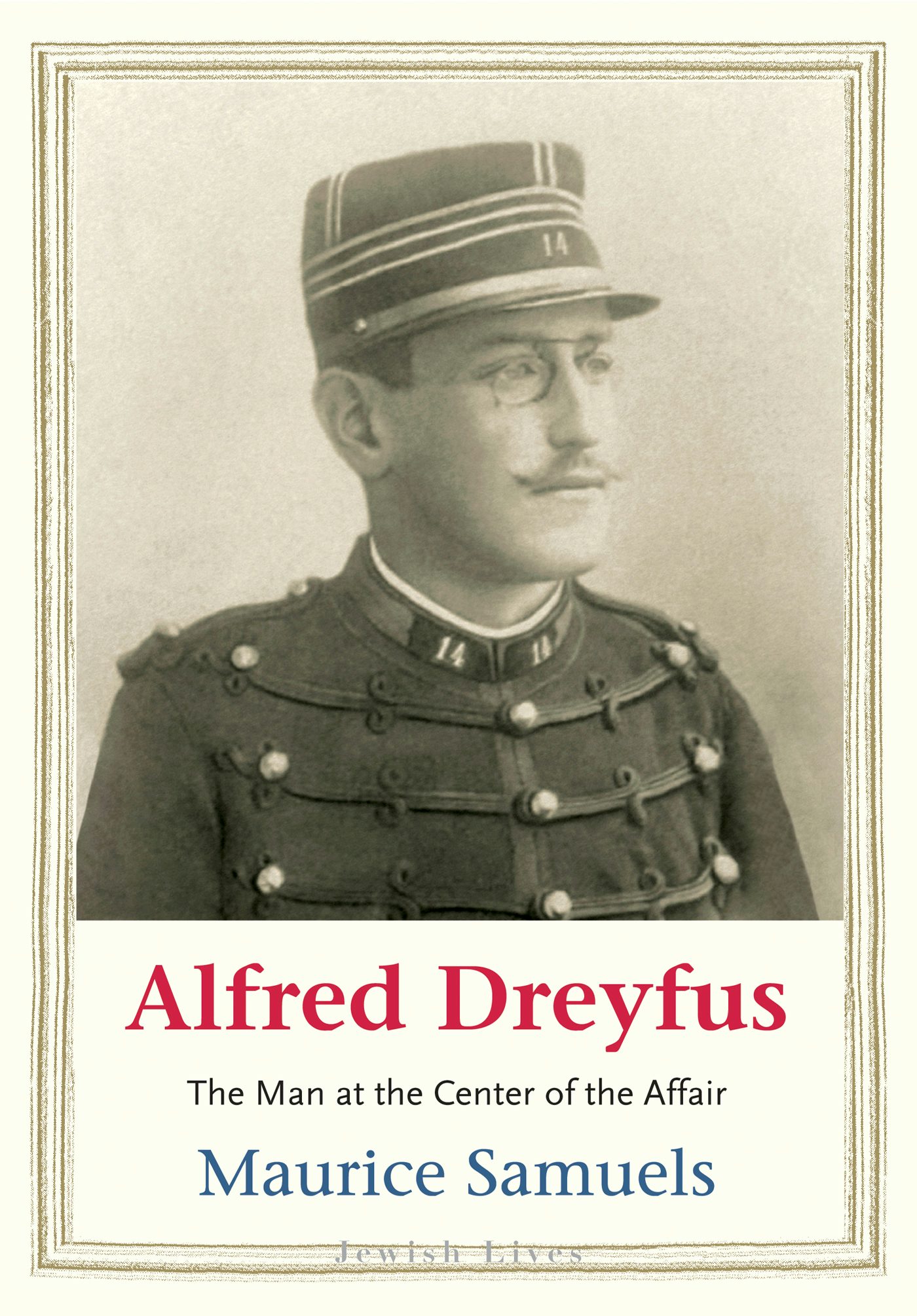
Alfred Dreyfus: The Man at the Center of the Affair
Maurice Samuels
Best for: Readers who want Dreyfus restored as a person, not merely a symbol.
Difficulty: General
Intellectual role: The biographical corrective to readings that turn Dreyfus into an empty emblem.
Bookinlight Rating: ★★★★★★
Samuels shifts attention from the Affair as national spectacle to Dreyfus as husband, officer, Alsatian Jew, and survivor of institutional cruelty. That change matters. Too often Dreyfus appears in history as a passive occasion for other people’s heroism: Zola writes, Picquart investigates, Clemenceau campaigns, intellectuals mobilize. Samuels asks what is lost when the innocent man becomes secondary to the cause created in his name. The biography is especially valuable for readers interested in Jewish emancipation, assimilation, family archives, and the intimate cost of public injustice.
Critical Reception
“An admirable introduction not only to its nominal subject but to great historical events.“
Bookinlight Note: Pair this with Bredin to prevent the historical case from swallowing the human being at its center.
Dreyfus: Politics, Emotion, and the Scandal of the Century
Ruth Harris
Best for: Readers interested in emotion, ideology, and social division.
Difficulty: Advanced
Intellectual role: The deep social history of Dreyfusards and anti-Dreyfusards.
Bookinlight Rating: ★★★★★
Harris offers the most searching account of why the Affair became emotionally inhabitable for both sides. Her achievement is to resist the lazy division between enlightened Dreyfusards and irrational anti-Dreyfusards without surrendering the central fact of Dreyfus’s innocence. She explores letters, networks, religious cultures, friendships, rivalries, and moral self-images. The result is a history of polarization before the age of social media: people did not simply hold opinions; they joined worlds of feeling in which honor, faith, nation, justice, and betrayal acquired radically different meanings.
Bookinlight Note: Use Harris for seminar discussion: her book asks how righteous causes can still contain vanity, rivalry, blindness, and myth.
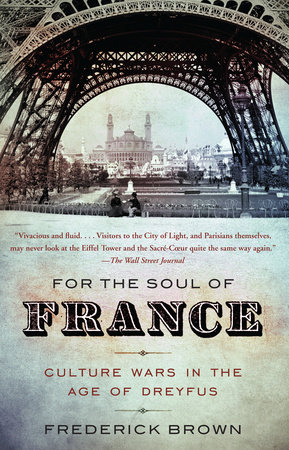
For the Soul of France: Culture Wars in the Age of Dreyfus
Frederick Brown
Best for: Readers who want the Affair inside wider French culture wars.
Difficulty: Intermediate
Intellectual role: The cultural and political landscape surrounding the scandal.
Bookinlight Rating: ★★★★★★
Brown’s book is not only about Dreyfus, and that is precisely its usefulness. It places the Affair among the symbolic struggles of late nineteenth-century France: Sacré-Cœur and the Eiffel Tower, Catholic finance and republican modernity, humiliation after 1870 and the hunger for national restoration. Brown helps readers see why the Dreyfus case detonated rather than merely unfolded. The scandal arrived in a society already divided over what France was, what it had lost, and which institutions could claim the nation’s soul.
Critical Reception
“Richly illustrated. . . . An important work of cultural and intellectual history.“
Bookinlight Note: This is the strongest bridge from the Affair to modern culture-war vocabulary, though Brown’s scale is broader than the case itself.
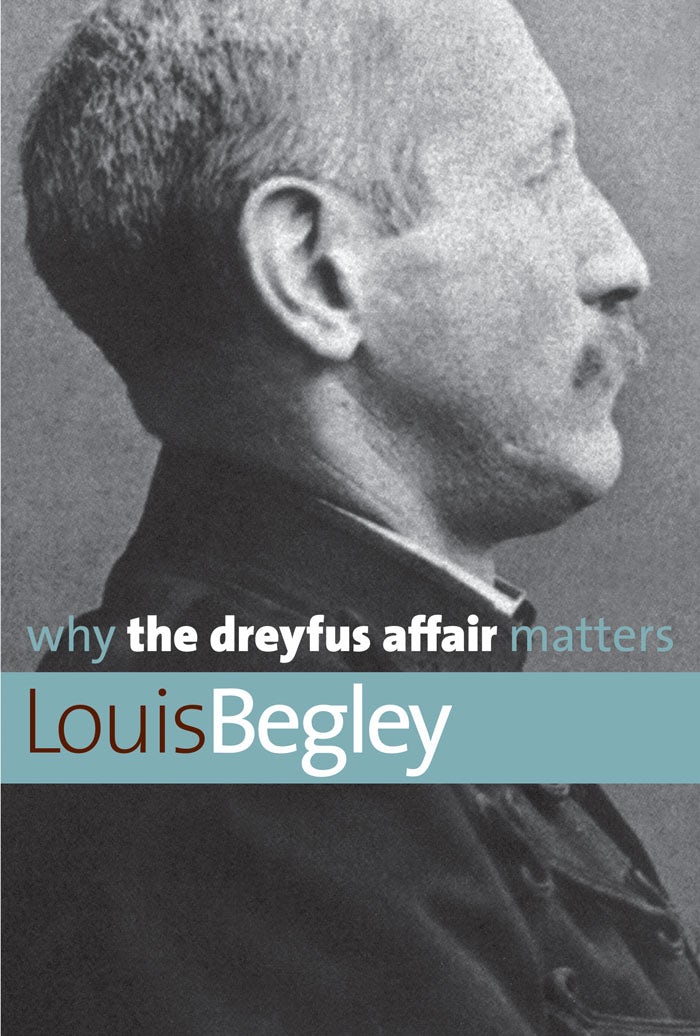
Why the Dreyfus Affair Matters
Louis Begley
Best for: Readers who want a concise legal and contemporary interpretation.
Difficulty: General to Intermediate
Intellectual role: The civic argument for why the case remains alive.
Bookinlight Rating: ★★★★★
Begley writes as a novelist-lawyer, which gives this short book its unusual energy. He is interested not only in what happened but in why due process, state secrecy, perjured evidence, military prestige, and public fear remain recurring dangers in liberal democracies. The book is less exhaustive than Bredin or Harris, but it is sharper as a civic essay. It works beautifully as a concluding read because it converts historical knowledge into a question of present responsibility: how much injustice will a public tolerate when authority claims necessity?
Bookinlight Note: Assign Begley after the historical works; it turns the Affair into a live argument about law under pressure.
How These Books Speak to One Another
The sequence matters. Bredin gives the reader factual command; Samuels prevents that command from becoming impersonal; Harris explains why the Affair divided families, salons, newspapers, churches, and political factions; Brown enlarges the frame to the symbolic battles of France after defeat; Begley returns the reader to law, evidence, and public conscience. Read together, the books reveal the Dreyfus Affair as a crisis of modernity in miniature. It was at once a Jewish question, a military scandal, a media event, a republican trial, and an argument about whether public truth can survive when institutions prefer loyalty to correction.
The Reading Map
| Book | Difficulty | Rating | Why It Matters |
|---|---|---|---|
| The Affair: The Case of Alfred Dreyfus | Intermediate | ★★★★★ | Best full narrative. |
| Alfred Dreyfus: The Man at the Center of the Affair | General | ★★★★★★ | Restores the person. |
| Dreyfus: Politics, Emotion, and the Scandal of the Century | Advanced | ★★★★★ | Explains polarization. |
| For the Soul of France | Intermediate | ★★★★★★ | Gives cultural context. |
| Why the Dreyfus Affair Matters | General to Intermediate | ★★★★★ | Links law to today. |
Where to Begin
- Entry point: Start with Alfred Dreyfus if you want a human-scale introduction.
- Historical background: Move to The Affair for the full narrative machinery.
- Conceptual foundation: Read Harris to understand emotion, belief, and factional identity.
- Critical perspective: Use Brown to situate the scandal within French culture wars.
- Contemporary relevance: End with Begley for law, state secrecy, and democratic vigilance.
- Advanced reflection: Revisit Zola’s “J’Accuse” after these books and it will read less like a slogan and more like an intervention into institutional reality.
External Sources for Further Reading
Famous Trials: The Dreyfus Affair
The Last Margin
The Dreyfus Affair endures because it reveals a terrible possibility: the truth can be available and still be refused when institutions, crowds, and myths have more emotional authority than evidence. These five books show why the case cannot be reduced to antisemitism alone, legal error alone, or republican heroism alone. It was all of these, and more: a drama of modern citizenship under suspicion. For readers seeking the best books on the Dreyfus Affair, the real reward is not only knowledge of a French scandal. It is a sharper understanding of how democracies are tested when admitting innocence requires admitting collective shame.