
Illustration by Bookinlight Art Desk
Culture, Literature & Political Thought
Six Books on Literature of Exile
Exile is not only a wound in biography. In these books, it becomes a method of reading: a way to test memory, language, citizenship, and the fragile stories people build after history has removed the ground beneath them.
By Bookinlight


Exile as a Literary Condition
The best books on exile literature do not treat displacement as a single dramatic event. They ask what happens after departure: how memory reorganizes itself, how language becomes both shelter and estrangement, how political catastrophe enters private syntax, and how the lost home continues to edit the present. The literature of exile is therefore not reducible to nostalgia. It is a literature of divided perception. It sees the homeland from outside, the host country from a distance, and the self as a provisional arrangement between histories.
The six books gathered here move between criticism, memoir, fiction, graphic narrative, and refugee testimony. Together they show exile as a demanding intellectual form: at once personal, aesthetic, ethical, and political.
Why the Best Books on Exile Literature Resist Sentimentality
Sentimentality turns exile into a purified sadness. These books refuse that simplification. Said insists on the discontinuity of the exiled condition; Rushdie studies the broken mirror of migrant memory; Nabokov turns aristocratic loss into artifice and pattern; Sebald makes exile almost archival, a trail of documents, photographs, absences, and silence. Satrapi exposes the comic, bodily, and adolescent texture of political displacement, while Nayeri asks what moral performances refugees are forced to provide in order to be believed. Their shared subject is not merely leaving home. It is the pressure placed on narrative when home has become historically unstable.
The Reading Lens
The Exiled Writer as Witness, Maker, and Unsettled Citizen
Read together, these books suggest that exile is a double discipline: it wounds belonging, but it also sharpens attention. The exiled writer is never simply outside a place; he or she is often inside too many places at once. That divided position can produce distortion, longing, irony, and anger, but also unusual freedom. Exile unsettles inherited national myths because it forces the writer to notice what settled citizens are trained not to see.
Central Question
How does a writer make form out of the rupture between memory, language, and political belonging?
Historical Pressure
Revolution, colonial aftermath, war, antisemitic violence, refugee systems, and migration regimes all press against literary form here.
Why These Books
They connect exile as lived experience with exile as a method for rethinking literature, memory, and public truth.
Six Essential Books on Exile and Literary Memory
Reflections on Exile and Other Essays
Edward W. Said
Best for: Readers who want the theoretical foundation of exile as a modern intellectual condition.
Difficulty: Advanced
Intellectual role: The conceptual anchor of the list.
Bookinlight Rating: ★★★★★
Said’s great essay collection gives exile its most enduring modern vocabulary. He refuses to romanticize the exiled intellectual, yet he also shows why displacement can produce a critical vantage point unavailable to settled national consciousness. The book matters because it links literary criticism, Palestinian dispossession, modernism, humanism, and political responsibility without collapsing them into one slogan.
Bookinlight Note: Pair this with a seminar on nationalism: Said’s strength is that he makes exile neither purity nor privilege, but a difficult discipline of attention.
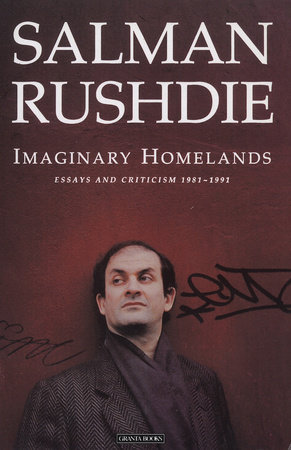
Imaginary Homelands
Salman Rushdie
Best for: Readers of postcolonial literature, migrant identity, and literary essays.
Difficulty: Intermediate
Intellectual role: The essayistic grammar of migrant imagination.
Bookinlight Rating: ★★★★★★
Rushdie’s essays make exile a problem of reconstruction. The migrant writer, he argues by example, does not possess the homeland whole; he rebuilds it from fragments, distortions, jokes, anger, and inherited languages. This is why the book remains indispensable for understanding how postcolonial fiction turns dislocation into narrative energy.
Critical Reception
“An important record of one writer’s intellectual and personal odyssey.“
Bookinlight Note: Read the title essay beside Said: where Said emphasizes fracture, Rushdie emphasizes the productive impurity of fragments.
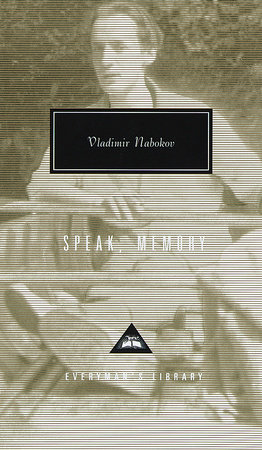
Speak, Memory
Vladimir Nabokov
Best for: Readers interested in memory, style, autobiography, and émigré modernism.
Difficulty: Intermediate
Intellectual role: The aesthetic transformation of lost aristocratic Russia.
Bookinlight Rating: ★★★★★
Nabokov’s memoir is not a political testimony in the ordinary sense. Its exile is mediated through pattern, color, lepidoptery, family memory, and the crystalline arrogance of style. Yet beneath the brilliance lies a vanished social world: pre-Revolutionary Russia, Cambridge, Berlin, Paris, and finally America. The book shows how aesthetic precision can become a defense against historical dispossession.
Critical Reception
“Scintillating … amazing glimpses into the life of a world that has vanished forever.“
Bookinlight Note: Use this book to ask whether beauty can preserve a past without falsifying the violence that ended it.
The Emigrants
W. G. Sebald
Best for: Readers drawn to memory, Holocaust aftermath, documentary fiction, and elegiac prose.
Difficulty: Advanced
Intellectual role: The spectral archive of twentieth-century displacement.
Bookinlight Rating: ★★★★★
Sebald’s four narratives appear to be biographies of German and Jewish exiles, but the book becomes stranger than biography. Photographs, recollections, documents, and quiet digressions create a literary space where memory is both evidence and haunting. Exile here is not movement alone; it is the afterlife of catastrophe in people who continue living.
Bookinlight Note: A powerful discussion question: when do photographs clarify exile, and when do they deepen the mystery of what cannot be recovered?
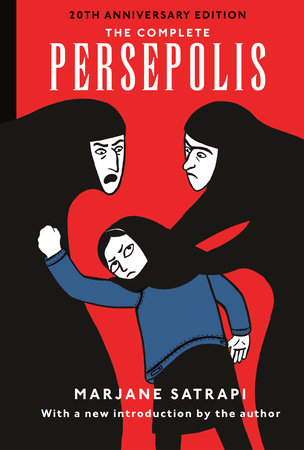
The Complete Persepolis
Marjane Satrapi
Best for: Readers seeking political memoir through graphic narrative and coming-of-age form.
Difficulty: General to Intermediate
Intellectual role: The visual memoir of revolution, adolescence, and self-imposed exile.
Bookinlight Rating: ★★★★★★
Satrapi’s graphic memoir brings exile down from abstraction into school corridors, family rooms, parties, fear, humor, and teenage misrecognition. Its black-and-white panels refuse the exoticizing gaze often placed on Iranian life. Exile becomes bodily and social: a young woman moving between Tehran and Vienna, between political terror and the ordinary absurdities of growing up.
Critical Reception
“A stunning graphic memoir…a wholly original achievement in the form.“
Bookinlight Note: Teach this beside prose memoirs to show how the graphic form makes political pressure visible without overexplaining it.
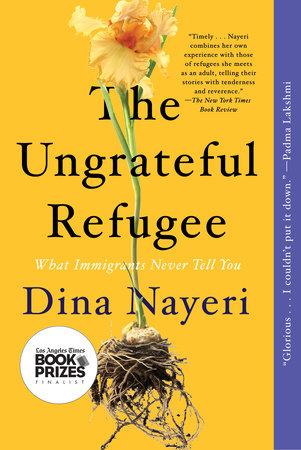
The Ungrateful Refugee
Dina Nayeri
Best for: Readers interested in asylum, testimony, moral performance, and contemporary migration.
Difficulty: General
Intellectual role: The contemporary ethical challenge to refugee storytelling.
Bookinlight Rating: ★★★★★
Nayeri’s book pushes exile literature into the present tense of asylum interviews, camps, assimilation demands, and the politics of gratitude. Its crucial insight is that refugees are not merely asked to tell the truth; they are often asked to tell a story that satisfies bureaucratic and moral expectations. This makes the book essential for readers who want contemporary relevance without losing literary force.
Bookinlight Note: This is the book to read when the word “refugee” has become a political abstraction and must be returned to voice, time, and dignity.
How These Books Speak to One Another
The sequence matters. Said gives exile a critical vocabulary; Rushdie shows how that vocabulary enters postcolonial imagination; Nabokov reveals the temptation to rescue loss through style; Sebald turns memory into a haunted archive; Satrapi makes political displacement visible through a radically accessible graphic form; Nayeri brings the argument to the contemporary refugee system, where stories are judged by institutions before they are heard as literature. Across the six books, exile is neither a genre nor a biography alone. It is a pressure that changes the rules of narration. The exiled writer must decide what to preserve, what to revise, what to mourn, and what to refuse.
The Reading Map
| Book | Difficulty | Rating | Why It Matters |
|---|---|---|---|
| Reflections on Exile and Other Essays | Advanced | ★★★★★ | Defines exile as critical consciousness. |
| Imaginary Homelands | Intermediate | ★★★★★★ | Turns fragmented belonging into criticism. |
| Speak, Memory | Intermediate | ★★★★★ | Shows memory becoming high style. |
| The Emigrants | Advanced | ★★★★★ | Makes exile archival and spectral. |
| The Complete Persepolis | General to Intermediate | ★★★★★★ | Visualizes exile through childhood and revolution. |
| The Ungrateful Refugee | General | ★★★★★ | Challenges the ethics of refugee storytelling. |
Where to Begin
- Entry point: Begin with The Complete Persepolis for immediacy, visual clarity, and political force.
- Historical background: Move to Speak, Memory to see how exile reshapes autobiography and aesthetic memory.
- Conceptual foundation: Read Reflections on Exile and Other Essays for the strongest theoretical framework.
- Critical perspective: Add Imaginary Homelands for postcolonial fragmentation and migrant literary identity.
- Contemporary relevance: Read The Ungrateful Refugee for asylum, gratitude, and the politics of testimony.
- Advanced reflection: End with The Emigrants, where exile becomes the ghostly form of twentieth-century memory.
External Sources for Further Reading
Edward Said’s “Reflections on Exile” at Granta
The Last Margin
The best books on exile literature do not offer exile as a metaphor that floats free of history. They return us to specific losses: Palestine, India and Britain, Russia, the ruins of European Jewry, revolutionary Iran, refugee camps, asylum offices, and the intimate humiliations of being asked to explain one’s survival. Yet they also show that exile can generate a demanding literary intelligence. The exiled page remembers what nations forget, interrupts easy belonging, and asks whether home is ever only a place, or also a language we keep rebuilding after it has been broken.