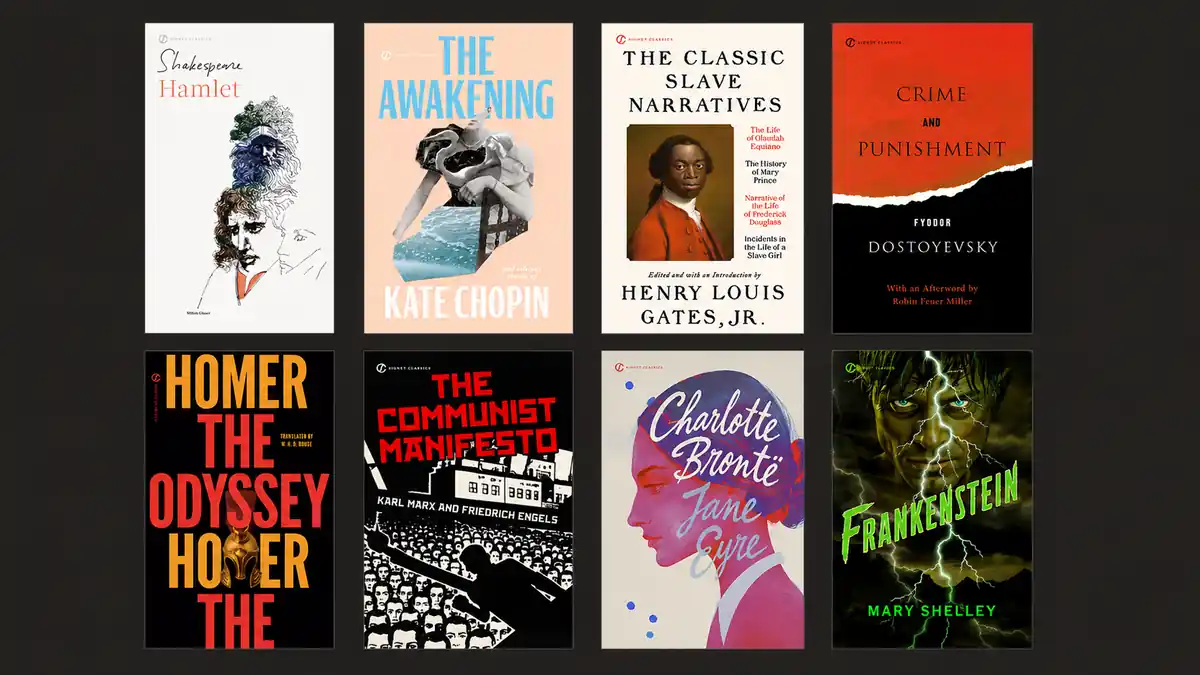
Are Signet Classics Worth Buying? Yes—when price, portability, and an inviting first encounter matter more than the newest translation or a fully documented text. The series remains one of the cheapest routes into major literature, and its best volumes are intelligently framed. Its weakness is structural inconsistency: the logo promises a family resemblance, not one uniform editorial standard.
The Short Answer
Are Signet Classics Worth Buying? For general reading and many introductory courses, often yes: they offer complete, portable texts at unusually low U.S. list prices, frequently with a substantial introduction or afterword. For translation-sensitive study, textual scholarship, or heavily annotated teaching, inspect the individual edition first and often prefer Oxford World’s Classics, Penguin Classics, or a Norton Critical Edition.
Signet Classics solved a real publishing problem: it put culturally prestigious books into the same inexpensive, widely distributed format as popular fiction. That democratic achievement still matters. A student can buy Hamlet, Jane Eyre, or The Communist Manifesto for less than many new trade paperbacks, carry the book easily, and receive more editorial guidance than a bare public-domain reprint provides.
Yet “a Signet Classic” is not a reliable shorthand for a particular kind of text. Some volumes are mature teaching editions with notes, criticism, performance history, and bibliographies. Others preserve translations chosen decades ago, then surround them with newer introductions. Still others market a familiar work attractively while leaving the copy-text or version insufficiently visible on the product page. The series should therefore be bought title by title. Its best books remain exceptional value; its weakest are inexpensive precisely because the reader is being asked to accept editorial opacity.
The Editorial Problem Signet Classics Set Out to Solve
The institutional story begins with the New American Library of World Literature, founded in 1948 by Victor Weybright and Kurt Enoch after the American operation separated from Penguin. The New American Library archive at New York University describes a company built around affordable paperback reprints of classics and serious nonfiction alongside crime, romance, and popular fiction. Distribution through newsstands, supermarkets, pharmacies, and schools was not incidental. It was the editorial model.
The problem, as NAL understood it, was less “Which text is philologically definitive?” than “How can serious reading escape the economic and social limits of the hardback bookshop?” Signet fiction and Mentor nonfiction reached roughly eighty thousand North American outlets at launch under the slogan “Good Reading for the Millions.” The current official history of Signet Classics says the two lines gradually combined into an imprint now approaching four hundred titles.
That origin explains the series’ deepest assumption: a classic is a work that should circulate broadly before it is one that must be stabilized exhaustively. Signet did not merely cheapen an existing scholarly object. It redesigned the social route by which readers met canonical books. The trade-off was built in from the start. Low price, compactness, and large distribution rewarded recognizable titles, manageable apparatus, and reusable translations. Textual documentation could be excellent, but it could not become so extensive that the book ceased to function as a mass-market paperback.
How the Project Took Shape
Signet Classics has no single clean founding moment comparable to a series launched with a prospectus and a named general editor. Its history is layered. The 1948 Signet and Mentor lists supplied the commercial infrastructure and much of the intellectual ambition; later, their classic-bearing functions converged under the Signet Classics name. NAL’s archive shows that the company regularly recruited established scholars to edit, translate, and write introductions. Its Shakespeare programme, aimed at secondary-school and college readers, developed the most coherent editorial architecture in the list.
Ownership changed repeatedly. Times Mirror bought NAL in 1960; Odyssey Partners and Ira J. Hechler acquired it in 1983; Penguin brought NAL back into its corporate family later in the decade. Penguin’s own publishing timeline records the 1986 acquisition, while the NYU finding aid dates reintegration to 1987. The difference reflects transaction and organizational chronology rather than a different intellectual history. Today the product pages identify Signet as publisher within Penguin Random House.
The continuity is commercial and rhetorical—cheap, recognizable, teachable classics—not a continuous house style of scholarship. Older translations survive beside later framing essays; some reissues update introductions without replacing the underlying text; cover systems shift from restrained modernism to bold commercial illustration. Louis Menand’s account of the American paperback revolution catches the productive contradiction: the same distribution machinery could make Orwell, Salinger, Dostoyevsky, and sensational fiction neighbors. Signet’s prestige grew not by escaping mass culture but by making literary culture operate inside it.
This structure also explains why it is misleading to search for one founding editor whose rules govern every Signet Classic. Authority has often been local to a book or subseries. Sylvan Barnet’s Shakespeare volumes display the cumulative discipline of a general editor working across related texts; a Russian novel translated earlier and repackaged later belongs to a different chain of decisions. The imprint’s history is therefore best read as a sequence of editorial settlements under one durable promise of access.
The Volumes That Best Explain the Project
These eight volumes were selected from a wider candidate pool because, together, they show the actual editorial range: the disciplined Shakespeare subseries, feminist recovery, canon expansion, inherited translation, political framing, commercial packaging, and unresolved textual ambiguity. Fame alone was not enough. Each book had to reveal a recurring Signet practice and have an exact current edition, authoritative publisher page, and matching publicly accessible cover.

Strong Teaching Edition
Hamlet: The Classroom Model at Its Most Complete
Author: William Shakespeare
Editor: Sylvan Barnet
Edition: Signet mass-market paperback, 1998; ISBN 9780451526922; 368 pages.
Why it matters: Barnet’s edition supplies an introduction, source discussion, explanatory notes, dramatic criticism, performance history, and further reading. It demonstrates how Signet can make a cheap text genuinely teachable without turning it into an academic brick.
Main limitation: It is a pedagogical edition, not a full textual apparatus documenting variants and editorial decisions at the level expected in specialist Shakespeare research.
Best suited to: Secondary and undergraduate courses, actors beginning contextual study, and general readers who want unusually rich support at a low price.
Recovery Volume
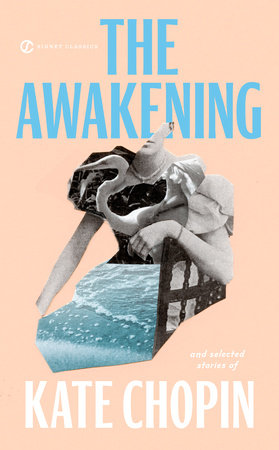
The Awakening and Selected Stories: Recovery Made Durable
Author: Kate Chopin
Editor: Barbara H. Solomon
Edition: Signet mass-market paperback, 1976; ISBN 9780451524485; 352 pages.
Why it matters: This long-lived edition belongs to the period when feminist scholarship helped move Chopin from regional-literature margins into the American classroom. Pairing the novel with stories made recovery a usable syllabus object rather than a symbolic act of inclusion.
Main limitation: An introduction important to the history of Chopin’s reception cannot substitute for newer scholarship, and the publisher page does not make the edition’s source-text policy explicit.
Best suited to: General readers and survey courses studying women’s writing, realism, regionalism, and canon revision.

Canon-Expanding Volume
The Classic Slave Narratives: Exceptional Editorial Value in a Difficult Format
Editor: Henry Louis Gates, Jr.
Edition: Revised Signet mass-market paperback, 2012; ISBN 9780451532138; 688 pages.
Why it matters: Equiano, Mary Prince, Frederick Douglass, and Harriet Jacobs appear in one inexpensive volume with Gates’s revised introduction; Equiano’s text is updated to the ninth edition, the last he revised and published. This is substantive canon expansion, not token supplementation.
Main limitation: Seven hundred pages in a pocket-sized binding impose a real physical cost, while researchers may still need separately edited narratives with fuller textual histories and annotations.
Best suited to: American-literature and history surveys, comparative reading, and readers seeking a coherent entry into the slave-narrative tradition.

Revealing Limitation
Crime and Punishment: Strong Framing around an Inherited Translation
Author: Fyodor Dostoyevsky
Translator and contributors: Sidney Monas; introduction by Leonard J. Stanton and James D. Hardy, Jr.; afterword by Robin Feuer Miller.
Edition: Signet mass-market paperback, 2006; ISBN 9780451530066; 560 pages.
Why it matters: The book demonstrates Signet’s layered method: retain a serviceable established translation, then refresh the interpretive frame with recognized Dostoyevsky scholarship. It is complete, inexpensive, and serious enough for an informed first reading.
Main limitation: Readers choosing among modern English Dostoyevskys should compare translation voice and annotation before accepting the Signet edition by default; the small format also makes a long novel visually dense.
Best suited to: Budget-conscious general readers and courses where interpretive framing matters more than translation comparison.
Translation Inheritance
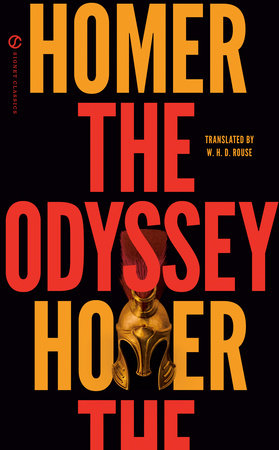
The Odyssey: A New Package for an Old Plain-Prose Strategy
Author: Homer
Translator and contributors: W. H. D. Rouse; introduction by Deborah Steiner; afterword by Adam Nicolson.
Edition: Signet mass-market paperback, 2015; ISBN 9780451474339; 384 pages.
Why it matters: Rouse’s 1937 plain-prose translation embodies an earlier ideal of immediate access. The modern introduction and afterword make the reissue intellectually livelier, while the emphatic cover advertises epic as fast narrative rather than remote monument.
Main limitation: Prose suppresses the poem’s metrical event and much of its oral texture. Readers studying translation, poetics, or contemporary Homeric interpretation should choose a newer verse version.
Best suited to: Readers wanting plot, pace, and low-friction access rather than a sustained encounter with Homeric verse form.

Political-Thought Benchmark
The Communist Manifesto: A Small Book with a Large Interpretive Frame
Authors: Karl Marx and Friedrich Engels
Contributors: Introduction by Martin Malia; afterword by Stephen Kotkin.
Edition: Authorized English translation edited and annotated by Engels, with the 1872–1888 prefaces; Signet mass-market paperback, 2011; ISBN 9780451531841; 128 pages.
Why it matters: Signet turns a short primary text into a compact historical debate by retaining Engels’s authorized version and adding two major historians. The ratio of apparatus to price is outstanding.
Main limitation: The post-Soviet framing is forceful enough to shape interpretation before and after the text; readers need alternative Marxist and intellectual-historical perspectives rather than treating the paratext as neutral.
Best suited to: Introductory political thought, modern history, and readers who want the principal historical prefaces in one inexpensive volume.
Popular-Reading Benchmark
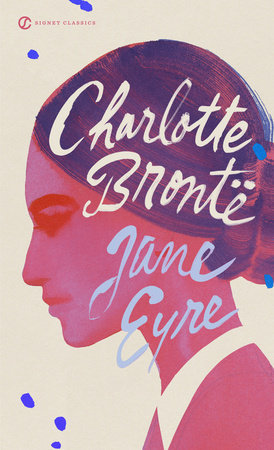
Jane Eyre: Literary Invitation before Textual Documentation
Author: Charlotte Brontë
Contributors: Introduction by Erica Jong; afterword by Marcelle Clements.
Edition: Signet mass-market paperback, 2008; ISBN 9780451530912; 480 pages.
Why it matters: The edition exemplifies Signet’s gift for making a nineteenth-century novel feel immediate. Its contributors address literary and feminist stakes in a voice closer to magazine criticism than textual scholarship, while the cover sells subjectivity rather than heritage décor.
Main limitation: Readers who need sustained notes, manuscript and publication history, or explicit discussion of the 1847 text should prefer an Oxford or Penguin scholarly edition.
Best suited to: Independent readers, book groups, and introductory courses prioritizing interpretation and accessibility.

Material-Design Benchmark
Frankenstein: When Genre Marketing Outruns Bibliographic Clarity
Author: Mary Shelley
Contributors: Introduction by Douglas Clegg; afterword by Harold Bloom.
Edition: Signet mass-market paperback, 2013; ISBN 9780451532244; 272 pages.
Why it matters: The electric horror cover embraces the novel’s popular afterlife rather than suppressing it beneath museum-like classicism. That is historically faithful to Signet’s ability to sell serious literature through mass-market visual codes.
Main limitation: The official listing does not foreground whether the text follows the 1818 or revised 1831 version—a decisive fact for scholarship. The edition should not be cited until its copyright page and textual basis have been checked.
Best suited to: First-time readers drawn by Gothic and horror traditions; not the safest default for version-sensitive study.
The Series at a Glance
What the Signet Catalogue Calls a Classic
Signet’s canon begins from durable public recognition: Shakespeare, major British and American novels, Russian fiction, Greek epic, political documents, and works already embedded in school curricula. That is not a moral failure; it is the economic foundation that permits prices this low. The catalogue’s primary unit is the work a reader already half knows by title. “Classic” therefore means culturally persistent, teachable, and capable of reaching a large paperback market.
The list has nevertheless changed the canon from within. The Awakening and Selected Stories records the consolidation of Kate Chopin’s recovery. The Classic Slave Narratives makes four foundational Black autobiographical texts available together under the authority of Henry Louis Gates, Jr. These are not marginal add-ons. They alter what an inexpensive American classics shelf can contain and what a survey course can assign without multiplying costs.
Anthology making is one of the series’ most effective mechanisms of revision. A recovery becomes durable when the inexpensive volume is easy to order, teach, and replace; it gains curricular infrastructure. Yet anthology design also concentrates editorial power. Gates’s four narratives form a persuasive genealogy, but no four-book selection can represent the full variety of testimony under slavery. Signet’s achievement is to create an entrance, not to settle the field’s boundaries.
The expansion remains uneven. Signet’s public identity is still heavily Anglophone and European, and “world literature” appears more convincingly through a narrow band of translated monuments than through sustained regional depth. The official claim of nearly four hundred titles sounds broad, but count alone cannot measure cultural balance. A catalogue can contain Homer, Dostoyevsky, and selected Asian or African works while still organizing classic status around the curricular history of the United States. Signet expands inherited canons pragmatically; it has not rebuilt the category from a genuinely multilingual or postcolonial foundation.
Translation and Textual Policy in Signet Classics
There is no visible current rule that every translated Signet Classic must be newly commissioned, revised to one house standard, or based on a specified critical source. Practice is accretive. Sidney Monas’s Crime and Punishment and W. H. D. Rouse’s Odyssey survive because they remain readable, licensable, and familiar; later scholars are then invited to reinterpret the work around them. The result can be intellectually productive, but a new introduction must not be mistaken for a new translation.
Translator visibility is better than in anonymous bargain reprints: current product pages name Monas and Rouse, and the covers may foreground the translator. Visibility, however, is not policy. It tells the buyer who made the English text, not why that version was chosen, what source edition it follows, whether it was revised, or how its language compares with alternatives. A serious buyer should treat the translator’s name as the beginning of edition choice, not its conclusion.
Rouse is the clearest case. The 1937 record in The Classical Review identifies the project plainly as an Odyssey rendered into “plain English.” That aim delivers narrative velocity, yet it removes meter from the reader’s experience. A 2015 package can modernize the paratext and cover without changing the translation’s historical premise.
Textual transparency varies just as much. The Manifesto volume names its authorized English translation and includes Engels-supervised prefaces. The slave-narrative anthology specifies the ninth edition of Equiano. By contrast, the current Frankenstein listing does not prominently identify the 1818 or 1831 text. For ordinary reading, that omission may not interrupt the novel. For citation or interpretation—where the revisions alter characterization, theology, agency, and responsibility—it matters greatly.
The sensible rule is simple: cite a Signet edition only after checking its title page, copyright page, editor’s note, and stated textual basis. The series is not inherently unreliable. It is insufficiently uniform to make reliability transferable from one volume to the next.
Introductions, Notes, and Scholarly Apparatus
Signet’s most impressive editorial habit is its willingness to commission recognizable intellectual voices for books sold at mass-market prices. Barnet on Shakespeare, Gates on slave narrative, Malia and Kotkin on Marx and Engels, and Robin Feuer Miller on Dostoyevsky represent several kinds of authority: textual editor, canon-forming scholar, historian, and interpretive critic. At its best, the series refuses the false choice between affordability and serious mediation.
The apparatus is strongest when a subseries has a stable pedagogical design. Signet Shakespeare volumes commonly combine contextual introductions, source notes, explanatory annotations, criticism, performance history, and reading lists. Elsewhere, “with an introduction and afterword” may be the entire scholarly promise. An excellent essay can orient a first reading, but it does not perform the work of line notes, chronology, bibliography, maps, variant discussion, or archival documents.
The contributors also write from identifiable moments. The political assumptions surrounding a post-Cold-War edition of The Communist Manifesto, or a 1970s recovery edition of Chopin, are part of the volume’s history. Readers should value these frames without treating them as the last word. Signet’s paratexts often deserve reading as essays in reception: they reveal how a classic was made newly legible at a particular date.
Design, Format, and the Material Idea of the Book
The recurring physical fact is the mass-market trim, generally about 4-3/16 by 6-3/4 inches in the editions examined. That size is not merely a budget compromise. It carries the memory of railway stalls, drugstores, backpacks, and pocket libraries: the classic as a book to be handled without ceremony. Portability lowers the psychological threshold of beginning a difficult work.
It also imposes limits. A 128-page Communist Manifesto is comfortable in this form; a 688-page anthology or 560-page Dostoyevsky becomes a compact block with dense pages and a tighter reading posture. The format does not document archival construction, so low replacement cost should not be confused with demonstrated longevity. Prospective collectors should distinguish an inexpensive working copy from a binding chosen for decades of repeated consultation.
The covers are historically more interesting than their inconsistency suggests. The official archive of Milton Glaser’s Signet and Signet Classics work records a modernist phase in which hand-drawn intelligence and generous space could dignify a cheap paperback without making it look institutional. The current Hamlet retains that lineage. Other covers use collage, saturated typography, or overt horror imagery. The shared logo is weaker than Penguin’s black spine or Oxford’s academic consistency, but the visual looseness reflects Signet’s older genius: it speaks in the commercial language most likely to bring a particular classic to a new reader.
Are Signet Classics Worth Buying? Price, Availability, and Academic Use
For readers asking Are Signet Classics Worth Buying, the current U.S. list prices of the eight editions examined give a persuasive answer: approximately $5.95 to $9.95 for mass-market paperbacks, verified on 29 July 2026. These are publisher list prices, not temporary retailer discounts. At that level, Signet competes less with deluxe classics than with photocopied course packets, used books, and bare digital texts.
Availability is strongest in the U.S. market and through international sellers supplied by Penguin Random House; it should not be assumed from one retailer in every territory. Several titles also have ebooks, although format coverage varies. The paperbacks are easy to replace, annotate, and assign where minimizing student expense is a priority. Their compact page references are stable within the ISBN, but instructors should specify the exact edition because introductions, translations, and pagination differ across competing books.
Academically, the series is best at the boundary between independent reading and survey teaching. Hamlet and The Classic Slave Narratives can support substantial course work. Frankenstein is less secure when version choice is central. Graduate researchers should rarely cite the logo; they should cite a verified text. Collectors, meanwhile, may value historic cover phases and the social history of the paperback, but current copies are working books rather than luxury objects.
For teaching, the economic advantage becomes collective. A difference of several dollars per student can determine whether everyone owns the same edition, and shared pagination makes discussion easier. The savings are most defensible when the course does not sacrifice its central method: a survey may use the Signet Jane Eyre successfully, while a seminar on Brontë’s textual history cannot. Affordability is an academic virtue only when edition choice remains aligned with the questions being asked.
How Signet Classics Compares with Its Closest Rivals
Penguin Classics is the closest broad literary rival, but it usually offers a more legible series-wide promise: authoritative texts, distinguished introductions, and a large international translation programme. Penguin is preferable when the translator is central, when editorial currency matters, or when a reader wants a collection with stronger bibliographic coherence. Signet usually wins on compactness and price.
Oxford World’s Classics generally provides the clearest undergraduate apparatus: explanatory notes, chronologies, bibliographies, and introductions written with classroom use in mind. For Jane Eyre or version-sensitive Frankenstein, Oxford is often the safer teaching choice. Its trade paperback is larger, usually costlier, and less pocketable.
Norton Critical Editions serve a different function. Their combination of annotated text, contexts, and criticism makes them superior seminar instruments when a course needs primary documents and competing critical approaches in one book. They are rarely the most graceful first encounter with a novel and are not designed to be the cheapest pocket edition.
At the opposite end, Dover Thrift Editions can undercut Signet and offer complete, unabridged public-domain texts. Dover is sensible when the reader needs the work and little else. Signet justifies the extra dollars when its introduction, notes, translation, or anthology design adds genuine editorial value. The right comparison is therefore functional: Signet is strongest as a mediated cheap edition, not as the cheapest possible text or the most scholarly possible one.
Limitations and Contradictions
The central contradiction is that Signet’s branding is more consistent than its editorial practice. The same colophon can cover a carefully structured Shakespeare edition, a recovered American writer, an old prose translation with new essays, or a minimally documented reprint. Readers trained to trust series identity must unlearn that habit here.
A second contradiction concerns democratization. Low prices broaden access, but they also favor works with guaranteed curricular or cultural recognition. Canon expansion occurs, sometimes impressively, yet the series remains dependent on the very inherited canon that finances it. Global range is real but not structurally deep; translation renewal is selective; women writers and Black traditions can be strongly represented in particular volumes without reorganizing the list’s European and Anglophone center.
Finally, compactness can undermine the reading it enables. A pocket Shakespeare is liberating. A pocket Dostoyevsky or 688-page anthology may save money while taxing eyesight, margins, and repeated classroom use. None of these objections makes Signet obsolete. They make selection an editorial act. The question Are Signet Classics Worth Buying cannot be answered at logo level; it must be answered by translator, editor, text, apparatus, and physical scale.
Related BookInLight Reading Guides
Editorial research and authorship: This article was researched and written by the BookInLight Department of Publishing History and Book Studies, with bibliographical review, edition checking, source verification, and editorial fact-checking by the BookInLight research team. Readers who identify a factual correction, an overlooked source, a missing volume, a valuable interpretive possibility, or another constructive suggestion are warmly invited to share it.
Art direction and rights: The editorial art direction, visual composition, cover selection, and presentation of images were developed by the BookInLight Art Department. Individual book covers remain the property of their respective publishers, designers, artists, and rights holders and are credited below. Complete republication, reproduction, translation, or reuse of this article, whether in print or digital form, is permitted only with prior written authorization from BookInLight.
Sources and Further Reading
Series History and Editorial Mission
Penguin Random House International Sales, “Signet Classics: A Short History”. Supports the 1948 launch context, the convergence of Signet and Mentor, the “Good Reading for the Millions” mission, and the current approximate catalogue size.
Fales Library and Special Collections, New York University, New American Library Archive, MSS.070. Supports founding, distribution, ownership, editorial staffing, classroom orientation, and NAL’s use of scholars.
Penguin Books, “Our Story Timeline”. Supports corporate chronology and Penguin’s acquisition of New American Library.
Thomas L. Bonn, Heavy Traffic and High Culture: New American Library as Literary Gatekeeper in the Paperback Revolution, Southern Illinois University Press, 1989. Used for the relationship among paperback economics, cultural prestige, editorial mediation, and canon formation.
Louis Menand, “Pulp’s Big Moment,” The New Yorker, 5 January 2015. Used for the social and commercial context of the American mass-market paperback.
Translation, Design, and Defining Volumes
Milton Glaser Studio, “Signet / Signet Classics”. Supports discussion of Glaser’s visual contribution to Signet’s classic-paperback identity.
The Classical Review, 1937 bibliographical record for W. H. D. Rouse’s Odyssey in plain prose. Supports the historical dating and stated translation strategy.
Penguin Random House, Hamlet, ISBN 9780451526922. Supports exact edition, price, format, dimensions, editor, and listed apparatus.
Penguin Random House, The Awakening and Selected Stories, ISBN 9780451524485. Supports exact edition, editor, contents, publication date, and physical details.
Penguin Random House, The Classic Slave Narratives, ISBN 9780451532138. Supports exact contents, Gates’s revised introduction, Equiano’s ninth edition, and physical details.
Penguin Random House, Crime and Punishment, ISBN 9780451530066. Supports exact translator, contributors, publication date, price, and format.
Penguin Random House, The Odyssey, ISBN 9780451474339. Supports exact translator, framing contributors, publication date, price, and format.
Penguin Random House, The Communist Manifesto, ISBN 9780451531841. Supports translation description, historical prefaces, contributors, price, and format.
Penguin Random House, Jane Eyre, ISBN 9780451530912. Supports exact contributors, publication date, price, and physical details.
Penguin Random House, Frankenstein, ISBN 9780451532244. Supports exact contributors, publication date, price, and the limits of publicly stated textual information.
Competitor Series
Penguin Books, Penguin Classics overview. Supports comparison of scale, translation programme, introductions, and series-wide editorial identity.
Oxford University Press, Oxford World’s Classics. Supports comparison of introductions, notes, chronologies, and bibliographies.
W. W. Norton, Norton Critical Editions. Supports comparison of annotated texts, contextual documents, criticism, and pedagogical purpose.
Dover Publications, Dover Thrift Editions. Supports comparison with lower-priced, complete and unabridged public-domain editions.
Image Credits
Hamlet, Signet mass-market paperback, 1998, ISBN 9780451526922. Cover image supplied on the Penguin Random House exact-edition page; cover artwork credited on the image to Milton Glaser. Rights remain with the publisher, artist, and relevant rights holders.
The Awakening and Selected Stories of Kate Chopin, Signet mass-market paperback, 1976, ISBN 9780451524485. Cover image supplied on the Penguin Random House exact-edition page. Rights remain with the publisher, designer, artist, and relevant rights holders.
The Classic Slave Narratives, revised Signet mass-market paperback, 2012, ISBN 9780451532138. Cover image supplied on the Penguin Random House exact-edition page. Rights remain with the publisher, designer, artist, and relevant rights holders.
Crime and Punishment, Signet mass-market paperback, 2006, ISBN 9780451530066. Cover image supplied on the Penguin Random House exact-edition page. Rights remain with the publisher, designer, artist, and relevant rights holders.
The Odyssey, Signet mass-market paperback, 2015, ISBN 9780451474339. Cover image supplied on the Penguin Random House exact-edition page. Rights remain with the publisher, designer, artist, and relevant rights holders.
The Communist Manifesto, Signet mass-market paperback, 2011, ISBN 9780451531841. Cover image supplied on the Penguin Random House exact-edition page. Rights remain with the publisher, designer, artist, and relevant rights holders.
Jane Eyre, Signet mass-market paperback, 2008, ISBN 9780451530912. Cover image supplied on the Penguin Random House exact-edition page. Rights remain with the publisher, designer, artist, and relevant rights holders.
Frankenstein, Signet mass-market paperback, 2013, ISBN 9780451532244. Cover image supplied on the Penguin Random House exact-edition page. Rights remain with the publisher, designer, artist, and relevant rights holders.