Illustration by Bookinlight Art Desk
Contemporary Philosophy
Seven Books on Merleau-Ponty and Perception
A serious reading path through the body, the visible world, perceptual faith, and the strange philosophical power of seeing before judging.
By Bookinlight




Why Perception Becomes Philosophy
To read Merleau-Ponty is to discover that perception is never merely a psychological topic. It is the place where ontology, embodiment, language, art, and politics begin to touch. The best books on Merleau-Ponty and perception do more than explain a theory of seeing; they unsettle the older image of the mind as a spectator standing apart from the world. These seven books show why perception, for Merleau-Ponty, is not raw sensation awaiting conceptual order. It is already meaningful, already bodily, already historical, and already exposed to others.
The Best Books on Merleau-Ponty and Perception Begin with the Body
The sequence below moves from Merleau-Ponty’s early confrontation with behaviorism and Gestalt psychology to his major account of the lived body, then toward perception’s consequences for art, knowledge, flesh, and late ontology. It also includes two indispensable guides: one patient chapter-by-chapter commentary and one contemporary reconstruction of perceptual motivation as a form of epistemic grounding. Together, the books reveal a thinker for whom the body is not a vessel for consciousness, but the medium through which a world first becomes inhabitable.
The Reading Lens
Perception Is Not a Window; It Is a Way of Belonging
Merleau-Ponty’s originality lies in shifting philosophy away from the fantasy of a detached subject inspecting an already finished world. Perception is not a neutral intake of data; it is the body’s practical, expressive, and vulnerable participation in meaning. These books therefore should be read as a single inquiry into how the visible world acquires depth before theory, how the body knows before judgment, and how philosophy changes when the perceiver is understood as situated, moving, and exposed.
Central Question
What if perception is already a form of understanding rather than a preliminary stage before thought?
Historical Pressure
The pressure comes from twentieth-century philosophy’s struggle with science, psychology, Cartesian dualism, and the crisis of disembodied reason.
Why These Books
They trace one arc: from behavior and the lived body to flesh, expression, perceptual faith, and contemporary epistemology.
Seven Essential Books
The Structure of Behavior
Maurice Merleau-Ponty
Best for: Readers who want the scientific and Gestalt background behind the later philosophy of perception.
Difficulty: Advanced
Intellectual role: The prehistory of the lived body.
Bookinlight Rating: ★★★★★★
This early work is not simply a preparatory text. It shows Merleau-Ponty testing the limits of behaviorism, reflex theory, and intellectualist explanation. Its central importance is that it refuses to treat behavior as a mechanical output from stimuli or as an invisible mental decision. Behavior is already structured, expressive, and worldly. Anyone who wants to understand why later Merleau-Ponty speaks of the body as a subject should begin with this difficult but decisive book.
Critical Reception
“will be received in America with distinct joy and wide interest“
Bookinlight Note: Read it as a philosophical dismantling of the machine-body before reading it as a psychology book.
Phenomenology of Perception
Maurice Merleau-Ponty
Best for: Serious readers ready for the central text.
Difficulty: Advanced
Intellectual role: The foundation of Merleau-Ponty’s philosophy of embodied perception.
Bookinlight Rating: ★★★★★
This is the indispensable work. Merleau-Ponty attacks empiricism and intellectualism because both miss the same fact: we do not first receive sensations and then add meaning from above. We perceive from within a bodily situation. Space, movement, habit, sexuality, language, others, temporality, and freedom all pass through this embodied field. The book’s difficulty is real, but so is its reward: it gives readers a philosophy in which the body is neither object nor instrument, but the living pivot of world-disclosure.
Bookinlight Note: Pair the chapters on motility and space with a walk through a familiar street; the book becomes clearer when read bodily.
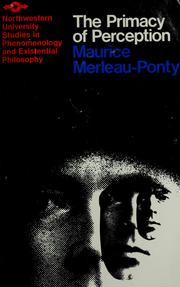
The Primacy of Perception
Maurice Merleau-Ponty
Best for: Readers seeking a concise doorway into the major themes.
Difficulty: Intermediate
Intellectual role: The compact manifesto of perceptual priority.
Bookinlight Rating: ★★★★★★
This collection is often the best bridge between Merleau-Ponty’s major work and his public, aesthetic, and historical concerns. The title essay distills the thesis that perception is not subordinate to scientific explanation or reflective judgment. The volume also shows how the same philosophical insight moves toward art, psychology, history, and politics. It is valuable because it presents perception as a methodological reorientation: before explaining the world, philosophy must recover the world as lived.
Bookinlight Note: Use this book for a seminar discussion on whether philosophy begins in doubt or in perceptual trust.
The World of Perception
Maurice Merleau-Ponty
Best for: New readers who want lucidity before technical depth.
Difficulty: General
Intellectual role: The accessible radio version of the perceptual revolution.
Bookinlight Rating: ★★★★★
Based on radio lectures from 1948, this slim book is one of the most graceful introductions to Merleau-Ponty. Its importance is not merely accessibility. It shows how his philosophy speaks beyond academic boundaries: to science, animals, space, painting, and ordinary life. The lectures help readers feel why perception is not a passive channel but an active intimacy with the world. For readers intimidated by the major texts, this is the most humane entrance.
Bookinlight Note: Read the lectures beside Cézanne: the argument becomes visual rather than merely conceptual.
The Visible and the Invisible
Maurice Merleau-Ponty
Best for: Advanced readers pursuing flesh, reversibility, and chiasm.
Difficulty: Advanced
Intellectual role: The late unfinished ontology of perception.
Bookinlight Rating: ★★★★★
Merleau-Ponty’s unfinished late work is essential because it radicalizes the earlier philosophy of perception. The body is no longer only the subject of perception; it becomes part of a broader ontology of flesh, reversibility, and intertwining. Seeing and being seen, touching and being touched, self and world no longer stand as clean opposites. This book is fragmentary, demanding, and sometimes cryptic, but it is where perception becomes a theory of being itself.
Critical Reception
“exciting insight into the mind of the philosopher at work“
Bookinlight Note: Treat the working notes as a laboratory: the unfinished form is part of the philosophical experience.
Merleau-Ponty’s Phenomenology of Perception: A Guide and Commentary
Monika M. Langer
Best for: Readers who want a disciplined guide through the main work.
Difficulty: Intermediate
Intellectual role: The careful companion to the central text.
Bookinlight Rating: ★★★★★★
Langer’s commentary remains valuable because it respects the internal movement of Merleau-Ponty’s argument. It does not reduce the book to slogans about embodiment. Instead, it reconstructs the argumentative sequence: sensation, judgment, the body, spatiality, intersubjectivity, temporality, and freedom. For readers who find the primary text beautiful but elusive, this guide supplies orientation without flattening ambiguity. It is especially useful for teaching, rereading, and building a chapter-level map.
Critical Reception
“contextualizes, reconstructs, clarifies and completes Merleau-Ponty’s analyses“
Bookinlight Note: Use Langer after each major section of Phenomenology of Perception, not before; let difficulty arrive first.
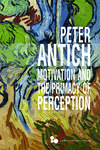
Motivation and the Primacy of Perception: Merleau-Ponty’s Phenomenology of Knowledge
Peter Antich
Best for: Readers connecting Merleau-Ponty to epistemology and philosophy of mind.
Difficulty: Advanced
Intellectual role: The contemporary account of perception as epistemic grounding.
Bookinlight Rating: ★★★★★★
Antich brings Merleau-Ponty into a contemporary debate about knowledge, justification, and perceptual faith. The key term is motivation: a way of understanding how experience can guide thought without becoming either mechanical causality or detached rational proof. The book is important because it shows that Merleau-Ponty is not merely a philosopher of embodiment or aesthetics. He also offers a serious challenge to modern epistemology’s division between reasons and causes.
Critical Reception
“compelling alternative to the empiricist and rationalist assumptions“
Bookinlight Note: Pair this with the title essay in The Primacy of Perception to see how a slogan becomes an epistemology.
How These Books Speak to One Another
The movement among these books is not linear in the ordinary sense. It is spiral. The Structure of Behavior asks how living action can be meaningful without being reduced to stimulus and response. Phenomenology of Perception answers by placing the lived body at the center of world-experience. The Primacy of Perception and The World of Perception make the claim portable, showing its implications for art, psychology, science, and public explanation. The Visible and the Invisible then deepens the claim ontologically: perception belongs to a fleshly intertwining of seer and seen. Langer clarifies the architecture of the major text; Antich shows why its epistemological consequences remain alive.
The Reading Map
| Book | Difficulty | Rating | Why It Matters |
|---|---|---|---|
| The Structure of Behavior | Advanced | ★★★★★★ | Explains behavior as meaningful form. |
| Phenomenology of Perception | Advanced | ★★★★★ | Makes the body central to philosophy. |
| The Primacy of Perception | Intermediate | ★★★★★★ | Condenses the central thesis. |
| The World of Perception | General | ★★★★★ | Turns perception into public philosophy. |
| The Visible and the Invisible | Advanced | ★★★★★ | Transforms perception into ontology. |
| Merleau-Ponty’s Phenomenology of Perception | Intermediate | ★★★★★★ | Clarifies the main work. |
| Motivation and the Primacy of Perception | Advanced | ★★★★★★ | Updates perception for epistemology. |
Where to Begin
- Entry point: Begin with The World of Perception for the clearest first encounter.
- Historical background: Move to The Structure of Behavior to understand the scientific and Gestalt setting.
- Conceptual foundation: Read Phenomenology of Perception slowly, especially the sections on the body, space, and the perceived world.
- Critical perspective: Use Langer’s guide after each major section rather than as a substitute.
- Contemporary relevance: Read Antich to connect perceptual experience with knowledge and justification.
- Advanced reflection: Finish with The Visible and the Invisible, where perception opens into flesh and ontology.
External Sources for Further Reading
Stanford Encyclopedia of Philosophy: Maurice Merleau-Ponty
Routledge: Phenomenology of Perception
Northwestern University Press: The Visible and the Invisible
The Last Margin
The best books on Merleau-Ponty and perception matter because they restore seriousness to what seems most ordinary: seeing, touching, moving, inhabiting a room, recognizing another body, trusting a world before proving it. Merleau-Ponty’s wager is that philosophy loses something essential when it begins too late, after the body has already been abstracted into a thing and the world into an object. These books invite readers to begin earlier, where perception is not yet theory, but already meaning.