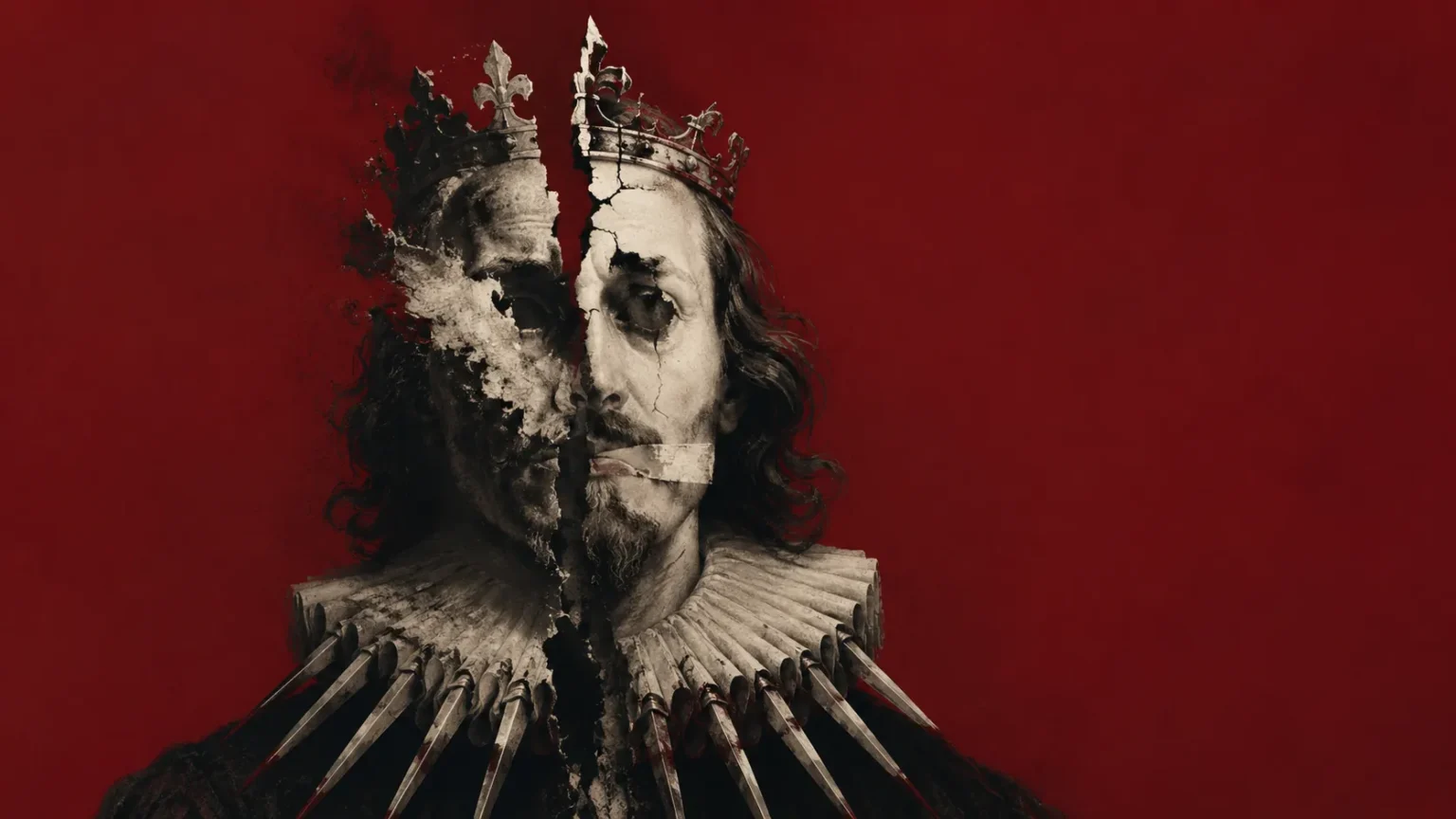
Illustration by Bookinlight Art Desk
The best books on the English Civil War do more than recount battles between Cavaliers and Roundheads. They ask why political trust collapsed, how religious fear entered public life, why ordinary people became historical actors, and how a kingdom could imagine itself without a king.
This reading list treats the English Civil War as a crisis of legitimacy: a struggle over monarchy, Parliament, conscience, law, property, and providence. The five books below are arranged as an intellectual sequence, moving from full historical architecture to causation, lived experience, radical political imagination, and concise interpretive orientation.
By Bookinlight
The Reading Lens
Civil war as a crisis of obedience
The English Civil War is often introduced as a constitutional quarrel between king and Parliament, but the best histories show a wider fracture. Subjects had to decide when obedience ceased to be a duty, whether religious reform justified resistance, and how local fears became national commitments. These books work together because each restores a different layer of the conflict: state formation, causation, experience, ideology, and historical memory.
Central Question
When does lawful authority become impossible to obey?
Historical Pressure
Three kingdoms, contested religion, weak finance, and political mistrust.
Why These Books
Together they move from structure to conscience, from Parliament to pamphlet, from crisis to memory.
How to Read the Best Books on the English Civil War
Begin with scale, then move into pressure. The war was not produced by a single cause, and it was not exhausted by military events. It was a constitutional crisis, a religious crisis, a fiscal crisis, a print crisis, and a crisis of political imagination.
The most rewarding path is therefore not chronological alone. Read Woolrych for the full architecture of the period, Russell for the argument about causes, Purkiss for the texture of suffering and participation, Hill for radical possibility, and Worden for a compressed synthesis that helps the whole field cohere.
The Reading Map
| Book | Difficulty | Rating | Why It Matters |
|---|---|---|---|
| Britain in Revolution: 1625–1660 | Advanced | ★★★ ★★ | The strongest full-scale architecture of the crisis. |
| The Causes of the English Civil War | Advanced | ★★★ ★½ | Reframes causation around religion, polity, and multiple kingdoms. |
| The English Civil War: A People’s History | General to Intermediate | ★★★ ★½ | Restores fear, grief, belief, and local experience. |
| The World Turned Upside Down | Intermediate | ★★★ ★★ | Shows the revolution’s radical religious and social imagination. |
| The English Civil Wars: 1640–1660 | General | ★★★ ★½ | A crisp orientation to events, meanings, and aftermath. |
1
Britain in Revolution: 1625–1660
Author: Austin Woolrych
Best for: Readers who want the most authoritative full-period account
Difficulty: Advanced
Intellectual role: The structural foundation
★★★★★
Austin Woolrych’s Britain in Revolution: 1625–1660 is the book to choose when the English Civil War must be understood as a long crisis rather than an isolated conflict. Its strength lies in scale: the accession of Charles I, the failures of political negotiation, the Bishops’ Wars, Parliament’s mobilization, military transformation, regicide, Commonwealth, Protectorate, and Restoration are treated as parts of one continuous historical movement. Woolrych is especially valuable because he refuses to make the war seem inevitable. He shows how contingency, mistrust, institutional weakness, religious alarm, and armed organization gradually narrowed the space for settlement. This belongs in the article because it gives readers the map on which all narrower interpretations can be placed. Someone new to the period may find it demanding, but a serious reader will gain an unusually clear sense of how monarchy, Parliament, army, church, and locality interacted. The book changes one’s understanding of the English Civil War by widening the field: the war was not simply fought by two ideological camps, but made through overlapping crises in state capacity, political culture, religious authority, and military command. It is an essential corrective to simplified narratives of liberty against tyranny or king against Commons.
Bookinlight Note
Read this as the article’s anchor text: it supplies the deep chronology and institutional density that make the rest of the list more intelligible.
2
The Causes of the English Civil War
Author: Conrad Russell
Best for: Readers interested in historiography and causation
Difficulty: Advanced
Intellectual role: The revisionist challenge
★★★★½
Conrad Russell’s The Causes of the English Civil War is indispensable because it attacks the comfort of simple causation. Instead of treating the conflict as the predictable outcome of class struggle, constitutional progress, or an abstract march toward parliamentary liberty, Russell asks what actually mattered to contemporaries. His answer turns attention toward religion, the problem of governing multiple kingdoms, the fragility of royal finance, and the political consequences of Charles I’s inability to maintain confidence across England, Scotland, and Ireland. The book belongs here because any serious list of English Civil War histories must include the historiographical turning point that made older explanatory habits look too smooth. Russell is not always the easiest starting place; his prose assumes patience, and his argument gains force from close attention to parliamentary and constitutional detail. But for readers who want to know why historians disagree, this is a bracing work. It changes the reader’s understanding by making the outbreak of war appear less like an ideological script and more like a collision of practical governance failures, religious anxieties, and mutually suspicious political languages. After Russell, the question is no longer simply why Parliament resisted the king. It is why a composite monarchy could no longer absorb pressure without converting mistrust into armed conflict.
Bookinlight Note
This is the list’s most important book for understanding the debate about causes, not merely the causes themselves.
3
The English Civil War: A People’s History
Author: Diane Purkiss
Best for: Readers who want human texture, testimony, and social experience
Difficulty: General to Intermediate
Intellectual role: The experiential history
★★★★½
Diane Purkiss’s The English Civil War: A People’s History brings the conflict down from constitutional abstraction into fear, hunger, rumour, grief, conviction, and memory. Its great contribution is not that it ignores high politics, but that it refuses to let high politics monopolize explanation. Soldiers, women, widows, preachers, witchfinders, local communities, and civilians appear not as decorative witnesses to decisions made elsewhere, but as people whose experiences reveal what civil war does to ordinary moral life. Purkiss is particularly strong at showing how religious language shaped feeling: providence, sin, martyrdom, and apocalypse were not metaphors added after the fact, but ways of interpreting danger as it happened. The book belongs in this list because the English Civil War cannot be understood only through Parliament, court, army council, or printed manifesto. It was also a conflict lived through kitchens, churches, market towns, family networks, and traumatized parishes. Readers who find military chronology dry will benefit from its narrative energy, while advanced readers will appreciate its attention to cultural evidence. It changes understanding by making civil war intimate. The reader comes away seeing that the breakdown of authority did not only produce political innovation; it also produced dread, opportunism, spiritual certainty, domestic fracture, and forms of survival that rarely fit neat ideological categories.
Bookinlight Note
Use this book to keep the war from becoming too clean. It restores the emotional and social cost of political theology.
4
The World Turned Upside Down: Radical Ideas During the English Revolution
Author: Christopher Hill
Best for: Readers interested in radical religion, popular politics, and revolutionary imagination
Difficulty: Intermediate
Intellectual role: The radical underside
★★★★★
Christopher Hill’s The World Turned Upside Down remains one of the most influential attempts to recover the radical energy released by the English Revolution. Hill turns away from court and Parliament to groups and figures often treated as marginal: Levellers, Diggers, Ranters, Seekers, Quakers, mechanic preachers, antinomians, and scriptural radicals. His central contribution is to show that the 1640s did not merely contest who should govern; they opened questions about property, ministry, law, scripture, gender, hierarchy, and social discipline. The book belongs here because it captures what a purely constitutional history cannot: the sense that revolution made previously unthinkable social and religious languages temporarily speakable. Hill’s Marxist framework and interpretive emphases have been debated, revised, and challenged, but the book’s imaginative power remains immense. It is best for readers who want to understand the English Civil War as a moment of political possibility, not only institutional breakdown. It changes understanding by placing radical print, itinerant preaching, and popular religious experiment at the center of the story. The war appears not simply as Parliament’s resistance to monarchy, but as an opening in the social order through which alternative worlds briefly appeared. Even where modern scholars qualify Hill, they still work in the field of questions he helped make unavoidable.
Bookinlight Note
Read Hill after Russell and Purkiss: causation and experience make the radical imagination more historically grounded.
5
The English Civil Wars: 1640–1660
Author: Blair Worden
Best for: Readers who want a short, elegant, historically serious introduction
Difficulty: General
Intellectual role: The concise synthesis
★★★★½
Blair Worden’s The English Civil Wars: 1640–1660 is the shortest book in this list, but its brevity is a virtue rather than a compromise. Worden offers a compressed account of the conflict’s origins, the war between king and Parliament, the execution of Charles I, Cromwellian rule, and the Restoration, while also attending to the afterlife of the wars in English political memory. The book belongs here because readers need one work that can be read quickly without flattening the subject. Worden’s prose is lucid, controlled, and interpretively alert; he has a gift for making complexity legible without pretending that complexity disappears. This is especially useful for readers approaching the period before taking on Woolrych or Russell. It also works well as a final book, because after the larger studies it clarifies the sequence of events and returns attention to meaning. The reader benefits by gaining orientation: what happened, why it mattered, and why the events of 1640–1660 remained troubling long after monarchy returned. The book changes understanding by showing that the English Civil War was not a closed episode solved by the Restoration. It left behind arguments about liberty, order, providence, military power, and political memory that continued to shape Britain’s understanding of authority.
Bookinlight Note
This is the best compact companion to the heavier works: elegant enough for general readers, serious enough for seminar use.
FAQ
What is the best first book on the English Civil War?
Blair Worden’s The English Civil Wars: 1640–1660 is the best first book for most readers because it is concise, clear, and interpretively serious.
Which book best explains the causes of the English Civil War?
Conrad Russell’s The Causes of the English Civil War is the essential advanced study of causation, especially for religion, constitutional conflict, and the multiple-kingdoms problem.
Which English Civil War book is best for social history?
Diane Purkiss’s The English Civil War: A People’s History is the strongest choice for readers interested in civilians, soldiers, women, local communities, and lived experience.
Was the English Civil War also a revolution?
Yes, though historians disagree about the term’s scope. Christopher Hill’s work is central for understanding the radical religious and social possibilities opened by the conflict.
The Last Margin
The best books on the English Civil War leave the reader with a productive unease. They do not reduce the 1640s to progress, rebellion, fanaticism, or constitutional destiny. They show a society in which political order, spiritual truth, local obligation, and coercive power ceased to fit together. To read these five books together is to see the war not as one event, but as a historical field where authority was broken, reimagined, weaponized, and remembered.