Illustration by Bookinlight Art Desk
Contemporary History
Five Books on European Integration After World War II
A serious reading path through the political imagination, economic bargaining, national interests, institutional improvisation, and historical myths that made postwar Europe into a union.
By Bookinlight


Europe as a Postwar Argument
European integration after World War II was never simply a noble march from ruins to unity. It was a dense historical settlement: part security project, part economic reconstruction, part national rescue operation, part elite bargain, part constitutional improvisation, and part story Europeans later told about themselves. The best books on European integration make that complexity harder to evade. They show that the European Coal and Steel Community, the Common Market, Maastricht, enlargement, and the later crises of legitimacy were not separate episodes but recurring tests of the same question: how far can sovereign states bind themselves together without ceasing to depend on national democratic consent?
The Best Books on European Integration Do Not Tell One Story
The five books below belong together because each attacks a different simplification. Ernst B. Haas gives us the classic neofunctionalist account of supranational momentum. Alan S. Milward reverses the heroic federalist myth by arguing that integration helped rebuild, rather than abolish, the nation-state. Andrew Moravcsik turns attention to interstate bargaining and national preference formation. Luuk van Middelaar restores drama, contingency, and the public stage of political action. Kiran Klaus Patel, writing after decades of scholarship and crisis, dismantles the comforting myths of peace, prosperity, democracy, and values without collapsing into crude Euroscepticism.
The Reading Lens
Integration as Rescue, Bargain, and Improvisation
Read together, these books move European integration away from the language of destiny. They reveal a postwar order built from damaged states, economic asymmetries, institutional inventions, and political performances that only later hardened into official memory. The central insight is not that Europe became united, but that unity repeatedly had to be made useful to governments, credible to publics, and adaptable to crises. Integration appears here as a historical practice rather than a finished ideal.
Central Question
Was European integration a transcendence of the nation-state, or one of the most sophisticated ways of preserving it?
Historical Pressure
Postwar devastation, Cold War constraint, German reconstruction, market interdependence, and democratic fatigue all pressed Europe toward institutional invention.
Why These Books
They trace the same historical object through theory, archival history, bargaining analysis, political narrative, and revisionist synthesis.
Five Books That Reconstruct Postwar Europe
The Uniting of Europe
Ernst B. Haas
Best for: Readers who want the classic theoretical starting point.
Difficulty: Advanced
Intellectual role: The foundational neofunctionalist model of postwar integration.
Bookinlight Rating: ★★★★★★
Haas’s great subject is not Europe as a moral aspiration but integration as a process that redirects loyalties, expectations, and political incentives. Focusing on the European Coal and Steel Community, he asks how limited sectoral cooperation can generate pressures toward wider political community. The book matters because it gives European integration a theory of movement: institutions do not merely register state decisions; they can alter the field in which future decisions are made. For contemporary readers, its importance lies partly in its confidence and partly in its vulnerability. Later crises have complicated neofunctionalism, but they have not erased its central question: why do technical arrangements sometimes become political worlds?
Bookinlight Note: Pair this with Milward to watch a theory of supranational spillover collide with a historian’s account of national reconstruction.
The European Rescue of the Nation-State
Alan S. Milward
Best for: Historians, political economists, and readers suspicious of easy federalist myths.
Difficulty: Advanced
Intellectual role: The major revisionist account of integration as national recovery.
Bookinlight Rating: ★★★★★
Milward’s book is indispensable because it overturns one of the most persistent clichés about European integration: that the European Community marked the retreat of the nation-state. His argument is subtler and more disruptive. Postwar governments accepted limited transfers of sovereignty because integration helped them deliver welfare, stability, reconstruction, agricultural policy, industrial recovery, and economic legitimacy at home. This makes the nation-state not integration’s victim but one of its beneficiaries. Milward’s archive-driven account also changes the moral tone of the subject. Europe becomes less a dream of transcendence than a practical historical answer to state weakness after catastrophe.
Critical Reception
“Classic economic and political account of the origins of the European Community.“
Bookinlight Note: Read it as a warning against both Europhile romance and nationalist nostalgia: the two often misunderstand the same postwar bargain.
The Choice for Europe
Andrew Moravcsik
Best for: Readers interested in negotiation, state power, and liberal intergovernmentalism.
Difficulty: Advanced
Intellectual role: The strongest state-centered challenge to integration-by-ideals narratives.
Bookinlight Rating: ★★★★★★
Moravcsik reorients the reader from institutional evolution to decisive interstate bargains. His focus is not Europe as destiny, but governments calculating preferences under conditions of economic interdependence. The book argues that major steps toward integration were driven less by supranational entrepreneurship than by national leaders pursuing domestic economic interests and locking in agreements through institutions. Whether one accepts the full explanatory ambition of liberal intergovernmentalism or not, the book forces a necessary discipline: do not explain European integration by invoking Europe when national preference, bargaining power, and credible commitment may explain more.
Bookinlight Note: Use this book in a seminar by asking whether European integration is most visible in speeches, treaties, or balance sheets.
The Passage to Europe
Luuk van Middelaar
Best for: Readers who want political drama without sacrificing conceptual seriousness.
Difficulty: General to Intermediate
Intellectual role: The narrative account of Europe as a stage of power and legitimacy.
Bookinlight Rating: ★★★★★★
Van Middelaar’s achievement is to recover the theatrical and contingent dimension of European politics. He is interested in moments when leaders, crises, publics, and institutions meet under pressure. That emphasis helps correct accounts that make integration look like either automatic spillover or rational treaty design. Europe also exists in performances of authority: summits, declarations, emergency decisions, symbolic gestures, and the search for public legitimacy. The result is a book unusually attentive to the gap between institutional form and political action, especially when the European project must speak in public rather than merely govern through procedures.
Critical Reception
“A work of impressive scholarship and historical imagination.“
Bookinlight Note: Read this after Moravcsik to feel the difference between explaining a bargain and narrating a political moment.
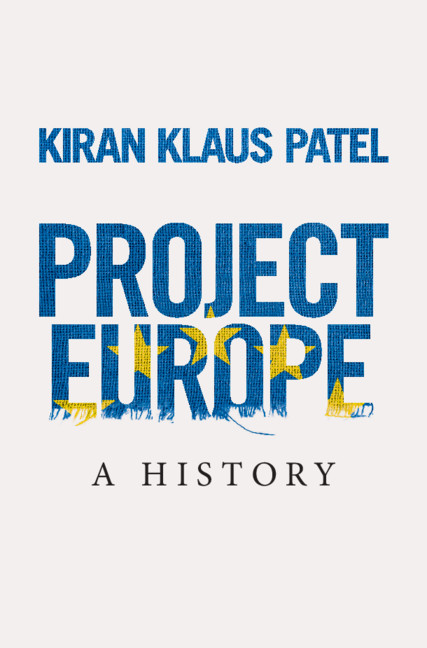
Project Europe
Kiran Klaus Patel
Best for: Readers seeking a recent synthesis that tests Europe’s self-image.
Difficulty: Intermediate
Intellectual role: The contemporary critical history of integration’s myths and achievements.
Bookinlight Rating: ★★★★★★
Patel’s book is the best final stop in this sequence because it looks back after the long accumulation of institutions, enlargements, narratives, and crises. Its method is neither celebration nor denunciation. Instead, it asks how much of the European Union’s reputation for peace, prosperity, democracy, and values can survive close historical scrutiny. Patel is especially good at showing how integration affected ordinary lives unevenly and how the EU’s self-description can obscure contingency. For readers living after the Eurozone crisis, Brexit, migration disputes, and rule-of-law conflicts, this book makes the past usable without making it comforting.
Critical Reception
“The essential institutional history and user’s manual.“
Bookinlight Note: Use Patel as the bridge from postwar reconstruction to today’s argument over whether Europe is a community, a market, or a crisis machine.
How These Books Speak to One Another
Haas gives European integration its grammar of movement; Milward restores the damaged state behind the supranational form; Moravcsik asks who wanted what, and why they could bargain for it; van Middelaar returns contingency, staging, and legitimacy; Patel shows how the whole story looks after its myths have become politically unstable. Their disagreement is the point. Together, they prevent the reader from treating Europe as either an inevitable peace project or a technocratic conspiracy. Integration becomes a historical field in which national survival, economic calculation, institutional invention, and public meaning are constantly renegotiated.
The Reading Map
| Book | Difficulty | Rating | Why It Matters |
|---|---|---|---|
| The Uniting of Europe | Advanced | ★★★★★★ | Defines integration as dynamic process. |
| The European Rescue of the Nation-State | Advanced | ★★★★★ | Reverses the anti-state myth. |
| The Choice for Europe | Advanced | ★★★★★★ | Explains treaties as bargains. |
| The Passage to Europe | General to Intermediate | ★★★★★★ | Restores drama and legitimacy. |
| Project Europe | Intermediate | ★★★★★★ | Tests Europe’s public myths. |
Where to Begin
- Entry point: Begin with The Passage to Europe for narrative momentum and conceptual clarity.
- Historical background: Move to The European Rescue of the Nation-State to understand reconstruction and welfare-state politics.
- Conceptual foundation: Read The Uniting of Europe for the classic theory of supranational momentum.
- Critical perspective: Turn to The Choice for Europe to test institutional stories against national bargaining.
- Contemporary relevance: Use Project Europe to revisit the entire tradition after today’s crises.
- Advanced reflection: Reread the sequence by asking where each book locates legitimacy: institution, state, bargain, stage, or public memory.
External Sources for Further Reading
European Parliament 100 Books: The European Rescue of the Nation-State
The Last Margin
The best books on European integration do not ask the reader to choose between faith in Europe and suspicion of Europe. They ask for something harder: historical attention. Postwar integration was built through coal, steel, welfare, markets, treaties, summits, crises, court decisions, elections, and stories about peace. Its meaning changes depending on whether one begins with institutions, governments, citizens, elites, or myths. That is why these five books remain so valuable. They do not close the argument over Europe. They give the reader the intellectual equipment to enter it with more precision.