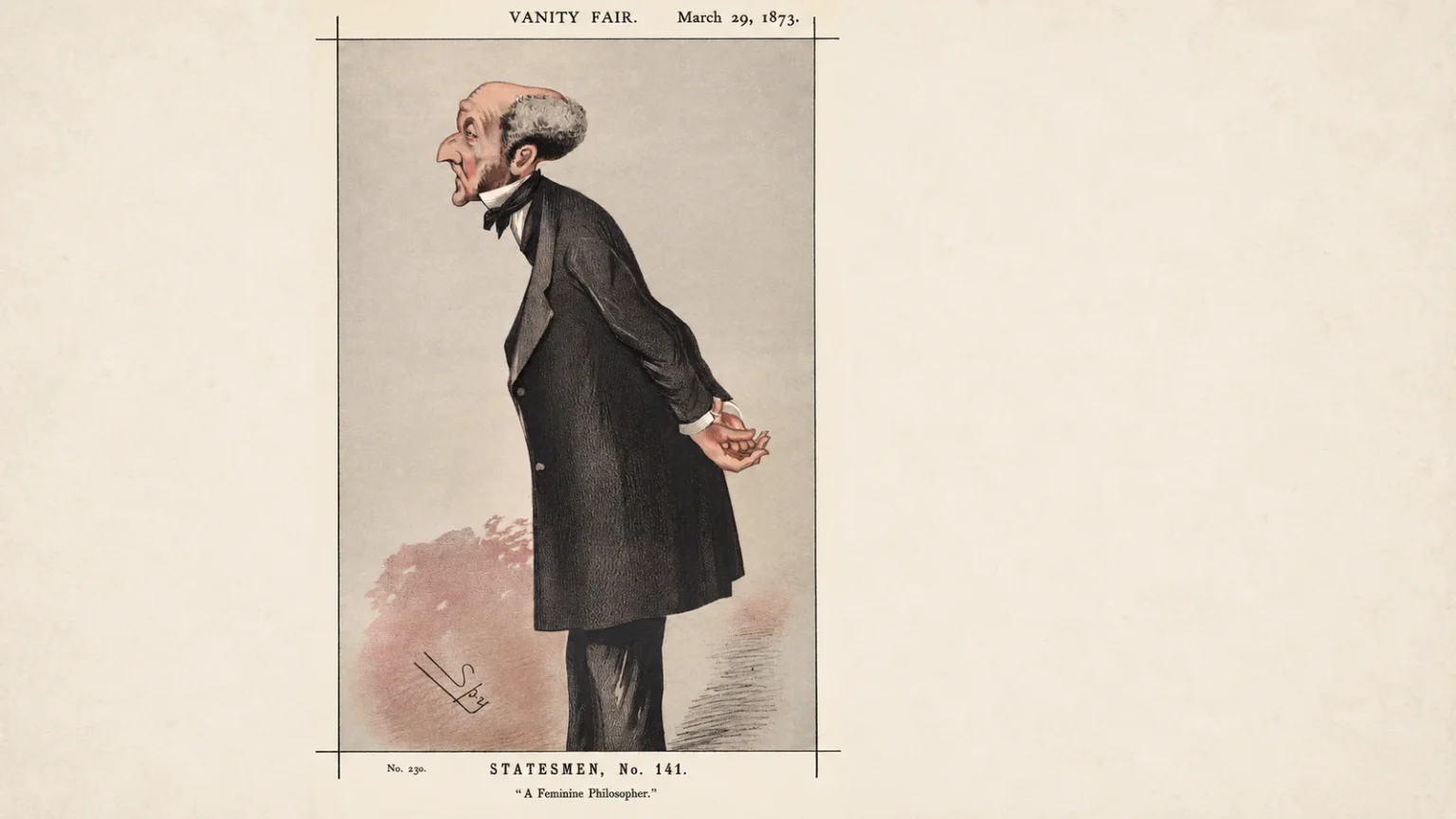
John Stuart Mill’s On Liberty asks where individual independence should end and legitimate social coercion begin—a deceptively simple problem that reaches from dissent and individuality to harmful conduct and majority power. This guide to scholarly articles on On Liberty introduces ten carefully selected journal studies one by one, explaining their arguments, methods, evidence, relationship to Mill’s text, access status, and scholarly authorship. Together they provide routes into textual interpretation, free-speech theory, authorship, Nietzschean reception, political economy, behavioural policy, and continuing disputes over the harm principle.
The Book and the Recommended Edition

On Liberty, Utilitarianism and Other Essays
Author: John Stuart Mill
Target work: On Liberty
Original publication: London, John W. Parker and Son, 1859
Original language: English
Edition: Second Edition
Editors: Mark Philp and Frederick Rosen
Publisher: Oxford University Press
Series: Oxford World’s Classics
Publication: July 2015
Format: Paperback
Pagination: 608 pages
ISBN-13: 9780199670802
ISBN-10: 0199670803
Language: English
Edition Details
For readers following the scholarly articles on On Liberty below, the second Oxford World’s Classics edition is the most useful single-volume working edition. Philp and Rosen supply a new introduction, a note on the text, chronology, bibliography, explanatory notes, and an index, while placing On Liberty beside Utilitarianism, Considerations on Representative Government, and The Subjection of Women. That arrangement is especially helpful when recent scholarship moves between liberty, utility, character, political institutions, gender, and economic action.
The Oxford University Press edition record confirms the edition, editors, series, ISBN, and contents; OUP’s Japanese catalogue additionally records the 608-page extent. Because Mill wrote in English, there is no translator. The principal limitation is that this is not a documentary variorum edition; its strength is a reliable reading text with substantial scholarly apparatus in a portable, currently useful volume.
Liberty, Character, and the Problem of Social Power
Published in London by John W. Parker and Son in 1859, On Liberty belongs to the middle period of John Stuart Mill’s career, after his major work in political economy and before Utilitarianism appeared in book form. An 1859 digitized edition preserves the original five-chapter architecture: the introductory statement of Mill’s governing principle is followed by chapters on thought and discussion, individuality, the limits of social authority, and practical applications.
Mill’s question is not merely how much government a liberal society should tolerate. He distinguishes political coercion from the less formal but sometimes equally constricting force of prevailing opinion. A society can possess representative institutions and still cultivate conformity. The essay therefore joins a jurisdictional claim about coercion to a developmental argument about human character: experiments in living, diversity of conduct, intellectual conflict, and individual self-direction possess value because human beings do not flourish by being pressed into a single approved form. The Stanford Encyclopedia of Philosophy’s account of Mill is useful for locating this concern with individuality within his broader philosophy.
The familiar formula that coercion is justified to prevent harm to others is only the beginning of the interpretive difficulty. What counts as harm? Must the restricted person cause it directly? Does chapter II’s defense of discussion derive from the same liberty principle, or from a distinct argument about truth? How do social sanctions differ from legal penalties? What should happen when speech reinforces structures of exclusion rather than causing a simple, discrete injury? The SEP treatment of Mill’s moral and political philosophy shows why answers depend on the relationship among utility, rights, freedom, character, and social progress rather than on one isolated maxim.
A further complication concerns authorship. On Liberty appeared under John Stuart Mill’s name and remains bibliographically catalogued as his work, yet Mill’s own testimony assigned Harriet Taylor Mill a profound role in its conception and revision. Recent stylometric research has reopened that question without making the historical evidence magically conclusive; Karlsruhe Institute of Technology’s account of the computational study provides useful institutional context. This combination of textual ambiguity, normative argument, reception history, and new methods explains why serious scholarly articles on On Liberty continue to ask markedly different questions of the same compact book.
Ten Essential Scholarly Articles on On Liberty
The sequence below moves from close interpretation of Mill’s freedom-of-discussion argument to authorship, intellectual reception, behavioural policy, economic liberty, and recent disputes over harm prevention. The order is designed for reading rather than ranking.
- “The Place of ‘The Liberty of Thought and Discussion’ in On Liberty” — Dale E. Miller
- “Truth, Discussion, and Free Speech in On Liberty II” — Christopher Macleod
- “John Stuart Mill’s Harm Principle and Free Speech: Expanding the Notion of Harm” — Melina Constantine Bell
- “Who Authored On Liberty? Stylometric Evidence on Harriet Taylor Mill’s Contribution” — Christoph Schmidt-Petri, Michael Schefczyk, and Lilly Osburg
- “On Liberty as a (Re-)Source for Nietzsche: Tracing John Stuart Mill in On the Genealogy of Morality” — Sören E. Schuster
- “Mill’s Constitution of Liberty: an alternative behavioural policy framework” — Shaun P. Hargreaves Heap
- “Market competition, efficiency and economic liberty” — Michele Grillo
- “J.S. Mill’s Puzzling Position on Prostitution and his Harm Principle” — Mark Tunick
- “Is John Stuart Mill’s On Liberty Obsolete?” — Vincent Blasi
- “J. S. Mill on Harm Prevention” — Ben Saunders
Article 1 of 10
“The Place of ‘The Liberty of Thought and Discussion’ in On Liberty”
Author: Dale E. Miller
Journal: Utilitas, Cambridge University Press
Publication: Volume 33, Issue 2, June 2021, pp. 133–149; published online 3 December 2020
DOI: 10.1017/S0953820820000382
Article type: Article
Access: Publisher HTML full text examined; no open-access licence is stated on the version of record.
Argument and Scope
Miller addresses a structural puzzle that changes how chapter II is read. Rather than treating “The Liberty of Thought and Discussion” as an eloquent detour inserted between Mill’s statement of the liberty principle and its later application, he argues that the chapter belongs to Mill’s construction of the case for that principle. Freedom of discussion is therefore not an autonomous appendix to On Liberty but part of the essay’s argumentative continuity.
Method and Evidence
The method is close conceptual and textual interpretation. Miller reconstructs the liberty principle, reviews rival readings, and pays particular attention to passages framing chapter II—material immediately before and after it—as evidence about Mill’s intended architecture. He explicitly treats the textual case as strong rather than logically conclusive.
Relation to the Book
This is one of the best starting points for scholarly articles on On Liberty because it asks how the book itself hangs together. Readers who have learned the harm principle and the free-speech chapter as separate doctrines will encounter a more integrated account of Mill’s project.
About the Author
Old Dominion University lists Dale E. Miller as Professor and Associate Dean for Research, Graduate Studies, and Faculty Affairs. His stated research interests include ethical theory, social and political philosophy, consequentialism, and J. S. Mill.
Article 2 of 10
“Truth, Discussion, and Free Speech in On Liberty II”
Author: Christopher Macleod
Journal: Utilitas, Cambridge University Press
Publication: Volume 33, Issue 2, June 2021, pp. 150–161; published online 19 March 2021
DOI: 10.1017/S0953820821000030
Article type: Article
Access: Open-access full text examined; CC BY 4.0.
Argument and Scope
Macleod narrows a phrase modern readers often broaden too quickly. Chapter II, he argues, is organized around the value of truth and around three cases: opinions that are true, false, or partly true. From that structure he draws a distinction between Mill’s “discussion” and the much wider category now called free speech. The chapter powerfully protects a truth-directed practice of intellectual exchange, but it does not by itself supply a theory covering every form of expression.
Method and Evidence
Macleod performs a structural reconstruction of chapter II. Instead of collecting famous sentences about dissent, he asks what Mill’s division of the argument into exhaustive cases implies about its object and purpose. The interpretation is teleological: the function of discussion is understood in relation to Mill’s concern with arriving at, retaining, and genuinely understanding truth.
Relation to the Book
The article is especially useful for preventing anachronism. It does not deny that On Liberty can support wider expressive freedom; Macleod suggests chapter III may provide additional resources. It does insist that chapter II’s own argument be identified before it is translated into contemporary constitutional vocabulary.
About the Author
Lancaster University lists Christopher Macleod as Professor of Politics and Philosophy. His profile states that he works mainly on John Stuart Mill, including Mill’s theories of practical and theoretical reason and their relation to Kantian, post-Kantian, and Romantic traditions.
Article 3 of 10
“John Stuart Mill’s Harm Principle and Free Speech: Expanding the Notion of Harm”
Author: Melina Constantine Bell
Affiliation at publication: Washington and Lee University
Journal: Utilitas, Cambridge University Press
Publication: Volume 33, Issue 2, June 2021, pp. 162–179; published online 23 September 2020
DOI: 10.1017/S0953820820000229
Access: Open-access full text examined; CC BY 4.0.
Argument and Scope
Bell asks what happens when Mill’s nineteenth-century vocabulary of harm encounters contemporary evidence about bigoted expression, systemic oppression, and epistemic injustice. Her proposal retains the harm principle as a boundary around protected, harmless speech while using Mill’s broader utilitarian framework to evaluate expression that threatens non-consensual harm. Mere offensiveness remains insufficient; the crucial question is whether speech damages interests in ways Mill lacked the empirical resources to identify.
Method and Evidence
The article combines normative reconstruction with contemporary work in social philosophy and empirical scholarship concerning psychological injury, structural discrimination, unequal credibility, and other mechanisms through which verbal conduct can affect opportunity and standing. Bell deliberately updates the evidentiary environment rather than attributing modern social science to Mill.
Relation to the Book
The result tests whether On Liberty can respond to modern speech conflicts without adding a separate offense principle. Bell’s answer preserves a substantial domain of offensive but harmless expression while arguing that some speech traditionally placed within “mere expression” may qualify as harm once its effects are better understood.
About the Author
Washington and Lee University lists Bell as Professor of Philosophy and Law. Her principal research areas include political philosophy, philosophy of law, feminist philosophy, social inequality, and applied ethics—fields directly relevant to the article’s reconstruction of harm and power.
Article 4 of 10
“Who Authored On Liberty? Stylometric Evidence on Harriet Taylor Mill’s Contribution”
Authors: Christoph Schmidt-Petri, Michael Schefczyk, and Lilly Osburg
Affiliation at publication: Department of Philosophy, Karlsruhe Institute of Technology
Journal: Utilitas, Cambridge University Press
Publication: Volume 34, Issue 2, June 2022, pp. 120–138; published online 2 December 2021
DOI: 10.1017/S0953820821000339
Access: Open-access full text examined; CC BY 4.0.
Argument and Scope
This article converts a long-running biographical and textual dispute into a computationally testable question. Mill repeatedly acknowledged Harriet Taylor Mill’s contribution to On Liberty, yet the book appeared under his name alone. The authors argue that stylometric evidence makes a preliminary case against treating every part of the prose as the work of John Stuart Mill alone. They also separate textual contribution from the stricter question of formal co-authorship, which may depend on contributors’ approval of the published text.
Method and Evidence
The study uses stylometry: computational comparison of recurrent linguistic features across a reference corpus of roughly 270 writings associated with Harriet Taylor and John Stuart Mill. Cluster and classification techniques are applied to portions of On Liberty, with especially notable signals in chapter III. The authors present the result probabilistically, not as a manuscript-level demonstration of who wrote each sentence.
Relation to the Book
For readers accustomed to treating authorship as settled metadata, this is a methodological shock in the productive sense. It asks whether interpretation of individuality and character should take Mill’s unusually emphatic statements about Harriet’s participation more seriously while preserving the distinction between statistical evidence and definitive attribution.
About the Authors
All three authors were affiliated with KIT’s Department of Philosophy in the publication record. KIT identifies Schmidt-Petri and Schefczyk with philosophy and credits Osburg’s information-science skills as an important component of the digital-humanities analysis.
Article 5 of 10
“On Liberty as a (Re-)Source for Nietzsche: Tracing John Stuart Mill in On the Genealogy of Morality”
Author: Sören E. Schuster
Journal: Nietzsche-Studien, De Gruyter
Publication: Volume 52, Issue 1, 2023, pp. 348–364; formally published online 23 September 2022
DOI: 10.1515/nietzstu-2022-0004
Access: Open-access full text examined; CC BY 4.0.
Argument and Scope
Schuster investigates an influence that is easy to miss because Nietzsche does not explicitly name Mill in On the Genealogy of Morality. His claim is that On Liberty nevertheless functioned as an important source during the Genealogy’s development. Nietzsche does not simply adopt Millian language; he appropriates and transforms motifs in ways that place Mill’s moral vocabulary under pressure.
Method and Evidence
This is source-based reception history. Schuster begins with evidence of Nietzsche’s reading, including pencil markings in Nietzsche’s copy of On Liberty, then traces corresponding terminology, motifs, and argumentative moves in the Genealogy. Three substantial points of connection carry the interpretive burden, giving the comparison a documentary basis rather than relying on general resemblance between two canonical thinkers.
Relation to the Book
The article changes the scale of reception history. Instead of asking only how later liberals used Mill, it shows On Liberty entering the workshop of a critic of modern morality. Mill becomes a resource to be redirected, making the article especially valuable to readers interested in intellectual transmission and adversarial appropriation.
About the Author
The Nietzsche Research Center at the University of Freiburg lists Sören Schuster’s doctoral research project, “Nietzsches Ökonomien. Lektüren, Transformationen. Potenziale,” situating this article within a wider investigation of Nietzsche, political economy, reading, and intellectual transformation.
Article 6 of 10
“Mill’s Constitution of Liberty: an alternative behavioural policy framework”
Author: Shaun P. Hargreaves Heap
Affiliation at publication: Department of Political Economy, King’s College London
Journal: Behavioural Public Policy, Cambridge University Press
Publication: Volume 7, Special Issue 4, October 2023, pp. 933–942; published online 7 March 2023
DOI: 10.1017/bpp.2023.4
Access: Open-access full text examined; CC BY 4.0.
Argument and Scope
Hargreaves Heap starts from a behavioural-economics difficulty: if preferences are unstable, incomplete, or partly constructed by context, policy cannot always be evaluated by asking which option best satisfies a pre-existing preference ordering. He proposes a Millian alternative in which public policy is judged by whether it advances individual liberty understood through On Liberty.
Method and Evidence
The article joins interpretation of behavioural evidence to normative political economy. Rather than attempting a historical reconstruction of every component of Mill’s philosophy, it extracts a policy standard from Mill’s account of individual freedom and asks what institutional choices follow when preference satisfaction is an unreliable welfare metric. The resulting discussion includes basic income and a progressive flat-tax proposal.
Relation to the Book
Here On Liberty functions as a theoretical instrument rather than solely an object of exegesis. The article is useful precisely because it exposes the choices involved when a nineteenth-century conception of freedom is turned into an evaluative framework for twenty-first-century behavioural policy.
About the Author
King’s College London lists Shaun Hargreaves Heap as Professor of Political Economy. His current research includes experimental and behavioural economics and, explicitly, the application of Mill’s harm principle to welfare economics and behavioural public policy.
Article 7 of 10
“Market competition, efficiency and economic liberty”
Author: Michele Grillo
Affiliation: Department of Economics and Finance, Università Cattolica del Sacro Cuore
Journal: International Review of Economics, Springer Nature
Publication: Volume 70, 2023, pp. 437–456; published 6 July 2023; issue date December 2023
DOI: 10.1007/s12232-023-00426-7
Article type: Research Article
Access: Open-access full text examined; CC BY 4.0.
Argument and Scope
Grillo begins from chapter V’s discussion of trade and asks how economic liberty should be defended when markets are not perfectly competitive. Perfect competition can make efficiency and freedom appear mutually reinforcing; actual markets introduce market power, entry barriers, and conflicts between those values. Grillo develops a consequentialist defense of economic freedom in imperfect competition, grounding it in the welfare value of equal freedom among heterogeneous agents possessing dispersed information.
Method and Evidence
The argument combines history of economic thought, normative economics, and industrial-organization reasoning. Formal appendices model free entry under different returns-to-scale assumptions, while the main discussion connects Mill’s free-trade passage to contemporary disputes over market structure and antitrust.
Relation to the Book
This study is a corrective to readings that confine On Liberty to speech and private lifestyle. Mill’s applications reach commercial action as well, and Grillo uses that material to investigate whether competitive structure itself can be defended partly through liberty rather than efficiency alone.
About the Author
The publisher identifies Michele Grillo with the Department of Economics and Finance at Università Cattolica del Sacro Cuore in Milan. His institutional record situates the article within economics rather than treating Mill’s free-trade discussion as a purely historical aside.
Article 8 of 10
“J.S. Mill’s Puzzling Position on Prostitution and his Harm Principle”
Author: Mark Tunick
Journal: Philosophy, Cambridge University Press for the Royal Institute of Philosophy
Publication: Volume 99, Issue 1, January 2024, pp. 1–25; published online 25 October 2023
DOI: 10.1017/S003181912300027X
Article type: Research Article
Access: Open-access full text examined; CC BY 4.0.
Argument and Scope
Tunick uses Mill’s opposition to coercive regulation of prostitution to sharpen a basic ambiguity in the harm principle. If restrictions can be imposed on anyone whenever doing so prevents harm, Mill’s resistance to measures directed at prostitutes becomes difficult to explain. Tunick proposes instead a harm-causation reading: interference is principally warranted against the morally relevant cause of non-consensual harm, not simply against whichever person it would be convenient to restrain.
Method and Evidence
The analysis moves among On Liberty, Mill’s correspondence, and his 1871 testimony concerning the Contagious Diseases Acts. That broader textual record matters because Mill opposed both the moral legitimation of prostitution through licensing and coercive medical regimes aimed at women, while accepting some restrictions on public solicitation.
Relation to the Book
Tunick’s case forces the famous formula about preventing harm to become more precise: prevention by whom, imposed on whom, and because of what causal responsibility? It also shows how Mill’s valuation of individuality and moral development can complicate policies that promise straightforward reductions in aggregate harm.
About the Author
Florida Atlantic University lists Mark Tunick as Professor of Political Science. His profile describes work applying thinkers including Mill, Hegel, Kant, and Locke to questions of law, privacy, punishment, rights, and other contemporary problems.
Article 9 of 10
“Is John Stuart Mill’s On Liberty Obsolete?”
Author: Vincent Blasi
Journal: Daedalus, MIT Press for the American Academy of Arts and Sciences
Publication: Volume 153, Issue 3, Summer 2024, pp. 14–30; MIT Press record dated 1 August 2024
DOI: 10.1162/daed_a_02086
Access: Open-access full text examined; CC BY-NC 4.0.
Argument and Scope
Blasi takes Mill’s consequentialist defense of “liberty of thought and discussion” seriously enough to ask whether changes in the communications environment could weaken the empirical assumptions on which it rests. Digital media alter how messages are formulated, amplified, selected, distributed, encountered, and received. If the mechanisms of public discussion have changed radically, an argument built partly on expected social consequences must be re-examined rather than merely repeated.
Method and Evidence
The article combines intellectual interpretation with constitutional and media analysis. Blasi compares Mill’s model of inquiry and persuasion with a transformed communicative environment instead of asking whether one nineteenth-century sentence directly answers every platform-governance controversy.
Relation to the Book
Among recent scholarly articles on On Liberty, this is particularly valuable for readers interested in the distinction between a principle surviving and its supporting argument surviving unchanged. Blasi tests Mill from inside the essay’s own empiricist, consequence-sensitive logic.
About the Author
Columbia Law School lists Vincent Blasi as Corliss Lamont Professor Emeritus of Civil Liberties. His scholarship has concentrated on the history and philosophy of freedom of speech and on First Amendment theory, making the article part of a much longer engagement with the intellectual genealogy of expressive liberty.
Article 10 of 10
“J. S. Mill on Harm Prevention”
Author: Ben Saunders
Journal: Philosophy, Cambridge University Press for the Royal Institute of Philosophy
Issue assignment: Volume 100, Issue 1, January 2025, pp. 154–164
Online publication: 10 July 2025, according to Cambridge’s official record
DOI: 10.1017/S0031819124000263
Article type: Research Article
Access: Open-access full text examined; CC BY 4.0.
Argument and Scope
Saunders directly contests Tunick’s harm-causation interpretation. The liberty principle can be read narrowly, permitting coercion only against conduct that itself causes harm, or more broadly, permitting interference with otherwise harmless conduct when that intervention prevents harm. Saunders argues that Mill does not clearly confine legitimate interference to proximate or morally salient causes and that the prostitution evidence does not settle the question in Tunick’s favor.
Method and Evidence
The method is close conceptual and textual criticism. Saunders revisits Mill’s remarks on prostitution, positive duties, omissions, assistance, instigation, rights, and causal responsibility, asking whether the examples require a causation-only reading. His argument is deliberately narrower than a complete new theory of the liberty principle: its primary task is to show that the recent case for one interpretation remains inconclusive.
Relation to the Book
Read immediately after Tunick, the article demonstrates what live textual disagreement looks like. Both authors begin with the same famous sentence from On Liberty yet disagree about the relationship between harmful conduct and harm-preventing coercion. That dispute matters for paternalism, rescue duties, public regulation, and the structure of Mill’s protected sphere.
About the Author
The University of Southampton lists Ben Saunders as Associate Professor in Political Philosophy. His research includes John Stuart Mill’s political thought, especially democracy and the proper limits of state action, alongside broader work in democratic theory and political ethics.
Editorial Note: Cambridge’s current record assigns the article to the January 2025 issue while separately listing an online publication date of 10 July 2025. Both dates are retained here rather than silently normalizing the publisher’s metadata.
Related BookInLight Reading Guides
Learning to Think Politically: Nine Books for a Serious Beginner — a structured introduction to political philosophy that places Mill among major arguments about authority, consent, liberty, class, democracy, and justice.
How Politics Works: Twenty Books from First Questions to Serious Study — a broader political-theory reading map that includes the same Oxford World’s Classics Mill edition and situates On Liberty within a longer sequence of political inquiry.
This article was researched and written by the BookInLight Department of Political Thought and Intellectual History. Editorial preparation included bibliographical review of the recommended edition, verification of journal publication records and DOI metadata, comparison of online-first and issue-assignment dates where relevant, review of lawful access status, verification of institutional scholar profiles, source checking, and factual review. Readers are warmly invited to send factual corrections, overlooked scholarly sources, interpretive suggestions, or constructive ideas that may improve future revisions.
Editorial art direction, visual composition, cover selection, and image presentation were handled by the BookInLight Art Department. The displayed third-party book cover remains the property of its respective rights holder; BookInLight does not claim authorship of the original artwork. Complete republication, reproduction, translation, or reuse of this BookInLight article requires prior written permission from BookInLight.
Sources and Further Reading
Recommended Edition and Publication History
- Oxford University Press — On Liberty, Utilitarianism and Other Essays, Second Edition. Supports edition designation, editors, ISBN, publication date, Oxford World’s Classics series, contents, and editorial description.
- Oxford University Press Japan — product details for ISBN 9780199670802. Supports paperback format, 608-page extent, dimensions, and July 2015 publication.
- Google Books — 1859 record for John Stuart Mill’s On Liberty. Supports the original publisher, year, five-chapter structure, and 207-page historical copy.
- Stanford Encyclopedia of Philosophy — “Mill’s Moral and Political Philosophy”. Supports intellectual context concerning liberty, harm, utility, individuality, and social coercion.
Ten Selected Articles
- Dale E. Miller, “The Place of ‘The Liberty of Thought and Discussion’ in On Liberty”, Utilitas 33.2 (2021): 133–149.
- Christopher Macleod, “Truth, Discussion, and Free Speech in On Liberty II”, Utilitas 33.2 (2021): 150–161.
- Melina Constantine Bell, “John Stuart Mill’s Harm Principle and Free Speech: Expanding the Notion of Harm”, Utilitas 33.2 (2021): 162–179.
- Christoph Schmidt-Petri, Michael Schefczyk, and Lilly Osburg, “Who Authored On Liberty? Stylometric Evidence on Harriet Taylor Mill’s Contribution”, Utilitas 34.2 (2022): 120–138.
- Sören E. Schuster, “On Liberty as a (Re-)Source for Nietzsche: Tracing John Stuart Mill in On the Genealogy of Morality”, Nietzsche-Studien 52.1 (2023): 348–364.
- Shaun P. Hargreaves Heap, “Mill’s Constitution of Liberty: an alternative behavioural policy framework”, Behavioural Public Policy 7, Special Issue 4 (2023): 933–942.
- Michele Grillo, “Market competition, efficiency and economic liberty”, International Review of Economics 70 (2023): 437–456.
- Mark Tunick, “J.S. Mill’s Puzzling Position on Prostitution and his Harm Principle”, Philosophy 99.1 (2024): 1–25.
- Vincent Blasi, “Is John Stuart Mill’s On Liberty Obsolete?”, Daedalus 153.3 (2024): 14–30.
- Ben Saunders, “J. S. Mill on Harm Prevention”, Philosophy 100.1 (2025): 154–164.
Scholar Profiles and Research Context
- Old Dominion University — Dale E. Miller and Lancaster University — Christopher Macleod. Supports current academic positions and Mill-related research fields.
- Washington and Lee University — Melina Bell. Supports professorial position and research in political philosophy, law, feminist philosophy, and social inequality.
- KIT repository record for Schmidt-Petri, Schefczyk, and Osburg and KIT research account of the stylometric project. Supports affiliations, publication metadata, corpus scale, and computational context.
- University of Freiburg Nietzsche Research Center — Sören Schuster and King’s College London — Shaun Hargreaves Heap. Supports research-project context and current political-economy profile.
- Florida Atlantic University — Mark Tunick and Columbia Law School — Vincent Blasi. Supports academic positions and research in political theory, law, Mill, and freedom of speech.
- University of Southampton — Ben Saunders. Supports his position in political philosophy and research on Mill, democracy, and limits of state action.
Image Credits
1. Recommended-edition cover: John Stuart Mill, On Liberty, Utilitarianism and Other Essays, Second Edition, edited by Mark Philp and Frederick Rosen, Oxford World’s Classics, Oxford University Press, 2015, ISBN 9780199670802. Cover image supplied through Oxford University Press’s public image server and matched to the official OUP edition page. Cover artwork and associated rights remain with their respective rights holder(s).
Image credit: Leslie Ward (“Spy”), 1873 — Source: Wikimedia Commons — License: Public Domain