Virginia Woolf’s “Modern Fiction” exists in distinct publication contexts; the original version and subsequent revision change the reading.
The practical answer is simple: Virginia Woolf’s “Modern Fiction” is in The Common Reader, first published as a collection in 1925. But a reader who stops at that bibliographic fact misses the more interesting object. The essay had an earlier life as “Modern Novels” in 1919, and Woolf revised it before it entered the book. The Virginia Woolf Society of Great Britain bibliography places The Common Reader in 1925; the Cambridge scholarly record explicitly notes the 1919 essay and its revision for the 1925 collection. So the best answer depends on whether you want a clean reading text, a citable collected essay, or the revision history behind one of modernism’s most famous manifestos.
Original-publication detail: Woolf’s earlier essay “Modern Novels” appeared in the Times Literary Supplement on 10 April 1919. The version collected as “Modern Fiction” in The Common Reader (1925) is a revised text; do not automatically treat their wording as identical. Source: Yale Virginia Woolf chronology.
Which text should you read first?
Read the 1925 version first. Project Gutenberg provides the complete public-domain text of The Common Reader, including “Modern Fiction.” That version gives you the essay as Woolf chose to place it among pieces on earlier writers, “The Russian Point of View,” the modern essay, and contemporary literary judgment. Its book context matters: the argument is not merely a declaration that old fiction is obsolete. It sits inside a collection obsessed with how readers inherit, resist, and remake literary tradition.
Woolf’s most quoted contrast is between writers who accumulate the solid furniture of social life and writers who try to catch experience as it arrives. One sentence presses toward the familiar demand that fiction record the mind as a shower of impressions; another refuses a compulsory recipe for what a novel must contain. Read those two pressures together. The essay does not replace one formula with another. It asks what happens when inherited conventions become less truthful than the unstable movement of perception. The Cambridge History of the English Novel situates this demand within modernist experiments in narrative consciousness rather than treating it as a slogan about “stream of consciousness.”
What changes when you know “Modern Novels” came first?
The earlier title changes the question. “Modern Novels” sounds like a survey of contemporary fiction; “Modern Fiction” sounds more like a claim about an art form. Scholarship on Woolf’s early fiction confirms that she repeatedly returned to the problem of what a modern novel might become. The Oxford Handbook of Virginia Woolf describes her early work as imagining a new kind of novel while refusing to specify it completely. That refusal helps explain why the revised essay is stronger than a programmatic manifesto: it attacks habits of representation while leaving the positive alternative deliberately open.
For close reading, place two passages side by side. First, Woolf’s complaint that conventional novelists spend immense skill constructing the “fabric” of life. Second, her invitation to look at an ordinary mind on an ordinary day and notice how impressions fall with no tidy respect for plot. The opposition is not object versus subject in the abstract. It is an argument about where artistic necessity resides. A room, an income, a dinner, a marriage, or a death can remain central; what Woolf refuses is the assumption that inherited plot machinery decides in advance which details count as reality.
This is also why the essay’s attack on “materialists” should not be converted into a schoolbook list of villains. The Cambridge discussion of Woolf and realist aesthetics notes that Wells, Bennett, and others are grouped under a polemical label even though they are hardly identical writers. Woolf is constructing an argument, not producing a neutral taxonomy. A good edition or classroom discussion should therefore make the polemical situation visible instead of teaching “materialism” as if it were a settled technical category.
Which collection is best for which reader?
For a first encounter, the free 1925 Project Gutenberg text is excellent: searchable, complete, and faithful to the collection as a reading object. For sustained scholarly work, use a modern annotated or collected-essays edition that identifies textual variants and publication history; the Cambridge and Oxford scholarship above gives a reliable map into that editorial ecosystem. If your question is specifically “what did Woolf change between 1919 and 1925?”, a collected-essays apparatus is more useful than a handsome standalone reprint of The Common Reader.
Choose the 1925 Common Reader text when your primary question is what “Modern Fiction” argues and how it functions inside Woolf’s first essay collection.
Choose a collected-essays edition with textual notes when your question is revision, dating, periodical context, or the relation between “Modern Novels” and “Modern Fiction.”
Choose modernist scholarship when the essay is evidence in a larger argument about Woolf’s fiction, rather than the final authority on what her novels themselves do.
What should the essay not be asked to prove?
Do not use “Modern Fiction” as a substitute for reading Jacob’s Room, Mrs Dalloway, or To the Lighthouse. The essay gives an extraordinarily concentrated vocabulary for dissatisfaction with inherited realism, but Woolf’s novels test possibilities the essay cannot legislate. They also complicate its rhetoric: social institutions, objects, money, bodies, and public spaces never disappear from her fiction. The useful tension is between the manifesto-like energy of the criticism and the messier evidence of the novels.
That tension is a good bridge into BookInLight’s broader Joyce and modernism material. The site’s James Joyce reading path treats formal experiment as a sequence of changing reading contracts rather than one technique called “stream of consciousness.” Woolf’s essay belongs beside that approach: it is most useful when it sharpens what you notice in fiction, not when it becomes a checklist for whether a novel is properly modernist.
So the bibliographic judgment is calibrated rather than absolute. Read the 1925 essay in The Common Reader first; consult the 1919 “Modern Novels” when revision becomes part of your question; move to the collected essays when you need documentary control. The point of finding the “complete text” is not merely to possess all the paragraphs. It is to know which textual object you are quoting, what editorial history stands behind it, and what kind of claim that object can responsibly support.
How should you cite it?
If you are quoting the essay for a paper, cite the edition actually in front of you rather than silently borrowing pagination from a different collection. Project Gutenberg is ideal for access but has no stable print-page correspondence to every scholarly edition. A library or collected-essays edition is better when page-specific citation and variant control matter. The Virginia Woolf Society bibliography is useful for checking the relation among The Common Reader and later collected-essay volumes.
A second citation problem is title history. If your argument concerns the development of Woolf’s critical vocabulary, identify whether you mean “Modern Novels” or the revised “Modern Fiction.” The Cambridge scholarship on realist aesthetics treats the 1919-to-1925 revision as part of Woolf’s changing engagement with realism. That is stronger evidence than retroactively treating the better-known 1925 wording as if it had existed unchanged from the beginning.
Finally, do not let the essay’s fame erase the collection around it. “Modern Fiction” is surrounded by criticism of Chaucer, Greek, Montaigne, Austen, Eliot, Conrad, and the contemporary essay. Reading those neighbors alters the tone of Woolf’s modernism: innovation emerges from an unusually active relation to older reading, not from a clean break with everything before 1910. That is one reason The Common Reader remains the better first object than an isolated quotation anthology.
A wider Cambridge Companion account of Woolf and modernity reinforces the same caution: Woolf’s formal innovation was entangled with genre, publishing, and the literary marketplace. “Modern Fiction” is therefore evidence about an evolving practice, not a constitution that every later novel simply obeys.
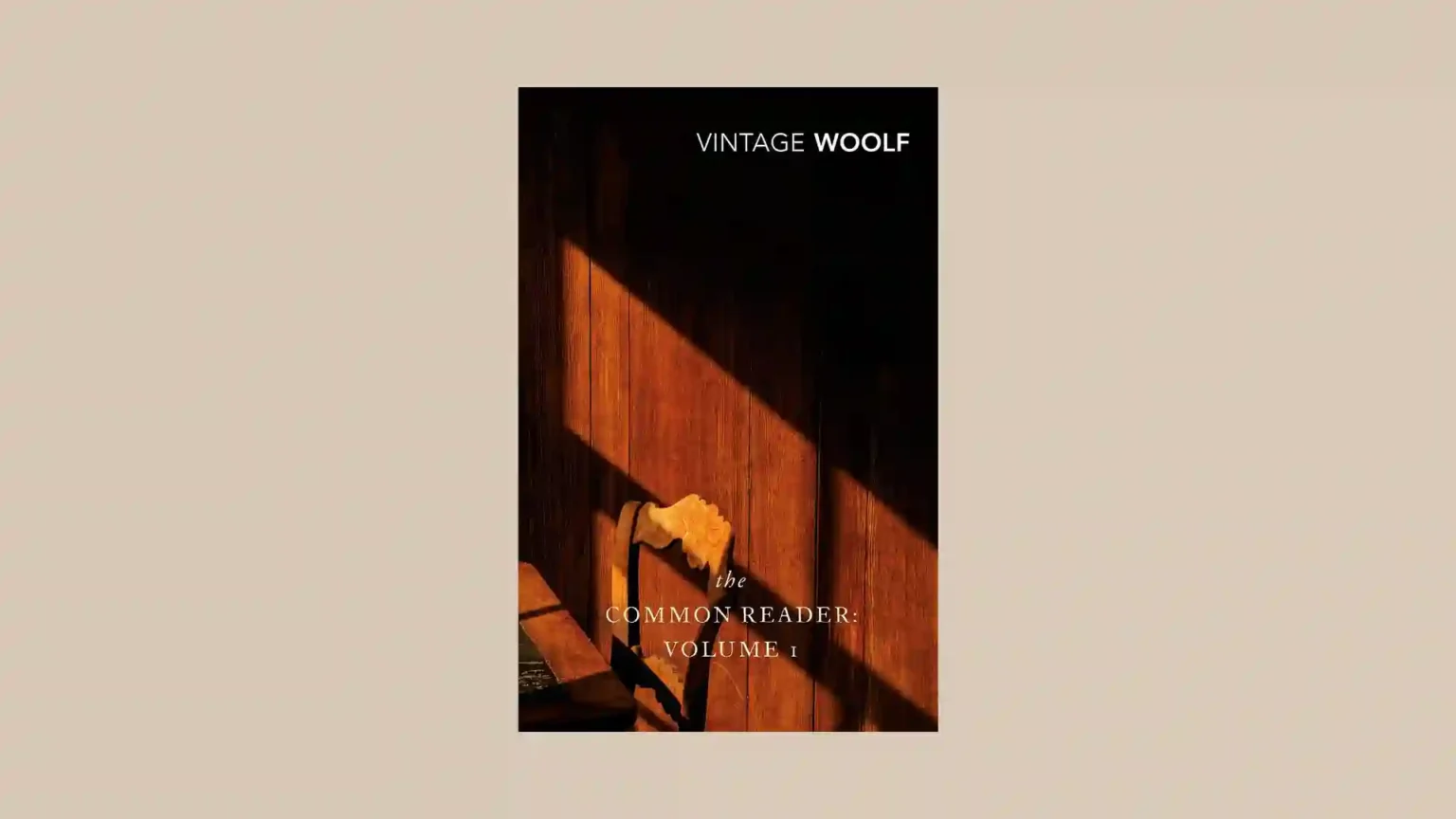
Cover artwork: credits and source records
- The Common Reader — Vintage (source record)