Best Translation of the Iliad is best understood as a question about use rather than a universal verdict. Homer’s poem can be read for speed, grandeur, philological closeness, classroom notes, oral force, Greek-facing study, or historical depth; no English version wins every category. For most first-time readers, Emily Wilson and Robert Fagles are the easiest modern defaults. For close study, Richmond Lattimore, Caroline Alexander, Anthony Verity, Stanley Lombardo, Peter Green, and the Loeb Classical Library each solve a different problem.
The difficulty is not merely that there are many translations. The Iliad is a poem of wrath, public speech, heroic code, ritual violence, grief, simile, formula, repetition, and oral momentum. A translator must decide whether to preserve Homeric repetitions, imitate epic elevation, modernize the language, maintain line correspondence, clarify names, smooth syntax, or let the poem feel strange. That is why the best edition for a university class may not be the best edition for a first encounter.
A useful choice begins with a simple question: do you want the poem to move, to explain itself, to stay close to the Greek, or to stand beside the Greek? Readers interested in ancient drama after Homer may also find the related Bookinlight guide Five Best Books on Greek Tragedy and Ancient Athenian Drama useful as a next step into classical literary culture.
Best Translation of the Iliad: the practical answer
If you want one safe modern choice, choose Emily Wilson for clarity and pace or Robert Fagles for dramatic sweep. If you want a version that stays closer to Homeric structure, choose Lattimore, Alexander, Verity, or Green. If you want performance energy, choose Lombardo. If you want Greek and English together, choose the Loeb Murray/Wyatt edition.
If you just want the answer
Best overall for most readers
Emily Wilson, W. W. Norton
Clear, fast, contemporary, and poetically disciplined.
Best dramatic modern classic
Robert Fagles, Penguin Classics
Expansive, vigorous, and classroom-friendly with Bernard Knox’s apparatus.
Best close-study standard
Richmond Lattimore, University of Chicago Press
Famous for fidelity, line movement, and a serious scholarly afterlife.
Best bilingual edition
A. T. Murray, revised by William F. Wyatt, Loeb Classical Library
Greek-facing English for readers who want the original beside them.
How to choose the right edition or translation
The right translation depends on the kind of reader you are. A first-time reader usually needs momentum, clear names, limited friction, and enough introduction to understand Achilles, Agamemnon, Hector, Patroclus, Priam, the gods, and the war setting. A student needs notes, maps, line references, a reliable introduction, and a version that can be cited without confusion. A Greek student needs line correspondence and, ideally, facing Greek. A literary reader may want the strongest English poem.
For the Best Translation of the Iliad, the key criteria are not identical: readability, fidelity, verse rhythm, consistency of names, treatment of repeated epithets, handling of speeches, battle narrative, similes, notes, introduction, physical durability, and whether the edition is abridged or complete. Avoid choosing only by fame. A famous translation may be magnificent but not suited to your actual reading purpose.
Main comparison table
| Edition / Translation | Translator / Editor | Publisher | Year | Type | Best For | Strengths | Limitations | Verification Status |
|---|---|---|---|---|---|---|---|---|
| The Iliad | Emily Wilson | W. W. Norton | 2023 | Modern verse translation | First-time readers | Brisk, lucid, current, metrically controlled | Some readers may want more archaic elevation | Publisher and Amazon verified |
| The Iliad | Robert Fagles; Bernard Knox | Penguin Classics | 1990; reissues include 1991 and 1998 | Literary verse translation with notes | General readers and classes | Powerful, dramatic, widely taught | Freer and more interpretive than literal versions | Publisher and Amazon verified |
| The Iliad of Homer | Richmond Lattimore; Richard P. Martin | University of Chicago Press | 1951; new edition 2011 | Close verse translation with modern apparatus | Close study | High fidelity, serious notes in 2011 edition | Can feel austere to casual readers | Publisher and Amazon verified |
| The Iliad: A New Translation | Caroline Alexander | Ecco / HarperCollins | 2015 hardcover; 2016 paperback | Close modern verse translation | Readers wanting accuracy and dignity | Line-conscious, restrained, serious | Less immediately fluid than Wilson or Fagles | Publisher and Amazon verified |
| The Iliad | Anthony Verity; Barbara Graziosi | Oxford World’s Classics | 2012 paperback | Annotated student edition | Students and guided readers | Useful notes, compact format, scholarly introduction | Not the most poetic English performance | Publisher and Amazon verified |
| Iliad | Stanley Lombardo; Sheila Murnaghan | Hackett | 1997 | Performance-oriented modern translation | Oral reading and classroom energy | Rapid, colloquial, vivid | Too informal for some traditional readers | Publisher and Amazon verified |
| Iliad, Volumes I–II | A. T. Murray; William F. Wyatt | Harvard University Press / Loeb Classical Library | 1924–1925; revised edition associated with 1999 | Greek-English bilingual edition | Greek students and scholars | Facing Greek, portable, reliable reference | Not the best first literary experience | Publisher and Amazon verified |
| The Iliad: A New Translation | Peter Green | University of California Press | 2015 hardcover; later paperback | Scholar-translator edition | Readers wanting scholarly density | Historically informed, close, substantial | Less smooth for beginners | Publisher and Amazon verified |
Individual edition profiles
Emily Wilson, The Iliad
Publisher: W. W. Norton. Year: 2023. ISBN: 9781324001805. Edition type: complete modern verse translation with introduction and supporting materials.
Wilson is the best default recommendation for many contemporary readers because she offers speed without making Homer trivial. Her English is direct, but not flat; modern, but not aggressively casual. This makes her especially strong for readers who have bounced off older epic diction and want the poem’s violence, grief, and argument to arrive quickly.
Translator/editor background: Emily Wilson is a classicist, translator, and professor of classical studies at the University of Pennsylvania. Her major Homeric work includes her widely discussed translation of the Odyssey, and her wider translation work includes Greek tragedy and Senecan drama. Her background matters because she combines philological training with a sustained public argument about what ancient poetry can sound like in contemporary English.
“clear and brisk, its iambic pentameter a zone of enchantment.”
— Ange Mlinko • W. W. Norton
Who should avoid it: readers who want deliberately archaic grandeur, older canonical English, or a bilingual Greek text may prefer Fagles, Lattimore, or Loeb.
Robert Fagles, The Iliad
Publisher: Penguin Classics. Year: 1990 original publication; common Penguin editions include 1991 and 1998. ISBN: 9780140275360 for the Penguin Classics Deluxe Edition. Edition type: literary verse translation with introduction and notes by Bernard Knox.
Fagles remains one of the safest recommendations for readers who want the Iliad to sound large, dramatic, and fully alive in English. It is not the most literal version, but it is one of the most compelling narrative experiences. Bernard Knox’s introduction and notes make the Penguin edition especially useful for students and book groups.
Translator/editor background: Robert Fagles was a Princeton professor, poet, and translator of major Greek and Roman classics. His Homeric work belongs to a larger epic sequence that also includes the Odyssey and Aeneid. Bernard Knox, the classicist who supplied the introduction and notes, was the first director of Harvard’s Center for Hellenic Studies and a major public interpreter of classical literature.
Reception note: Fagles’s version is widely taught and praised for force, narrative drive, and accessibility. Its limitation is the same as its strength: it often gives Homer a heightened dramatic amplitude rather than preserving every formulaic repetition or syntactic contour.
Richmond Lattimore, The Iliad of Homer
Publisher: University of Chicago Press. Year: 1951 translation; 2011 edition with Richard P. Martin’s introduction and notes. ISBN: 9780226470498. Edition type: close verse translation with modern scholarly apparatus.
Lattimore is the classic answer for readers who ask for fidelity. It keeps closer to Homeric line movement and repeated phrasing than many literary translations. The 2011 Chicago edition is particularly useful because Richard P. Martin’s supplementary materials help newer readers enter what can otherwise feel like a severe, demanding text.
Translator/editor background: Richmond Lattimore was a poet and classicist whose translations range across Greek lyric, Homer, and biblical Greek. Richard P. Martin is a major Homer scholar whose work on performance, epic speech, and classical poetics makes the updated edition stronger for study.
Who should avoid it: readers seeking a smooth modern novel-like experience may find Lattimore too formal. Readers comparing translations, however, should keep it nearby because it shows what a close, disciplined English Homer can look like.
Caroline Alexander, The Iliad: A New Translation
Publisher: Ecco / HarperCollins. Year: 2015 hardcover; 2016 paperback. ISBN: 9780062046284 for the paperback. Edition type: complete modern translation attentive to line shape and Greek structure.
Alexander is an excellent choice for readers who want a modern translation that resists both looseness and excessive rhetorical inflation. Her version is often dignified, close, and controlled. It is less instantly conversational than Wilson and less theatrically expansive than Fagles, but it rewards readers who value seriousness and accuracy.
Translator/editor background: Caroline Alexander is a classicist, author, and filmmaker. Her work on the Iliad followed her nonfiction study The War That Killed Achilles, so her translation is informed by long engagement with Homeric war, violence, and memory. She is also historically significant as the first woman to publish a complete English translation of the Iliad.
“invites us to engage directly with this tradition.”
— Gregory Nagy • Amazon
Who should avoid it: beginners who need maximum speed may prefer Wilson; readers who want overtly elevated English may prefer Fagles or Fitzgerald.
Anthony Verity, The Iliad
Publisher: Oxford World’s Classics. Year: 2012 paperback. ISBN: 9780199645213. Edition type: annotated student edition with introduction and notes by Barbara Graziosi.
Verity is one of the best choices for students who need guidance but do not want an intimidating scholarly tome. The Oxford World’s Classics format is compact and practical, and Graziosi’s introduction helps frame Homeric tradition, authorship, performance, and the poem’s political and emotional stakes.
Translator/editor background: Anthony Verity was a classics teacher and translator associated with Oxford World’s Classics; his other OWC translation work includes major Greek lyric and pastoral texts. Barbara Graziosi is a Homer scholar whose academic work has focused on Homeric reception, ancient authorship, and the cultural authority of epic.
Reception note: Oxford presents this edition as an accurate and powerful translation with the scholarly features expected of the World’s Classics series. It is a strong study edition rather than the most sensuous English poem on this list.
Stanley Lombardo, Iliad
Publisher: Hackett. Year: 1997. ISBN: 9780872203525. Edition type: modern, performance-oriented translation with introduction by Sheila Murnaghan.
Lombardo is the edition to choose when you want the poem to sound spoken, urgent, and bodily. It is especially good for classrooms where students read aloud or where the oral character of epic matters. Its looseness and colloquial voltage are deliberate, not accidental.
Translator/editor background: Stanley Lombardo is a classicist and translator associated with the University of Kansas. His Homeric translations are known for performative energy and oral delivery. Sheila Murnaghan, who supplies the introduction, is a classicist whose work on Homer and Greek literature gives the edition scholarly ballast.
“The most daring, rapid and colloquial translation of Homer’s Iliad that I know.”
— Richard Janko • Hackett
Who should avoid it: readers who want stately epic decorum or close line-by-line comparison with Greek may prefer Lattimore, Alexander, Green, Verity, or Loeb.
A. T. Murray and William F. Wyatt, Iliad, Loeb Classical Library
Publisher: Harvard University Press / Loeb Classical Library. Year: original Loeb volumes 1924 and 1925; revised wording associated with William F. Wyatt’s updated edition. ISBNs: 9780674995796 and 9780674995802. Edition type: two-volume Greek-English facing-page edition.
The Loeb is not the best literary first read, but it is indispensable for readers who want the Greek text beside the English. It is compact, durable, and designed for consultation. The English is more serviceable than dazzling; the value is the bilingual format and reference function.
Translator/editor background: A. T. Murray was the original Loeb translator. William F. Wyatt revised the English for modern readers while preserving the Loeb’s reference character. Their work matters because this edition serves a different audience from trade translations: students, classicists, and readers checking the English against the Greek.
Who should avoid it: beginners who simply want to experience Homer in English should start elsewhere. Use Loeb when Greek-facing study, quotation control, or textual comparison matters.
Peter Green, The Iliad: A New Translation
Publisher: University of California Press. Year: 2015 hardcover; later paperback. ISBN: 9780520281417 for the hardcover. Edition type: scholar-translator edition with substantial classical orientation.
Green is best for readers who want a historically alert, learned, and comparatively close modern version. It is not the lightest way into the poem, but it has real value for serious readers who want a translator deeply immersed in Greek history, Homeric scholarship, and the ancient Mediterranean world.
Translator/editor background: Peter Green was a major classics scholar, historian, novelist, critic, and translator. His work on Homer came late in a long career devoted to ancient Greek history, Alexander, the Hellenistic world, and classical literary translation. That scholarly weight makes his Iliad particularly useful for readers who want context as well as English verse.
Reception note: University of California Press identifies the edition as a first edition with 608 pages, and later commentary has often treated it as a serious scholar’s contribution rather than a beginner’s entertainment version.
Translation philosophy: what changes between versions
The main differences are rhythm, register, repetition, and distance from the Greek. Fagles often gives the poem a large dramatic charge. Wilson uses lucid modern pentameter and keeps the reading line moving. Lattimore preserves more Homeric strangeness and formula. Alexander often stays close to sentence shape and line discipline. Verity balances accuracy with the needs of an annotated student edition. Lombardo pushes toward spoken energy. Loeb gives you a reference English beside Greek rather than a free-standing poetic event.
This is why the Best Translation of the Iliad changes by reader type. A translation that is excellent for oral performance may be less ideal for line-by-line philological work. A translation that is excellent for Greek comparison may be less inviting for a first reader. Homer’s repeated phrases, epithets, speeches, and battle scenes are not decorative extras; they are structural features, and every translator must decide how much of that structure English can bear.
Annotated, scholarly, and companion editions
Most readers benefit from some apparatus, but too much can slow a first reading. The Iliad needs context: the quarrel between Achilles and Agamemnon, the role of the gods, the war’s mythic backstory, heroic honor, funeral ritual, the Catalogue of Ships, and the emotional importance of Hector, Andromache, Priam, and Patroclus. Notes should clarify without making the poem feel like a puzzle box.
For students, Oxford World’s Classics, Penguin Classics, Hackett, and the Chicago Lattimore edition are especially useful. For Greek-facing readers, Loeb is the obvious reference edition. For readers who want deeper background while reading Lattimore, Malcolm M. Willcock’s companion volume, based on Lattimore’s translation, is worth considering, though it is a companion rather than a replacement translation.
For background, see Iliad – Scaife Viewer, Iliad English Translation by Murray, and Who needs another translation of Homer’s Iliad?.
What to avoid
Avoid abridged editions unless they are clearly marked and you need excerpts only. Avoid cheap public-domain reprints that do not identify the translator, include no introduction, and offer no notes. Avoid Kindle editions with poor formatting, especially if line breaks, book divisions, or notes are corrupted. Avoid editions that treat Homer merely as a myth summary.
Older public-domain translations can still be historically valuable, but they are rarely the best first choice for a modern reader. Pope and Chapman matter enormously to English literary history, yet they are not neutral windows onto Homeric Greek. Samuel Butler’s prose can be convenient, but many readers will be better served by a modern annotated edition.
When buying, verify the translator, publisher, ISBN, format, and whether the edition is complete. Similar covers and repeated titles can make different versions look interchangeable when they are not.
Reader pathways
Start with Wilson or Fagles. Read through without stopping at every note.
Choose Verity, Fagles, Lattimore with Martin, or Lombardo depending on the course.
Wilson is the strongest current default; Fagles is the dramatic classic.
Compare Lattimore, Alexander, Green, Verity, and Loeb rather than relying on one answer.
Check current hardcover and deluxe formats carefully; availability changes.
Read Book 1 in Wilson, Fagles, Lattimore, Alexander, and Lombardo before choosing.
Best choice by reader type
| Reader Type | Recommended Edition | Reason |
|---|---|---|
| First-time reader | Emily Wilson | Fast, clear, modern, and serious. |
| Reader wanting grandeur | Robert Fagles | Powerful dramatic English with Knox’s apparatus. |
| Close-study reader | Richmond Lattimore | A standard for fidelity and comparison. |
| Classroom performance | Stanley Lombardo | Oral, fast, and vivid. |
| Greek-facing study | Loeb Murray/Wyatt | Facing Greek and English reference format. |
FAQ
Is the Best Translation of the Iliad always the newest one?
No. Newer translations often solve problems of readability and contemporary idiom, but older translations may remain stronger for grandeur, tradition, or comparison. Wilson is an excellent current default, but Fagles and Lattimore remain important.
Should I read the introduction before the poem?
Read a short orientation first, but avoid turning the introduction into a barrier. For a first reading, it is often better to read enough to know the quarrel, the gods, and the war setting, then return to the introduction after several books.
Is Pope’s translation still worth reading?
Yes, but as a major English poem and reception document rather than as the best modern entrance to Homer. Pope’s heroic couplets belong to eighteenth-century English literary history and reshape Homer through that idiom.
Do I need to read the Odyssey before the Iliad?
No. The poems are connected by the Trojan War tradition, but the Iliad can be read first. In fact, reading the Iliad first helps clarify the postwar emotional world that the Odyssey later inhabits.
Final recommendation
For most readers asking for the Best Translation of the Iliad, the best default is Emily Wilson: clear, swift, modern, and serious without becoming thin. For readers who want a grander modern classic, Robert Fagles remains the strongest second choice. For close study, Richmond Lattimore and Caroline Alexander are the most important comparisons, while Verity is especially useful for students, Lombardo for oral energy, Green for scholarly density, and Loeb for Greek-facing reference.
Before buying, verify the exact translator, publisher, ISBN, format, and whether the edition is complete. The Iliad is too important to leave to a random public-domain reprint. Choose the translation that matches the way you intend to read: first encounter, study, teaching, performance, collection, or comparison.
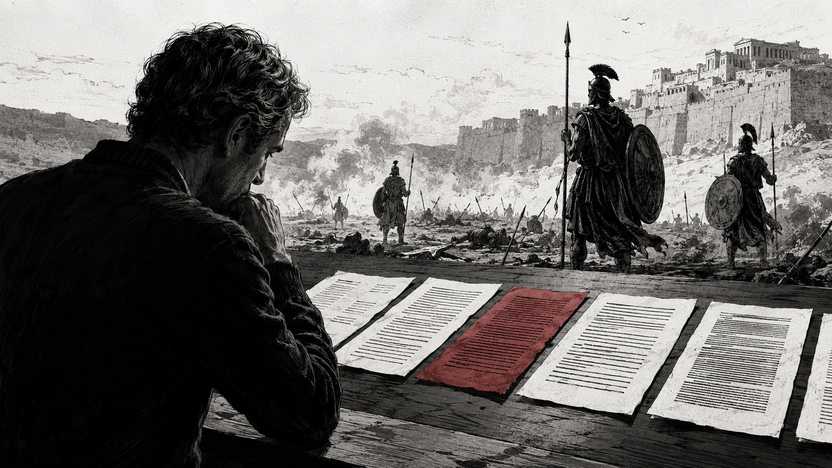
Illustration credit: Bookinlight