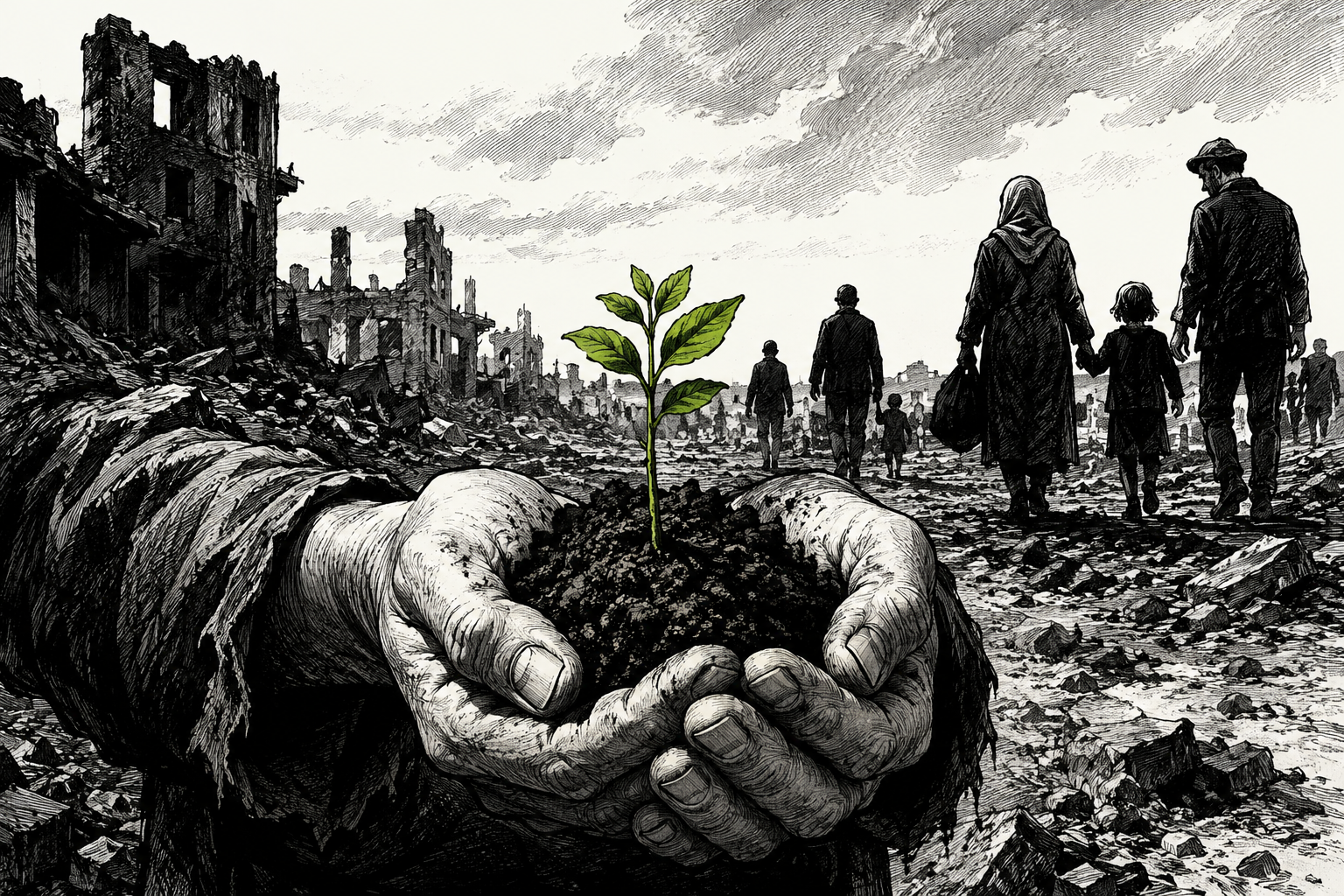
Illustration by Bookinlight Art Desk
Modern History
Five Books on the Boxer Rebellion
A reading path through peasant violence, imperial invasion, missionary conflict, Qing crisis, and the difficult afterlife of 1900 in modern Chinese memory.
By Bookinlight




When a Local Rising Became a World Crisis
The best books on Boxer Rebellion history do not treat 1900 as a simple collision between China and the West. They show a more difficult scene: drought and rural distress in North China, anti-Christian violence, missionary privilege, Qing factionalism, imperial rivalry, foreign expeditionary war, and competing memories that later turned the Boxers into symbols of fanaticism, patriotism, victimhood, resistance, or failed statecraft. The Boxer crisis was at once a local movement, a dynastic emergency, a missionary catastrophe, a multinational military intervention, and a modern myth. These five books belong together because each refuses a single moral frame. Read in sequence, they move from village ecology to historical method, from global imperial violence to narrative reconstruction and military contingency.
Why the Best Books on Boxer Rebellion History Disagree Productively
The Boxer Rebellion is unusually vulnerable to inherited caricature. Western accounts long emphasized irrational xenophobia and siege drama. Chinese nationalist memory often drew from anti-imperial resistance, humiliation, and the violence of foreign occupation. Missionary records preserved suffering, but also reflected the power asymmetries that had made Christian institutions politically explosive in the countryside. A serious reading list must therefore hold several registers at once: local causation, lived experience, geopolitical intervention, and retrospective myth. The point is not to absolve violence or flatten responsibility. It is to understand why the same event can appear as peasant revolt, religious war, imperial intervention, dynastic collapse, and historical parable.
The Reading Lens
The Boxer Rebellion as Event, System, and Memory
The strongest books here ask the reader to move between scales. A village shrine, a mission compound, a Qing decree, a legation wall, a railway line, a battlefield report, and a later patriotic myth do not explain the crisis separately. They form a chain. The Boxer Rebellion becomes intelligible only when local fear, imperial intrusion, religious conflict, and global spectacle are read as mutually producing one another.
Central Question
How does a rural movement become a world-historical crisis without losing its local roots?
Historical Pressure
Late Qing weakness, missionary privilege, ecological distress, and imperial competition pressed local conflict into global politics.
Why These Books
Together they balance origin, interpretation, world context, narrative experience, and military contingency.
Five Essential Books on the Boxer Rebellion
The Origins of the Boxer Uprising
Joseph W. Esherick
Best for: Readers who want the movement before it became a world headline.
Difficulty: Advanced
Intellectual role: The local and social foundation.
Bookinlight Rating: ★★★★★
Esherick’s classic study is the necessary starting point because it resists the temptation to begin with foreign armies or diplomatic crisis. Its force lies in reconstruction: Shandong communities, drought, martial associations, sectarian suspicion, village ritual, and the destabilizing presence of Christian institutions. The book’s central achievement is methodological as much as historical. It shows that the Boxers cannot be explained as timeless irrationality or as a simple nationalist eruption. Their emergence belonged to a specific social ecology in which local grievances and cosmological practices were reworked under conditions of imperial pressure.
Critical Reception
“challenging the traditional view that they grew from earlier anti-dynastic sects“
Bookinlight Note: Read this beside a map of Shandong missions, railways, drought zones, and market towns. The geography matters.
History in Three Keys: The Boxers as Event, Experience, and Myth
Paul A. Cohen
Best for: Readers interested in how history becomes memory and argument.
Difficulty: Advanced
Intellectual role: The historiographical conscience of the list.
Bookinlight Rating: ★★★★★★
Cohen’s book is indispensable because it teaches the reader how to distrust one-dimensional history without abandoning historical judgment. Its three keys are event, experience, and myth: what happened, how participants lived it, and how later communities turned it into meaning. The Boxer Rebellion becomes a laboratory for historical knowledge itself. Cohen is especially valuable for readers who want to understand why the same crisis could generate incompatible memories in China, the West, popular culture, nationalist discourse, and professional historiography.
Critical Reception
“The most adventurous writing on modern Chinese history currently available.“
Bookinlight Note: Use Cohen as the second book, not the first. Its interpretive power increases after the basic geography and chronology are in place.
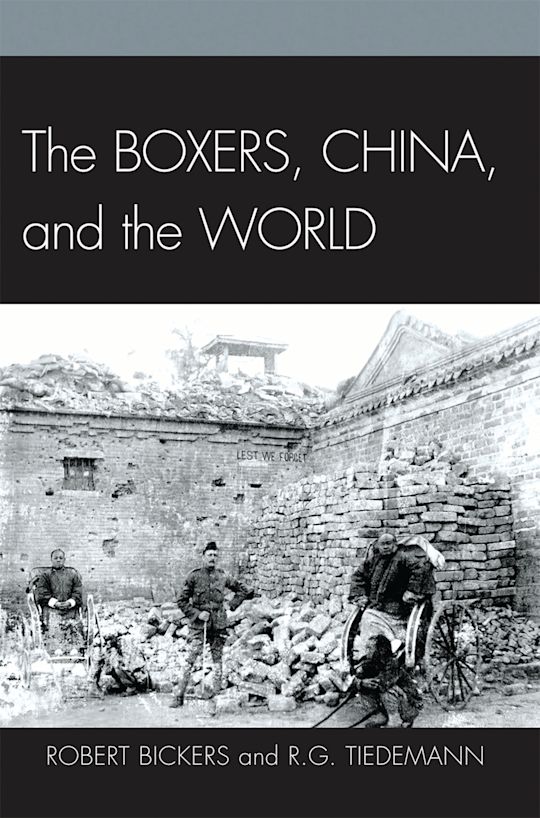
The Boxers, China, and the World
Robert Bickers and R. G. Tiedemann
Best for: Readers who want the rebellion placed in a global frame.
Difficulty: Intermediate
Intellectual role: The international and imperial expansion of the subject.
Bookinlight Rating: ★★★★★★
This edited volume is the best corrective to any purely national reading. Its essays bring the Boxer crisis into the history of imperialism, looting, transnational imagination, Christianity, occupation, public opinion, India, Japan, and the politics of intervention. It is especially strong on the aftermath of victory: how foreign forces justified violence, how imperial publics processed the war, and how the occupation of North China exposed the moral contradictions of civilizing rhetoric. The volume’s major contribution is to make 1900 look modern, not archaic.
Critical Reception
“This is an important book, representing the latest state of the art on the subject.“
Bookinlight Note: Pair this book with visual archives of foreign illustrated newspapers and Chinese prints. The war was also a battle over images.
The Boxer Rebellion: The Dramatic Story of China’s War on Foreigners That Shook the World in the Summer of 1900
Diana Preston
Best for: Readers seeking a vivid narrative of siege, fear, and reprisal.
Difficulty: General
Intellectual role: The human and narrative entry point.
Bookinlight Rating: ★★★★★
Preston’s strength is narrative compression. She gives readers the legations, Tianjin, missionary families, imperial court tensions, foreign diplomats, Chinese Christians, soldiers, rumor, hunger, and terror in a form that moves quickly without losing the tragic density of the crisis. It is not the most theoretically ambitious book here, but it remains useful because the Boxer Rebellion was lived through bodies under siege and communities exposed to revenge. For many readers, Preston supplies the drama that later scholarship can complicate.
Bookinlight Note: This is the most approachable first read, but it should be followed by Esherick or Cohen to avoid a siege-centered lens.
The Boxer Rebellion and the Great Game in China
David J. Silbey
Best for: Readers interested in insurgency, expeditionary war, and imperial competition.
Difficulty: General to Intermediate
Intellectual role: The military and strategic counterweight.
Bookinlight Rating: ★★★★★
Silbey’s book emphasizes contingency. The allied expedition was not simply the clean arrival of overwhelming force; it moved through logistical difficulty, misjudgment, tactical danger, and imperial rivalry. The book also places the Boxer crisis inside a wider world of American, Japanese, Russian, and European ambition. Its value is to restore the war to the rebellion. The reader sees how a rural uprising became a theater in which great powers performed cooperation while also measuring one another.
Bookinlight Note: Ask while reading: when did international rescue become international punishment, and who had the authority to define the difference?
How These Books Speak to One Another
Esherick explains why the movement was possible; Cohen explains why the movement remains interpretively unstable; Bickers and Tiedemann widen the scene into empire and global memory; Preston restores narrative immediacy; Silbey clarifies military risk and great-power rivalry. Together, they prevent the reader from reducing the Boxer Rebellion to either patriotic resistance or anti-Christian fanaticism. They also reveal how modern historical crises acquire their afterlives: through official records, missionary testimony, military reports, illustrated media, public myth, and later national pedagogy. The result is a reading list about 1900, but also about how societies remember violence under unequal power.
The Reading Map
| Book | Difficulty | Rating | Why It Matters |
|---|---|---|---|
| The Origins of the Boxer Uprising | Advanced | ★★★★★ | Explains local origins. |
| History in Three Keys | Advanced | ★★★★★★ | Turns events into method. |
| The Boxers, China, and the World | Intermediate | ★★★★★★ | Globalizes the crisis. |
| The Boxer Rebellion | General | ★★★★★ | Supplies vivid narrative. |
| The Boxer Rebellion and the Great Game in China | General to Intermediate | ★★★★★ | Highlights war and rivalry. |
Where to Begin
- Entry point: Start with Diana Preston for narrative orientation and human immediacy.
- Historical background: Move to Joseph W. Esherick for the rural origins and social ecology.
- Conceptual foundation: Read Paul A. Cohen to separate event, experience, and myth.
- Critical perspective: Use Bickers and Tiedemann to widen the crisis into global imperial history.
- Contemporary relevance: Return to the occupation, looting, intervention, and memory politics in the edited volume.
- Advanced reflection: End with David J. Silbey to rethink the war as military contingency and great-power theater.
External Sources for Further Reading
MIT Visualizing Cultures: The Boxer Uprising
The Last Margin
The best books on Boxer Rebellion history ask readers to give up the comfort of a single verdict. The Boxers committed violence, but they were not born from nowhere. Missionaries suffered, but missionary institutions were entangled with unequal treaties and local power. Foreign armies relieved besieged communities, but they also looted, punished, and occupied. Qing officials hesitated, maneuvered, supported, suppressed, and survived until the dynasty could no longer contain the consequences of its own crisis. These books matter because they let 1900 remain morally difficult. That difficulty is precisely why the Boxer Rebellion still rewards serious reading.