Illustration by Bookinlight Art Desk
Global Governance
Seven Books on the League of Nations
A reading table for the first great experiment in organized peace: collective security, empire, sanctions, publicity, Japan, expert knowledge, and the unfinished architecture of global governance.
By Bookinlight


The Institution That Failed and Endured
The League of Nations is often remembered through a single bleak sentence: it failed to stop the Second World War. That sentence is not false, but it is too small for the institution it describes. The best books on the League of Nations show something more difficult and more revealing: an organization born from war trauma, imperial bargains, legal imagination, bureaucratic invention, and public hope. Its weakness was real. So was its afterlife. The League made visible many of the techniques that still organize international politics: mandates, sanctions, technical committees, humanitarian administration, transnational publicity, expert missions, and the uneasy claim that peace can be managed by institutions.
Why the Best Books on the League of Nations Refuse the Simple Failure Story
To read seriously about the League is to move beyond verdict and toward anatomy. These seven books do not rescue the League by sentimentalizing it. They ask how a liberal international order worked when it had to govern empire, economic coercion, mass media, racial hierarchy, Japanese diplomacy, and the conversion of knowledge into power. Taken together, they show that the League was not merely a diplomatic chamber in Geneva. It was a laboratory in which modern global governance tested its vocabulary before the world had agreed on its limits.
The Reading Lens
International Order as Administration, Exposure, and Afterlife
The League of Nations becomes most intelligible when it is read not as a failed parliament of peace, but as an administrative imagination under pressure. It tried to transform war into procedure, empire into trusteeship, scarcity into economic discipline, and public opinion into a diplomatic force. The result was neither triumph nor simple hypocrisy. These books reveal a world in which liberal internationalism depended on files, committees, experts, publicity, sanctions, and moral language that could restrain violence while also legitimating power.
Central Question
Can peace be institutionalized without reproducing the inequalities that shaped the world before peace was declared?
Historical Pressure
The League emerged when total war, imperial rivalry, revolutionary anxiety, and mass publicity made old diplomacy visibly inadequate.
Why These Books
They move from institutional overview to archival memory, empire, Japan, sanctions, media, and the knowledge systems inherited by later orders.
Seven Books for Re-reading Geneva
The League of Nations and the Organization of Peace
Martyn Housden
Best for: Readers who need a clear, serious entrance into the institution.
Difficulty: General to Intermediate
Intellectual role: The architectural overview.
Bookinlight Rating: ★★★★★
Housden’s book is an excellent first map of the League because it treats the institution as more than a diplomatic failure. It introduces collective security, disarmament, humanitarian labor, economic cooperation, and the personalities who made Geneva more than a symbolic capital. Its virtue is compression without triviality: the reader sees how peace became a problem of organization, not merely intention.
Critical Reception
“central to our understanding of diplomacy and international relations in the Inter-War period“
Bookinlight Note: Read this first, then return to it after the other books; its outline becomes richer once empire, media, and sanctions enter the frame.
A History of the League of Nations
F. P. Walters
Best for: Readers who want the classic institutional chronicle.
Difficulty: Advanced
Intellectual role: The archival memory of the League.
Bookinlight Rating: ★★★★★★
Walters wrote from unusual proximity to the institution, and that closeness is the book’s power. It is not the most contemporary interpretation, but it remains indispensable for the reader who wants to feel the League’s daily machinery: councils, assemblies, crises, procedures, hopes, and humiliations. The book preserves the institution’s own tempo before later historians rearranged it into themes.
Bookinlight Note: Use Walters as a documentary companion: not the final interpretation, but the thick background against which later arguments sharpen.
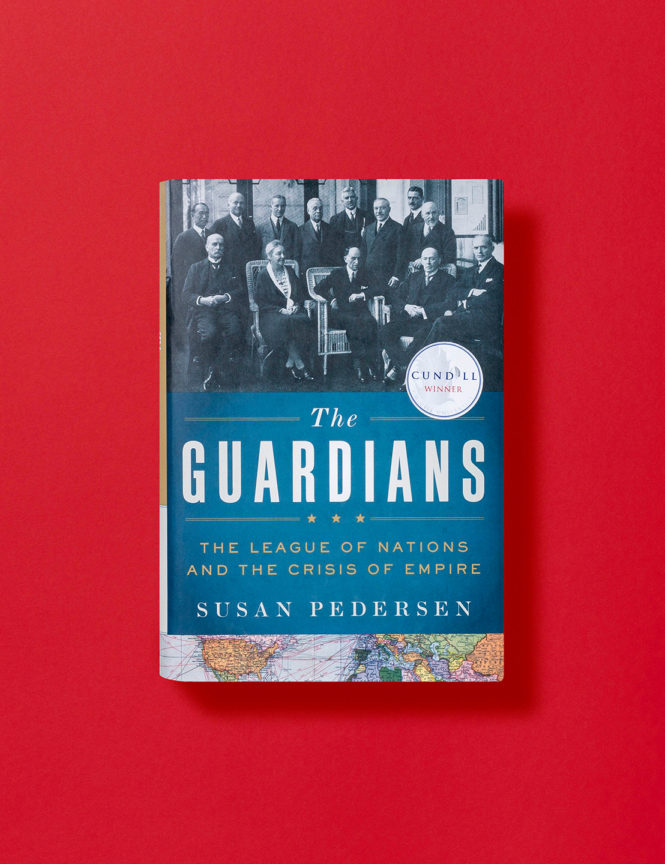
The Guardians: The League of Nations and the Crisis of Empire
Susan Pedersen
Best for: Readers interested in empire, trusteeship, and liberal contradiction.
Difficulty: Intermediate
Intellectual role: The mandate system as the League’s moral test.
Bookinlight Rating: ★★★★★
Pedersen’s study is one of the essential modern works on the League because it turns the mandate system into a central problem rather than a peripheral administrative detail. The book shows how international oversight could expose imperial rule while also preserving it. In Pedersen’s hands, Geneva becomes a stage on which colonial governance, humanitarian language, petition, publicity, and sovereignty all become unstable.
Bookinlight Note: Pair this with anti-colonial political thought; the mandate archive becomes a school of both imperial persistence and international criticism.
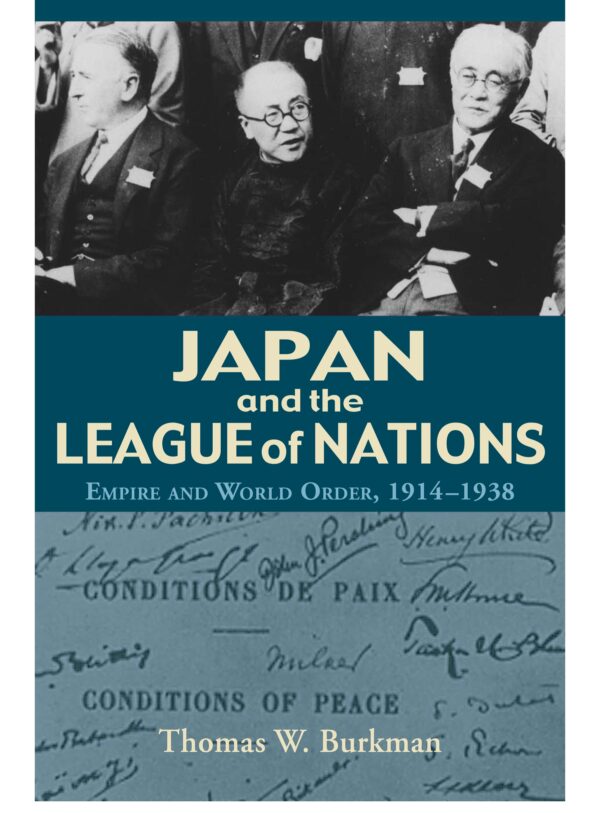
Japan and the League of Nations: Empire and World Order, 1914–1938
Thomas W. Burkman
Best for: Readers who want the League beyond the Atlantic frame.
Difficulty: Intermediate
Intellectual role: The problem of non-Western power inside liberal order.
Bookinlight Rating: ★★★★★★
Burkman’s book prevents the League from becoming a purely European story. Japan’s relationship with Geneva reveals how internationalism could attract, frustrate, and estrange a major imperial power. The book is especially valuable because it does not reduce Japan to withdrawal and Manchuria. It studies the earlier investments in world order that made the later rupture more historically complex.
Critical Reception
“sheds new light on the meaning and content of internationalism“
Bookinlight Note: Ask what kind of world order can welcome a rising power without demanding either submission or imitation.
The Economic Weapon: The Rise of Sanctions as a Tool of Modern War
Nicholas Mulder
Best for: Readers interested in sanctions, coercion, and the politics of peace.
Difficulty: Intermediate
Intellectual role: The League as inventor of modern economic pressure.
Bookinlight Rating: ★★★★★
Mulder’s book changes the emotional tone of League history. Sanctions appear not as a mild alternative to war, but as a powerful instrument born from blockade, scarcity, and the desire to discipline states without immediate battle. The League becomes central to the modern history of coercion: peace is no longer only law and arbitration; it is also pressure applied through finance, trade, and civilian vulnerability.
Bookinlight Note: This is the book to place beside contemporary debates about sanctions, humanitarian exemptions, and the blurred boundary between war and peace.
A Violent Peace: Media, Truth, and Power at the League of Nations
Carolyn N. Biltoft
Best for: Readers interested in information, propaganda, and public truth.
Difficulty: Advanced
Intellectual role: The League as media environment.
Bookinlight Rating: ★★★★★★
Biltoft places the League inside the twentieth century’s crisis of mediation. The book’s importance lies in showing that international order depended not only on treaties and councils, but on the circulation of claims about truth, violence, civilization, and public knowledge. It is a demanding but rewarding study for anyone who senses that global governance has always been partly a struggle over communication.
Critical Reception
“its length belies the complexity and range of its ambition“
Bookinlight Note: Read this with today’s information wars in mind; it reveals how institutional legitimacy depends on who can make violence legible.
Plowshares into Swords: Weaponized Knowledge, Liberal Order, and the League of Nations
David Ekbladh
Best for: Readers interested in expertise, development, and institutional afterlives.
Difficulty: Advanced
Intellectual role: The League as knowledge machine.
Bookinlight Rating: ★★★★★★
Ekbladh’s book is crucial for understanding why the League’s story did not end with its political collapse. It follows how expertise, social knowledge, reformist ambition, and liberal international planning could be repurposed for later orders, including wartime and postwar systems. The League appears here as a generator of techniques: development, research, standardization, and knowledge that could be emancipatory or coercive.
Critical Reception
“Peopled with vivid portraits of dedicated internationalists“
Bookinlight Note: This is the best final book in the sequence because it asks what institutions leave behind when their constitutional dreams fail.
How These Books Speak to One Another
The sequence matters. Housden and Walters give the reader institutional form and historical depth. Pedersen then forces the moral center of the story toward empire, where the language of guardianship becomes inseparable from hierarchy. Burkman widens the map by showing Japan’s complex passage through internationalism, recognition, frustration, and estrangement. Mulder shifts the discussion from law to coercion, making sanctions a central technology of peace. Biltoft asks how truth itself became a medium of power. Ekbladh closes the circle by showing that the League’s knowledge systems survived political failure. Together, these books make the League less a dead organization than a disturbed archive of the modern world.
The Reading Map
| Book | Difficulty | Rating | Why It Matters |
|---|---|---|---|
| The League of Nations and the Organization of Peace | General to Intermediate | ★★★★★ | Best first map of the institution. |
| A History of the League of Nations | Advanced | ★★★★★★ | Classic institutional memory. |
| The Guardians | Intermediate | ★★★★★ | Makes empire unavoidable. |
| Japan and the League of Nations | Intermediate | ★★★★★★ | Decenters Europe. |
| The Economic Weapon | Intermediate | ★★★★★ | Explains sanctions as power. |
| A Violent Peace | Advanced | ★★★★★★ | Reveals media power. |
| Plowshares into Swords | Advanced | ★★★★★★ | Tracks institutional afterlife. |
Where to Begin
- Entry point: Begin with Housden for structure, chronology, and the institutional vocabulary of peace.
- Historical background: Use Walters when you want the classic long account from near the League’s own archive.
- Conceptual foundation: Read Pedersen to understand why empire sits at the center of the story.
- Critical perspective: Turn to Mulder and Biltoft for coercion, publicity, and the violence hidden inside peace.
- Contemporary relevance: Burkman is essential for thinking about rising powers and contested recognition.
- Advanced reflection: End with Ekbladh to see how League knowledge survived institutional death.
External Sources for Further Reading
United Nations: Predecessor, the League of Nations
The Last Margin
The best books on the League of Nations do not ask the reader to admire Geneva naively. They ask for something more difficult: to see how failure can still organize the future. The League failed in the face of aggression, nationalism, imperial violence, and great-power absence. Yet its techniques remained: committees, mandates, sanctions, publicity, expert administration, and the aspiration to make peace a matter of durable institutions. To read these seven books is to understand that the modern international order was not born cleanly after 1945. It carried Geneva’s unfinished questions forward.