
Illustration by Bookinlight Art Desk
Economic History
Seven Books on the Gold Standard
The gold standard was never only a monetary mechanism. It was a political promise, an imperial discipline, a theory of credibility, and a fragile international architecture whose failures still haunt debates about money, sovereignty, and crisis.
By Bookinlight
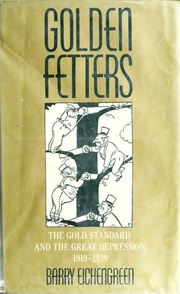
Golden Fetters
Barry Eichengreen
Not the original published cover
The Glitter of Gold
Marc Flandreau
Not the original published cover

A Retrospective on the Classical Gold Standard
Michael D. Bordo and Anna J. Schwartz
Not the original published cover
Globalizing Capital
Barry Eichengreen
Not the original published cover
The Gold Standard and Related Regimes
Michael D. Bordo
Not the original published cover

Lever of Empire
Mark Metzler
Not the original published cover

Lords of Finance
Liaquat Ahamed
Not the original published cover

Gold as Rule, Myth, and Constraint
The best books on the gold standard show that gold mattered because people treated it as more than money. It became a promise that states would discipline themselves, a mechanism for binding currencies together, and a story about value as if value could stand outside politics. Yet the same promise could become a trap. These seven books move from nineteenth-century bimetallism and the classical gold standard to Japan, the Great Depression, central banking, and the long history of international monetary order. Together they reveal the gold standard as a world-making institution: part technical apparatus, part imperial hierarchy, part political theology of sound money.
Why the Best Books on the Gold Standard Still Matter
The gold standard remains powerful in public memory because it appears to offer an answer to monetary anxiety: convertibility, discipline, automaticity, and trust. The deeper historical record is less serene. Gold linked economies through trade, capital flows, central bank decisions, and reserve politics, but it also transmitted deflation, narrowed policy choices, and rewarded surplus countries that refused adjustment. These books are not nostalgic defenses or simple demolitions. Their shared value lies in showing how a monetary regime becomes credible only when institutions, empires, voters, bankers, and intellectual habits continually reproduce its authority.
The Reading Lens
A Monetary Order Is Also a Moral Order
Read together, these books shift the gold standard from a narrow question of convertibility to a broader problem in economic history: how societies turn a material object into a rule of legitimacy. Gold promised neutrality, but its operation depended on central banks, fiscal states, imperial networks, legal commitments, and public belief. The crucial question is not whether gold was stable in abstraction. It is who had to absorb instability so that gold could appear stable.
Central Question
Can a monetary system be politically neutral when its defense imposes unequal social costs?
Historical Pressure
The nineteenth-century search for credibility became a twentieth-century discipline of crisis, deflation, and institutional blame.
Why These Books
They connect theory, global history, Japan, central banking, and political economy into one argument about value and power.
Seven Essential Books on the Gold Standard
Golden Fetters
Barry Eichengreen
Not the original published cover
Golden Fetters
Barry Eichengreen
Best for: Readers who want the definitive account of gold and the Great Depression.
Difficulty: Advanced
Intellectual role: The central crisis narrative of the interwar gold standard.
Bookinlight Rating: ★★★★★
Eichengreen’s great achievement is to make the interwar gold standard visible as a transmission mechanism of disaster. The book rejects the idea that the Depression was merely a sequence of national policy mistakes. Instead, it reconstructs a fragile international order in which central banks, reserve flows, reparations, war debts, and domestic political constraints interacted catastrophically. Its lasting force lies in the metaphor of the title: gold did not simply anchor money; it fettered political response when expansion, lender-of-last-resort action, and international coordination were most needed.
Critical Reception
“This book offers a reassessment of the international monetary problems.“
Bookinlight Note: Pair this with Ahamed’s Lords of Finance: one gives the system, the other gives the bankers who inhabited it.
The Glitter of Gold
Marc Flandreau
Not the original published cover
The Glitter of Gold
Marc Flandreau
Best for: Readers interested in bimetallism, France, and the pre-1873 monetary order.
Difficulty: Advanced
Intellectual role: The revisionist account of how gold became international.
Bookinlight Rating: ★★★★★★
Flandreau complicates the assumption that the gold standard naturally triumphed because it was technically superior. His focus on France’s bimetallic regime shows that nineteenth-century stability could emerge from institutional arbitrage between gold and silver rather than from gold alone. This makes the book essential: it turns the rise of gold into a contingent historical outcome, not a destiny. The result is a subtle account of markets, central banks, legal ratios, and coordination failure before the classical gold standard hardened into global orthodoxy.
Bookinlight Note: Read it as a study of paths not taken: monetary history becomes richer when inevitability is removed.
A Retrospective on the Classical Gold Standard
Michael D. Bordo and Anna J. Schwartz
Not the original published cover
A Retrospective on the Classical Gold Standard
Edited by Michael D. Bordo and Anna J. Schwartz
Best for: Readers who want a technical research map of the classical period.
Difficulty: Advanced
Intellectual role: The scholarly laboratory of competing interpretations.
Bookinlight Rating: ★★★★★★
This conference volume is not a single sweeping narrative, and that is its strength. It gathers debates about rules of the game, purchasing-power parity, the Bank of England, commodity prices, and national cases from Germany to Canada. The volume is especially useful because it preserves disagreement. The classical gold standard appears here not as an elegant diagram but as an empirical problem: a regime whose actual operation depended on institutional practice, credibility, and uneven adjustment across countries.
Bookinlight Note: Use this volume as a reference shelf: read the introduction first, then follow the national cases that match your research question.
Globalizing Capital
Barry Eichengreen
Not the original published cover
Globalizing Capital
Barry Eichengreen
Best for: Readers seeking the long arc from gold to floating currencies.
Difficulty: General to Intermediate
Intellectual role: The broad international monetary history.
Bookinlight Rating: ★★★★★
Where Golden Fetters excavates a particular disaster, Globalizing Capital offers the architecture surrounding it. Eichengreen moves from the classical gold standard to interwar breakdown, Bretton Woods, and the post-1973 monetary order. Its clarity makes it the best starting point for many readers, because it explains why international monetary regimes are never merely technical. They are historical settlements among capital mobility, exchange-rate commitments, domestic politics, and the capacity of states to absorb shocks.
Critical Reception
“A brief, lucid book that tells the story of the international financial system.“
Bookinlight Note: This is the best bridge between economic history and contemporary debates about dollar power, currency blocs, and monetary sovereignty.
The Gold Standard and Related Regimes
Michael D. Bordo
Not the original published cover
The Gold Standard and Related Regimes
Michael D. Bordo
Best for: Readers interested in rules, credibility, and regime comparison.
Difficulty: Advanced
Intellectual role: The analytical defense and interrogation of gold as commitment.
Bookinlight Rating: ★★★★★★
Bordo’s collected essays are indispensable because they take seriously what gold’s defenders often emphasize: credibility, rules, and the attraction of a nominal anchor. Yet the essays also show that those concepts work historically, not magically. Gold convertibility becomes meaningful only when institutions, expectations, fiscal capacity, and international cooperation align. For readers who want to understand why gold keeps returning in policy imagination, this volume explains both the intellectual appeal and the historical limits of monetary rule-making.
Bookinlight Note: The most productive discussion question is simple: when does a rule create trust, and when does it merely hide politics?
Lever of Empire
Mark Metzler
Not the original published cover
Lever of Empire
Mark Metzler
Best for: Readers who want the gold standard outside the usual Euro-American frame.
Difficulty: Advanced
Intellectual role: The imperial and Japanese political-economic case.
Bookinlight Rating: ★★★★★★
Metzler places Japan at the center of gold’s global story. The book shows how the international gold standard shaped fiscal policy, imperial expansion, liberal politics, and the induced deflation that preceded Japan’s 1931 crisis. Its importance lies in demonstrating that gold was not a European mechanism merely exported outward. It became a lever through which rising powers sought recognition, discipline, and geopolitical standing, even when the domestic price was severe economic contraction and political destabilization.
Critical Reception
“Thought-provoking, intellectually curious, and at times controversial.“
Bookinlight Note: This is the book that most sharply turns gold from monetary policy into imperial political history.
Lords of Finance
Liaquat Ahamed
Not the original published cover
Lords of Finance
Liaquat Ahamed
Best for: Readers who want narrative history with central bankers at the center.
Difficulty: General
Intellectual role: The human drama of interwar monetary failure.
Bookinlight Rating: ★★★★★
Ahamed tells the story through Montagu Norman, Benjamin Strong, Émile Moreau, and Hjalmar Schacht, making visible the personalities and blind spots behind monetary orthodoxy. It is less analytically exhaustive than Eichengreen, but it is unmatched as an entrance into the atmosphere of the 1920s: reparations, fragile banking systems, elite confidence, and the belief that returning to gold could restore civilization after war. Its narrative power makes institutional failure feel human without reducing history to biography.
Critical Reception
“Highly readable… cannot have foreseen how timely his book would be.“
Bookinlight Note: Ideal for a reading group: assign each participant one central banker and ask what each mistook for stability.
How These Books Speak to One Another
The sequence matters. Flandreau shows that gold’s rise was contingent; Bordo and Schwartz show that its classical operation remains empirically contested; Bordo clarifies why rules and credibility retain intellectual appeal; Eichengreen explains how those same rules collapsed into interwar constraint; Metzler relocates the system through Japan and empire; Ahamed narrates the human drama of central bankers defending a failing orthodoxy. The best books on the gold standard therefore do not point toward one verdict. They reveal a monetary regime as an unstable settlement among belief, coercion, expertise, and historical chance.
The Reading Map
| Book | Difficulty | Rating | Why It Matters |
|---|---|---|---|
| Golden Fetters | Advanced | ★★★★★ | Explains gold as Depression constraint. |
| The Glitter of Gold | Advanced | ★★★★★★ | Shows gold’s rise as contingent. |
| A Retrospective on the Classical Gold Standard | Advanced | ★★★★★★ | Maps major empirical disputes. |
| Globalizing Capital | General to Intermediate | ★★★★★ | Gives the long monetary arc. |
| The Gold Standard and Related Regimes | Advanced | ★★★★★★ | Clarifies rules and credibility. |
| Lever of Empire | Advanced | ★★★★★★ | Centers Japan and empire. |
| Lords of Finance | General | ★★★★★ | Humanizes central bank failure. |
Where to Begin
- Entry point: Start with Globalizing Capital for the clearest broad map.
- Historical background: Move to The Glitter of Gold to see how gold became dominant.
- Conceptual foundation: Use A Retrospective on the Classical Gold Standard for empirical debates.
- Critical perspective: Read Golden Fetters for the interwar crisis argument.
- Contemporary relevance: Add The Gold Standard and Related Regimes for rule-based monetary thinking.
- Advanced reflection: Finish with Lever of Empire and Lords of Finance to see how gold shaped both empire and elite decision-making.
External Sources for Further Reading
NBER introduction to A Retrospective on the Classical Gold Standard
Cambridge University Press page for The Gold Standard and Related Regimes
The Last Margin
The most serious reason to read the best books on the gold standard is not to decide whether gold should return. It is to understand why a society repeatedly dreams of escaping politics through money. These books show that the dream is unstable. Gold may promise discipline, but discipline always has a distribution. Gold may promise credibility, but credibility always has institutional guardians. Gold may promise natural value, but value is never outside history. The gold standard endures as an intellectual problem because it forces us to ask what kinds of suffering are hidden when a monetary order calls itself sound.