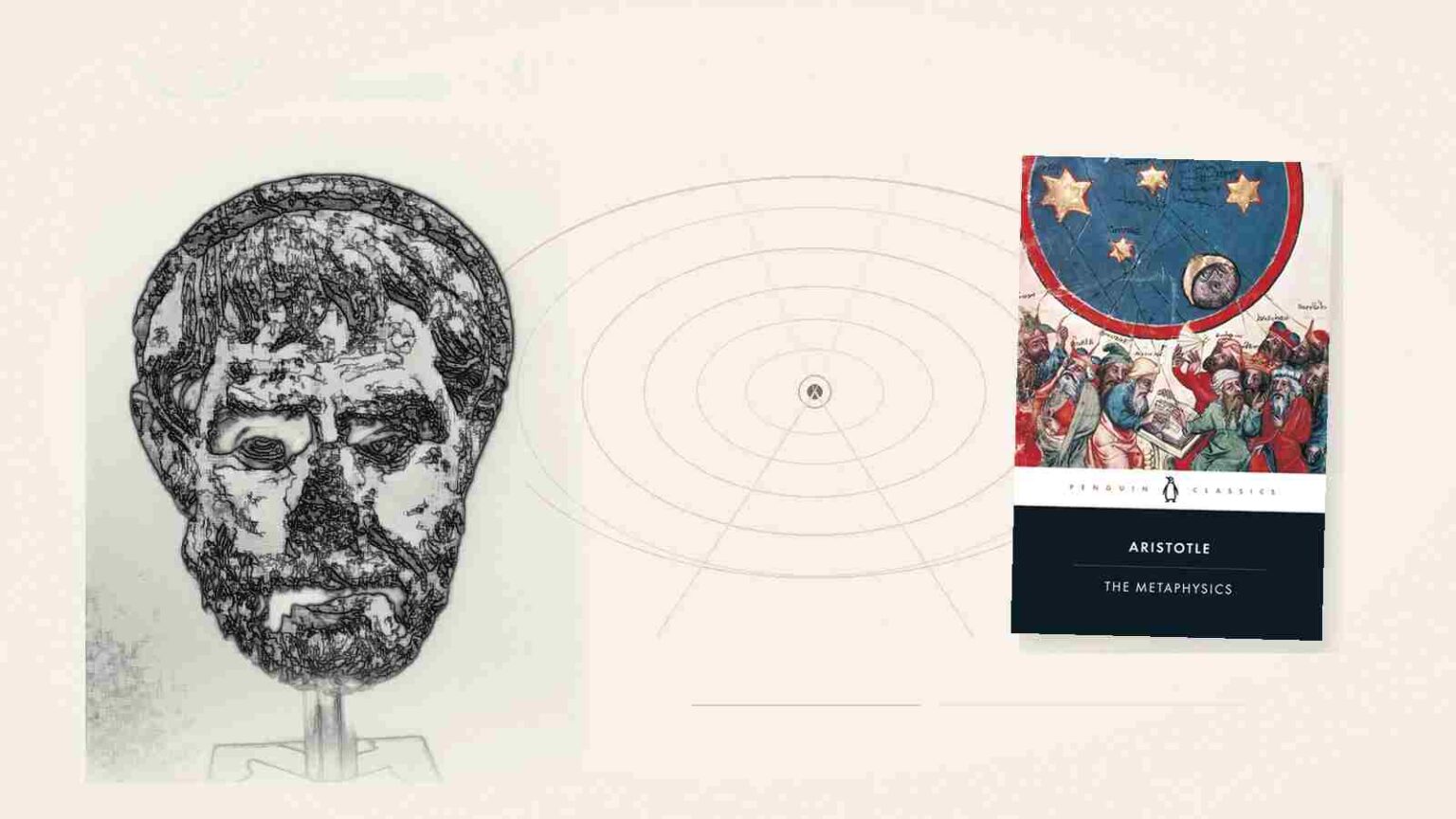
The doctrine called Aristotle’s “unmoved mover” is not a separate essay. Where to Read Aristotle’s Unmoved Mover is chiefly Metaphysics Book XII—Lambda—especially chapters 6–10, with XII.7 as the central passage; Physics VIII supplies the earlier motion argument. Hugh Lawson-Tancred’s complete Penguin translation is the most practical first volume, while C. D. C. Reeve and Lindsay Judson are stronger for sustained academic study. :contentReference[oaicite:0]{index=0}

DIRECT ANSWER
Where the Text Appears
Collection: The Metaphysics
Translator and introducer: Hugh Lawson-Tancred
Edition: Penguin Classics; translation first published 1998, current UK paperback record 2004; ISBN 9780140446197
Exact locator: Book XII (Lambda), chapters 6–10; begin with XII.7, 1072a19–1073a13, then read XII.9
Completeness: Complete fourteen-book Metaphysics, not an excerpt
Main advantage: Readable continuous English, a substantial introduction, stable Bekker references, and the full conceptual route through substance, potentiality, and actuality. Best for first-time readers and independent study. :contentReference[oaicite:1]{index=1}
Where to Read Aristotle’s Unmoved Mover: The Doctrine’s First Appearance
There was no ancient work entitled “The Unmoved Mover.” The expression is a later label for a connected set of arguments in Aristotle’s Physics and Metaphysics. In Physics VIII, especially chapters 5–6, Aristotle argues that the chain of movers must terminate in something that imparts motion without itself being moved. In Metaphysics XII.6–10, he asks what kind of substance could ground eternal cosmic motion and describes a first actuality that moves as an object of thought and desire. The compact sentence most readers seek is in XII.7; the account of divine self-thinking belongs chiefly to XII.9. :contentReference[oaicite:2]{index=2}
The Greek work is conventionally titled τὰ μετὰ τὰ φυσικά (ta meta ta physika), and its twelfth book is Lambda, Λ. Aristotle did not use “metaphysics” as the title of a discipline or of this assembled treatise. The received collection was put together from smaller writings by an ancient editor; the exact date and internal history of Lambda remain disputed. Some scholars treat it as an originally independent tract later fitted into the collection. It is therefore safer to date it broadly to Aristotle’s fourth-century BCE teaching corpus than to assign a fictitious year of composition or an original “publication venue.” :contentReference[oaicite:3]{index=3}
The earliest complete English book-form translation verified here is Thomas Taylor’s The Metaphysics of Aristotle, printed in London in 1801. Modern readers rarely use it except for reception history. The familiar twentieth-century English lineage begins with W. D. Ross; Hugh Tredennick’s Loeb translation followed in 1933–35, while Lawson-Tancred, Joe Sachs, and Reeve represent distinct modern strategies. Cite the doctrine by book, chapter, and Bekker number—not by a page number that changes with every edition. :contentReference[oaicite:4]{index=4}
The Main English Collections and Editions
Lawson-Tancred is the best practical entry point, but it is not the only serious choice. Reeve’s 2016 Hackett version translates the entire Metaphysics and adds more than 1,600 explanatory notes plus a detailed index of terms. It is the strongest single-volume study edition for readers who want current English and sustained guidance. Lindsay Judson’s 2019 Aristotle, Metaphysics Lambda translates only Book XII, but its extended commentary makes it the most useful specialist companion when Lambda itself is the research object. :contentReference[oaicite:5]{index=5}
ALTERNATIVE MODERN TRANSLATION
Aristotle’s Metaphysics: Greek Vocabulary Recast
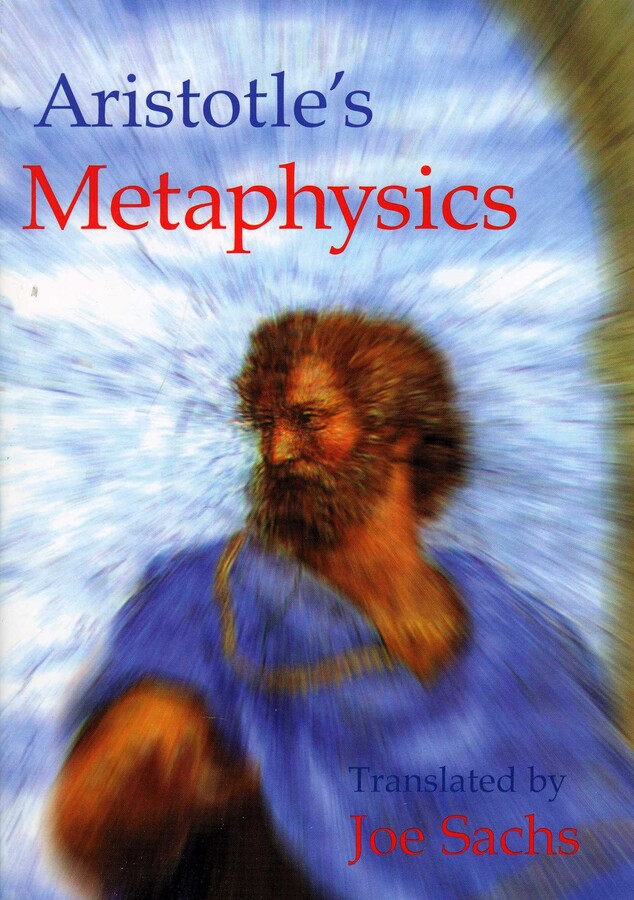
Translator: Joe Sachs
Publisher and year: Green Lion Press, 1999; ISBN 9781888009033
Extent: Complete Metaphysics; Book XII is titled “The Cause of Being” in this edition
Judgment: Sachs deliberately avoids inherited Latinate abstractions and makes Aristotle’s verbal texture newly visible. That can clarify energeia, but the unfamiliar English demands patience. Best for readers comparing philosophical vocabularies, not for those who need the most conventional terminology. :contentReference[oaicite:6]{index=6}
HISTORICAL SCHOLARLY EDITION
W. D. Ross’s Two-Volume Greek Text and Commentary
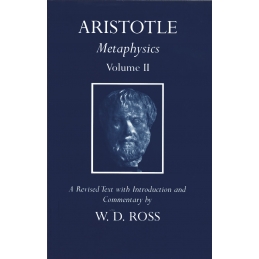
Editor and commentator: W. D. Ross
Publisher: Clarendon Press; first published 1924; two-volume reissue ISBN 9780198141075
Text location: Book Lambda appears in Volume II; the displayed cover is Volume II
Judgment: Still indispensable for the history of modern scholarship and detailed cross-reference, but its Greek text and commentary precede later textual work. Scholars should consult Ross alongside Judson or a newer critical treatment rather than treat it as the last word. :contentReference[oaicite:7]{index=7}
| Edition | Main value | Best for |
|---|---|---|
| Lawson-Tancred | Complete; fluent full context | First reading |
| Reeve, 2016 | Complete; extensive notes and term index | Coursework |
| Sachs, 1999 | Complete; Greek-shaped English | Translation study |
| Judson, 2019 | Lambda only; detailed commentary | Book XII research |
| Ross, 1924 | Greek text; historical commentary | Textual history |
Why the English Title and Translation Change
“Unmoved mover,” “prime mover,” and “first mover” usually designate the same central principle, not three separate Aristotelian texts. The Greek sentence in XII.7 speaks of something that moves without being moved. Translators then decide whether to turn that description into a compact noun phrase. “Prime mover” emphasizes causal priority; “unmoved mover” preserves the paradoxical structure; “first god” or “first principle” may appear where Aristotle shifts from motion to substance and intellect. :contentReference[oaicite:8]{index=8}
The deeper differences concern recurring terms. Energeia may be “actuality,” “activity,” or, in Sachs, “being-at-work”; ousia is normally “substance,” while Sachs often chooses “thinghood”; nous and noēsis may become “intellect,” “understanding,” or “thought.” These decisions shape how XII.7 and XII.9 sound. They do not create different versions of the doctrine. Readers writing about one Greek term should compare at least two translations and cite the Greek line reference.
Legal Online and Library Access
For readers asking Where to Read Aristotle’s Unmoved Mover legally, the current Penguin, Hackett, Green Lion, and Judson editions remain copyrighted. No authorized free full text of those exact translations was located. Complete older translations and the Greek text are legally accessible, however. A catalogue record can help locate a copy; it is not itself the book.
FREE FULL TEXT
MIT Internet Classics Archive, Metaphysics XII: complete W. D. Ross translation of the book containing the central passage.
COMPANION ARGUMENT
MIT, Physics VIII: complete Hardie–Gaye translation of the motion argument, especially chapters 5–6.
GREEK AND ENGLISH
The Perseus Digital Library provides the Greek text and a separate Hugh Tredennick English text, useful for checking Greek vocabulary and Bekker references.
BORROW OR SUBSCRIBE
Search ISBN 9780140446197 in a local or university catalogue; for digital access, use the Internet Archive record for controlled borrowing of Sachs, or the Loeb Classical Library through a subscribing institution. :contentReference[oaicite:9]{index=9}
Which Edition Should You Choose?
For a first complete reading: choose Lawson-Tancred. For a university course or close English-language study: Reeve gives the best combination of a full translation, notes, and terminological navigation. For research concentrated on Lambda: use Judson, but keep a complete Metaphysics beside it. For translation comparison: Sachs is the most revealing departure from standard philosophical English. For the history of scholarship: Ross remains important, though no longer sufficient by itself.
RECOMMENDED EDITION
Buy or borrow the Lawson-Tancred Penguin when you need one readable complete volume. Read XII.6–10, not XII.7 in isolation. For a citable academic argument, add Reeve’s notes or Judson’s Lambda commentary and identify the passage by Bekker number.
What Else Is in the Recommended Collection?
The value of a complete Metaphysics is that Lambda’s first actuality does not arrive without preparation. Book I, Alpha, frames wisdom as knowledge of first causes. Book IV, Gamma, defines the inquiry into being as being and defends non-contradiction. Books VII–VIII, Zeta and Eta, examine substance, matter, and form. Book IX, Theta, develops potentiality and actuality—the distinction Lambda needs when it argues for an eternal actuality without potentiality.
These are not optional background decorations. They explain why Aristotle’s first mover must be substance, why pure actuality matters, and why the theological discussion belongs inside first philosophy. The one indispensable companion outside the collection is Physics VIII: it establishes the motion problem that Lambda redescribes at the level of separate substance.
Frequently Asked Questions
What book contains Aristotle’s “unmoved mover”?
The main theological account is in Metaphysics Book XII, Lambda, especially chapters 6–10. The central description of what moves without being moved is in XII.7. The underlying proof from eternal motion is developed in Physics VIII, particularly chapters 5–6.
Is “The Unmoved Mover” a chapter title?
No. It is a later descriptive label. Editions may add headings, but Aristotle’s transmitted book is Lambda, not a standalone essay or officially titled subsection called “The Unmoved Mover.”
Where to Read Aristotle’s Unmoved Mover legally online?
MIT provides the complete public-domain Ross translation of Metaphysics XII and the Hardie–Gaye Physics VIII. Perseus is preferable when Greek vocabulary and section navigation matter. Current commercial translations are not legally free in full.
What is the best English translation?
Lawson-Tancred is the best practical first reading. Reeve is the strongest complete study edition because of its extensive notes. Sachs is best for testing how inherited Latin-derived vocabulary shapes interpretation. Judson is best for specialist work on Lambda alone.
How should the passage be cited?
Name Aristotle, the work, book and chapter, the Bekker range, and the translator or edition in the bibliography. A useful central locator is Metaphysics XII.7, 1072a19–1073a13. Use XII.6–10 when discussing the whole doctrine rather than one celebrated sentence.
Final Recommendation
Most readers should use Hugh Lawson-Tancred’s complete Penguin Metaphysics and read Lambda 6–10, beginning with XII.7 but continuing through the account of divine intellect in XII.9. Reeve is the better single-volume choice for coursework; Judson is the specialist edition to cite and consult when the argument of Lambda itself is under scrutiny.
A legal full text is available in older translations through MIT and in Greek through Perseus. Do not mistake a quotation headed “The Unmoved Mover” for a complete Aristotelian work, and do not omit Physics VIII if your question concerns the proof from motion. The full collection is worth obtaining because Lambda’s pure actuality only becomes intelligible against Aristotle’s earlier books on substance, cause, potentiality, and actuality.
Related BookInLight Reading Guides
“Aristotle’s Four Causes, Precisely Located: Physics II.3 and the Editions That Matter” identifies another doctrine often detached from its actual textual setting and clarifies the causal vocabulary presupposed by Lambda. :contentReference[oaicite:10]{index=10}
“Aristotle’s Function Argument, Precisely Located” offers a parallel guide to citing a famous Aristotelian argument by book, chapter, and Bekker number rather than by an invented standalone title. :contentReference[oaicite:11]{index=11}
“The Mean in Its Proper Place: Aristotle’s Doctrine in Book II” shows how a familiar later label can compress a longer argument and why the surrounding chapters matter. :contentReference[oaicite:12]{index=12}
Editorial research and authorship: This article was researched and written by the BookInLight Department of Philosophy and Intellectual History, with bibliographical review, edition comparison, source verification, and fact-checking by the BookInLight research team. Readers are invited to submit factual corrections, overlooked editions, source suggestions, translation observations, and constructive editorial ideas.
Art direction and rights: Editorial art direction, visual composition, cover selection, and image presentation were developed by the BookInLight Art Department. Rights in the individual book covers remain with the relevant publishers, artists, designers, institutions, and other rights holders. Complete republication, reproduction, translation, or reuse of this article requires prior written permission from BookInLight.
Sources and Further Reading
Text and Publication History
Aristotle, “Metaphysics, Book XII,” MIT Internet Classics Archive — complete Ross text and chapter sequence.
Aristotle, “Physics, Book VIII,” MIT Internet Classics Archive — the motion argument and its first unmoved source.
Stanford Encyclopedia of Philosophy, “Aristotle’s Metaphysics” — title history, Lambda 7 and 9, and modern bibliography.
Stanford Encyclopedia of Philosophy, “Aristotle’s Natural Philosophy” — relation between Physics VIII and Metaphysics XII.
Thomas Taylor, The Metaphysics of Aristotle (1801) — early complete English book-form translation.
English Editions and Commentary
Penguin Classics, The Metaphysics, translated by Hugh Lawson-Tancred — exact edition data and current format.
Hackett Publishing, Metaphysics, translated by C. D. C. Reeve — completeness, notes, index, ISBN, and publication data.
Green Lion Press / Simon & Schuster, Aristotle’s Metaphysics, translated by Joe Sachs — edition extent and translation rationale.
Oxford University Press, Lindsay Judson, Aristotle, Metaphysics Lambda — focused translation, commentary, and 2019 edition data.
Oxford University Press, W. D. Ross, Aristotle’s Metaphysics — two-volume Greek text and commentary record.
Christopher Shields, review of Aristotle’s Metaphysics Book Lambda, Notre Dame Philosophical Reviews — Lambda’s textual uncertainty and scholarly significance.
Legal Digital Access
Perseus Digital Library, Greek Metaphysics, with its Tredennick English edition — legal text access and Bekker-number navigation.
Loeb Classical Library, Metaphysics Volume II — Greek–English institutional access to Books X–XIV.
Internet Archive, Joe Sachs edition record — controlled digital borrowing, subject to account and availability.
Image Credits
The Metaphysics, translated by Hugh Lawson-Tancred, Penguin Classics, ISBN 9780140446197. Cover from the official Penguin edition page; cover rights remain with the publisher and designer.
Aristotle’s Metaphysics, translated by Joe Sachs, Green Lion Press, 1999, ISBN 9781888009033. Cover supplied on the official distributor edition page.
Aristotle’s Metaphysics, Volume II, revised Greek text with introduction and commentary by W. D. Ross, Clarendon Press; two-volume ISBN 9780198141075. Volume II cover displayed from the exact two-volume edition listing; rights remain with Oxford University Press and the relevant designer.