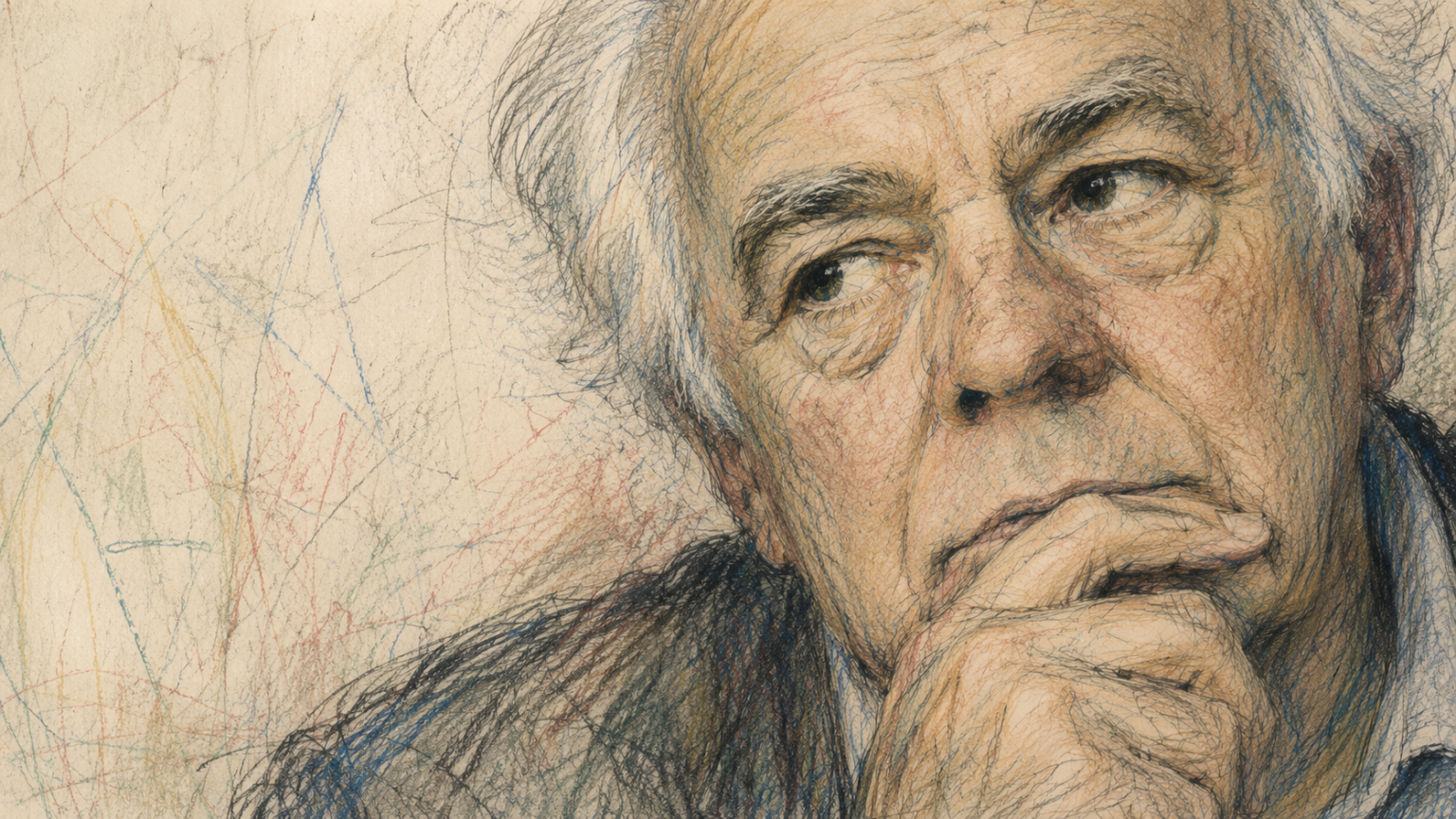
Illustration by Bookinlight Art Desk
Contemporary Philosophy
Six Books on Richard Rorty and Pragmatism
A serious reading path through Rorty’s attack on representation, his revival of pragmatism, his liberal ironism, and the democratic hopes that made his philosophy both unsettling and durable.
By Bookinlight
Philosophy and the Mirror of Nature
Richard Rorty
Not the original published cover
Consequences of Pragmatism
Richard Rorty
Not the original published cover
Objectivity, Relativism, and Truth
Richard Rorty
Not the original published cover

Contingency, Irony, and Solidarity
Richard Rorty
Not the original published cover

Achieving Our Country
Richard Rorty
Not the original published cover

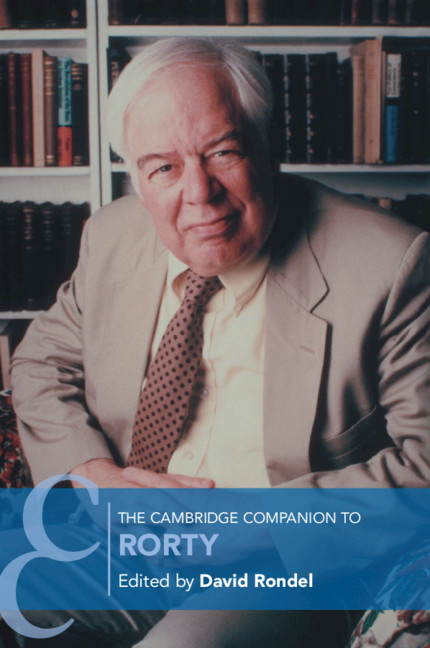
The Cambridge Companion to Rorty
David Rondel
Not the original published cover
After the Mirror Breaks
Rorty is often introduced as the philosopher who told philosophy to stop pretending it possessed a tribunal above culture. That is true, but incomplete. The best books on Richard Rorty and pragmatism reveal a more intricate figure: an analytic philosopher who used the tools of analytic philosophy to loosen its deepest ambitions; a Deweyan democrat who distrusted philosophical foundations; a literary humanist who thought moral progress required new descriptions more than final arguments; and a liberal ironist who hoped public solidarity could survive private doubt. These six books belong together because they trace the movement from epistemological therapy to cultural politics. Rorty’s pragmatism is not merely a theory of truth. It is a style of intellectual conduct: anti-representational, historical, conversational, suspicious of certainty, and still committed to democratic hope.
Why Books on Richard Rorty and Pragmatism Still Matter
Rorty remains useful because the arguments around him have not disappeared. Public debate still oscillates between technocratic claims to objectivity and relativistic despair. Universities still quarrel over whether philosophy clarifies culture or merely polices it. Democratic politics still needs hope, but hope now often appears naive beside cruelty, disinformation, and institutional fatigue. Rorty’s answer was neither a retreat into subjectivism nor a defense of old foundations. He asked readers to redescribe objectivity as solidarity, truth as what survives free inquiry, and philosophy as one cultural voice among others. To read him well is to see pragmatism not as intellectual laziness, but as a disciplined refusal to confuse useful vocabularies with final mirrors of reality.
The Reading Lens
Pragmatism as a Discipline of Redescription
The most productive way to read Rorty is not to ask whether he refuted epistemology once and for all. It is to ask what becomes possible when philosophy gives up the fantasy of cultural sovereignty. Across these books, pragmatism becomes a practice of changing vocabularies: from representation to conversation, from certainty to justification, from foundations to democratic imagination, from metaphysical comfort to public responsibility.
Central Question
Can philosophy remain serious after it stops claiming privileged access to reality?
Historical Pressure
Rorty wrote after analytic philosophy, linguistic philosophy, postwar liberalism, and the rediscovery of classical American pragmatism had all collided.
Why These Books
Together they show Rorty’s path from epistemological criticism to literary liberalism and democratic cultural politics.
The Six Essential Books
Philosophy and the Mirror of Nature
Richard Rorty
Not the original published cover
Philosophy and the Mirror of Nature
Richard Rorty
Best for: Readers who want the decisive break with representationalist epistemology.
Difficulty: Advanced
Intellectual role: The demolition of philosophy as mirror-polishing.
Bookinlight Rating: ★★★★★
This is the necessary starting point because it stages Rorty’s central drama: the attempt to free philosophy from the image of the mind as a mirror of nature. Rorty does not simply reject epistemology; he historicizes the very desire for epistemology. By drawing on Sellars, Quine, Davidson, Wittgenstein, Heidegger, and Dewey, he argues that many classic philosophical problems are products of inherited vocabularies rather than timeless necessities. The book is demanding, but its difficulty is part of its force. It lets readers watch Rorty move from inside analytic philosophy toward a pragmatist conception of justification as social practice.
Bookinlight Note: Read this book beside Dewey rather than only beside analytic epistemology; its deepest ambition is cultural, not merely technical.
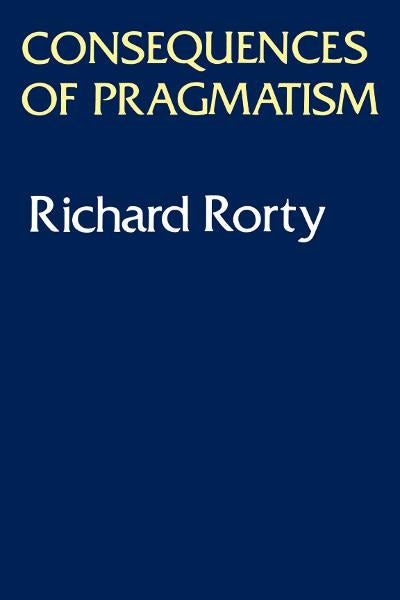
Consequences of Pragmatism
Richard Rorty
Not the original published cover
Consequences of Pragmatism
Richard Rorty
Best for: Readers seeking the essays that make Rorty’s pragmatist inheritance explicit.
Difficulty: Intermediate
Intellectual role: The bridge from Dewey and James to late twentieth-century theory.
Bookinlight Rating: ★★★★★★
These essays are indispensable because they show Rorty converting pragmatism from a historical school into a contemporary intellectual temperament. The collection moves through philosophy, literary criticism, European theory, and the fate of analytic inquiry, arguing that philosophers should stop searching for foundations and start asking which descriptions help communities cope, create, and converse. Its importance lies in how openly it makes Rorty’s wager: philosophy can become more humane when it gives up metaphysical prestige.
Critical Reception
“the most provocative philosophical writer working in North America today“
Bookinlight Note: Pair it with William James’s essays on truth to see how Rorty radicalizes pragmatism by turning it toward vocabulary, contingency, and cultural politics.
Objectivity, Relativism, and Truth
Richard Rorty
Not the original published cover
Objectivity, Relativism, and Truth
Richard Rorty
Best for: Readers focused on truth, justification, science, and anti-relativism debates.
Difficulty: Advanced
Intellectual role: The mature defense of objectivity as solidarity.
Bookinlight Rating: ★★★★★★
This volume gathers Rorty’s most important essays from the period when critics accused him of relativism and he replied by changing the question. Instead of grounding inquiry in correspondence to a mind-independent structure, Rorty emphasizes justification within communities, the virtues of open conversation, and the moral rather than metaphysical authority of scientific practice. It is a crucial book because it clarifies that Rorty’s anti-foundationalism is not contempt for reason. It is a demand that reason be understood historically, socially, and democratically.
Bookinlight Note: Use this book in seminars on post-truth culture, but resist the lazy claim that Rorty caused the problem; he was asking what kind of democratic culture truth-talk requires.
Contingency, Irony, and Solidarity
Richard Rorty
Not the original published cover
Contingency, Irony, and Solidarity
Richard Rorty
Best for: Readers interested in liberalism, literature, cruelty, and private self-creation.
Difficulty: Intermediate
Intellectual role: The literary and ethical turn in Rorty’s pragmatism.
Bookinlight Rating: ★★★★★
If the earlier books break the mirror, this one asks how a culture lives without it. Rorty’s answer is famously double: private irony and public liberal hope. We may privately recognize that our deepest vocabularies are contingent, yet publicly commit ourselves to reducing cruelty and widening solidarity. The book’s brilliance lies in refusing to make metaphysics do the work of ethics. Literature, not philosophical proof, becomes central to moral enlargement because novels and narratives help us notice humiliation, pain, and unfamiliar lives.
Bookinlight Note: A powerful discussion question: can a liberal society survive if its citizens treat all final vocabularies as contingent?
Achieving Our Country
Richard Rorty
Not the original published cover
Achieving Our Country
Richard Rorty
Best for: Readers connecting pragmatism to democratic politics and the American Left.
Difficulty: General to Intermediate
Intellectual role: The political statement of Rorty’s democratic hope.
Bookinlight Rating: ★★★★★★
This compact political book is Rorty at his most public. He contrasts a reformist, Deweyan Left oriented toward campaigns, labor, institutions, and national hope with a spectatorial cultural Left absorbed by theoretical suspicion. The book became newly famous because of its passages about economic abandonment and authoritarian temptation, but its broader argument is about the emotional preconditions of democratic reform. For Rorty, progressive politics needs pride, shame, literature, and solidarity; it cannot be sustained by demystification alone.
Bookinlight Note: This is the best Rorty book for political reading groups because it forces the question of whether intellectual criticism can still produce organized hope.
The Cambridge Companion to Rorty
David Rondel
Not the original published cover
The Cambridge Companion to Rorty
Edited by David Rondel
Best for: Readers who want orientation, criticism, and a map of Rorty’s afterlife.
Difficulty: General to Intermediate
Intellectual role: The contemporary guide to Rorty’s range and reception.
Bookinlight Rating: ★★★★★★
A companion volume is not a substitute for Rorty’s own prose, but this one is unusually valuable because Rorty’s work crosses so many borders: analytic philosophy, classical pragmatism, feminism, religion, literature, liberalism, and political theory. The essays help readers distinguish caricature from argument. They also show why Rorty’s legacy is contested: he is too analytic for some continental readers, too historicist for many analytic philosophers, too liberal for radicals, and too anti-foundational for traditional liberals.
Critical Reception
“a systematic introductory overview of Richard Rorty’s philosophy“
Bookinlight Note: Read this last, not first, if you want the essays to answer problems you have already encountered in Rorty’s own books.
How These Books Speak to One Another
The sequence matters. Philosophy and the Mirror of Nature dismantles the representational picture. Consequences of Pragmatism names the constructive inheritance: James, Dewey, conversation, and cultural usefulness. Objectivity, Relativism, and Truth answers the predictable accusation that without foundations we lose reason itself. Contingency, Irony, and Solidarity then turns the argument toward literature, cruelty, and liberal culture. Achieving Our Country tests whether pragmatism can support public hope rather than private sophistication. Finally, The Cambridge Companion to Rorty lets readers assess what remains alive, unresolved, and politically urgent. Together, these books make Rorty visible not as a destroyer of truth, but as a philosopher of democratic redescription.
The Reading Map
| Book | Difficulty | Rating | Why It Matters |
|---|---|---|---|
| Philosophy and the Mirror of Nature | Advanced | ★★★★★ | Breaks the mirror model of knowledge. |
| Consequences of Pragmatism | Intermediate | ★★★★★★ | Makes neopragmatism explicit. |
| Objectivity, Relativism, and Truth | Advanced | ★★★★★★ | Answers relativism charges. |
| Contingency, Irony, and Solidarity | Intermediate | ★★★★★ | Turns pragmatism toward literature. |
| Achieving Our Country | General to Intermediate | ★★★★★★ | Links hope to reform. |
| The Cambridge Companion to Rorty | General to Intermediate | ★★★★★★ | Maps the debates after Rorty. |
Where to Begin
- Entry point: Start with Contingency, Irony, and Solidarity if you want Rorty at his most elegant and humane.
- Historical background: Move to Consequences of Pragmatism to understand the Deweyan inheritance behind the style.
- Conceptual foundation: Read Philosophy and the Mirror of Nature when you are ready for the major anti-representational argument.
- Critical perspective: Use Objectivity, Relativism, and Truth to test whether Rorty avoids relativism convincingly.
- Contemporary relevance: Read Achieving Our Country for democratic politics, national hope, and the problem of the intellectual Left.
- Advanced reflection: Finish with The Cambridge Companion to Rorty to see how scholars now debate his legacy.
External Sources for Further Reading
University of Minnesota Press: Consequences of Pragmatism
Cambridge University Press: Contingency, Irony, and Solidarity
Cambridge University Press: Objectivity, Relativism, and Truth
Harvard University Press: Achieving Our Country
Cambridge University Press: The Cambridge Companion to Rorty
The Last Margin
The best books on Richard Rorty and pragmatism do not resolve every objection to his work. They leave readers with sharper discomforts. Can solidarity replace objectivity without becoming tribal? Can literature do moral work that philosophy cannot? Can liberal democracy survive without foundations, relying instead on habits, institutions, and hope? Rorty’s greatness lies in making these questions unavoidable. He asks us to abandon the fantasy of philosophy as final court and to imagine it instead as a practice of cultural redescription. That may disappoint those who want certainty. For readers willing to accept risk, it remains one of the most provocative invitations in contemporary philosophy.