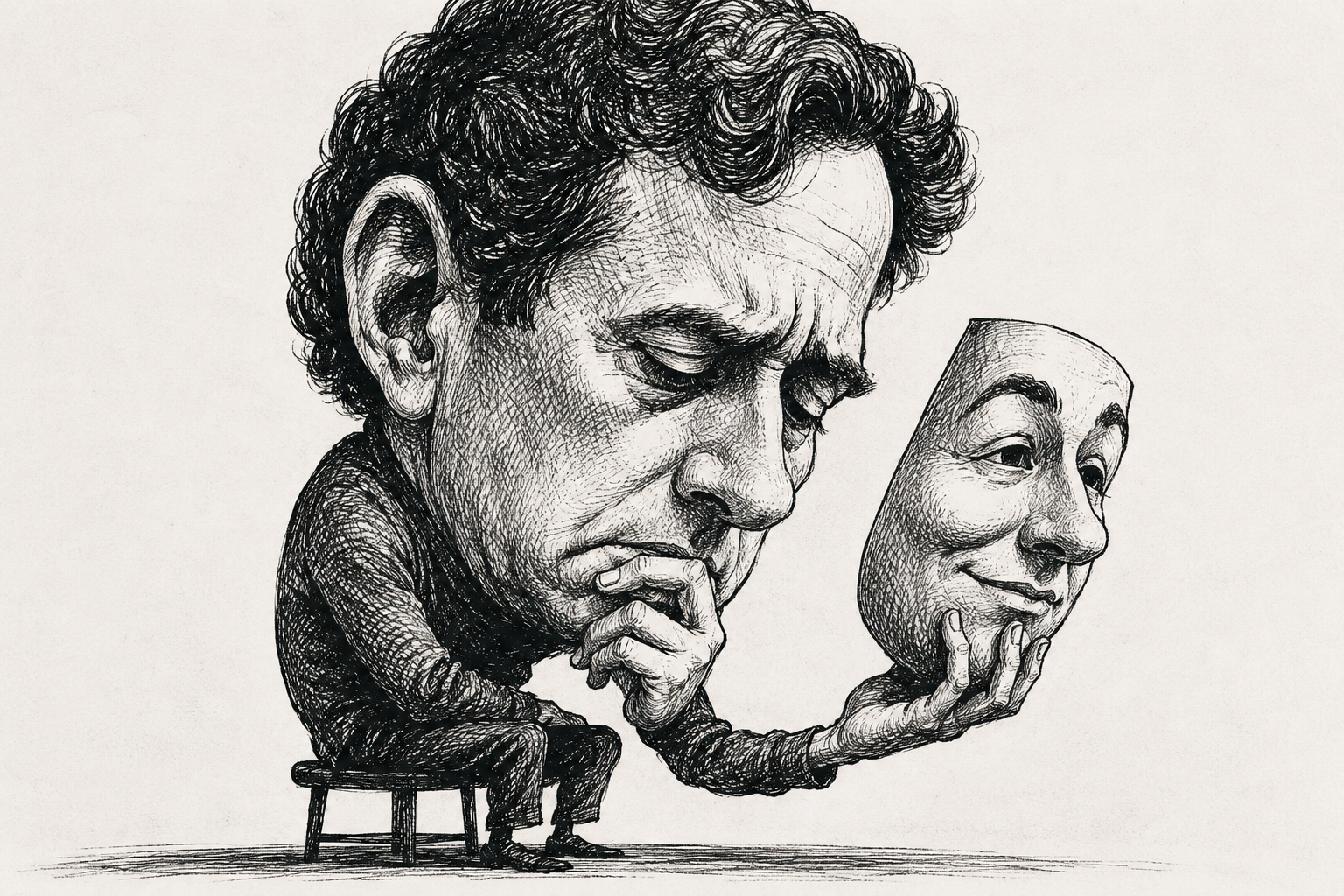
Illustration by Bookinlight Art Desk
Economic History
Six Books on Stagflation in the 1970s
A reading guide to the decade when inflation, unemployment, oil shocks, labor conflict, central-bank uncertainty, and the collapse of postwar confidence remade economic common sense.
By Bookinlight
The Great Inflation and Its Aftermath
Robert J. Samuelson
Not the original published cover
The Great Inflation
Bordo and Orphanides
Not the original published cover
Pivotal Decade
Judith Stein
Not the original published cover
Stayin’ Alive
Jefferson Cowie
Not the original published cover
The Commanding Heights
Yergin and Stanislaw
Not the original published cover
A Brief History of Neoliberalism
David Harvey
Not the original published cover
When the Postwar Formula Broke
The best books on 1970s stagflation do more than explain why prices rose while growth slowed. They reconstruct a crisis of interpretation. For a generation trained to believe that fiscal management could soften recession and that unemployment and inflation moved in roughly opposite directions, the 1970s were intellectually destabilizing. Oil shocks mattered, but they were not the whole story. So did wage bargaining, productivity slowdown, monetary uncertainty, deindustrialization, global competition, and a political culture losing faith in the institutions that had organized the postwar settlement.
These six books belong together because stagflation was never simply a macroeconomic malfunction. It was a historical hinge: the point at which Keynesian confidence, industrial citizenship, union power, cheap energy, and the political legitimacy of active government all came under pressure. Read together, they show how a technical word became a doorway into a larger transformation of work, statecraft, finance, and ideology.
Books on 1970s Stagflation as a History of Power
The phrase “stagflation” often invites a narrow story: central banks were too loose, politicians were too timid, oil exporters shocked the system, and Volcker eventually imposed discipline. That story is not false, but it is incomplete. Economic history becomes richer when inflation is read as a conflict over who absorbs scarcity, who defines credibility, and whose expectations are treated as dangerous. These books move from monetary diagnosis to labor history, from factories to finance, from policy error to ideological realignment. Their shared argument is that the 1970s did not merely interrupt prosperity; the decade rearranged the moral vocabulary of capitalism.
The Reading Lens
Stagflation as the End of Managed Confidence
The most revealing way to read 1970s stagflation is not as a single policy failure but as a breakdown in the credibility of postwar coordination. Prices, wages, energy, trade, finance, and democratic expectation stopped moving inside one intelligible settlement. The selected books show different layers of that disintegration: the monetary regime, the political economy of industry, the fate of labor, the global turn toward markets, and the later doctrine that presented discipline as liberation.
Central Question
What happens when a society no longer agrees on whether inflation, unemployment, or industrial decline is the central emergency?
Historical Pressure
The decade forced governments to choose between protecting employment, defending money, preserving industry, and satisfying global capital.
Why These Books
Together they turn stagflation from a textbook puzzle into a history of institutions, classes, expectations, and political imagination.
Six Essential Books
The Great Inflation and Its Aftermath
Robert J. Samuelson
Not the original published cover
The Great Inflation and Its Aftermath
Robert J. Samuelson
Best for: Readers who want a lucid public history of inflation’s political consequences.
Difficulty: General to Intermediate
Intellectual role: The accessible narrative foundation for the entire reading path.
Bookinlight Rating: ★★★★★★
Samuelson’s book is the most direct entrance into the Great Inflation as a lived political event. Its strength is explanatory compression: it connects policy drift, public frustration, the erosion of confidence, and the later memory of the Volcker shock without demanding specialist training. It is especially useful because it treats inflation as a force that reorganized everyday expectations, not merely as a chart line.
Critical Reception
“Samuelson’s clear-eyed focus on the rise and fall of inflation remains relevant today.“
Bookinlight Note: Read this first, then ask how a society decides when inflation has become a moral emergency rather than a technical inconvenience.
The Great Inflation
Bordo and Orphanides
Not the original published cover
The Great Inflation
Edited by Michael D. Bordo and Athanasios Orphanides
Best for: Readers ready for central-bank history, policy analysis, and comparative monetary debate.
Difficulty: Advanced
Intellectual role: The technical and institutional core of the list.
Bookinlight Rating: ★★★★★
This collection is indispensable for understanding why economists still argue over the causes of the Great Inflation. It places supply shocks, monetary accommodation, expectations, central-bank independence, and international comparison inside one demanding archive of debate. For readers studying stagflation seriously, this volume clarifies why the 1970s became a founding trauma for modern central banking.
Bookinlight Note: Pair the chapter on supply shocks with Judith Stein to see how a technical diagnosis changes when trade, factories, and labor are restored to the picture.
Pivotal Decade
Judith Stein
Not the original published cover
Pivotal Decade
Judith Stein
Best for: Readers who want the 1970s understood through factories, trade, finance, and state strategy.
Difficulty: Intermediate
Intellectual role: The industrial and political-economic counterweight to monetary explanations.
Bookinlight Rating: ★★★★★★
Stein’s central contribution is to insist that the 1970s were not just a period of policy confusion but a structural redirection of the American economy. High oil prices, foreign competition, inflation anxiety, and fiscal restraint become part of a larger shift from production toward finance. The book is essential for readers who suspect that stagflation cannot be understood without asking what happened to industrial employment and economic citizenship.
Critical Reception
“A highly original illumination of how the American Century collapsed.“
Bookinlight Note: Use this book to complicate the phrase “war on inflation”: against whom was that war socially fought, and what forms of investment did it reward?
Stayin’ Alive
Jefferson Cowie
Not the original published cover
Stayin’ Alive
Jefferson Cowie
Best for: Readers who want economic crisis translated into labor, culture, class feeling, and democratic disappointment.
Difficulty: General to Intermediate
Intellectual role: The social history that gives stagflation a human voice.
Bookinlight Rating: ★★★★★★
Cowie’s book is not a monetary history, and that is precisely why it belongs here. Stagflation produced numbers, but it also produced humiliation, anger, cultural backlash, and the unraveling of working-class political belonging. By moving between factory floors, popular music, political rhetoric, and class identity, Cowie shows how economic disorder became a crisis of recognition.
Critical Reception
“Will long stand as the finest and most sophisticated portrait of politics and culture in the American 1970s.“
Bookinlight Note: Read Cowie after Bordo and Orphanides: the contrast reveals what gets lost when inflation is narrated without class experience.
The Commanding Heights
Yergin and Stanislaw
Not the original published cover
The Commanding Heights
Daniel Yergin and Joseph Stanislaw
Best for: Readers looking for a broad political narrative of the market turn after the crisis of state management.
Difficulty: General to Intermediate
Intellectual role: The global narrative of how market authority replaced postwar planning confidence.
Bookinlight Rating: ★★★★★
Yergin and Stanislaw write on a broad canvas: governments, markets, reformers, crises, and the world economy. The book is useful here because it places 1970s economic turmoil inside the longer struggle over the “commanding heights” of the economy. It is not the most critical account on this list, but it remains one of the clearest narratives of how market-centered reform became a global language.
Critical Reception
“No one could ask for a better account of the world’s political and economic destiny since World War II.“
Bookinlight Note: Treat this as the map of the winning story: then read Harvey to ask who benefited from that victory.
A Brief History of Neoliberalism
David Harvey
Not the original published cover
A Brief History of Neoliberalism
David Harvey
Best for: Readers seeking a critical theory of the settlement that followed the stagflationary crisis.
Difficulty: Intermediate
Intellectual role: The interpretive critique of the neoliberal turn.
Bookinlight Rating: ★★★★★★
Harvey does not write a narrow history of stagflation; he writes a sharp account of the political-economic order that used the crisis of the 1970s as an opening. Thatcher, Reagan, Volcker, deregulation, privatization, and the reconstitution of state power become parts of a single historical argument. The book is polemical, but that polemical force is precisely why it is useful beside the more institutional volumes.
Bookinlight Note: Harvey is best read last: not as the final authority, but as the question that returns after the data have been mastered.
How These Books Speak to One Another
Samuelson gives the story its public shape; Bordo and Orphanides give it institutional and monetary depth; Stein insists on production, trade, and finance; Cowie restores the emotional life of class; Yergin and Stanislaw narrate the market turn as a global political transformation; Harvey interrogates that transformation as a project of power. Their disagreement is their value. The reader who finishes all six will no longer see 1970s stagflation as a simple lesson in central-bank firmness. It becomes a dense historical episode in which economic language, political authority, industrial structure, and social belonging were all renegotiated.
The Reading Map
| Book | Difficulty | Rating | Why It Matters |
|---|---|---|---|
| The Great Inflation and Its Aftermath | General to Intermediate | ★★★★★★ | Best narrative entry point. |
| The Great Inflation | Advanced | ★★★★★ | Deepest monetary study. |
| Pivotal Decade | Intermediate | ★★★★★★ | Links crisis to deindustrialization. |
| Stayin’ Alive | General to Intermediate | ★★★★★★ | Restores class experience. |
| The Commanding Heights | General to Intermediate | ★★★★★ | Explains the market turn. |
| A Brief History of Neoliberalism | Intermediate | ★★★★★★ | Critiques the settlement after crisis. |
Where to Begin
- Entry point: Start with Samuelson for the cleanest public narrative of inflation and its aftermath.
- Historical background: Move to Stein for the broader political economy of factories, finance, and trade.
- Conceptual foundation: Read Bordo and Orphanides when you want the central-bank debate in full detail.
- Critical perspective: Add Cowie to understand how economic crisis changed working-class identity.
- Contemporary relevance: Use Yergin and Stanislaw to see how the crisis fed the prestige of markets.
- Advanced reflection: End with Harvey to ask whether the solution to stagflation became a new form of power.
External Sources for Further Reading
NBER page for The Great Inflation
The Last Margin
Books on 1970s stagflation matter now because they teach humility about economic crisis. The decade was not solved by one variable, one villain, or one elegant formula. It involved energy, money, wages, trade, industry, political legitimacy, and cultural confidence. The six books gathered here invite a more mature reading: stagflation was the moment when the postwar promise became historically vulnerable, and when new doctrines of discipline, competitiveness, and market rule gained authority. To read the period well is to see that inflation was never only about prices. It was about the terms on which modern societies decided who would pay for uncertainty.