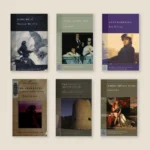
Illustration by Bookinlight Art Desk
The best books on the Council of Trent do more than explain a Catholic assembly held between 1545 and 1563. They show how doctrine, diplomacy, reform, clerical discipline, biblical authority, ritual, and political power were forced into one prolonged institutional drama. Trent was not merely an answer to Protestantism. It was also a test of whether an ancient church could define itself under pressure without becoming only a reaction to its opponents.
This Bookinlight reading packet is arranged as an intellectual sequence: first a lucid modern narrative, then the classic scholarly architecture, then the conciliar texts themselves, then a contemporary transnational reassessment, and finally a wider study of Catholic renewal after Trent. The result is a compact route into the council as event, argument, document, and afterlife.
By Bookinlight
The Reading Lens
How the best books on the Council of Trent should be read
Trent is best approached as a council of compression. It compressed late medieval reform movements, humanist learning, Protestant critique, imperial politics, papal anxiety, episcopal ambition, and pastoral discipline into decrees that later generations treated as a stable Catholic settlement. These books show that the settlement was neither simple nor automatic. It was argued, delayed, revised, interpreted, enforced, resisted, and exported.
Central Question
How did Trent turn crisis into doctrinal and institutional form?
Historical Pressure
Protestant reform, imperial rivalry, papal caution, and Catholic demands for internal reform.
Why These Books
Together they move from narrative to scholarship, text, reception, and global afterlife.
The Reading Map
| Book | Difficulty | Rating | Why It Matters |
|---|---|---|---|
| Trent: What Happened at the Council | General to Intermediate | ★★★★★ | The clearest modern entrance into the council as a contested historical event. |
| A History of the Council of Trent | Advanced | ★★★★★ | The foundational scholarly account of the council’s long formation. |
| The Canons and Decrees of the Council of Trent | Intermediate | ★★★★½ | The essential primary text for doctrine, reform, and conciliar language. |
| The Council of Trent: Reform and Controversy in Europe and Beyond (1545–1700) | Advanced | ★★★★½ | A major scholarly reassessment of Trent’s European and extra-European reception. |
| The World of Catholic Renewal, 1540–1770 | General to Intermediate | ★★★★½ | Shows how Tridentine reform entered society, missions, books, clergy, and Catholic culture. |
1
Trent: What Happened at the Council
Author: John W. O’Malley
Best for: Readers who want a lucid one-volume account before entering specialist scholarship.
Difficulty: General to Intermediate
Intellectual role: Narrative orientation and historical demythologizing.
Bookinlight Rating: ★★★★★
John W. O’Malley’s Trent: What Happened at the Council is the best first book because it restores movement to an event often remembered as a doctrinal block. O’Malley presents the council as an unstable, interrupted, politically exposed gathering shaped by popes, emperors, bishops, theologians, ambassadors, wars, epidemics, and procedural arguments. Its central contribution is not simply that it explains what Trent decided, but that it shows how difficult it was for Trent to decide anything at all. The council emerges as a place where reform and anti-Protestant definition were never cleanly separable, because the same institutional body had to address clerical corruption, sacramental controversy, episcopal residence, biblical authority, justification, and pastoral discipline.
This book belongs here because it gives the reader a humane sense of contingency. Trent did not descend fully formed as “Counter-Reformation policy.” It had phases, interruptions, tactical silences, diplomatic crises, and theological compromises. O’Malley is especially valuable for readers who have encountered Trent only through later polemics, whether Catholic triumphalist or Protestant critical. He changes the subject from a council as slogan to a council as lived procedure. After reading him, the decrees no longer look like abstract statements floating above history. They look like texts produced by pressure, patience, fear, learning, and institutional necessity.
Bookinlight Note: Start here if the council feels remote. O’Malley makes Trent intelligible without flattening its complexity.
2
A History of the Council of Trent
Author: Hubert Jedin
Best for: Advanced readers who want the classic scholarly architecture behind modern Trent studies.
Difficulty: Advanced
Intellectual role: Foundational historiography and archival reconstruction.
Bookinlight Rating: ★★★★★
Hubert Jedin’s A History of the Council of Trent remains indispensable because it treats the council not as a single dramatic meeting but as a long historical problem. Jedin reconstructs the delays, negotiations, theological preparations, imperial expectations, papal hesitations, episcopal pressures, and disciplinary agendas that made Trent both necessary and nearly impossible. The work’s central contribution is scale. It gives the reader a council embedded in institutions: curial administration, European monarchy, episcopal reform currents, theological schools, and the unresolved legacy of earlier conciliar debates. Where a shorter account must compress, Jedin patiently separates causes, phases, factions, and documentary layers.
This book belongs in a serious Council of Trent reading list because later scholarship still moves in relation to it. Even when newer historians revise its assumptions, they often do so against the horizon Jedin established. The reader who benefits most is not someone looking for speed, but someone trying to understand how historians know what they claim about Trent. Jedin slows the council down. He makes the reader see why convoking a general council required more than religious urgency: it required diplomatic calculation, jurisdictional negotiation, and a workable balance between reform and authority. His account changes the reader’s understanding by revealing Trent as the product of accumulated crises, not merely as a punctual answer to Luther.
Bookinlight Note: Jedin is demanding, but his importance is structural: he teaches the grammar of Trent scholarship.
3
The Canons and Decrees of the Council of Trent
Author: Council of Trent; translated by J. Waterworth
Best for: Readers ready to encounter Trent in its own legal and doctrinal language.
Difficulty: Intermediate
Intellectual role: Primary source for the council’s doctrinal definitions and reform decrees.
Bookinlight Rating: ★★★★½
The Canons and Decrees of the Council of Trent is not a secondary interpretation but the textual core around which every interpretation must turn. It contains the council’s doctrinal decrees, disciplinary reforms, and canons on contested questions such as Scripture and tradition, original sin, justification, the sacraments, the Mass, ordination, marriage, saints, relics, indulgences, clerical life, episcopal residence, seminaries, and reform of ecclesiastical office. Its central contribution is precision. The reader sees how Trent’s authority works through formula, anathema, definition, reservation, disciplinary command, and carefully bounded language.
This book belongs here because no history of Trent can replace direct contact with the decrees. The challenge is that the text does not behave like a modern narrative. It assumes theological controversy, canon-law habits, scholastic distinctions, and an institutional world in which doctrine and governance are inseparable. The reader who benefits most is one who has already read a narrative account and now wants to test interpretations against primary material. Reading the decrees changes one’s understanding of the council by revealing how much of Trent was not abstract theology alone. Its reforms touched bishops, clergy, education, preaching, marriage records, benefices, religious houses, and public devotion. Trent becomes less a single “answer” and more a machinery of definition and discipline.
Bookinlight Note: Read selectively at first: justification, Scripture, sacraments, episcopal reform, and the final disciplinary decrees are the most illuminating entry points.
4
The Council of Trent: Reform and Controversy in Europe and Beyond (1545–1700)
Editors: Wim François and Violet Soen
Best for: Scholars and advanced readers interested in reception, implementation, and comparative perspectives.
Difficulty: Advanced
Intellectual role: Contemporary reassessment of Trent’s European and global afterlife.
Bookinlight Rating: ★★★★½
The Council of Trent: Reform and Controversy in Europe and Beyond (1545–1700), edited by Wim François and Violet Soen, is essential because it shifts attention from the council as an event to Trent as a field of reception. Across its scholarly essays, the collection asks how Tridentine decisions were interpreted, contested, localized, transmitted, and transformed across theology, liturgy, episcopal government, political conflict, art, music, missions, and confessional boundaries. Its central contribution is pluralization. There was no single uncomplicated “implementation of Trent.” There were regional negotiations, institutional rivalries, episcopal initiatives, Roman interventions, princely interests, religious orders, and communities that received Tridentine reform through their own local pressures.
This work belongs in the list because it corrects the temptation to stop in 1563. The closing of the council did not settle the historical meaning of Trent; it began a long process of application. The reader who will benefit most is someone already comfortable with Reformation historiography and now interested in current research questions. The collection changes the reader’s understanding by replacing the language of simple enforcement with the language of mediation. Trent moved through bishops, courts, printers, colleges, religious orders, diplomats, missionaries, patrons, artists, and local conflicts. It was not only promulgated; it was translated into institutions and habits. That makes this collection especially valuable for seeing Trent as a European and extra-European process rather than a merely Italian or curial achievement.
Bookinlight Note: This is the best advanced bridge from classic council history to the newer history of confessionalization, reception, and global Catholicism.
5
The World of Catholic Renewal, 1540–1770
Author: R. Po-chia Hsia
Best for: Readers who want to see how Trent entered the wider history of Catholic reform.
Difficulty: General to Intermediate
Intellectual role: Social, cultural, and global context for post-Tridentine Catholicism.
Bookinlight Rating: ★★★★½
R. Po-chia Hsia’s The World of Catholic Renewal, 1540–1770 is not a narrow council history, and that is precisely why it belongs here. Its central argument is that Catholic reform after the mid-sixteenth century must be understood as a broad historical formation: doctrinal renewal, clerical discipline, new religious orders, papal government, schools, sanctity, books, missions, art, architecture, local devotion, and global encounter. Trent matters in this book as a point of institutional crystallization, but Hsia’s concern is what happened when Tridentine energies entered ordinary structures of Catholic life.
The reader who benefits most is someone who wants to connect conciliar decisions to lived history. Hsia moves the subject beyond debate chambers and into parishes, courts, religious communities, missionary zones, and devotional cultures. This changes the meaning of the Council of Trent by showing that its importance cannot be measured only by what the fathers decreed. It must also be measured by how reform was embodied: in seminaries, bishops, catechesis, confession, saints, religious women, censorship, Catholic books, Iberian empires, Asian missions, and the culture of early modern piety. Hsia’s book also prevents a narrow “Counter-Reformation” frame from dominating the subject. Catholic renewal was certainly shaped by Protestant challenge, but it also drew on internal reform currents, pastoral ambitions, and global expansion. Trent becomes a hinge, not the whole door.
Bookinlight Note: Use Hsia after the conciliar texts. The book shows how Trent became history after it became law.
FAQ
What is the best first book on the Council of Trent?
John W. O’Malley’s Trent: What Happened at the Council is the best first choice because it is readable, historically precise, and attentive to both doctrine and politics.
Should I read the decrees of Trent directly?
Yes, but ideally after a narrative introduction. The decrees are essential, yet their legal and theological language is easier to understand with historical context.
Was the Council of Trent only a reaction to Protestantism?
No. Protestant reform shaped the council’s urgency, but Trent also responded to long-standing Catholic concerns about clerical discipline, pastoral reform, episcopal office, education, and sacramental practice.
Which book is best for advanced research?
Jedin remains foundational for archival council history, while François and Soen’s edited volumes are stronger for recent work on reception, controversy, and wider implementation.
What Reading Still Keeps Open
The Council of Trent is most revealing when read neither as a simple triumph nor as a simple refusal. It was an institution under pressure, producing doctrine while also reorganizing discipline, authority, education, and pastoral life. The best books on the Council of Trent therefore need to do several things at once: narrate the event, reconstruct the scholarship, preserve the primary texts, trace reception, and follow Catholic renewal into society. Read together, these five books show why Trent remained powerful: not because it ended conflict, but because it gave conflict a durable form.