Modern History · July 2026
The best new books in Modern History for July 2026 move through revolutionary networks, militarized publics, corporate computers, contested dictatorships, courtrooms, sectarian states, queer archives, airports, workshops, and lecture halls. These ten first editions were ranked only after publication-date, edition, and subject-relevance checks, giving readers a disciplined view of where the field’s strongest new work is moving.
Eligible titles were first published from through , inclusive; coordinated print and digital formats within thirty days were treated as one first-edition program.
Selection combined publisher and bibliographic date verification, negative edition checks, disciplinary relevance testing, critical research, exact-edition link checking, and cover-source validation.
Affiliate note: Book in Light may earn a small commission if a purchase is made through some links on this page, at no extra cost to the reader. Commercial availability never determines editorial selection.
The 10 best new books in Modern History for July 2026
The ranking weighs disciplinary centrality first, then originality, method, evidence, authorial expertise, critical engagement, and the contribution each title makes to the month as a whole. Lower placement does not indicate weak scholarship; it usually reflects a narrower scope or a more specialized intervention.
Viewed together, the best new books in Modern History for July 2026 prioritize historical mechanisms over topical novelty: each finalist explains how institutions, media, or material systems made change possible.
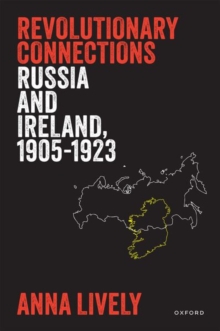
1. Revolutionary Connections: Russia and Ireland, 1905–1923
Anna Lively
Oxford University Press ·
- Format
- Hardcover
- ISBN-13
- 9780198983323
- Page count
- 304
- Primary field
- Modern History
- Specific subfield
- Transnational revolutionary history
Anna Lively takes first place because she does more than set two revolutionary societies beside one another: she reconstructs the channels through which Irish and Russian actors interpreted, translated, and strategically used each other’s struggles. That mechanism of connection gives the book unusual explanatory force. It belongs centrally to modern history through its treatment of empire, land, nationalism, socialism, war, and revolution between 1905 and 1923. Among July’s releases, it most decisively unsettles a national container without dissolving historical specificity. Readers of Irish, Russian, British, and comparative revolutionary history will find a shared archive rather than a loose analogy.
The book follows political, social, and cultural traffic between Russia and Ireland from the 1905 Revolution to the close of the Irish Civil War. Lively asks how news, analogy, and political imagination moved in both directions: Irish observers read Russian upheaval through debates about land and self-determination, while Russian-language writers used Ireland to think about imperial governance and national liberation. Her evidence ranges across archives, newspapers, diaries, letters, memoirs, literary works, and visual material. News agencies and diasporic networks in Britain and the United States help explain why distant events acquired local urgency. The argument also widens beyond a bilateral comparison, placing Ukraine, Finland, and Poland within a larger imperial field. The result is a history of revolution as a connected process of observation, appropriation, and misrecognition.
Anna Lively is a historian of modern Ireland, Britain, and Russia and a Leverhulme Early Career Fellow at the University of Strathclyde. Her doctoral research at the University of Edinburgh, completed in 2022, provided the foundation for this study; she subsequently held teaching and research posts at Aberdeen and Oxford. Her current work on Irish women in interwar anti-communist networks extends the book’s concern with political circulation across borders. The Strathclyde research profile confirms the transnational scope of her expertise.
Best suited to advanced undergraduates, graduate students, and researchers working on revolution, empire, Irish history, Russian history, or transnational method. The prose and comparative architecture should also reward serious general readers familiar with the broad outlines of the Russian Revolution and Irish independence. It would anchor seminars on connected history, imperial borderlands, political media, and the circulation of revolutionary models.
Edition and date were cross-checked against Oxford Academic’s first-edition record and an independent ISBN-specific bookseller record; the subject classification explicitly places the work in modern history, revolutionary history, Russian history, and Irish history.

2. Germany and the Next War: Militarism and the Imagination of Violence, 1888–1914
Mark Hewitson
Oxford University Press ·
- Format
- Hardcover
- ISBN-13
- 9780198791065
- Page count
- 560
- Primary field
- Modern History
- Specific subfield
- German military and political culture
Mark Hewitson ranks second for revisiting one of modern European history’s most consequential problems without reducing German militarism to a fixed national essence. He treats war as an imagined political possibility whose meanings differed among elites, parties, veterans, conscripts, and readers of the mass press. The book’s breadth—chronological, social, and evidentiary—makes it the month’s most substantial contribution to the history of violence and the origins of the First World War. It sits just below Lively’s study because its geographic frame is more familiar, yet its reconstruction of contested expectations about future conflict promises a major historiographical correction.
Covering the reign of Wilhelm II before 1914, Hewitson examines how Germans pictured the next European war and how those pictures shaped political risk. Memories of the wars of unification faded or changed; colonial campaigns, war scares, arms races, alliance politics, illustrated journalism, military histories, and future-war fiction supplied new scripts. The book distinguishes fascination with violence from confidence in victory and shows that enthusiasm coexisted with anxiety, pessimism, and awareness of industrial war’s costs. Political leaders therefore confronted a public sphere that was neither uniformly bellicose nor simply pacific. Drawing on newspapers, magazines, diaries, memoirs, correspondence, novels, treatises, and official records, Hewitson connects cultural representations to foreign policy and civil-military relations. The central issue is not whether Germany “wanted war” in the abstract, but how imagined outcomes made some risks appear acceptable.
Mark Hewitson is Professor of German History and Politics at University College London. His research spans nineteenth- and twentieth-century Germany and Europe, nationalism, war, political culture, and historical theory. This volume completes a long sequence of work on violence in the German lands, following studies of the revolutionary and post-Napoleonic eras. He has also written extensively on German liberalism, national identity, and perceptions of neighboring powers. His University College London profile situates the book within a broader program on the relationship among military experience, public culture, and international politics.
The first substantial independent review emphasizes the book’s exceptional range of printed and archival evidence and its ability to connect dispersed cultural material to strategic risk. Reviewer Jeremy Black praises the scale and interpretive ambition but notes that anti-Prussian and non-Prussian military memories receive less sustained attention. That reservation matters: a study of “German opinion” must continually test regional difference. Even so, the review treats the book as a major contribution to military and diplomatic history rather than a narrowly cultural supplement.
an astonishing range of newspapers, magazines, diaries, memoirs
Jeremy Black, New Diplomatic History, July 2026
The praise identifies the source diversity on which Hewitson’s reconstruction of public imagination depends.
Essential for readers of imperial Germany, militarism, political culture, and the origins of the First World War. Advanced undergraduates can use selected chapters, while graduate seminars will benefit from the book’s engagement with public opinion and war causation. Military historians, historians of emotions and media, and international-relations scholars seeking a deeply historical account of risk will find the argument especially useful.
The July 9 publication date, hardcover identity, and ISBN were verified through Oxford’s edition metadata and an independent exact-product record. The publisher classifies the work within modern European history and military history.
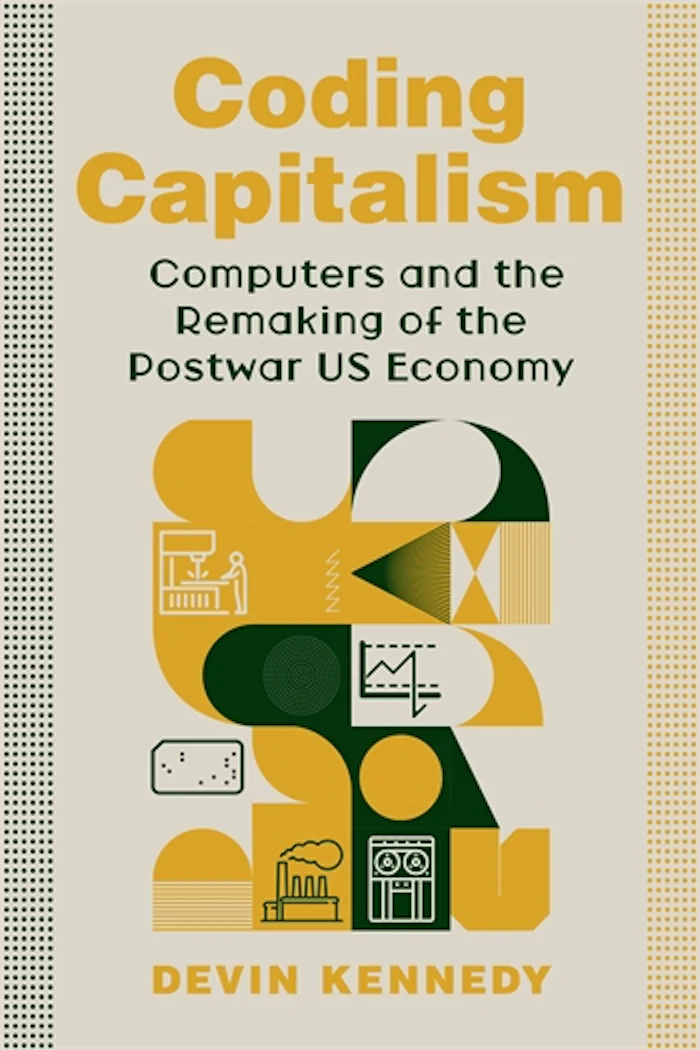
3. Coding Capitalism: Computers and the Remaking of the Postwar US Economy
Devin Kennedy
Columbia University Press ·
- Format
- Paperback
- ISBN-13
- 9780231224031
- Page count
- 320
- Primary field
- Modern History
- Specific subfield
- History of capitalism and technology
Third place goes to Devin Kennedy’s reconstruction of computing as a business and economic history before it became a story of consumer devices and Silicon Valley. The book’s central question—how capitalism shaped the computer, and how computers reorganized capitalism—belongs squarely to postwar United States history. Its archives of firms, laboratories, regulators, and financial institutions support a strong institutional account of technological change. Compared with the two books above it, the geographical field is narrower, but the interpretive payoff is unusually broad: management, labor, production, finance, and software emerge as parts of the same historical transformation.
Kennedy begins with wartime and early postwar computing, then follows machines into factories, corporate offices, management science, and financial markets. Businesses did not merely adopt neutral tools; their demands for cost control, inventory management, labor discipline, forecasting, and rapid calculation influenced what computers became. The book tracks how computer specialists translated economic problems into data structures and automated procedures, while managers and regulators adjusted institutions around new technical capacities. Its closing movement toward electronic finance and the 1987 market crash makes the history of computation inseparable from financialization. By drawing on corporate, scientific, regulatory, and banking archives, Kennedy replaces a heroic inventor narrative with a history of organizations and incentives. The “digital economy” appears not as a late-twentieth-century rupture but as an outcome of postwar capitalist administration.
Devin Kennedy is an assistant professor of history and a Bascom Professor of Integrated Liberal Studies at the University of Wisconsin–Madison. Trained in the history of science, he works across business and economic history, science and technology studies, and the history of computing. His Harvard doctorate examined the institutional relationship between computers and political economy. His teaching likewise joins modern United States history to the study of firms, expertise, and technological systems. The Wisconsin history profile confirms that this book is the culmination of a research program on technology’s embeddedness in modern economic institutions.
A strong choice for historians of postwar America, capitalism, business, finance, computing, and science and technology. It is appropriate for graduate seminars and upper-level undergraduate courses on the modern United States or digital history. Economists, technologists, and policy readers will also gain from its demonstration that contemporary platforms and automated markets have institutional histories deeper than the familiar rise of personal computing.
The paperback first-edition program, 320-page extent, ISBN, and July 7 release were cross-checked through Columbia’s edition data, NetGalley’s publisher-supplied release record, and independent ISBN listings.
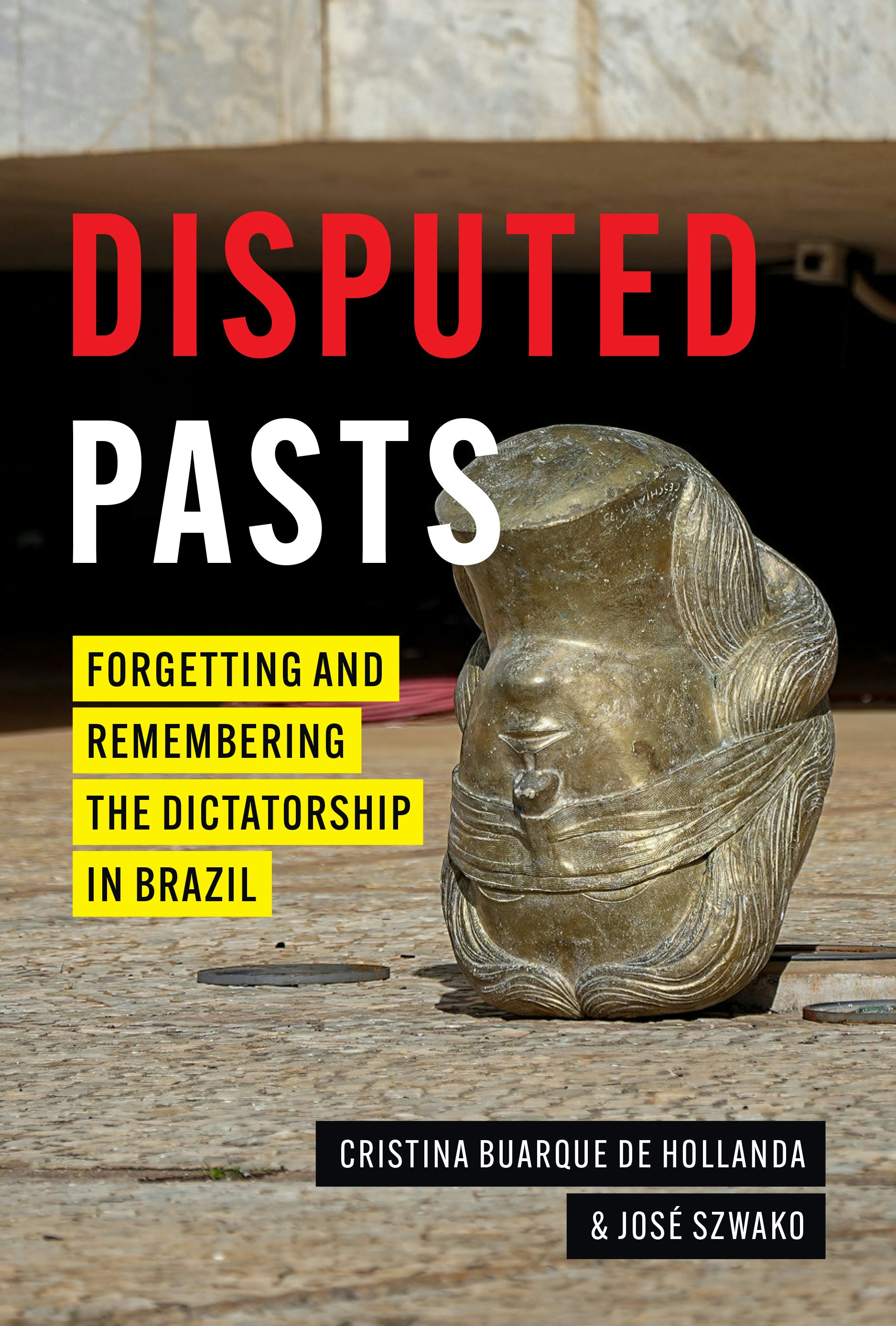
4. Disputed Pasts: Forgetting and Remembering the Dictatorship in Brazil
Cristina Buarque de Hollanda and José Szwako
University of Texas Press ·
- Format
- Hardcover
- ISBN-13
- 9781477334072
- Page count
- 256
- Primary field
- Modern History
- Specific subfield
- Brazilian dictatorship and memory politics
Cristina Buarque de Hollanda and José Szwako place fourth by overturning the comfortable claim that democratic Brazil simply forgot its military dictatorship. They treat forgetting, remembrance, and celebration as rival political projects, each built through institutions, movements, testimony, and public language. That distinction gives the book exceptional relevance to modern history and memory studies. Its national focus is more concentrated than the books ranked above, but its conceptual intervention travels: authoritarian pasts do not merely persist as silences; they can be actively reassembled by political actors. The book is indispensable for understanding the historical conditions of Bolsonarismo without treating it as an abrupt anomaly.
Beginning with the end of military rule in 1985, the authors trace struggles over amnesty, victimhood, state responsibility, reparations, memorialization, and truth. Human-rights organizations, families of the disappeared, journalists, officials, and social movements kept the dictatorship visible through campaigns and institutions, culminating in major investigative and truth-seeking initiatives. The conservative reaction did not arise from a vacuum. It contested the moral authority of those projects, rehabilitated anti-communist narratives, discredited victims, and recast state violence as national defense. The book thus argues that Brazil’s recent right did not simply erase the dictatorship; it remembered it affirmatively. By placing public memory within democratization and institutional conflict, the authors show how historical interpretation becomes political organization. Memory is neither a stable national possession nor a therapeutic endpoint, but an arena in which democratic legitimacy is continually fought over.
Cristina Buarque de Hollanda is a political scientist and historian of Brazilian democracy, human rights, truth commissions, and public memory; she has taught at the Federal University of Rio de Janeiro and is listed by New York University Abu Dhabi as an adjunct lecturer. José Szwako is a professor and researcher at the Institute for Social and Political Studies of the State University of Rio de Janeiro. His work examines social movements, intellectual history, and civil society’s institutional effects during redemocratization. Their combined expertise joins memory politics to the history of democratic contention.
For readers of Latin American history, authoritarianism, democratization, transitional justice, and memory studies. The book should work particularly well in upper-level courses on modern Brazil and comparative dictatorship. Historians, political scientists, human-rights researchers, and serious readers trying to understand why public evidence does not settle political memory will find its conceptual distinction between forgetting and celebratory remembrance especially clarifying and portable.
The hardcover’s July 14 sales date, 256-page extent, and ISBN were verified through the press record and independent ISBN-specific catalog listings. The table of contents confirms sustained historical coverage of dictatorship, transition, truth, and conservative countermemory.
NYU Abu Dhabi faculty record · José Szwako institutional profile

5. Russia’s Rogue Masters: Elite Criminal Trials in the Age of Reform, 1866–1884
Sergei Antonov
Yale University Press ·
- Format
- Hardcover
- ISBN-13
- 9780300253177
- Page count
- 416
- Primary field
- Modern History
- Specific subfield
- Imperial Russian legal history
Sergei Antonov ranks fifth for using spectacular criminal trials to reconsider the political meaning of legal reform in imperial Russia. Rather than treating courts as a façade laid over autocracy, he asks what happened when nobles, senior officials, and wealthy merchants became defendants before juries and the press. The cases expose elite domestic life, financial conduct, and violence to public judgment. That archival strategy places the book firmly within modern social, legal, and political history. Its chronological and national scope is tighter than the four books above, yet the argument about legality’s unstable coexistence with authoritarian power has wide comparative reach.
The book examines prosecutions for murder, arson, fraud, forgery, embezzlement, and related crimes committed by socially powerful defendants after Russia’s judicial reforms of the 1860s. Jury trials and expanding press coverage transformed private scandal into public drama. Antonov argues that the courts could discipline elites, reveal the workings of privilege, and cultivate expectations of procedural fairness without making the empire liberal or democratic. Trials became sites where the state, educated society, and ordinary jurors negotiated the limits of reform. The cases also illuminate credit, family authority, property, and the moral language attached to class power. By following legal procedure and media reception together, the book reconstructs a fragile equilibrium: public law strengthened the regime’s claim to order even as it exposed misconduct and encouraged scrutiny that autocratic government could not fully control.
Sergei Antonov is Associate Professor of History at Yale University. His teaching and research cover Russia after 1800, comparative legal history, serfdom, capitalism and credit, crime, policing, and elite power. His earlier work on debt and informal finance in imperial Russia established the economic and legal expertise that informs this study of criminal justice. He also directs scholarly work connecting Russian and East European studies with legal and social history. Yale’s history faculty directory identifies precisely the combination of Russian, legal, and social-historical fields on which the book depends.
For specialists and students of imperial Russia, legal history, public spheres, crime, and nineteenth-century reform. It will suit graduate seminars and advanced undergraduate courses, especially where court records are used to connect institutions with everyday social power. Comparative legal historians and readers interested in how authoritarian systems generate genuine yet politically limited forms of legality should also find it productive.
The July 21 first-edition date, hardcover ISBN, extent, and subtitle were checked against Yale’s publication data and an exact-ISBN bibliographic record. The author’s institutional specializations independently support the book’s disciplinary placement.
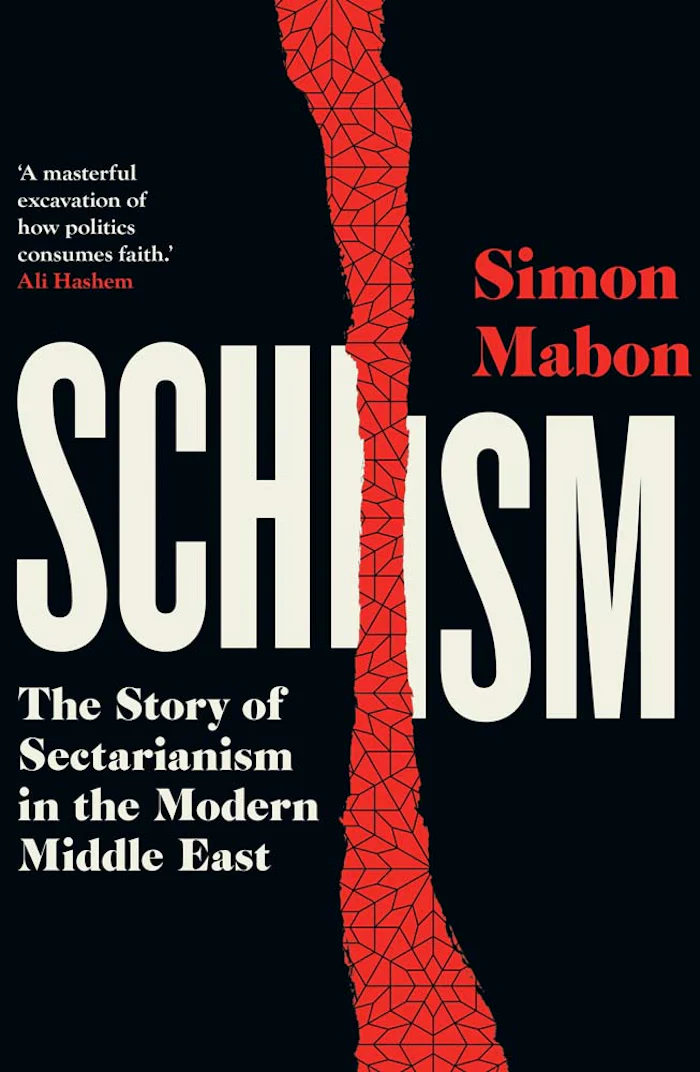
6. Schism: The Story of Sectarianism in the Modern Middle East
Simon Mabon
Yale University Press ·
- Format
- Hardcover
- ISBN-13
- 9780300276138
- Page count
- 304
- Primary field
- Modern History
- Specific subfield
- Modern Middle East and sectarianism
Simon Mabon’s book takes sixth place for refusing the recurrent explanation of Middle Eastern conflict as the eruption of timeless religious hatred. Its subject is historical production: how states, imperial arrangements, institutions, and political entrepreneurs made sectarian categories administratively useful and socially consequential. That question places the work centrally within modern Middle Eastern history even though Mabon also writes as a scholar of international politics. The regional sweep is a strength, permitting comparison across different regimes; it also makes the book more synthetic than the tightly archival studies ranked above. Its chief value lies in replacing inherited division with processes that can be dated, governed, and contested.
Mabon traces sectarianism through the formation and transformation of modern states in the Middle East. He examines how colonial rule, citizenship, security institutions, patronage, law, and geopolitical rivalry turned religious difference into political classification. Cases across Iraq, Iran, Lebanon, Saudi Arabia, and Israel show that sectarian identities do not operate identically everywhere. They are shaped by regimes, economic resources, theological claims, and struggles over belonging. The book’s organizing argument is that sectarianism is a process rather than a primordial condition: identities are produced, regulated, and mobilized, but also resisted and reworked. This approach joins political history to the history of ideas and institutions. It helps explain why the same doctrinal distinction can be politically dormant in one setting and decisive in another, and why attempts at “de-sectarianization” must confront structures rather than rhetoric alone.
Simon Mabon is Professor of International Politics at Lancaster University and directs the Sectarianism, Proxies and De-sectarianisation project. His work sits at the intersection of Middle East studies, international relations, political theory, sovereignty, and religion. Previous monographs have examined Saudi-Iranian rivalry and the relationship among violence, revolution, and sectarianism. He has advised public institutions and built collaborative research networks concerned with state-society relations across the region. His Lancaster University profile documents a long-running research program on how states and regional orders organize sectarian difference.
Recommended for readers of modern Middle Eastern history, state formation, religion and politics, and sectarianism. Its comparative structure makes it suitable for upper-level students and serious general readers as well as specialists. Scholars of international relations will benefit from the historical grounding, while historians can use the book to test how a regional synthesis handles local chronology, institutions, and variation.
The title, hardcover ISBN, 304-page extent, and July 21 release were verified against Yale’s edition record and exact-ISBN bibliographic data. The author’s institutional profile confirms sustained specialization in sectarianism, sovereignty, and Middle Eastern politics.
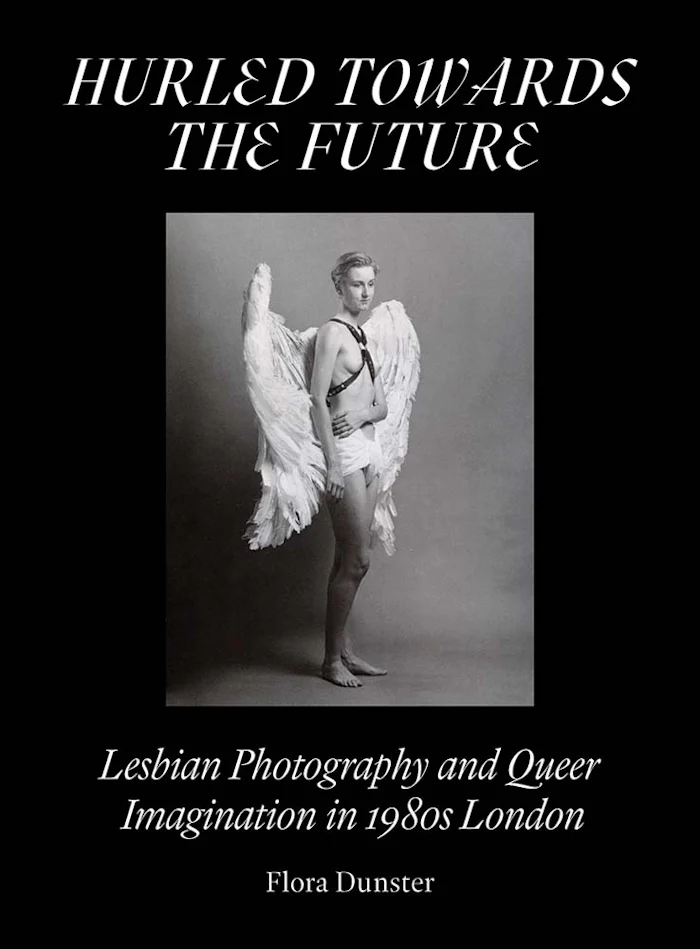
7. Hurled Towards the Future: Lesbian Photography and Queer Imagination in 1980s London
Flora Dunster
Yale University Press ·
- Format
- Hardcover
- ISBN-13
- 9781913107543
- Page count
- 232
- Primary field
- Modern History
- Specific subfield
- Queer visual and cultural history
Flora Dunster ranks seventh for recovering a London photographic scene that changes the chronology of queer visual history. By centering lesbian sex-radical practice, the book challenges accounts organized almost entirely around gay male representation and the cultural response to HIV/AIDS. Its historical claims arise from archives, institutions, censorship, feminist disagreement, and the politics of Section 28, not from formal analysis alone. The narrower geography and artistic corpus place it below the broader regional and institutional histories above, but its recovery work is exacting and consequential. It shows how images did not merely document queer life; they rehearsed futures under hostile political conditions.
The book focuses on lesbian photography in London during the late 1980s and early 1990s, with particular attention to Tessa Boffin and Del LaGrace Volcano. Dunster places their staged images within the sex wars, disputes over pornography and representation, the enactment of Section 28, and debates about who could appear as a queer political subject. Performance, parody, fantasy, and theatrical self-fashioning become historical practices through which artists tested possibilities unavailable in ordinary public life. Archival and previously unpublished material supports an account of photography as “subjunctive”: images could ask what might be, rather than simply record what was. This method revises a familiar crisis-centered narrative of the period. The scene emerges as intellectually ambitious, institutionally precarious, and oriented toward pleasure and futurity even while confronting censorship, illness, and political reaction.
Flora Dunster is a London-based researcher, writer, and Senior Lecturer at Central Saint Martins, where she leads the MA in Contemporary Photography. She completed her doctorate at the University of Sussex and trained in contemporary art theory and art history at Goldsmiths and McGill. Her research interests include photography, feminism, queer theory, utopia, and fabulation. Her work combines archival scholarship with sustained attention to photographic practice and the politics of representation. The Central Saint Martins profile establishes the disciplinary combination behind this historical study of queer image-making.
For historians of sexuality, feminism, Thatcher-era Britain, photography, and queer cultural politics. The book should be especially valuable in courses on modern visual culture and archival recovery. Readers need no specialist knowledge of photographic technique, but some familiarity with feminist debates over pornography and representation will sharpen the argument. Museum professionals and artists researching queer archives will also find the methodological language useful.
The hardcover ISBN, 232-page extent, and July 14 release were checked against Yale’s edition metadata and an exact-ISBN bibliographic record. The author’s profile and the book’s archival focus support its co-primary classification as modern cultural history.
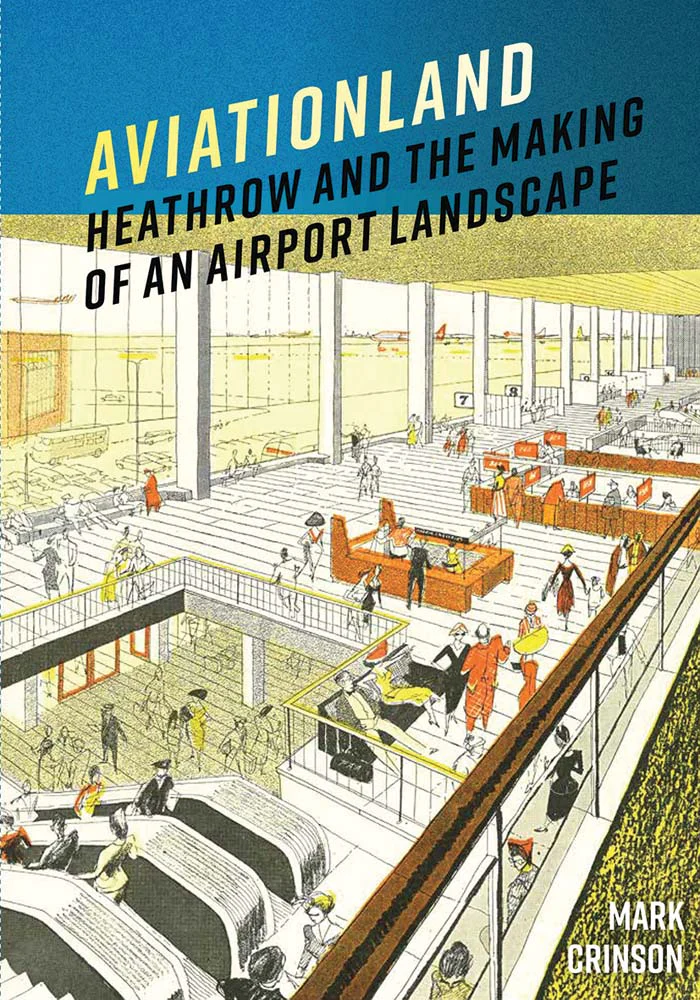
8. Aviationland: Heathrow and the Making of an Airport Landscape
Mark Crinson
Yale University Press ·
- Format
- Hardcover
- ISBN-13
- 9781913107536
- Page count
- 358
- Primary field
- Modern History
- Specific subfield
- Infrastructure, landscape, and urban history
Mark Crinson places eighth by treating Heathrow not as a succession of terminals but as a historical landscape produced by planning, energy, mobility, enclosure, architecture, and metropolitan expansion. That scale makes the airport legible as a central institution of postwar modernity. The book passes the modern-history test because its argument depends on chronological transformation, state and corporate decisions, local displacement, and the changing meanings of infrastructure. Its single-site focus limits its comparative reach, yet the method is unusually integrative. Readers can see how a “global hub” accumulates schools, factories, hotels, roads, and ecological consequences around the iconic machinery of flight.
Crinson begins before the airport, with Hounslow Heath and the longer history of the land on which Heathrow would be built. He then follows the creation of terminals, runways, control systems, hotels, industrial buildings, schools, roads, and business parks. Official planning and celebrated design are set beside improvised growth, local experience, environmental cost, and the vast material systems required to sustain aviation. Architects and planners appear within a wider cast that includes governments, corporations, workers, travelers, and communities. Unpublished evidence and visual material allow the book to move between metropolitan strategy and small-scale landscape change. Heathrow becomes a place where postwar Britain’s ambitions—mobility, modernization, global connection—were made concrete, while their costs were displaced onto land, noise, energy use, and uneven urban development.
Mark Crinson is an architectural and art historian and emeritus professor at Birkbeck, University of London. His research concentrates on nineteenth- and twentieth-century architecture in relation to empire, industrialization, welfare, and historiography. He previously taught at the University of Manchester and served as president of the European Architectural History Network. His publications repeatedly connect buildings to metropolitan, colonial, and industrial processes. The British Academy profile, which places him in both Modern History from 1850 and History of Art and Music, precisely supports this book’s interdisciplinary historical standing.
For historians of postwar Britain, cities, architecture, transportation, planning, environment, and infrastructure. It will work in advanced undergraduate or graduate courses on urban modernity and the built environment. Aviation enthusiasts will find a more demanding account than an institutional chronicle, while planners and architects can use it to understand how celebrated design becomes inseparable from land, logistics, and political conflict.
The July 28 date, hardcover ISBN, 358-page extent, and illustrated format were verified through Yale’s edition metadata and an exact-ISBN bibliographic record. The British Academy classifies the author’s work under modern history as well as architectural history.
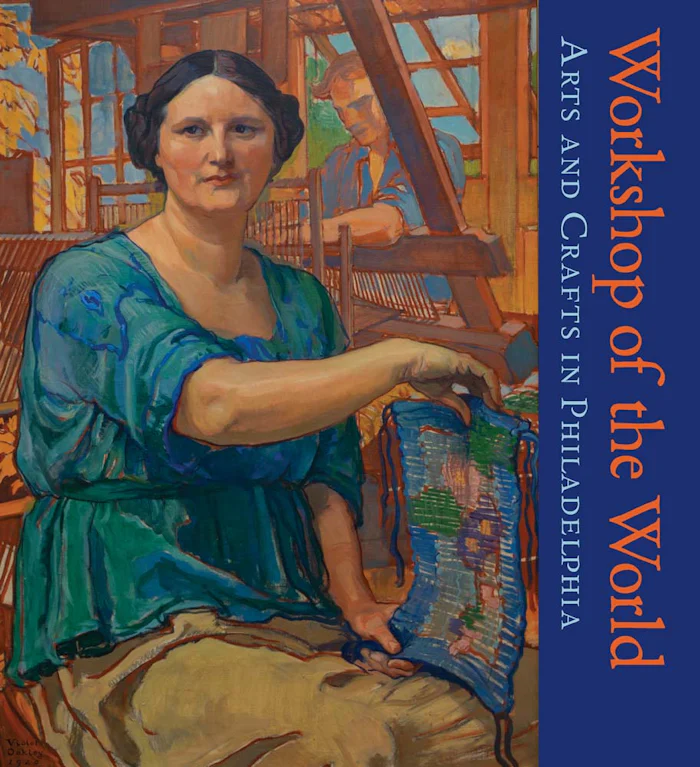
9. Workshop of the World: Arts and Crafts in Philadelphia
Edited by David L. Barquist and Colin Fanning
Yale University Press for the Philadelphia Museum of Art ·
- Format
- Hardcover
- ISBN-13
- 9780876333136
- Page count
- 392
- Primary field
- Modern History
- Specific subfield
- Material, labor, and urban cultural history
Ninth place goes to this large, object-rich history of Philadelphia between the Centennial Exposition of 1876 and the Sesquicentennial of 1926. Its importance lies in refusing a clean opposition between handcraft and industrial production. Workshops, factories, museums, design schools, patrons, and reform communities belonged to one urban economy of making. The volume is an exhibition publication, which makes its argumentative voice more distributed than a single-author monograph’s; that explains its lower rank. Yet its combination of labor, material culture, institutional history, and global design exchange makes it a serious contribution to modern United States history rather than a decorative-arts catalogue alone.
The volume traces how Philadelphia’s industrial identity shaped a distinctive Arts and Crafts culture over fifty years. The 1876 Centennial Exposition exposed anxieties about American design and manufacturing while bringing European and Asian objects into local institutions and markets. Subsequent artists, metalworkers, furniture makers, architects, schools, museums, and reform communities negotiated the relationship between skilled labor and commercial scale. Essays and extensive object documentation reveal that celebrated artisans often relied on workshops, molds, employees, and business systems that complicated the ideal of autonomous handwork. The city’s craft movement therefore appears as an argument about industrial capitalism: who controlled labor, how quality could be taught, and whether beauty could survive mass production. By bringing decorative objects into dialogue with urban institutions and work practices, the book turns material culture into evidence for a broader history of modern production.
David L. Barquist is the H. Richard Dietrich, Jr. Curator of American Decorative Arts at the Philadelphia Museum of Art; Colin Fanning is the museum’s Louis C. Madeira IV Assistant Curator of European Decorative Arts. Their curatorial expertise spans objects, makers, collecting histories, workshop organization, and the institutional interpretation of design. Both work within a museum whose own origins are tied to the 1876 Centennial Exposition examined by the volume. The museum’s official curatorial notice identifies the editors and the wider team responsible for connecting the publication to the exhibition and the museum’s collections.
Independent local reporting supports the volume’s central historical tension: Philadelphia’s craft reform emerged inside, not outside, a manufacturing metropolis. WHYY’s account follows the exhibition through institutions, worker autonomy, design education, and the unstable economics of artisan communities. It also supplies a useful caution for readers of the book: museum narratives can celebrate individual makers while the underlying workshops depended on hierarchy, repetition, and commercial scale. The reporting therefore reinforces the editors’ strongest contribution—the refusal to romanticize “handmade” as the simple opposite of industry.
For historians of nineteenth- and early-twentieth-century America, labor, urban industry, museums, design, and material culture. The many illustrations and object-centered essays make it useful for teaching, while the institutional and economic framing supports graduate research. Readers accustomed to linear monographs should expect a collaborative volume whose argument emerges cumulatively across essays and objects rather than through one continuous narrative overall.
The July 28 release, hardcover ISBN, 392-page extent, and museum-publisher relationship were verified against Yale’s edition data, the Philadelphia Museum of Art’s publication notice, and an exact-ISBN record.
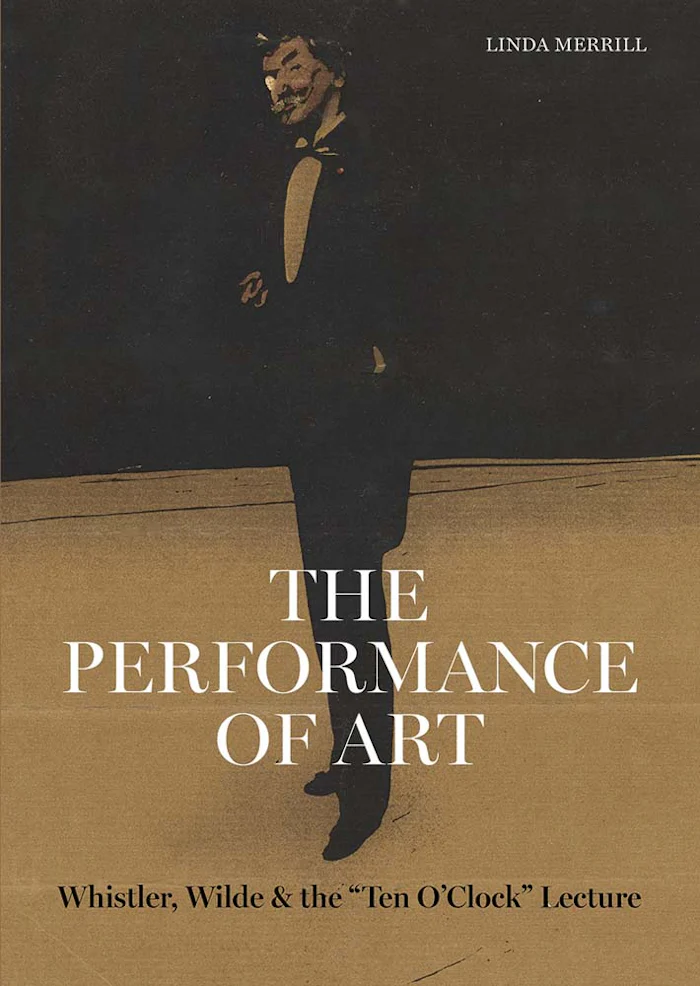
10. The Performance of Art: Whistler, Wilde, and the Ten O’Clock Lecture
Linda Merrill
Yale University Press ·
- Format
- Hardcover
- ISBN-13
- 9781915401229
- Page count
- 264
- Primary field
- Modern History
- Specific subfield
- Victorian cultural and intellectual history
Linda Merrill’s microhistory completes the ranking because it turns a single 1885 lecture into a study of artistic authority, celebrity, reproduction, and the late-Victorian public sphere. James McNeill Whistler’s Ten O’Clock was simultaneously speech, performance, manifesto, and circulating text; Oscar Wilde’s example helped make such self-presentation imaginable. The book is the narrowest in scale and the closest to disciplinary art history, hence tenth place. It nevertheless qualifies directly as modern cultural and intellectual history because it reconstructs the institutions, media, audiences, and professional strategies through which “the artist” became a public role.
Merrill reconstructs Whistler’s Ten O’Clock lecture from its London performance in 1885 through later appearances, print circulation, translation, and plans for an American tour. The event allowed Whistler to present aesthetic argument through timing, dress, voice, staging, and personality. Wilde’s speaking tours and cultivated public persona supplied an important precedent, while Stéphane Mallarmé’s French translation extended the lecture into another literary and artistic network. By following performance and transmission together, the book shows how art theory acquired force through media beyond the picture or gallery. The lecture also marks a changing professional culture: artists could manage publicity and address mass audiences while insisting on art’s autonomy from ordinary moral and social claims. That paradox helps explain the widening divide between specialist fine-art discourse and popular entertainment at the end of the nineteenth century.
Linda Merrill is Teaching Professor and Director of Undergraduate Studies in Art History at Emory University. She holds a doctorate from the University of London and specializes in late-nineteenth-century British art and literature, aestheticism, japonisme, and American painting. Before entering full-time teaching, she held curatorial posts at the Smithsonian’s Freer Gallery of Art and the High Museum of Art. She has published extensively on Whistler and his artistic circle. Her Emory profile documents a long publication record on Whistler and the cultural world in which the lecture circulated.
For readers of Victorian Britain, aestheticism, intellectual performance, celebrity, and art institutions. It is accessible to serious general readers, though familiarity with Whistler and Wilde will add texture. The book should work particularly well in courses on nineteenth-century cultural history, public lectures, print circulation, or the professionalization of artists. Its compact event-centered method also offers a model for historical microanalysis.
The July 28 date, hardcover ISBN, 264-page extent, and subtitle were checked against Yale’s edition data and an exact-ISBN bibliographic record. Emory’s institutional profile verifies Merrill’s specialization in Whistler, aestheticism, and late-nineteenth-century art and literature.
What July’s Modern History Reveals
Taken together, July’s modern-history books are less interested in the sovereign nation as a self-contained stage than in the institutions and media that make historical power visible. Courts expose elites; newspapers and political fiction condition expectations of war; computers reorganize factories and finance; truth commissions and conservative movements compete to authorize the past. Even the apparently specialized studies of photographs, airports, crafts, and lectures ask how publics are assembled and how authority travels through images, buildings, objects, and performance.
The strongest methodological pattern is connection without flattening. Russia and Ireland become mutually legible through news, diaspora, and imperial analogy, but their revolutions do not collapse into one model. Sectarianism is compared across states without being treated as a single inherited essence. Heathrow joins local land to global mobility; Philadelphia’s workshops connect hand skill to industrial organization. This is a field increasingly comfortable crossing political, economic, legal, visual, and architectural history, provided that claims remain anchored in chronology and archives.
There are clear disagreements beneath that convergence. Several authors resist primordial explanations—of militarism, sectarian hatred, or national forgetting—by showing how institutions manufacture dispositions and categories. Others question modernity’s preferred oppositions: public law versus autocracy, craft versus industry, artistic autonomy versus publicity, technology versus political economy. The best books do not merely replace one label with another; they identify the mechanisms through which those oppositions became persuasive.
Geographically, the month is unusually wide, moving across Europe, the United States, Brazil, Russia, and the Middle East. Yet Africa, South Asia, East Asia, and the Pacific remain conspicuously absent from the final ten after strict first-edition and exact-date screening. University presses dominate, and serious trade history is barely represented. That concentration supports scholarly depth but also reveals how unevenly new historical research reaches broader markets.
The best new books in Modern History for July 2026 therefore suggest a discipline moving toward systems of circulation, classification, and visibility. Its future will be interdisciplinary, but not borderless: the month’s most convincing works earn their range by preserving causal sequence, institutional specificity, and evidentiary discipline.
Research Scope
Research was completed on . The log recorded 38 plausible July candidates; 24 received publication-date and edition-history checks, 17 received full subject-relevance testing, and 10 passed the complete link-and-cover screen. The work included 31 publisher, press, catalog, series, or institutional pages; 14 media, review, podcast, or specialist searches; and 24 ISBN, bibliographic, retailer, or authorized-platform records. Two independent critical assessments were suitable for synthesis, and one short quotation met the verification and copyright rules.
Ten final cover paths were checked against exact editions. Twenty successful direct-image or exact product-image-source openings were recorded as ten repeated pairs. High-resolution Imgix variants use the same verified publisher image paths as the repeatedly opened source variants. No authenticated BookInLight Media Library, WordPress preview, or public-page testing was available; external HTTPS image delivery is therefore reported without a permanence guarantee.
Publishers, presses, and institutional catalogs
- Oxford University Press global catalog and Oxford Academic book records
- Columbia University Press catalog and Columbia Studies in the History of U.S. Capitalism series record
- University of Texas Press catalog and table-of-contents record
- Yale University Press catalog and distributed museum-publication records
- Stanford University Press July catalog checks used during candidate screening
- University of Strathclyde, University College London, University of Wisconsin–Madison, New York University Abu Dhabi, NUPAD/UFES, Yale History, Lancaster University, Central Saint Martins, Birkbeck, British Academy, Philadelphia Museum of Art, and Emory University profiles
- BookInLight’s Modern History archive and existing monthly-review format
Newspapers, magazines, and literary reviews
- WHYY Arts & Entertainment coverage of the Philadelphia exhibition and publication
- Title-specific searches across major newspaper, magazine, and literary-review indexes; publisher endorsements and retailer customer reviews were excluded
Academic journals and specialist review outlets
- New Diplomatic History and Jeremy Black’s historical review index
- New Books Network’s Irish Studies and History records; the author interview was used for discovery and biographical confirmation, not counted as independent criticism
- ResearchGate DOI and publication records used only as secondary bibliographic checks
Libraries, ISBN systems, and bibliographic databases
- Google Books exact-ISBN edition records for all ten finalists
- Browns Books for Students, UniPressAlert, NetGalley, and institutional publication databases
- ISBN-specific records surfaced through Foyles, Kriso, The Nile, Booktopia, eCampus, iMusic, BookHero, Coles Books, and KulturKaufhaus
Retailers and authorized digital platforms
- Amazon United States and United Kingdom exact-product records
- Walmart exact-ISBN listing, VitalSource edition records, and authorized bookseller format listings
- Retailer dates were never used alone to establish first-edition eligibility
Cover-image sources
- DMM/Browns jacket server for Rank 1
- Amazon Media image server for Rank 2
- Columbia University Press Imgix server for Rank 3
- University of Texas Press Imgix server for Rank 4
- Yale University Press Imgix server for Ranks 5–10
- Google Books exact-ISBN pages used as authoritative edition-overlay and credit destinations
Sources and Verification
Consequential Research Sources
- Oxford Academic: Revolutionary Connections — Supports the July 2026 first-edition record, disciplinary classifications, abstract, and coordinated digital publication.
- Browns Books: Revolutionary Connections — Independently confirms the July 31 hardcover date, ISBN, page count, and exact jacket.
- University of Strathclyde: Anna Lively — Confirms the author’s position, doctoral history, prior appointments, and transnational research program.
- Oxford Academic: Germany and the Next War — Supports the July 9 edition identity, subject placement, and the book’s central argument about imagined violence.
- New Diplomatic History review — Provides the independent assessment, evidentiary praise, and reservation synthesized in Rank 2.
- University College London: Mark Hewitson — Confirms academic position and specialization in German history, war, nationalism, and political culture.
- NetGalley: Coding Capitalism — Independently confirms the July 7 release, extent, publisher, and history classification.
- University of Wisconsin–Madison: Devin Kennedy — Confirms Kennedy’s appointment and fields in economic, business, technological, and United States history.
- New York University Abu Dhabi faculty record — Confirms Cristina Buarque de Hollanda’s appointment and doctoral qualification.
- NUPAD/UFES: José Szwako — Confirms Szwako’s institutional role and research on social movements, redemocratization, and intellectual history.
- Yale History faculty directory — Confirms Sergei Antonov’s position and specializations in imperial Russia, legal history, crime, credit, and elites.
- Lancaster University: Simon Mabon — Confirms Mabon’s position, directorship, and sustained research on sectarianism, sovereignty, and Middle Eastern politics.
- Central Saint Martins: Flora Dunster — Confirms Dunster’s position, education, and research background in photography, feminism, and queer theory.
- British Academy: Mark Crinson — Places Crinson’s work explicitly in Modern History from 1850 and architectural history, supporting the interdisciplinary classification.
- Philadelphia Museum of Art publication notice — Confirms the editors, curatorial team, exhibition-publication relationship, and institutional setting.
- WHYY feature — Provides independent reporting on industrial craft, labor autonomy, design education, and the exhibition’s historical claims.
- Emory University: Linda Merrill — Confirms Merrill’s position, education, curatorial background, and specialization in aestheticism and Whistler.
- UniPressAlert July 2026 history listings — Supported broad candidate discovery and month-level comparison across university presses.
Related BookInLight Editorial Guides
Editorial Research, Art Direction, and Rights
The Book in Light Modern History Department researched and wrote this article. The process included bibliographic review, source verification, first-edition and format checking, publisher and purchase-link checking, subject-relevance testing, and editorial fact-checking. Factual corrections, overlooked authoritative sources, interpretive suggestions, and constructive ideas are welcome so that the record can be improved transparently.
The BookInLight Art Department is credited for editorial art direction, visual composition, cover selection, and image presentation. Rights in individual book covers remain with the publishers, artists, designers, photographers, and other lawful rights holders. Complete republication, reproduction, translation, or reuse of this article requires prior written authorization from BookInLight.
Image Credits
- Rank 1, Revolutionary Connections: Russia and Ireland, 1905–1923, 2026 hardcover, Oxford University Press. Cover delivered by the DMM/Browns jacket server; authoritative exact-edition record.
- Rank 2, Germany and the Next War: Militarism and the Imagination of Violence, 1888–1914, 2026 hardcover, Oxford University Press. Cover delivered by Amazon Media’s exact-product image server; authoritative exact-edition record.
- Rank 3, Coding Capitalism: Computers and the Remaking of the Postwar US Economy, 2026 paperback, Columbia University Press. Cover delivered by Columbia University Press Imgix; authoritative exact-edition record.
- Rank 4, Disputed Pasts: Forgetting and Remembering the Dictatorship in Brazil, 2026 hardcover, University of Texas Press. Cover delivered by University of Texas Press Imgix; authoritative exact-edition record.
- Rank 5, Russia’s Rogue Masters: Elite Criminal Trials in the Age of Reform, 1866–1884, 2026 hardcover, Yale University Press. Cover delivered by Yale University Press Imgix; authoritative exact-edition record.
- Rank 6, Schism: The Story of Sectarianism in the Modern Middle East, 2026 hardcover, Yale University Press. Cover delivered by Yale University Press Imgix; authoritative exact-edition record.
- Rank 7, Hurled Towards the Future: Lesbian Photography and Queer Imagination in 1980s London, 2026 hardcover, Yale University Press. Cover delivered by Yale University Press Imgix; authoritative exact-edition record.
- Rank 8, Aviationland: Heathrow and the Making of an Airport Landscape, 2026 hardcover, Yale University Press. Cover delivered by Yale University Press Imgix; authoritative exact-edition record.
- Rank 9, Workshop of the World: Arts and Crafts in Philadelphia, 2026 hardcover, Yale University Press for the Philadelphia Museum of Art. Cover delivered by Yale University Press Imgix; authoritative exact-edition record.
- Rank 10, The Performance of Art: Whistler, Wilde, and the Ten O’Clock Lecture, 2026 hardcover, Yale University Press. Cover delivered by Yale University Press Imgix; authoritative exact-edition record.