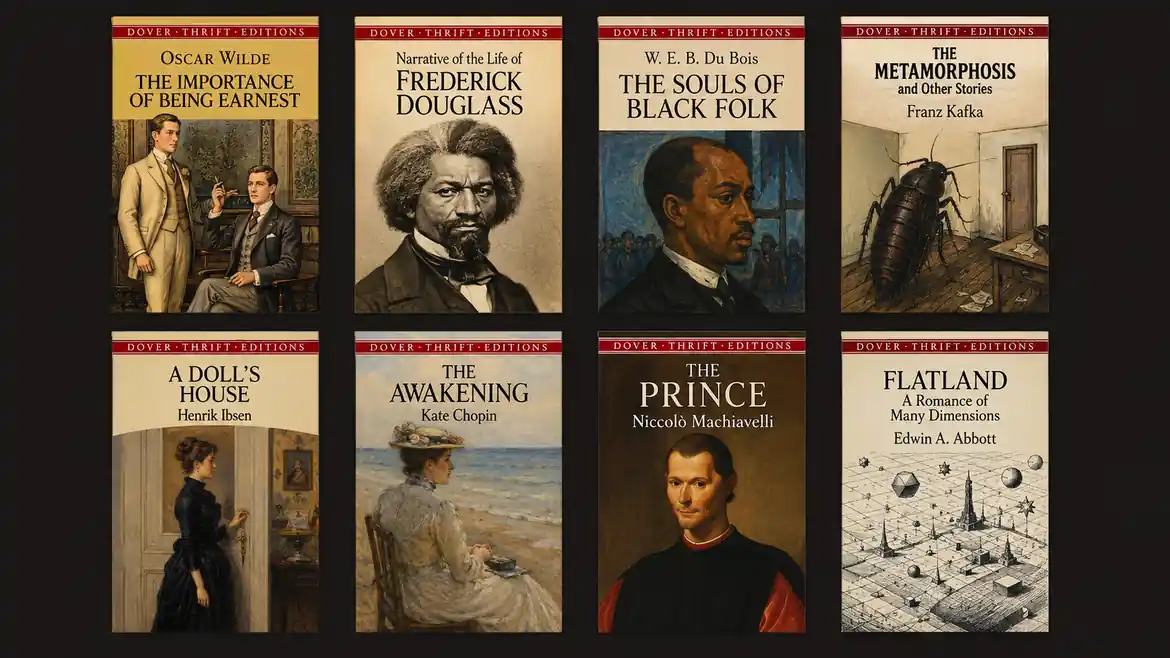
Dover Thrift Editions turned the public-domain classic into a book almost anyone could buy. This Dover Thrift Editions review argues that the series is excellent reading infrastructure—complete, portable, and unusually affordable—but not a substitute for a critical or translator-led edition. The decisive question is not whether the books look inexpensive; it is what kind of editorial guidance a reader, teacher, or researcher actually needs.
The Short Answer
Dover Thrift Editions are good enough for reading, classroom discussion, and inexpensive shared copies when the work is in English and textually straightforward. They are less dependable for translation-sensitive or heavily annotated study. Their bargain is real: readers receive complete texts and stable editions, but usually surrender modern scholarship, extensive notes, and transparent editorial provenance.
A four- or five-dollar Dover is not a failed Norton Critical Edition. It is a different instrument. Its principal achievement is to reduce the cost of entering a classic while preserving the whole work. Its limitation is that “complete and unabridged” answers only one bibliographical question: it does not identify a preferred copy-text, guarantee a modern translation, document variants, or supply current scholarship.
For Wilde, Douglass, Chopin, and Abbott, a standard Dover Thrift can be an excellent first copy. For Ibsen, Machiavelli, Kafka, or any author whose English identity depends heavily on translation, the edition needs closer scrutiny. Teachers assembling class sets, libraries, reading groups, and independent annotators have strong reasons to use the series; graduate seminars and citation-sensitive research usually require Oxford, Penguin, Broadview, Norton, or a specialist edition.
The central claim of this Dover Thrift Editions review is precise: these books are often excellent reading editions, intermittently useful teaching editions, and rarely sufficient scholarly editions. Their quality depends less on the cover price than on the textual complexity of the work.
The Editorial Problem Dover Thrift Editions Set Out to Solve
Dover Publications had been built around a radical proposition long before the Thrift line appeared: important books need not disappear when their first commercial life ends. Hayward and Blanche Cirker founded the company in 1941, and Dover became known for economical republication of out-of-copyright material. As Karin Falcone Krieger’s history of the firm shows, its “permanent book” ideal joined low price to continued availability, even for modest audiences.
The Thrift problem was educational. Public-domain texts could be legally free yet awkward to assign: library copies were limited, photocopies cumbersome, and better trade editions expensive when multiplied across a class. Dover’s answer was not prestige but possession—the complete work at nearly the price of a snack.
Dover dates the series’ debut to 1990 and now describes more than 700 titles. A later publisher retrospective in School Library Journal recalled a 1991 launch with roughly twelve books and Hayward Cirker’s goal of one-dollar classics for schools and libraries. The slight date discrepancy is best understood as formal debut versus remembered launch, not two projects.
The editorial assumption was clear: many readers need access before mediation. Dover’s phrase “complete and unabridged” rejects cut-down school texts, but completeness is not authority. A whole inherited translation may preserve dated diction; a full reprint may conceal textual choices; an uncut play may still need performance history. Dover solved possession. It never solved every problem of interpretation.
The economics of public-domain publishing explain the trade. Rights payments disappear, but editorial labour does not. A new translation, textual collation, commissioned introduction, and dense annotation all require specialists and time. Dover’s model strips most of those costs away so that printing, distribution, and basic edition preparation can carry the book. The low price is therefore produced by selective editorial abstention, not by routine abridgment.
How the Project Took Shape
Dover Thrift Editions did not begin as a scholarly library governed by a named general editor, textual constitution, and uniform board. Public documentation foregrounds publisher, price, and completeness. That institutional shape explains why continuity is strongest in branding and economics rather than in a single editorial method.
The early formula favoured short plays, novellas, speeches, stories, poetry selections, and compact works of philosophy—books that could survive radical cost reduction without becoming extracts. Wilde’s The Importance of Being Earnest, issued in 1990, is exemplary: brief, frequently assigned, written in English, and dramatically alive without much mediation.
Growth came through multiplication. The 2022 complete catalogue ranges across fiction, drama, poetry, history, philosophy, social thought, speeches, and regional groupings. African American autobiography, women’s writing, political documents, folklore, and translated literature sit beside Shakespeare, Dickens, Austen, and Poe.
Scale did not produce uniformity. Some volumes disclose a specific source edition; some use named Dover translators; others inherit older or anonymous English versions. Dover later added Thrift Study Editions with summaries and questions, but these are a distinct pedagogical branch. The standard book remains an inexpensive primary-text container whose textual pedigree must be checked title by title.
Brand continuity can conceal those differences. A reader seeing the same red-and-white banner across decades may assume that every volume has passed through an equivalent process. The more accurate picture is a stable publishing programme assembled from heterogeneous textual solutions. Its catalogue has a history, but not a single unchanging house style of scholarship.
The Volumes That Best Explain the Project
These eight books expose the editorial system rather than merely displaying famous titles: the launch-era ideal, low-cost canon recovery, named and inherited translations, uneven source disclosure, and the short forms that benefit most from Dover’s minimalism. Every card refers to the exact Dover edition shown.
Foundational Volume
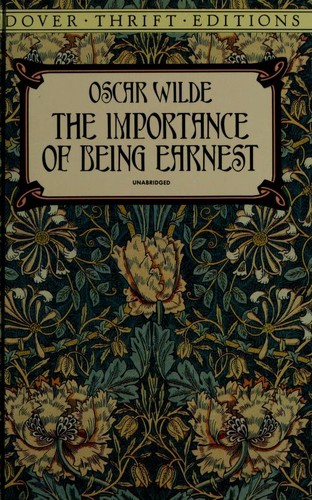
The Importance of Being Earnest: The Thrift Formula in Its Purest Form
Author: Oscar Wilde
Edition: Dover Thrift Editions paperback, 1990; ISBN 9780486264783
Why it matters: Wilde’s compact play demonstrates why the line worked. It is short, frequently taught, written in English, dramatically alive without editorial assistance, and available as a complete object rather than an excerpt. The reader pays for the text, not a prefatory argument about it.
Main limitation: The edition offers little help with production history, Wilde’s revisions, Victorian theatrical convention, or the play’s relation to censorship and scandal.
Best suited to: General readers, actors, school and undergraduate class sets, and anyone wanting a disposable annotation copy.
Canon-Expanding Volume
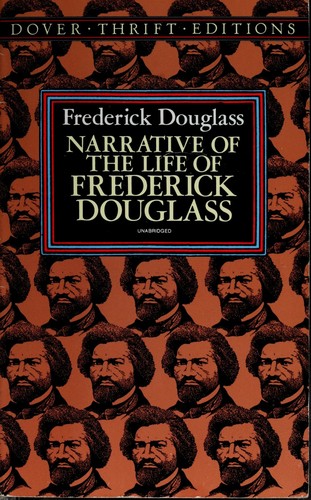
Narrative of the Life of Frederick Douglass: Access as a Canonical Force
Author: Frederick Douglass
Edition: Dover Thrift Editions paperback, 1995, 76 pages; ISBN 9780486284996
Why it matters: This is where affordability becomes more than consumer convenience. A whole class can own a central work of abolitionist autobiography for less than the cost of many course packets. The edition helps move Douglass from “supplementary historical document” to primary literary and political text.
Main limitation: Readers receive no substantial dossier on slave-narrative conventions, publication history, authentication debates, or Douglass’s later revisions of his life story.
Best suited to: Secondary and undergraduate courses, reading groups, and first encounters with Douglass.

Canon-Expanding Volume
The Souls of Black Folk: Intellectual History at Paperback Scale
Author: W. E. B. Du Bois
Edition: Dover Thrift Editions paperback, 1994; reprints the 1903 A. C. McClurg text with a new introduction; ISBN 9780486280417
Why it matters: The volume demonstrates the line’s reach beyond belles lettres. Du Bois’s mixture of sociology, memoir, cultural criticism, and prophetic prose belongs in several curricula at once, and Dover’s price makes cross-disciplinary assignment unusually easy.
Main limitation: The thin framing cannot reconstruct the book’s intellectual interlocutors, musical epigraphs, publishing history, or the changing political meaning of “the color line.”
Best suited to: General readers and survey courses that can provide contextual material elsewhere.

Translation Benchmark
The Metamorphosis and Other Stories: A Named Translator Changes the Equation
Author: Franz Kafka
Translator: Stanley Appelbaum
Edition: Dover Thrift Editions paperback, 1996, 96 pages; ISBN 9780486290300
Why it matters: Appelbaum’s credit shows that Dover is not confined to anonymous public-domain recycling. The selection offers a coherent, inexpensive encounter with Kafka and gives the reader a translator whose decisions can at least be identified and compared.
Main limitation: A named translation is not a timeless one. Kafka’s syntax, tonal comedy, and key terms support competing English solutions, while this volume provides little apparatus for evaluating them.
Best suited to: First-time readers and courses that explicitly compare translations; less suitable as an unquestioned graduate-level text.
Revealing Limitation
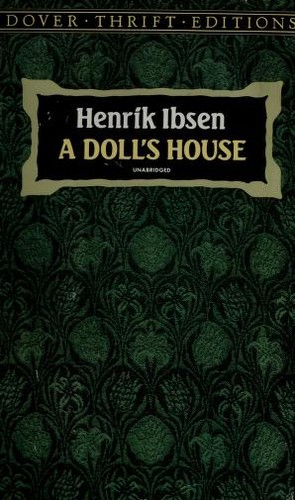
A Doll’s House: Completeness Without Transparent Translation
Author: Henrik Ibsen
Translator: The exact edition reprints an anonymous, undated English translation, slightly corrected by Dover
Edition: Dover Thrift Editions paperback, 1992, 72 pages; ISBN 9780486270623
Why it matters: This volume makes the series’ central weakness visible. The play is whole, cheap, and usable, but the English voice through which most readers meet Nora is not presented as the accountable work of a named translator.
Main limitation: Historical diction and obscure provenance make a modern, named translation preferable for close reading, performance choices, or research.
Best suited to: Budget-conscious introductory reading where the instructor can discuss translation history; not the strongest default for advanced Ibsen study.

Recovery Volume
The Awakening: When Cheap Reprinting Consolidates Recovery
Author: Kate Chopin
Edition: Dover Thrift Editions paperback, 1993, 116 pages; ISBN 9780486277868
Why it matters: Canon recovery becomes durable when a work is not only praised by scholars but also easy to assign, replace, and circulate. Dover’s edition helped make Chopin’s novel an ordinary presence in courses rather than a specialist rediscovery requiring an expensive volume.
Main limitation: Minimal apparatus cannot narrate the novel’s hostile early reception, twentieth-century recovery, Creole setting, or feminist critical history.
Best suited to: Readers who need the novel itself and teachers prepared to supply historical and critical context.

Textual-Provenance Test
The Prince: A Political Classic Whose English Matters
Author: Niccolò Machiavelli
Edition: Dover Thrift Editions paperback, 1992, 71 pages; based on a 1910 Harvard Classics printing with minor typographical corrections and a new note; ISBN 9780486272740
Why it matters: The book proves the extraordinary utility of a nearly costless political classic. It also shows why price cannot decide edition choice: terms such as virtù, fortuna, and stato carry interpretive burdens that differ among translators.
Main limitation: The inherited English lineage is more important than the cover suggests, and the edition lacks the notes and translator’s account needed for conceptually precise study.
Best suited to: Casual reading and introductory discussion; choose a modern named translation for political theory, intellectual history, or citation-sensitive work.

Neglected Strength
Flatland: The Ideal Cross-Disciplinary Thrift Book
Author: Edwin A. Abbott
Edition: Dover Thrift Editions paperback, 1992; an unabridged, corrected text based on the 1884 Seeley edition; ISBN 9780486272634
Why it matters: Geometry, satire, social hierarchy, and speculative fiction meet in a short work whose original diagrams and conceptual play reward direct encounter. Here Dover’s source disclosure is useful and the minimal format keeps the strange little book agile.
Main limitation: Readers receive little guidance on Victorian social satire, the history of dimensions, or Abbott’s intellectual setting.
Best suited to: Mathematics-and-humanities courses, reading groups, curious general readers, and teachers building a cross-disciplinary unit.
The Series at a Glance
What the Catalogue Calls a Classic
Dover’s implicit classic is durable, useful, and legally compatible with an extremely low price. Public-domain status is not an aesthetic judgment, yet it functions here as a powerful selector. Older Anglophone and European works therefore dominate: Shakespeare, Dickens, Austen, Poe, Wilde, Ibsen, Dostoevsky, classical authors, and foundational political texts are familiar, teachable, and cheap to reprint.
The catalogue is broader than that centre suggests. Douglass, Du Bois, Chopin, Charlotte Perkins Gilman, Equiano, Sojourner Truth, African American poetry, speeches, folklore, and world traditions make the line a vehicle for curricular expansion. Price changes the meaning of inclusion: a four-dollar book can enter school bags, community programmes, prison libraries, amateur theatres, and reading groups at a scale that a costly recovery edition cannot.
Breadth is not parity. Modern postcolonial writing, living authors, recent translations, and works under active estates cannot enter the same economic machine easily. The result is an access canon: wider than the series’ stereotype, yet shaped by copyright history, English-language preservation, page count, and persistent demand. This Dover Thrift Editions review therefore treats the catalogue not as a neutral map of greatness but as a record of what legal and production conditions allow to remain cheaply visible.
This is why recovery titles are so important to the project’s identity. Dover seldom originates the scholarly argument for bringing a neglected author back; it converts that argument into repeatable circulation. Once a recovered book can be ordered cheaply by the hundred, canon formation moves from specialist advocacy into routine teaching practice. Material availability does not determine value, but it strongly affects which values become institutionally durable.
Translation and Textual Policy
There is no single Dover Thrift translation policy safe to apply across languages and decades. Practice ranges from identifiable Dover translators to corrected reprints of older English versions. “Complete” remains meaningful, but readers must inspect the copyright page and edition statement.
Stanley Appelbaum’s Kafka represents the stronger model: the translator is named, his decisions can be compared, and responsibility for the English text is visible. That does not make the version definitive; Kafka’s syntax, comedy, and recurrent terms sustain rival solutions. It makes the edition accountable.
The exact record for A Doll’s House, by contrast, identifies an anonymous, undated English translation slightly corrected by Dover. Ibsen’s speech registers and domestic-legal vocabulary make that invisibility consequential. Dover’s The Prince derives from a 1910 Harvard Classics printing; it is serviceable for orientation, but concepts such as virtù, fortuna, and stato require a translator’s rationale in serious political theory.
English works still demand source awareness. Dover’s Flatland usefully discloses an unabridged, corrected text based on the 1884 Seeley edition. Other volumes say less about variants or modernization.
For ordinary quotation, a stable ISBN and pagination can be cited accurately if the exact edition is named. For textual criticism, translation studies, variant analysis, or wording that bears heavy evidentiary weight, consult a critical edition, documented modern translation, or source-language text. Dover is often reliable enough to read; it is not uniformly constituted to establish the text.
Introductions, Notes, and Scholarly Apparatus
Standard Thrifts treat apparatus as optional and proportionate to price. A short introduction, headnote, translator’s note, or bibliographical statement may appear, but readers should not expect a consistent chronology, map, glossary, annotation, bibliography, or documentary archive. The series name alone reveals little about the support surrounding a particular text.
Minimalism can improve some encounters. Wilde moves quickly without a prefatory lecture; Douglass retains rhetorical force without notes on every page; a teacher may supply context digitally while students receive a clean, stable primary text. Yet the silence can abandon beginners. Du Bois assumes Reconstruction history and Black musical culture; Chopin’s Louisiana is socially specific; Machiavelli’s political geography is not self-explanatory.
The separate Study Editions add summaries, questions, biographies, and study aids, but they remain pedagogical rather than fully critical. Readers should distinguish orientation, explanation, and scholarship. Many Thrifts offer enough orientation; explanatory coverage varies; sustained discussion of copy-text, variants, reception, and criticism is rare. Restraint is useful when chosen knowingly and misleading when low price encourages the belief that all editions do equivalent work.
A brilliant introduction is not automatically better for every first reader: it can narrow attention before the work has generated its own questions. Dover’s restraint occasionally protects discovery. The problem is inconsistency, not sparseness alone. Because the line offers no uniform apparatus standard, readers cannot infer from the imprint whether an introduction is substantial, dated, elementary, or absent; they must inspect the specific volume.
Design, Format, and the Material Idea of the Book
The material identity begins with compactness. Many Thrifts sit near a small trade-paperback format, and short works feel natural at that scale. The book can be carried, marked, bent open, or replaced without ceremony. Its design encourages use rather than reverence.
Covers combine a recurring banner with title-specific art, period imagery, or collage. They are recognizable without Penguin’s or Oxford’s strict uniformity. That looseness gives individual books energy but projects less sense of a single intellectual institution. Dover branding promises economy and completeness more clearly than a shared editorial worldview.
Production choices favour plays, novellas, speeches, and short nonfiction. Longer novels or heavily annotated works put more pressure on page density and margins. The relevant criticism is not that a budget paperback fails to resemble a collectors’ book; it is whether economy impedes sustained reading.
Dover’s historic “permanent book” reputation should not become an unsupported claim that every Thrift is heirloom durable. The line is built for circulation and replacement. Its achievement is congruence between object and purpose: Wilde can live in a rehearsal bag, Flatland can cross disciplines, and Douglass can reach a large cohort without a budget crisis. At its best, the book is attractive because it asks no one to be afraid of using it.
Dover Thrift Editions Review: Price, Availability, and Academic Use
Price is the editorial mechanism. On Dover’s United States store in August 2026, representative short paperbacks examined here were generally listed around four to seven dollars, while the official series page still advertised some titles from $2.50. Longer books cost more, and sale prices should not be treated as normal list prices.
That economics changes institutional decisions. A teacher can order a class set; a library can replace losses; a theatre can issue scripts; a reading programme can distribute books rather than ration access. The value lies not only in what one buyer saves, but in how many readers can own the text at once.
Availability fluctuates. The official page for A Doll’s House was marked sold out at the research date, and direct ordering, local distribution, retailer stock, and ebook availability differ by market. A low American list price does not guarantee the same landed cost elsewhere.
For undergraduate teaching, Dover is strongest when the instructor supplies the apparatus through lectures or a learning platform. When notes, contextual documents, and criticism are central to the course, Norton or Broadview may be better value than assembling them separately. Researchers can sensibly own two copies: a Dover for portable reading and annotation, and a documented edition for verification.
The practical verdict of this Dover Thrift Editions review is that the prices represent excellent value when the omissions are understood. They become poor value only when translation, annotation, or textual history was essential from the beginning and a second edition must be bought.
Citation suitability should likewise be decided title by title. Stable pagination makes classroom reference easy, but a cheap copy does not become a critical edition through repeated use. In survey courses, that distinction may be immaterial. In research writing, an instructor should specify whether quotations must be checked against a named translation, a scholarly edition, or a source text.
How It Compares with Its Closest Rivals
The real comparison concerns allocations of editorial labour. Dover minimizes the material between reader and public-domain text. Its rivals spend more on translation, annotation, introductions, textual selection, and design. Those costs can be needless for one reader and indispensable for another.
Penguin Classics is preferable when a readable modern translation and useful introduction justify a higher price. Its rights reach and translator visibility extend beyond public-domain economics. Dover can still win for a short English work when that mediation is unnecessary.
Oxford World’s Classics is the stronger bridge between general reading and university study, with specialist introductions, notes, chronologies, and bibliographies. The apparatus may sometimes pre-empt a first encounter, but it usually clarifies the edition’s authority.
Norton Critical Editions and Broadview Editions are preferable when historical documents, criticism, and careful annotation form part of the assignment. For a reading group that wants only the primary work, their bulk and price may be unnecessary.
The decision rule is simple: choose Dover when the lowest sustainable cost for the whole text is the objective; Penguin or Oxford when translation and editorial guidance are integral; Norton or Broadview when documentary and critical materials constitute the course.
No rival simply replaces Dover. Penguin and Oxford use their higher price to make editorial judgment visible; Norton and Broadview make contextual reading part of the physical book. Dover leaves more of that work to the reader or teacher. The best edition is therefore the one whose paid-for features match the actual use, not the one carrying the most prestigious spine.
Limitations and Contradictions
The first contradiction lies in “complete and unabridged.” It guarantees neither a preferred text nor a current translation and can coexist with anonymous provenance, silent modernization, or an inherited version specialists would reject. Dover is generally accurate; readers may hear more in the phrase than it promises.
The recurring banner also implies more editorial uniformity than exists. A Stanley Appelbaum translation, a corrected 1884 English text, and an anonymous stage translation belong to different bibliographical categories. Consistency is strongest in price and format; scholarship remains title-specific.
The access mission depends on a legal filter that favours older writing, European languages, and works preserved by powerful institutions. Dover has widened the catalogue through Black writing, women writers, folklore, political speech, and non-European traditions, but it operates inside an unequal archive.
Minimal apparatus can respect experienced readers or abandon beginners; the boundary varies by title. Finally, cheapness attracts unfair suspicion while expensive editions receive an unearned aura of authority. Dover’s defects should be identified bibliographically, not inferred from price. A low-cost accurate English text can outperform a handsome weak edition, while a costly new translation may justify every additional dollar.
Related BookInLight Reading Guides
Editorial research and authorship: This article was researched and written by the BookInLight Department of Publishing History and Book Studies, with bibliographical review, edition checking, source verification, and editorial fact-checking by the BookInLight research team. Readers who identify a factual correction, an overlooked source, a missing volume, or a valuable interpretive possibility are warmly invited to share their comments and constructive suggestions.
Art direction and rights: The editorial art direction, visual composition, cover selection, and presentation of images were developed by the BookInLight Art Department. Individual book covers remain the property of their respective publishers, designers, artists, and rights holders and are credited below. Complete republication, reproduction, translation, or reuse of this article, whether in print or digital form, is permitted only with prior written authorization from BookInLight.
Sources and Further Reading
Series History and Editorial Mission
1. Dover Publications, “Dover Thrift Editions”. Official series account supporting the 1990 debut date, current mission, scale, readership, and complete-and-unabridged claim.
2. School Library Journal, “Dover’s Thrifty Classics: Behind the Books”, 2015. Publisher interview used cautiously for the retrospective account of a 1991 launch, the original one-dollar goal, and school-and-library readership.
3. Karin Falcone Krieger, “This Is a Permanent Book”, Contingent Magazine, 2020. Supports the founding history of Dover and the company’s public-domain reprint economics.
4. Dover Publications, Dover Thrift Editions 2022 Complete Catalog. Used to assess catalogue breadth, genre groupings, cultural range, and the persistence of the complete-text mission.
Defining Volumes and Exact Editions
5. Dover Publications, The Importance of Being Earnest, ISBN 9780486264783. Exact-edition identity, format, publication details, and current series membership.
6. Dover Publications, Narrative of the Life of Frederick Douglass, ISBN 9780486284996. Exact-edition identity, pagination, format, and current series membership.
7. Dover Publications, The Souls of Black Folk, ISBN 9780486280417. Exact-edition identity, source-edition statement, format, and current series membership.
8. Dover Publications, The Metamorphosis and Other Stories, ISBN 9780486290300. Exact-edition identity and Stanley Appelbaum’s translator credit.
9. Dover Publications, A Doll’s House, ISBN 9780486270623. Exact-edition identity, format, and availability status at the research date.
10. Dover Publications, The Awakening, ISBN 9780486277868. Exact-edition identity, pagination, format, and current series membership.
11. Dover Publications, The Prince, ISBN 9780486272740. Exact-edition identity, format, and current series membership.
12. Dover Publications, Flatland, ISBN 9780486272634. Exact-edition identity, source-text description, format, and current series membership.
13. Open Library exact-edition records for Wilde, Douglass, Du Bois, Kafka, Ibsen, Chopin, Machiavelli, and Abbott. Used for edition-level source notes, translator information, dimensions, and cover correspondence.
Apparatus and Competitor Series
14. Dover Publications, Dover Thrift Editions Study Editions. Official documentation used to distinguish the pedagogically expanded subseries from standard Thrift editions.
15. Penguin, Penguin Classics. Official series history and mission used for comparison of translation, range, and trade-classics mediation.
16. Oxford University Press, Oxford World’s Classics. Official description supporting the comparison of expert translations, critical introductions, notes, chronologies, and bibliographies.
17. W. W. Norton, Norton Critical Editions. Official series information used to compare contextual documents, criticism, annotation, and seminar use.
18. Broadview Press, The Broadview Editions Series. Official series description used to compare newly edited texts, explanatory notes, introductions, and historical documents.
Image Credits
1. The Importance of Being Earnest, Dover Thrift Editions paperback, 1990, Dover Publications. Cover image from the Open Library exact-edition record.
2. Narrative of the Life of Frederick Douglass, Dover Thrift Editions paperback, 1995, Dover Publications. Cover image from the Open Library exact-edition record.
3. The Souls of Black Folk, Dover Thrift Editions paperback, 1994, Dover Publications. Cover image from the Open Library exact-edition record.
4. The Metamorphosis and Other Stories, Dover Thrift Editions paperback, 1996, Dover Publications. Cover image from the Open Library exact-edition record.
5. A Doll’s House, Dover Thrift Editions paperback, 1992, Dover Publications. Cover image from the Open Library exact-edition record.
6. The Awakening, Dover Thrift Editions paperback, 1993, Dover Publications. Cover image from the Open Library exact-edition record.
7. The Prince, Dover Thrift Editions paperback, 1992, Dover Publications. Cover image from the Open Library exact-edition record.
8. Flatland, Dover Thrift Editions paperback, 1992, Dover Publications. Cover image from the Open Library exact-edition record.