Finding the best political philosophy books for beginners is less about assembling famous titles than choosing a sequence. These 20 curated books move from accessible introductions to classical foundations, contemporary disputes, and demanding critiques. Each entry identifies a useful edition, difficulty, ideal reader, exact publisher page, and Amazon product link, so newcomers and advanced readers can decide what to read first—and what to postpone.
Affiliate note: Book in Light may earn a small commission if you buy through some of the links on this page, at no extra cost to you. We include books only when they serve the editorial purpose of the reading guide.
Quick Answer
Start with David Miller for the shortest reliable orientation, then read Jonathan Wolff for a fuller argumentative introduction. Michael Sandel is the most accessible case-based entry; Will Kymlicka is the best bridge to contemporary schools; and John Rawls’s Justice as Fairness is the clearest next step into advanced theory. Use the 20 books as pathways, not a compulsory ranking.
How to Use This Reading List
No reader needs to complete all 20 books before forming serious judgments. The best political philosophy books for beginners perform different jobs: some teach the questions, some supply historical foundations, some defend rival principles, and some reveal exclusions that the canonical debate obscured. Begin with one accessible map, choose a primary-text route, and use the comparison table to decide where greater difficulty is justified.
Political philosophy asks what institutions may rightly demand, how power can be justified, and what freedom, equality, justice, citizenship, and membership require. The Internet Encyclopedia of Philosophy’s overview is a useful companion to these broad questions; the Stanford Encyclopedia’s account of political obligation shows why obeying a law and believing it legitimate are not the same thing.
A completely new reader can move from Miller to Wolff or Sandel. A historically minded reader can use Ryan as a companion while proceeding from Plato through Rousseau, Mill, Marx, and Arendt. Readers interested in contemporary theory can move from Kymlicka to Rawls, Nozick, Sen, Mills, Pateman, and Walzer. The order is therefore a map of routes, not a command to read from number 1 to number 20.
The 20 best political philosophy books for beginners

Book 1 of 20 · BEGINNER
1. Political Philosophy: A Very Short Introduction by David Miller
Publisher: Oxford University Press | First published: 2003 | Edition shown: 2003 paperback · ISBN 9780192803955
Beginner
Miller gives the cleanest first map of the field because he begins with political problems rather than a procession of canonical names. Authority, freedom, justice, feminism, nationhood, and multiculturalism appear as connected disputes about how people should live under common institutions. The scale is deliberately small, but the compression is intelligent: each chapter identifies a question, outlines rival answers, and shows why apparently attractive principles generate new difficulties. Unlike Sandel, Miller does not organize the subject around dramatic cases; unlike Wolff, he does not attempt a course-length survey. That makes this the best zero-background starting point, especially for readers uncertain whether political philosophy is mainly history, moral theory, or commentary on current affairs. Read it first, then use the rest of this list to test its categories. Its brevity is also its limit: arguments are introduced, not fully reconstructed, and its examples remain largely within modern Western debate.
Best for: A complete beginner who wants a reliable conceptual orientation in one sitting.
Why read it: It supplies the vocabulary needed to recognize what later books are arguing about.

Book 2 of 20 · BEGINNER
2. An Introduction to Political Philosophy by Jonathan Wolff
Publisher: Oxford University Press | First published: 1996 | Edition shown: Fourth edition, 2023 paperback · ISBN 9780192847904
Beginner
Wolff offers the strongest full-length introduction for readers ready to move beyond a pocket guide. He structures the subject through enduring questions: Why have a state? Who should rule? What is liberty? How should property be justified? What does justice require? Classic thought experiments and arguments are presented with unusual clarity, yet the book rarely pretends that a tidy solution has been reached. Its real strength is argumentative reconstruction. Hobbes, Locke, Rousseau, Mill, Marx, and Rawls become participants in linked debates rather than isolated historical monuments. Compared with Miller, Wolff gives more room to objections and counterexamples; compared with Kymlicka, he assumes less familiarity and covers a longer historical arc. Beginners can read it straight through, while more experienced readers can use individual chapters as preparation for primary texts. The fourth edition is the recommended version because it updates examples and framing without sacrificing the book’s disciplined, question-led design.
Best for: Readers who want a teachable, semester-scale introduction before tackling primary works.
Why read it: It shows how political arguments are built, criticized, and revised—not merely what famous thinkers believed.

Book 3 of 20 · BEGINNER
3. Justice: What’s the Right Thing to Do? by Michael J. Sandel
Publisher: Farrar, Straus and Giroux | First published: 2009 | Edition shown: 2010 paperback · ISBN 9780374532505
Beginner
Sandel is the most inviting entry for readers who discover ideas through cases. Price gouging after disasters, military service, affirmative action, markets, promises, and competing claims of loyalty become tests for utilitarian, libertarian, Kantian, Rawlsian, and Aristotelian reasoning. The method is dialogical: each solution exposes a moral cost that forces the reader to reconsider the premises beneath it. This is not a neutral survey. Sandel’s communitarian sympathies shape the destination, especially his resistance to theories that picture persons as choosing principles independently of inherited purposes and attachments. That partiality is useful when recognized. It gives the book argumentative energy and makes it an excellent companion to Rawls and Nozick, not a substitute for them. Read Sandel early if abstract theory feels remote; postpone him only if you want a strictly historical introduction. His examples make moral disagreement vivid, but they can also make political philosophy appear more courtroom-like than institutional, historical, or power-centered traditions would allow.
Best for: Readers who need concrete moral dilemmas before abstract principles become meaningful.
Why read it: It turns competing theories of justice into decisions the reader must actually make.

Book 4 of 20 · GENERAL
4. On Politics: A History of Political Thought: From Herodotus to the Present by Alan Ryan
Publisher: Liveright Publishing | First published: 2012 | Edition shown: 2020 paperback · ISBN 9781631498145
General
Ryan supplies the historical breadth that beginner lists often promise but rarely deliver. Across two large volumes, he follows arguments about citizenship, law, empire, religion, sovereignty, liberty, democracy, revolution, and the modern state from Greek antiquity into the twentieth century. The book’s value lies less in encyclopedic completeness than in its sense of political thought as a sequence of responses to changing institutions and crises. Plato is not simply “about justice,” nor Hobbes simply “about authority”; each thinker is placed inside a problem-world that made certain questions urgent. Ryan writes with wit and strong preferences, so this is interpretation rather than a neutral catalogue. It should not be the first book read from cover to cover. Use Miller or Wolff to establish the conceptual map, then read Ryan alongside the primary texts selected below. For a reader seeking historical depth without immediately entering specialist scholarship, it is the best single narrative companion on this list.
Best for: General readers who want political ideas placed in their historical and institutional settings.
Why read it: It prevents canonical arguments from floating free of the conflicts that gave them force.

Book 5 of 20 · INTERMEDIATE
5. The Republic by Plato
Publisher: Penguin Classics | First published: c. 375 BCE | Edition shown: 2007 paperback · Translated by Desmond Lee; introduction by Melissa Lane · ISBN 9780140455113
Intermediate
Plato’s dialogue is the classical foundation because it refuses to separate justice in a city from order in a soul, education from power, or political rule from knowledge. Socrates’ search for the just life produces the imagined city, the philosopher-ruler, the critique of poetry, the divided line, the cave, and a descending sequence of regimes. Beginners often encounter these episodes as detachable doctrines. Read together, they form a more unsettling inquiry into whether politics can be guided by truth without becoming coercive. The Desmond Lee translation is readable, and Melissa Lane’s introduction helps situate the argument without deciding every ambiguity in advance. Still, this should follow at least one modern introduction: the dialogue’s dramatic voices, irony, and shifts of scale make it harder than its fame suggests. Read it before Aristotle, then return to it after Arendt or Rawls. Few books reveal more clearly that political philosophy began as a dispute over who is fit to judge the good.
Best for: Readers prepared to begin primary-text study with the central ancient dialogue on justice and rule.
Why read it: It establishes questions about knowledge, education, character, and regime that later theories repeatedly narrow or resist.
Book 6 of 20 · ADVANCED
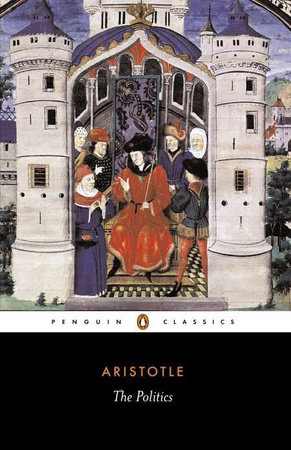
6. The Politics by Aristotle
Publisher: Penguin Classics | First published: c. 350 BCE | Edition shown: 1981 paperback · Translated by T. A. Sinclair; revised by Trevor J. Saunders · ISBN 9780140444216
Advanced
Aristotle replaces Plato’s ideal construction with a comparative inquiry into actual constitutions, yet he retains the claim that political association has an ethical purpose. The household, slavery, citizenship, distributive claims, constitutional change, democracy, oligarchy, and the best practicable regime are examined through distinctions that still organize political analysis. The difficulty is not only the compressed prose. Aristotle’s empirical observations sit beside hierarchical assumptions—most starkly his defense of natural slavery—that cannot be treated as incidental blemishes. Reading him well therefore requires simultaneous attention to method, argument, and exclusion. This edition offers an established translation with useful revision, but readers will benefit from having Plato and a modern introduction behind them. Aristotle differs from later social-contract thinkers because the political community is not created to escape a prepolitical condition; it develops from forms of association and aims at a complete life. That contrast makes him indispensable for understanding republican, civic, and communitarian traditions.
Best for: Readers ready for a demanding primary text on citizenship, constitutions, and political purposes.
Why read it: It joins normative argument to comparative institutional analysis more closely than any other ancient work.
Book 7 of 20 · GENERAL
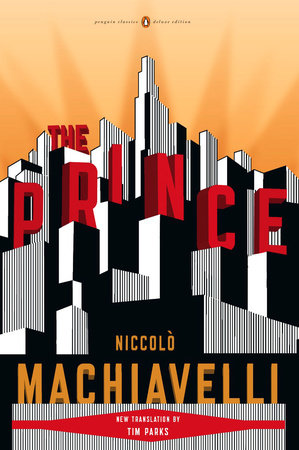
7. The Prince by Niccolò Machiavelli
Publisher: Penguin Classics Deluxe Edition | First published: 1532 | Edition shown: 2009 paperback · Translated and introduced by Tim Parks · ISBN 9780143105862
General
Machiavelli’s short treatise is the sharpest early correction to reading political philosophy as applied personal morality. Princes must acquire, preserve, and sometimes found political order amid fortune, conflict, deception, military danger, and unreliable allies. The famous counsel to learn “how not to be good” is not a simple celebration of cruelty; it marks the distance between intentions and political consequences. Tim Parks’s translation keeps the prose brisk and the provocations visible. Because the book is short, beginners often read it too quickly and mistake maxims for the whole argument. Attend to the recurring problems of arms, dependence, popular support, necessity, and founding. Pair it with Hobbes for rival accounts of insecurity, and with Arendt for a very different vocabulary of action and public life. It belongs early in the historical route, after the ancients, because it changes the question from the best regime to effective political judgment under unstable conditions.
Best for: Readers interested in power, leadership, statecraft, and the moral hazards of political necessity.
Why read it: It forces ideal theory to confront dependence, conflict, contingency, and consequences.
Book 8 of 20 · ADVANCED
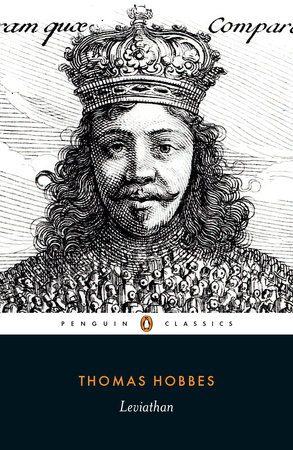
8. Leviathan by Thomas Hobbes
Publisher: Penguin Classics | First published: 1651 | Edition shown: 2017 paperback · Edited and introduced by Christopher Brooke · ISBN 9780141395098
Advanced
Hobbes constructs political authority from a deliberately austere picture of human vulnerability. Equal capacity to threaten, competition, distrust, and disagreement about value make security uncertain where no common power can settle disputes. The social covenant authorizes a sovereign whose unity is meant to replace the unstable judgments of a multitude. That familiar outline understates the book’s ambition: its account of sensation, language, reason, religion, representation, law, and personhood forms one system. Christopher Brooke’s edition helps readers see the theological and historical dimensions that abridged accounts often omit. Hobbes is the most demanding foundational text in the beginner route and should not be read first. Approach him after Wolff, then compare his authorization argument with Locke’s limited government and Rousseau’s general will. The reward is precision. Modern debates about political obligation, emergency power, state legitimacy, and the price of peace still become clearer when the Leviathan’s logic is reconstructed rather than caricatured.
Best for: Readers ready to study the strongest systematic case for undivided sovereign authority.
Why read it: It makes security, authorization, and representation central to the problem of legitimate rule.

Book 9 of 20 · ADVANCED
9. Two Treatises of Government by John Locke
Publisher: Cambridge University Press | First published: 1689 | Edition shown: 1988 paperback · Edited by Peter Laslett · ISBN 9780521357302
Advanced
Locke’s second treatise supplies the canonical vocabulary of natural equality, rights, consent, property, limited government, and justified resistance; the first dismantles patriarchal defenses of hereditary rule. Peter Laslett’s edition remains especially useful because its introduction reconstructs the polemical and chronological setting, discouraging the myth that Locke wrote an abstract blueprint for later liberal democracy. The text is harder than simplified summaries suggest. The labor theory of property depends on contested assumptions about appropriation, money, improvement, and colonial space, while tacit consent and majority rule leave difficult questions about actual political membership. Read Locke after Hobbes so that their shared state-of-nature framework does not conceal their different accounts of law, trust, and sovereignty. Then place him beside Mills and Pateman, who expose exclusions hidden within contract narratives. Locke belongs in a beginner’s map not because he offers final answers, but because so many modern arguments about rights and government still speak in terms he helped stabilize.
Best for: Readers studying liberal rights, property, consent, and the right of revolution in their classic form.
Why read it: It reveals both the power and the unresolved tensions of limited-government liberalism.

Book 10 of 20 · INTERMEDIATE
10. The Social Contract and Other Later Political Writings by Jean-Jacques Rousseau
Publisher: Cambridge University Press | First published: 1762 | Edition shown: Second edition, 2018 paperback · Edited and translated by Victor Gourevitch · ISBN 9781316605448
Intermediate
Rousseau asks how people can obey laws and remain free, then answers by distinguishing submission to another’s will from participation in a general will directed toward the common good. Sovereignty cannot be represented or alienated; citizens must be authors of the laws that bind them. Those claims inspire democratic and republican thought, but the text also raises enduring fears about enforced conformity, civil religion, and the authority to identify a genuine common interest. Gourevitch’s edition is valuable because related later writings surround the central treatise and reveal Rousseau’s concern with political economy, nationhood, and institutional conditions. Read him after Hobbes and Locke: the shared contractual language makes the disagreements about freedom, dependence, property, and popular rule unusually visible. Rousseau is shorter than Hobbes but conceptually slippery. A beginner should resist translating the general will into ordinary majority preference. Its purpose is normative, and much of the book concerns what would have to be true for collective self-government to avoid domination.
Best for: Readers exploring popular sovereignty, civic freedom, equality, and the problem of collective self-rule.
Why read it: It states the democratic ideal of obeying laws one gives oneself in its most demanding form.

Book 11 of 20 · GENERAL
11. On Liberty, Utilitarianism and Other Essays by John Stuart Mill
Publisher: Oxford World’s Classics | First published: 1859 | Edition shown: Second edition, 2015 paperback · Edited by Mark Philp and Frederick Rosen · ISBN 9780199670802
General
Mill’s case for liberty is memorable because it connects freedom of thought, individuality, experiments in living, and social progress. The harm principle limits coercion against competent adults, while the argument for free discussion insists that even false opinions may sharpen neglected truths. Yet the essay becomes more instructive when read beside “Utilitarianism” and the other pieces in this volume. Mill’s defense of liberty rests within a consequentialist moral framework, and the relation between utility, character, social authority, and individual development is more complex than the slogan “do no harm” suggests. This Oxford edition makes those connections easier to see. Mill is accessible enough to read early, preferably after Sandel or Wolff, but should be revisited after Marx and Pateman: informal social power, economic dependence, and gendered institutions test whether legal noninterference is sufficient. For beginners, he offers the best classic route into arguments about speech, paternalism, autonomy, and the limits of majority pressure.
Best for: Readers interested in free speech, individuality, paternalism, and the moral limits of coercion.
Why read it: It gives liberal freedom a developmental and social argument, not merely a legal formula.

Book 12 of 20 · GENERAL
12. The Communist Manifesto by Karl Marx and Friedrich Engels
Publisher: Penguin Classics | First published: 1848 | Edition shown: 2004 paperback · Translated by Samuel Moore; edited with an introduction by Gareth Stedman Jones · ISBN 9780140447576
General
The Manifesto is a political intervention, historical sketch, and compressed theory of capitalist transformation—not a complete statement of Marx’s philosophy. Its unforgettable account of the bourgeoisie’s revolutionary energy explains how markets dissolve inherited relations, reorganize production, and create a class whose emancipation would require abolishing class domination itself. The text also distinguishes communists from rival socialist tendencies and ends as a program for organized struggle. Gareth Stedman Jones’s introduction provides the context necessary to separate the document’s 1848 rhetoric from later Marxist orthodoxies. Read it after Mill to expose contrasting accounts of freedom and social power, then continue to more substantial works before treating any slogan as doctrine. Its accessibility is deceptive: terms such as class, property, ideology, and historical development carry arguments that the pamphlet cannot fully defend. It belongs on a beginner list because it changes the unit of analysis from individual choice to structured relations of production and conflict.
Best for: Readers seeking the shortest primary-text entry into Marxist political analysis and class conflict.
Why read it: It shows how economic structures can redefine freedom, law, and political agency.

Book 13 of 20 · INTERMEDIATE
13. The Human Condition by Hannah Arendt
Publisher: University of Chicago Press | First published: 1958 | Edition shown: Second edition, 2018 paperback · Introduction by Margaret Canovan; foreword by Danielle Allen · ISBN 9780226586601
Intermediate
Arendt expands political philosophy beyond the familiar questions of who gets what and what the state may coerce. Her distinctions among labor, work, and action identify different human activities, while the public realm becomes the space where plural persons disclose themselves through speech and deed. Modernity, in her account, elevates production and administration while weakening the durable common world in which political freedom can appear. The argument is historical, phenomenological, and often resistant to textbook classification. Readers should not approach it expecting a policy theory or a systematic definition of justice. Read Arendt after several social-contract texts: her emphasis on plurality, worldliness, natality, and action reveals how much those models reduce politics to security, consent, or distribution. Margaret Canovan’s introduction and Danielle Allen’s foreword help locate the book’s stakes without smoothing away its difficulties. It is the best bridge on this list from canonical political theory to questions about public life, bureaucracy, technology, and the meaning of political agency.
Best for: Readers who want politics understood as public action and plurality rather than only state power or distribution.
Why read it: It restores action, speech, and a shared world to the center of political reflection.

Book 14 of 20 · ADVANCED
14. Justice as Fairness: A Restatement by John Rawls
Publisher: The Belknap Press of Harvard University Press | First published: 2001 | Edition shown: 2001 paperback · Edited by Erin Kelly · ISBN 9780674005112
Advanced
Rawls’s restatement is the best deeper-study destination for beginners because it presents the mature architecture of justice as fairness more directly than the much longer A Theory of Justice. Free and equal citizens choose principles from an original position that blocks knowledge of their social advantages. The resulting framework protects equal basic liberties, secures fair equality of opportunity, and permits inequalities only when they benefit the least advantaged. Rawls also explains why this is a political conception for a democratic society marked by reasonable pluralism, not a comprehensive moral doctrine imposed on every life. The prose is exacting, and the argument assumes patience with distinctions; read Kymlicka first if contemporary theory is entirely new. Then place Rawls against Nozick, Sen, Mills, Pateman, and Walzer. Their disagreements concern more than the distribution of goods: they challenge his assumptions about entitlement, idealization, race, gender, social meaning, and the comparative diagnosis of actual injustice. This is where introductory reading becomes serious theoretical study.
Best for: Readers ready for a rigorous modern theory of democratic justice without beginning with Rawls’s largest book.
Why read it: It gives the clearest compact statement of the framework that reorganized late twentieth-century political philosophy.

Book 15 of 20 · ADVANCED
15. Anarchy, State, and Utopia by Robert Nozick
Publisher: Basic Books | First published: 1974 | Edition shown: 2013 trade paperback · Foreword by Thomas Nagel · ISBN 9780465051007
Advanced
Nozick is the most important direct libertarian challenge to Rawls. Beginning from strong individual rights, he argues that a minimal state may arise without violating anyone’s rights, but that a more extensive redistributive state cannot be justified by patterned ideals of distribution. His entitlement theory evaluates holdings through acquisition, transfer, and rectification rather than by asking whether the final pattern is equal or maximizes welfare. The famous Wilt Chamberlain example demonstrates how voluntary choices repeatedly disrupt preferred distributions. Nozick writes with speed, invention, and strategic incompleteness; many arguments are sketches designed to shift the burden of proof. Do not read him first. Without Rawls and Locke, his targets and assumptions are easy to miss, and without Mills or Pateman the social background of apparently voluntary transactions may appear too frictionless. The book remains valuable because it makes the conflict between historical entitlement and end-state justice impossible to evade.
Best for: Readers comparing libertarian rights with egalitarian theories of distribution and state action.
Why read it: It presents the strongest canonical case that redistributive patterns can violate individual entitlement.

Book 16 of 20 · INTERMEDIATE
16. Contemporary Political Philosophy: An Introduction by Will Kymlicka
Publisher: Oxford University Press | First published: 1990 | Edition shown: Second edition, 2001 paperback · ISBN 9780198782742
Intermediate
Kymlicka is the best bridge between introductory surveys and advanced contemporary argument. Rather than narrating thinkers chronologically, he reconstructs the internal logic of utilitarianism, liberal equality, libertarianism, Marxism, communitarianism, citizenship theory, multiculturalism, and feminism. The chapters are substantial enough to reveal why each position attracts serious defenders and where its characteristic objections arise. Kymlicka’s organizing perspective is broadly liberal-egalitarian, and readers should notice how that shapes the questions asked of rival traditions. Even so, the book is unusually fair in separating weak caricatures from stronger versions. Read it after Wolff and before Rawls if you want a guided transition; read it after Rawls and Nozick if you want synthesis. It is more demanding than the word “introduction” suggests, but its argument maps make difficult primary works less opaque. The principal limitation is age: later debates on race, decolonization, disability, climate, and nonideal theory require supplementation, partly supplied by Mills, Pateman, and Sen here.
Best for: Readers who want a structured map of late twentieth-century schools before advanced study.
Why read it: It compares theories at the level of their strongest arguments rather than their slogans.

Book 17 of 20 · INTERMEDIATE
17. The Idea of Justice by Amartya Sen
Publisher: The Belknap Press of Harvard University Press | First published: 2009 | Edition shown: 2011 paperback · ISBN 9780674060470
Intermediate
Sen redirects the theory of justice from designing perfectly just institutions toward comparing remediable injustices in the world we inhabit. Drawing on social choice theory, public reasoning, and the capability approach, he argues that institutional rules matter but cannot replace attention to what people are actually able to do and be. The contrast with Rawls is central: Sen questions whether agreement on one transcendental blueprint is necessary before societies can rank alternatives and reduce manifest wrongs. His examples and intellectual range extend beyond the standard Euro-American canon, including sustained engagement with Indian traditions of reasoning and public argument. The book is long but more accessible than Rawls at the sentence level; its cumulative structure still demands patience. Read it after Rawls so the critique has a clear target, then compare it with Walzer’s plural goods and Mills’s nonideal diagnosis. Sen offers the best route on this list from abstract distributive principles to comparative, global, and practically oriented judgments.
Best for: Readers interested in capabilities, global justice, public reasoning, and reducing actual injustice.
Why read it: It asks what justice can accomplish without waiting for agreement on a perfectly just society.

Book 18 of 20 · INTERMEDIATE
18. The Racial Contract by Charles W. Mills
Publisher: Cornell University Press | First published: 1997 | Edition shown: 25th anniversary edition, 2022 paperback · New preface by the author; foreword by Tommie Shelby · ISBN 9781501764288
Intermediate
Mills rewrites the social-contract tradition by arguing that modern political orders were also structured through a racial contract: an agreement, explicit and tacit, to classify some persons as fully human and others as subordinated subjects. The book moves between philosophy, history, law, colonialism, and epistemology, showing how racial domination shapes not only institutions but what dominant groups are trained not to know. Its style is direct and often darkly ironic, making it more approachable than many works it criticizes. Read Hobbes, Locke, Rousseau, and Rawls first—or at least beside it—because Mills’s intervention gains force from exposing what their abstract persons and idealized founding stories omit. The anniversary edition adds a retrospective preface and Tommie Shelby’s framing. This is not merely a request to add race as another topic. It changes the method of political philosophy by insisting that normative concepts be tested against the historical construction of the societies that invoke them.
Best for: Readers studying race, colonialism, white supremacy, and nonideal approaches to political theory.
Why read it: It demonstrates how exclusion can be constitutive of the contract tradition, not an accidental failure to apply it.

Book 19 of 20 · ADVANCED
19. The Sexual Contract by Carole Pateman
Publisher: Stanford University Press | First published: 1988 | Edition shown: 30th anniversary edition, 2018 paperback · New preface by the author · ISBN 9781503608276
Advanced
Pateman argues that the familiar story of free individuals leaving natural hierarchy through a social contract tells only half the political story. The civil order is also sustained by a sexual contract that establishes men’s access to women and organizes subordination across marriage, employment, citizenship, and the public–private division. Her method combines close reading of Hobbes, Locke, Rousseau, and later contract theory with a feminist diagnosis of institutions that present domination as voluntary agreement. The book is harder than Mills’s parallel intervention because its conceptual and psychoanalytic discussions are denser, but the comparison is exceptionally productive. Read the classic contract theorists first, then Pateman beside Mills: one traces patriarchal right, the other racial domination, and both challenge idealized accounts of equal contractors. The anniversary preface clarifies the argument’s later reception. Pateman belongs near the advanced end of the map because she does not simply add women to an existing canon; she contests the canon’s picture of freedom, consent, and political membership.
Best for: Readers examining feminist critiques of contract, consent, employment, marriage, and the public–private divide.
Why read it: It shows how formally voluntary agreements can reproduce political subordination.
Book 20 of 20 · ADVANCED
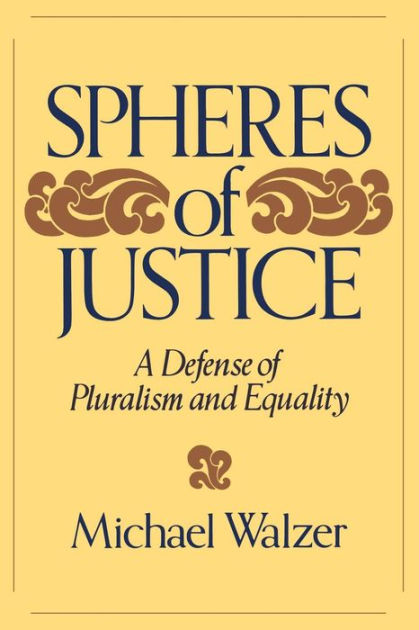
20. Spheres of Justice: A Defense of Pluralism and Equality by Michael Walzer
Publisher: Basic Books | First published: 1983 | Edition shown: 1984 trade paperback · ISBN 9780465081899
Advanced
Walzer rejects the search for one universal distributive metric. Different social goods—political power, money, education, health care, office, recognition, membership—carry different meanings and should be distributed by principles appropriate to their spheres. Injustice arises when dominance in one sphere, especially wealth, buys control in another. His ideal of complex equality therefore resists both strict leveling and the conversion of every good into a market commodity. The argument is interpretive and communitarian: principles emerge from shared social meanings, which raises difficult questions about internal dissent and unjust cultures. Read Walzer after Rawls and Sen. Rawls seeks fair principles for a basic structure; Sen emphasizes capabilities and comparative remedy; Walzer asks whether justice can be understood apart from the meanings communities attach to particular goods. This is not the easiest final book, but it is a fitting endpoint because it unsettles the assumption that justice is a single problem with one distributive solution.
Best for: Advanced readers comparing universal principles with pluralist and interpretive accounts of equality.
Why read it: It explains why domination across social spheres may matter more than equality according to one measure.
The Reading Map
Use this table to match a book to the question you are ready to ask. Difficulty refers to the reading experience, not the value of the argument.
Where to Start
If you are completely new, read Miller first and Wolff second. Miller tells you what the recurring questions are; Wolff slows down enough to reconstruct the arguments. Add Sandel when examples help you think, but remember that his cases foreground moral choice more than institutions, history, or domination.
If you want the classical foundation, move from Plato to Aristotle, then Machiavelli. This route begins with justice and the good regime, passes through citizenship and constitutional comparison, and ends with judgment under conflict and necessity. Ryan works best beside this sequence rather than before it.
If you want the modern social-contract route, read Hobbes, Locke, and Rousseau in that order. Then read Mills and Pateman before treating the contract as a neutral story about equal individuals. Their critiques reveal how race, gender, property, and inherited power change the meaning of consent.
If you want contemporary debates, use Kymlicka as the bridge, then Rawls, Nozick, Sen, and Walzer. This is the most efficient advanced pathway through equality, entitlement, capabilities, public reasoning, plural goods, and the limits of a single distributive principle.
If you want the most demanding route, read Hobbes, Aristotle, Rawls, Pateman, and Walzer with notes and secondary references. Among the best political philosophy books for beginners, these are not the easiest entries; they are the books that most reward rereading once the field’s vocabulary is secure.
What Most Reading Lists on Political Philosophy Miss
Many lists confuse importance with suitability. A book can be canonical and still be a poor first encounter. Hobbes and Rawls matter enormously, but placing either at the entrance without conceptual preparation teaches endurance more readily than understanding. The best political philosophy books for beginners should therefore be sequenced by function: orientation, primary foundation, comparison, critique, and advanced reconstruction.
A second error is reducing the field to distributive justice. The distributive-justice tradition is central, but political philosophy also concerns legitimacy, citizenship, collective action, public life, violence, membership, empire, and historical domination. Arendt appears here because political agency cannot be understood entirely as allocation. Machiavelli appears because power and contingency cannot be dissolved into ideal principles.
A third error is treating “liberalism” as one doctrine. The liberal tradition contains conflicts over liberty, property, neutrality, equality, and the purposes of political association. Rawls and Nozick are not two versions of the same answer. The Nozick debate asks whether patterned redistribution violates rights, while Sen and Walzer challenge the assumption that one ideal or metric exhausts justice.
Contract theory also needs to be read twice: first as a method of justification, then as a history of exclusions. The contractarian framework explains why agreement has such normative force. Mills and Pateman show why abstract agreement can conceal racial and patriarchal background structures. The broader literatures on feminist political philosophy and the philosophy of race and racialization are not optional supplements; they alter the objects and methods of the field.
Finally, popularity does not produce a complete map. Short viral manifestos, leadership manuals, and partisan polemics may be politically revealing, but they rarely teach how rival normative claims are justified. A durable reading list must preserve disagreement. These 20 books do not converge on one ideology; they train the reader to identify what an argument assumes, whom it includes, what institutions it imagines, and which forms of power it leaves unexamined.
Frequently Asked Questions
What are the best political philosophy books for beginners?
David Miller’s Political Philosophy: A Very Short Introduction is the best first orientation, Jonathan Wolff’s An Introduction to Political Philosophy is the strongest full beginner survey, and Michael Sandel’s Justice is the most accessible case-driven entry. Together they prepare readers for primary classics and contemporary theory.
Which single book should a complete beginner read first?
Start with Miller. It is brief enough to finish before the terminology becomes discouraging, but serious enough to distinguish authority, freedom, justice, feminism, nationality, and multiculturalism. Readers who already know they want a longer course can begin with Wolff instead.
Which classic political philosophy book should be read first?
Plato’s Republic is the best first ancient classic after an introduction. For the modern tradition, begin with Machiavelli if you want a short text, or Hobbes if you want the systematic origin of social-contract arguments. Hobbes is more rewarding but substantially harder.
What order should beginners use for the social-contract tradition?
Read Hobbes, Locke, and Rousseau in sequence, then Mills and Pateman. The first three establish competing accounts of security, rights, property, consent, sovereignty, and freedom. The latter two reveal how racial and patriarchal domination complicate the image of equal contractors.
Is Rawls’s A Theory of Justice necessary for a beginner?
Not initially. Justice as Fairness: A Restatement presents Rawls’s mature position more compactly and is a better first advanced text. Readers undertaking specialist study should later return to A Theory of Justice, where the arguments and revisions are developed at greater length.
Which book is best for understanding contemporary political philosophy?
Kymlicka’s Contemporary Political Philosophy provides the best map of major late twentieth-century schools. Read Rawls and Nozick for the central egalitarian–libertarian dispute, then Sen, Mills, Pateman, and Walzer for capabilities, nonideal critique, feminist contract theory, and pluralist equality.
How many books are needed for a serious introduction?
Five well-chosen books can establish a strong foundation: Miller or Wolff, Plato, Hobbes or Rousseau, Rawls, and either Mills or Pateman. Ten books allow meaningful historical and contemporary comparison. The full 20-book map is most useful for readers building a sustained independent course.
The Last Page Before the First Book
Political philosophy becomes intelligible when its books are allowed to disagree at full strength. Miller and Wolff teach the grammar of those disagreements. Plato, Aristotle, Machiavelli, Hobbes, Locke, Rousseau, Mill, and Marx show how the grammar developed around changing problems of rule, citizenship, property, freedom, and conflict.
The contemporary route begins when Rawls gives justice a new architecture and Nozick challenges its reach. Sen, Mills, Pateman, Walzer, Arendt, and Kymlicka then widen the field—toward capabilities, racial and gendered domination, plural social meanings, public action, and competing schools. The advanced reader should not seek one final winner; the point is to become precise about the costs of each answer.
For most readers, the best political philosophy books for beginners begin with Miller, deepen through Wolff, and become genuinely transformative only when a classic is placed beside a critique. Choose one route, keep the table nearby, and let the first difficult disagreement determine the next book.
Editorial research and authorship: This reading guide was researched and written by the BookInLight Department of Political Thought and Intellectual History, with bibliographical review, edition verification, source checking, link verification, and editorial fact-checking by the BookInLight research team. Readers who identify a factual correction, an overlooked book or source, or a valuable interpretive possibility are warmly invited to share their comments and suggestions.
Art direction and rights: The editorial art direction, visual composition, cover selection, and presentation of images were developed by the BookInLight Art Department. Individual book covers remain the property of their respective publishers, designers, artists, and rights holders and are credited below. Complete republication, reproduction, translation, or reuse of this article, whether in print or digital form, is permitted only with prior written authorization from BookInLight.
Sources and Further Reading
Reference Works
Editions and Publisher Records
Image Credits
1. Political Philosophy: A Very Short Introduction. 2003 paperback, Oxford University Press. Cover image source: Amazon media, exact ISBN image verified against Oxford University Press; authoritative edition page.
2. An Introduction to Political Philosophy. Fourth edition, 2023 paperback, Oxford University Press. Cover image source: Amazon media, exact ISBN image verified against Oxford University Press; authoritative edition page.
3. Justice: What’s the Right Thing to Do?. 2010 paperback, Farrar, Straus and Giroux. Cover image source: Amazon media, exact ISBN image verified against Macmillan; authoritative edition page.
4. On Politics: A History of Political Thought: From Herodotus to the Present. 2020 paperback, Liveright Publishing. Cover image source: Amazon media, exact ISBN image verified against W. W. Norton / Liveright; authoritative edition page.
5. The Republic. 2007 paperback, Penguin Classics. Cover image source: Amazon media, exact ISBN image verified against Penguin Classics; authoritative edition page.
6. The Politics. 1981 paperback, Penguin Classics. Cover image source: Penguin Random House official cover server; authoritative edition page.
7. The Prince. 2009 paperback, Penguin Classics Deluxe Edition. Cover image source: Penguin Random House official cover server; authoritative edition page.
8. Leviathan. 2017 paperback, Penguin Classics. Cover image source: Penguin Random House official cover server; authoritative edition page.
9. Two Treatises of Government. 1988 paperback, Cambridge University Press. Cover image source: Amazon media, exact ISBN image verified against Cambridge University Press; authoritative edition page.
10. The Social Contract and Other Later Political Writings. Second edition, 2018 paperback, Cambridge University Press. Cover image source: Amazon media, exact ISBN image verified against Cambridge University Press; authoritative edition page.
11. On Liberty, Utilitarianism and Other Essays. Second edition, 2015 paperback, Oxford World’s Classics. Cover image source: Amazon media, exact ISBN image verified against Oxford University Press; authoritative edition page.
12. The Communist Manifesto. 2004 paperback, Penguin Classics. Cover image source: Amazon media, exact ISBN image verified against Penguin Classics; authoritative edition page.
13. The Human Condition. Second edition, 2018 paperback, University of Chicago Press. Cover image source: Amazon media high-resolution image, exact ISBN verified against University of Chicago Press; authoritative edition page.
14. Justice as Fairness: A Restatement. 2001 paperback, The Belknap Press of Harvard University Press. Cover image source: Amazon media, exact ISBN image verified against Harvard University Press; authoritative edition page.
15. Anarchy, State, and Utopia. 2013 trade paperback, Basic Books. Cover image source: Hachette Book Group / Basic Books official image server; authoritative edition page.
16. Contemporary Political Philosophy: An Introduction. Second edition, 2001 paperback, Oxford University Press. Cover image source: Amazon media, exact ISBN image verified against Oxford University Press; authoritative edition page.
17. The Idea of Justice. 2011 paperback, The Belknap Press of Harvard University Press. Cover image source: Amazon media, exact ISBN image verified against Harvard University Press; authoritative edition page.
18. The Racial Contract. 25th anniversary edition, 2022 paperback, Cornell University Press. Cover image source: Amazon media, exact ISBN image verified against Cornell University Press; authoritative edition page.
19. The Sexual Contract. 30th anniversary edition, 2018 paperback, Stanford University Press. Cover image source: iMusic CDN exact-ISBN image, edition verified against Stanford University Press; authoritative edition page.
20. Spheres of Justice: A Defense of Pluralism and Equality. 1984 trade paperback, Basic Books. Cover image source: Hachette Book Group / Basic Books official image server; authoritative edition page.