Hume’s “Of the Standard of Taste” survives in identifiable editions; choose a dependable text before arguing about the critic’s authority.
The familiar claim that David Hume simply makes taste subjective does not survive contact with the essay itself. In “Of the Standard of Taste”, Hume begins from variation in sentiment but spends most of the essay asking why some judgments nevertheless deserve more authority than others. That is why the first editorial decision matters: you need the complete essay, not a quotation about beauty existing “merely in the mind.”
The cleanest free text
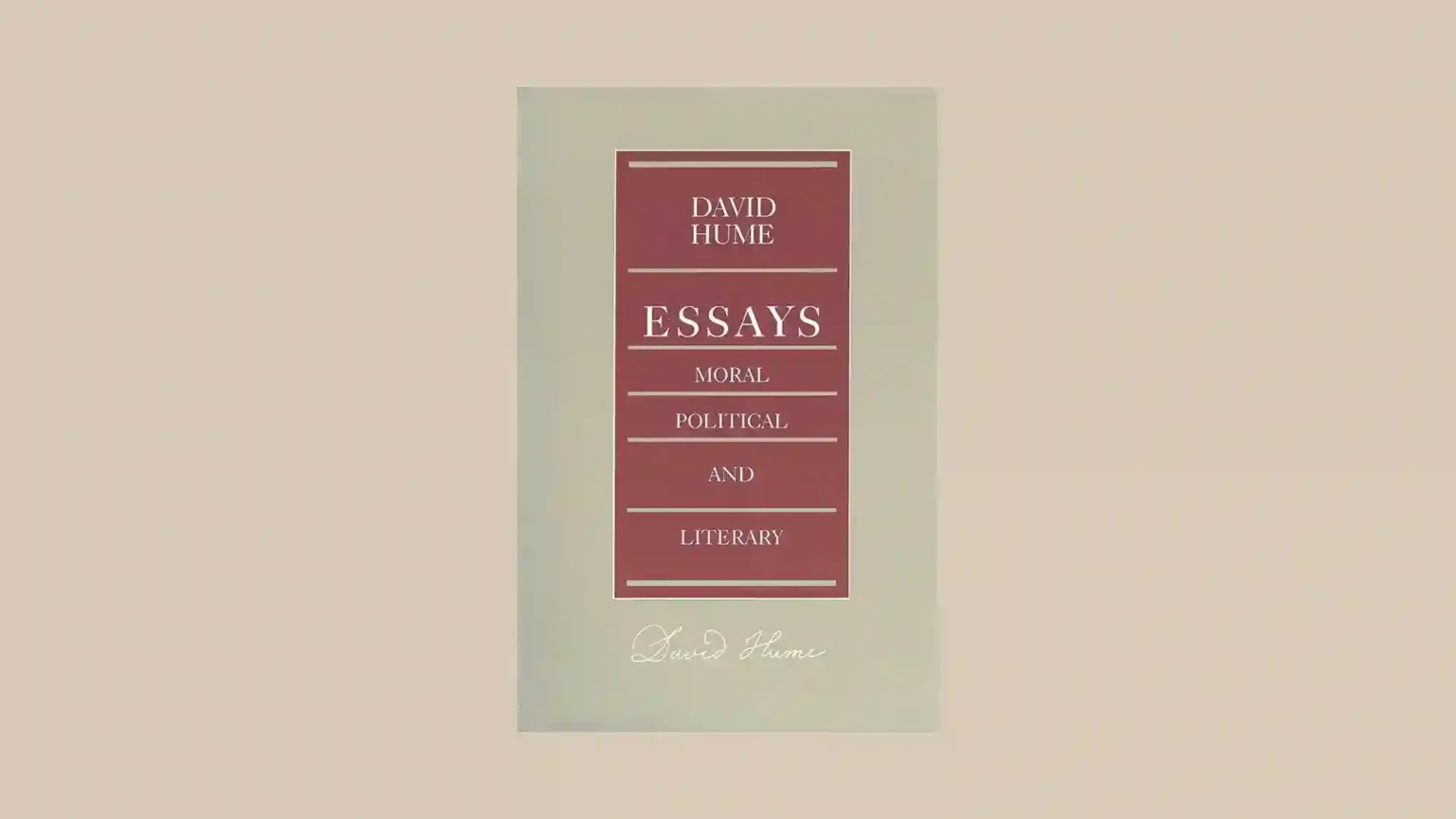
For a first reading, the best online text is Hume Texts Online. It gives the essay inside the first volume of Hume’s Essays, Moral, Political, and Literary and is designed as a scholarly text rather than a quotation repository. Its editorial notes explain the project’s textual practices and source history; the site’s notes and documentation are worth checking if exact wording matters.
That wording matters because “Of the Standard of Taste” was first published in 1757 and then revised by Hume. The essay entered the evolving corpus of his essays, and the commonly read text reflects the late authorial state rather than a frozen first impression. For ordinary reading, you do not need to collate every variant. For quotation, scholarship, or close interpretation, you should at least know which textual state you are using.
The best complete collection
If you want the essay in a full collection rather than as a web page, the Liberty Fund edition of Essays, Moral, Political, and Literary is the practical choice. Its online version is searchable, substantial, and keeps “Standard of Taste” among the political, moral, literary, and economic essays that make Hume a much less compartmentalized thinker than modern course syllabi suggest. The collection is more useful than buying a tiny anthology if you expect to follow Hume into commerce, history, politics, or religion.
What to watch while reading
Do not ask only whether beauty is “objective.” Ask what qualifies a judge. Hume’s answer turns on practice, comparison, delicacy, good sense, and freedom from prejudice. The Stanford Encyclopedia account of Hume’s aesthetics is useful because it places these criteria inside Hume’s larger theory of sentiment rather than treating them as an embarrassed retreat from subjectivism. The broader entry on eighteenth-century British aesthetics shows how the problem of taste belonged to a wider attempt to explain criticism, sensibility, and standards without reducing beauty to a demonstrable property.
The hard point is not that competent critics always agree. Hume leaves room for durable differences produced by age, temperament, culture, and genre. The standard therefore cannot be a mechanical rule that generates a verdict from features. Jerrold Levinson’s discussion of the “real problem” in Hume’s standard of taste is useful precisely because it keeps pressure on this gap between identifying good judges and explaining the authority of their verdicts.
Read the essay once quickly, then a second time with two columns in your notes: conditions of good judgment on one side, legitimate sources of continuing disagreement on the other. That division prevents the essay from collapsing into either “anything goes” or “experts are always right.” The question left at the end is sharper: if the standard depends on idealized critics, how do we identify them without already relying on the judgments we hoped they would validate?
The publication history explains another common confusion. “Of the Standard of Taste” was prepared for the 1757 collection Four Dissertations after Hume withdrew two more controversial pieces from the project. Its place among dissertations on the passions, tragedy, and natural religion makes the essay less like an isolated magazine piece and more like part of Hume’s sustained investigation of sentiment, criticism, and belief. A modern reader who encounters only a famous paragraph about diversity of taste misses this architecture. The Oxford discussion of Hume, Kant, and standards of taste is useful when you want to see how the essay became a reference point for later aesthetics without pretending that Kant simply solves Hume’s problem.
There is also a practical edition rule. If you are quoting Hume in an article or paper, record the edition and section or page rather than treating every online transcription as interchangeable. If you are reading for understanding, the Hume Texts Online version is cleaner than chasing page images. If you want the essay beside the rest of Hume’s mature essays, the Liberty Fund collection gives you that wider corpus. The “best” edition therefore depends on the task: textual inspection, complete collection, or portable first reading.
Finally, test Hume’s five qualifications of the critic against an actual disagreement. Imagine two practiced readers who know a genre well, compare widely, attend carefully, reason soundly, and try to bracket prejudice—yet still disagree. Hume has resources for explaining some such cases through temperament and context. The residue is not a defect to be edited away; it is where the essay becomes philosophically interesting. A standard of taste may discipline judgment without converting criticism into demonstration.
That final problem is why the essay rewards rereading. Hume is not offering a consumer guide to approved masterpieces; he is asking what makes criticism corrigible when its evidence includes feeling. The result is a theory of cultivated judgment whose authority remains philosophical rather than bureaucratic.
Cover artwork: credits and source records
- Essays, Moral, Political, and Literary — Liberty Fund (source record)