A serious The Prince interpretation must begin by refusing the most seductive mistake about Machiavelli’s book: treating “the prince” as the name of a wicked personality. The title names an office under pressure. It asks what happens when inherited rules, moral reputations, military loyalties, and public expectations no longer fit together, yet someone must still make decisions whose consequences will be judged as order or ruin.
Central claim: Machiavelli studies power as a public performance tested by effects, not as a private appetite liberated from morality.
Historical pressure: The work belongs to a fractured Italy of invasions, regime changes, mercenary armies, and unstable civic loyalties.
Reading method: Follow the traffic among necessity, reputation, fortune, arms, and popular judgment rather than isolating a handful of scandalous maxims.

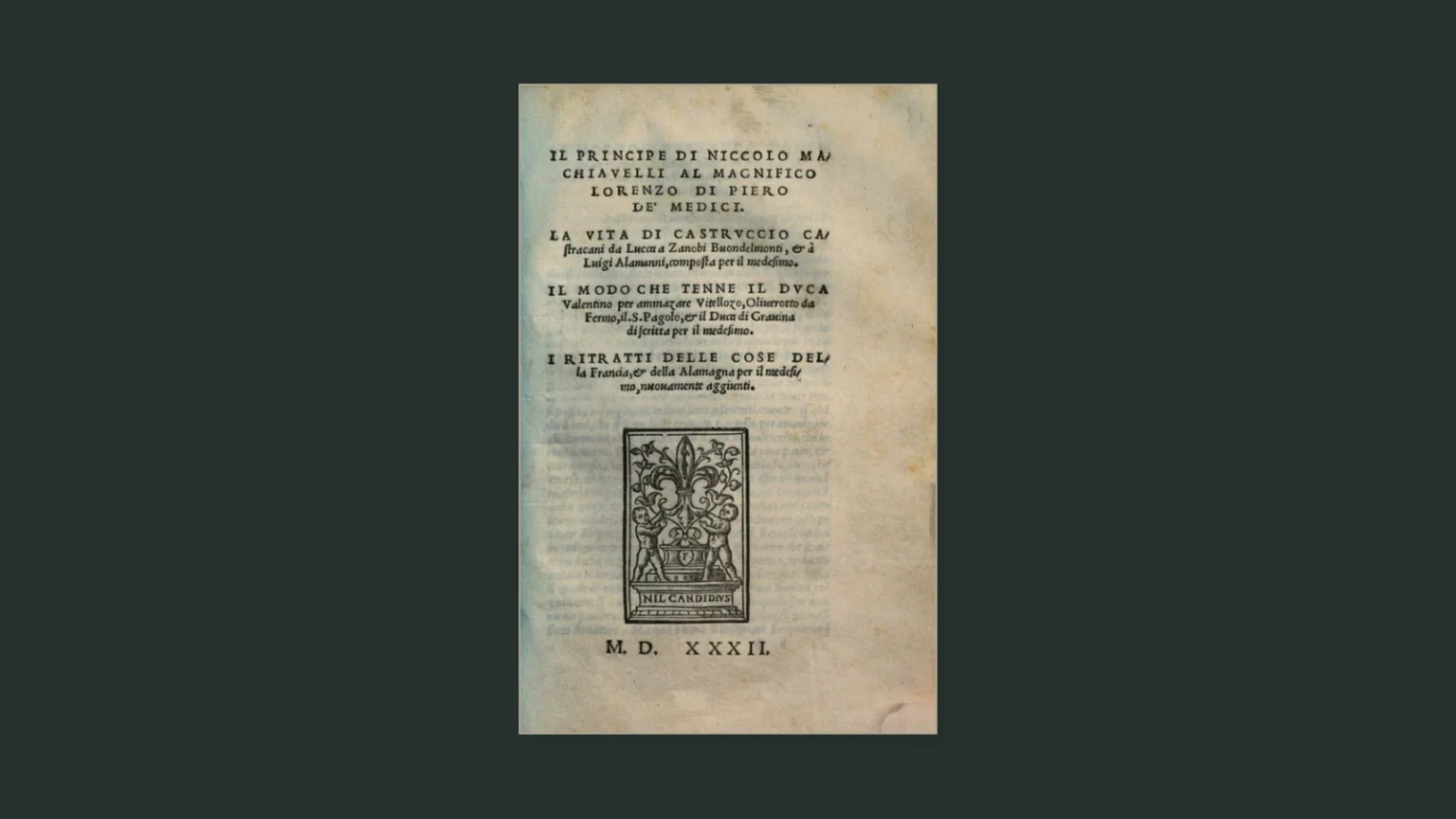
The 1532 Florentine title page. For reading, the Tim Parks translation in the Penguin Classics Deluxe edition (2009, ISBN 9780143105862) offers lucid modern English while preserving Machiavelli’s tonal abruptness.
The Prince Interpretation Begins with an Office, Not a Villain
For five centuries, Machiavelli’s title has behaved like a trap. It tempts the reader to imagine a singular man—cold, calculating, perhaps magnificently unscrupulous—whose interior psychology explains political domination. English has even turned the author’s name into an adjective for manipulative conduct. Yet Il Principe does not offer a portrait of one temperament. Its “prince” is a variable position occupied by founders, heirs, conquerors, civic leaders, military commanders, and men who have risen through fortune, crime, favor, or popular support. The title therefore performs an abstraction. It strips away the dignity of traditional dynastic language and asks what remains when rule is examined as a problem of acquisition, maintenance, and loss.
That abstraction is what makes the work more disturbing than a handbook for tyrants. A tyrant can be condemned as an exception. An office under pressure cannot be dismissed so easily, because the same pressures recur wherever decisions must be made before moral certainty, legal regularity, and political security can be brought into alignment. Machiavelli’s question is not whether rulers should prefer goodness to wickedness in the abstract. It is what a political actor can responsibly infer when every available course distributes harm differently, when appearances affect obedience, and when delay may itself become a choice with catastrophic effects. The Stanford Encyclopedia of Philosophy’s account of Machiavelli rightly emphasizes how deeply his argument turns on the relation between political authority and the capacity to command effectively.
The famous appeal to the verità effettuale della cosa—the effectual truth of the matter—belongs here. “Effectual” does not simply mean empirical, as though Machiavelli were replacing moral fantasy with a spreadsheet of political facts. It means truth disclosed in operation: what a policy, reputation, military arrangement, or institutional choice actually does within a field of competing perceptions. The ruler cannot retreat into pure intention. His action enters a public world, and that world judges by consequences it can see, stories it can believe, burdens it must bear, and dangers it expects someone to master.
The book’s central problem is not how evil defeats goodness. It is how political action becomes legible as necessity. Machiavelli’s prince survives only when coercion, prudence, military capacity, and public appearance can be made to converge. The unresolved danger is that necessity can be real, misread, or manufactured—and the book never supplies an external tribunal capable of distinguishing them with perfect confidence.
This interpretation does not domesticate Machiavelli. On the contrary, it clarifies his offense. He forces political judgment to occur inside time, where incomplete knowledge and irreversible acts matter. Moral vocabulary remains present—cruelty, faith, mercy, goodness, blame, glory—but no longer controls outcomes merely by being invoked. A ruler may possess a conventionally admirable character and destroy his state; another may commit a limited wrong and prevent a wider collapse. The scandal lies in the possibility that political responsibility and personal innocence can diverge.
Florence After the Republic: A Book Written from Political Rupture
The indispensable context is not “the Renaissance” in general, with its familiar gallery of artists, humanists, and ambitious patrons. It is regime failure. Machiavelli had served the Florentine Republic from 1498 until the Medici return in 1512, carrying out diplomatic missions, observing courts and armies, and helping organize a citizen militia. When the republic fell, he lost office, was later imprisoned and tortured after being implicated in a conspiracy, and withdrew to his farm at Sant’Andrea in Percussina. The political world that had given his intelligence a function suddenly treated him as disposable.
In his celebrated letter to Francesco Vettori of 10 December 1513, Machiavelli describes changing out of muddy daytime clothes, entering his study in courtly dress, and conversing with ancient authors. He also reports composing “a little work” on principalities. The theatricality of the letter matters. Excluded from public office, he reconstructs a court in the study. Political thought becomes a way of rehearsing judgment after the stage on which judgment had once mattered has been taken away.
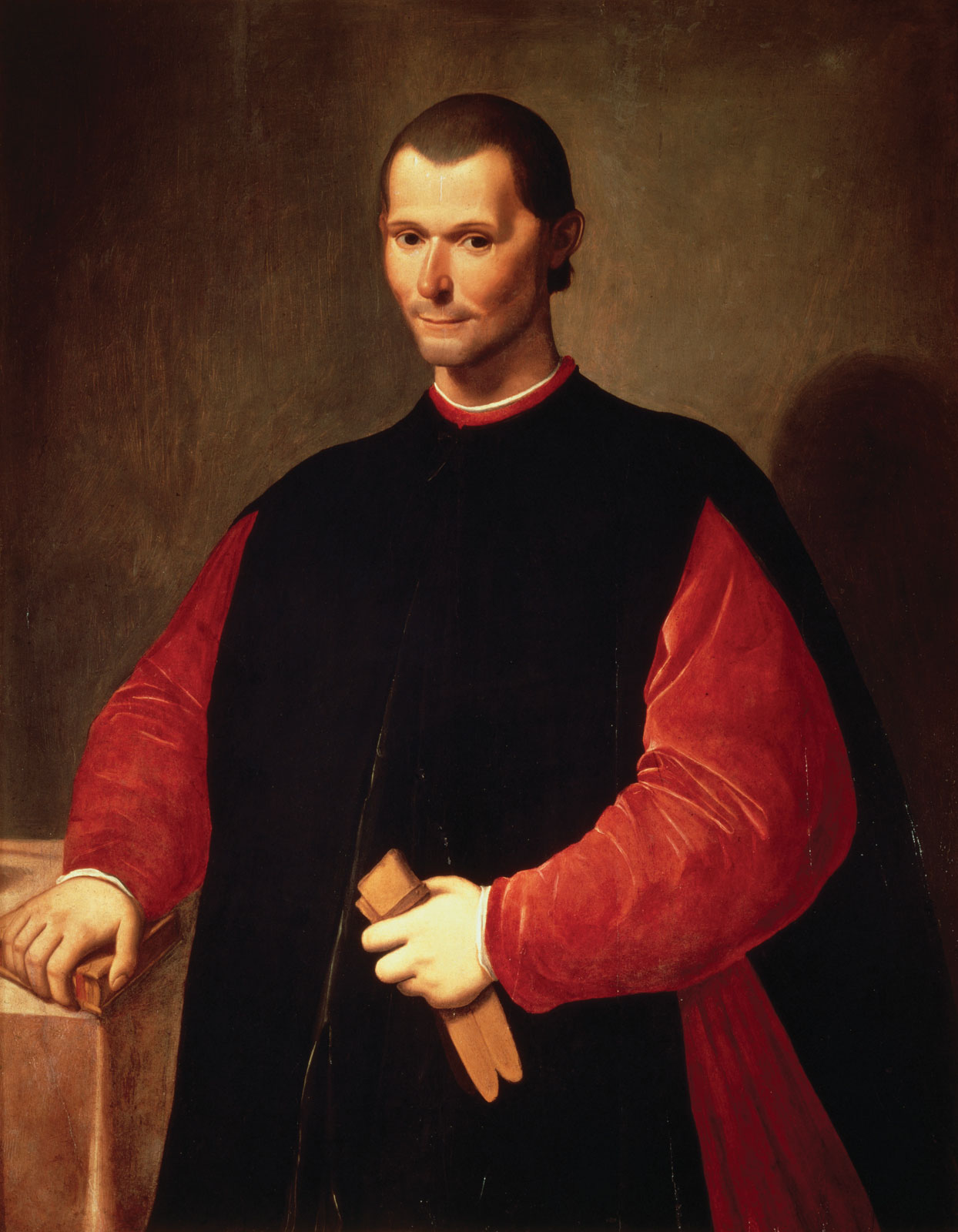
Santi di Tito’s posthumous image fixes the face of the dismissed secretary; the book itself is less a confession than an analysis of the office from which he had been expelled.
Italy’s repeated invasions after 1494 supplied the larger pressure. French, Spanish, papal, imperial, Venetian, and local forces moved through a peninsula divided among vulnerable states. Alliances shifted; mercenary captains changed employers; republics and dynasties rose and fell. Under such conditions, the difference between legal title and practical control could become brutally visible. A state might possess treaties, noble lineage, and ceremonial legitimacy yet lack troops willing to defend it. Another might acquire territory quickly but fail to convert fear into durable obedience.

Florence appears compact and ordered in this later view. Machiavelli wrote from knowledge of how quickly civic form could be overturned by forces arriving from outside and factions working within.
The printed book came later. Machiavelli died in 1527; Il Principe appeared posthumously in 1532, in Rome and Florence, with a dedicatory address to Lorenzo de’ Medici. The work was composed in Italian, while the working Latin title reported to Vettori, De principatibus—“On Principalities”—is conceptually revealing. The later singular title concentrates the subject, but the chapters continue to classify different kinds of acquisition and rule. What looks like a portrait is built as a taxonomy. The prince is never free-standing; he is the point at which territory, institutions, armies, elites, popular expectations, and chance meet. The Prince interpretation developed here therefore treats the title as a junction of forces rather than a character label.
Its publication also changed the vocabulary of political accusation. “Machiavellian” became a portable name for cunning rule, and Machiavelli’s works entered the Roman Index of prohibited books in 1559. Yet later readers often project backward a fully formed secular state, modern bureaucracy, or a doctrine of raison d’état that the text itself does not possess. The book’s innovation is narrower and more radical: it makes the preservation of political order an autonomous problem of judgment without proving that political success is the highest human good.
The Grammar of Effective Truth
Machiavelli writes in the recognizable tradition of advice to rulers, yet he turns the “mirror for princes” inside out. Conventional mirrors presented virtues a ruler ought to embody. His mirror is closer to a stress test. It asks which habits endure when circumstances change and which moral identities become politically self-destructive. A generous ruler, for example, may finance the reputation of generosity through taxation, thereby producing hatred. A merciful ruler may refuse a severe intervention until disorder multiplies victims. The moral label and the public effect can move in opposite directions.
This is why the book’s short chapters proceed through compressed cases rather than a deductive system. Rome, Syracuse, France, Spain, Florence, ancient founders, contemporary popes, mercenary captains, and Cesare Borgia become trials of judgment. Machiavelli often suppresses details that a modern historian would restore, because his purpose is not neutral chronicle. He selects the feature that exposes a political mechanism: dependence on another’s arms, delay in confronting an emerging threat, inability to secure the people, or confusion between inherited prestige and present capacity.
The method carries a risk. Once history becomes a storehouse of examples, analogy can harden into overconfidence. Machiavelli knows this, which is why fortune and changing times repeatedly interrupt imitation. The prudent actor must imitate, but never mechanically. He chooses exemplary figures as an archer aims above a distant target: the model gives direction, not a reproducible script. The book’s form trains the reader to compare unequal cases and then to notice the inequality.
The effectual truth is therefore inseparable from rhetoric. Political facts do not announce their meaning unaided. They are interpreted by frightened subjects, ambitious elites, foreign powers, soldiers, and the ruler himself. Machiavelli’s prose repeatedly switches the imagined observer. What appears cruelty from one vantage may appear the end of civil violence from another; what looks like clemency today may become culpable weakness tomorrow. Public judgment is neither infallible nor irrelevant. It is part of the causal field. The Prince interpretation becomes clearer once rhetoric is understood as one of the conditions under which political facts acquire force.
Virtù Gives Contingency a Shape
No concept has suffered more from tidy translation than virtù. Rendering it simply as “virtue” imports a moral harmony the book deliberately unsettles; rendering it as “prowess” captures force but loses intelligence, timing, adaptability, and civic capacity. Machiavellian virtù is the power to form a situation without pretending to control it completely. It includes boldness, foresight, discipline, rhetorical command, and the ability to change conduct when the times demand it.
Its counterpart, fortuna, is not mere luck. Fortune names the excess of events over calculation: accidents, inherited conditions, other people’s decisions, environmental shocks, and the instability built into political life. Machiavelli’s flood image is exact. A river may overwhelm defenses, but prudent communities build embankments before the waters rise. Fortune is most destructive where previous action has failed to prepare a channel for it. The metaphor denies both fatalism and mastery.

Dürer’s winged Fortune balances over a globe. Machiavelli’s fortune is likewise unstable, but his political actor is judged by the structures built before instability becomes crisis.
Necessity, meanwhile, is the hinge between circumstance and action. The word can indicate a genuine constraint: military defeat, imminent rebellion, a hostile elite, a fiscal limit. But it can also become a ruler’s alibi. Because necessity is rarely self-interpreting, the actor who invokes it must stage a persuasive relation between danger and response. This is the “theater” in the book: not the claim that politics is fake, but the recognition that force must be presented as proportionate, timing as prudence, and innovation as restoration if it is to acquire legitimacy.
The tension cannot be resolved by telling the prince to be flexible. Character itself limits adaptation. A cautious man succeeds when times reward caution and fails when they require speed; an impetuous man meets the inverse fate. One of the book’s bleakest insights is that people often cannot revise the style through which they first became successful. Virtù therefore includes a nearly impossible demand: to alter one’s political self before failure makes alteration unavoidable.
Appearance Is Not the Opposite of Reality
The most quoted passages on appearance are often read as an elementary lesson in hypocrisy: seem merciful, faithful, humane, upright, and religious while remaining ready to act otherwise. That reading is not false, but it is shallow. Machiavelli’s more difficult point is that political qualities exist partly through recognition. A ruler who is privately compassionate but publicly associated with disorder does not possess politically effective mercy. A ruler known for keeping promises may gain credit that changes what allies and enemies are willing to risk. Reputation is not a veil laid over a complete reality; it helps compose the reality in which action becomes possible.
This helps explain the fox and the lion. The animals do not represent two detachable tricks, deception and violence. They are modes of reading a field. The lion detects threats as contests of force; the fox detects traps constructed through signs, commitments, and expectations. Political failure comes from treating every problem as the same kind of problem. Brute force cannot dissolve a coalition maintained by belief, and cleverness cannot stop an army already at the gate.
Fear and love belong to the same analysis. Machiavelli’s preference for fear when one cannot have both is usually detached from his qualifying condition: fear must not become hatred. Fear can be stabilized through predictable enforcement; hatred grows when power invades property, honor, family, or the ordinary expectation of not being arbitrarily preyed upon. The prince’s problem is not to maximize terror. It is to establish an asymmetry of power without producing a coalition of enemies with nothing left to lose.
The distinction between appearance and reality thus becomes triangular. There is what the ruler intends, what he does, and what different publics understand the action to mean. None is dispensable. The Prince is modern not because it discovers public relations, but because it recognizes that political action is mediated through judgment before institutions can certify its meaning.
Cruelty, Arms, and the Cost of Borrowed Power
The chapter on cruelty “well used” is the hardest test of any humane reinterpretation. Machiavelli does not merely observe that rulers commit violence. He distinguishes concentrated violence that secures a new order from repeated violence that continually renews insecurity. The distinction is morally dangerous because perpetrators almost always claim that their brutality is limited, preventive, and necessary. Yet it is analytically serious because political violence has temporal patterns. A regime that must keep injuring subjects reveals that its founding coercion did not create obedience, institutions, or trust.
Cesare Borgia serves as Machiavelli’s most vivid contemporary experiment. He used Remirro de Orco to pacify the Romagna, then had him executed and displayed publicly, shifting responsibility for cruelty onto the instrument through which it had been carried out. The episode is horrifying precisely because it shows political theater working: the prince attempts to convert fear into gratitude by separating the restored order from the violence that produced it. Machiavelli admires Borgia’s strategic intelligence but records the fragility of his achievement. Dependent at crucial points on papal fortune and unable to control every succession contingency, Borgia demonstrates both virtù and its limits.
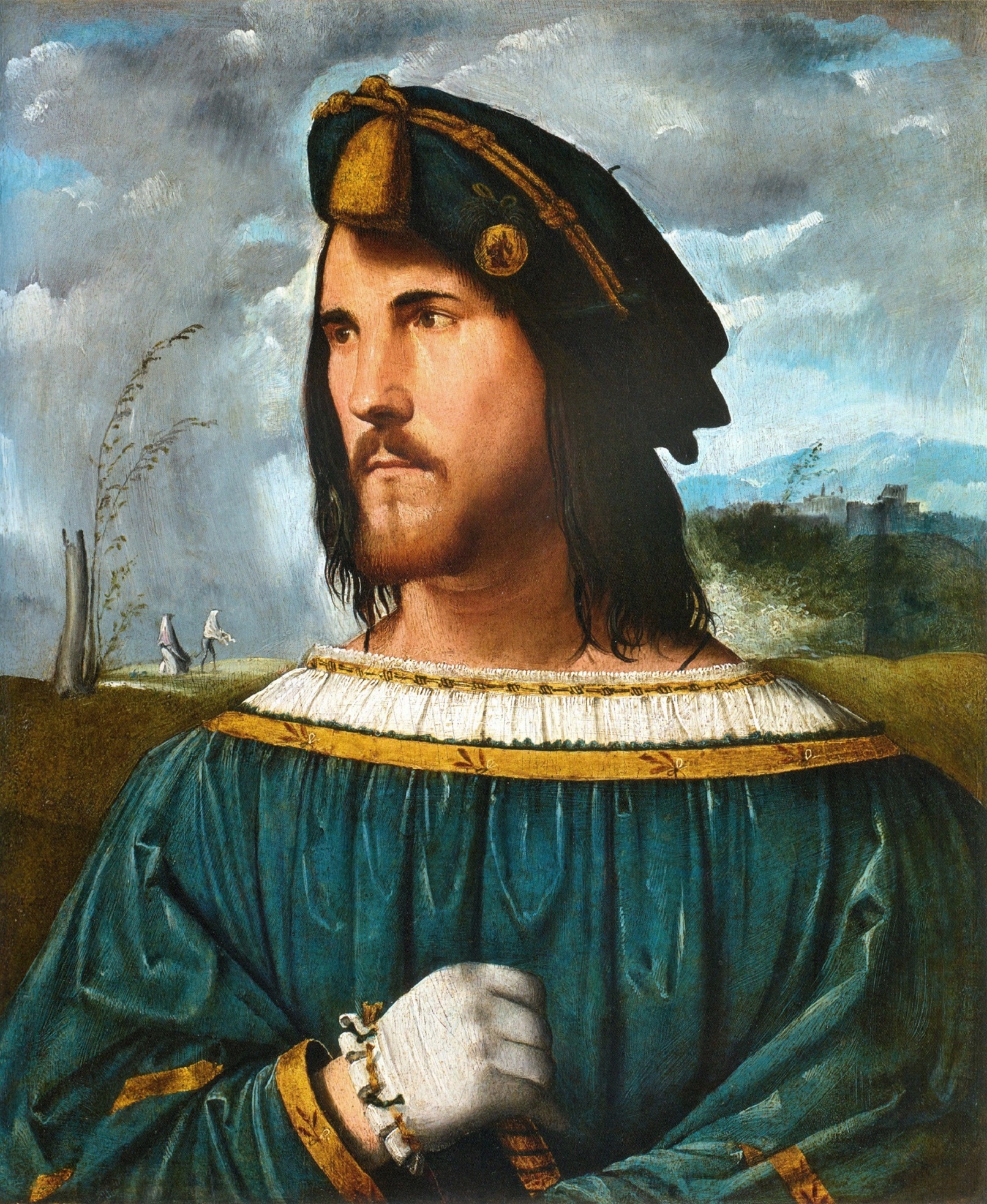
Altobello Melone’s sitter was long identified as Cesare Borgia, though that identification is no longer secure. The uncertainty is apt for a figure whose political afterlife has repeatedly hardened image into identity.
The analysis of arms extends the same logic. Mercenaries and auxiliaries are not merely inefficient military technologies. They are forms of borrowed agency. A ruler who depends on forces whose loyalty, command, or strategic purpose belongs to someone else cannot reliably translate victory into political order. “One’s own arms” means more than a national army in the modern sense. It means a structure of force whose incentives are tied to the polity it defends. Machiavelli’s republican militia project and his princely advice meet at this point: political freedom depends on not outsourcing the capacity by which collective decisions are secured.
The book’s harshest counsel therefore rests on a larger suspicion of dependency. Fortune, foreign troops, aristocratic patrons, inherited prestige, and borrowed reputations may all elevate a ruler rapidly. None can substitute for the slow work of giving power an internal base. Acquisition is dramatic; maintenance is institutional.
The People Are Not Scenery
The conventional image of Machiavelli as counselor to autocrats often makes “the people” disappear. Yet chapter 9 gives them a structural role. The great desire to command and oppress; the people desire not to be commanded and oppressed. These desires are not morally symmetrical. The appetite of elites is expansive, while the popular appetite is presented as a refusal. A prince who rises with elite support inherits patrons who regard reward as their due. One who rises with popular support faces a broader but often more modest expectation: protection from domination.
This does not make The Prince a democratic manifesto. The people do not govern in its institutional frame, and Machiavelli can treat them collectively in ways that erase internal differences. Still, popular judgment supplies a constraint that cannot be reduced to propaganda. Hatred makes conspiracies easier, defeats harder to survive, and elite defection more dangerous. The strongest fortress, Machiavelli suggests, is not to be hated by one’s people. Architecture cannot compensate for a political relation in which the population sees foreign invasion or internal revolt as preferable to existing rule.
This is where The Prince touches the republican concerns developed more fully in the Discourses. John McCormick’s democratic reading of Machiavelli forcefully restores the conflict between elites and ordinary citizens to the center of the corpus. Its greatest contribution is to show that social conflict is not simply a pathology to be suppressed. Its limitation, when carried back into The Prince, is that the princely text does not provide the institutional mechanisms by which popular suspicion can become durable accountability.
The people are therefore an audience with causal power but insufficient constitutional form. They judge outcomes, distribute reputation, resist injury, and determine whether coercion produces obedience or hatred. Their presence complicates any reading of appearance as a one-way manipulation conducted by a sovereign mind. The audience can misread the spectacle, but it can also refuse it.
The Strong Readings—and Where They Overreach
The scholarly afterlife of The Prince is unusually polarized because the text licenses incompatible emphases. One tradition, associated with Leo Strauss and developed with formidable precision by Harvey Mansfield, sees Machiavelli as a conscious founder of modernity who lowers the ends of politics and teaches the conquest of fortune. Mansfield’s study of Machiavelli’s virtue is brilliant on the book’s audacity, its revaluation of inherited moral language, and the way its apparent modesty conceals a transformative ambition. It overreaches when every ambiguity becomes evidence of a perfectly controlled esoteric design. Machiavelli is strategic, but the fractures in his work are not all masks.
A contextual tradition associated with Quentin Skinner and J. G. A. Pocock places Machiavelli within Renaissance humanism and republican debates about liberty, corruption, civic arms, and the instability of republics. Skinner’s concise intellectual history remains one of the surest introductions because it prevents the isolated maxims of The Prince from swallowing the rest of Machiavelli’s work. Pocock’s “Machiavellian moment” illuminates the republican problem of preserving a temporal, mortal polity against corruption. The contextual achievement is decisive, though the republican synthesis can make the singular compression and violence of The Prince seem merely one episode in a larger civic vocabulary.
Erica Benner offers the strongest ethical revision. In her new reading of The Prince, irony, classical pedagogy, and critical exposure matter more than straightforward advice to wrongdoing. She is persuasive against the cartoon Machiavelli who believes that any means is justified by any successful end. She also restores his concern with self-deception and false necessity. Yet the rehabilitation can become too complete. The text does not merely teach readers to see through violent political claims; it also grants rulers a frightening latitude to make such claims under conditions where no neutral judge is available.
The Prince interpretation offered here lies between demonization and exoneration. Machiavelli neither celebrates cruelty without limit nor encloses it within a secure moral law. He examines how a polity crosses the dangerous interval between broken order and established rule. His intelligence is diagnostic; his prescriptions are conditional; his conditions can be abused. The book’s enduring power comes from refusing to dissolve that triangle.
What the Manual-for-Tyrants Reading Misses
Reduced to “the ends justify the means”—a sentence Machiavelli never writes—The Prince becomes both more immoral and less intelligent than it is. The slogan imagines a fixed end capable of cleansing any means. Machiavelli’s actual analysis is harsher: means alter ends. Repeated cruelty does not merely purchase security at a moral price; it creates hatred and thereby destroys security. Reliance on mercenaries does not simply achieve victory by an imperfect instrument; it creates a state unable to defend itself. Spectacular generosity may corrupt the fiscal conditions of public support. Political action changes the field in which its success will later be judged.
The manual reading also ignores time. Machiavelli distinguishes founding from maintenance, emergency from routine, novelty from inheritance. A measure that appears effective in the first interval can become ruinous in the second. Cruelty “well used,” to the extent the phrase can be defended at all, is supposed to contract rather than reproduce violence. The prince who turns exception into permanent technique has failed by Machiavelli’s own standard, even if he survives for a while.
Nor is success identical with duration. Glory, honor, blame, and infamy remain active categories. Agathocles can acquire empire through crime but not glory. That distinction is easy to overlook because Machiavelli refuses to let moral condemnation substitute for causal explanation. To explain how a criminal rises is not to award him greatness. The book’s language is unstable because it keeps two ledgers at once: the ledger of political efficacy and the ledger of human judgment.
Finally, the familiar reading misses the reader’s position. We are not simply invited to identify with the prince. We are also asked to become better judges of princely claims. Every invocation of necessity should prompt questions: Who defined the danger? Which alternatives were excluded? Did the measure create conditions for its own termination? Who bears the cost? What institution can revisit the decision? A mature The Prince interpretation reads the text as training in suspicion as well as command.
Why Rereading The Prince Now Matters
Machiavelli did not predict mass democracy, bureaucratic states, digital media, corporate platforms, or nuclear strategy. Claims of prophecy flatten historical difference and turn a difficult Renaissance text into a fortune cookie for modern crises. The reason to reread him is more exact. Institutions still encounter moments when formal authority and effective capacity separate, when officials invoke emergency, when public trust becomes a strategic resource, and when borrowed systems conceal dependence until failure exposes it.
His analysis of appearance is especially useful in environments where visibility is uneven. Leaders are evaluated through fragments: an image, a statistic, a speech, a leaked document, a sudden success, a delayed failure. Machiavelli would not tell us that image is everything. He would ask which appearances acquire causal force, which audiences matter, and whether an institution can survive when reputation and performance diverge for too long. The lesson is not “control the narrative.” It is that narratives become durable only when attached to capacities people repeatedly encounter.
His account of borrowed power also travels well. Organizations that outsource technical knowledge, security, logistics, finance, or communication may retain legal ownership while losing practical sovereignty. The analogy must be handled carefully: a cloud provider is not a Renaissance mercenary captain. Still, the conceptual question is recognizably Machiavellian. Can an institution command the means on which its declared purposes depend, especially when the interests of the provider change?
A contemporary The Prince interpretation must also register the danger of appropriation. Executives, campaigners, and self-help writers often treat The Prince as permission to romanticize decisiveness. They detach audacity from institutional consequence and call every preference a necessity. Machiavelli’s standard is more severe. Action is judged not by its theatrical force at the instant of decision but by whether it creates a less dependent, less hated, more defensible order. Many acts advertised as bold fail that test.
The book also clarifies the moral burden of office without absolving the officeholder. Political “dirty hands,” discussed in the modern philosophical literature on compromised action, are not simply evidence that morality has been suspended. They may show that roles distribute responsibility in tragic ways. Machiavelli contributes the harder warning: actors can mistake ambition for duty, and systems that demand repeated transgression may be revealing their own illegitimacy.
This is why the title remains the right anchor. “The prince” is not a species of monster safely confined to another age. It is the political role imagined at the point where rules lose traction and judgment becomes personal. Modern constitutional orders are designed, in part, to prevent that point from becoming permanent. Rereading Machiavelli helps us recognize both why concentrated discretion sometimes appears necessary and why every polity should fear becoming dependent on it.
Final Verdict
The strongest reason to reread The Prince is not to acquire ruthlessness but to understand how necessity is converted into authority. The book reveals that political power is never only force, law, intention, or image. It is the unstable achievement of making these elements support one another before fortune tears them apart.
Readers should resist two opposite misunderstandings: that Machiavelli simply licenses any successful crime, and that his ironies secretly return every harsh recommendation to conventional morality. His text exposes fabricated necessity while leaving genuine emergency dangerously open to interpretation. That unresolved problem is not a defect that criticism can remove; it is the source of the book’s continuing severity.
For a clear and alert modern translation, the Tim Parks Penguin Classics Deluxe edition deserves confidence; readers conducting close scholarly work should compare it with an Italian text and a more literal annotated translation. The Prince still merits serious attention because it makes political judgment answer to consequences without pretending that consequences settle every question of justice.
Three Books to Read Beside This Book
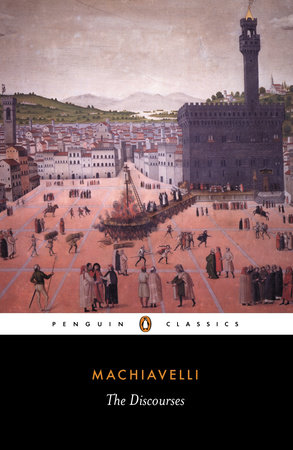
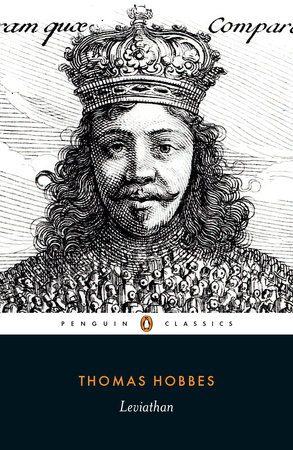
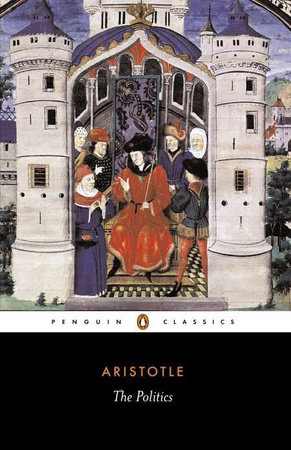
Related BookInLight Reading Guides
How Politics Works: Twenty Books from First Questions to Serious Study — a staged route from basic political concepts to the institutional and historical problems that give Machiavelli’s analysis its larger field.
Learning to Think Politically: Twenty Books from First Questions to Hard Arguments — a companion pathway for readers interested in authority, legitimacy, conflict, and the discipline of political judgment.
Seven Essential Books on Oakeshott and Conservatism — useful for contrasting Machiavelli’s politics of founding and emergency with a later skepticism toward rationalist political construction.
This article was researched and written by the BookInLight Department of Political Thought and Intellectual History, with bibliographical review, source verification, edition checking, and editorial fact-checking. Readers are invited to send factual corrections, overlooked primary or secondary sources, interpretive suggestions, and constructive ideas that could strengthen a future revision.
Editorial art direction, visual composition, image selection, and presentation were developed by the BookInLight Art Department. Third-party book covers remain the property of their publishers, artists, designers, and other rights holders. Complete republication, reproduction, translation, or reuse of this article requires prior written authorization from BookInLight.
Sources and Further Reading
Primary Text and Editions
Niccolò Machiavelli, The Prince, Project Gutenberg edition. Consulted for the complete chapter sequence and comparison of familiar English phrasings; not treated as a modern critical translation.
Niccolò Machiavelli, The Prince, translated and introduced by Tim Parks (Penguin Classics Deluxe, 2009). Publisher record. Used for the recommended reading edition and its bibliographical details.
Niccolò Machiavelli, The Prince, translated by Harvey C. Mansfield, second edition (University of Chicago Press, 1998). Publisher record. Used to compare technical vocabulary and a deliberately literal interpretive translation.
Niccolò Machiavelli, “Letter to Francesco Vettori, 10 December 1513.” University of Washington course copy. Supports the account of composition, exile, and the working title De principatibus.
Historical and Intellectual Context
Robert Black, Machiavelli (Routledge, 2013). Used for the Florentine political setting, Machiavelli’s career, and the relation among his political and literary works.
Maurizio Viroli, Machiavelli (Oxford University Press, 1998). Supports the historically grounded account of civic language, political redemption, and republican commitments.
John M. Najemy, editor, The Cambridge Companion to Machiavelli (Cambridge University Press, 2010). Used for disciplinary context, rhetoric, military thought, religion, and reception.
Quentin Skinner, Machiavelli: A Very Short Introduction, second edition (Oxford University Press, 2019). Used to situate The Prince within humanist advice literature and Machiavelli’s republican project.
Major Interpretations
Erica Benner, Machiavelli’s Prince: A New Reading (Oxford University Press, 2013). Central to the discussion of irony, ethical pedagogy, self-deception, and false claims of necessity.
Erica Benner, Machiavelli’s Ethics (Princeton University Press, 2009). Used for the broader argument that Machiavelli retains principled distinctions concerning justice, law, and responsibility even while revising conventional virtue.
Harvey C. Mansfield, Machiavelli’s Virtue (University of Chicago Press, 1996). Supports the account of Machiavelli’s radical revaluation of virtue and the article’s critique of an overly totalized esoteric design.
J. G. A. Pocock, The Machiavellian Moment: Florentine Political Thought and the Atlantic Republican Tradition (Princeton University Press, originally 1975). Used for the problem of temporal fragility, corruption, and republican maintenance.
John P. McCormick, Machiavellian Democracy (Cambridge University Press, 2011). Used for the role of class conflict, elite appetite, and popular resistance.
Cary Nederman, “Niccolò Machiavelli,” Stanford Encyclopedia of Philosophy. Used for the relation among authority, liberty, rhetoric, and effective command.
Internet Encyclopedia of Philosophy, “Niccolò Machiavelli”. Consulted as a comparative scholarly overview of virtù, fortune, republicanism, and moral controversy.
Edition and Companion-Book Records
Penguin Random House, The Discourses by Niccolò Machiavelli, Penguin Classics paperback, ISBN 9780140444285. Used to verify the recommendation edition, translator, editor, date, and cover.
Penguin Random House, Leviathan by Thomas Hobbes, Penguin Classics paperback, ISBN 9780141395098. Used to verify the recommendation edition and cover.
Penguin Random House, The Politics by Aristotle, Penguin Classics paperback, ISBN 9780140444216. Used to verify the recommendation edition, translation, revision, and cover.
Image Credits
1. Target-book image: title page of Niccolò Machiavelli, Il Principe, Florentine first printed edition, 1532; scan associated with the Bavarian State Library / Munich Digitization Center. Public-domain historical scan delivered through Wikimedia Commons. Authoritative source page.
2. Contextual image: Santi di Tito, Portrait of Niccolò Machiavelli, posthumous, second half of the sixteenth century, Palazzo Vecchio, Florence. Public domain; delivered through Wikimedia Commons. Authoritative source page.
3. Contextual image: Florence: A Detailed View, around 1600, historical city view. Public-domain image delivered through Wikimedia Commons. Authoritative source page.
4. Contextual image: Albrecht Dürer, Nemesis (The Great Fortune), circa 1501–1502, engraving, National Gallery of Art, Washington. CC0 / public-domain open-access image delivered through Wikimedia Commons. Authoritative source page.
5. Contextual image: Altobello Melone, Portrait of a Gentleman, circa 1513, formerly identified as Cesare Borgia, Accademia Carrara, Bergamo. Public domain; delivered through Wikimedia Commons. Authoritative source page.
6. Recommendation cover: Niccolò Machiavelli, The Discourses, translated by Leslie J. Walker and edited by Bernard Crick, Penguin Classics paperback, published 1984, ISBN 9780140444285. Cover image delivered from Penguin Random House’s official image server; cover rights remain with the publisher, designer, artist, and relevant rights holders. Publisher source page.
7. Recommendation cover: Thomas Hobbes, Leviathan, introduction and notes by Christopher Brooke, Penguin Classics paperback, published 2017, ISBN 9780141395098. Cover image delivered from Penguin Random House’s official image server; cover rights remain with the publisher, designer, artist, and relevant rights holders. Publisher source page.
8. Recommendation cover: Aristotle, The Politics, translated by T. A. Sinclair and revised by Trevor J. Saunders, Penguin Classics paperback, published 1981, ISBN 9780140444216. Cover image delivered from Penguin Random House’s official image server; cover rights remain with the publisher, designer, artist, and relevant rights holders. Publisher source page.