“Tradition and the Individual Talent” is an essay with a complicated magazine-to-book history; here is how to identify the text.
If the practical question is simply where to read T. S. Eliot’s “Tradition and the Individual Talent,” the easiest answer is the Poetry Foundation text. If the question is bibliographic—what the essay originally looked like, when its two parts appeared, and which later collection established the form most readers know—then the answer branches. The essay is not a single source object. It is a short publication history.
Where did the essay first appear?
The first instalment appeared in The Egoist, volume 6, number 4, dated September 1919, on pages 54–55. The second appeared in The Egoist, volume 6, number 5, dated December 1919, on pages 72–73. That chronology matters because summaries often compress the essay into “1919” and then silently treat the later collected text as if it were the magazine object. The strongest bibliographic check is the detailed Review of English Studies reconstruction, which identifies the two Egoist instalments and follows the text into The Sacred Wood. A scan of the second instalment is also available through the University of Pennsylvania PDF.
There is a small but instructive dating trap. Eliot’s official site currently describes the Egoist publication as September and November 1919 on its essay page. The surviving periodical record and the bibliographic scholarship point instead to September and December. For a source-locator article, the periodical issue should control the date.
Which book first collected it?
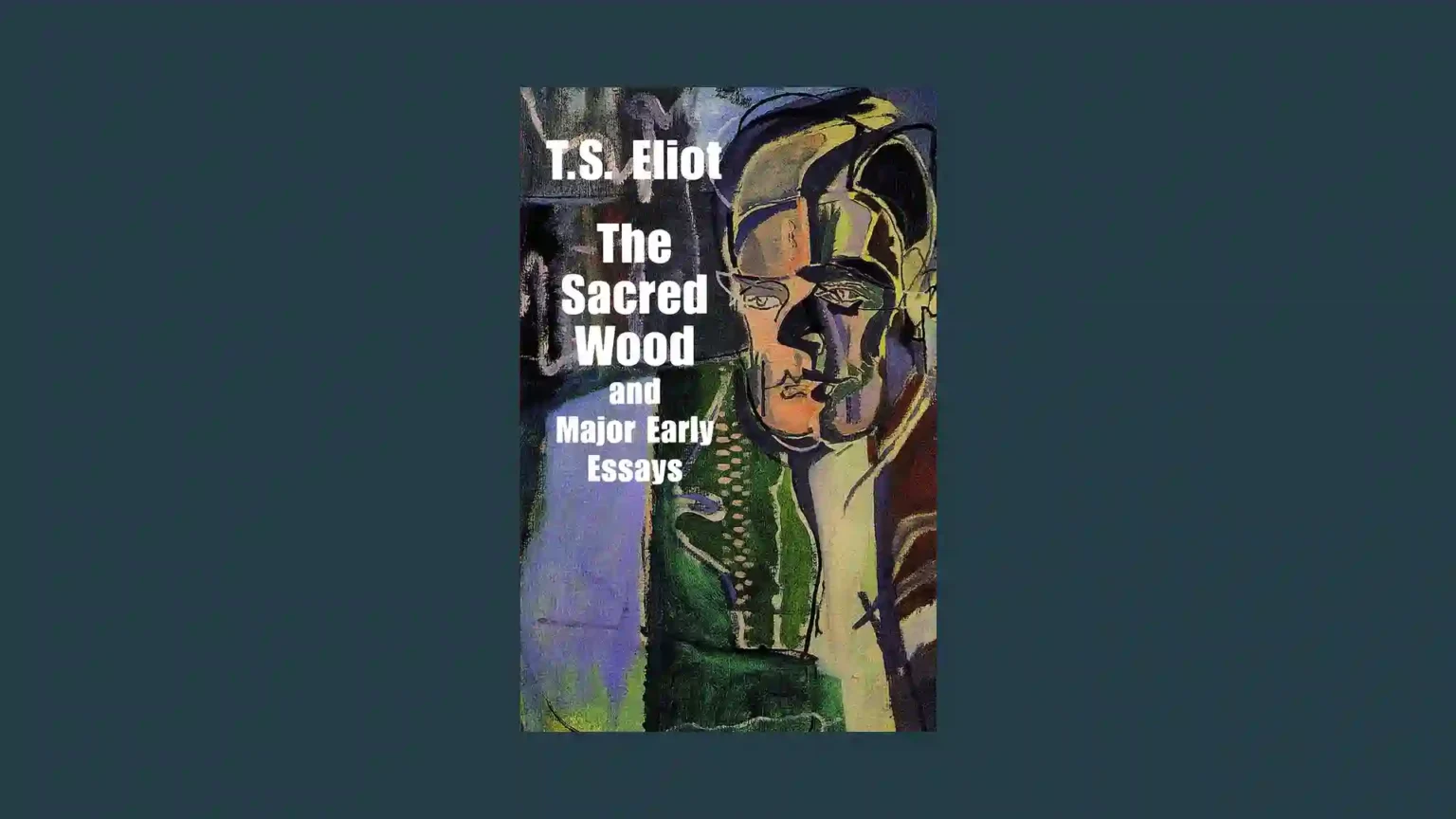
Eliot gathered the essay into The Sacred Wood: Essays on Poetry and Criticism, published in 1920. The Oxford bibliographic study gives the collected-page range as 42–53 and dates the book’s publication to 4 November 1920. For readers who want the historical collection rather than a modern anthology, Project Gutenberg’s complete Sacred Wood is the cleanest free route, with a stable ebook record for citation and downloading.
That collected setting changes the reading. In The Egoist the essay sits inside a live magazine culture of manifestos, criticism, little-magazine argument, and unfinished modernism. In The Sacred Wood it becomes one part of a deliberately organized critical book. The famous propositions about tradition, impersonality, and the relation between new works and an existing order begin to look less like isolated slogans and more like components of Eliot’s early critical program. The Academy of American Poets contextual essay is useful for tracing how later readers turned these propositions into a theory of poetic impersonality.
What is the best modern scholarly home?
For version control and research, the strongest destination is not an inexpensive Selected Essays alone but The Complete Prose of T. S. Eliot. The Project MUSE guide to the Complete Prose explains the eight-volume editorial project; the relevant period is covered in volume 2, The Perfect Critic, 1919–1926. That edition is designed to recover collected, uncollected, and previously unpublished prose with editorial context. It is the right choice when the question is not merely “what did Eliot say?” but “which state of the prose am I citing, and what surrounded it?”
For teaching, a modern excerpt can still be useful. A Cambridge University Press excerpt places Eliot’s account of tradition within a broader critical frame, while the official T. S. Eliot site supplies concise excerpts keyed to the later Selected Essays pagination. These are orientation tools, not substitutes for the 1919 issues when a claim depends on first publication.
Which version should a reader choose?
A student reading the essay for the first time should use the Poetry Foundation text and keep The Sacred Wood open nearby. A teacher discussing modernist periodical culture should show the two Egoist instalments, because the magazine is part of the evidence. A scholar making a claim about textual history should cite the periodical or the Complete Prose and identify the state being used. Those are different jobs; no single edition is “best” across all three.
The most useful practical rule is therefore bibliographic rather than interpretive: name the container. “Tradition and the Individual Talent” in The Egoist, in The Sacred Wood, and in a modern selected or complete prose edition is recognizably the same essay, but the container tells readers what evidence you actually consulted. Once that is explicit, disagreements about Eliot’s “tradition” can proceed without a hidden disagreement about the text.
Sources consulted
Publication history was checked against the original-magazine chronology reconstructed in The Review of English Studies, the Modernist Magazines Project Egoist scans, and the Project MUSE editorial-project description. Reader-facing text access was checked against Poetry Foundation and Project Gutenberg.
Did Eliot leave one stable version behind?
The safest assumption is no. Reprinting an essay does not mean every later state is bibliographically identical to the magazine instalments. The detailed Oxford study matters because it treats the essay as a text with a publication history rather than as a quotation reservoir. The Complete Prose project matters for the same reason: editorial notes can distinguish composition, first publication, later collection, and revision in a way a web transcription cannot.
That distinction becomes important whenever an argument turns on a particular phrase or on Eliot’s development across 1919–1920. A reader quoting the familiar later wording may be doing excellent criticism while still making a weak historical claim about what an Egoist reader encountered. Conversely, a scholar citing the first instalment without noticing the later collected organization may miss how Eliot wanted the essay to function inside his first prose book. Version control is not pedantry here; it changes the historical question.
Why does The Egoist matter beyond dating?
The magazine format shows that the essay entered public argument in pieces. Part I ends before the theory of impersonality is complete; Part II resumes in the final issue of the magazine. The Modernist Magazines Project archive lets a reader see typography, neighboring material, pagination, and the scale of the periodical itself. Those features disappear when a modern site presents the essay as one seamless page.
The bibliographic record also corrects an easy retrospective illusion: famous essays do not enter culture already famous. In 1919 this was one contribution to a little magazine at the end of its run. By 1920, inclusion in The Sacred Wood gave it a more durable container; later Selected Essays and the Complete Prose gave it still other editorial lives. The essay’s canonicity is partly a history of containers.
What should a citation actually name?
For a general interpretation, author, essay title, and the edition actually read are enough. For periodical history, the citation should name The Egoist, volume and issue, month, year, and page range. For comparison across states, the citation should identify both the 1919 instalment and the later collected source. A locator that names only “1919” or only “Selected Essays” leaves the most useful evidence hidden.
What does “complete text” mean in practice?
For this essay, “complete text” should mean an unabridged state whose source is identifiable, not merely a page that contains the familiar passages. The Poetry Foundation version is excellent for uninterrupted reading; the Gutenberg Sacred Wood is better when the surrounding 1920 collection matters; the Egoist scans are indispensable when first publication matters. These routes answer different evidentiary questions even when all reproduce the full argument.
A modern selected-essays volume may still be the best classroom object because pagination is stable and other major critical essays sit nearby. But “best collection” is a use claim, not a claim of textual priority. The archival first printing, the historically important first book collection, and the modern scholarly edition each deserve that adjective for a different reason. Keeping those reasons separate is the simplest way to avoid false precision.
A final source-critical advantage follows: once the container is named, later scholarship becomes easier to audit. Page references can be traced, quotations can be checked against a known state, and claims about Eliot’s development can be tied to chronology rather than to a floating digital text. That is the real value of locating the essay precisely.
Cover artwork: credits and source records
- The Sacred Wood and Major Early Essays — Dover Publications (source record)