Annotated print remains the best main format for Demons, while a verified publisher ebook is its strongest portable companion. Is Demons Readable as an Ebook? Yes—search, adjustable type, and instant name lookup can help—but the novel’s crowded social field, delayed revelations, notes, and disputed chapter placement reward stable pages. The main danger is not the screen itself; it is buying an unidentified translation or a badly assembled public-domain file.
Annotated print, because names, notes, chapter structure, and rereading remain spatially stable.
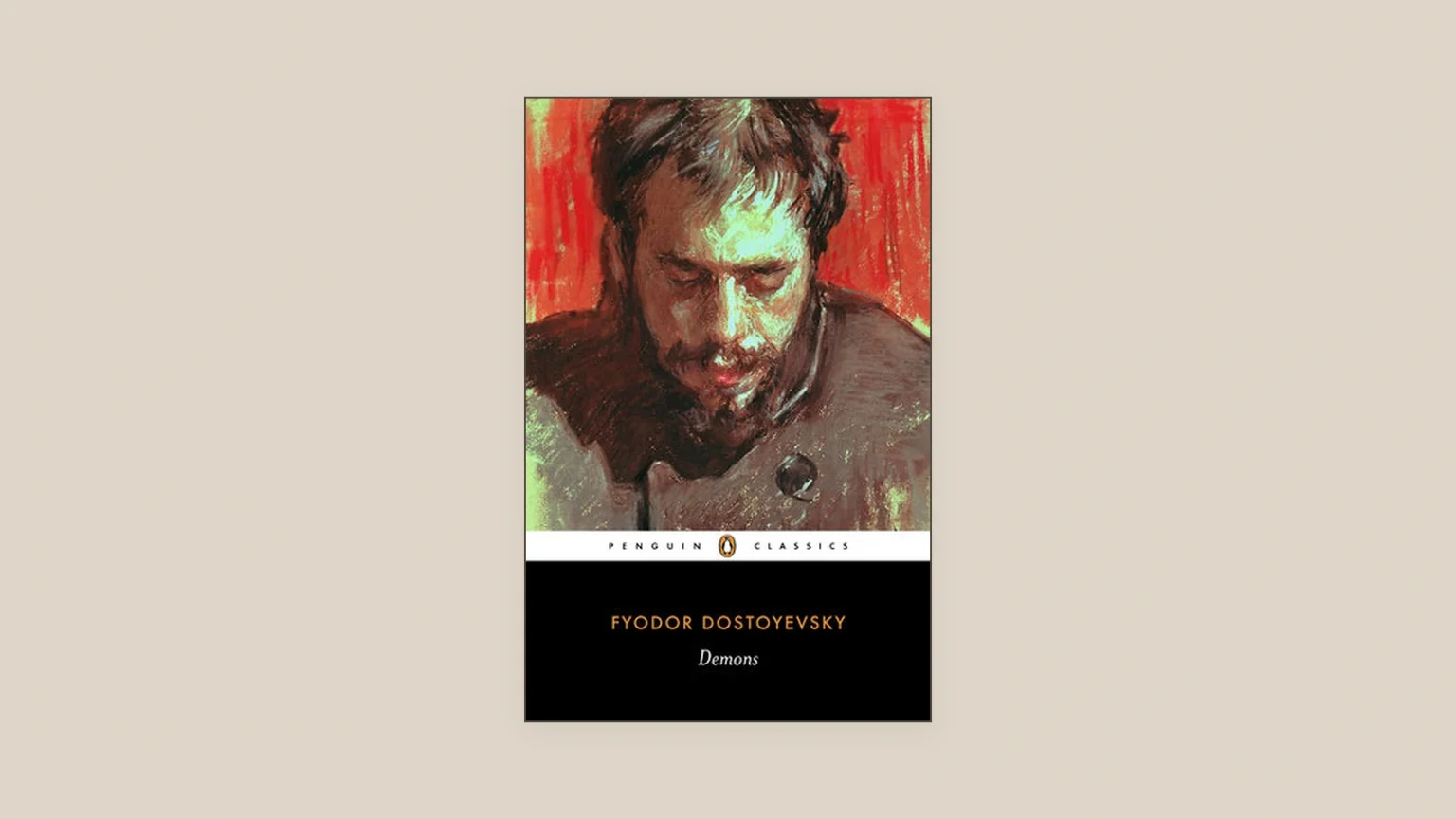
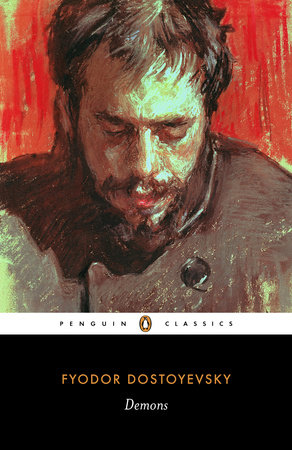
Penguin Classics, Robert A. Maguire, because it combines a modern translation with useful editorial apparatus.
Official Vintage ebook, because it is searchable, portable, and bibliographically identifiable.
Anonymous Kindle reprints and abridged audio, because title alone does not establish translation, completeness, or chapter order.
Best Overall Format
For a serious first reading, the best answer is a well-annotated paperback. Demons is not difficult because every sentence is obscure. It is difficult because Dostoevsky keeps rearranging the reader’s understanding of a large cast, lets conversations acquire significance hundreds of pages later, and embeds political argument inside comedy, gossip, confession, and performance. Print makes that architecture easier to hold in mind: a finger can remain in the notes, names can be checked without losing the scene, and the controversial suppressed chapter can be located physically rather than encountered as an unexplained digital appendix.
The ebook case is nevertheless stronger than it first appears. Search is genuinely useful when the same person appears under a first name, patronymic, surname, nickname, or social title. Adjustable type and screen-reader support may also make a long nineteenth-century novel more accessible than a dense paperback. That is why the practical answer to Is Demons Readable as an Ebook? is emphatically yes—but only when the file identifies its translator, publisher, and contents.
The work first appeared in Russian as Бесы, serialized in The Russian Messenger in 1871–72 and issued in book form in 1873. Its English titles—Demons, Devils, and The Possessed—name the same novel but often signal different translation histories. Constance Garnett’s 1916 version established the older English tradition; major modern alternatives include Michael R. Katz, Richard Pevear and Larissa Volokhonsky, and Robert A. Maguire. A reader is therefore choosing a text as well as a container.
A two-format strategy is better than either format alone for many readers: use the Penguin Classics paperback as the governing text and keep the official Vintage ebook on a phone or tablet for travel, searching, and continuity. The trade-off is cost and the nuisance of page-location mismatch between translations. Readers who alternate formats should therefore keep to one translation whenever possible, or accept that wording and chapter pagination will not align.
Robert A. Maguire
Pevear–Volokhonsky
Pevear–Volokhonsky
Penguin Classics, translated by Robert A. Maguire; edited by Ronald Meyer; introduction by Robert Belknap; ISBN 9780141441412.
This edition is the safest recommendation for a serious first reader because it balances a modern English voice with a substantial editorial frame. Its 880-page scale is not a defect: the extra space supports notes, contextual material, and less cramped navigation. Maguire’s translation is often more immediately idiomatic than the Pevear–Volokhonsky version without turning Dostoevsky into smooth contemporary realism. The edition is especially useful when the novel’s political vocabulary, name forms, and textual history begin to overlap.
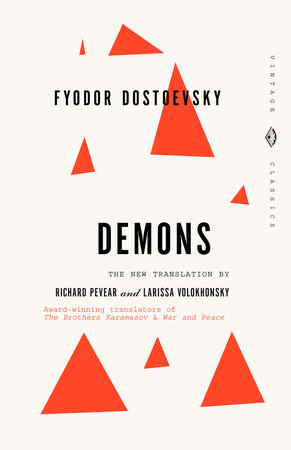
Vintage Classics, translated by Richard Pevear and Larissa Volokhonsky; ISBN 9780679734512.
Choose this paperback when you already read Dostoevsky in Pevear and Volokhonsky or intend to pair print with the official Vintage ebook. Their English preserves more of the Russian text’s angularity and tonal collisions, which some readers value as fidelity and others experience as friction. The edition is widely discussed and easy to match across formats, but it is not automatically the easiest entry point. Its strongest advantage here is textual continuity between paperback and digital copy.
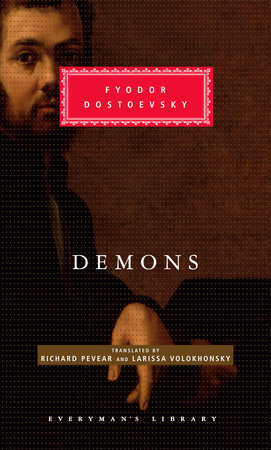
Everyman’s Library hardcover, translated by Richard Pevear and Larissa Volokhonsky; introduction by Joseph Frank; ISBN 9780375411229.
The Everyman’s edition earns its place through construction rather than a superior underlying translation. The publisher specifies acid-free cream paper, full cloth, decorative endpapers, a ribbon marker, chronology, bibliography, and Joseph Frank’s introduction. That makes it the strongest collector or gift option and a good rereading object. It does not, however, justify replacing a usable Vintage paperback merely for textual reasons: the reading text is the same Pevear–Volokhonsky translation.
Oxford World’s Classics, Devils, translated and edited by Michael R. Katz; ISBN 9780199540495.
Katz gives readers a clear modern translation with Oxford’s contextual apparatus. It is especially attractive for courses that want the title Devils and a translation that later matches the strongest documented audiobook. It falls just behind Penguin for the general first reader because the Maguire volume offers the more persuasive all-round balance of navigational help and literary ease, but the Oxford edition is a fully serious alternative rather than a lesser substitute.
Kindle and Ebook Is Demons Readable as an Ebook?
Vintage / Knopf Doubleday ebook, Pevear–Volokhonsky translation, ISBN 9780307434869.
This is the safest digital purchase because the publisher, translators, release record, and ISBN are explicit across the publisher-distributed listing and major stores. The same file is offered through ecosystems including Kobo, Apple Books, Kindle, and OverDrive, although regional availability varies. It is searchable and portable, and it preserves a modern copyrighted translation rather than presenting Garnett’s text under a vague new cover. Its weakness is ordinary ebook ergonomics: jumping between text, endnotes, and a name list can fracture concentration, and location numbers cannot replace the visual memory of a page.
Standard Ebooks, Constance Garnett translation.
Standard Ebooks is preferable to a bare transcription because it rebuilds the public-domain text as a coherent modern ebook with cleaner typography, navigation, and device-ready files. The compromise is textual, not technical. Garnett’s translation remains historically important and readable, but its diction is older, and public-domain versions may not supply the suppressed “At Tikhon’s” chapter in the form or position expected by readers of modern editions. Use it confidently as a free reference or budget reading copy; use it more cautiously as the sole basis for a seminar.
Project Gutenberg, The Possessed: or, The Devils, translated by Constance Garnett.
Gutenberg is legitimate, lightweight, and useful across old devices. It is weaker than Standard Ebooks as a reading object because its production is plainer and its bibliographic framing is limited. The title The Possessed is also a reminder that search results can collapse distinct editorial traditions into one commodity. Choose it when file compatibility and zero cost matter more than notes, presentation, or a modern translation.
Audiobook
Devils, translated by Michael R. Katz, narrated by George Guidall, Recorded Books, 2013, unabridged, approximately 28 hours.
This is the strongest evidence-based audio recommendation because the translation, narrator, audio publisher, unabridged status, and runtime are all documented. That matters more than storefront popularity. Katz’s modern translation gives the recording a clear textual basis, and Recorded Books’ edition can be identified across Audible, Google Play, Apple Books, and library catalogues. Metadata cannot decide whether Guidall’s vocal manner suits an individual listener, so the prudent step is to compare the official sample before purchase.
Demons, narrated by Malk Williams, SNR Audio, 2024, unabridged, Constance Garnett translation, approximately 28 hours 24 minutes.
This recording offers a recent production of the public-domain Garnett text and identifies its narrator and length. It may be a practical alternative where the Guidall recording is unavailable or costly. Its disadvantages are the older translation and thinner editorial framing. Because narrator preference is subjective and no metadata can establish sustained performance quality, compare samples rather than treating a newer release date as proof of superiority.
LibriVox, The Possessed, Constance Garnett translation.
The LibriVox recording is legitimate and free, but a volunteer, multi-reader production introduces more variation in voice and recording consistency than a single-narrator commercial edition. It is useful for sampling the book, maintaining momentum, or supporting a print reading. It is less suitable as the sole text for study because the translation is old and audio alone makes textual comparison cumbersome.
Podcast and Companion Audio
BBC World Service, The Forum, “The Devils: Dostoevsky’s Novel of Political Evil,” 4 November 2021, 40 minutes.
This episode is the strongest companion because it is wholly devoted to the novel and brings together Bridget Kendall with scholars Tatyana Kovalevskaya, Carol Apollonio, and Sarah Hudspith. Its breadth is useful after the reader has established the main characters—ideally after Part I—or after finishing the book. Listening before page one risks making “political evil” the only interpretive lens for a novel that is also comic, theatrical, theological, and socially observant.
Philosophize This!, Episode 220, “Dostoevsky – Demons,” 40 minutes.
This episode offers an accessible route into nihilism, Westernizing liberalism, moral authority, and faith. It is useful for a book club or an independent reader who wants a concise conceptual map. It is less authoritative as a bibliographic guide and more interpretively directive than the BBC roundtable, so it works better after the reader has formed a provisional view of the novel.
Free, Public-Domain, and Library Sources
Standard Ebooks.
Its carefully produced EPUB is the strongest free reading file because it improves typography, navigation, and device compatibility without disguising the Constance Garnett basis. It is a better sustained-reading object than the basic Gutenberg file. Readers should still compare the table of contents with a modern edition and confirm the presence and placement of the suppressed chapter before using it for formal study.
Internet Archive scan of the Garnett-era printed edition.
A scan is slower and less elegant than a reflowable ebook, yet it preserves the historical page as an object: title page, pagination, typography, and the evidence of a particular printing. That makes it useful for bibliographic comparison or checking whether a modern transcription silently changed punctuation or structure. It is not the best first-reading interface on a phone.
Borrow a modern translation through a local catalogue, OverDrive/Libby, or an interlibrary service.
The Open Library record for the Maguire Penguin edition and the exact OverDrive record for the Vintage ebook provide useful bibliographic starting points, while WorldCat identifies the Katz/Guidall audio recording in library collections. Availability is regional, so no single borrowing link can promise access everywhere. Search by translator or ISBN—not title alone—to avoid being routed to an older Garnett text when you intended a modern edition.
Public-domain status depends on jurisdiction. Garnett’s translation is freely distributed by major United States repositories, but readers outside the United States should check local copyright rules. Modern translations by Maguire, Katz, and Pevear–Volokhonsky remain copyrighted.
Critical, Student, and Collector Options
For students and teachers, Penguin leads because the Maguire translation arrives with an editor, an introduction by Robert Belknap, and enough contextual support to make political references and textual problems teachable. Oxford’s Katz edition is an excellent alternative, especially where a course pairs the book with the Recorded Books audiobook or prefers Katz’s direct modern English. Neither should be mistaken for a full scholarly variorum; both are reading editions with serious apparatus.
For a serious rereader, translation comparison is more valuable than luxury binding. A reader who first used Maguire will learn more from adding Katz or Pevear–Volokhonsky than from purchasing a second physical presentation of the same translation. The novel’s tonal instability—satire beside spiritual terror, bureaucratic speech beside fevered confession—makes comparison unusually revealing.
For collectors, Everyman’s Library is the rational premium choice because its cloth case, acid-free paper, ribbon marker, decorative endpapers, chronology, bibliography, and Joseph Frank introduction add durable material value. The premium is for production and permanence, not a uniquely authoritative text. A rare or fine-press edition may be more collectible, but current availability and exact textual apparatus vary too much to recommend one as the default reading copy without edition-specific inspection.
Final Recommendation
The question Is Demons Readable as an Ebook? should not be answered by defending paper on principle. It is readable—and for some readers more accessible—when the ebook is a documented modern edition. Yet the book’s best main format remains annotated print because orientation is part of interpretation. The novel asks the reader to remember who said what, notice changed accounts, return to earlier scenes, and understand where the suppressed chapter sits in relation to the published structure.
FAQ
Is Demons Readable as an Ebook?
Yes. A verified publisher ebook is searchable, portable, and adjustable, which can make the large cast easier to manage. It is weaker than annotated print for note consultation, spatial memory, and the placement of “At Tikhon’s,” so it works best as a main format for mobility or accessibility and as a companion for close study.
Which translation is easiest for a beginner?
Robert A. Maguire’s Penguin Classics translation is the best all-round beginner choice because its English is modern and its editorial support is substantial. Michael R. Katz is also clear and particularly attractive for readers pairing print with the Guidall audiobook. Pevear–Volokhonsky preserves more verbal roughness but may feel less immediately fluent.
Is print or Kindle better for this novel?
Print is better for the first serious reading because names, notes, and earlier passages remain easy to revisit. Kindle is better for portability, adjustable type, and search. The best combined method is a print governing text plus a digital companion in the same translation where possible.
Can the audiobook serve as the main format?
It can, especially for listeners who depend on audio access, but it demands a stronger memory for names and relationships. The Katz/Guidall recording is the safest choice because it is documented as unabridged and tied to an identifiable modern translation. Keep a character list or searchable text available.
Is the free public-domain version complete?
The major free repositories provide Garnett’s public-domain translation of the published novel, but chapter supplements and placement can differ from modern editions. Before relying on a free file, inspect its contents for “At Tikhon’s” or “Stavrogin’s Confession” and compare its structure with a current publisher edition.
Which edition has the best notes?
For the general serious reader, Penguin Classics offers the best balance of notes, introduction, glossary-level help, and readable presentation. Oxford World’s Classics is a strong academic alternative. A premium hardcover should not be assumed to have better notes merely because its materials are more expensive.
Is the Everyman’s Library edition worth it?
Yes for a collector, gift buyer, or committed rereader because its cloth binding, acid-free paper, ribbon marker, chronology, and bibliography add durable material value. No for a reader seeking a different text from the Vintage paperback: both use the Pevear–Volokhonsky translation.
What should I verify before buying any edition?
Verify translator, publisher or imprint, ISBN when available, unabridged status for audio, and the treatment of the suppressed chapter. For ebooks, inspect the sample and table of contents. For audiobooks, compare official samples because metadata can establish completeness but cannot settle narrator preference.
Related BookInLight Reading Guides
A Stable Page for an Unstable World: How to Read The Idiot — a closely related guide to managing names, structure, annotation, and format in another demanding Dostoevsky novel.
The Karamazov Choice: Why Print Should Lead and Audio Should Follow — a useful comparison for readers deciding whether spoken performance can replace a navigable text.
Best Books on Dostoevsky Political Theology — companion scholarship for readers pursuing the religious and political pressures behind Demons.
Oxford World’s Classics: A Complete Guide to the Series — context for judging the Katz Devils edition as a student and reference volume.
This guide was prepared by the BookInLight Literature and Political Thought editorial desk. Bibliographic review, source verification, translation and edition comparison, availability checking, and factual review were conducted for the editions, recordings, repositories, and companion sources named above. Readers are invited to send factual corrections, overlooked editions, updated regional-availability information, interpretive suggestions, and constructive feedback.
Editorial art direction, visual composition, source-strip design, cover selection, and image presentation are credited to the BookInLight Art Department. Individual covers and provider identities remain the property of their respective publishers, designers, artists, platforms, companies, and rights holders. Complete republication, reproduction, translation, or reuse of this article requires prior written authorization from BookInLight.
Sources and Further Reading
Primary Text and Publication History
Penguin Random House, Demons, Penguin Classics — translator, editor, introduction, ISBN, publication date, page count, and official cover.
Oxford University Press, Devils — Michael R. Katz translation and Oxford World’s Classics edition record.
Google Books bibliographic record for Oxford’s Devils — edition and copyright-page cross-check.
Christie’s bibliographic record for the first edition of Бесы — first-edition status, interrupted serialization, and Katkov’s rejection of “Stavrogin’s Confession.”
Print Editions and Translations
Penguin Random House, Vintage and Everyman’s Library Demons — Pevear–Volokhonsky translation, format dates, ISBNs, page counts, production specifications, and official covers.
Penguin Books UK, Demons — edition contributors, format availability, and UK bibliographic details.
Ebook and Public-Domain Sources
OverDrive record for the Vintage / Knopf ebook — translators, publisher, release date, ISBN, and supported ebook formats.
Kobo listing for Demons — storefront cross-check for ISBN 9780307434869 and digital format metadata.
Apple Books listing for Demons — translator and publisher cross-check.
Standard Ebooks, Demons — public-domain Garnett text and production formats.
Project Gutenberg, The Possessed: or, The Devils — basic public-domain transcription and downloads.
Internet Archive historical scan — printed-page and bibliographic comparison.
Audiobook Recordings
Google Play, Recorded Books Devils — narrator, audio publisher, release date, unabridged status, and 28-hour runtime.
Audible, Devils narrated by George Guidall — narrator and Katz copyright basis cross-check.
WorldCat record for Recorded Books Devils — Katz, Guidall, unabridged status, publisher, year, and library discovery.
LibriVox / Internet Archive, The Possessed — free public-domain recording and track structure.
Podcasts, Libraries, and Companion Materials
BBC World Service, “The Devils: Dostoevsky’s Novel of Political Evil” — date, duration, host, guests, and episode scope.
Philosophize This!, Episode 220 — duration and stated thematic focus.
Open Library record for the Penguin Classics Demons — edition identification and nearby-library discovery.
Image Credits
Cover — Demons, Penguin Classics, Robert A. Maguire translation, 2008, ISBN 9780141441412; Penguin Classics / Penguin Random House. Opening print comparison appearance. Authoritative edition page.
Cover — Demons, Vintage Classics, Richard Pevear and Larissa Volokhonsky translation, paperback ISBN 9780679734512; Vintage / Penguin Random House. Opening print comparison appearance. Authoritative edition page.
Cover — Demons, Everyman’s Library, Richard Pevear and Larissa Volokhonsky translation, 2000, ISBN 9780375411229; Everyman’s Library / Penguin Random House. Opening print comparison appearance. Authoritative edition page.
Cover — Demons, Penguin Classics, Robert A. Maguire translation, 2008, ISBN 9780141441412; Penguin Classics / Penguin Random House. Detailed print profile appearance. Authoritative edition page.
Cover — Demons, Vintage Classics, Richard Pevear and Larissa Volokhonsky translation, paperback ISBN 9780679734512; Vintage / Penguin Random House. Detailed print profile appearance. Authoritative edition page.
Cover — Demons, Everyman’s Library, Richard Pevear and Larissa Volokhonsky translation, 2000, ISBN 9780375411229; Everyman’s Library / Penguin Random House. Detailed print profile appearance. Authoritative edition page.