The Best Format for Reading The Idiot is a well-annotated print edition, with an unabridged audiobook used for momentum rather than textual control. Dostoevsky’s unstable social scenes, shifting Russian names, repeated confrontations, and translation-sensitive rhythms reward a page that can be marked and revisited. The main caution is provenance: a cheap ebook or famous narrator is not enough unless the translator, completeness, and edition are identified.
Print, because the novel rewards annotation, name-tracking, and rapid return to earlier scenes.
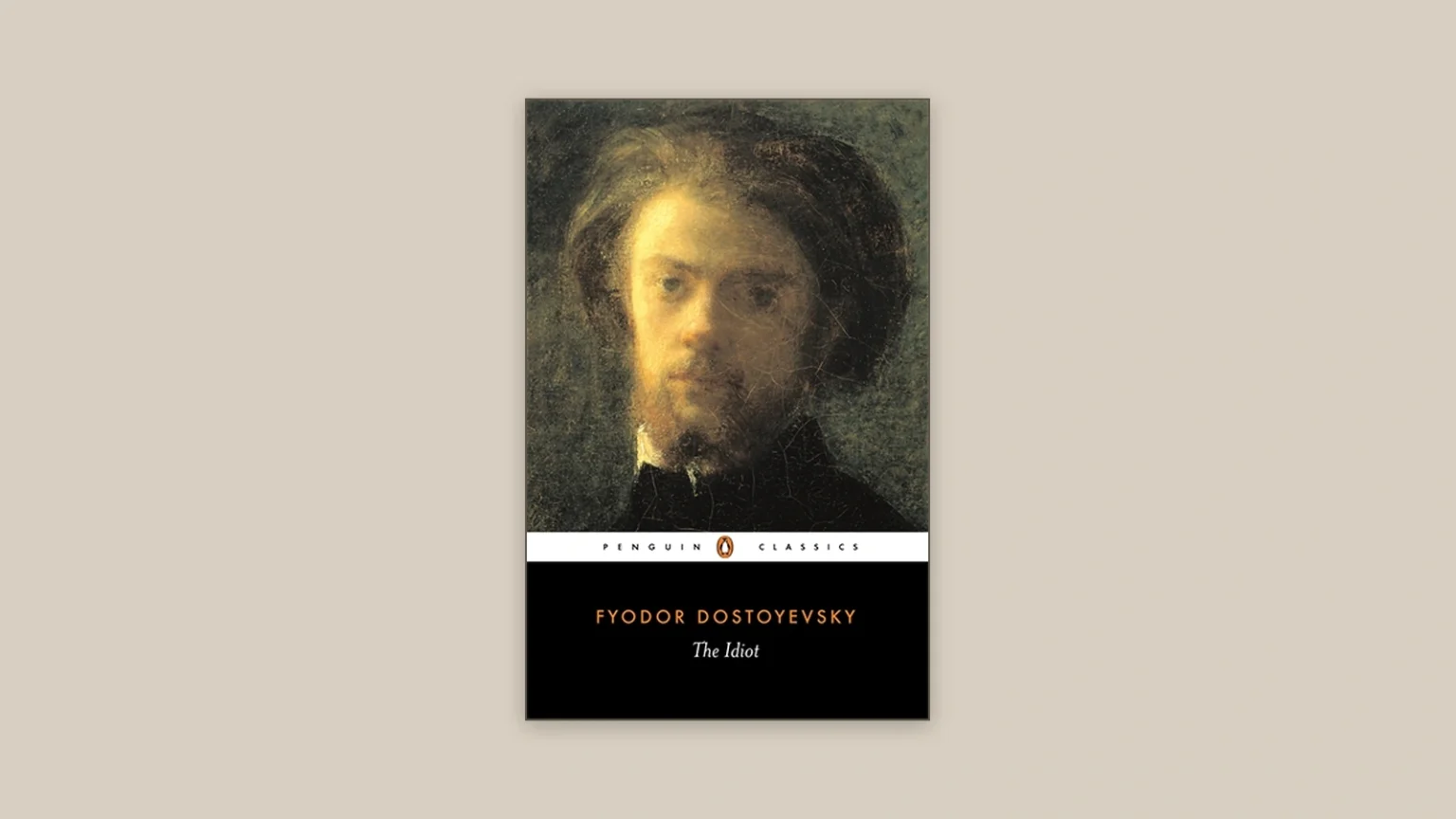
Penguin Classics, David McDuff, because it balances a modern translation, practical notes, and a manageable reading apparatus.
Recorded Books audio, because the Alan Myers text, Jefferson Mays narration, unabridged status, and runtime are documented.
Unidentified digital reprints, because many omit the translator or recycle an old public-domain text behind new cover art.
Best Overall Format
The practical answer to the Best Format for Reading The Idiot question is print—not because paper is intrinsically nobler, but because this particular novel behaves like a crowded room whose alliances change while people are still speaking. Given names, patronymics, surnames, and diminutives overlap. A phrase uttered in humiliation may return chapters later as accusation, self-defence, or prophecy. Stable pagination makes those recurrences easier to locate and compare.
Print also protects the distinction between a difficult novel and a confusing file. Dostoevsky’s late style can move abruptly from social comedy to theological pressure, from gossip to public spectacle, and from lucid moral perception to near-delirium. A reader needs margins, visible paragraph shape, and the freedom to pause without losing the architecture of the scene. Good notes help with names and historical references, but an oversized critical apparatus can over-direct a first reading.
Ebook is the strongest single-format alternative. Search, adjustable type, dictionary access, highlights, and instant name lookup solve genuine problems, especially for readers who cannot comfortably hold a thick paperback. Its weakness is spatial memory: a reflowed screen makes it harder to remember where an earlier argument sat in the book. Audio restores velocity and vocal pressure, yet it makes quotation recovery and translation comparison slow. The best all-purpose plan is therefore print as the governing text, audio for continuity, and a searchable ebook only when it adds convenience rather than replacing orientation.
Format verdict: In the Best Format for Reading The Idiot decision, print is the strongest main format because the novel demands visual navigation, annotation, and comparison between emotionally charged scenes. Its cost is physical: even the practical paperbacks are substantial, while premium hardcovers are poor commuter objects.

David McDuff
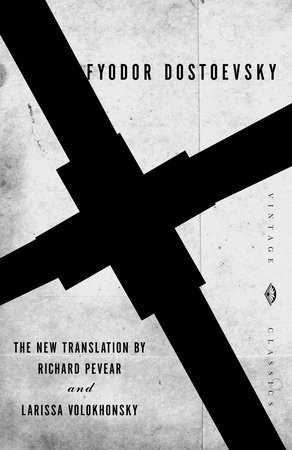
Pevear and Volokhonsky

Pevear and Volokhonsky
Edition: Penguin Classics paperback, published 27 May 2004; ISBN 9780140447927; 784 pages. David McDuff translated the text with notes, and William Mills Todd III supplied the introduction.
Best for: serious first-time readers who want one dependable volume without turning the novel into a seminar packet.
Why this over alternatives: McDuff’s English preserves nervous shifts and odd social pressure while remaining readable across long scenes. The edition gives enough apparatus to orient the reader without making every page feel academically pre-interpreted. Its main trade-off is bulk: 784 pages in a compact paperback can be tiring to hold flat.
Edition: Vintage paperback, published 8 July 2003; ISBN 9780375702242; 656 pages; introduction by Richard Pevear. The publisher also identifies a 2012 ebook.
Best for: readers who value lexical texture, deliberate foreignness, and the chance to compare Dostoevsky’s irregular verbal pressure with smoother English versions.
Why choose it: this translation is one of the central modern alternatives and should be read as a translation strategy, not a neutral default. Its sometimes angular English can make social abrasion vivid, but that same quality may slow a beginner during already chaotic scenes. It is strongest for readers prepared to hear roughness as evidence rather than error.
Edition: Everyman’s Library hardcover, published 25 April 2002; ISBN 9781857152548; 680 pages. The official series specifications identify acid-free cream-wove paper, sewn full-cloth binding, a ribbon marker, a substantial introduction, and comparative chronology.
Best for: collectors, gift buyers, and rereaders who already know they want the Pevear–Volokhonsky translation in a durable library object.
Why choose it: the material upgrade is real, not merely a redesigned jacket. Yet it does not provide a different translation from the Vintage paperback. Buy it for construction, longevity, and reading pleasure—not because cloth, ribbon, and acid-free paper make the text more authoritative.
Edition: Oxford World’s Classics paperback, ISBN 9780199536399, June 2008 reissue; translated and edited by Alan Myers, with an introduction by William Leatherbarrow. Oxford identifies a scholarly introduction, notes, bibliography, and the usual series apparatus.
Best for: students and independent readers who want the strongest integrated study edition among the ordinary paperbacks.
Why this over alternatives: Myers’s translation and editing work belong to one coherent scholarly package. The edition is more useful for coursework than a bare reading copy, while remaining less cumbersome than a critical anthology. It may be a better classroom choice than Penguin, but its extra scaffolding is not essential for every first reading.
Edition: new hardcover translation published in the United States on 21 July 2026; ISBN 9781324096375; 800 pages. The Association for Slavic, East European, and Eurasian Studies independently confirmed its publication.
Best for: readers who want the newest major English translation and are willing to compare samples rather than rely on accumulated reputation.
Why it matters: Katz has become an important contemporary Dostoevsky translator, and his stated attention to irony, rhythm, and jagged emotional force makes this edition a serious candidate. The limitation is historical, not textual: in August 2026 it has not yet acquired the broad teaching record, reader response, or long comparative criticism available for McDuff, Myers, or Pevear and Volokhonsky.
Kindle and Ebook
Format verdict: Ebook is the strongest portable answer within the Best Format for Reading The Idiot comparison because it adds search, adjustable type, dictionary access, and synchronized notes. It weakens spatial memory and can conceal poor textual provenance behind professional-looking store metadata.
Best for: readers who want the recommended print translation with search and adjustable type.
Why this over alternatives: the exact publisher record names McDuff and identifies ISBN 9780141906331, so the file’s textual basis is clear. That transparency is more valuable than a low price from an anonymous Kindle reprint. The main drawback is app-dependent footnote behaviour and the loss of fixed page geography.
Best for: readers who already prefer this translation or want a searchable comparison copy.
Why choose it: Penguin Random House links the ebook to the same named translators and the Vintage edition family. It is safer than marketplace files that merely repeat the title. It is not the easiest digital first read for everyone, because the translation’s deliberate angularity can become more tiring on a small screen.
Best for: the cleanest free reflowable file and readers who need open EPUB access.
Why this over Gutenberg: Standard Ebooks documents that its 1914 Eva M. Martin text is based on a Project Gutenberg transcription and HathiTrust scans, then adds careful typography, metadata, navigation, and modern ebook semantics. Production quality is excellent; the caution is that good production does not modernize an early twentieth-century translation.
Best for: plain-text search, broad download compatibility, and a no-account backup.
Why use it cautiously: the record transparently identifies Eva Martin and notes uncertainty about a possible relationship to Frederick Whishaw’s 1887 translation. That honesty is useful, but a reader choosing a main edition should prefer a modern translation with cleaner bibliographic certainty and notes.
Audiobook
Format verdict: Audio is the strongest companion in the Best Format for Reading The Idiot comparison because it strengthens momentum, pronunciation, and the theatrical force of interruption. It weakens visual name recognition, annotation, and rapid comparison, so it is best as a companion unless accessibility or circumstance makes listening the main route.
Verified metadata: unabridged; Recorded Books; narrator Jefferson Mays; translator Alan Myers; release 25 October 2014; duration 27:56:31; OverDrive Listen ISBN 9781470328948.
Why this over alternatives: the complete chain from translator to narrator, publisher, status, and runtime is explicit. It is also the cleanest audio partner for the Oxford Myers print edition. The safest recommendation is still to compare the official sample before committing, because metadata cannot decide whether a narrator’s pacing and characterization suit an individual listener.
Verified metadata: unabridged; narrator Constantine Gregory; Naxos AudioBooks; catalogue NA0263; barcode 9781781980408; released January 2017.
Why it is not the default: Naxos provides unusually detailed track structure and production identity, but the official catalogue page does not clearly name the English translation used. That omission matters for anyone reading along or comparing wording. Choose it after sampling when performance is the priority, not when text-matching is essential.
Best for: library listeners who accept an older public-domain translation and want a long-established commercial reading.
Main trade-off: the Garnett text remains historically important, but it is not the best way to hear the distinctions among current English translations. Older listings may also use Simon Vance’s former recording name, Robert Whitfield, so the narrator credit should be checked rather than treated as a contradiction.
Free, Public-Domain, and Library Sources
Format verdict: Free sources are excellent for sampling, quotation search, and budget access. Their usual compromise is translation age and editorial apparatus rather than missing chapters. Library borrowing is the better route when a reader wants a modern translation or commercial audiobook without buying it.
Standard Ebooks is the best free source for sustained ordinary reading because its Eva M. Martin file has purposeful typography, a working contents structure, modern metadata, and carefully prepared EPUB downloads. Project Gutenberg is better for plain text, rapid searching, and broad compatibility. Neither should be mistaken for a current annotated translation.
OverDrive and Libby provide the strongest library route when the exact edition is available. The verified Recorded Books listing lets a borrower search for the Alan Myers–Jefferson Mays audiobook rather than accepting any title match. Local holdings, waiting lists, and territorial rights vary, so an exact record confirms that an edition exists in the library ecosystem, not that every library owns it.
For print borrowing, search the catalogue by ISBN rather than title alone. The novel has accumulated many English translations and repackaged public-domain editions, so a library record that merely says The Idiot may not tell you which text will arrive. Use 9780140447927 for the Penguin McDuff paperback or 9780199536399 for the Oxford Myers edition when those are the versions you want.
Critical, Student, and Collector Options
Format verdict: Specialized editions should be selected by task. Student apparatus improves orientation; collector construction improves durability and ownership pleasure. Neither benefit automatically makes a translation easier, newer, or more accurate.
Oxford World’s Classics, Alan Myers. It is strongest because translation, editing, Leatherbarrow’s introduction, notes, and bibliography function as one teaching package. It supplies more guidance than a reading edition without burying the novel beneath a large critical dossier.
Everyman’s Library hardcover. It is preferable because the publisher documents acid-free paper, sewn full-cloth binding, ribbon marker, substantial introduction, and chronology. The premium is material, not textual: it retains the Pevear–Volokhonsky translation.
Michael R. Katz, Liveright/Norton. It is the most consequential new English version because it arrives from a major Dostoevsky translator with explicit attention to rhythm and irony. It is best approached beside McDuff or Myers until broader reception develops.
Final Recommendation
The Best Format for Reading The Idiot remains print because the novel’s difficulty is relational rather than merely lexical. A stable page lets the reader recognize who is speaking, notice when a social role changes, and recover earlier words whose moral weight has shifted. Audio can carry the drama forward, but it should not quietly decide which translation the reader is hearing.
The strongest two-format strategy is Penguin McDuff in print plus audio used selectively for momentum. The strongest exact text-and-audio pairing is Oxford Myers plus the Recorded Books Myers recording. Those are different recommendations because one optimizes the first reading and the other optimizes synchronization.
FAQ
What is the Best Format for Reading The Idiot?
Print is the best main format because it makes names, recurring scenes, and translation-sensitive passages easier to mark and revisit. An unabridged audiobook is the best companion because it restores momentum and spoken pressure without replacing the page as the authoritative workspace.
Which translation should a beginner choose?
David McDuff is the safest default because the Penguin edition combines a modern translation with practical editorial support. Alan Myers is a strong guided alternative for students. Pevear and Volokhonsky suit readers who welcome more verbal roughness, while Michael R. Katz deserves comparison as a newly published 2026 translation.
Is print or Kindle better for this novel?
Print is better for sustained close reading because the page supports annotation and spatial memory. Kindle or another ebook is better for adjustable type, search, travel, and accessibility. The official Penguin McDuff ebook is the safest digital choice because its translator and publisher are explicit.
Can the audiobook replace the printed book?
Yes when accessibility or daily circumstances require it, but not without a trade-off. Audio makes the drama continuous and audible; it makes spelling, quotation recovery, and comparison harder. Keep a searchable ebook nearby, and choose a recording whose translation is named.
Is the Project Gutenberg version complete?
The record presents a complete English text attributed to Eva Martin, but bibliographic notes indicate possible dependence on Frederick Whishaw’s earlier translation. Completeness does not make it the best first edition: the English is historical and the apparatus is limited.
Which edition has the best notes for students?
Oxford World’s Classics is the strongest practical student edition because Alan Myers translated and edited the text, while William Leatherbarrow supplies the introduction and the series adds notes and bibliography. Penguin is lighter and better for uninterrupted general reading.
Is the Everyman’s Library edition worth buying?
It is worth buying when you specifically want the Pevear–Volokhonsky translation in a durable hardcover. Its acid-free paper, cloth binding, sewn construction, ribbon marker, introduction, and chronology add real material value. They do not make the translation universally preferable.
What should I verify before buying any edition?
Verify the translator, publisher, ISBN, abridgement status for audio, narrator, and whether the ebook or recording matches the print translation you intend to use. A familiar cover, platform badge, or low price does not establish textual identity.
Related BookInLight Reading Guides
The Karamazov Choice: Why Print Should Lead and Audio Should Follow — a closely related Dostoevsky format analysis that clarifies when audio should support rather than govern a demanding novel.
Penguin Classics: A Complete Guide to the Series — useful for judging the McDuff paperback within Penguin’s wider editorial and production model.
Oxford World’s Classics: A Complete Guide to the Series — explains why Oxford’s introductions, notes, and bibliographies often make the series especially effective for students.
Best Books on Dostoevsky Political Theology — companion scholarship for readers pursuing the novel’s religious, ethical, and political implications after the first reading.
Professional editorial note. BookInLight’s Literature and Intellectual History editorial team conducted bibliographic review, source verification, translation and edition comparison, audiobook metadata review, and fact-checking for this guide. Factual corrections, overlooked editions, updated availability information, interpretive suggestions, and constructive reader feedback are welcome.
The BookInLight Art Department is credited for editorial art direction, visual composition, source-strip design, cover selection, and image presentation. Individual covers and provider marks remain the property of their respective publishers, designers, artists, platforms, companies, and rights holders. Complete republication, reproduction, translation, or reuse of this article requires prior written authorization from BookInLight.
Sources and Further Reading
Primary Text and Publication History
Project Gutenberg, The Idiot, ebook no. 2638 — consulted for the Eva Martin attribution, download formats, and bibliographic caution attached to the public-domain text.
Standard Ebooks colophon — consulted for the 1868–1869 publication statement and the 1914 Eva M. Martin translation date.
Print Editions and Translations
Penguin Classics, David McDuff paperback — translator, imprint, publication date, ISBN, page count, dimensions, and exact cover.
Penguin Random House Canada, McDuff edition record — official confirmation that McDuff translated the text with notes and William Mills Todd III supplied the introduction.
Oxford University Press, Alan Myers edition — translator/editor, Leatherbarrow introduction, ISBN, publication date, series, and scholarly apparatus.
Vintage Classics, Pevear and Volokhonsky paperback and ebook — translators, introduction, publication dates, ISBN, formats, page count, and exact cover.
Everyman’s Library hardcover — translators, ISBN, date, page count, dimensions, binding-series specifications, and exact cover.
W. W. Norton / Liveright, Michael R. Katz translation — current publisher record for the 2026 hardcover and ISBN.
Association for Slavic, East European, and Eurasian Studies publication notice — independent confirmation that Katz’s translation was published in July 2026.
Chicago Review of Books interview with Michael R. Katz — consulted for the translator’s stated priorities and method.
Ebook and Public-Domain Sources
Penguin official McDuff ebook — exact translator, publisher record, ebook ISBN, and linked digital platforms.
Standard Ebooks, Eva M. Martin edition — free EPUB production, text identity, navigation, and download options.
Standard Ebooks imprint — source-transcription relationship to Project Gutenberg and HathiTrust scans.
Audiobook and Library Sources
OverDrive record for the Recorded Books audiobook — Alan Myers translation, Jefferson Mays narration, unabridged status, publisher, release date, runtime, and ISBN.
Naxos AudioBooks catalogue NA0263 — Constantine Gregory narration, unabridged status, barcode, release date, and detailed track listing.
Libby record for the Blackstone recording — library-route confirmation for the Simon Vance / Constance Garnett production.
Translation Context
The Guardian, “Alan Myers obituary” — consulted for Myers’s career and standing as a translator of Russian literature.
Image Credits
- Cover, opening Print comparison row: The Idiot, Penguin Classics paperback, David McDuff translation, 2004. Publisher and rights holder: Penguin Classics / Penguin Books. Source: official edition page.
- Cover, detailed Print profile: The Idiot, Penguin Classics paperback, David McDuff translation, 2004. Publisher and rights holder: Penguin Classics / Penguin Books. Source: official edition page.
- Cover, opening Print comparison row: The Idiot, Vintage Classics paperback, Richard Pevear and Larissa Volokhonsky translation, 2003. Publisher and rights holder: Vintage / Penguin Random House. Source: official edition page.
- Cover, detailed Print profile: The Idiot, Vintage Classics paperback, Richard Pevear and Larissa Volokhonsky translation, 2003. Publisher and rights holder: Vintage / Penguin Random House. Source: official edition page.
- Cover, opening Print comparison row: The Idiot, Everyman’s Library hardcover, Richard Pevear and Larissa Volokhonsky translation, 2002. Publisher and rights holder: Everyman / Penguin Books. Source: official edition page.
- Cover, detailed Print profile: The Idiot, Everyman’s Library hardcover, Richard Pevear and Larissa Volokhonsky translation, 2002. Publisher and rights holder: Everyman / Penguin Books. Source: official edition page.