How to Prepare for Reading Dante’s Divine Comedy is mostly a question of learning what not to postpone. You need a small biblical framework, the shape of Virgil’s journey to the underworld, a sketch of Florentine politics, and several medieval ideas about sin, freedom, love, and salvation. You do not need to finish Aquinas, master scholasticism, or read the whole classical canon before entering the dark wood.
TARGET TEXT
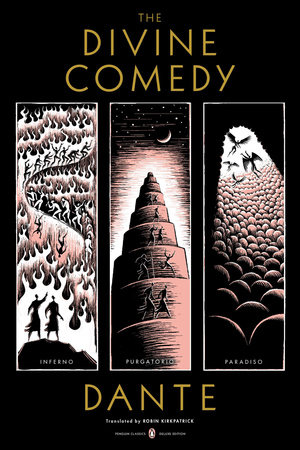
The Divine Comedy: the best one-volume starting point
Author: Dante Alighieri.
Translator or editor: Robin Kirkpatrick, translator, introduction, and notes; Eric Drooker, illustrator.
Edition: Penguin Classics Deluxe Edition, 2013, paperback, 752 pages, ISBN 9780143107194.
Dependency level: Target text — the work being prepared for.
Why this edition: It keeps all three canticles in one volume, uses supple blank verse rather than forcing Dante’s interlocking rhyme into English, and supplies maps, chronology, introduction, and notes substantial enough for a first serious reading.
Main limitation: Readers who want line-by-line scholarly commentary may prefer the Hollander translation and apparatus, in print or through the Princeton Dante Project, as a companion rather than a replacement.
The Short Answer
You can begin Dante after a modest preparation: learn the Christian map of Hell, Purgatory, and Paradise; read or review Virgil’s Aeneid Book VI; know why Dante was exiled from Florence; and recognize that the poem treats desire, free will, repentance, and divine justice as parts of one moral order. Everything else can be learned while reading.
That is the central judgment of this guide. How to Prepare for Reading Dante’s Divine Comedy should not become a six-month detour through medieval philosophy. The poem was certainly written out of a culture saturated in Scripture, classical poetry, scholastic argument, liturgy, civic faction, and courtly love, but Dante also builds explanations into the journey. Virgil lectures. Beatrice argues. Souls tell their histories. The landscape itself teaches. A reader who arrives with a few coordinates can let the poem supply much of the rest.
The one exception is biblical literacy. Dante can announce Virgil by name; biblical language often arrives without a label. A second exception is the literary descent to the dead. Dante’s decision to make Virgil his first guide is not a decorative tribute. It places the Christian pilgrimage inside, against, and beyond the Roman epic tradition. The most efficient preparation therefore combines selected Scripture, Aeneid VI, a short political orientation, and a well-annotated edition.
Why The Divine Comedy Is Difficult
The first difficulty is historical compression. A single canto may move from a Florentine feud to a Roman hero, from a biblical phrase to an Aristotelian distinction, then end with a joke whose target was obvious in fourteenth-century Italy. Notes can identify the references, but a reader still needs to know which kinds of references carry structural weight. Not every name is a prerequisite. Virgil, Scripture, the moral architecture of the afterlife, and Dante’s exile are.
The second difficulty is that the poem looks simpler than it is. Its journey is extraordinarily concrete: caves, rivers, gates, ledges, stars, bodies, voices. Yet those places also organize moral and intellectual states. The journey through Hell, Purgatory, and Paradise is at once narrated event, ethical education, political diagnosis, and theological ascent. The poem’s original title was Comedìa; the adjective divina became standard later. Treccani’s account of the poem’s composition and title notes its composition in exile and the later stabilization of “Divina Commedia” after the 1555 Venice edition.
The third difficulty is formal. One hundred cantos are distributed as thirty-four in Inferno and thirty-three each in Purgatorio and Paradiso. Terza rima—Dante’s chained ABA BCB CDC rhyme scheme—makes forward motion audible in Italian. Giuseppe Mazzotta’s Yale lecture on the opening cantos is particularly useful for seeing how numerical structure, style, and Dante’s rivalry with classical journeys work together.
Finally, translation creates a productive loss. English cannot preserve every semantic shade, syntactic pressure, rhyme chain, and register shift at once. A heavily rhymed translation may reproduce pattern by taking liberties elsewhere; a more semantically exact version may sacrifice music. This is why edition choice matters more than preliminary encyclopedic study.
There is also a narratological difficulty that background reading cannot solve for you: the traveler called Dante is not identical with the poet who has already survived the journey and composed it. The pilgrim is frightened, mistaken, pitying, angry, and repeatedly corrected; the poet controls the sequence in retrospect. First-time readers often mistake every emotional response of the pilgrim for the poem’s final judgment. An annotated edition can flag the problem, but only attentive reading teaches the distinction. It is one reason to resist commentary that explains each canto before you encounter its dramatic pressure.
The Dependency Map at a Glance
Essential Before Reading
Essential before reading A biblical map, not the whole Bible. The modern reader’s largest cultural gap is not ignorance of one obscure Florentine; it is the loss of Scripture as an ambient language. Peter S. Hawkins’s chapter “Dante and the Bible” in The Cambridge Companion to Dante makes the scale clear: biblical words, stories, liturgy, and images permeate Dante’s writing, often without explicit signposts.
For preparation, read selectively: Genesis 1–3 for creation and fall; Psalms of penitence such as 51 and 130; the Sermon on the Mount and Matthew 25 for beatitude and judgment; John 1 for Logos and divine light; 1 Corinthians 13 and 15 for charity and resurrection; Revelation 21–22 for the final vision of transformed creation. These passages establish a grammar. Your notes can supply the rest. Dante’s scriptural world was mediated largely through the Latin Vulgate, liturgy, preaching, and medieval exegesis, so no modern English Bible reproduces his experience exactly.
ESSENTIAL PREREQUISITE
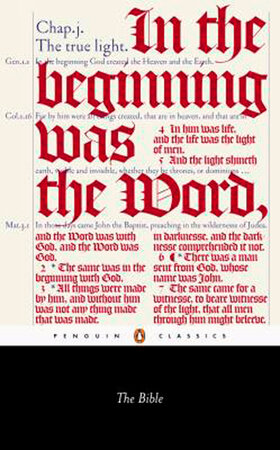
The Bible: a practical English reference, not Dante’s historical Bible
Author: Multiple biblical authors.
Translator or editor: King James Version; edited, introduced, and annotated by David Norton.
Edition: Penguin Classics, 2006, paperback, 2000 pages, ISBN 9780141441511.
Dependency level: Essential before reading
Why it matters: It gives one-volume access to the Old Testament, Apocrypha, and New Testament. The KJV postdates Dante by centuries, so use it for English access, not as evidence of Dante’s wording.
How much to read: Selected passages only; do not turn “read Dante” into “read the entire Bible first.”
Essential before reading Virgil’s descent to the dead. Read Book VI of the Aeneid in Robert Fagles’s translation, or another dependable translation. Aeneas enters the underworld, encounters the dead, learns a providential Roman future, and returns. Dante Christianizes, personalizes, and contests that structure. Knowing the episode makes Virgil’s authority—and the limits placed on that authority—far more legible.
Do not make the whole Aeneid a barrier. If time permits, Books I, II, IV, and VI give the richest preparation: exile and destiny; the fall of Troy; Dido; the underworld. Book VI alone is the minimum. Homer is more distant here: important to Virgil and to Dante’s Ulysses, but not a first-line prerequisite for beginning the Comedy.
Strongly Recommended Background
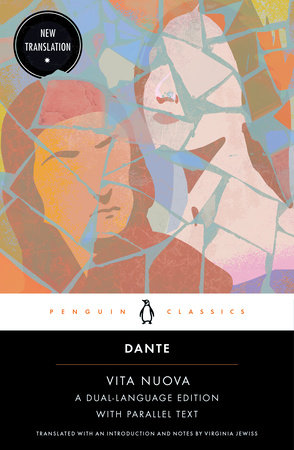
Strongly recommended Vita Nuova. This is the rare earlier work worth reading complete before the Comedy. It shows Dante converting personal love into poetic vocation, joining lyric poems to retrospective prose commentary, and making Beatrice a figure whose significance exceeds ordinary biography. The later poem does not simply continue the earlier book, but it remembers and transforms it.
STRONGLY RECOMMENDED
Vita Nuova: the shortest route to Beatrice and Dante’s poetic self
Author: Dante Alighieri.
Translator or editor: Virginia Jewiss, translation, introduction, and notes.
Edition: Penguin Classics dual-language edition, 2022, 224 pages, ISBN 9780143106203.
Dependency level: Strongly recommended
Why it matters: Facing Italian and clear notes let readers see the early Dante’s lyric technique while following the transformation of Beatrice from beloved woman into theological-poetic sign.
How much to read: The whole book; it is brief enough to repay complete reading.
Strongly recommended Florence, faction, exile. You need one compact political timeline, not a history of medieval Italy. Around the fictional Easter journey of 1300, Florence was divided between White and Black Guelphs. The Black victory, aided by Charles of Valois and entangled with Pope Boniface VIII’s policies, led to Dante’s exile in 1302. The University of Texas Danteworlds guide to Inferno VI gives a concise account of the factional crisis that the poem repeatedly converts into prophecy and judgment.
Also learn the larger distinction between papal spiritual authority and imperial temporal authority. Dante’s politics cannot be reduced to “pro-emperor, anti-pope,” but the conflict helps explain why corrupt popes, civic disorder, Rome, and empire recur so insistently. Peter Hainsworth and David Robey’s Dante: A Very Short Introduction is a better preparatory tool than plunging into Monarchia before the poem.
Keep the fictional date of the journey—Easter season 1300—separate from the later date of composition. Dante can therefore make characters “predict” events that the author and his first readers already knew, including his own exile. These prophecies are not ornamental fortune-telling. They let the poem dramatize the gap between the pilgrim’s partial knowledge and the poet’s retrospective judgment, while turning private catastrophe into part of a providential historical argument. One good political chronology is enough to make that machinery visible.
Helpful but Optional Context
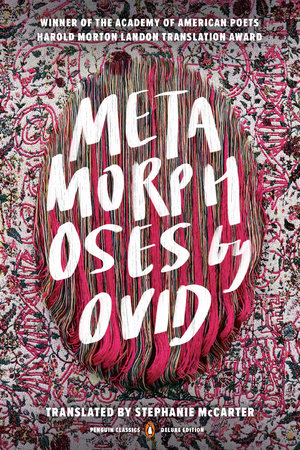
Helpful background Classical myth becomes progressively useful when Dante turns mythological figures into moral examples, rivals Ovidian transformations, or rewrites pagan stories within Christian history. Ovid is therefore a book to keep nearby rather than a book to finish first.
HELPFUL BACKGROUND
Metamorphoses: Dante’s mythic storehouse and rival
Author: Ovid.
Translator or editor: Stephanie McCarter.
Edition: Penguin Classics Deluxe Edition paperback, 2023, 608 pages, ISBN 9780143134237.
Dependency level: Helpful background
Why it matters: Dante repeatedly assumes a mythic vocabulary formed by Ovid, yet he also competes with Ovid’s poetry of bodily transformation.
How much to read: Consult relevant stories as they arise; complete reading is optional.
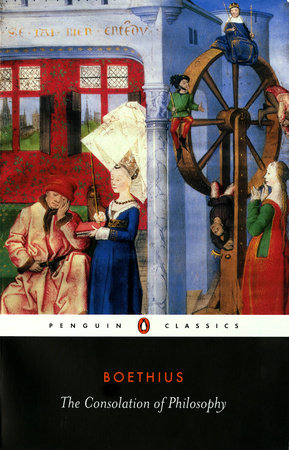
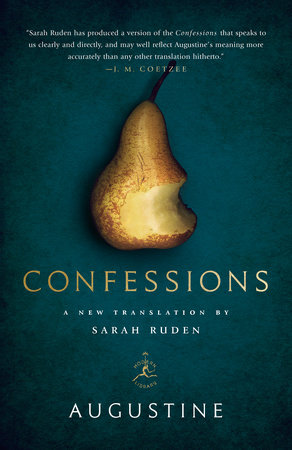
Two philosophical ancestors are similarly useful but nonessential. Boethius gives a compact medievally influential treatment of Fortune, providence, happiness, foreknowledge, and free will. Augustine offers an earlier Christian language for conversion, restless desire, memory, time, and the reordering of love. Neither should delay your first canto.
The same principle applies to medieval visual and liturgical culture. Knowing that Dante’s readers inhabited a world of public preaching, church calendars, penitential practice, Marian devotion, saints’ lives, and sacred images helps explain why theology in the poem is rarely a purely abstract system. Yet there is no single prerequisite handbook for that culture. Let the cantos cue your research: consult a note when a hymn, feast, biblical type, or ecclesiastical institution becomes structurally important, and move on when it is merely local texture. Selective curiosity is more useful here than premature mastery.
HELPFUL BACKGROUND
The Consolation of Philosophy: Fortune, providence, and freedom in compact form
Author: Boethius.
Translator or editor: Victor Watts, translation, introduction, and preface.
Edition: Penguin Classics, 2000, 192 pages, ISBN 9780140447804.
Dependency level: Helpful background
Why it matters: Its dialogue between a suffering exile and Philosophy gives a powerful conceptual backdrop to Dante’s treatment of Fortune, true happiness, providence, and moral responsibility.
How much to read: Complete if you have time; otherwise Books II and IV–V are the most useful.
HELPFUL BACKGROUND
Confessions: the inward journey behind a public pilgrimage
Author: Augustine of Hippo.
Translator or editor: Sarah Ruden.
Edition: Modern Library paperback, 2018, 528 pages, ISBN 9780812986488.
Dependency level: Helpful background
Why it matters: Augustine’s movement from disordered desire toward conversion offers a deep Christian precedent for the Comedy’s education of the will.
How much to read: Books I, VIII, X, and XI are sufficient preparation; complete reading can wait.
Concepts to Learn First
Allegory without reducing the poem to a code
Dante’s journey invites moral and theological interpretation, but “allegory” should not mean that every person is merely a symbol with one fixed translation. The poem insists on concrete personalities, places, histories, arguments, and emotions while making them bear larger significance. Learn to ask two questions at once: what is happening to this character here, and what pattern of desire, error, justice, or knowledge does the scene expose?
Contrapasso
Contrapasso names the fitting relation between sin and punishment that readers often notice in Inferno: punishment can resemble, invert, literalize, or expose the logic of a soul’s earthly choice. Do not turn it into a mechanical chart. Some punishments have contested explanations, and Dante’s moral taxonomy changes as the journey advances.
Free will, responsibility, and providence
The afterlife is meaningful only if human choices matter. Dante can therefore affirm divine providence while insisting on moral responsibility. Fortune is not an excuse; stars do not absolve conduct; foreknowledge does not simply erase freedom. You need the tension, not a solved scholastic formula, before beginning.
Ordered and disordered love
One of the poem’s most important ideas is that moral failure often concerns love aimed badly, weakly, or excessively. This becomes explicit in Purgatorio, where the seven capital vices are organized as distortions of love. Modern readers who imagine medieval ethics only as rule enforcement miss the poem’s psychology: conversion requires learning to desire rightly.
Purgation
Dante’s Purgatory is neither a second Hell nor a mere waiting room. Its souls are saved; punishment is medicinal and educative. The historical doctrine of an intermediate purgatorial state was well established by Dante’s lifetime, and the Cambridge study of Dante’s Christian ethics usefully links the poem’s mountain to the newly crystallized doctrine of Purgatory and the established tradition of the seven capital vices.
Reason, revelation, and the limits of Virgil
Virgil represents far more than “reason” in a simple diagram: he is poet, Roman authority, moral teacher, cultural ancestor, and beloved guide. Yet his eventual inability to lead Dante into the highest realm dramatizes a limit. Human reason and classical virtue are genuine goods in the poem; they are not the whole route to beatitude. Keep that distinction flexible enough for the poem to complicate it.
Beatific vision
The final goal is not simply residence in a pleasant heaven. Christian beatitude is direct fulfillment in the vision and love of God. Paradiso becomes more doctrinal because knowledge itself belongs to blessedness. Readers should expect argument, paradox, and increasingly strained visual language as the poem approaches what it says exceeds ordinary representation.
None of these concepts needs to be mastered as a scholastic definition before Canto I. The useful threshold is recognition: know enough to notice when Dante is making a claim about freedom, love, justice, purification, or the limits of human understanding, then let the poem sharpen the terms.
The Texts You Do Not Need to Read First
You do not need Thomas Aquinas’s Summa Theologiae. Dante belongs to the scholastic intellectual world and often converges with Thomistic positions, but calling the Comedy a poetic transcript of Aquinas is too simple. Learn basic concepts first; use Aquinas selectively when a theological question becomes important.
SPECIALIST TEXT
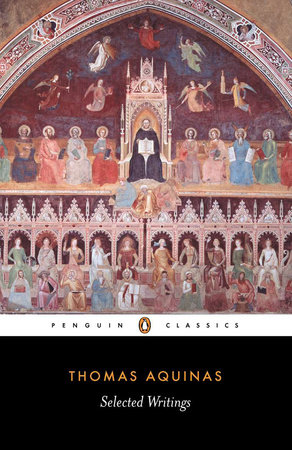
Selected Writings of Thomas Aquinas: use for questions, not as an entrance toll
Author: Thomas Aquinas.
Translator or editor: Ralph McInerny, selection, translation, and introduction.
Edition: Penguin Classics, 1999, 450 pages, ISBN 9780140436327.
Dependency level: Relevant only for specialists
Why it matters: Selected texts clarify faith and reason, virtue, law, the soul, providence, and beatitude without pretending Dante simply versifies Aquinas.
How much to read: Consult thematically during Purgatorio and Paradiso; no complete pre-reading is required.
You also do not need the whole Convivio or Monarchia, all of Aristotle, all of Virgil, all of Ovid, Homer’s epics, Boccaccio’s life of Dante, or a shelf of twentieth-century commentary. Those are legitimate scholarly routes, not admission requirements. Reading too much commentary first has a particular cost with Dante: you begin recognizing commentators’ arguments before you have felt the poem’s own surprises.
Nor should you treat every medieval cosmological detail as prerequisite science. Learn the broad geocentric picture—Earth at the center, the planetary spheres above, the Empyrean beyond the physical heavens—then let maps and notes handle the machinery. The poem turns cosmology into an architecture of knowledge; exhaustive astronomy beforehand produces diminishing returns.
The Full Scholarly Preparation Route
A scholarly route should deepen the dependencies in an order that preserves the poem as poem.
- Begin with Dante’s earlier lyric self. Read Vita Nuova completely, then selected Convivio passages on human knowledge and happiness. The aim is to see continuities and revisions, not to read chronologically for its own sake.
- Reconstruct the classical ancestry. Read the whole Aeneid, then selected Ovid. Add Lucan and Statius only when your edition’s notes reveal why Dante invokes them. Their presence becomes especially important as Dante creates a Christian canon that nevertheless depends on pagan poetic authority.
- Expand the Christian archive. Read a broader biblical selection, Augustine’s Confessions, and Boethius’s Consolation. Learn how medieval exegesis could move among literal, moral, allegorical, and anagogical senses without assuming Dante’s poem works as a rigid four-column cipher.
- Add scholastic precision. Consult Aquinas on virtue, law, providence, the soul, resurrection, and beatitude, while comparing other medieval authorities where commentary indicates them. The purpose is doctrinal discrimination, not proving that Dante belongs to one system.
- Study the political Dante. Read Monarchia after you know the basic Florentine and papal-imperial context. This clarifies why universal empire can appear in the poem as a solution to disordered temporal desire without turning the Comedy into a political tract.
This route is appropriate for graduate seminars, translators, and readers planning sustained secondary research. It is excessive for a first encounter unless the preparatory texts are already part of your interests.
Recommended Companions While Reading
The best free scholarly companion is the Princeton Dante Project. It places Giorgio Petrocchi’s Italian critical text beside the Robert and Jean Hollander translation and provides historical and interpretive notes, audio, minor works, and connections to the Dartmouth Dante Project. Its strength is depth on demand. Its limitation is the same: a first-time reader can disappear into commentary and forget to finish the canto.
Prue Shaw’s Reading Dante: From Here to Eternity is the strongest single book-length companion for the serious general reader. Shaw is concise enough to accompany a first reading but intellectually independent enough not to become a paraphrase machine. Read its relevant chapters alongside or immediately after canticles, rather than before every episode.
For thematic essays, Rachel Jacoff’s second-edition Cambridge Companion to Dante remains especially useful because its chapters isolate the classical poets, Bible, theology, Florence, empire, language, and individual canticles. It is a reference companion, not a book to read cover to cover before Canto I.
A practical rule: read the canto first, consult your edition’s notes second, and open a larger companion third. This preserves the encounter while still letting scholarship correct anachronistic assumptions.
Suggested Reading Sequence
- Orient yourself. Complete the minimum biblical, Virgilian, and political preparation. Read the translator’s note and maps; save a long interpretive introduction if it begins telling you what every major episode means.
- Read Inferno with forward momentum. Stop for Virgil, Ulysses, Florence, papal politics, and major classical myths. Do not research every condemned Italian for twenty minutes.
- Before Purgatorio, reset the moral model. Review the seven capital vices, penitence, suffrages for the dead, and ordered love. This canticle rewards slower attention to liturgy, music, and communal prayer.
- Before Paradiso, accept abstraction. Review the geocentric heavens, beatific vision, and the reason/revelation distinction. Expect theological arguments to be part of the poetry, not interruptions of it.
- Finish before overinterpreting. Let the final cantos retroactively alter your understanding of the earlier ones. Only then read a major companion or sustained critical interpretation in sequence.
- Return selectively. Revisit cantos that now look different: Francesca, Farinata, Brunetto, Ulysses, the terrace of pride, the earthly paradise, Cacciaguida, and the final vision are obvious candidates, but your own points of resistance matter too.
This sequence answers How to Prepare for Reading Dante’s Divine Comedy by making preparation recursive. Some background belongs before the poem; more becomes meaningful only after Dante has given you a problem to solve.
What to Read Afterward
Better read afterward Read Monarchia if Dante’s theory of empire and papal authority has become a live question; read the Convivio for the philosophical ambitions that the Comedy both inherits and supersedes; return to Vita Nuova to see how radically the role of Beatrice has changed.
Then follow the afterlife rather than the ancestry. Boccaccio’s lectures and life of Dante help reveal early canonization; later poets from Chaucer to T. S. Eliot show forms of appropriation rather than simple “influence.” Modern responses are especially valuable after completion because they expose what later cultures select from Dante—Hell, exile, political judgment, terza rima, Beatrice, visionary authority—and what they leave behind.
For a second reading, make translation itself a critical problem. Compare a canto in Kirkpatrick with the Hollander translation and one rhymed English version. The discrepancies will show where English Dante is a series of editorial decisions: rhyme versus semantic pressure, explanatory clarity versus strangeness, modern idiom versus medieval texture.
Related BookInLight Reading Guides
Editorial research and authorship: This reading guide was researched and written by the BookInLight Department of Literature and Comparative Humanities, with bibliographical review, source verification, and editorial fact-checking by the BookInLight research team. Readers who identify a factual correction, an overlooked source, an interpretive suggestion, or another constructive way to improve the guide are warmly invited to share it.
Art direction and rights: The editorial art direction, visual composition, cover selection, and presentation of images were developed by the BookInLight Art Department. Individual book covers remain the property of their respective publishers, designers, artists, and rights holders and are credited below. Complete republication, reproduction, translation, or reuse of this article, whether in print or digital form, requires prior written authorization from BookInLight.
Sources and Further Reading
Primary Texts and Editions
1. Dante Alighieri. The Divine Comedy. Translated, introduced, and annotated by Robin Kirkpatrick. Penguin Classics Deluxe Edition, 2013. Publisher edition record. Supports the recommended translation, apparatus, ISBN, publication date, and format.
2. Princeton Dante Project. Project information. Documents use of Giorgio Petrocchi’s critical Italian text and the project’s scholarly purpose.
3. Dante Alighieri. Vita Nuova. Translated, introduced, and annotated by Virginia Jewiss. Penguin Classics, 2022. Publisher edition record. Supports the dual-language edition and its relevance to Beatrice and Dante’s early poetics.
4. Virgil. The Aeneid. Translated by Robert Fagles; introduction by Bernard Knox. Penguin Classics, 2010. Publisher edition record. Supports the recommended English route to Virgil, especially Book VI.
5. The Bible. King James Version, edited with introduction and notes by David Norton. Penguin Classics, 2006. Publisher edition record. Used only as a modern English reference edition, not as Dante’s historical scriptural text.
6. Ovid. Metamorphoses. Translated by Stephanie McCarter. Penguin Classics Deluxe Edition, paperback 2023. Publisher edition record. Supports the optional classical-myth route.
7. Boethius. The Consolation of Philosophy. Translated and introduced by Victor Watts. Penguin Classics, 2000. Publisher edition record. Supports discussion of Fortune, providence, happiness, and free will.
8. Augustine. Confessions. Translated by Sarah Ruden. Modern Library, paperback 2018. Publisher edition record. Supports the optional route through conversion, desire, memory, and inwardness.
9. Thomas Aquinas. Selected Writings. Selected, translated, and introduced by Ralph McInerny. Penguin Classics, 1999. Publisher edition record. Supports the judgment that Aquinas is valuable selectively but unnecessary as full pre-reading.
Intellectual, Historical, and Formal Context
10. Treccani. “Divina commedia.” Supports composition history, medieval genre terminology, title history, and the poem’s cosmographic structure.
11. Peter Hainsworth and David Robey. Dante: A Very Short Introduction. Oxford University Press, 2015. Oxford Academic record. Supports the concise preparation route through autobiography, truth, humanity, politics, and God.
12. Peter S. Hawkins. “Dante and the Bible.” In Rachel Jacoff, ed., The Cambridge Companion to Dante, 2nd ed., Cambridge University Press, 2007. Supports the judgment that Scripture is the most important cultural-linguistic prerequisite.
13. George Corbett. “Reframing Dante’s Christian Ethics.” Cambridge University Press. Supports the historical relationship between Dante’s Purgatorio, purgatorial doctrine, and the seven capital vices.
14. Giuseppe Mazzotta. Open Yale Courses, Lecture 3: Inferno I–IV. Supports discussion of the title, hundred-canto architecture, terza rima, and classical precedent.
15. University of Texas at Austin, Danteworlds. “Inferno: Circle 3 — Canto 6.” Supports the concise account of White and Black Guelph politics and Dante’s exile.
Recommended Companions
16. Rachel Jacoff, ed. The Cambridge Companion to Dante, 2nd ed. Cambridge University Press, 2007. Cambridge Core record. Used for thematic companion recommendations and specialized context.
17. Prue Shaw. Reading Dante: From Here to Eternity. Liveright / W. W. Norton, paperback 2015. Publisher record. Used as the principal book-length companion recommendation for serious non-specialists.
Image Credits
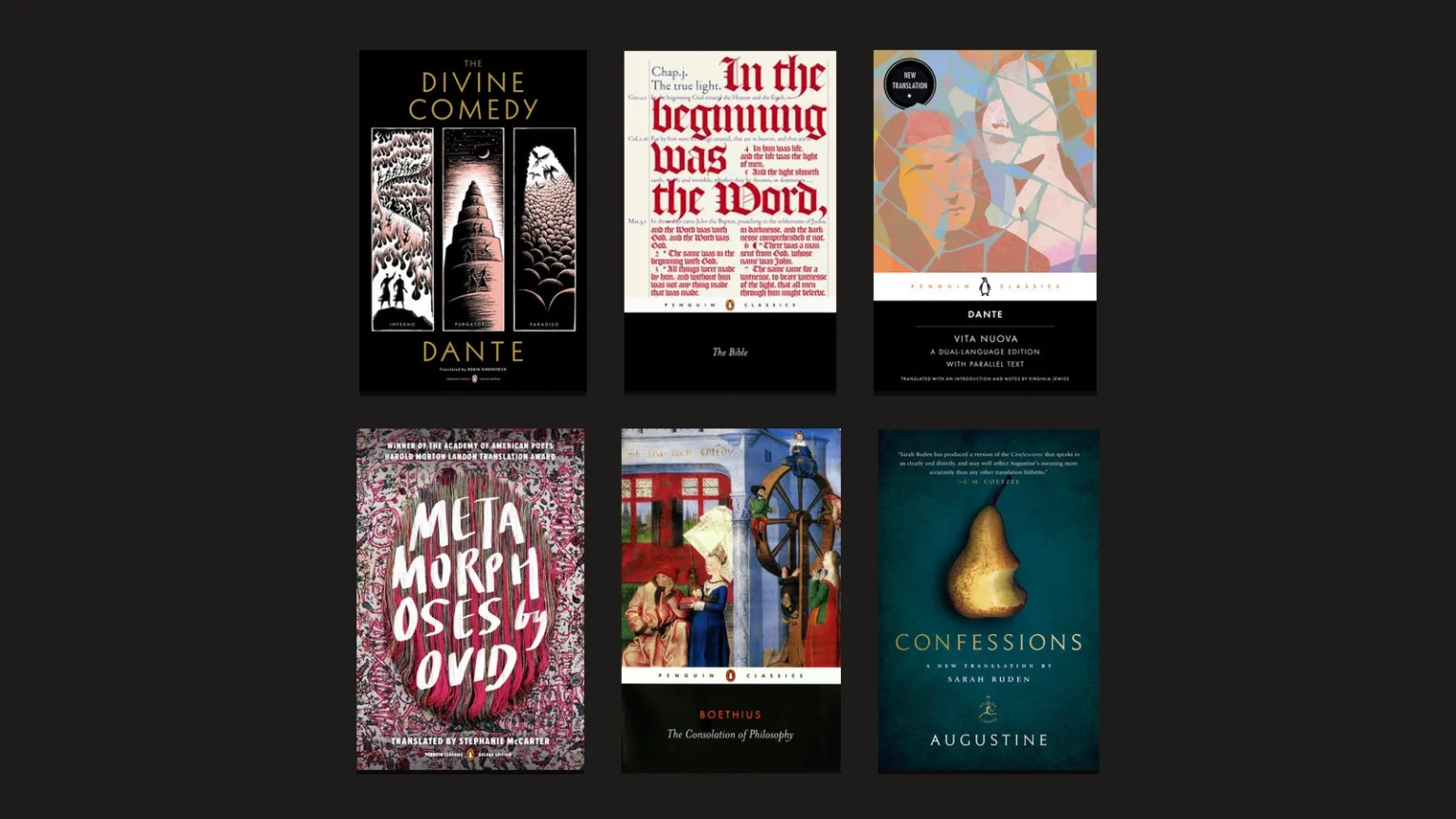
1. The Divine Comedy, Robin Kirkpatrick translation, Penguin Classics Deluxe Edition, 2013. Cover image served by Penguin Random House; authoritative edition page.
2. The Bible, David Norton edition, Penguin Classics, 2006. Cover image served by Penguin Random House; authoritative edition page.
3. Vita Nuova, Virginia Jewiss translation, Penguin Classics, 2022. Cover image served by Penguin Random House; authoritative edition page.
4. Metamorphoses, Stephanie McCarter translation, Penguin Classics Deluxe Edition paperback, 2023. Cover image served by Penguin Random House; authoritative edition page.
5. The Consolation of Philosophy, Victor Watts translation, Penguin Classics, 2000. Cover image served by Penguin Random House; authoritative edition page.
6. Confessions, Sarah Ruden translation, Modern Library paperback, 2018. Cover image served by Penguin Random House; authoritative edition page.
7. Selected Writings of Thomas Aquinas, Ralph McInerny edition, Penguin Classics, 1999. Cover image served by Penguin Random House; authoritative edition page.