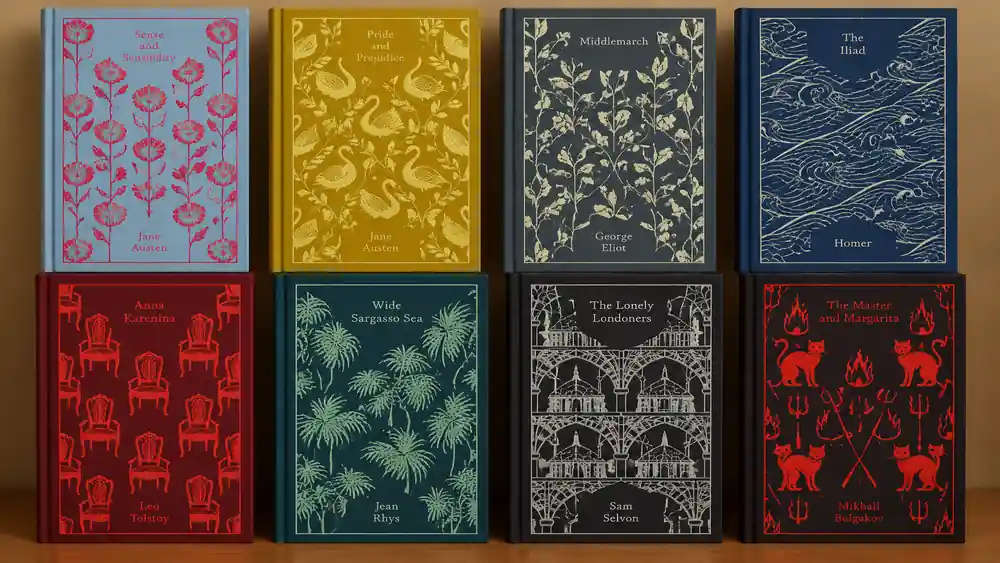
This Penguin Clothbound Classics review reaches a qualified verdict: the series is worth collecting when you want readable Penguin texts inside one of modern trade publishing’s most coherent physical designs, but not when decorative uniformity is mistaken for uniform textual authority. The strongest purchases unite Bickford-Smith’s covers with a translation or editorial package you would choose anyway; the weakest reason to buy is simply completing the shelf.
The Short Answer
Penguin Clothbound Classics are worth collecting as designed reading copies, not as automatically superior texts. Their distinction lies in Coralie Bickford-Smith’s text-derived foil patterns, cloth cases, ribbon markers and unusually durable visual system. Buy selectively: inspect the translator, editor and apparatus first. For intensive annotation, textual scholarship or classroom use, Oxford World’s Classics, Norton or another critical edition may be the better book.
The decisive point is that “Clothbound Classic” names a material format within the much larger Penguin Classics ecosystem; it does not name a single editorial method. A clothbound Iliad can preserve a historic Penguin translation lineage, Anna Karenina can embody a particular modern translation choice, and Wide Sargasso Sea can simply place a well-established English text in a prestige binding. The covers are consistent because one designer and one visual grammar bind the project together. The texts beneath them are necessarily heterogeneous because they inherit decades of Penguin editorial history.
That is why this series rewards selective collecting. The best shelf is not the longest one. The practical test in any Penguin Clothbound Classics review is whether the physical object, the edition inside it and the reader’s actual use coincide.
The Editorial Problem Penguin Clothbound Classics Set Out to Solve
The founding problem was less “How do we edit the classics?” than “What should a classic look and feel like when digital reading appears to threaten the prestige of the physical book?” Penguin had already spent more than six decades answering the first question through Penguin Classics. The Clothbound experiment emerged in a different commercial climate. In Penguin’s detailed history of the project, designer Coralie Bickford-Smith and Penguin staff recall the anxiety around ebooks in 2007–08 and the desire to make hardbacks whose material presence was part of their reason for existing.
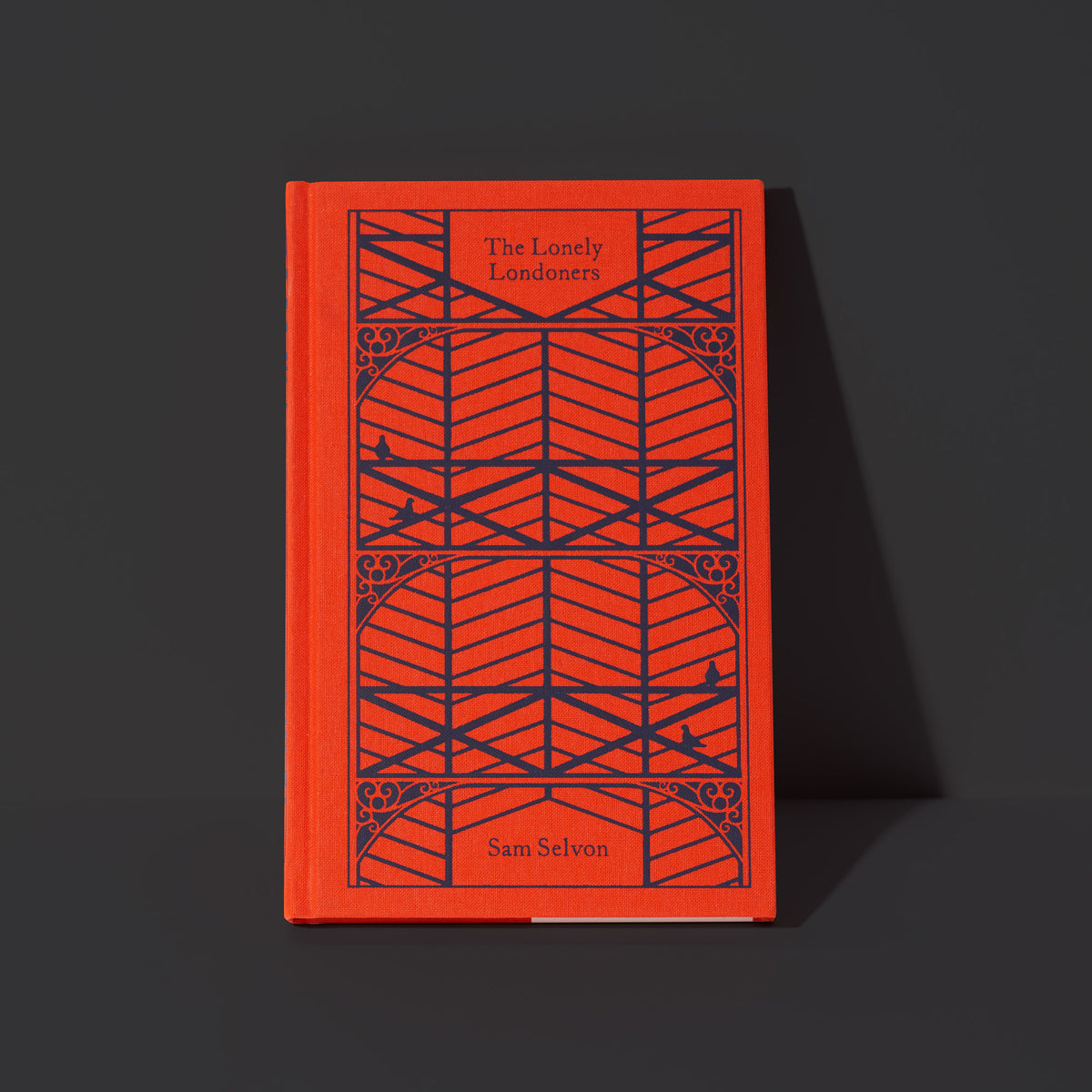
The solution was deliberately backward-looking in technique and contemporary in production. Bickford-Smith drew on Victorian publishers’ cloth bindings, discarded the wraparound dust jacket, and used a restricted two-colour logic in which foil patterns sit directly on binding cloth. Each pattern is generated from an image, motif or object found in the book itself. That matters. The series does not merely decorate famous titles; at its best it turns interpretation into surface. The cover of The Lonely Londoners, for example, abstracts the architecture of the station into a repeating visual rhythm. The books announce that design can be a form of reading.
There was also a bookselling problem. Penguin’s history identifies earlier Bickford-Smith designs and Waterstones’ interest in a broader collectable line at a more accessible price as part of the origin story. The Clothbounds therefore sat between two markets that publishers often separate: gift hardbacks and serious reading editions. They had to look special enough to be given, displayed and collected, but remain close enough to Penguin Classics prices to be bought as books rather than objets d’art.
That compromise remains the project’s central achievement. A Folio Society volume can pursue luxury production at a much higher price; a standard Penguin paperback can maximize portability and economy. Clothbound Classics attempt a middle position: prestige without turning the book into a scarce luxury object.
How the Project Took Shape
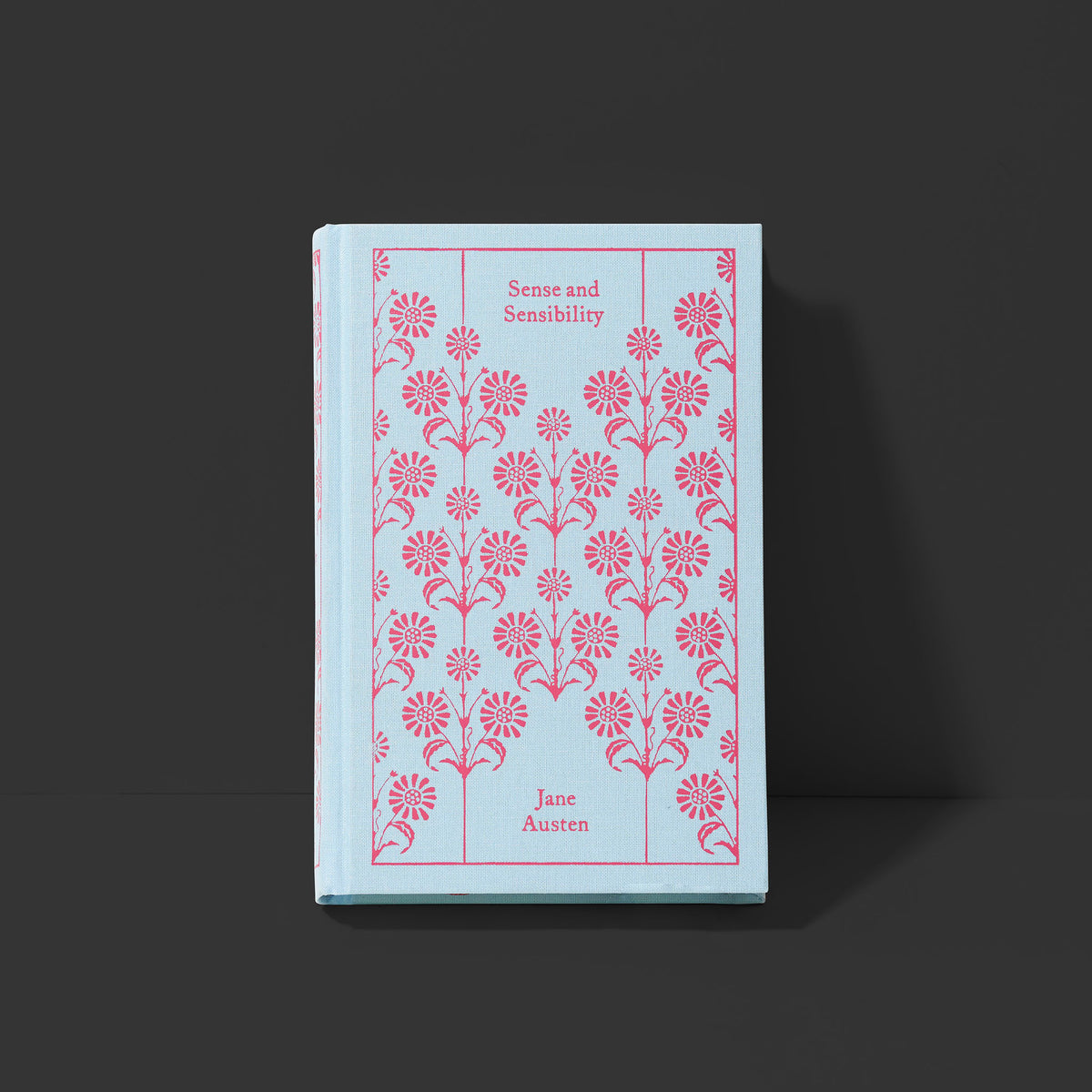
The design history begins before the official line. Bickford-Smith points to her 2005 edition of Hans Christian Andersen’s Fairy Tales and 2007 Poems for Life as precursors: intricate linework, strong colour pairing and a renewed interest in the cover as a continuous patterned field. The first Clothbound dummy was Sense and Sensibility, pale blue with deep pink flowers. Penguin’s retrospective dates the clothbound release of the Austen novel to 6 November 2008, while the current catalogued ISBN used below is dated September 2009. That small discrepancy is instructive: a design project can have a clean visual genealogy while its individual printings and ISBN histories remain bibliographically less tidy.
Production itself forced the style to evolve. Penguin’s account describes the difficulty of obtaining even foil coverage across cloth; negative space became part of the visual language partly because solid foil fields were technically unreliable. The books use Brillianta cloth over boards, stamped foil and ribbon markers. Bickford-Smith’s original grid has proved remarkably stable. She has said that the visual icons come from reading the text, then researching the author, period and earlier cover traditions. This is why the series can be immediately recognizable without giving every title the same image.
The commercial life was less linear. The early books appeared in small “drops”; by 2022 Penguin said the format had been absorbed into the ordinary Penguin Classics schedule, with new titles added when the editors felt a work suited the line. That year Penguin reported 85 Clothbound Classics and six million copies sold across 110 countries. In the autumn 2025 catalogue, The Fall of the House of Usher and Other Writings was explicitly announced as the 100th title. The official series page has continued to grow beyond that milestone.
The most important continuity is not numerical. It is that the line still behaves as a design programme laid over the broader Penguin Classics list. That gives it visual integrity without requiring a new general editor, a separate textual constitution or one translation policy. Collectors need to understand that distinction before assuming that a matching binding implies matching scholarship.
The Volumes That Best Explain the Project
These eight books are not a ranking of the “best classics.” They were chosen because together they expose the project’s operating system: its Austen origins, its aptitude for long nineteenth-century novels, its dependence on inherited Penguin translations, its gradual expansion toward modern and postcolonial canons, and the point at which attractive uniformity stops being enough. Each card refers to the exact currently catalogued Penguin Clothbound Classics edition shown.
Foundational Volume
Sense and Sensibility: Where the Visual Grammar Begins
Author: Jane Austen
Editor or introducer: Ros Ballaster; Tony Tanner also credited for an introduction
Edition: Penguin Classics hardback, 2009; ISBN 9780141040370; 448 pages
Why it matters: The pale-blue cloth and pink floral repeat are the clearest route back to the project’s first dummy and first published design. It established the rule that a familiar canonical work could be made newly desirable through material interpretation rather than textual novelty.
Main limitation: The current ISBN’s 2009 catalogue date should not be confused with Penguin’s 2008 date for the first clothbound release; collectors interested in first states need bibliographic precision beyond the series branding.
Best suited to: Readers who want one volume that explains the origin of the design language.
Reputation-Defining Volume
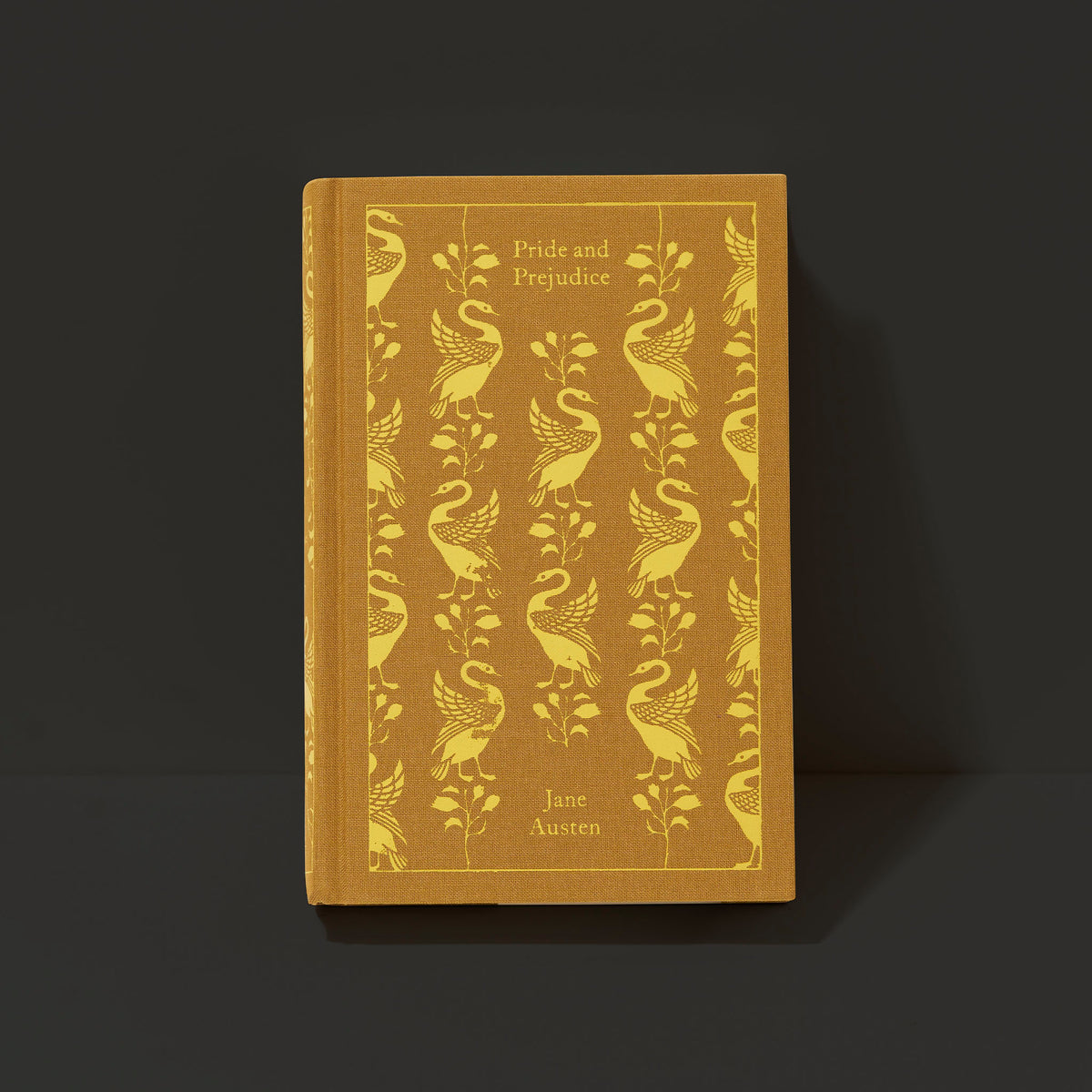
Pride and Prejudice: The Shelf Icon
Author: Jane Austen
Editor or introducer: Vivien Jones; introduction by Tony Tanner
Edition: Penguin Classics hardback, 2009; ISBN 9780141040349; 480 pages
Why it matters: This is the format’s commercial logic in miniature: a canonical text readers already know, a highly legible patterned binding and an established Penguin editorial package. It demonstrates how the series turns recognition into repeat purchase without pretending to rediscover Austen.
Main limitation: The binding is the primary novelty. Readers who already own a strong Penguin or Oxford Austen are mostly buying a new material experience, not a radically new textual one.
Best suited to: General readers and collectors who want the series at its most immediately recognizable.
Material-Design Benchmark
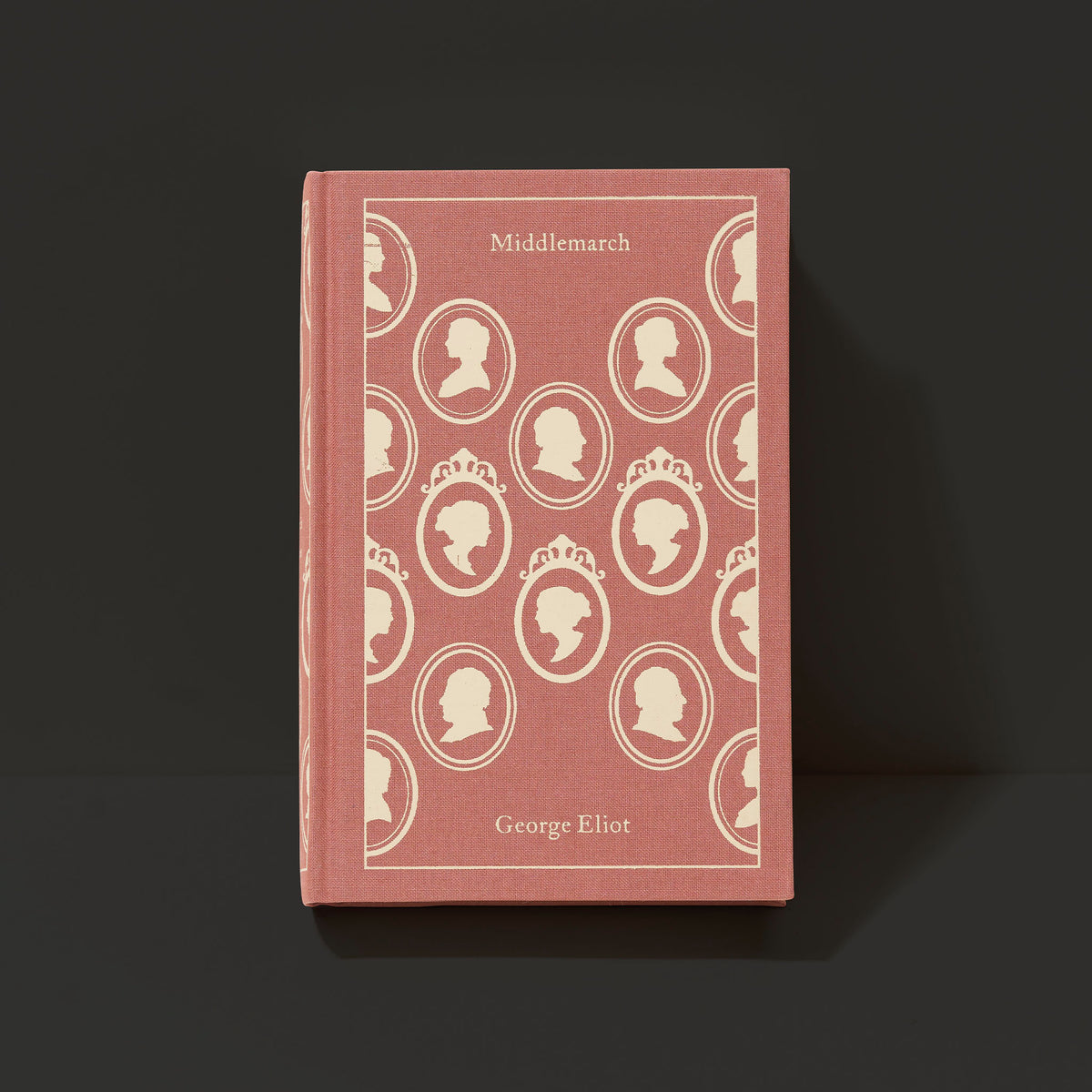
Middlemarch: When Beauty Meets a Thousand-Gram Novel
Author: George Eliot
Editor or introducer: Introduction by Rosemary Ashton
Edition: Penguin Classics hardback, 2011; ISBN 9780141196893; 880 pages
Why it matters: At roughly one kilogram, Middlemarch reveals the trade-off concealed by the elegant shelf line. The uniform B-format identity can accommodate a very large Victorian novel, but the physical book stops being a portable reading tool and becomes a substantial desk or armchair object.
Main limitation: Its heft makes a paperback or lighter hardback more comfortable for commuting, close annotation or long hand-held sessions.
Best suited to: Readers who want a handsome long-term copy and mostly read at home.
Revealing Translation Policy
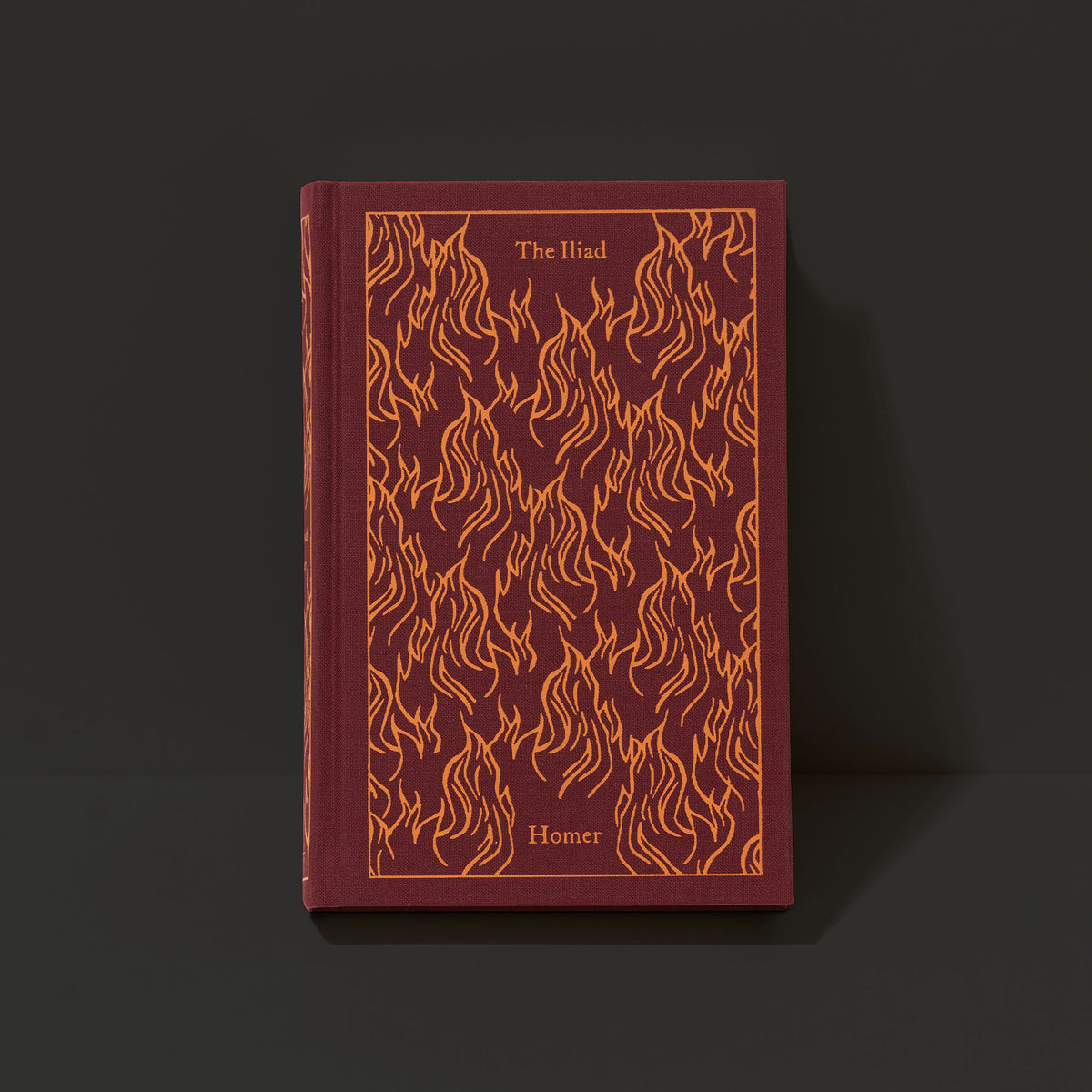
The Iliad: A Historic Penguin Translation in New Cloth
Author: Homer
Translator or editor: E. V. Rieu’s translation, revised by D. C. H. Rieu and Peter Jones; introduction and notes by Peter Jones
Edition: Penguin Classics hardback, 2014; ISBN 9780141394657; 560 pages
Why it matters: The volume makes the series’ dependence on Penguin’s editorial inheritance explicit. Clothbinding does not imply a newly commissioned translation; here it gives a distinguished historical Penguin translation tradition a prestige material form.
Main limitation: Rieu’s prose lineage is not the natural choice for readers studying Homeric metre or comparing contemporary verse translations. Translation preference should precede cover preference.
Best suited to: Readers who value Penguin’s Rieu tradition and want a durable-looking reading copy.
Competitor-Comparison Volume
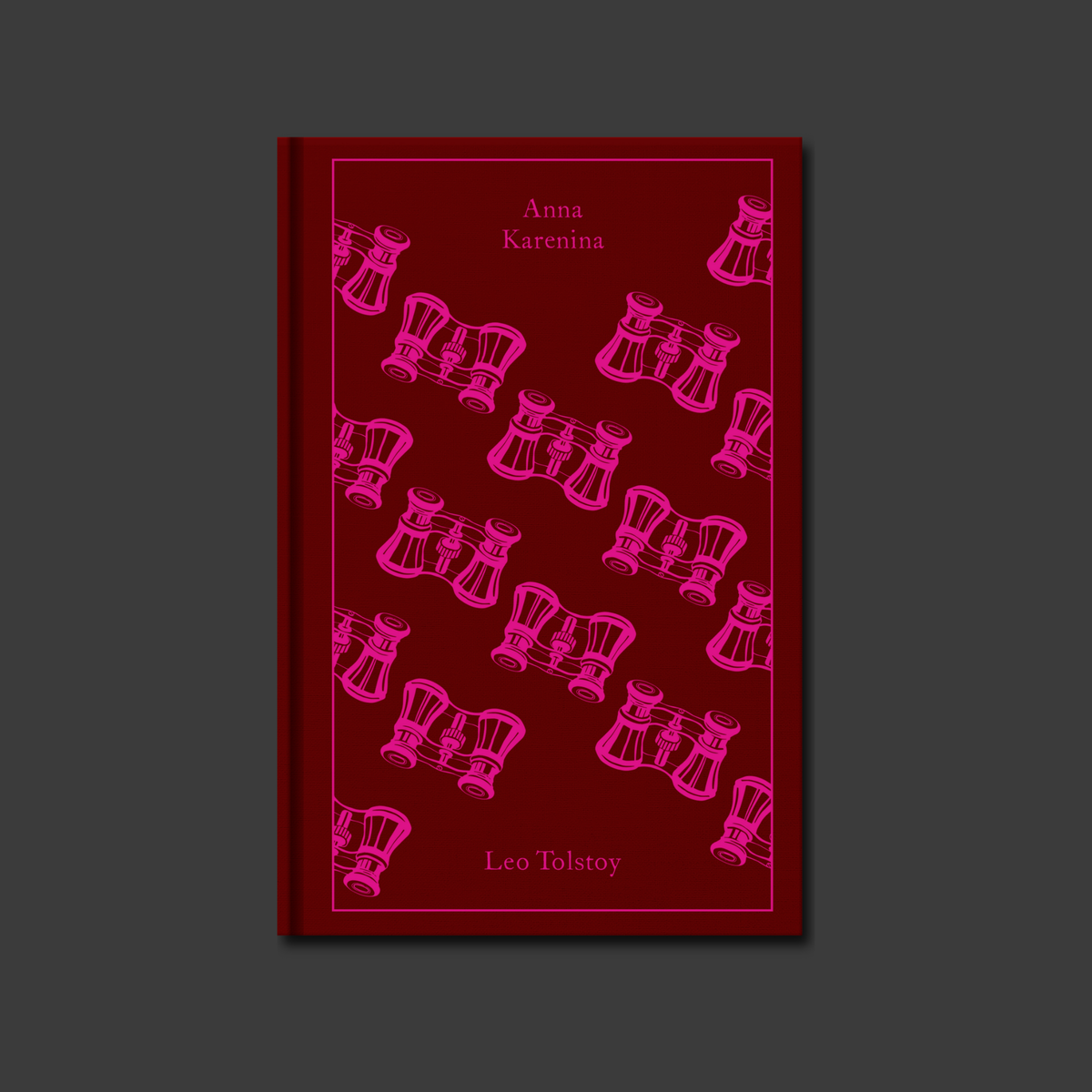
Anna Karenina: The Cover Cannot Choose the Translation for You
Author: Leo Tolstoy
Translator or editor: Richard Pevear and Larissa Volokhonsky; introduction by Richard Pevear; preface by John Bayley
Edition: Penguin Classics hardback, 2013; ISBN 9780141199610; 864 pages
Why it matters: Translation is not ancillary here. Pevear and Volokhonsky’s version has a powerful reputation and a distinct method; choosing this Clothbound means choosing their English. The object therefore forces the collector to confront a question visual uniformity can disguise.
Main limitation: Readers who prefer a different Tolstoy translator should not let the binding settle a linguistic decision. A rival edition with the preferred translation is the better purchase.
Best suited to: Readers who already know they want the Pevear–Volokhonsky translation.
Canon-Expanding Volume
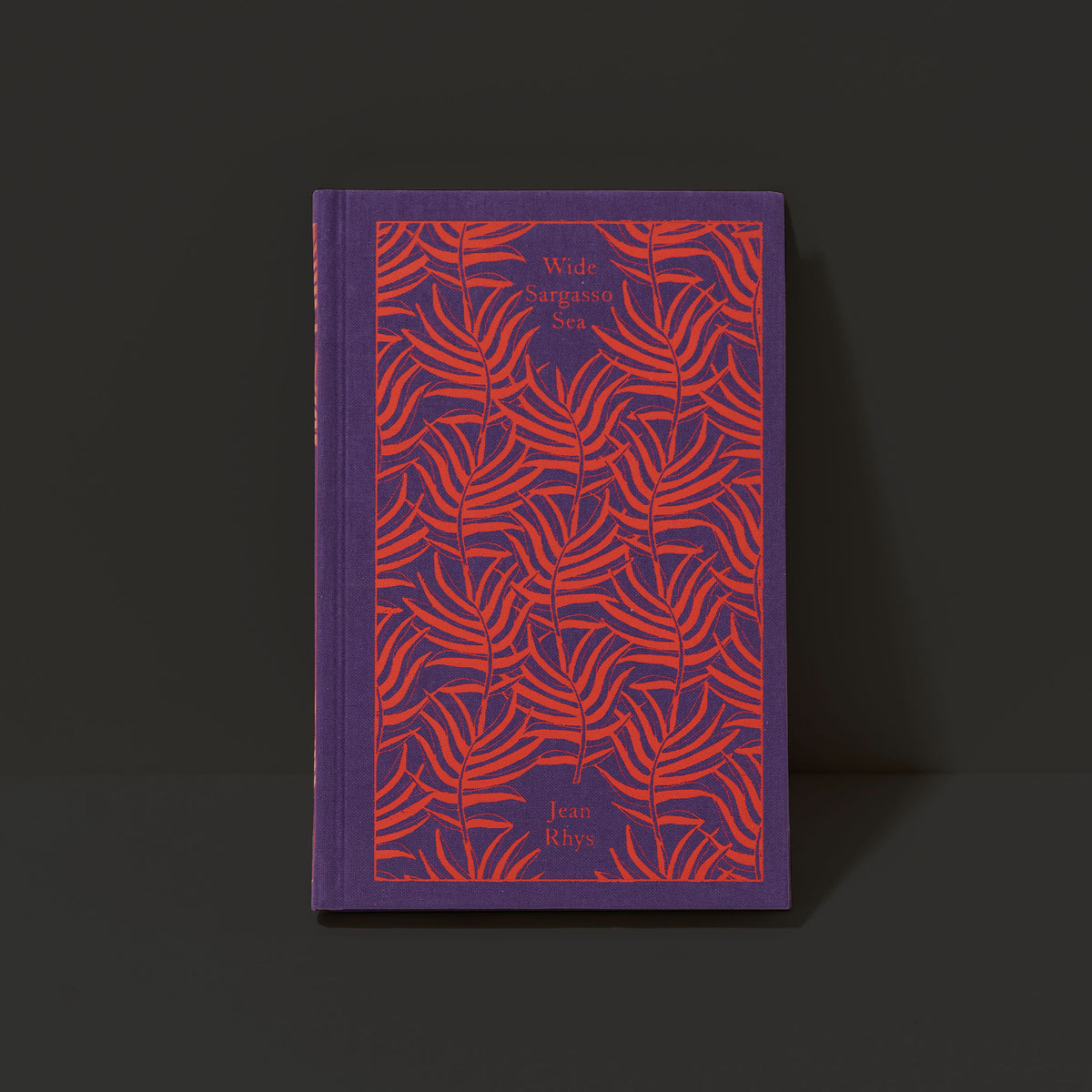
Wide Sargasso Sea: A Modern Classic Inside a Victorian-Looking System
Author: Jean Rhys
Editor or introducer: Introduction by Andrea Ashworth
Edition: Penguin Classics hardback, 2016; ISBN 9780241281901; 192 pages
Why it matters: Published in the format for the novel’s fiftieth anniversary, Rhys’s rewriting of the world around Jane Eyre makes the collection argue with its own nineteenth-century centre. The catalogue can therefore stage canon revision within the very design language associated with inherited classics.
Main limitation: One postcolonial modern classic cannot by itself establish global balance across the series.
Best suited to: Readers interested in how the Clothbounds broaden the idea of what belongs beside Austen and the Brontës.
Current-Direction Volume
The Lonely Londoners: The Canon Moves into Postwar Britain
Author: Sam Selvon
Editor or introducer: Introduction by Susheila Nasta
Edition: Penguin Classics hardback, 2021; ISBN 9780241504123; 160 pages
Why it matters: Selvon’s Caribbean migrant London complicates any idea that the Clothbound shelf is simply an upscale Victorian canon. Bickford-Smith’s station-roof motif also demonstrates the series’ strongest design principle: extracting a repeatable visual sign from the book’s social and spatial world.
Main limitation: Its inclusion marks welcome movement, but the wider catalogue remains much more deeply stocked in British and European traditions than in African, Asian, Middle Eastern or Latin American literatures.
Best suited to: Collectors who want the later series to represent the changing shape of the Penguin canon.
Current-Direction Volume
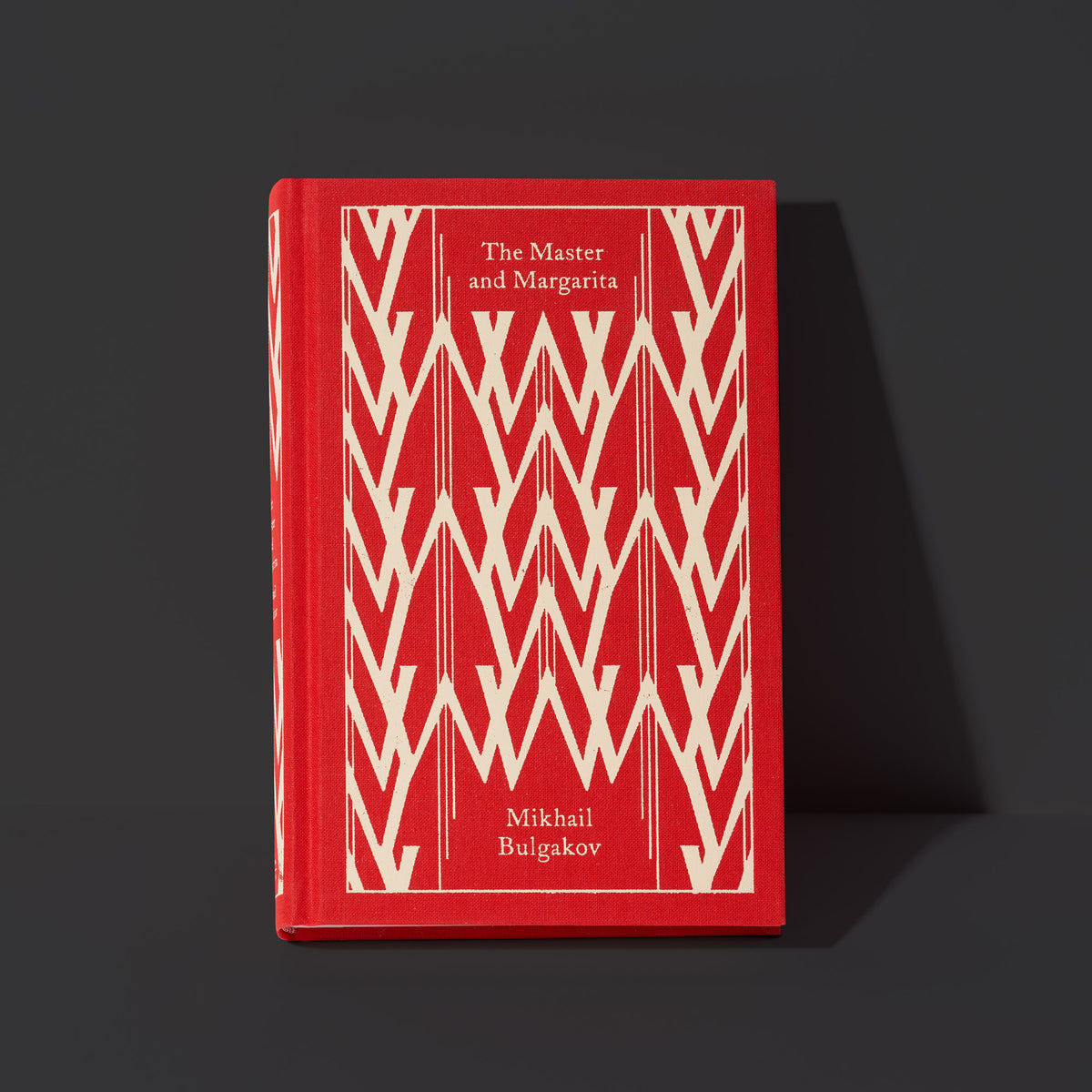
The Master and Margarita: A New Binding, an Established Translation
Author: Mikhail Bulgakov
Translator or editor: Richard Pevear and Larissa Volokhonsky; introduction by Richard Pevear
Edition: Penguin Classics hardback, 2023; ISBN 9780241552674; 432 pages
Why it matters: This recent addition shows how the mature line works: an already established Penguin Classics translation is moved into the clothbound system, gaining a distinctive visual identity without pretending that the publishing event is a fresh textual edition.
Main limitation: Collectors seeking the newest scholarship or another translation must look beyond the binding and compare editions.
Best suited to: Readers who want a modern Russian classic in the established Clothbound visual language and accept this translation.
The Series at a Glance
What the Catalogue Calls a Classic: A Penguin Clothbound Classics Review of the Canon
The catalogue’s first definition of a classic was conservative in the literal sense: it preserved a familiar core of Austen, Dickens, the Brontës, Eliot, Hardy and other authors whose long afterlives in British reading culture already needed little argument. That was commercially rational. A new physical format is easiest to establish around books readers already recognize, especially when gift buying is part of the model.
The list has widened substantially. Russian fiction, Homer, Kafka, Tolstoy, Bulgakov, Sōseki, Wu Cheng’en, Selvon, Rhys, Orwell and many twentieth-century titles now sit within the same material frame. Yet breadth should not be mistaken for balance. A current publisher listing still makes the historical centre of gravity obvious: English-language fiction, especially British fiction, remains unusually dense. The expansion is real, but the line has not become a miniature world literature in equal proportions.
That matters because material prestige is canon-forming. When the same cloth, foil, trim and typographic authority surround Austen and Selvon, the newer inclusion acquires a visible institutional equality. The design says these books belong in the same durable library. This may be the series’ most interesting intellectual effect. It does not create the canon by itself, but it changes what canonical adjacency looks like on an ordinary reader’s shelf.
The risk is that collectability encourages readers to confuse catalogue presence with proportional representation. A few Japanese, Chinese, Caribbean or Arabic-world titles can look more globally comprehensive in a colour-sorted photograph than the actual list is. The right judgment is therefore double: the series has moved beyond its original British nineteenth-century comfort zone, yet it remains structurally shaped by that inheritance.
Translation and Textual Policy
There is no autonomous Clothbound translation policy comparable to the design policy. The simplest accurate rule is that readers inherit whatever Penguin Classics edition has been selected for the format. Sometimes that is a celebrated modern translation; sometimes it is a revised historical Penguin translation; sometimes no translation is involved at all. The binding is new more often than the text is.
The Iliad edition demonstrates the point. Its English descends from E. V. Rieu’s prose translation and its later revisions, with Peter Jones supplying introduction and notes. That genealogy connects the Clothbounds to Penguin Classics’ founding translation culture; it does not establish a house preference for prose Homer in every period. Anna Karenina and The Master and Margarita, by contrast, use Richard Pevear and Larissa Volokhonsky. A collector buying “the Russian clothbounds” is therefore also buying into particular translators’ methods and reputations.
For citation, the same volume-by-volume discipline applies. These are legitimate published editions with stable ISBNs and generally named editors or translators, but the series mark alone cannot tell a scholar whether the text is based on a critical edition, whether spelling has been modernized, whether a translation was revised, or how extensively variants are documented. Those questions belong to the copyright page, editor’s note and bibliographical statement of the individual book.
The practical advice is strict: if translation is central to your reason for reading, choose the translator first and the cloth second. A beautiful edition in the wrong translation is an expensive compromise. The same is true for Shakespearean textual variants, heavily edited historical works or texts whose publication history is contested.
Introductions, Notes, and Scholarly Apparatus
The apparatus is better understood as inherited Penguin Classics infrastructure than as a Clothbound feature. This is good news in many volumes. Pride and Prejudice carries editorial work associated with Vivien Jones and Tony Tanner; Middlemarch is introduced by Rosemary Ashton; Wide Sargasso Sea by Andrea Ashworth; The Lonely Londoners by Susheila Nasta. These are not anonymous gift editions with the text dropped into a decorative shell.
But the quantity and type of help vary. Some books offer substantial introductions, chronologies, explanatory notes or bibliographies; others are closer to a reading edition. The variation is defensible because the underlying works have different editorial needs, yet it limits the usefulness of “Clothbound” as a study recommendation. A teacher cannot infer the presence of line-by-line annotation from the binding. A graduate student cannot infer a documented copy-text policy from the ribbon marker.
For independent reading, this level of apparatus is often exactly right. Penguin tends to place scholarship at the front and back of the book rather than overwhelming the page with commentary. The danger is interpretive front-loading: introductions can spoil plots or strongly frame a first reading. Readers who want to encounter a novel with minimal mediation can postpone the introduction. Researchers should verify the exact edition against a critical or scholarly apparatus where textual variants matter.
Design, Format, and the Material Idea of the Book
This is where the project becomes genuinely distinctive. The cover is not a jacket protecting the “real” book beneath it; the cover is the binding. Bickford-Smith’s system uses foil-stamped motifs directly on cloth over boards, usually with a restrained palette and a repeated icon drawn from the text. The front and back operate as one patterned field. A ribbon marker extends the sense that the book is meant to remain in use rather than merely be unwrapped once as a gift.
The design also has an unusual degree of authorship. Penguin’s 2022 history describes an internal process in which Bickford-Smith is trusted to develop the covers without the conventional cover-meeting machinery. That continuity explains why the series has aged better visually than many “deluxe classics” programmes assembled by rotating freelancers. Individual designs vary in success, but the system is coherent enough that a title from 2009 and one from 2023 still belong together.
Coherence, however, is not invulnerability. The same Penguin production account explains that adhesive price stickers once pulled foil from the covers, prompting the introduction of paper belly bands; current Penguin Shop material for some sets still warns that removing barcode stickers may affect the foil design. Collectors should therefore treat the surface as decorative cloth, not as a library binding engineered to ignore abrasion. Shelving tightly, dragging volumes against one another or handling them with the expectation of laminated-board resilience misses the nature of the object.
Nor is every volume equally comfortable. The nominally harmonious shelf contains very different bodies: Wide Sargasso Sea is a compact 192 pages; Middlemarch and Anna Karenina approach or exceed a kilogram. The clothbound format supports sustained reading best at moderate lengths. On very large novels, its prestige becomes physically conspicuous. The book looks like a unified series object even when the ergonomics change dramatically.
Price, Availability, and Academic Use
As of 10 September 2026, the selected exact-edition publisher pages range roughly from £16.99 to £25 in UK list pricing, with Pride and Prejudice and Sense and Sensibility at £18.99, The Iliad at £20 and the very long Middlemarch and Anna Karenina at £25. The Penguin Shop’s current Clothbound collection also advertises promotional multi-buy pricing—three selected books for £33 and thirty for £330. Those are promotions, not a reliable substitute for list price.
At that level, a Penguin Clothbound Classics review has to separate value from collectibility. A £17–£25 hardback that contains a serious Penguin edition, a distinctive binding and a design you actively want can be excellent value. Buying dozens to maintain a complete sequence changes the economics. The 100-title threshold alone implies a four-figure commitment at normal retail pricing, and the line continues to grow.
For academic use, the books occupy an awkward but useful middle. They are stable, identifiable editions and often contain reputable introductions and notes. They are less convenient than paperbacks for carrying to class, marking heavily or replacing cheaply. They are also not uniformly critical editions. A lecturer assigning twenty copies should normally prefer an affordable paperback with the same translation and pagination where possible. A researcher can cite a Clothbound edition responsibly when its editorial basis is appropriate, but should not cite it simply because the format is prestigious.
Collectibility is strongest when the book is still a book you intend to read. The line is mass-produced, kept in print and periodically promoted; it should not be approached as a guaranteed investment vehicle. Its “collectible” value is primarily cultural and personal: visual continuity, edition identity, and the pleasure of building a library with a recognizable material grammar.
How It Compares with Its Closest Rivals
The closest rival depends on what “worth collecting” means. For a durable hardback library, Everyman’s Library is the sharper comparison. Everyman explicitly emphasizes sewn full-cloth bindings, acid-free cream-wove paper, ribbon markers, substantial introductions and comparative chronologies. Its visual identity is quieter and less individualized. If durability, uniform page architecture and long-term library use matter more than cover-by-cover invention, Everyman often has the advantage.
For study, Oxford World’s Classics is usually more directly purposeful. OUP foregrounds critical introductions, comprehensive notes, expert translations, chronologies and bibliographies. The books are less luxurious as objects, but the series-level expectation of scholarly apparatus is clearer. When a student needs annotation rather than display value, Oxford is frequently the rational choice.
Inside Penguin itself, the Penguin English Library offers a revealing alternative: visually coordinated paperbacks of fiction in English, designed for accessible collecting and reading rather than hardcover prestige. It is cheaper, lighter and easier to annotate, but lacks the material drama of cloth and foil. The two lines share Bickford-Smith’s capacity to turn series design into a reading invitation.
Norton Critical Editions occupy another category again. For works available there, the point is not shelf beauty but textual and pedagogical density: contextual documents, criticism and stronger classroom utility. A Norton is often the better tool; a Clothbound is often the more pleasurable object. The mistake is expecting one format to win at every task.
Limitations and Contradictions
The first contradiction is productive, and it is central to this Penguin Clothbound Classics review: the series looks more editorially uniform than it is. One cover system encloses texts and translations prepared under different historical circumstances. That is not a defect by itself—Penguin Classics is too large and old for perfect uniformity—but it becomes a problem when buyers treat format as a quality seal for every textual decision.
The second is material. These books deliberately reclaim decorative binding traditions, yet the foil can be vulnerable to sticker adhesive and surface wear. The design invites handling while collectable anxiety can discourage it. A reader who becomes afraid to touch the book has allowed the object to defeat its purpose. The sensible compromise is ordinary care, not museum treatment.
The third concerns canon expansion. Later volumes such as The Lonely Londoners, Wide Sargasso Sea, Sanshiro and other translated or twentieth-century works have broadened the line. Still, the series’ deepest runs remain in familiar British and European literature. Visual equality can make that imbalance less obvious, not more.
Finally, the completionist impulse is built into the very feature that makes the books appealing. Repeating trim, spines and patterned cloth make one book look better beside another. The publisher’s bundle promotions reinforce the sequence as a collection. Yet completion is an unstable goal in an active series. The healthiest collecting principle is editorial rather than numerical: buy the editions whose texts, translations and designs justify their space.
Related BookInLight Reading Guides
Editorial research and authorship: This article was researched and written by the BookInLight Department of Publishing History and Book Studies, with bibliographical review, edition checking, source verification, and editorial fact-checking by the BookInLight research team. Readers who identify a factual correction, an overlooked source, a missing volume, an interpretive suggestion, or another constructive idea are warmly invited to share it.
Art direction and rights: The editorial art direction, visual composition, cover selection, and presentation of images were developed by the BookInLight Art Department. Individual book covers remain the property of their respective publishers, designers, artists, and rights holders and are credited below. Complete republication, reproduction, translation, or reuse of this article, whether in print or digital form, is permitted only with prior written authorization from BookInLight.
Sources and Further Reading
Series History, Design, and Catalogue
Alice Vincent, “Clothbound Classics: how a Victorian-inspired books experiment broke the internet,” Penguin, 24 August 2022 — principal source for the founding context, Bickford-Smith’s design method, materials, production history, early chronology and Penguin’s 2022 sales claim.
Penguin Clothbound Classics, official series page — current catalogue identity and continuing additions.
Penguin Classics Autumn/Winter 2025 online catalogue — identifies Poe’s The Fall of the House of Usher and Other Writings as the 100th Clothbound title.
Penguin Shop, Penguin Clothbound Classics collection — current UK promotional pricing, collection positioning and official shop imagery.
Defining Volumes
Sense and Sensibility, Penguin Classics, ISBN 9780141040370 — exact edition date, contributor credits, format, pagination and price.
Pride and Prejudice, Penguin Classics, ISBN 9780141040349 — exact edition and editorial credits.
Middlemarch, Penguin Classics, ISBN 9780141196893 — exact edition, dimensions, weight, pagination and price.
The Iliad, Penguin Classics, ISBN 9780141394657 — exact translation/revision credits, apparatus, format and price.
Anna Karenina, Penguin Classics, ISBN 9780141199610 — exact translation, introduction, pagination, dimensions and price.
Wide Sargasso Sea, Penguin Classics, ISBN 9780241281901 — exact 2016 anniversary edition and contributor information.
The Lonely Londoners, Penguin Classics, ISBN 9780241504123 — exact 2021 edition, pagination and introduction credit.
The Master and Margarita, Penguin Classics, ISBN 9780241552674 — exact 2023 edition, translation and contributor credits.
Competitors and Editorial Context
Everyman’s Library, Everyman Classics — official description of sewn full-cloth bindings, acid-free paper, ribbons, introductions and chronologies.
Oxford University Press, Oxford World’s Classics — official account of introductions, notes, translations, chronologies and bibliographies.
Penguin English Library, official series page — comparison for a design-led, collectable paperback classics programme.
BookInLight, “Penguin Classics: A Complete Guide to the Series” — parent-series editorial history, translation policy and variation across Penguin Classics.
BookInLight, “Oxford World’s Classics: A Complete Guide to the Series” — comparative analysis of scholarly apparatus and study use.
Image Credits
Sense and Sensibility, Penguin Clothbound Classics hardback, 2009, Penguin Classics. Cover image served by Penguin Shop; exact-edition record: Penguin, ISBN 9780141040370.
Pride and Prejudice, Penguin Clothbound Classics hardback, 2009, Penguin Classics. Cover image served by Penguin Shop; exact-edition record: Penguin, ISBN 9780141040349.
Middlemarch, Penguin Clothbound Classics hardback, 2011, Penguin Classics. Cover image served by Penguin Shop; exact-edition record: Penguin, ISBN 9780141196893.
The Iliad, Penguin Clothbound Classics hardback, 2014, Penguin Classics. Cover image served by Penguin Shop; exact-edition record: Penguin, ISBN 9780141394657.
Anna Karenina, Penguin Clothbound Classics hardback, 2013, Penguin Classics. Cover image served by Penguin Shop; exact-edition record: Penguin, ISBN 9780141199610.
Wide Sargasso Sea, Penguin Clothbound Classics hardback, 2016, Penguin Classics. Cover image served by Penguin Shop; exact-edition record: Penguin, ISBN 9780241281901.
The Lonely Londoners, Penguin Clothbound Classics hardback, 2021, Penguin Classics. Cover image served by Penguin Shop; exact-edition record: Penguin, ISBN 9780241504123.
The Master and Margarita, Penguin Clothbound Classics hardback, 2023, Penguin Classics. Cover image served by Penguin Shop; exact-edition record: Penguin, ISBN 9780241552674.