Illustration by Bookinlight Art Desk
History
Seven Books on the Paris Commune
A reading path through eyewitness testimony, socialist theory, feminist history, massacre, and the unfinished political imagination of 1871.
By Bookinlight



A City That Became an Argument
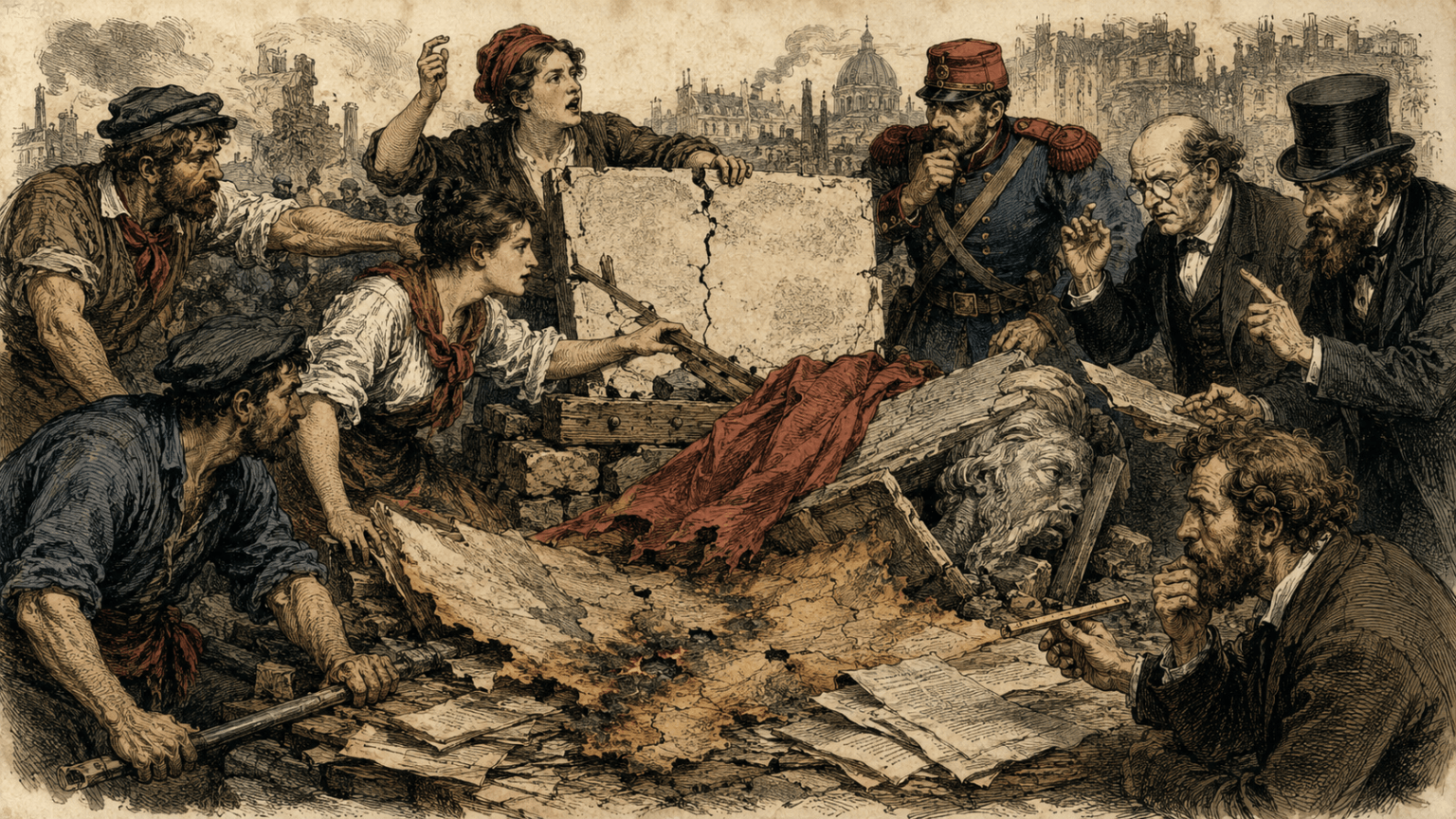
The Paris Commune lasted only a short season, but its afterlife has been unusually long. It was at once a municipal revolution, a civil war, a working-class experiment, a feminist opening, a catastrophe of repression, and a symbolic inheritance for later socialists, anarchists, republicans, and critics of state power. The best books on the Paris Commune do not simply retell the siege, the barricades, and the Bloody Week. They ask why this brief insurgent government became a permanent problem for modern political imagination: who may govern a city, what democracy demands beyond elections, and how quickly a republic can turn its own army against its own citizens.
Why These Books on the Paris Commune Still Matter
These seven books belong together because each one changes the scale at which the Commune can be read. Lissagaray gives the insurgency a witness’s urgency; Marx turns it into a theoretical event; Tombs reconstructs it as a political and military crisis; Thomas and Eichner recover women as organizers, militants, and thinkers; Merriman measures the human cost of repression; Ross returns to the Commune as an unfinished political imaginary. Taken together, they show that the Commune was not merely defeated. It was interpreted, appropriated, mourned, disciplined, revived, and repeatedly made to answer questions it never had time to settle.
The Reading Lens
The Commune as Event, Method, and Afterlife
The Commune is best read not as a single episode with a settled lesson, but as a historical pressure point. These books move from street-level witness to political theory, from institutional reconstruction to gendered memory, from massacre to utopian afterlife. Their shared force lies in refusing to let 1871 become either romantic myth or administrative failure. The Commune becomes a test of how history records defeated experiments without burying their unfinished claims.
Central Question
Can a defeated democratic experiment still alter the political imagination of later generations?
Historical Pressure
The Commune arose from war, siege, republican crisis, class conflict, and the collapse of trust between Paris and the national state.
Why These Books
Together they preserve the Commune as witness, theory, institution, gendered struggle, massacre, and future-oriented social imagination.
Seven Books for Reading the Commune Seriously
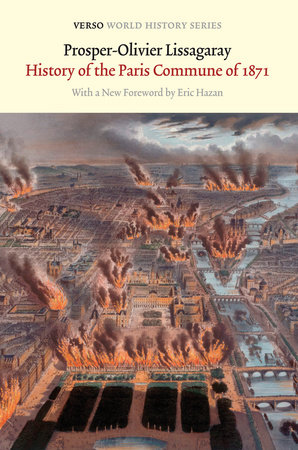
History of the Paris Commune of 1871
Prosper-Olivier Lissagaray
Best for: Readers who want the Commune from the side of defeat, witness, and political memory.
Difficulty: Intermediate
Intellectual role: The insurgent chronicle
Bookinlight Rating: ★★★★★
Lissagaray’s history remains indispensable because it is not written from a cool distance. It is animated by proximity to the catastrophe and by the desire to protect the Commune from the versions produced by its victors. The book gives readers barricades, assemblies, strategic errors, courage, rhetoric, confusion, and terror as a single historical fabric. It is partisan, but its partisanship is also its historical value: it records how defeat felt before it became a case study.
Bookinlight Note: Read Lissagaray as a counter-archive: the book’s emotional heat is part of its method.
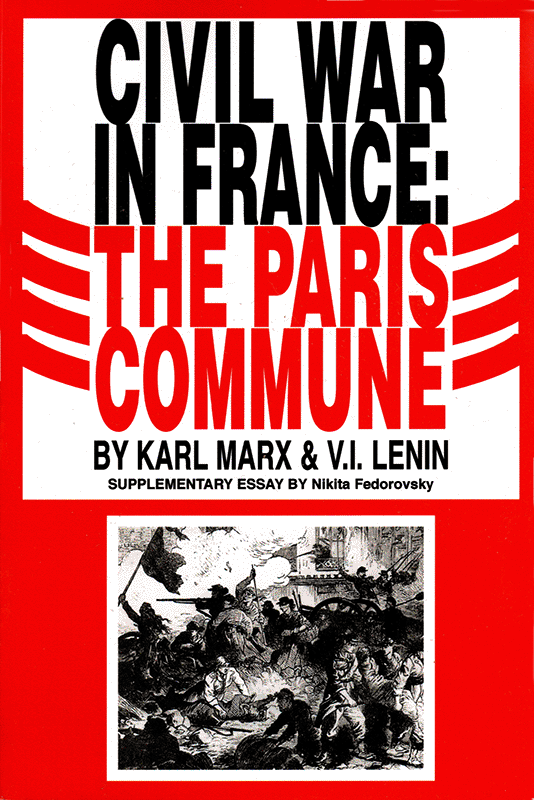
The Civil War in France
Karl Marx
Best for: Readers interested in the Commune as a theoretical break in socialist and democratic thought.
Difficulty: Advanced
Intellectual role: The conceptual foundation
Bookinlight Rating: ★★★★★
Marx’s address to the International Workingmen’s Association is short, polemical, and unusually compressed. Its importance lies less in narrative completeness than in the political form it recognizes: a working-class government that appeared to dismantle the inherited machinery of centralized state power. For readers of the Paris Commune, Marx supplies the conceptual vocabulary of state, class, emancipation, and democratic administration. The text is best read beside historical accounts, where its brilliance and selectivity become equally visible.
Bookinlight Note: Pair Marx with Tombs to see the distance between theoretical clarity and historical complication.
The Paris Commune 1871
Robert Tombs
Best for: Readers seeking a disciplined historical overview before moving into more polemical or theoretical accounts.
Difficulty: General to Intermediate
Intellectual role: The historical map
Bookinlight Rating: ★★★★★★
Tombs is valuable because he resists turning the Commune into a single moral emblem. He reconstructs the overlapping military, social, municipal, and political pressures that made the event possible and then doomed it. The prose is concise, the framework clear, and the interpretive stance measured. Readers who come to the Commune through mythology will find here a useful corrective: a brief revolution made of institutions, contingencies, fears, rival legitimacies, and very real strategic limits.
Bookinlight Note: Use Tombs as the article’s stabilizing center: he helps every other book become sharper.
The Women Incendiaries
Edith Thomas
Best for: Readers who want the gendered memory of the Commune placed at the center, not the margin.
Difficulty: Intermediate
Intellectual role: The feminist recovery
Bookinlight Rating: ★★★★★★
Thomas’s book matters because the myth of the pétroleuse was never merely a rumor about arson. It was a gendered weapon used to turn women’s political presence into moral panic. By reconstructing the lives and representations of women associated with the Commune, Thomas shows how revolution and counterrevolution both fight over the meaning of female agency. The book is especially powerful when read as a study of memory, accusation, and the politics of respectability.
Bookinlight Note: Read this beside Eichner to move from myth-breaking toward a fuller political sociology of women’s activism.
Surmounting the Barricades: Women in the Paris Commune
Carolyn J. Eichner
Best for: Readers seeking a modern scholarly account of feminist socialism, organization, and political practice.
Difficulty: Advanced
Intellectual role: The gendered political analysis
Bookinlight Rating: ★★★★★★
Eichner deepens the feminist reading of the Commune by examining women not as symbols of scandal or sacrifice but as political actors within organizations, neighborhoods, clubs, and ideological debates. The book is especially strong on how gender, labor, anticlericalism, and socialism intersected. It also helps readers understand why the Commune’s defeat did not erase its feminist implications. Its value lies in showing that women’s participation was not an ornament to revolution, but one of its defining tests.
Bookinlight Note: A useful discussion question: what happens to democracy when domestic, religious, and labor hierarchies are politicized together?
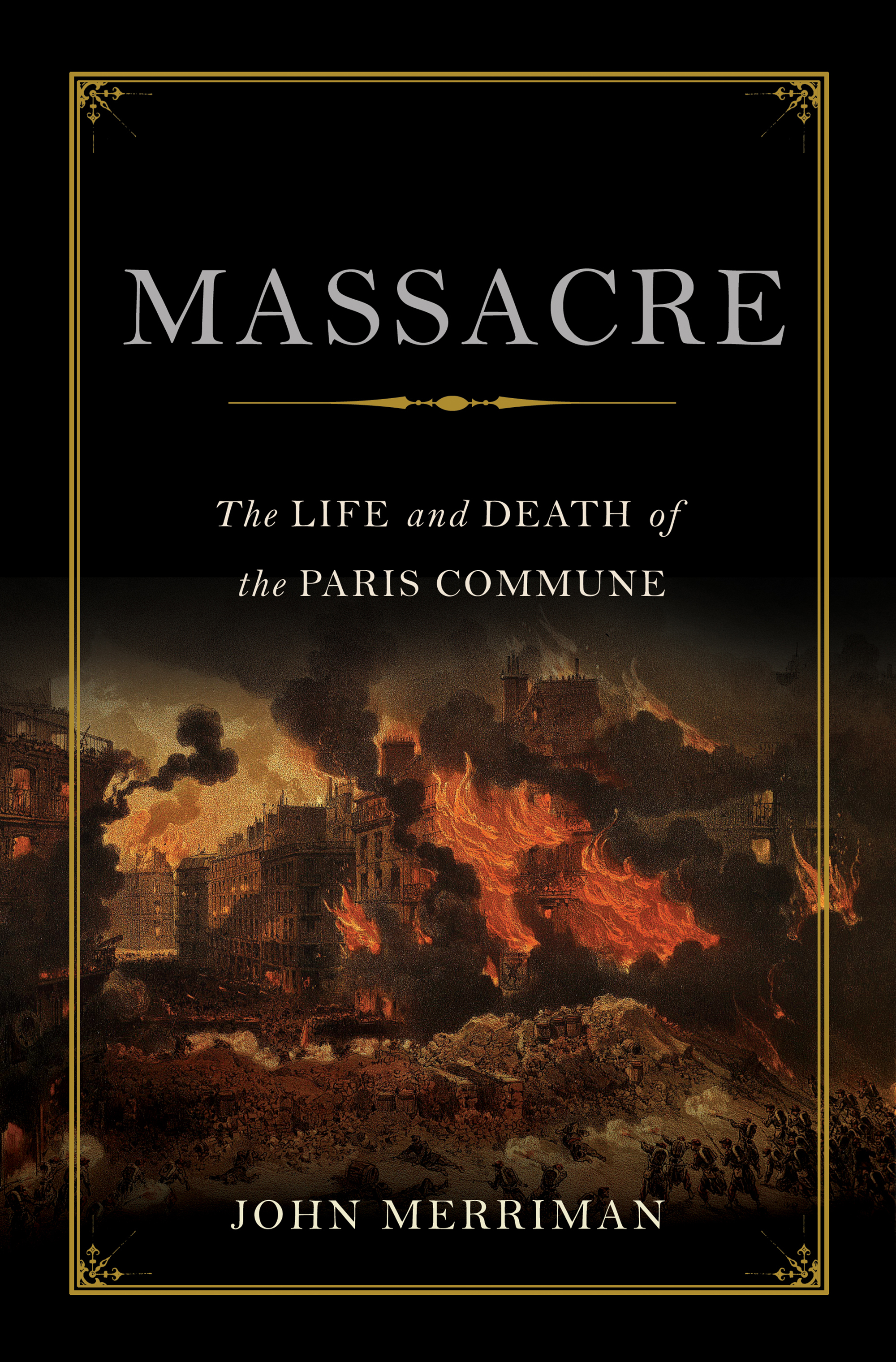
Massacre: The Life and Death of the Paris Commune
John Merriman
Best for: Readers who need the human cost of repression placed at the center of the narrative.
Difficulty: General to Intermediate
Intellectual role: The anatomy of state violence
Bookinlight Rating: ★★★★★★
Merriman’s narrative is strongest when it makes repression impossible to treat as an epilogue. The killing of Communards was not a secondary detail after political failure; it was the means by which one version of order was restored and another was made exemplary in defeat. The book is accessible, vivid, and morally forceful. It reminds readers that the history of political ideas becomes incomplete when it fails to ask who paid for those ideas in bodies, streets, and graves.
Critical Reception
“some of the grandest political dreams of the nineteenth century.“
Bookinlight Note: Read Merriman after Lissagaray; the first gives lived urgency, the second intensifies the cost of its suppression.
Communal Luxury: The Political Imaginary of the Paris Commune
Kristin Ross
Best for: Readers interested in the Commune’s afterlife, ecological imagination, art, labor, and social possibility.
Difficulty: Advanced
Intellectual role: The unfinished future
Bookinlight Rating: ★★★★★
Ross reads the Commune less as a failed state than as a dispersed political imagination. The book follows affinities among workers, artists, geographers, educators, and later militants, asking how the Commune’s ideas exceeded the dates of its military life. Its phrase “communal luxury” names a social horizon in which beauty, labor, knowledge, and collective life are no longer luxuries reserved for the few. Ross is essential for readers who want the Commune as possibility, not merely tragedy.
Critical Reception
“A timely, elegant and rather useful cartography of the Paris Commune.“
Bookinlight Note: Ross is best read last: she transforms the ruins of 1871 into a question about future social forms.
How These Books Speak to One Another
The most productive way to read these books is not chronologically, but contrapuntally. Lissagaray’s witness account gives Marx’s theory its lived density; Marx gives Lissagaray’s anger a conceptual architecture. Tombs slows down both by recovering institutional conflict and contingency. Thomas and Eichner insist that no reading of the Commune is complete if women appear only as allegory, scandal, or mourning figures. Merriman keeps repression from disappearing behind ideological fascination. Ross then turns the afterlife of defeat into an intellectual resource. Together, these books on the Paris Commune create a history of political possibility under the sign of loss.
The Reading Map
| Book | Author | Difficulty | Rating | Why It Matters |
|---|---|---|---|---|
| History of the Paris Commune of 1871 | Prosper-Olivier Lissagaray | Intermediate | ★★★★★ | Preserves the defeated side’s memory before official history can domesticate it. |
| The Civil War in France | Karl Marx | Advanced | ★★★★★ | Turns the Commune into a test of state power and working-class self-government. |
| The Paris Commune 1871 | Robert Tombs | General to Intermediate | ★★★★★★ | Clarifies the event’s political, military, and institutional pressures. |
| The Women Incendiaries | Edith Thomas | Intermediate | ★★★★★★ | Exposes how counterrevolution turned women’s agency into moral panic. |
| Surmounting the Barricades: Women in the Paris Commune | Carolyn J. Eichner | Advanced | ★★★★★★ | Places women’s activism inside socialism, labor, neighborhood politics, and feminism. |
| Massacre: The Life and Death of the Paris Commune | John Merriman | General to Intermediate | ★★★★★★ | Makes violence and repression central rather than incidental. |
| Communal Luxury: The Political Imaginary of the Paris Commune | Kristin Ross | Advanced | ★★★★★ | Shows the Commune’s afterlife as social imagination rather than nostalgic relic. |
Where to Begin
- Entry point: Begin with Robert Tombs for a clear map of events, actors, and pressures.
- Historical background: Move to Lissagaray for witness, urgency, and the defeated side’s memory.
- Conceptual foundation: Read Marx once the event has become historically concrete.
- Critical perspective: Pair Edith Thomas with Carolyn Eichner to restore women’s political agency.
- Contemporary relevance: Use Kristin Ross to rethink the Commune as a living political imagination.
- Advanced reflection: Read Merriman against Ross to hold massacre and possibility in the same frame.
External Sources for Further Reading
Marxists Internet Archive: The Civil War in France
The Last Margin
The most enduring books on the Paris Commune do not ask readers to choose between romance and realism. They make a harder demand: to see an event as fragile, contradictory, violent, generative, and unfinished at once. The Commune was crushed, but its questions survived because they were never merely local. They concern the city, the state, work, gender, education, beauty, memory, punishment, and the right to shape collective life. To read these books together is to discover that defeat can become a historical archive, but also a political summons.