Best Translation of The Count of Monte Cristo is, for most adult readers, Robin Buss’s complete Penguin Classics version: it is a modern translation from the French, it restores the breadth and frankness that the nineteenth-century English tradition could mute, and it supplies enough notes to keep Dumas’s politics and social codes intelligible without slowing the story to a crawl. The principal alternative is Oxford World’s Classics, where David Coward extensively revises the anonymous 1846 English translation and surrounds it with excellent scholarly apparatus. That is a valuable book, but it solves a different problem. The decisive choice is therefore not simply “Penguin or Oxford”; it is whether you want an independent modern English translation, a renovated Victorian English lineage, a handsome streamlined reading copy, or a deliberately abridged adaptation. Because Le Comte de Monte-Cristo grew out of serial publication and has a complicated English afterlife, those distinctions materially change what you read.
If You Just Want the Answer: Best Translation of The Count of Monte Cristo
Best overall and best for first-time adult readers: Penguin Classics, translated by Robin Buss, ISBN 9780140449266. It is the safest single purchase if you want Dumas’s full narrative rather than a Victorian-derived or shortened English text.
Best scholarly, annotated, student, and teaching edition: Oxford World’s Classics, ISBN 9780199219650. David Coward’s 2008 revision gives the anonymous 1846 English translation a modern surface and pairs it with a strong introduction, textual note, chronology, notes, and bibliography.
Best durable hardcover: Everyman’s Library, ISBN 9780307271129, if you accept the publisher’s stated “slightly streamlined” treatment of the 1846 English tradition. Best collector’s version without changing the recommended translation: Penguin Clothbound Classics, ISBN 9780141392462, which keeps Robin Buss’s text.
Best intentional abridgments: Lowell Bair’s Bantam for adults who need a compact version, and Robin H. Waterfield’s Puffin Classics for younger readers. An abridgment is not automatically bad; an undisclosed or accidentally purchased abridgment is.
How to Choose the Right Edition or Translation
The Best Translation of The Count of Monte Cristo decision begins with completeness. Dumas and his collaborator Auguste Maquet built an enormous serial machine: imprisonment and escape occupy only one portion of a novel whose later force depends on apparently secondary families, debts, inheritances, aliases, political loyalties, romantic arrangements, and delayed recognitions. Cutting those elements can leave the revenge plot intact while changing its moral geometry. A 400- to 550-page adaptation may be perfectly suited to a younger reader or a time-limited course, but it is not interchangeable with a 1,100- to 1,300-page full-text edition.
The second question is translation genealogy. English readers encountered the novel almost immediately: the Chapman and Hall translation appeared in 1846 and became the foundation for an extraordinary number of later reprints, revisions, modernizations, and abridgments. Wordsworth still identifies its own edition as based on that enduring 1846 version. Oxford’s David Coward works within this historical lineage, extensively revising it; Everyman’s openly says that its Peter Washington text slightly streamlines the original 1846 English translation. Robin Buss’s Penguin version is different in kind because it is a new translation from the French rather than another renovation of the inherited English text.
The third question is what “readable” means. Readability is not the same thing as simplification. Dumas’s prose is rapid, dialogic, theatrical, and often socially coded. Names, titles, forms of address, political references, money, and manners all carry narrative information. A good modern translation can clarify those signals without erasing historical distance; a poor modernization can make every voice sound contemporary. Conversely, an old translation can be energetic and accurate in many places while still reflecting Victorian reticence or editorial habits elsewhere.
Finally, look at the apparatus and physical object. A chronology is unusually helpful because the story’s opening is tied to Napoleon’s return from Elba and the volatile politics of 1815. Notes help with Italian settings, financial mechanisms, titles, and Restoration-era references. But the best apparatus is useless if the type is too cramped for a thousand-page commitment. Hardcover durability, paper opacity, page dimensions, and binding therefore have legitimate editorial weight here, particularly for rereaders and collectors.
Main Comparison Table
| Edition | Textual identity | Apparatus | Best use | Main caveat |
|---|---|---|---|---|
| Penguin Classics, Buss | New translation from French; complete and unabridged | Introduction, chronology, notes, further reading | Best default; first reading; book clubs | Long and physically bulky |
| Oxford World’s Classics, Coward | Anonymous 1846 English text extensively revised; unabridged | Introduction, chronology, notes, textual note, bibliography | Close study; teaching; reception history | Not a wholly independent new translation |
| Everyman’s Library, Washington | Slightly streamlined 1846 English-text lineage | Umberto Eco introduction, bibliography, chronology | Durable hardcover reading copy | Some streamlining; not strict completeness |
| Penguin Clothbound, Buss | Same complete Buss translation as Penguin Classics | Buss introduction and notes | Collector who also wants the recommended text | Premium is material, not textual |
| Vintage 2020 | Translator uncredited; traditional anonymous lineage reported | Endnotes reported in specialist comparison | Convenient trade paperback if knowingly chosen | Opaque translator attribution |
| Bantam Classics, Bair | Translated and abridged by Lowell Bair | Minimal mass-market apparatus | Adults intentionally wanting a shorter version | Major compression of the novel |
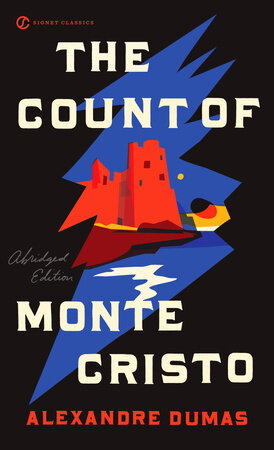
| Signet Classics 2005 | Abridged; translator not credited on publisher record | Introduction by Roger Celestin | Compact classroom or casual abridgment | Not suitable for full-text study |
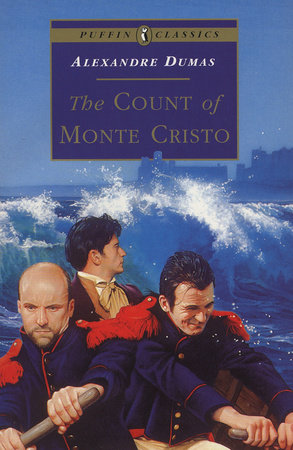
| Puffin Classics, Waterfield | Purpose-built youth abridgment | Youth-classics framing | Readers age 10+; families; schools | Not an adult textual edition |
Individual Edition Profiles
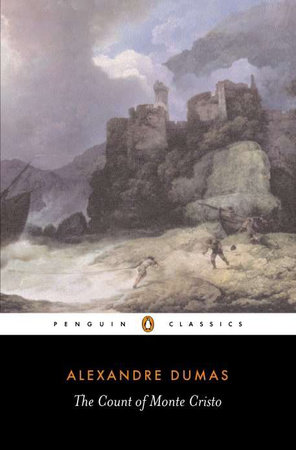
1. The Count of Monte Cristo — Penguin Classics
Author: Alexandre Dumas. Translator / textual agent: Robin Buss. Editor / introducer: Introduction and notes by Robin Buss.
Publisher: Penguin Classics. Year: 2003. ISBN: 9780140449266. Format / series: Paperback; Penguin Classics; 1,312 pages. Status: Complete and unabridged.
Best audience: Adult first-time readers, book clubs, general readers, and anyone who wants one dependable English copy.
Principal strength: A genuinely modern English translation from the French, complete and unabridged, with useful but not oppressive scholarly support.
Main limitation: At 1,312 pages it is physically substantial, and readers who want a historical Victorian English voice will not get it here.
This is the edition that resolves the most important problem in the English history of the novel, and it is the edition behind this guide’s Best Translation of The Count of Monte Cristo recommendation. The anonymous Chapman and Hall translation of 1846 became the durable English base text, but Victorian translation and publication practices could soften, omit, or recast material that later readers reasonably want restored. Robin Buss’s translation, first published by Penguin in 1996 and represented here by the current 2003 paperback ISBN, starts afresh from the French rather than merely polishing that inherited English text. Penguin explicitly describes it as complete and unabridged and as faithful to Dumas’s style.
Why choose it: Buss is especially good at preserving the novel’s velocity without pretending that Dumas wrote a stripped-down modern thriller. Courtly address, social rank, money, political allegiance, theatrical entrances, and the comic or grotesque edges of minor characters all matter to the revenge machine. A translation that merely makes the sentences “easy” can flatten those relations; Buss generally keeps them legible while letting the prose move. His introduction, chronology, explanatory notes, and further-reading suggestions give a new reader enough historical scaffolding to understand Bonapartism, Restoration politics, Italian episodes, and Parisian social codes without converting every chapter into a seminar.
Translator / editor background: Robin Buss was a British writer, translator, and film critic whose work for Penguin included several major French classics. In this volume he is not only translator but also introducer and annotator, which gives the edition unusual coherence: the person making lexical and tonal decisions also explains the historical and textual problems that produced them.
Who should avoid it: Avoid it only if your main purpose is to study the reception of the nineteenth-century English translation, if you need a compact abridgment, or if you specifically want a premium sewn-style hardcover object. For virtually every other first purchase, this is the strongest default.
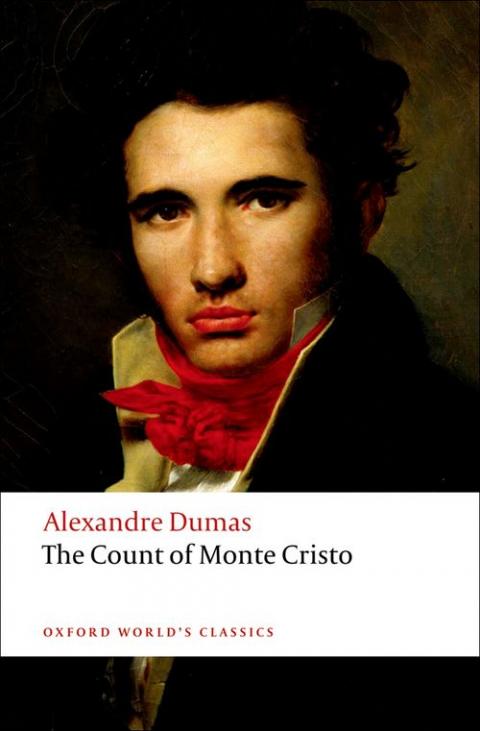
2. The Count of Monte Cristo (Revised Edition) — Oxford World’s Classics
Author: Alexandre Dumas. Translator / textual agent: Anonymous 1846 English translation, extensively revised by David Coward. Editor / introducer: Introduction, notes, chronology, and textual revision by David Coward.
Publisher: Oxford University Press. Year: 2008. ISBN: 9780199219650. Format / series: Paperback; Oxford World’s Classics; 1,136 pages. Status: Unabridged revised Victorian translation.
Best audience: Students, teachers, close readers, and readers comparing the Victorian English tradition with a modern translation.
Principal strength: Strong scholarly apparatus and a heavily revised, modernized presentation of the historically dominant 1846 English translation.
Main limitation: It is often described too casually as a wholly new translation. Its textual genealogy is the anonymous 1846 English version, not an independent fresh translation comparable to Buss.
Oxford’s 2008 volume is a more interesting edition than the phrase “David Coward translation” suggests, and it deserves its frequent place in Best Translation of The Count of Monte Cristo discussions for reasons that differ from Buss. Oxford markets it as a newly revised, unabridged translation, while the edition’s textual history—documented in its note on the text and in specialist comparison—shows that Coward is extensively revising the anonymous Chapman and Hall English translation of 1846. That distinction is not pedantic. It determines what the book is useful for: this is the best current gateway to the durable Victorian English lineage in a form whose diction and pacing have been modernized, not the cleanest independent control against that lineage.
Why choose it: For study, that can be a virtue. The edition combines a substantial introduction, chronology, explanatory notes, a revised note on the text, and an updated bibliography. Coward’s revisions replace archaic phraseology and smooth passages that can sound needlessly ponderous to a modern reader while retaining the historical architecture of the earlier English version. If you are teaching reception, examining how Dumas became an English-language classic, or placing two English texts side by side, Oxford and Buss form a more revealing pair than two cosmetically different descendants of the same anonymous translation.
Translator / editor background: David Coward, a scholar of French literature and the author of A History of French Literature, has edited and translated Dumas and other French writers for Oxford World’s Classics. Oxford’s own product record emphasizes his role across its Dumas editions, and the apparatus here is the principal reason to prefer this ISBN over an anonymous bargain reprint.
Who should avoid it: Do not buy it believing that “unabridged” automatically makes its textual history identical to Buss’s. Readers primarily concerned with recovering material historically suppressed or softened in English should begin with Buss; readers interested in scholarship, historical English reception, and a carefully renovated classic translation have a strong reason to choose Coward.
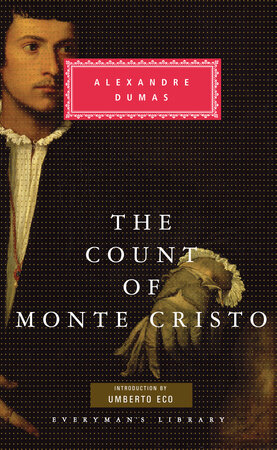
3. The Count of Monte Cristo — Everyman’s Library
Author: Alexandre Dumas. Translator / textual agent: Peter Washington (publisher credit); based on and streamlining the 1846 English translation. Editor / introducer: Introduction by Umberto Eco.
Publisher: Everyman’s Library / Knopf. Year: 2009. ISBN: 9780307271129. Format / series: Hardcover; Everyman’s Library Classics; 1,240 pages. Status: Slightly streamlined 1846 English-text lineage.
Best audience: Readers who want a handsome, durable hardcover and are comfortable with a lightly streamlined traditional English text.
Principal strength: Excellent physical production, a useful Umberto Eco introduction, and a deliberate reading copy rather than a display-only luxury object.
Main limitation: The publisher explicitly calls the text a slightly streamlined version of the original 1846 English translation, so it is not the choice for strict textual completeness.
Everyman’s Library makes a different proposition: it should not displace the Best Translation of The Count of Monte Cristo answer when textual completeness is the criterion, but it may be the better physical book for a particular reader. The attraction is not that its English text supersedes Buss on completeness or Oxford on textual explanation. Penguin Random House describes this edition as a slightly streamlined version of the original 1846 English translation, intended to accelerate narrative flow while retaining most pictorial description and the essential details of the plot. Peter Washington receives the translation credit, and Umberto Eco provides the introduction. That makes the edition a curated reworking of a historical English tradition, not a neutral container for the same text found in Penguin Classics.
Why choose it: As a physical book, however, it has a compelling rationale. The publisher specifies acid-free cream paper, full-cloth case, foil stamping, decorative endpapers, a silk ribbon marker, and the characteristic rounded Everyman’s spine. The volume also includes a select bibliography and chronology. For a novel this long, binding and page design are not trivial: a copy that survives repeated reading and can lie comfortably in the hand has practical value. The Eco introduction also places Dumas’s narrative machinery within a broader literary frame without requiring an academic critical edition.
Translator / editor background: Peter Washington is credited by Everyman’s as translator for this edition; the publisher’s own description simultaneously makes clear that his text works from the 1846 English version and streamlines it. That double description should govern how the book is catalogued and recommended.
Who should avoid it: Do not choose it as the sole basis for quotation in translation scholarship, or if you want to be certain that no narrative material has been trimmed. Choose it if the object matters, if you prefer a traditional English flavor, and if a small amount of streamlining is an acceptable exchange for an attractive long-term reading copy.
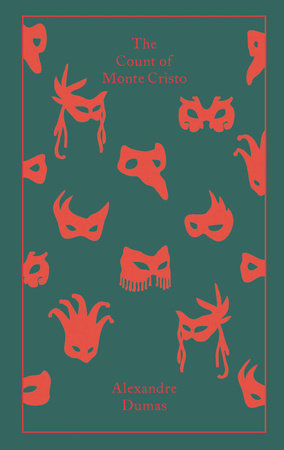
4. The Count of Monte Cristo — Penguin Clothbound Classics
Author: Alexandre Dumas. Translator / textual agent: Robin Buss. Editor / introducer: Introduction and notes by Robin Buss; cover artwork by Coralie Bickford-Smith.
Publisher: Penguin Classics. Year: 2013 U.S. issue; the same ISBN was published by Penguin in the U.K. in 2012. ISBN: 9780141392462. Format / series: Hardcover; Penguin Clothbound Classics; 1,312 pages. Status: Complete and unabridged Robin Buss text.
Best audience: Collectors who want Robin Buss’s recommended complete translation in a designed hardcover.
Principal strength: It preserves the Buss text while adding Coralie Bickford-Smith’s distinctive clothbound design.
Main limitation: The premium is chiefly material and aesthetic, not textual; it is also a very large clothbound book and less carefree to carry or annotate.
The crucial fact about the Penguin Clothbound Classics edition is that it does not force a collector to sacrifice the recommended text. This ISBN credits Robin Buss for translation, introduction, and notes, and reproduces the same 1,312-page textual package associated with Penguin’s modern complete translation. Coralie Bickford-Smith supplies the cover design. In other words, its added value is bibliographic and material rather than a separate translation philosophy.
Why choose it: That matters because collector’s editions of public-domain classics often pair ornate bindings with unidentified or abridged texts. Here the textual identity is explicit. If you already know that Buss is the version you want, this is the straightforward way to buy it as a more designed object. It also works well as a gift because the recipient is not being handed a visually impressive but editorially compromised text.
Translator / editor background: Bickford-Smith is closely associated with Penguin’s Clothbound Classics visual program; the publisher record names her for the cover artwork. Buss remains responsible for the translation and scholarly framing. The U.S. publisher record dates this ISBN to 2013, while Penguin’s U.K. record lists the same ISBN from late 2012, a normal market-date difference rather than a different translation.
Who should avoid it: Do not pay extra expecting more notes, a different text, or a scholarly apparatus beyond what the Buss edition already provides. Readers who annotate heavily, travel with the book, or dislike wear on patterned cloth may be happier with the paperback. For collectors who want the best default translation in a recognizable modern binding, however, it is the strongest choice in this group.
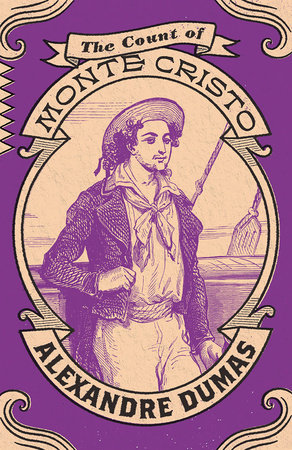
5. The Count of Monte Cristo — Vintage Classics
Author: Alexandre Dumas. Translator / textual agent: Translator not credited on the publisher record; independent bibliographic comparison identifies the anonymous English tradition. Editor / introducer: Endnotes reported in bibliographic comparison.
Publisher: Vintage. Year: 2020. ISBN: 9780593081501. Format / series: Trade paperback; 1,200 pages. Status: Full-length traditional-text edition; translation attribution is opaque.
Best audience: Readers who find this exact 2020 Vintage trade paperback convenient or discounted and do not need transparent translator attribution.
Principal strength: A roomy 1,200-page trade-paperback format from a major imprint, with endnotes reported by specialist bibliographic comparison.
Main limitation: The publisher product record does not name a translator. That lack of attribution makes the edition a poor choice for translation study and easy to confuse with Penguin’s Robin Buss text.
The 2020 Vintage paperback illustrates why a familiar corporate logo is not enough to identify a translation. Penguin Random House owns both Vintage and Penguin Classics, but the purple Vintage ISBN 9780593081501 is not the Robin Buss edition. The official Vintage record lists the book, date, extent, and ISBN without naming a translator; a specialist translation bibliography identifies this ISBN with the anonymous English tradition and reports endnotes. That distinction should be made before purchase, not discovered halfway through the novel.
Why choose it: There is nothing inherently wrong with reading a traditional English version. Indeed, readers curious about how generations encountered Dumas may enjoy its period texture, and the trade-paperback dimensions are friendlier than some tiny mass-market reprints. The problem is metadata opacity. A reader cannot responsibly treat an unnamed translation as interchangeable with a documented modern one, especially when comparing sexual frankness, idiom, social register, or passages historically vulnerable to omission.
Translator / editor background: No translator biography can be supplied for this exact edition because the publisher record does not credit one. That absence is itself bibliographical evidence and should remain visible rather than being filled with a guessed attribution. The edition is therefore useful as an example of why ISBN-level verification matters.
Who should avoid it: Avoid it if your assignment requires naming a translator, if you intend to cite a translation in scholarly work, or if you specifically want Buss. If price and physical format are your main constraints and you knowingly accept the traditional anonymous lineage, it can still be a serviceable reading copy.
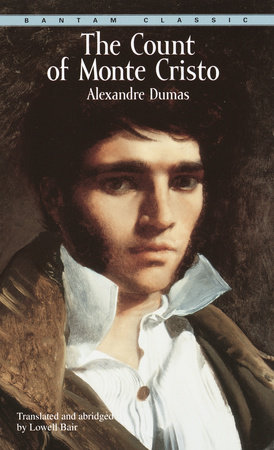
6. The Count of Monte Cristo — Bantam Classics
Author: Alexandre Dumas. Translator / textual agent: Translated and abridged by Lowell Bair. Editor / introducer: Lowell Bair.
Publisher: Bantam Classics. Year: 1984. ISBN: 9780553213508. Format / series: Mass-market paperback; 544 pages. Status: Abridged.
Best audience: Adults who consciously want a much shorter version, commuters, or readers sampling the novel before committing to the full text.
Principal strength: A clearly identified abridgment by Lowell Bair rather than an edition that hides its cuts.
Main limitation: At 544 pages, it necessarily changes the scale, delay, secondary plotting, and social density that make the full novel what it is.
Lowell Bair’s Bantam version deserves a place in a serious guide precisely because it tells the truth about what it is. The cover identifies it as translated and abridged by Bair, and bibliographic records connect the text to Bair’s mid-century abridgment; the current mass-market ISBN dates to 1984 and runs 544 pages. That is less than half the extent of the major complete modern editions. It should therefore be evaluated as an adaptation for reading economy, not as a cheaper equivalent.
Why choose it: A deliberate abridgment can be legitimate. Dumas wrote for serial publication, and the novel’s proliferating subplots, disguises, delayed recognitions, financial maneuvers, and Parisian family histories can overwhelm readers who simply want the central arc of imprisonment, transformation, and revenge. Bair offers that arc in a compact, inexpensive format and, importantly, gives the abridger a name. For a reluctant adult reader or a first reconnaissance, that transparency is preferable to a 500-page reprint sold merely as “the classic novel.”
Translator / editor background: Lowell Bair was a prolific translator and adapter of French literature for American readers. In this case the bibliographic role is explicit: translation and abridgment are joined, so the English wording cannot be assessed independently of the editorial cutting.
Who should avoid it: Do not use Bair as your only text in a literature course focused on Dumas’s structure, as the basis for claims about what the novel includes, or for translation comparison with Buss and Coward. Choose it only when brevity is an intentional requirement. An abridgment is acceptable when the reader knows it is an abridgment and the reading purpose genuinely rewards compression.
7. The Count of Monte Cristo — Signet Classics
Author: Alexandre Dumas. Translator / textual agent: Uncredited in the publisher record. Editor / introducer: Introduction by Roger Celestin.
Publisher: Signet. Year: 2005 U.S. publication record. ISBN: 9780451529701. Format / series: Mass-market paperback; 528 pages. Status: Abridged.
Best audience: Readers who want another compact mass-market abridgment, especially where Roger Celestin’s introduction is useful.
Principal strength: A clearly marketed abridged classroom-style package with a named scholarly introducer.
Main limitation: The exact publisher record does not identify a translator, and the 528-page text is not suitable as a substitute for the full novel.
Signet’s 2005 U.S. record gives a 528-page mass-market paperback with an introduction by Roger Celestin. Penguin’s New Zealand record for the same ISBN is unusually helpful because it states explicitly that this is an accessible abridged edition. That transparency separates it from reprints whose shortened status can be buried in retailer metadata. The trade-off remains substantial: the very economy that makes it classroom-manageable also removes much of the novel’s cumulative architecture.
Why choose it: Compared with Bair, the Signet edition’s strongest differentiator is paratext rather than a clearly credited translator. Celestin, a scholar of French and Francophone literature, supplies an introduction that can orient students toward historical and literary context. If a course has only a few weeks for Dumas and has deliberately chosen an abridgment, that framing may matter more than shaving another small amount from the purchase price.
Translator / editor background: Roger Celestin is credited by Penguin Random House as the introducer. The publisher does not name a translator on the exact U.S. product record, so this guide does not infer one. That is a limitation for any assignment centered on translation choices.
Who should avoid it: Avoid the Signet text for graduate study, close structural analysis, or quotation when the assignment assumes the complete novel. If you need an abridgment, compare the explicit credits carefully: Bair gives you a named translator-abridger, whereas Signet gives you the stronger named scholarly introduction but opaque translation attribution.
8. The Count of Monte Cristo — Puffin Classics
Author: Alexandre Dumas. Translator / textual agent: Abridged by Robin H. Waterfield. Editor / introducer: Robin H. Waterfield.
Publisher: Puffin Books. Year: 1996. ISBN: 9780140373530. Format / series: Paperback; Puffin Classics; 400 pages; age 10+. Status: Abridged for younger readers.
Best audience: Younger readers, families, and teachers who need a child-accessible route into the story.
Principal strength: A purpose-built 400-page abridgment with Robin H. Waterfield explicitly credited and a publisher age recommendation of ten and up.
Main limitation: It is an adaptation for younger readers, not a textual edition for adult study.
Puffin’s edition is the clearest case in which abridgment is not a defect but the point. Penguin Random House credits Robin H. Waterfield as abridger, places the book in Puffin Classics, lists 400 pages, and recommends it for age ten and up. The edition therefore makes a specific pedagogical promise: preserve the recognizability and suspense of Dantès’s story while reducing the novel to a scale that a younger independent reader can plausibly manage.
Why choose it: That is more responsible than handing a child a tiny-type public-domain “complete” edition and concluding that Dumas is inaccessible. The full novel depends on adult legal, political, financial, erotic, and social contexts, and its length can obscure its extraordinary narrative drive for readers still building stamina. A transparent youth abridgment can create the desire to read the complete book later. Waterfield’s name on the bibliographic record also gives teachers and librarians a traceable editorial agent.
Translator / editor background: Robin H. Waterfield has worked extensively with classical and historical texts as translator and writer; in this product record his role is specifically “abridged by,” which should not be inflated into a claim that this is the preferred adult English translation.
Who should avoid it: Adults buying one lifetime copy should not choose Puffin merely because it is shorter, and students should not quote it when an instructor assigns the full novel. For a ten-to-teen reader or a family read-aloud that needs compression, however, it is the most defensible abridged choice among the editions profiled here.
Translation Philosophy: What Changes Between Versions
The most useful comparison is not “old English versus new English” in the abstract. It is an inherited English textual tradition versus a fresh act of translation. The 1846 Chapman and Hall version arrived while Dumas’s novel was still a contemporary sensation. Its speed of transmission is part of its historical importance, and its phrasing helped create the English-speaking Monte Cristo. Yet early English publishing also operated under cultural constraints that affected how sexuality, drug experience, female intimacy, and socially awkward material could be rendered or retained. Later anonymous reprints often inherit those decisions without explaining them.
That is why the Best Translation of The Count of Monte Cristo question cannot be answered by checking whether a retailer says “unabridged.” “Unabridged” may mean that a modern publisher has not deliberately shortened the English base text it is using. It does not automatically prove that every historical omission or bowdlerization in that base text has been repaired. Specialist comparison of Buss with the Victorian lineage repeatedly points to passages in Franz d’Épinay’s altered-state experience, the Villefort and Madame Danglars material, and the Eugénie Danglars–Louise d’Armilly relationship as places where the newer translation can reveal differences that matter to characterization and tone.
Buss’s governing advantage is therefore not that he makes Dumas slangy or “modern.” It is that he translates the French anew while preserving the novel’s mixture of propulsion and social formality. His sentences tend to move quickly, but the world remains nineteenth-century. Coward’s Oxford text pursues another legitimate goal: keep the historically influential English translation available while replacing obsolete phraseology, improving pace, and making its textual history visible through scholarship. For a translation-studies reader, the contrast between Buss and Coward is intellectually productive precisely because their starting points differ.
Everyman’s Peter Washington version represents a third philosophy: editorial streamlining for sustained reading. Its publisher does not pretend that nothing has changed; it says repetitions and redundancies have been reduced while essential narrative details and most pictorial description remain. That claim makes the edition easier to evaluate. One may disagree with the cuts, but the principle is explicit. Bair, Signet, and Waterfield go further into adaptation, reducing the scale enough that the reader should approach them as purposeful abridgments.
A final caution concerns the word literal. A line-by-line verbal closeness can be inaccurate if it misses idiom, register, irony, or the social force of a form of address. Likewise, fluency is not evidence of simplification. For Dumas, accuracy includes narrative timing: information should arrive with the same degree of clarity or concealment, a joke should still land as a joke, and a character’s self-dramatization should not be mistaken for neutral narration. Those are literary, not merely lexical, decisions.
Annotated, Scholarly, and Companion Editions
There is no single English edition in this eight-book set that functions as a full-scale critical edition in the scholarly sense of collating manuscript states and printing a dense textual apparatus. For most students, the Oxford World’s Classics volume is the strongest study package because Coward gives readers an introduction, chronology, explanatory notes, bibliography, and, crucially, a note on the text that identifies the history of the English version. Penguin’s Robin Buss edition is the better primary reading text for most English readers and still carries a useful introduction, chronology, notes, and further reading.
For advanced work, neither should stand alone; at that level, Best Translation of The Count of Monte Cristo becomes a comparative question rather than a one-book verdict. The French Le Comte de Monte-Cristo must become part of the comparison, and the Bibliothèque nationale de France record is especially valuable for fixing the publication chronology: serialization in the Journal des débats began on 28 August 1844, continued in three runs through 15 January 1846, and the novel appeared in eighteen volumes across 1845–46, with an illustrated edition in 1846. The same BnF record identifies Auguste Maquet as collaborator. That serial history helps explain both the novel’s architecture and the complexity of later “complete” editions.
A serious translation-comparison project should therefore use Buss as one English witness, Coward as another, and a reliable French text as the control. Everyman’s can be added if the project concerns editorial streamlining; Bantam or Puffin if it concerns adaptation. The goal is not to crown one wording in isolation but to ask what each edition believes a modern reader needs to receive from Dumas.
What to Avoid
Avoid unidentified “complete classics” when the translator is not named and the ISBN cannot be traced. Dumas is in the public domain, so there are innumerable low-cost print-on-demand and ebook versions assembled from old files. Some are perfectly legible; others combine anonymous Victorian text, missing chapters, malformed paragraph breaks, inconsistent accents, or retailer metadata copied from a different edition. A handsome cover proves nothing about the text inside.
Avoid accidental abridgments. The Bantam, Signet, and Puffin editions profiled here are recommended only for readers whose purpose genuinely calls for compression. A 400- or 500-page Monte Cristo cannot provide the same architecture as a 1,200-page version. If a seller does not state abridgment status clearly, check the ISBN against the publisher.
Avoid assuming that every Penguin Random House imprint uses Robin Buss. The 2020 Vintage paperback profiled here is a concrete counterexample: its publisher page does not credit Buss or any translator, and specialist bibliographic comparison identifies it with the anonymous tradition. Corporate ownership is not textual identity.
Avoid the easy slogan that “any unabridged edition is fine.” A Best Translation of The Count of Monte Cristo claim based only on page count is too crude. It is probably the most overrated advice attached to this novel. Completeness matters, but so do the translation’s source, historical censorship, revision history, annotation, and the difference between a new translation and a modernization. Also avoid specialist or collector’s copies merely because they are expensive: Everyman’s is attractive but streamlined; Penguin Clothbound is beautiful but textually the same Buss edition you can buy in paperback.
A free public-domain ebook can still be sufficient if your aim is simply to sample the story and cost is decisive. A professionally cleaned public-domain text is preferable to an anonymous scan. But for a first full reading, the marginal saving is usually not worth losing transparent translation credits and dependable formatting.
Reader Pathways
You want to read the novel once, properly, and do not want to research any further: buy the Robin Buss Penguin paperback. This is the most direct answer to Best Translation of The Count of Monte Cristo because it combines a complete modern translation with usable notes and broad availability.
You are writing an essay on translation, reception, censorship, or Victorian publishing: use Buss and Oxford together. Read Buss as the independent modern translation and Coward as the revised descendant of the 1846 English text. Add the French original wherever your language skills permit.
You are teaching the full novel: Oxford gives instructors the strongest built-in scholarly scaffolding, but Buss gives students the cleaner translation case. The better choice depends on whether your course foregrounds nineteenth-century English reception or Dumas’s French text. If the course cannot allocate time for the full novel, choose an abridgment openly rather than pretending a shortened text is complete.
You want a lifetime hardcover: choose Penguin Clothbound if the priority is preserving Buss; choose Everyman’s if binding, paper, and the Eco introduction outweigh the objection to slight streamlining. They are not the same editorial proposition.
You are buying for a younger reader: Puffin’s Waterfield abridgment is the purpose-built choice. If that reader becomes absorbed by Dantès, the Buss edition is the natural next step rather than another intermediate abridgment.
Best Choice by Reader Type
The Best Translation of The Count of Monte Cristo changes only when the reader’s purpose changes: the default text remains Buss, while study, collecting, deliberate abridgment, and youth reading justify different choices.
Penguin Classics / Robin Buss. Complete, modern, and well annotated.
Oxford / David Coward revision. Best apparatus and clearest access to the 1846 English lineage.
Penguin Clothbound / Robin Buss. The preferred modern translation in a designed hardcover.
Everyman’s Library. Strong physical production, with the caveat of light streamlining.
Bantam / Lowell Bair. A transparent, named abridgment.
Puffin / Robin H. Waterfield. A 400-page abridgment explicitly designed for age ten and up.
FAQ
1. What is the Best Translation of The Count of Monte Cristo for a first reading?
Robin Buss’s Penguin Classics translation, ISBN 9780140449266. It is complete and unabridged, translated anew from the French, and supplied with an introduction, chronology, explanatory notes, and further reading. Its main advantage over many cheaper editions is not merely newer wording; it avoids relying on the anonymous 1846 English text as its base.
2. Is the Oxford World’s Classics edition a completely new David Coward translation?
It is better described as an extensively revised version of the anonymous 1846 English translation. Oxford calls the 2008 book a newly revised, unabridged translation, and Coward modernizes phraseology and pacing while revising the apparatus. Its note on the text and specialist bibliographic comparison make the historical dependence on the 1846 version clear. That makes Oxford excellent for study, but different in genealogy from Buss.
3. Is it worth reading an abridged Count of Monte Cristo?
Yes, when the abridgment serves an explicit purpose. A younger reader may be far better served by Waterfield’s 400-page Puffin version than by abandoning a 1,300-page adult edition. An adult with limited time may reasonably choose Bair’s Bantam. What should be avoided is treating those versions as evidence for the full novel or buying them without realizing how much compression has occurred.
4. Is a public-domain or free ebook good enough?
For sampling the plot, often yes. For a complete first reading, quotation, teaching, or translation comparison, a named and verified edition is much safer. Public-domain files usually descend from older anonymous English texts, and digital reprints vary greatly in proofreading and formatting. If you use one, record the source and textual identity rather than citing it simply as “Dumas.”
Final Recommendation
Professional Editorial Note
This guide was prepared as a humanities and bibliography project: the scholarly department’s work included publication-history research, edition-level ISBN verification, comparison of translator and reviser credits, checking of abridgment claims, and source-by-source fact-checking. Research and authorship were editorial rather than retail-driven. Cover files were matched to the exact selected editions, direct image assets were re-opened during research, and the BookInLight Art Department standard was applied to image attribution and presentation. Authenticated WordPress preview and public-page testing were not available for this delivery, so no live-site image claim is made.
Readers, librarians, translators, and publishers are welcome to send corrections or bibliographical suggestions when edition metadata changes. Cover artwork and jacket design remain the rights of their respective publishers, designers, artists, and other third-party rights holders; their inclusion here is for identification, criticism, and editorial reference. Full republication, reproduction, translation, or reuse of this article or its designed presentation requires permission from BookInLight, while any separate reuse of third-party cover imagery may also require permission from the relevant rights holder.
Sources and Further Reading
- Bibliothèque nationale de France, bibliographic record for Le Comte de Monte-Cristo: serialization dates, 1845–46 volume publication, illustrated edition, and Auguste Maquet collaboration.
- Bibliothèque nationale de France, Pétion 1845 bibliographic record, including digitized-volume links and the same publication-history note.
- Penguin Random House Higher Education, Penguin Classics, Robin Buss, ISBN 9780140449266: translator, completeness, date, extent, and apparatus.
- Oxford University Press, Oxford World’s Classics revised edition, ISBN 9780199219650: date, extent, series, Coward credentials, and scholarly apparatus.
- Penguin Random House Retail, Everyman’s Library, ISBN 9780307271129: Peter Washington credit, Umberto Eco introduction, physical specifications, and the publisher’s “slightly streamlined” description.
- Penguin Random House, Penguin Clothbound Classics, ISBN 9780141392462: Buss credits, Coralie Bickford-Smith cover credit, U.S. publication date, and page count.
- Penguin Books UK, clothbound ISBN 9780141392462: U.K. publication date, series, dimensions, and extent.
- Penguin Random House, Vintage 2020 paperback, ISBN 9780593081501: imprint, publication date, extent, and the absence of a translator credit on the publisher record.
- Penguin Random House, Bantam Classics, ISBN 9780553213508: current mass-market bibliographic data.
- Google Books, Lowell Bair bibliographic record: translation/abridgment lineage.
- Penguin Random House, Signet Classics, ISBN 9780451529701: date, extent, imprint, and Roger Celestin introduction credit.
- Penguin Books New Zealand, Signet ISBN 9780451529701: explicit identification as an accessible abridged edition.
- Penguin Random House Retail, Puffin Classics, ISBN 9780140373530: Robin H. Waterfield abridgment credit, 400-page extent, and age 10+ recommendation.
- Wordsworth Editions, ISBN 9781853267338: publisher statement that its text is based on the enduring anonymous Chapman and Hall translation first published in 1846.
- We Love Translations, comparative bibliography of English Count of Monte Cristo versions: used as a specialist secondary cross-check on the Coward lineage, Vintage attribution, and differences between Victorian-derived texts and Buss.
- Overdue Podcast, Episode 234: The Count of Monte Cristo, a work-level discussion included as optional listening rather than translation evidence.
Image Credits
- The Count of Monte Cristo — Penguin Classics, ISBN 9780140449266. Cover image delivered from images.penguinrandomhouse.com; exact-edition identification and credit source: Penguin Classics edition page.
- The Count of Monte Cristo (Revised Edition) — Oxford World’s Classics, ISBN 9780199219650. Cover image delivered from www.oupjapan.co.jp; exact-edition identification and credit source: Oxford University Press edition page.
- The Count of Monte Cristo — Everyman’s Library, ISBN 9780307271129. Cover image delivered from images.penguinrandomhouse.com; exact-edition identification and credit source: Everyman’s Library / Knopf edition page.
- The Count of Monte Cristo — Penguin Clothbound Classics, ISBN 9780141392462. Cover image delivered from images2.penguinrandomhouse.com; exact-edition identification and credit source: Penguin Classics edition page.
- The Count of Monte Cristo — Vintage Classics, ISBN 9780593081501. Cover image delivered from images3.penguinrandomhouse.com; exact-edition identification and credit source: Vintage edition page.
- The Count of Monte Cristo — Bantam Classics, ISBN 9780553213508. Cover image delivered from images1.penguinrandomhouse.com; exact-edition identification and credit source: Bantam Classics edition page.
- The Count of Monte Cristo — Signet Classics, ISBN 9780451529701. Cover image delivered from images1.penguinrandomhouse.com; exact-edition identification and credit source: Signet edition page.
- The Count of Monte Cristo — Puffin Classics, ISBN 9780140373530. Cover image delivered from images.penguinrandomhouse.com; exact-edition identification and credit source: Puffin Books edition page.