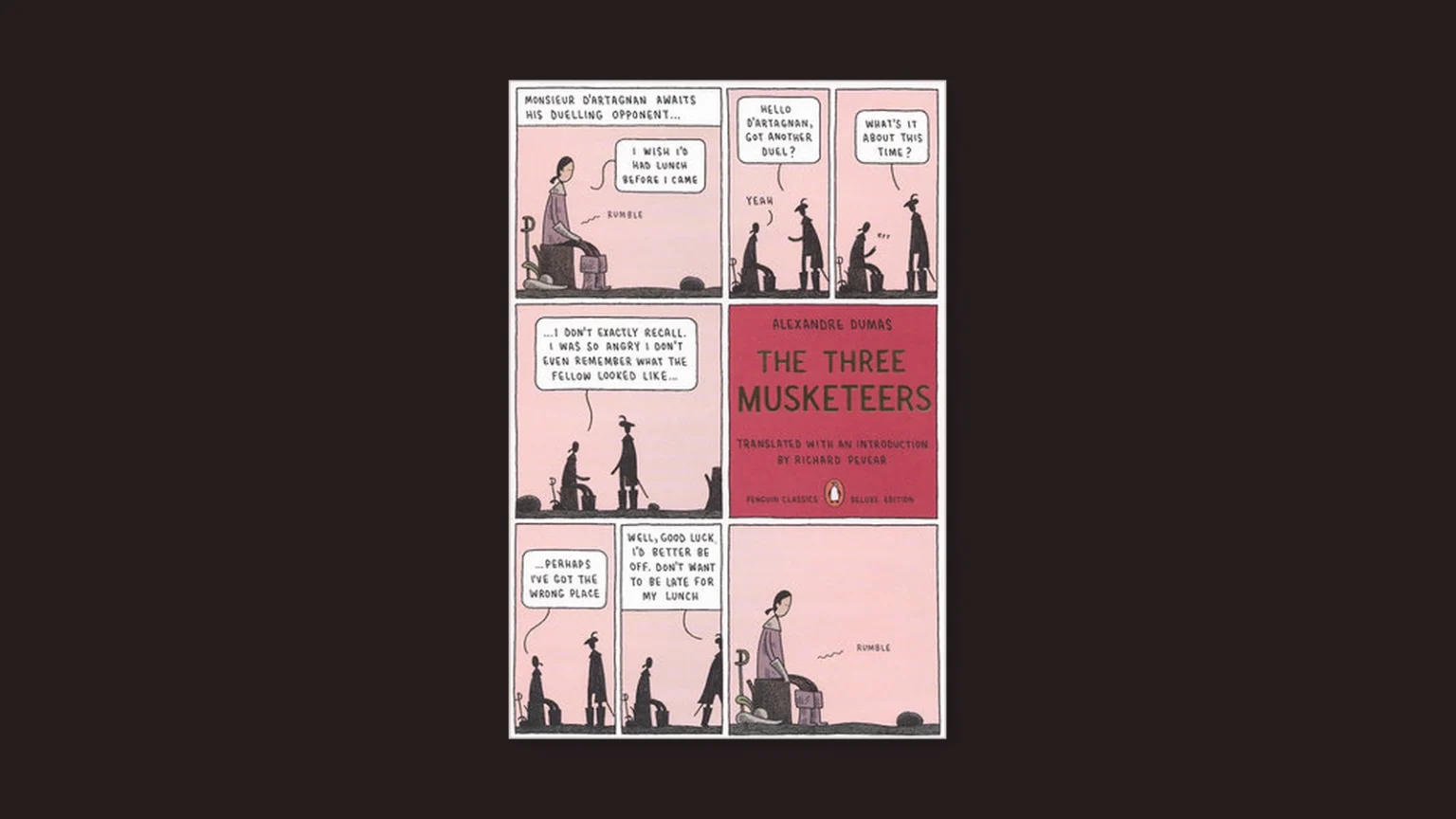
Best Edition of The Three Musketeers depends on whether you want Dumas’s adult, rapid, dialogue-driven French in modern English, the deepest explanatory notes, a consistent route through the full Musketeers cycle, or a handsome shelf copy. For most first-time readers, Richard Pevear’s Penguin Classics Deluxe Edition is the safest default: vivid, unbowdlerized, well introduced, and easy to identify by ISBN 9780143105008. The trade-off is unusually sharp. David Coward’s Oxford World’s Classics supplies the strongest annotation but prints William Barrow’s censored 1846 translation; Lawrence Ellsworth offers the most coherent path through the sequels but less academic apparatus; and Will Hobson may be the liveliest choice for readers who value conversational momentum above everything else.


If You Just Want the Answer: Best Edition of The Three Musketeers
For most buyers, the Best Edition of The Three Musketeers remains Pevear; the celebrated recommendation that deserves the most qualification is Oxford. It is superbly useful as an annotated edition, yet its underlying William Barrow translation belongs to the first wave of Victorian English Dumas and suppresses or obscures material central to the Milady plot. Conversely, the Pevear edition is sometimes recommended as though it settles every question. It does not: Hobson can feel more conversational, and Ellsworth is the practical choice when consistency across the sequels matters.
How to Choose the Right Edition or Translation
The search for the Best Edition of The Three Musketeers begins with its serial form. Les Trois Mousquetaires first appeared in Le Siècle on 14 March 1844 and continued through July before book publication that year. Its form matters. Dumas, working in collaboration with the researcher and plotter Auguste Maquet, built chapters around arrival, confrontation, disclosure, and renewed suspense. The prose is unusually dependent on dialogue, rapid tonal changes, and comic timing. A translation can preserve the events while flattening the novel if it makes the speech ceremonious, deletes sexual information, or tidies the heroes into cleaner moral exemplars than Dumas wrote.
Start with textual candor. Older English versions were produced for a market with different conventions about sex, the body, adultery, and gender. The most consequential cuts affect d’Artagnan’s deception of Milady and the logic of her revenge. These are not detachable “adult details.” They alter characterization and causation. A modern unbowdlerized version is therefore preferable for a first encounter, even when an older translation remains historically important.
Then consider register and rhythm. Dumas’s world is seventeenth-century, but the novel’s storytelling energy belongs to the popular press of the 1840s. Excessive archaism can make the text feel older than it is; excessive modernization can turn courtly, military, and social distinctions into generic contemporary banter. Pevear tends toward firm syntactic definition and restored frankness. Hobson prizes vivacity and speech. Ellsworth emphasizes forward drive and cycle-wide continuity. Barrow offers a document of Victorian reception rather than a transparent route to Dumas.
Finally, separate translation from apparatus. Oxford has the strongest notes among the editions profiled here, but the translation beneath them is the compromised Barrow text. Penguin’s Pevear edition gives a useful introduction, a note on translation, and explanatory notes, but not Oxford’s density of historical assistance. Mass-market editions may be inexpensive and portable while offering small type, tight margins, lighter paper, and little bibliographical clarity. Collector’s hardcovers can be pleasant objects yet weak choices for quotation if the translator is not identified.
Main Comparison Table
| Edition | Translation or text | Best for | Apparatus and trade-off |
|---|---|---|---|
| Penguin Deluxe, 2007 9780143105008 | Richard Pevear; modern, candid, rhythmically controlled | First reading | Apparatus: Introduction, translation note, notes Trade-off: Lighter notes than Oxford; no cycle continuity |
| Oxford, 2009 9780199538461 | William Barrow, 1846; edited by David Coward | Notes and teaching | Apparatus: Extensive introduction, notes, bibliography Trade-off: Victorian bowdlerization changes meaning |
| Pegasus, 2019 9781643130408 | Lawrence Ellsworth; energetic, expansive, cycle-minded | Whole cycle | Apparatus: Translator framing; light scholarly apparatus Trade-off: Large volume; interpretive freedom |
| BBC Books, 2014 9781849907491 | Will Hobson; buoyant, immediate, dialogue-led | Reading momentum | Apparatus: Introduction and explanatory notes Trade-off: TV tie-in styling; less academic framing |
| Modern Library, 2001 9780375756740 | Jacques Le Clercq; mid-century, brisk, traditional | Version comparison | Apparatus: Alan Furst introduction; reading guide Trade-off: Abridgment status unstated |
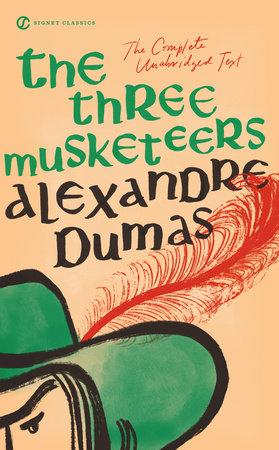
| Signet, 2006 9780451530035 | Eleanor Hochman revision; accessible and compact | Budget students | Apparatus: Introduction and afterword Trade-off: Completeness claim contested |
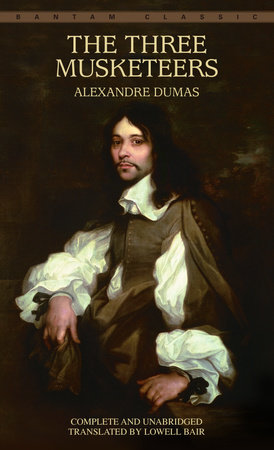
| Bantam, 1984 9780553213379 | Lowell Bair; straightforward, older mass-market style | Lowest-cost copy | Apparatus: Minimal Trade-off: Small type; completeness disputed |
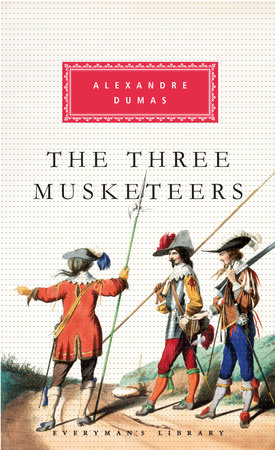
| Everyman’s, 2011 9780307594990 | Translator uncredited in publisher record | Durable shelf copy | Apparatus: Allan Massie introduction Trade-off: Translator uncredited |
Individual Edition Profiles
BEST OVERALL
Richard Pevear · Penguin Classics Deluxe Edition
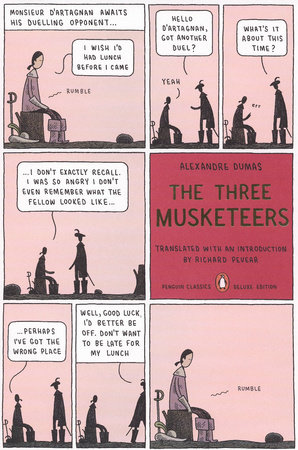
Alexandre Dumas · Translated and introduced by Richard Pevear · Cover illustration by Tom Gauld · Penguin Classics · 2007 · Paperback · 736 pages · ISBN 9780143105008 · Complete, unbowdlerized modern translation.
Best audience: first-time adult readers, book clubs, and readers who want one dependable copy. Principal strength: it restores the bodily, sexual, comic, and morally disquieting material that older English versions softened while maintaining the short-paragraph propulsion and dramatic confrontations on which the novel depends. Main limitation: the notes are useful rather than exhaustive, and Pevear did not translate the complete sequence of Musketeers novels.
Pevear’s version is not merely “modernized.” Its more important achievement is tonal range. Dumas can move from mock-heroic boasting to brutality, from servants’ comedy to political calculation, without changing genres. Pevear allows the novel to remain both exhilarating and unpleasant. That matters especially in the Milady chapters, where a euphemistic translation can make motives incoherent and turn the novel into the innocent boys’ adventure many adaptations have encouraged readers to expect.
Pevear is an American translator best known for his work, often with Larissa Volokhonsky, on Russian classics. Here he works alone from French and supplies an introduction, a translator’s note, and explanatory notes. The Guardian’s 2006 review treated the new translation as a recovery of an adult, troubling Dumas rather than a decorative refresh. The Deluxe paperback is physically generous, with readable proportions and Gauld’s wraparound design, though its deckled edges and flexible binding will not please every reader.
Why choose it: as the Best Edition of The Three Musketeers for most readers, it offers the strongest balance of textual candor, literary control, apparatus, and availability. Who should avoid it: readers who need line-by-line historical annotation, a compact pocket edition, or one translator across the whole cycle.
BEST ANNOTATED EDITION
William Barrow / David Coward · Oxford World’s Classics
Alexandre Dumas · Translated by William Barrow (1846) · Edited, introduced, and annotated by David Coward · Oxford University Press · Oxford World’s Classics · 2009 · Paperback · 704 pages · ISBN 9780199538461 · Historically bowdlerized translation with modern scholarly apparatus.
Best audience: students, teachers, and readers who need historical and cultural explanation. Principal strength: Coward’s introduction and notes make this the most fully supported English reading edition in ordinary circulation. Main limitation: the underlying Barrow translation suppresses explicit and implicit sexual material and alters passages whose details are necessary to understand d’Artagnan and Milady.
Oxford’s own description emphasizes the edition’s annotation, and that claim is justified: names, offices, political factions, places, literary allusions, and the novel’s relationship to historical romance receive far more assistance than in a mass-market reprint. Coward, a scholar of modern French literature and a prolific editor and translator, also places Dumas within nineteenth-century literary culture rather than treating the book as self-explanatory entertainment.
The difficulty is bibliographical, not cosmetic. Retail pages often present Coward prominently enough that buyers assume he translated the novel. He did not. The English text is Barrow’s 1846 version. Its Victorian censorship makes several episodes “strangely vague,” as Pevear later observed, and independent comparative readings have documented more extensive rearrangement and rewriting. For a course, the edition can be excellent if this fact becomes part of the lesson: it allows students to study both Dumas and the history of English bowdlerization. It is a poor choice when cited as the most accurate modern translation.
Why choose it: unmatched notes at a normal paperback price. This is not the Best Edition of The Three Musketeers as a sole reading text, but it is the best profiled companion for historical annotation. Who should avoid it: first-time readers seeking Dumas’s full sexual and moral texture, or anyone who assumes “Oxford” automatically means the best underlying translation.
IMPORTANT ALTERNATIVE
Lawrence Ellsworth · Pegasus Books Trade Paperback
Alexandre Dumas · Translated by Lawrence Ellsworth · Pegasus Books · 2019 · Trade paperback · 816 pages · ISBN 9781643130408 · Complete modern translation.
Best audience: readers committed to continuing through the Musketeers cycle in a consistent modern voice. Principal strength: Ellsworth’s translation belongs to a sustained project covering the larger cycle, including works long difficult to obtain in modern English. Main limitation: the volume is physically large, and Ellsworth’s readiness to clarify or energize Dumas can become interpretively assertive.
Ellsworth—also known as the writer and game designer Lawrence Schick—came to Dumas as a specialist in swashbuckling fiction. His prose foregrounds action, humor, and comradeship, and the publisher’s reception file repeatedly stresses clarity and energy. It also notes the restoration of racier material suppressed in Victorian versions. Readers who find Pevear slightly formal may prefer Ellsworth’s immediate narrative surface.
The larger reason to buy this edition is continuity. The Three Musketeers is not an isolated adventure but the entry to a vast sequence whose later political and emotional development changes the meaning of the first book. Ellsworth’s project gives English readers a practical route through that architecture in one translatorial idiom. That advantage can outweigh small local disagreements about diction. For quotation or translation criticism, however, compare disputed passages with Pevear, Hobson, or the French rather than treating any single modern version as neutral.
Why choose it: it converts a famous first volume into the beginning of a genuinely readable long-form project. Who should avoid it: readers who need compact physical design, dense notes, or the most restrained possible translator.
BEST READABLE TRANSLATION
Will Hobson · BBC Books Paperback
Alexandre Dumas · Translated by Will Hobson · BBC Books · 2014 · Paperback · 752 pages · ISBN 9781849907491 · Full-length modern translation; the publisher discloses no abridgment.
Best audience: readers who want the most buoyant conversational experience. Principal strength: Hobson treats dialogue as the novel’s engine and gives exchanges speed without turning every voice into generic present-day speech. Main limitation: this exact edition is branded around the BBC television series, and its apparatus is useful but not designed for advanced study.
The publisher’s adjectives—“dashing,” “knockabout,” “violent,” “chilling,” and “tragic”—are revealing because Hobson’s strength lies in holding those registers together. The comedy lands quickly, but the violence does not become weightless. He resists both dusty pseudo-antiquity and overripe costume-drama diction. For a novel built largely from people interrupting, challenging, deceiving, and performing for one another, that is a major form of accuracy rather than a mere concession to readability.
Hobson translates from French and German and has worked across literary fiction and nonfiction. His introduction explains his approach to diction and the centrality of Milady. Among current versions, this is the strongest alternative for a reader who samples Pevear and finds the prose slightly too composed. The BBC cover can misleadingly suggest a novelization or adaptation, so verify the ISBN: this is Dumas’s novel in Hobson’s translation, not a tie-in retelling.
Why choose it: immediate dialogue, comic precision, and strong forward movement. Who should avoid it: collectors who dislike photographic tie-in jackets and scholars who need a fuller bibliography and denser notes.
HISTORICALLY IMPORTANT TRANSLATION
Jacques Le Clercq · Modern Library Paperback
Alexandre Dumas · Translated by Jacques Le Clercq · Introduction by Alan Furst · Modern Library · 2001 paperback reissue · 640 pages · ISBN 9780375756740 · Abridgment status is not stated on the current publisher page.
Best audience: readers comparing the history of English Dumas and admirers of mid-century classic editions. Principal strength: a brisk, traditional English voice paired with an introduction by espionage novelist Alan Furst. Main limitation: it should not be treated as a control text for completeness or close translation analysis.
Le Clercq’s translation dates from the mid-twentieth century and represents a phase between Victorian decorum and the explicit recovery undertaken by Pevear, Hobson, and Ellsworth. It reads smoothly and has circulated widely, which makes it historically important: many English-language impressions of Dumas’s pacing and characterization were formed through editions of this kind. Its polish can also conceal how much interpretive intervention separates it from the French.
Furst’s introduction is an asset for general readers because he understands intrigue, loyalty, secrecy, and political atmosphere as elements of narrative craft. Modern Library also provides a reading guide. Yet the publisher page does not advertise the text as complete or unabridged, and comparative translation work ranks Le Clercq among the freer and more reductive versions. That does not make it unreadable. It makes its use specific: read it to encounter a durable Anglophone Dumas, not to settle what Dumas wrote.
Why choose it: elegant mid-century readability and a strong contextual introduction. Who should avoid it: first-time readers who want the least mediated modern text, students quoting without the French, and anyone buying solely because the Modern Library name implies textual transparency.
BEST FOR STUDENTS
Eleanor Hochman · Signet Classics Mass-Market Edition
Alexandre Dumas · Translation revised and updated by Eleanor Hochman · Introduction by Thomas Flanagan · Afterword by Marcelle Clements · Signet · 2006 · Mass-market paperback · 672 pages · ISBN 9780451530035 · Marketed as unabridged, though that claim is contested by comparative reading.
Best audience: students who need a low-cost, readily identifiable text with introductory apparatus. Principal strength: unusually strong framing for an inexpensive mass-market book. Main limitation: tight physical design and a completeness claim that should not be repeated without qualification.
The Signet package is intelligently assembled. Flanagan’s introduction gives literary and historical orientation; Clements’s afterword helps a student move from plot to interpretation; and the translation’s updated surface avoids some of the stiffness associated with older reprints. A class can purchase matching copies without forcing students into anonymous print-on-demand editions.
The bibliographical warning is important. Penguin Random House describes the book as “An Unabridged Translation, Revised and Updated by Eleanor Hochman.” Close independent comparisons, however, identify compression and omitted material. The responsible wording is therefore not “definitively unabridged” but “marketed as unabridged.” Teachers can turn the discrepancy into a useful lesson about paratext, publishing claims, and the difference between reproducing all major episodes and translating all the language of a source text.
Why choose it: low cost, reliable ISBN identification, and enough apparatus to support discussion. Who should avoid it: readers with visual fatigue, scholars requiring textual completeness, or anyone who can afford a larger Pevear or Hobson paperback for sustained leisure reading.
BEST BUDGET EDITION
Lowell Bair · Bantam Classics Mass-Market Edition
Alexandre Dumas · Translated by Lowell Bair · Bantam Classics · 1984 · Mass-market paperback · 656 pages · ISBN 9780553213379 · Cover states “complete and unabridged”; comparative assessments report condensation.
Best audience: readers whose main constraints are cost and portability. Principal strength: a named translator, a stable ISBN, and decades of availability. Main limitation: minimal apparatus, small type, and a marketing claim about completeness that should be treated cautiously.
Bair’s English is direct, serviceable, and rarely ostentatious. It can deliver the plot efficiently, which is not a trivial virtue in a long serial novel. The edition also avoids the worst problem of generic public-domain reprints: the translator is named, so readers know which English text they are buying. For travel or a disposable reading copy, it remains practical.
Its limitations become clear in comparison. The physical page is compact, and long sessions can be tiring. More importantly, textual comparisons have found omissions despite the “complete and unabridged” declaration printed on the cover. That phrase may describe the publisher’s understanding of the inherited text rather than a verified line-by-line relationship to the French. Use the edition for inexpensive narrative access, not as evidence that every nuance and passage has survived.
Why choose it: it is a legitimate named-translation edition at the budget end of the market. Who should avoid it: close readers, teachers assigning translation analysis, and anyone likely to struggle with mass-market typography.
BEST COLLECTOR’S EDITION
Everyman’s Library Hardcover · Introduction by Allan Massie
Alexandre Dumas · Introduction by Allan Massie · Everyman’s Library · 2011 · Hardcover · 680 pages · ISBN 9780307594990 · Translator and abridgment status are not identified in the current publisher record.
Best audience: collectors and general readers who prioritize binding, shelf uniformity, and a durable object. Principal strength: handsome, compact hardcover construction with an introduction by novelist and critic Allan Massie. Main limitation: inadequate translatorial transparency for serious comparison or citation.
Everyman’s Library gives Dumas the material dignity often withheld from popular adventure fiction. The sewn-feeling compact format, clothbound presentation, ribbon marker, and series design make it an attractive ownership copy. Massie’s introduction helps frame the novel as historical fiction and literary entertainment rather than merely a source for screen adaptations.
Yet a collector’s edition should still identify its text. The official current record names Dumas and Massie but not a translator. Secondary bibliographical guides consequently list the translation as anonymous or uncredited. That absence matters because English versions of this novel differ substantially. A beautiful binding cannot answer whether a sexual reference was retained, whether a speech was condensed, or which wording may responsibly be quoted. Buy this edition as an object and a reading copy only after accepting that limitation.
Why choose it: durability and classic series design. Who should avoid it: translators, scholars, students preparing citations, or any buyer who believes a premium binding guarantees a premium text.
Translation Philosophy: What Changes Between Versions
The Best Edition of The Three Musketeers cannot be chosen by modernity alone. The decisive distinction is not “literal” versus “readable.” A literal rendering can misrepresent tone, social register, or idiom; a readable rendering can be precise. The better question is what each translator believes must survive. In The Three Musketeers, the priorities include speed, dramatic dialogue, ironic distance, social titles, sexual candor, the heroes’ compromised morality, and the oscillation between exuberance and menace.
Pevear treats restoration as a central task. His prose makes the novel’s adult material legible and refuses to protect d’Artagnan from the ethical consequences of his conduct. The result can feel more controlled than spontaneous, but the control keeps shifts of tone intelligible. Hobson gives greater emphasis to speech as performance. His sentences are often the easiest to hear aloud, and his dialogue captures the charge of insult, bluff, and camaraderie. Readers can reasonably prefer either one: Pevear for definition and candor, Hobson for dramatic life.
Ellsworth works with the long cycle in view. This encourages continuity of names, voices, and recurring political relationships. His willingness to choose energetic English serves the serial form, though it can make the translator more audible. Barrow represents a different philosophy: accommodation to Victorian norms. The problem is not simply old vocabulary. When sexual actions become “interviews,” garments and time lapses disappear, or Milady’s role is morally rewritten, translation becomes censorship and plot repair.
Le Clercq, Hochman, and Bair belong to traditions of accessible popular-classics publishing in which compression was often normalized or poorly disclosed. Their editions can be enjoyable, but page count and the word “unabridged” are not sufficient proof of completeness. Compare a sequence rather than a sentence: the Milady–Kitty episodes, the discovery of the fleur-de-lis, and the transitions that connect d’Artagnan’s deception to Milady’s revenge reveal far more than a random paragraph.
Names and titles also matter. “Milady” is not a generic description, and a translation that repeatedly substitutes “the lady” changes how the character is positioned in the narrative. Terms for servants, guards, clerical offices, money, and rank can either preserve social relations or smooth them into vagueness. Annotations may compensate for foreignness; silent normalization usually cannot.
For quotation, record the translator every time. “Dumas says” is often inaccurate when the words come from Barrow, Le Clercq, or Pevear. For translation comparison, use a modern version beside the French and then add an older English witness. The most revealing three-way set is Pevear or Hobson, Barrow in the Oxford edition, and the original French.
Annotated, Scholarly, and Companion Editions
No profiled English edition combines the best modern translation with the fullest scholarly apparatus. The practical study solution is therefore a two-book method: read Pevear or Hobson, and keep Coward’s Oxford edition beside it for notes. This avoids asking Barrow’s text to do work it cannot do while preserving the value of Coward’s historical, literary, and cultural explanations.
Readers with strong French should consider the Folio classique edition, ISBN 9782070417681, edited by Gilbert Sigaux and introduced by Roger Nimier, as an obtainable original-language reading text. Specialists may prefer the Bibliothèque de la Pléiade volume that places Les Trois Mousquetaires with Vingt ans après, but its compact print, editorial conventions, and price make it a poor beginner’s choice. Neither is included among the eight profiles because this guide’s verified-cover set concentrates on current English purchasing decisions.
For historical comparison, digitized nineteenth-century translations can be valuable, but a scan should be identified by translator, publisher, and date. Project Gutenberg’s French text offers free access to the original language; it is useful for checking passages, not a substitute for a modern critical edition with textual notes. Companion listening is strongest when it addresses the work or translation directly. The National Review episode linked in the Ellsworth profile discusses the novel with the translator and is therefore more useful here than a generic Dumas biography podcast.
What to Avoid
Unidentified translators. A publisher that names the author but not the translator prevents you from knowing which English text you are buying. This is common in bargain hardcovers, public-domain ebooks, and print-on-demand paperbacks.
Undisclosed or euphemistically described abridgments. “Complete story,” “classic edition,” and a high page count do not mean complete translation. The Macmillan Collector’s Library volume, for example, is attractive but abridged; it is not the right first choice for a reader who wants Dumas’s whole novel.
Wrong-translator purchases. Covers change, retailer metadata merges formats, and Oxford’s prominent display of David Coward can be mistaken for a translator credit. Verify translator, ISBN, publisher, and format together.
Poorly formatted ebooks. The novel’s rapid dialogue and short paragraphs suffer when quotation marks, accents, chapter breaks, or footnotes are corrupted. Sample the file before purchase and inspect the table of contents.
Finding the Best Edition of The Three Musketeers also means rejecting prestige when it obscures purpose. Specialist or collector’s books chosen for the wrong reason. Pléiade is excellent for advanced French readers but physically dense. Everyman’s is handsome but translationally opaque. Oxford is exceptionally annotated but bowdlerized at the textual level. No prestige imprint cancels a mismatch between edition and purpose.
Reader Pathways
One book, no further research: the Best Edition of The Three Musketeers for this pathway is Pevear’s Penguin Deluxe paperback; buy it and begin. Its balance is the strongest.
Reading for pleasure but sensitive to stiffness: sample Pevear and Hobson. Choose Hobson when spoken rhythm and comedy decide the matter.
Planning the entire saga: start with Ellsworth and continue in the same project. The gain in sequence-wide consistency is substantial.
University essay or seminar: read Pevear or Hobson as the primary English text; consult Coward’s Oxford notes; check important claims against French; cite the translator.
Teaching a cost-sensitive class: Signet is the better equipped cheap set, while Bantam is the bare-bones alternative. Explain the contested completeness claims before assigning close-reading exercises.
Collecting rather than comparing: Everyman’s is the most attractive profiled shelf copy, but keep a named modern translation for serious reading and quotation.
Best Choice by Reader Type
First-time reader
Pevear, Penguin Deluxe. The clearest all-round compromise.
Dialogue-first reader
Hobson, BBC Books. Fast, comic, and highly speakable.
Scholar or teacher
Pevear plus Coward’s Oxford apparatus; do not rely on Barrow alone.
Long-cycle reader
Ellsworth, Pegasus. One modern voice across the larger project.
Budget student
Hochman, Signet. Better supporting material than most cheap copies.
Collector
Everyman’s hardcover, with a separate named translation kept for textual work.
FAQ
What is the Best Edition of The Three Musketeers for a first reading?
Richard Pevear’s Penguin Classics Deluxe Edition, ISBN 9780143105008. It is a modern, unbowdlerized translation with a useful introduction and notes. Will Hobson is the best alternative when conversational speed matters more than Pevear’s firmer textual definition.
Is The Three Musketeers usually abridged?
Many editions are abridged, bowdlerized, condensed, or based on older translations that silently removed material. Even “unabridged” on a cover is not conclusive. Verify the named translator and use edition-specific bibliographical information.
Is a free public-domain edition good enough?
It is adequate for sampling the plot or checking an older English witness. It is not the best default for a serious first reading because public-domain English versions often reproduce Victorian censorship, omit the translator’s name, or have weak ebook formatting. The French public-domain text is more useful for readers able to consult the original.
Should I read Dumas in French or English?
Read the French when your command of nineteenth-century literary prose is strong enough that speed and dialogue remain pleasurable. Otherwise, begin with Pevear or Hobson and consult the French for disputed passages. A bilingual comparison is more illuminating than struggling through the original so slowly that the serial momentum disappears.
Final Recommendation
Related BookInLight Reading Guides
Penguin Classics: A Complete Guide to the Series — useful for understanding what the imprint’s introductions, notes, and translation programs are designed to do.
Oxford World’s Classics: A Complete Guide to the Series — a broader guide to Oxford’s apparatus-heavy approach and its variable use of older translations.
Choosing Don Quixote: Wit, Fidelity, and the Editions Worth Owning — another case in which rhythm, historical register, and edition apparatus pull readers toward different choices.
The Red Spine and the Moving Canon: What Vintage Classics Is For — relevant to Hobson’s place in the modern classics marketplace.
Professional Editorial Note
This guide was researched and written by the BookInLight Scholarly Department. Bibliographical identities were checked against publisher, university-press, institutional, and exact-edition records; translation claims were separated from publisher marketing; cover correspondence and direct-image behavior were independently checked; and the final copy was fact-checked for translator, editor, imprint, year, ISBN, format, and disclosed abridgment status. Reader corrections and documented edition suggestions are welcome.
Cover presentation was reviewed by the BookInLight Art Department. All third-party jacket images remain the property of their respective rights holders and are used for editorial identification and criticism. Full republication, reproduction, translation, syndication, or reuse of this article or its designed components requires prior written permission from BookInLight; reuse of third-party cover art may require separate permission from the relevant rights holder.
Sources and Further Reading
- Bibliothèque nationale de France, “Les Trois Mousquetaires”.
- Bibliothèque de la Pléiade, Sylvain Ledda on Dumas and Auguste Maquet’s collaboration.
- Penguin Classics, Richard Pevear Deluxe Edition record.
- Oxford University Press, Oxford World’s Classics edition record.
- Simon & Schuster / Pegasus Books, Lawrence Ellsworth paperback record and reception file.
- Penguin UK / BBC Books, Will Hobson edition record.
- Modern Library, Jacques Le Clercq edition record.
- Signet Classics, Eleanor Hochman edition record.
- Bantam Classics, Lowell Bair edition record.
- Everyman’s Library, Allan Massie introduction edition record.
- Adam Thorpe, review of Richard Pevear’s translation, The Guardian.
- We Love Translations, bibliographical survey of English editions.
- Ambra Gargini, comparative review of William Barrow’s censorship.
- Lawrence Ellsworth, overview of the Musketeers translation cycle.
- The Great Books Podcast, episode on The Three Musketeers with Lawrence Ellsworth.
- Project Gutenberg, French text of Les Trois Mousquetaires.
Image Credits
- Richard Pevear, Penguin Classics Deluxe Edition, ISBN 9780143105008. Cover supplied on the official Penguin Random House edition page.
- William Barrow translation, edited by David Coward, Oxford World’s Classics, ISBN 9780199538461. Exact edition verified through the official Oxford University Press edition page; displayed cover asset from the verified exact Amazon product record.
- Lawrence Ellsworth, Pegasus Books trade paperback, ISBN 9781643130408. Exact edition verified through the official Simon & Schuster / Pegasus Books edition page; displayed cover asset from the verified exact Amazon product record.
- Will Hobson, BBC Books paperback, ISBN 9781849907491. Cover supplied on the official Penguin UK edition page.
- Jacques Le Clercq, Modern Library paperback, ISBN 9780375756740. Cover supplied on the official Penguin Random House edition page.
- Eleanor Hochman revision, Signet Classics, ISBN 9780451530035. Cover supplied on the official Penguin Random House edition page.
- Lowell Bair, Bantam Classics, ISBN 9780553213379. Cover supplied on the official Penguin Random House edition page.
- Everyman’s Library hardcover with an introduction by Allan Massie, ISBN 9780307594990. Cover supplied on the official Penguin Random House edition page.