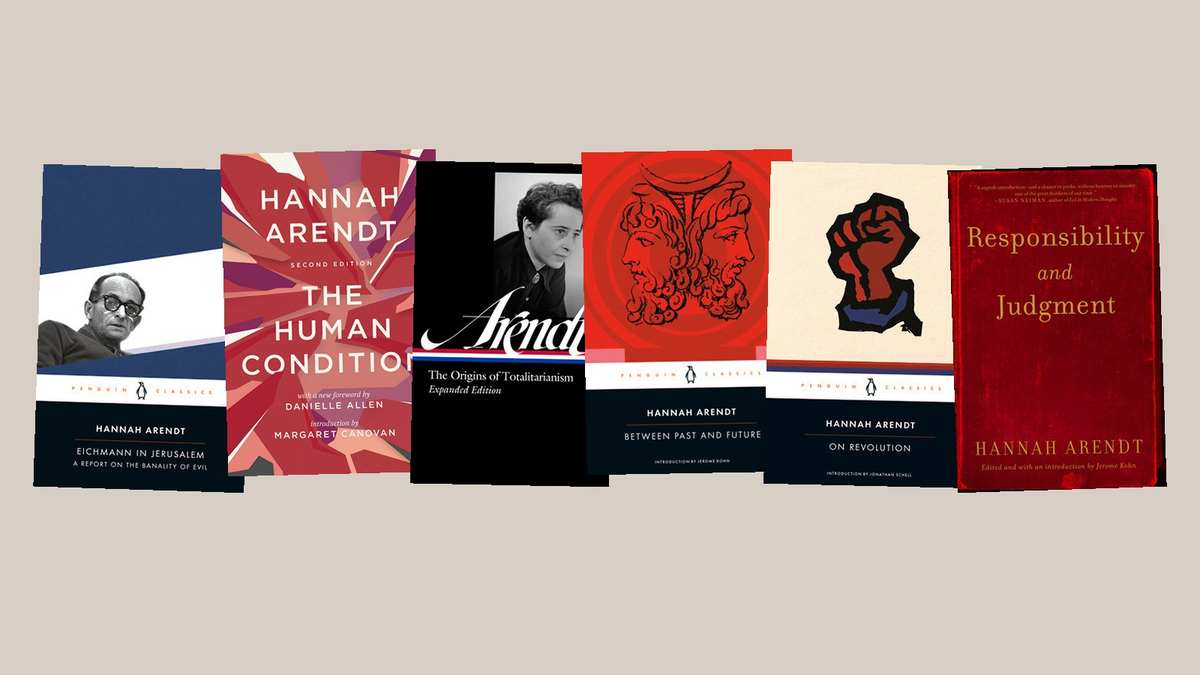
Hannah Arendt for beginners is best approached through a concrete moral and political crisis, not through her longest theoretical work. Begin with Eichmann in Jerusalem; then move through action, totalitarianism, authority, revolution, and judgment in a sequence that reveals why her ideas resist becoming a tidy system.
Introduction
Hannah Arendt matters because she changed the scale at which political questions can be asked. She wrote about totalitarian domination, statelessness, revolution, civil disobedience, lying, violence, conscience, and the strange fragility of a shared world. Yet she did not build a system in which one definition settles the rest. The Stanford Encyclopedia of Philosophy’s account of Arendt rightly emphasizes the range and interdependence of these concerns, while the Internet Encyclopedia of Philosophy’s overview notes how stubbornly her writings resist reduction to a single doctrine.
That resistance is the beginner’s first difficulty. Familiar words—power, freedom, action, labor, authority, evil—often mean something more exact and less conventional in Arendt. Power is not simply domination; freedom is not chiefly private choice; action is not any purposeful behavior; evil cannot be explained only by demonic intention. The Hannah Arendt Center’s concise portrait captures the governing tension: she defended plurality and the public realm while warning against abstractions that erase the reality of a common world.
A Hannah Arendt for beginners sequence should therefore offer a reading path rather than a ranking. It starts with a book whose courtroom setting makes Arendt’s problem of judgment tangible. It then supplies her political vocabulary, expands into the historical architecture of totalitarianism, pauses over authority and truth, turns to the promise and failure of revolution, and ends by returning to personal responsibility. The order is thematic and pedagogical, not chronological. It is designed to let each book correct the simplifications produced by the one before it.
The shortest honest answer
Start with Eichmann in Jerusalem. It gives a beginner a concrete dispute about evil, responsibility, bureaucracy, and judgment. Read The Human Condition next for Arendt’s political vocabulary; continue to The Origins of Totalitarianism, Between Past and Future, On Revolution, and finally Responsibility and Judgment. No general history of philosophy is required first.
The Hannah Arendt for beginners sequence moves from an event to a conceptual grammar, then from a history of domination to essays on the broken language of politics. On Revolution shows what positive political freedom might look like, while Responsibility and Judgment returns to the question that the first book leaves unsettled: how individuals judge when inherited moral rules have collapsed.
Before you start: how to approach Hannah Arendt for beginners
Do not begin by trying to reconcile every term across every decade. Arendt’s concepts develop in response to distinct historical pressures, and she often writes by drawing sharp distinctions rather than by constructing a closed theory. The useful beginner’s question is not “What is Arendt’s system?” but “What problem is this distinction trying to expose?” In The Human Condition, labor, work, and action separate forms of activity that modern societies blur. In On Revolution, liberation and freedom distinguish escape from oppression from the creation of durable spaces for public participation. In the writings on evil, thoughtlessness is not low intelligence but a failure to examine what one is doing.
Chronology helps with biography but hinders as a reading rule. Starting with the 1951 Origins means confronting a vast, historically uneven argument before learning how Arendt uses plurality, action, worldliness, and judgment. The Library of Congress Hannah Arendt Papers reveal the breadth of the career, but no beginner needs to master the archive—or Heidegger, Kant, Augustine, Greek political thought, Zionism, and twentieth-century European history—before reading her. Learn the background as each book makes it necessary.
One caution is essential. Eichmann in Jerusalem should not be treated as a self-sufficient history of the Holocaust or as the last word on Eichmann. Arendt’s report emerged from the 1961 trial, whose survivor testimony and public significance are clearly summarized by the United States Holocaust Memorial Museum. Read Arendt’s interpretation closely, but keep separate the historical record, the legal proceeding, her portrait of Eichmann, and the larger philosophical claim later attached to the phrase “the banality of evil.”
The best first book on Hannah Arendt for beginners
Start with: Eichmann in Jerusalem
Eichmann in Jerusalem is the strongest first encounter because it places Arendt inside an argument rather than presenting her as a monument. The reader meets a courtroom, a defendant, a prosecution, testimony, administrative language, disputed legal categories, and the problem of judging acts that seem to exceed inherited moral concepts. Arendt’s style is lucid enough to follow, but her judgments are provocative enough to demand resistance. That combination teaches the right reading posture: neither reverence nor dismissal, but patient reconstruction.
The book does not provide Arendt’s full political theory, a comprehensive history of the Holocaust, or an uncontested account of Eichmann’s ideological commitments. For Hannah Arendt for beginners, that limitation is precisely why it works first. It gives the beginner a bounded case through which several later themes become visible: bureaucratic responsibility, the relation between law and justice, the instability of moral rules under dictatorship, and the danger of language that shields action from thought. Choose the 2006 Penguin Classics paperback with Amos Elon’s introduction and Arendt’s revised text and postscript. Then move immediately to The Human Condition, which prevents “banality” from becoming the single slogan through which all her work is read.
The core reading sequence

Book 1
Eichmann in Jerusalem
Edition shown: Penguin Classics / introduction by Amos Elon / 2006 paperback / ISBN 9780143039884
Place in the sequence: A concrete first encounter with evil, bureaucracy, and judgment
Read this first because it forces Arendt’s most famous phrase back into the scene that produced it. The “banality of evil” is not a theory that ordinary people are secretly monsters, nor a claim that Nazi crimes were ordinary. It emerges from Arendt’s attempt to describe a perpetrator whose speech seemed made of official formulas and whose self-understanding depended on refusing the activity of judgment. The reader should watch how she moves between reportage, legal argument, historical reconstruction, characterization, and moral reflection. Those genres do not always sit comfortably together, and the friction is part of the book’s continuing power.
Look especially for the distinction between obeying orders and accepting responsibility. Eichmann repeatedly represents himself as a functionary inside a hierarchy; Arendt insists that the court must judge a person, not an administrative process. Yet she also broadens the frame to institutions, careerism, euphemism, deportation machinery, and the collapse of conventional moral inhibitions. The result is not a simple opposition between an evil individual and an innocent system. It is an inquiry into how systems operate through people who continue to speak, choose, improvise, and seek advancement while denying the meaning of those acts.
The book’s controversies must remain visible. Arendt’s treatment of Jewish councils, her tone, her account of Eichmann, and her judgments about the prosecution generated serious objections, and later archival research has complicated the portrait of a merely thoughtless bureaucrat. A first reading should therefore be argumentative: mark where evidence ends and interpretation begins; ask whether irony clarifies or distorts; compare the defendant’s clichés with the documented initiative he exercised. Read the revised text and postscript completely, but do not let the secondary debate consume the book before you have reconstructed its claims. Its proper function here is diagnostic. It opens the problem of judgment; the next book supplies the richer political vocabulary needed to understand what judgment protects.
Difficulty: Beginner
“Brilliant and disturbing.”
— Stephen Spender • Penguin Random House
Book 2
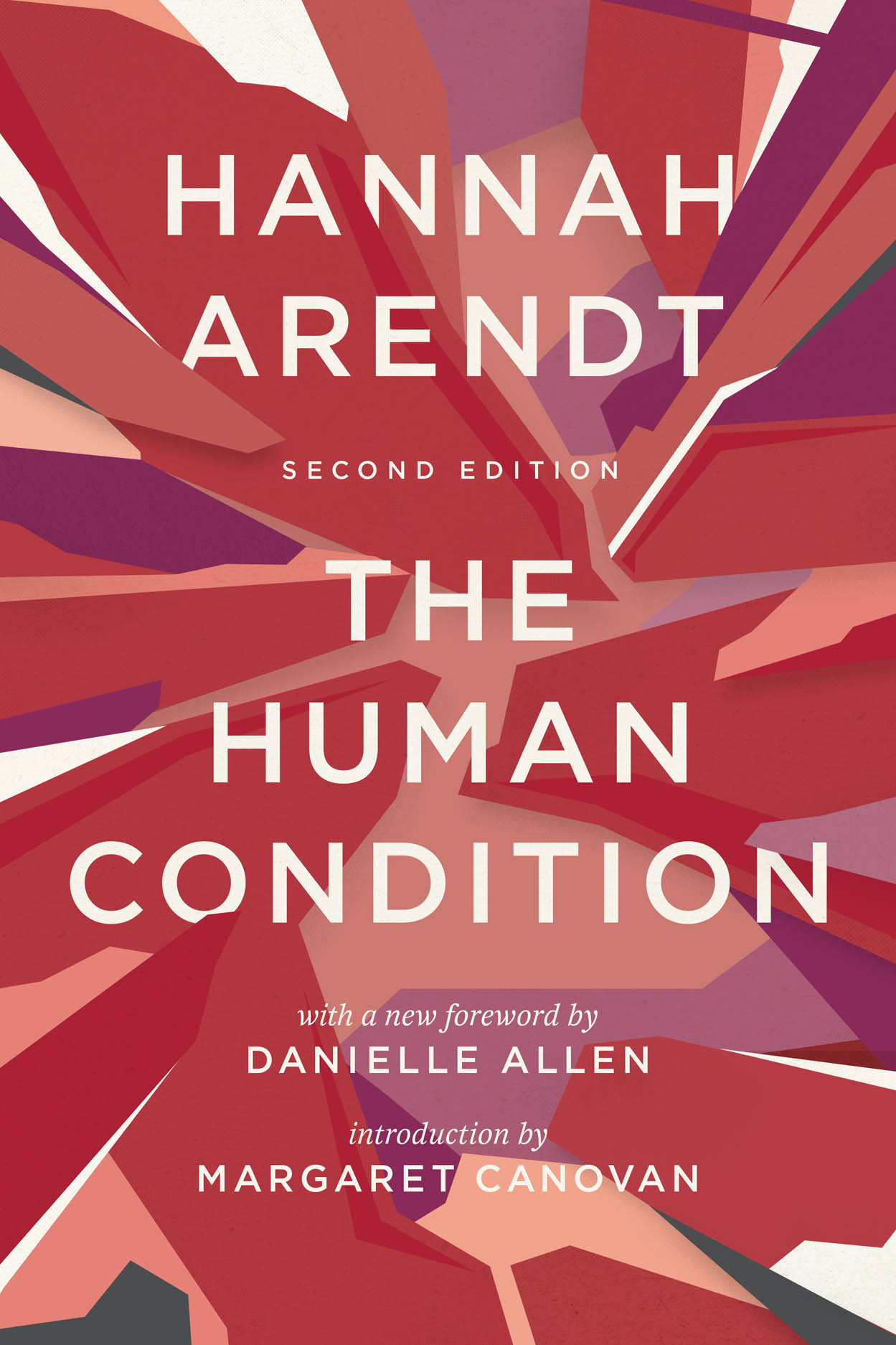
The Human Condition
Edition shown: University of Chicago Press / enlarged second edition / introduction by Margaret Canovan and foreword by Danielle Allen / 2018 paperback / ISBN 9780226586601
Place in the sequence: The conceptual grammar of action, plurality, worldliness, and power
After the courtroom, turn to the book that explains what can be destroyed when public life is reduced to administration. The Human Condition distinguishes labor, work, and action. Labor answers to biological necessity and recurring consumption; work fabricates a relatively durable world of things; action occurs directly among plural persons through speech and deed. These are not occupational categories or a hierarchy of social classes. They are modes of activity whose differences let Arendt diagnose a modern age increasingly organized around production, process, behavior, and the maintenance of life.
The beginner should concentrate on the public/private distinction, the rise of “the social,” the chapters on action, and the final diagnosis of modernity. Action matters because it discloses who someone is among others and begins something whose outcome cannot be mastered in advance. Plurality means that human beings are equal enough to understand one another yet distinct enough to require speech and perspective. Power arises when people act in concert; it is sustained by their continued association rather than possessed like an instrument. This vocabulary sharply revises the common idea that power is chiefly the capacity to command or coerce.
The book is rewarding but difficult because its historical generalizations are sweeping, its Greek reference point can look idealized, and its distinction between social and political questions has drawn substantial criticism. Do not defend every boundary before understanding the problem it names. Ask instead what disappears when politics becomes household management on a vast scale, citizens become populations to be administered, and public action is replaced by predictable conduct. Read the prologue, Parts I and II, the whole section on action, and the concluding chapters carefully; on a first pass, the dense middle analyses of labor and work can be read more quickly and revisited. The 2018 enlarged second edition is the best beginner edition because Margaret Canovan’s introduction situates the argument and Danielle Allen’s foreword clarifies its continuing political stakes without pretending to remove its tensions.
Difficulty: Demanding
“Arendt’s most important philosophical work.”
— Richard Wolin • University of Chicago Press
Book 3
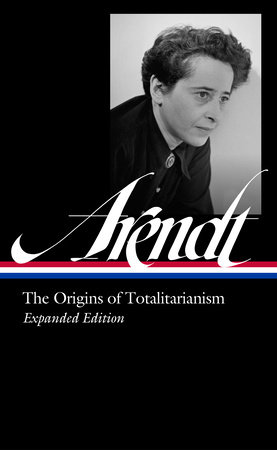
The Origins of Totalitarianism
Edition shown: Library of America / expanded and annotated edition / edited by Jerome Kohn and Thomas Wild / 2025 hardcover / ISBN 9781598538069
Place in the sequence: The historical and conceptual anatomy of total domination
Only after learning Arendt’s language of plurality and action should the beginner enter her largest political diagnosis. The Origins of Totalitarianism is organized in three great movements—antisemitism, imperialism, and totalitarianism—but it is not a linear causal history in which the first mechanically produces the last. Arendt traces elements that crystallized into a novel form of rule: racial thinking, continental expansion, statelessness, the decay of the nation-state, mass movements, ideology, terror, and the production of human beings made politically and socially superfluous.
The strongest first-reading strategy is selective but serious. Read the prefaces, “The Decline of the Nation-State and the End of the Rights of Man,” the chapters on the totalitarian movement and totalitarianism in power, and “Ideology and Terror.” These sections establish the book’s enduring claims: rights become precarious when they depend on membership in a political community; ideology converts a premise into an all-explaining logic; terror does more than suppress opposition; loneliness can prepare people for a world in which experience and common sense lose authority. Then return to the earlier parts, especially the analysis of imperialism, to see how Arendt connects European empire, race, bureaucracy, and expansion.
This is also the book in the sequence most in need of historical scrutiny. Its comparisons between Nazism and Stalinism, its treatment of imperialism, its sources, and several large narratives remain contested. Reading it responsibly means neither extracting aphorisms for current events nor treating every historical linkage as settled. The 2025 Library of America edition is particularly valuable because it is based on the final version Arendt revised, supplies annotations, restores the original “Concluding Remarks” and her chapter on the Soviet suppression of the Hungarian Revolution, and provides a chronology. The volume is physically compact but intellectually immense. Do not insist on reading all 900 pages before moving forward; build the central argument first, then use the annotations and restored materials to test how that argument changed across editions.
Difficulty: Advanced
“A deluxe expanded edition of the masterpiece of political philosophy that transformed how the world thinks about fascism and authoritarianism.”
— Library of America • Penguin Random House
Book 4
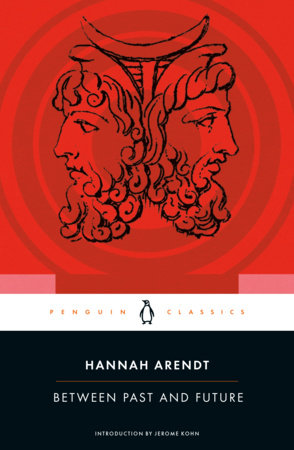
Between Past and Future
Edition shown: Penguin Classics / introduction by Jerome Kohn / 2006 paperback / ISBN 9780143104810
Place in the sequence: Eight exercises in recovering the meanings of authority, freedom, education, culture, and truth
This collection comes fourth because it lets the reader slow down and watch Arendt think through concepts one at a time. Its “exercises in political thought” begin from a break in tradition: inherited categories no longer command unquestioned authority, yet political judgment cannot proceed without distinctions. Rather than restore a lost tradition, Arendt moves between past and future, retrieving experiences that old concepts once articulated and asking whether those experiences can be understood anew.
For the present reading path, prioritize “What Is Authority?,” “What Is Freedom?,” “The Crisis in Education,” and “Truth and Politics.” The authority essay distinguishes authority from both persuasion and coercion; where force is required, authority has already failed. The freedom essay relocates freedom from private will to public action, where beginnings can appear among others. “Truth and Politics” examines the vulnerability of factual truth without imagining that politics can be replaced by expert administration. These essays make Arendt’s vocabulary more precise after the scale and darkness of Origins.
The collection’s limitation is also its attraction: the essays do not form a continuous argument, and their historical reconstructions can be compressed or idealizing. Read them as interventions rather than textbook chapters. Track recurring oppositions—authority and violence, freedom and sovereignty, truth and opinion, education and politics—but do not assume that every pair is absolute. The best method is to read one essay, summarize the distinction it establishes, then write down a contemporary example that seems to resist it. This tests the concept without merely translating it into a slogan. The 2006 Penguin Classics edition is convenient and reliable, with Jerome Kohn’s introduction and all eight essays in a compact format. Read the four priority essays completely on the first pass; return to “The Concept of History,” “What Is Culture?,” and the essays on tradition and conquest once the central vocabulary has settled.
Difficulty: Moderate
“Arendt . . . has an extraordinary talent for giving fresh meanings to everyday experiences.”
— Foreign Affairs • Penguin Random House
Book 5
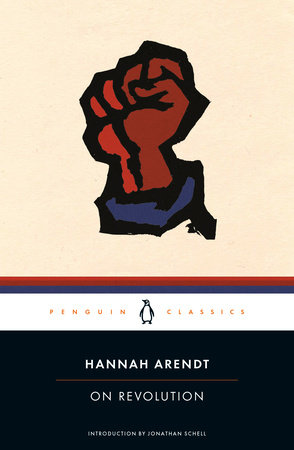
On Revolution
Edition shown: Penguin Classics / introduction by Jonathan Schell / 2006 paperback / ISBN 9780143039907
Place in the sequence: A comparative argument about liberation, founding, and public freedom
After the destruction analyzed in Origins and the conceptual recovery attempted in Between Past and Future, On Revolution asks whether modern politics can create durable spaces of freedom. Arendt compares the American and French Revolutions, not to rank national virtues, but to distinguish liberation from oppression from the harder achievement of founding institutions in which citizens can act publicly. Revolution becomes a test of natality—the human capacity to begin—and of the constitutional forms capable of preserving beginnings without freezing them into administration.
The reader should follow three linked arguments. First, political freedom means participation in public affairs, not merely civil liberties secured after private life resumes. Second, the “social question” of mass poverty altered the course and language of the French Revolution, allowing necessity and compassion to overwhelm institutional concerns. Third, the revolutionary council tradition repeatedly revealed a desire for direct public participation that representative systems failed to house. These claims are provocative because they expose a genuine problem—the loss of spaces for action—while risking an untenable separation of social suffering from political freedom.
That risk should be confronted, not hidden. Arendt’s account of slavery, racial domination, poverty, and the American founding is incomplete, and her admiration for council forms leaves difficult questions about scale, exclusion, expertise, and durability. Read the book for the structure of its argument, then press on the cases it marginalizes. The payoff is a richer conception of power: institutions are not alive merely because they possess legal force; they require people who continue to support, interpret, and inhabit them together. Read the introduction and all six chapters, but give greatest attention to the distinctions among liberation, freedom, sovereignty, and foundation. The 2006 Penguin Classics edition, with Jonathan Schell’s introduction, is the most practical entry. By this stage, the reader can see that Arendt’s political hope is not optimism. It is the fragile possibility that collective action can establish a world in which further action remains possible.
Difficulty: Demanding
“She is never dull, enormously erudite, always imaginative, original and full of insights.”
— The Sunday Times • Penguin Random House
Book 6
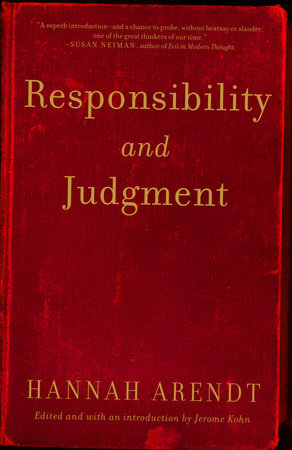
Responsibility and Judgment
Edition shown: Schocken / edited with an introduction by Jerome Kohn / 2005 paperback / ISBN 9780805211627
Place in the sequence: The ethical return to conscience, personal responsibility, and judging without fixed rules
End here because these essays reopen the first book after the political architecture of the middle four has changed the reader’s questions. Responsibility and Judgment gathers late lectures, essays, addresses, and reflections rather than presenting a single finished treatise. Its center is “Some Questions of Moral Philosophy,” where Arendt examines what happens when moral commandments that seemed permanent collapse with startling ease. The decisive issue is not why some people became heroes. It is why certain people refused participation even when refusal offered no public reward and when surrounding institutions declared criminal conduct normal.
Arendt’s answer turns on the relation a person bears to oneself. Those who refused could not live with themselves after becoming murderers or accomplices; their judgment did not depend on predicting success or consulting an intact social consensus. This is not a celebration of private purity. Personal responsibility cannot be dissolved into collective guilt, because guilt attaches to acts and agents, while political responsibility may extend to membership in a community whose past one did not personally cause. That distinction helps clarify the confusion left by Eichmann in Jerusalem: explaining institutional conditions does not erase the need to judge individual conduct.
Read “Some Questions of Moral Philosophy” completely, then “Personal Responsibility Under Dictatorship,” “Collective Responsibility,” “Auschwitz on Trial,” and the reflections on Little Rock. The last item is important partly because it exposes limits and failures in Arendt’s own judgment; a serious reader should not turn her account of judgment into immunity from criticism. The collection remains uneven, and some pieces require historical context, but that unevenness makes it a fitting culmination. It shows political thinking as an activity performed without a guaranteed rulebook, accountable to facts, other perspectives, and the demand to remain someone with whom one can live. Jerome Kohn’s edited Schocken volume is the standard accessible collection. It should be read after, not before, the earlier works, because its moral vocabulary becomes sharper once plurality, worldliness, authority, and institutional power are already in view.
Difficulty: Moderate
“The publication of Responsibility and Judgment is thus a particularly welcome event.”
— Susan Neiman • Penguin Random House
How these books fit together
A Hannah Arendt for beginners path begins with judgment under pressure and then asks what kind of world judgment presupposes. Eichmann in Jerusalem exposes speech emptied into cliché and responsibility hidden inside procedure. The Human Condition answers by describing plurality, action, and a common world in which people appear to one another. Origins shows how total domination attacks those conditions: it isolates, renders persons superfluous, organizes reality through ideology, and seeks to eliminate spontaneity.
Between Past and Future then supplies a workshop for distinctions damaged by modern experience—especially authority, freedom, and factual truth. On Revolution converts those distinctions into an institutional question: can a founding preserve spaces for public freedom rather than merely secure release from oppression? Responsibility and Judgment returns from institutions to the person without retreating into private morality. Judgment is exercised by individuals, but it depends on the capacity to consider a world shared with others.
This architecture also explains Arendt’s unusual account of power. The Stanford Encyclopedia’s discussion of feminist perspectives on power places her “power-to” conception beside later accounts of empowerment: power is generated through acting in concert, whereas violence is instrumental and can destroy the support on which power rests. Across the six books, evil and power are therefore not mirror images. Evil may flourish through thoughtless participation and systems of domination; power, in the properly political sense, exists only while plural people sustain a common undertaking.
Common beginner mistakes
Beginning with the biggest book because it looks foundational. The Origins of Totalitarianism is foundational, but it is a poor first exposure to Arendt’s shifting methods. Learn her political vocabulary and argumentative style before asking a 900-page historical synthesis to carry the whole introduction.
Turning “the banality of evil” into a universal slogan. The phrase does not mean that evil is harmless, commonplace, or explained by mere obedience. Keep it attached to Arendt’s account of thoughtlessness, language, careerism, judgment, and a particular defendant—and read historical challenges to her portrait.
Treating Arendt’s distinctions as eternal boxes. Labor/work/action, power/violence, liberation/freedom, and truth/opinion are analytical instruments. Ask what each distinction reveals and where experience strains it. A distinction can be illuminating without being exhaustive.
Ignoring the exclusions inside her examples. Arendt’s treatments of race, colonialism, poverty, gender, and the American founding have generated substantial criticism. Read those criticisms as tests of her concepts, not as reasons to avoid the primary texts or excuses to suspend judgment.
Reading biography as a substitute for argument. Her exile, Jewish political engagement, relationships, and academic career matter, but they do not settle what her concepts mean. Use biography to clarify situations and stakes; return to the sentences, distinctions, and evidence of the work itself.
Optional paths depending on your interest
If you are interested in evil and moral responsibility, prioritize Eichmann in Jerusalem and Responsibility and Judgment. Read them as a pair, with later historical work on Eichmann nearby, so that the philosophical claim and the contested portrait remain distinguishable.
If you are interested in power, public life, and democratic action, prioritize The Human Condition. Follow it with the short essay On Violence, where the difference between power and coercive instruments is stated most directly.
If you are interested in authoritarianism and mass politics, prioritize The Origins of Totalitarianism. Begin with its final part, then return to antisemitism, imperialism, statelessness, and the collapse of the nation-state rather than mining the book only for topical quotations.
For a more advanced path, continue with The Life of the Mind and Lectures on Kant’s Political Philosophy. These works deepen the relation among thinking, willing, judging, and the enlarged mentality that informs political judgment.
FAQ
Is Hannah Arendt for beginners better read chronologically or thematically?
Thematically. Chronology illuminates development, but a beginner benefits more from moving from a concrete controversy to political concepts, historical diagnosis, institutional freedom, and moral judgment. Return to publication order after the main vocabulary is secure.
How much historical background is necessary before Eichmann in Jerusalem?
Know the basic structure of the Holocaust, Eichmann’s role in deportation logistics, and the purpose and chronology of the 1961 Jerusalem trial. A reliable museum or scholarly history should accompany the book; Arendt’s report should not carry the entire historical burden.
Can The Origins of Totalitarianism be read selectively?
Yes. Read the prefaces, the chapter on the rights of stateless people, the sections on totalitarian organization and rule, and “Ideology and Terror” first. Then return to the earlier historical parts. Selective entry is not the same as relying on excerpts forever.
Are audiobooks suitable for reading Arendt?
They work best for a second pass through the more essayistic books. For The Human Condition and Origins, print or an ebook is preferable because the argument depends on distinctions, cross-references, and passages that reward annotation and rereading.
Related BookInLight Reading Guides
Learning to Think Politically: Twenty Books from First Questions to Hard Arguments — a broader route through political philosophy that places Arendt beside ancient, modern, liberal, socialist, and critical traditions.
Seven Essential Raymond Aron Books on Totalitarianism and Liberal Judgment — a useful comparison with another twentieth-century analyst of ideology, regimes, historical responsibility, and political moderation.
Seven Essential Books on Gramsci and Cultural Hegemony — a contrasting account of power, consent, institutions, and the formation of common political sense.
This article was researched and written by the BookInLight Department of Political Thought and Intellectual History, with bibliographical review, source verification, quotation verification, link verification, and editorial fact-checking by the BookInLight research team. Readers are warmly invited to send factual corrections, overlooked sources, edition suggestions, interpretive observations, and other constructive ideas.
The BookInLight Art Department is credited with editorial art direction, visual composition, cover selection, and image presentation. Rights in third-party book covers remain with their respective publishers, artists, designers, and rights holders. Complete republication, reproduction, translation, or reuse of this article requires prior written authorization from BookInLight.
Sources and Further Reading
Primary texts and exact editions
Hannah Arendt, Eichmann in Jerusalem, Penguin Classics, 2006 — edition details, revised-text description, and contemporary critical notices.
Hannah Arendt, The Human Condition, enlarged second edition, University of Chicago Press, 2018 — edition structure, contents, and editorial apparatus.
Hannah Arendt, The Origins of Totalitarianism: Expanded Edition, Library of America, 2025 — restored material, annotations, editors, and bibliographical specifications.
Hannah Arendt, Between Past and Future, Penguin Classics, 2006 — exact edition and the collection’s eight-exercise design.
Hannah Arendt, On Revolution, Penguin Classics, 2006 — exact edition and comparative revolutionary framework.
Hannah Arendt, Responsibility and Judgment, Schocken, 2005 — contents, edition details, and the late ethical essays.
Context, archives, and reference works
Thomas Meyer and Tatjana Noemi Tömmel, “Hannah Arendt”, Stanford Encyclopedia of Philosophy — intellectual overview and conceptual orientation.
Internet Encyclopedia of Philosophy, “Hannah Arendt” — accessible account of the non-systematic unity of her work.
Hannah Arendt Center for Politics and Humanities, “About Hannah Arendt” — institutional introduction to plurality, public life, and worldly responsibility.
Library of Congress, Hannah Arendt Papers — archival scope, manuscripts, correspondence, and career chronology.
United States Holocaust Memorial Museum, “Eichmann Trial” — historical and legal context for the 1961 proceeding.
Hannah Arendt, “Eichmann in Jerusalem—I”, The New Yorker, 1963 — the report’s original serial publication context.
Scholarly interpretation and critical correction
Elisabeth Young-Bruehl, Hannah Arendt: For Love of the World, second edition, Yale University Press, 2004 — full intellectual biography and historical setting.
Richard J. Bernstein, Hannah Arendt and the Jewish Question, MIT Press, 1996 — Jewish political engagement and its relation to the larger political thought.
Bettina Stangneth, Eichmann Before Jerusalem, Alfred A. Knopf, 2014 — archival challenge to the image Eichmann cultivated at trial.
Amy Allen, “Feminist Perspectives on Power”, Stanford Encyclopedia of Philosophy — Arendt’s power-to conception and its later theoretical reception.
Jerome Kohn, “Evil: The Crime against Humanity”, Library of Congress — development of Arendt’s accounts of radical evil and banality.
Jerome Kohn, “Totalitarianism, the Inversion of Politics”, Library of Congress — interpretive guide to total domination and the destruction of political plurality.
Image Credits
Eichmann in Jerusalem, Penguin Classics paperback, 2006; cover image supplied through Penguin Random House’s official exact-edition page: Penguin Random House.
The Human Condition, enlarged second edition, University of Chicago Press, 2018; official cover preview linked to the exact-edition page: University of Chicago Press.
The Origins of Totalitarianism: Expanded Edition, Library of America hardcover, 2025; cover image supplied through the official exact-edition page: Penguin Random House.
Between Past and Future, Penguin Classics paperback, 2006; cover image supplied through Penguin Random House’s official exact-edition page: Penguin Random House.
On Revolution, Penguin Classics paperback, 2006; cover image supplied through Penguin Random House’s official exact-edition page: Penguin Random House.
Responsibility and Judgment, Schocken paperback, 2005; cover image supplied through Penguin Random House’s official exact-edition page: Penguin Random House.