
Best Translation of Les Misérables depends on whether you value textual completeness, modern readability, historical notes, continuity with the novel’s earliest English reception, or the physical appeal of a collector’s edition. For most first-time readers, Christine Donougher’s complete Penguin Classics translation is the strongest default choice because it combines clear contemporary English with substantial explanatory material. Julie Rose offers the most energetic modern alternative, Lee Fahnestock and Norman MacAfee provide an affordable unabridged revision of Charles E. Wilbour’s nineteenth-century translation, and Norman Denny remains attractive for literary fluency and book design despite making editorial abridgements.

Christine Donougher
Penguin Classics
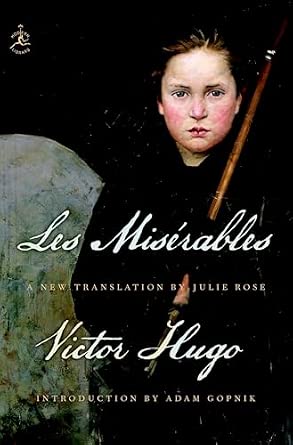
Julie Rose
Modern Library

Fahnestock and MacAfee
Signet Classics

Norman Denny
Penguin Clothbound Classics
If you just want the answer
Best overall: Christine Donougher, Penguin Classics. Complete, readable, well annotated, and suitable for both independent reading and academic study.
Best modern and lively translation: Julie Rose, Modern Library. Energetic, idiomatic, and especially effective for readers intimidated by the novel’s length.
Best affordable unabridged paperback: Lee Fahnestock and Norman MacAfee, Signet Classics. A modernized revision based on Charles E. Wilbour’s historic translation.
Best collector’s edition: Norman Denny, Penguin Clothbound Classics. Visually distinguished and fluent, but not completely unabridged.
For a reader who wants to purchase one dependable edition and read the complete novel, the Best Translation of Les Misérables is Donougher’s Penguin Classics version. Rose is a legitimate alternative rather than an inferior second place: it serves readers who prefer immediacy and colloquial force over Donougher’s somewhat more controlled modern register.
Best Translation of Les Misérables: the central decision
Choosing a translation of this novel is unusually consequential because Victor Hugo does not maintain one consistent narrative register. The book moves among intimate dialogue, political argument, religious meditation, historical reconstruction, satire, melodrama, street slang, urban description, and direct address to the reader. A translation that succeeds in the plot-driven chapters may become stiff during Hugo’s essays on Waterloo, convents, criminal language, revolution, or the Paris sewers.
Donougher offers the most balanced solution. Her English is modern enough to remain readable across more than a thousand pages but rarely sounds as though Hugo has been rewritten as a contemporary novelist. Rose is more visibly interventionist: her colloquial choices can restore humor, speed, and spoken force, though some readers find them historically conspicuous. Fahnestock and MacAfee preserve a stronger connection with Wilbour’s nineteenth-century English. Denny privileges narrative and literary fluency while openly treating some of Hugo’s excess as material that may be shortened, rearranged, or transferred.
The practical question is therefore not simply which translation is most accurate. It is which version best preserves the relationship among Hugo’s plot, rhetoric, political imagination, digressions, humor, and narrative personality for the kind of reading you intend to undertake.
How to choose the right edition or translation
Begin with abridgement status. Hugo’s historical and philosophical digressions are part of the novel’s intellectual architecture. They may interrupt the forward motion of Jean Valjean’s story, but they establish the institutions, historical memories, political conflicts, and moral categories through which that story acquires meaning. Readers who want Hugo’s full design should begin with Donougher, Rose, or Fahnestock and MacAfee.
Consider how modern the English should sound. Rose makes the novel feel spoken and immediate, sometimes using conspicuously current idiom. Donougher is also contemporary but generally less flamboyant. Fahnestock and MacAfee retain part of Wilbour’s older verbal texture. Denny’s prose is often elegant and accessible, though his approach reflects the editorial confidence of a translator willing to reshape the text.
Evaluate the scholarly apparatus separately from the translation. A readable translation may have minimal notes, while an older translation may be surrounded by a valuable introduction. Students should check the chronology, explanatory notes, bibliography, translation note, chapter organization, and identity of the introducer rather than trusting the publisher’s series name alone.
Think about the physical object. A mass-market paperback containing nearly 1,500 pages will be inexpensive but cramped. A hardcover may offer better typography while being heavy to hold. An ebook can solve the weight problem, but buyers should verify that the edition identifies the translator and contains functional navigation and properly linked notes.
Readers comparing publishing programmes may also consult Penguin Classics: A Complete Guide to the Series, which explains why a trusted imprint still requires edition-level verification.
Main comparison table
| Edition / Translation | Translator / Editor | Publisher and Year | Type | Best For | Strengths | Limitations | Verification Status |
|---|---|---|---|---|---|---|---|
| Penguin Classics ISBN 9780241248744 | Christine Donougher; introduction by Robert Tombs | Penguin Classics, 2015 UK paperback | Complete modern translation | First-time readers, students, reading groups | Balanced prose, extensive notes, chronology, historical framing | Very thick paperback; readers seeking maximum colloquial energy may prefer Rose | ISBN, contributors, publisher page, Amazon product, and direct cover image verified |
| Modern Library hardcover ISBN 9780679643333 | Julie Rose; introduction by Adam Gopnik | Modern Library, 2008 | Complete modern translation | Readers wanting energy, speed, and contemporary idiom | Vivid dialogue, narrative momentum, unabridged text, strong introduction | Some choices may feel more contemporary than Hugo’s historical setting | ISBN, contributors, publisher page, Amazon product, and direct cover image verified |
| Signet Classics ISBN 9780451419439 | Lee Fahnestock and Norman MacAfee; introduction by Fahnestock; afterword by Chris Bohjalian | Signet, 2013 edition | Unabridged revision based on Charles E. Wilbour | Budget buyers and readers interested in translation history | Complete text, affordable format, continuity with the earliest major English version | Small type, tight binding, and less extensive annotation | ISBN, contributors, publisher page, Amazon product, and direct cover image verified |
| Penguin Clothbound Classics ISBN 9781846140495 | Norman Denny; translated and introduced by Denny | Penguin Classics, 2012 clothbound edition | Literary translation with abridgements and relocated material | Collectors, gift buyers, and readers prioritizing physical design | Fluent prose, translator’s introduction, distinctive clothbound design | Not suitable when complete textual structure is essential | ISBN, translator, publisher page, Amazon product, and direct cover image verified |
Individual edition profiles
Best overall
Christine Donougher — Penguin Classics
Publisher: Penguin Classics Selected edition: 2015 UK paperback ISBN: 9780241248744 Length: approximately 1,456 pages in the corresponding US listing
Best for: first-time readers, university courses, reading groups, and readers who want one complete edition with substantial contextual assistance.
Donougher’s translation is the best-balanced modern English version among the editions compared here. It allows Hugo’s narrator to remain chatty, argumentative, ironic, theatrical, and morally insistent without making every sentence sound antique. The translation is clear enough for sustained reading but retains more rhetorical texture than a purely plot-driven modernization would permit.
Robert Tombs’s introduction gives the political and historical framework needed to understand the novel’s relation to post-revolutionary France, social inequality, penal institutions, monarchy, republicanism, and the uprising of June 1832. The chronology and explanatory notes are especially valuable when Hugo interrupts the central narrative to discuss Waterloo, convent life, criminal argot, or the changing geography of Paris.
Who should avoid it: readers who want a small lightweight paperback or who strongly prefer a translation that constantly foregrounds contemporary spoken idiom. The physical volume is substantial, and Rose may feel faster during comic or conversational passages.
Translator and editor background: Christine Donougher is a literary translator from French and Italian whose work includes translations of Sylvie Germain. Her broad experience with literary prose matters because Hugo moves repeatedly among realism, historical commentary, visionary rhetoric, humor, and melodrama. Robert Tombs is a historian of France whose scholarship provides an appropriate framework for the novel’s political and social setting.
“A magnificent achievement. It reads easily, sometimes racily, and Hugo’s narrative power is never let down.”
— William Doyle • Penguin Classics
Most energetic
Julie Rose — Modern Library
Publisher: Modern Library Year: 2008 ISBN: 9780679643333 Length: 1,376 pages
Best for: readers who want the complete novel but fear that older or more formal English will make its scale unnecessarily difficult.
Rose approaches Hugo as a writer addressing a broad living audience rather than as a distant monument. Her translation can be fast, slangy, dramatic, comic, and emotionally direct. The approach is especially effective in scenes involving the Thénardiers, crowds, political argument, street speech, and Hugo’s sudden transitions between satire and pathos.
The benefit is momentum. Rose makes it easier to hear the novel as a sequence of voices rather than as a uniform block of nineteenth-century prose. The cost is that some phrases sound deliberately current. Readers who expect historical fiction to maintain a restrained period atmosphere may become more conscious of Rose’s interpretive decisions than of Donougher’s.
Who should avoid it: readers who dislike conspicuous colloquial modernization or who want an English version that remains less attached to the idiom of a particular modern decade.
Translator and editor background: Julie Rose is an Australian literary translator whose work includes Alexandre Dumas’s The Knight of Maison-Rouge, Racine’s Phèdre, and works by Paul Virilio and Jacques Rancière. Her experience across drama, popular narrative, philosophy, and cultural theory helps explain her confidence in moving between Hugo’s abstract arguments and theatrical dialogue. Adam Gopnik’s introduction frames the novel as both an enormous nineteenth-century artifact and a work of continuing popular culture.
“Vibrant and readable, idiomatic and well suited to a long narrative.”
— Diane Johnson • Modern Library
Best budget unabridged edition
Lee Fahnestock and Norman MacAfee — Signet Classics
Publisher: Signet Selected edition: 2013 ISBN: 9780451419439 Length: 1,488 pages
Best for: readers seeking a low-cost complete edition and readers interested in the continuing influence of Charles E. Wilbour’s 1862 English translation.
Fahnestock and MacAfee did not discard Wilbour and begin with an entirely independent English text. They revised, corrected, and modernized his historic translation while retaining much of its underlying structure. The result occupies a useful middle position between a Victorian version and a wholly new late-twentieth- or twenty-first-century translation.
This continuity can be valuable for readers interested in how the novel first entered English. It also means that the edition should be described accurately: it is a revised translation based on Wilbour, not simply a new translation in the same sense as Rose or Donougher. The introduction by Lee Fahnestock explains the project, while Chris Bohjalian supplies the afterword.
Who should avoid it: readers who require extensive annotation or comfortable large-format typography. Nearly 1,500 pages in a mass-market binding produce a tight gutter and small print.
Translator and editor background: Lee Fahnestock translated fiction and the poetry of Francis Ponge and worked with Norman MacAfee on the letters of Jean-Paul Sartre. She was made a Chevalier in France’s Order of Arts and Letters. MacAfee was a writer, translator, editor, poet, and visual artist who also translated Pier Paolo Pasolini with Luciano Martinengo. Their experience with Sartre is relevant because Hugo likewise combines intellectual argument, public intervention, and personal voice.
Best for collectors
Norman Denny — Penguin Clothbound Classics
Publisher: Penguin Classics Year: 2012 clothbound edition ISBN: 9781846140495 Length: 1,232 pages
Best for: collectors, gift buyers, and readers who value a handsome permanent edition more than strict textual completeness.
Denny’s translation is fluent, literary, and often highly enjoyable. His introduction provides a translator’s account of Hugo’s artistic and political purposes. The clothbound edition designed within Penguin’s decorative classics programme is also the most visually distinctive of the four books compared here.
The important qualification is editorial. Denny explains that he has made some abridgements and has moved two substantial digressions, including material on convents and argot, to appendices. The result can improve narrative continuity for readers who view the digressions as obstacles, but it does not preserve the complete sequence and architecture Hugo established.
Who should avoid it: students comparing passages with the French text, scholars citing the novel’s exact structure, teachers who need consistent chapter placement, and readers who want every digression in its original position.
Translator background: Norman Denny was an English writer and translator whose work from French included books by Georges Simenon, Michel Tournier, Marcel Aymé, André Maurois, and Pierre Teilhard de Chardin. His version of Hugo reflects the method of a literary translator prepared to privilege rhythm and narrative effect over exhaustive structural fidelity.
Translation philosophy: what changes between versions
The Best Translation of Les Misérables must preserve more than narrative information. Hugo’s language repeatedly expands beyond the immediate scene. The narrator comments, argues, jokes, condemns, predicts, lectures, and challenges the reader. A translation can retain these shifts, soften them, or make them sound like interruptions from a different book.
Donougher and controlled modernity: Donougher modernizes syntax and vocabulary without consistently domesticating the novel into contemporary conversational English. Her version is therefore well suited to readers who want accessibility without losing the sense that Hugo’s narrative voice is historically and rhetorically unusual.
Rose and performative energy: Rose is more willing to reproduce the effect of living speech through modern idiom. This can make characters and comic situations immediately vivid. It can also make the translator more visible, particularly when an expression sounds closely associated with present-day English.
Fahnestock and MacAfee as revision: their translation is historically layered. Readers encounter Hugo through Wilbour’s nineteenth-century decisions and through the later translators’ corrections and modernization. This makes the edition valuable for reception history, though less useful as an example of a wholly independent modern translation philosophy.
Denny and the authority to edit: Denny’s version treats translation and editorial judgment as overlapping activities. His rearrangements embody a clear theory: that Hugo’s narrative may benefit when certain digressions are separated from the plot. Readers should decide whether they share that theory before selecting his edition.
Annotated, scholarly, and companion editions
A first-time reader does not need a specialist critical edition documenting every manuscript variant, but some explanatory apparatus is extremely useful. The novel assumes knowledge of French political regimes, penal law, religious orders, Parisian geography, Waterloo, the June uprising of 1832, revolutionary memory, and forms of social classification that are no longer self-explanatory.
Donougher’s Penguin edition provides the best integrated apparatus among the four profiled choices. Its notes help the reader without transforming every page into a seminar handout. Rose’s Modern Library edition has strong framing and a substantial introduction, but its principal attraction remains the translation’s voice. The Signet edition offers enough editorial material for general orientation but is not a deeply annotated student edition. Denny’s introduction is valuable as a statement of translation philosophy, although the edition should not be confused with a complete scholarly text.
A separate companion volume is most useful for teaching, dissertation research, or readers deliberately studying Hugo’s politics and historical method. For an independent first reading, excessive secondary material can interrupt the novel more severely than Hugo’s own digressions. Use notes when a reference blocks comprehension, then return to the primary text.
What to avoid
Unattributed editions: many inexpensive ebooks and print-on-demand books omit the translator’s name. A cover saying only Les Misérables does not establish which English text appears inside.
Unclear abridgements: a shortened adaptation may be appropriate for younger readers or classroom excerpts, but the product page should state clearly that it is abridged. Check the translator, page count, table of contents, and copyright page.
Public-domain files without editorial control: Wilbour and Isabel Hapgood remain historically important, but low-cost digital reproductions may contain scanning errors, missing paragraphs, broken chapter divisions, or inadequate navigation.
Retailer listings that combine editions: online reviews and format options may be grouped across several translations. Confirm the ISBN rather than assuming that every hardcover, paperback, and ebook on one page contains the same text.
Choosing Denny without understanding his method: Denny’s translation is a serious literary achievement, but it should not be bought as though it were structurally identical to the complete French novel.
Reader pathways
I am reading it for the first time
Choose Donougher. Read enough of the introduction to understand the political chronology, then use the endnotes selectively.
I want the most readable version
Compare Rose and Donougher. Choose Rose for stronger colloquial energy and Donougher for a more restrained modern voice.
I am studying it at university
Use Donougher unless your syllabus specifies another translation. Always cite translator, publisher, year, and ISBN.
I want the cheapest complete edition
Choose the Signet Fahnestock–MacAfee edition, provided that small print and limited annotation are acceptable.
I want a beautiful physical book
Choose the Denny clothbound edition for design, but keep a complete edition available for textual comparison.
I want to compare translations
Use Donougher as the base text, Rose as the strongest stylistic contrast, and Fahnestock–MacAfee for Wilbour’s reception history.
I am teaching the novel
Standardize one exact ISBN for the class. Donougher offers the strongest combination of complete text, context, and teachable annotation.
I mainly know the musical
Choose Rose or Donougher. Both reveal how much political history, satire, urban analysis, and religious argument the adaptation necessarily omits.
Best choice by reader type
| Reader Type | Recommended Edition | Reason |
|---|---|---|
| First-time serious reader | Christine Donougher | Best balance of completeness, readability, and contextual notes |
| Reader seeking narrative momentum | Julie Rose | Most energetic contemporary voice |
| University student | Christine Donougher | Complete structure and superior explanatory apparatus |
| Budget-conscious reader | Fahnestock and MacAfee | Affordable and unabridged |
| Collector or gift buyer | Norman Denny clothbound | Distinctive design and fluent prose |
| Translation-comparison reader | Donougher plus Rose | Clearest contrast between two complete modern strategies |
Related Bookinlight reading guides
For additional context, see How “Les Misérables” Was the Biggest Deal in Book History and The Persistent Greatness of “Les Misérables”.
FAQ
Why do page counts differ so much between complete editions?
Typography, page dimensions, paper thickness, introductions, notes, and chapter layout can alter the length by hundreds of pages. Page count alone cannot prove that an edition is abridged.
Can quotations be compared across different translations?
Yes, but cite the translator and edition. A memorable English sentence belongs partly to the translator, and wording may differ substantially even when two versions represent the same French passage.
Does the Best Translation of Les Misérables change for ebook readers?
The preferred translation does not change, but the product may. Confirm the translator, ISBN, unabridged status, linked notes, chapter navigation, and formatting before purchasing a digital edition.
Should readers skip Hugo’s digressions on a first reading?
They should normally be attempted because they define the novel’s historical and political scale. A struggling reader may postpone a section temporarily, but an edition should not silently remove it.
Final recommendation
For most readers, the Best Translation of Les Misérables is Christine Donougher’s Penguin Classics version. It preserves the complete novel, gives Hugo a flexible modern English voice, and supplies the historical and explanatory apparatus required to understand the sections that extend beyond Jean Valjean’s personal story.
Julie Rose is the strongest alternative for readers who prioritize immediacy, spoken energy, and narrative momentum. It is complete, substantial, and supported by Adam Gopnik’s introduction. Readers comparing the two should sample a dialogue-heavy chapter and one of Hugo’s historical digressions rather than judging from the opening pages alone.
Fahnestock and MacAfee offer the best economical unabridged paperback and an instructive bridge to Wilbour’s nineteenth-century translation. Denny’s clothbound Penguin is the best physical object in this comparison, but its abridgements and rearrangements make it a secondary choice for academic or textually exact reading.
Before buying, verify the translator, ISBN, format, price, territorial availability, and abridgement status. Retailers frequently combine reviews and format options from different editions even when the translations, introductions, notes, and page structures are not the same.
Illustration credit: Bookinlight