
Capitalism · June 2026
The best new books in Capitalism for June 2026 range from a forgotten global crash and contested socialist markets to warehouse unionism, Indigenous futures, artificial labor, and the commercial space frontier. These ten first editions were selected for direct subject relevance, bibliographic integrity, argumentative strength, and their capacity to show capitalism as a changing institutional order rather than a single doctrine.
Eligible first-edition publication dates ran from through , inclusive.
For this ranking of the best new books in Capitalism for June 2026, selection combined publisher-date verification, independent bibliographic checking, direct disciplinary relevance, critical research, edition matching, required purchase-link validation, and exact-cover review.
Affiliate note: Book in Light may earn a small commission if a purchase is made through some links on this page, at no extra cost to the reader. Commercial availability never determines editorial selection.
Ranked overview: best new books in Capitalism for June 2026
1. 1873: The Rothschilds, the First Great Depression, and the Making of the Modern World
Liaquat Ahamed · Penguin Press ·
Best for: global financial crises and capitalism’s political afterlives
2. Nativism and Capitalism: From Colonial Hauntings to Radical Indigenous Futures
Peter Bloom · Routledge ·
Best for: colonial belonging, exclusion, and anti-capitalist Indigenous futures
3. Capital Untamed: The Politics of Finance in Nineteenth-Century France
Charlotte Robertson · University of Chicago Press ·
Best for: the state’s failed attempt to make finance serve public transformation
4. Reforming Communism, Refusing Capitalism: The Rise and Fall of the Concept of “Socialist Market”
Edited by János Mátyás Kovács · Bloomsbury Academic ·
Best for: comparative histories of markets inside communist systems
5. The Antinomies of Black Marxism: Critique of the Racial Capitalism Paradigm
Edited by Salvador Rangel and William I. Robinson · Routledge ·
Best for: a direct theoretical dispute over race, class, and capitalist exploitation
6. Free Robot Labour: Marx, Automation, and the Future of AI
Jamie Terence Kelly · Palgrave Macmillan ·
Best for: Marxist analysis of artificial labor and machine rights
7. What Are Markets For?
Philip Roscoe · Bristol University Press ·
Best for: a clear account of market design, morality, and social purpose
8. When the Revolution Comes: A Fight for the Future of the Working Class
Chris Smalls · Pantheon ·
Best for: first-person labor organizing inside Amazon’s logistics regime
9. I Guess This Is Activism?: Youth, Political Education, and Free-Market Common Sense
Kevin L. Clay · University of Minnesota Press ·
Best for: how young people learn to contest neoliberal common sense
10. New Space Capitalism: The Entrepreneurial Path to the Stars
Rainer Zitelmann, with a foreword by Newt Gingrich · Skyhorse Publishing ·
Best for: a forceful pro-market case for the commercial space economy
1. 1873: The Rothschilds, the First Great Depression, and the Making of the Modern World

Liaquat Ahamed
Penguin Press ·
- Full title
- 1873: The Rothschilds, the First Great Depression, and the Making of the Modern World
- Author / editor
- Liaquat Ahamed
- Publisher
- Penguin Press
- Publication date
- June 2, 2026
- ISBN-13
- 9781594204173
- Page count
- 368
- Primary field
- Capitalism
- Specific subfield
- Financial history and crisis
- Displayed format
- Hardcover
- Official edition
- Publisher page
Why It Was Selected
Ahamed takes first place because he does more than reconstruct a spectacular crash: he shows how a nineteenth-century financial breakdown reorganized power, wealth, sovereignty, and political blame across several continents. That breadth makes the book the month’s most consequential study of capitalism as a world system. It joins market mechanics to Reconstruction, Ottoman debt, monetary orthodoxy, antisemitism, and the changing authority of bankers. The ranking also reflects the quality of the early independent criticism, which recognizes both the research and the contemporary resonance. Readers seeking one June book that connects financial history to the recurring political consequences of crisis should begin here.
Short Book Summary
The book follows the panic that began with the collapse of the Vienna Stock Exchange in 1873 and spread through interconnected banking, railway, property, and sovereign-debt markets. Ahamed treats the Rothschild network as a connective thread rather than as a conspiratorial master key, using its position in European finance to track the movement of credit and fear. His larger argument is that the ensuing depression helped establish a modern pattern: speculative expansion, abrupt contraction, creditor-friendly remedies, deflation, social anger, and political scapegoating. The narrative ranges from the United States and Europe to the Ottoman world, showing how monetary policy and debt enforcement redistributed losses. It therefore belongs centrally to the history of capitalism, not simply to banking history, because it explains how a crisis in capital markets altered states, parties, racial politics, and popular understandings of economic power.
Author Profile
Liaquat Ahamed studied economics at Cambridge and Harvard, worked at the World Bank, and spent roughly twenty-five years as a professional investment manager before turning to historical writing. That unusual combination of economic training and market experience shaped his Pulitzer Prize–winning Lords of Finance, which examined central bankers and the interwar collapse. His official author profile confirms the professional background that lets him explain technical mechanisms without losing sight of institutional judgment, elite networks, and political consequence. His prose also benefits from long familiarity with how financial actors frame uncertainty and responsibility.
Critical Reception
The earliest reviews are unusually substantial for a book published during the target month. Publishers Weekly emphasizes the connection between boom-and-bust dynamics and reactionary politics, while Kirkus Reviews praises the book’s exemplary economic history and present-day relevance. The Financial Times reads the railway and property boom against contemporary investment manias, and Air Mail stresses the narrative force of the global account. The shared admiration concerns range, pace, and synthesis; the most useful critical caution is implicit rather than hostile: the book’s panoramic design privileges connective explanation over sustained local social history.
Review Quotations
Granular and deeply researched
Publishers Weekly · March 24, 2026
The phrase identifies the book’s combination of archival density and a legible global argument.
An exemplary work of economic history, with many lessons for the present.
Kirkus Reviews · April 6, 2026
That verdict captures why the book leads this ranking: historical specificity becomes comparative intelligence.
utterly compelling history of the world’s first global financial disaster
Jim Kelly, Air Mail · June 6, 2026
The assessment points to the narrative control that keeps a multi-country crisis from becoming diffuse.
Reviews & Criticism
Publisher & Print Editions
Who Should Read It
Best suited to readers of economic history, global history, political economy, and financial crises. It is accessible to serious general readers, but its value rises for those who already know the outlines of nineteenth-century industrialization, Reconstruction, or the gold-standard debate. The book would work particularly well in upper-level courses on capitalism, international finance, or the political history of economic downturns, where its cross-regional structure can anchor comparison without reducing crisis to a single national story.
2. Nativism and Capitalism: From Colonial Hauntings to Radical Indigenous Futures

Peter Bloom
Routledge ·
- Full title
- Nativism and Capitalism: From Colonial Hauntings to Radical Indigenous Futures
- Author / editor
- Peter Bloom
- Publisher
- Routledge
- Publication date
- June 9, 2026
- ISBN-13
- 9781041033950
- Page count
- 232
- Primary field
- Capitalism
- Specific subfield
- Nativism, coloniality, and political economy
- Displayed format
- Hardcover
- Official edition
- Publisher page
Why It Was Selected
Bloom ranks second because he treats nativism as an operating logic of capitalist modernity, not as an irrational disturbance arriving from outside the economy. That intervention directly joins political economy, colonial history, and contemporary far-right mobilization. The book is especially valuable in a month rich in historical studies because it asks how economic dispossession is translated into racialized stories about authentic membership and scarce entitlement. Its second-place position reflects conceptual ambition and disciplinary reach, while acknowledging that the argument is more synthetic and programmatic than Ahamed’s densely documented global history. Scholars of nationalism, migration, decolonial thought, and critical management will find the strongest immediate use.
Short Book Summary
Bloom reconstructs the figure of “the native” as a colonial category that continues to organize capitalist distinctions between those entitled to land, work, welfare, mobility, and political voice and those marked as intruders. The book traces this structure from nineteenth-century empire to contemporary populist movements that convert insecurity into demands for exclusion. Its central claim is that nativism is not merely cultural backlash against globalization; it is one way capitalist societies narrate and administer scarcity. The counterargument emerges through Indigenous epistemologies, ecological practices, governance traditions, and transnational movements. Bloom distinguishes radical Indigenous futures from exclusionary blood-and-soil politics by emphasizing reciprocity, plural sovereignty, and international solidarity. Capitalism is therefore the book’s dominant analytical field: accumulation, dispossession, hierarchy, and market-centered globalization explain both the production of nativist desire and the search for alternatives.
Author Profile
Peter Bloom is Professor of Management at the University of Essex and co-director of the university’s Centre for Commons Organising, Values, Equalities and Resilience. His work connects critical organization studies to political economy, ideology, technology, and alternative forms of collective life. The University of Essex profile places him within management scholarship, but this book draws equally on decolonial theory and the politics of belonging. That interdisciplinary position helps explain its unusual move from organizational scarcity to colonial categories and Indigenous political imagination.
Publisher & Print Editions
Digital & Audio Editions
Who Should Read It
This is a specialist-facing but readable book for researchers and graduate students in political economy, nationalism studies, Indigenous studies, migration, sociology, anthropology, and critical management. Familiarity with coloniality and neoliberalism will help, though the argument is designed to connect those literatures. It is especially appropriate for seminars asking why economic grievance becomes exclusionary identity politics, or how Indigenous political thought can articulate internationalist alternatives without reproducing the nativist category under critique.
3. Capital Untamed: The Politics of Finance in Nineteenth-Century France

Charlotte Robertson
University of Chicago Press ·
- Full title
- Capital Untamed: The Politics of Finance in Nineteenth-Century France
- Author / editor
- Charlotte Robertson
- Publisher
- University of Chicago Press
- Publication date
- June 22, 2026
- ISBN-13
- 9780226847573
- Page count
- 320
- Primary field
- Capitalism
- Specific subfield
- Finance, state formation, and modern France
- Displayed format
- Cloth
- Official edition
- Publisher page
Why It Was Selected
Robertson earns third place for turning a familiar story about financial modernization into a study of political legitimacy. Her subject is not simply the growth of the Paris Bourse; it is the Bonapartist wager that financial institutions could reconcile authoritarian government, mass participation, infrastructure, and social progress. The book’s archival range and clear institutional question distinguish it from broader surveys of capitalism. It ranks just below Bloom because its geographical focus is narrower, yet within that focus the evidence is unusually exact. Readers interested in how states cultivate markets, then confront their autonomy and opacity, will find a history with obvious relevance to contemporary debates over public purpose and private capital.
Short Book Summary
The book follows French efforts after the revolutions of 1848 to transform finance from a domain associated with private speculation into an instrument of national development. Under Napoleon III, new banks, securities, railways, and widened market participation promised to direct capital toward industry and infrastructure while stabilizing the regime. Robertson shows why that program became politically unstable. Financial markets generated information asymmetries, speculative practices, competing intermediaries, and claims to autonomy that the state could neither fully direct nor publicly disown. Drawing on police surveillance, courtroom records, investment manuals, newspapers, incorporation petitions, and shareholder disputes, she reconstructs finance from the perspectives of officials and ordinary investors. The resulting history explains a key capitalist contradiction: governments create and authorize markets in the name of collective advancement, but market actors can escape the purposes used to legitimate them.
Author Profile
Charlotte Robertson is Assistant Professor in the Business, Government, and the International Economy Unit at Harvard Business School. Her research focuses on the history of financial markets and political economy in modern Europe. The Harvard Business School profile identifies Capital Untamed as her first book and situates it within a program concerned with the institutional production of markets. Her training as a historian is evident in the use of administrative and legal archives, while her business-school setting sharpens the analysis of how financial organizations acquire authority.
Publisher & Print Editions
Who Should Read It
An excellent choice for historians of capitalism, finance, modern France, state formation, and business institutions. Graduate students will benefit most from the archival method, though advanced undergraduates can follow the central argument with basic knowledge of the Second Republic and Second Empire. The book fits courses on financialization, political legitimacy, or the public-private boundary. It will also interest policy-oriented readers who want a historically grounded account of why governments can sponsor markets without being able to command their social outcomes.
4. Reforming Communism, Refusing Capitalism: The Rise and Fall of the Concept of “Socialist Market”

Edited by János Mátyás Kovács
Bloomsbury Academic ·
- Full title
- Reforming Communism, Refusing Capitalism: The Rise and Fall of the Concept of “Socialist Market”
- Author / editor
- Edited by János Mátyás Kovács
- Publisher
- Bloomsbury Academic
- Publication date
- June 11, 2026
- ISBN-13
- 9781793631800
- Page count
- 472
- Primary field
- Capitalism
- Specific subfield
- Comparative political economy and socialist market reform
- Displayed format
- Hardcover
- Official edition
- Publisher page
Why It Was Selected
This collective volume ranks fourth because it studies capitalism from the boundary where communist reformers tried to admit markets without accepting private ownership or pluralist rule. That is a powerful way to clarify what a market is—and what it is not—inside rival economic systems. The geographic range, extending across Eastern Europe, the Soviet sphere, Yugoslavia, China, and Taiwan, gives the book comparative weight unavailable in a single-country monograph. It falls below the top three because its edited structure inevitably produces variation in emphasis, but the organizing concept is strong enough to hold the cases together. Historians of economic thought and comparative political economy should treat it as the month’s major reference work.
Short Book Summary
The contributors trace the rise and decline of the “socialist market” as a language of reform from the 1950s onward. Reform economists sought to correct rigid central planning through prices, enterprise autonomy, competition, and multiple forms of social ownership while refusing large-scale privatization and one-party political change. Chapters examine how that conceptual compromise developed differently across Bulgaria, Czechoslovakia, East Germany, Hungary, Poland, Romania, the Soviet Union, Yugoslavia, China, and Taiwan. The volume’s central contribution is to separate marketization from capitalism without pretending the distinction was stable. It shows how reformers debated incentives, property, planning, and coordination, and why attempts to combine these elements repeatedly encountered institutional and ideological limits. For capitalism studies, the book provides a comparative archive of near-capitalist arrangements that reveals which legal and political transformations markets alone could not accomplish.
Author Profile
János Mátyás Kovács is an economic historian and historian of economic thought associated with Vienna’s Research Center for the History of Transformations, the Institute for Human Sciences, and Eötvös Loránd University. His long research program has examined communist economic ideas, reform socialism, and post-1989 transformations. The Institute for Human Sciences profile documents the institutional continuity behind the project. As editor, Kovács supplies the comparative problem and brings together specialists capable of distinguishing national reform vocabularies rather than treating state socialism as a uniform block.
Publisher & Print Editions
Digital & Audio Editions
Who Should Read It
Designed primarily for scholars, graduate students, and advanced undergraduates in economic history, the history of economic thought, communist studies, comparative politics, and political economy. Some familiarity with central planning and twentieth-century socialist regimes is useful because the chapters assume a working vocabulary of reform debates. The volume is especially valuable for courses that too quickly equate markets with capitalism: its case studies make that relationship historically contingent, institutionally demanding, and politically contested.
5. The Antinomies of Black Marxism: Critique of the Racial Capitalism Paradigm

Edited by Salvador Rangel and William I. Robinson
Routledge ·
- Full title
- The Antinomies of Black Marxism: Critique of the Racial Capitalism Paradigm
- Author / editor
- Edited by Salvador Rangel and William I. Robinson
- Publisher
- Routledge
- Publication date
- June 25, 2026
- ISBN-13
- 9781041251149
- Page count
- 190
- Primary field
- Capitalism
- Specific subfield
- Marxism, race, and class formation
- Displayed format
- Paperback
- Official edition
- Publisher page
Why It Was Selected
Fifth place goes to the month’s most openly polemical intervention. The editors and contributors contest the contemporary dominance of the racial-capitalism paradigm associated with Cedric Robinson, arguing that some uses of the concept detach racism from historically specific relations of exploitation and class formation. Its directness is a strength: the volume identifies propositions, names disagreements, and forces readers to ask what explanatory work “capitalism” performs in accounts of race. It ranks below the broader comparative books because the project is deliberately adversarial and compact, but that compression makes it valuable for seminars. Readers should approach it alongside, not instead of, the Black radical tradition it criticizes.
Short Book Summary
The volume reassesses Cedric Robinson’s account of Black Marxism and the now widespread category of racial capitalism. Its contributors argue that racism should be analyzed as a modern historical production within capitalist exploitation rather than as a transhistorical racial logic that Marxism cannot explain. From that position, the book defends class analysis, internationalism, and the possibility of multiethnic working-class politics while criticizing approaches that treat race as the autonomous foundation of capitalist order. The essays examine conceptual genealogy, historical evidence, political strategy, and the relation between racial domination and global accumulation. Whatever one’s judgment of the argument, the collection belongs centrally to capitalism studies because it asks how capital’s universalizing dynamics coexist with differentiated labor, coercion, and hierarchy. Its contribution is the sharpening of a dispute that has often proceeded through slogans rather than explicit competing causal claims.
Author Profile
Salvador Rangel is a sociologist whose work is informed by labor, migration, and class politics. William I. Robinson is a sociologist of globalization and a major theorist of transnational capitalist classes, global accumulation, and crisis. Robinson’s University of California, Santa Barbara faculty site connects this volume to his larger account of global capitalism. The editorial pairing matters: it situates the critique within Marxist political economy and within debates over how contemporary racial divisions are produced, reproduced, and potentially overcome through collective struggle.
Publisher & Print Editions
Digital & Audio Editions
Who Should Read It
Best for graduate seminars and researchers in Marxist theory, Black studies, sociology, racial capitalism, labor history, and political strategy. Prior reading in Cedric Robinson is strongly recommended; without it, the essays’ targets and stakes can be flattened. The volume is particularly useful when paired with defenses of racial-capitalism analysis, because its value lies in forcing comparison between rival explanations of exploitation, differentiation, colonial inheritance, and solidarity rather than supplying a neutral introduction to the field.
6. Free Robot Labour: Marx, Automation, and the Future of AI

Jamie Terence Kelly
Palgrave Macmillan ·
- Full title
- Free Robot Labour: Marx, Automation, and the Future of AI
- Author / editor
- Jamie Terence Kelly
- Publisher
- Palgrave Macmillan
- Publication date
- June 23, 2026
- ISBN-13
- 9783032267818
- Page count
- x + 112
- Primary field
- Capitalism
- Specific subfield
- Marxist theory, automation, and artificial intelligence
- Displayed format
- Softcover
- Official edition
- Publisher page
Why It Was Selected
Kelly ranks sixth because he asks a genuinely new question with old conceptual tools: not merely whether artificial intelligence will displace workers, but whether machines could become laborers in Marx’s sense. The book’s brevity is an advantage for argument but limits its empirical range, placing it below the larger historical studies. Its three-scenario structure clarifies competing futures—conventional automation, platform-bound artificial feudalism, and legally free yet economically dependent robots. That framework makes the book one of June’s most teachable interventions. It is especially useful for readers dissatisfied with discussions of artificial intelligence that measure productivity without examining property, dependence, legal personhood, or the reproduction of capitalist social relations.
Short Book Summary
Kelly begins with Marx’s definition of labor and asks whether agentic artificial intelligence could perform socially organized, value-producing activity rather than simply operate as machinery. The “Standard Marxian Line” denies artificial labor and predicts familiar dynamics of overproduction, unemployment, and pressure for expansion. “Artificial Feudalism” imagines capable systems trapped within platform ownership and proprietary infrastructures. “Double Freedom for Robots” develops the most provocative possibility: robots acquire legal emancipation while remaining dependent on capital for access to productive resources, reproducing the double freedom associated with wage labor. The argument moves from automation to status, rights, property, and class relation. Capitalism remains the organizing problem throughout because the decisive issue is not technical intelligence alone but how autonomous machines would be owned, contracted, disciplined, and inserted into accumulation. The conclusion raises the prospect of artificial comrades without sentimentalizing technological development.
Author Profile
Jamie Terence Kelly is Associate Professor of Philosophy at Vassar College and the author of Framing Democracy: A Behavioral Approach to Democratic Theory. His teaching and research span social and political philosophy, democratic theory, law, and technology. The Vassar faculty profile helps locate this book’s method: it is a work of normative and conceptual political philosophy rather than a forecast built from engineering benchmarks. Kelly’s contribution lies in asking which social categories would make artificial agency politically intelligible under capitalism.
Publisher & Print Editions
Digital & Audio Editions
Who Should Read It
Ideal for philosophers of technology, Marxist theorists, artificial-intelligence ethicists, legal scholars, and students of labor. The book requires no technical expertise in machine learning, but familiarity with Marx’s account of labor power, property, and wage dependence will deepen the argument. Its compact scale makes it suitable for a graduate or advanced undergraduate seminar week, especially when paired with empirical work on automation, platform labor, data extraction, or the legal status of autonomous systems.
7. What Are Markets For?

Philip Roscoe
Bristol University Press ·
- Full title
- What Are Markets For?
- Author / editor
- Philip Roscoe
- Publisher
- Bristol University Press
- Publication date
- June 30, 2026
- ISBN-13
- 9781529244175
- Page count
- 178
- Primary field
- Capitalism
- Specific subfield
- Economic sociology and market purpose
- Displayed format
- Paperback
- Official edition
- Publisher page
Why It Was Selected
Roscoe takes seventh place for asking the deceptively simple question that many studies of capitalism evade. Markets are often judged by efficiency, but their rules distribute visibility, risk, bargaining power, and moral responsibility before any transaction occurs. The book’s trade-facing clarity gives it broad usefulness, although its synthetic scale is less original than the historical and theoretical interventions ranked above it. Its strength lies in moving discussion from “more market” versus “less market” toward the design and purpose of particular markets. Readers entering economic sociology, public policy, or business ethics will find a disciplined vocabulary for asking who a market serves and what kinds of conduct its architecture rewards.
Short Book Summary
Roscoe treats markets as constructed social institutions rather than natural arenas that appear whenever individuals exchange. Prices, rankings, categories, contracts, information systems, and eligibility rules determine what can be valued and who can participate. The book asks what purposes these arrangements should serve and how their effects exceed the narrow goals of allocative efficiency. Drawing on economic sociology and studies of finance and valuation, it explains why markets can coordinate activity while also obscuring responsibility, intensifying competition, and converting contested goods into comparable units. The central capitalist question is institutional: which domains should be organized through market devices, and what political or ethical obligations follow when they are? By foregrounding design, Roscoe avoids romantic anti-marketism and laissez-faire fatalism alike. Markets become revisable mechanisms whose legitimacy depends on publicly defensible ends.
Author Profile
Philip Roscoe is Professor of Management at the University of St Andrews and Director of Research for Management in its Business School. His scholarship examines markets, finance, valuation, and the moral consequences of calculative devices. The St Andrews profile places his work at the intersection of organization studies and economic sociology. That background supports the book’s central move: treating markets not as abstract equations but as practical arrangements built by institutions, experts, technologies, and rules that embody judgments about social worth.
Publisher & Print Editions
Who Should Read It
The most accessible scholarly book in the ranking, suitable for undergraduates, policy professionals, business students, and general readers who want a rigorous alternative to slogans about markets. No advanced economics is required. It would fit introductory courses in capitalism, economic sociology, business ethics, or public policy, particularly as a conceptual bridge between abstract debates and concrete market design. Specialists may use it as a compact teaching text rather than as a comprehensive research monograph.
8. When the Revolution Comes: A Fight for the Future of the Working Class
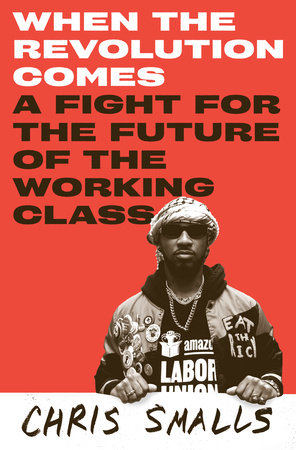
Chris Smalls
Pantheon ·
- Full title
- When the Revolution Comes: A Fight for the Future of the Working Class
- Author / editor
- Chris Smalls
- Publisher
- Pantheon
- Publication date
- June 2, 2026
- ISBN-13
- 9780593700631
- Page count
- 304
- Primary field
- Capitalism
- Specific subfield
- Labor organizing and corporate power
- Displayed format
- Hardcover
- Official edition
- Publisher page
Why It Was Selected
Smalls ranks eighth because his memoir supplies something the more academic books cannot: a worker-organizer’s account of how corporate discipline, racialized management, pandemic risk, media attention, and collective action intersect on the warehouse floor. The analysis is less systematic than the books above it, but the evidence of lived strategy matters to any study of contemporary capitalism. Its exact position also reflects early reviews that praise the organizing detail while noting the book’s stronger emphasis on personal history than on a comprehensive political program. Labor historians, organizers, and readers of platform and logistics capitalism will find its tactical candor especially useful.
Short Book Summary
The book traces Smalls’s path from precarious employment and warehouse supervision to the walkout that led Amazon to fire him during the COVID-19 pandemic, followed by protests, coalition building, and the formation of the Amazon Labor Union. Its central narrative concerns the successful campaign at the JFK8 warehouse on Staten Island, the first recognized Amazon union in the United States. Smalls describes productivity demands, promotion barriers, health risks, anti-union spending, organizing disagreements, and the public theater required to challenge a corporation with vastly greater resources. The book’s contribution to capitalism studies lies in its close view of logistical power: algorithmic targets and managerial surveillance are inseparable from race, status, charisma, and collective risk. It is both memoir and practical record of how workers convert workplace grievances into an institution capable of confronting concentrated private authority.
Author Profile
Chris Smalls is the founder and former president of the Amazon Labor Union and became nationally prominent after organizing a pandemic-era walkout at Amazon’s Staten Island facility. His official author profile presents the book as an extension of his organizing work. Smalls is not an academic analyst, and the memoir’s authority rests elsewhere: firsthand knowledge of warehouse management, the difficulties of sustaining worker coalitions, and the strategic use of public visibility against one of the world’s most powerful firms. That practical authority distinguishes the memoir from retrospective labor commentary written at a distance.
Critical Reception
Early reviews agree that the book is strongest as a plainspoken record of organizing. Publishers Weekly praises its access to the internal work of the campaign while observing that the narrative leans more toward personal history than a sustained political manifesto. Kirkus Reviews emphasizes the unlikely victories and the clarity of Smalls’s account of work. Jacobin’s more movement-centered discussion supplies a sharper political context, asking how celebrity, institutional durability, and rank-and-file organization fit together. The emerging reception is positive but usefully differentiated: memoir, organizing handbook, and labor strategy are not identical genres.
Review Quotations
a fascinating glimpse behind the curtain of American labor organizing
Publishers Weekly · March 24, 2026
The phrase identifies the book’s principal documentary value: access to organizing as practice rather than abstraction.
An absorbing account of work—and unlikely organizing victories
Kirkus Reviews · February 16, 2026
The emphasis on work keeps the memoir grounded in the labor process that made the campaign necessary.
Reviews & Criticism
Publisher & Print Editions
Who Should Read It
Recommended for labor organizers, union members, sociologists of work, students of logistics and platform capitalism, and general readers following Amazon’s labor conflicts. The prose requires no specialist background. In courses, it should be paired with research on labor law, warehouse technology, or union governance so that personal experience can be placed within larger institutional structures. Practitioners will be most interested in the campaign’s sequencing, coalition problems, public messaging, and uneven conversion of victory into durable organization.
9. I Guess This Is Activism?: Youth, Political Education, and Free-Market Common Sense

Kevin L. Clay
University of Minnesota Press ·
- Full title
- I Guess This Is Activism?: Youth, Political Education, and Free-Market Common Sense
- Author / editor
- Kevin L. Clay
- Publisher
- University of Minnesota Press
- Publication date
- June 23, 2026
- ISBN-13
- 9781517914417
- Page count
- 240
- Primary field
- Capitalism
- Specific subfield
- Political education, youth activism, and neoliberalism
- Displayed format
- Paperback
- Official edition
- Publisher page
Why It Was Selected
Clay ranks ninth not because the subject is marginal, but because the book approaches capitalism through political education rather than through institutions of accumulation directly. That angle is nevertheless distinctive. It asks how young people learn to name structural conditions that schools and public discourse often present as individual responsibility or neutral market necessity. The use of youth participatory action research gives the participants analytical agency and makes pedagogy part of the evidence. The book is especially strong for readers interested in how anti-capitalist critique becomes ordinary language, collective inquiry, and action. Its narrower educational setting places it below the more system-wide studies, while preserving a clear disciplinary fit.
Short Book Summary
Clay examines youth political education in settings shaped by what he calls free-market common sense: the assumption that competition, entrepreneurship, personal choice, and individual resilience provide natural answers to social problems. Through youth participatory action research and critical pedagogy, the book follows young people as they investigate how race, class, schooling, policing, work, and neighborhood inequality are structured. The argument is not that students simply receive radical ideas from adult educators. They interpret contradictions in their own lives, test explanations collectively, and develop forms of activism whose political meaning may remain tentative. Capitalism organizes most of the book’s substantive analysis because market ideology helps depoliticize unequal institutions and relocate responsibility onto individuals. Political education becomes a method for recovering causation, naming power, and imagining collective responses without treating young participants as symbols of automatic resistance.
Author Profile
Kevin L. Clay is Assistant Professor of Black Studies in Education at Rutgers University’s Graduate School of Education. His research connects political education, Black youth studies, critical pedagogy, and participatory methods. The Rutgers faculty profile situates the book within scholarship that treats young people as producers of political knowledge. Clay’s methodological expertise is central: youth participatory action research is not an illustrative supplement but the means through which the book studies how structural critique is learned, revised, and put into practice.
Publisher & Print Editions
Who Should Read It
Best for researchers and students in education, youth studies, Black studies, sociology, political socialization, and neoliberalism. It is methodologically useful for readers working with youth participatory action research and conceptually useful for those studying how capitalist ideology becomes common sense. The book can anchor graduate seminars or advanced undergraduate courses, especially when paired with texts on racial capitalism, critical pedagogy, and social movements. Practitioners in civic education and community organizing will also find its account of political learning relevant.
10. New Space Capitalism: The Entrepreneurial Path to the Stars
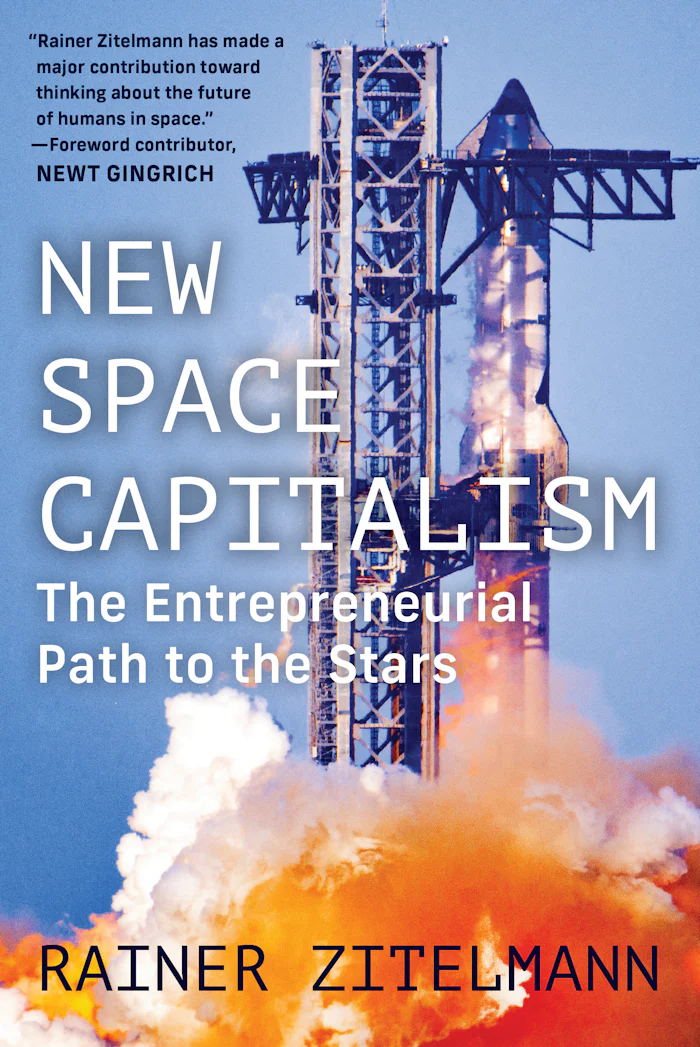
Rainer Zitelmann, with a foreword by Newt Gingrich
Skyhorse Publishing ·
- Full title
- New Space Capitalism: The Entrepreneurial Path to the Stars
- Author / editor
- Rainer Zitelmann, with a foreword by Newt Gingrich
- Publisher
- Skyhorse Publishing
- Publication date
- June 9, 2026
- ISBN-13
- 9781510788213
- Page count
- 304
- Primary field
- Capitalism
- Specific subfield
- Private enterprise, property rights, and space economy
- Displayed format
- Hardcover
- Official edition
- Publisher page
Why It Was Selected
Zitelmann closes the ranking because his book is directly about capitalism but makes the month’s least balanced argument. Its value lies in stating the entrepreneurial case for private spaceflight with unusual clarity: competition, ownership, investment, and transferable property rights are presented as the institutions capable of moving exploration beyond state-led limits. That thesis gives the book relevance to capitalism studies even when readers reject its prescriptions. The ranking reflects the need for critical distance from its deregulatory assumptions and frontier analogies. Read alongside work on public research, infrastructure, planetary governance, and colonial expansion, it becomes a productive document of how market advocates imagine the next spatial horizon of accumulation.
Short Book Summary
The book compares public space programs with the rapid expansion of private companies including SpaceX, Blue Origin, Virgin Galactic, and Rocket Lab. Zitelmann argues that entrepreneurial competition has accelerated launch capacity and innovation, and that the next breakthrough will depend less on propulsion than on legal institutions permitting ownership, exchange, and investment beyond Earth. Property rights therefore become the bridge between exploration and a durable space economy. The book places asteroid mining, lunar development, settlement, and commercial infrastructure within a classical liberal narrative of incentives and decentralized initiative. Its central limitation is also analytically revealing: public research, procurement, subsidy, international law, ecological risk, and unequal access receive less weight than private enterprise. As a study of capitalism, the book matters because it shows how familiar doctrines of ownership and frontier development are being projected onto domains not yet governed by settled market institutions.
Author Profile
Rainer Zitelmann holds doctorates in history and sociology and has written or edited more than thirty books, many defending capitalism, entrepreneurship, and wealth creation. His previous titles include In Defense of Capitalism, The Power of Capitalism, and How Nations Escape Poverty. The publisher’s author profile establishes the continuity of the project. Zitelmann writes as an advocate of market institutions rather than a neutral historian of the space sector, a standpoint readers should keep visible when assessing his evidence and policy claims.
Critical Reception
Early coverage is largely sympathetic to the book’s market orientation. The Financial Times calls it well timed and emphasizes the force of its comparison between public missions and private enterprise. Reviews from free-market and space-settlement organizations welcome the focus on property rights and entrepreneurial incentives. That concentration of ideologically aligned venues limits the range of independent challenge. The unresolved questions concern public investment, international governance, environmental externalities, and whether terrestrial homesteading analogies can be transferred to celestial bodies without importing histories of dispossession. The book is most useful when its confidence becomes the starting point for debate rather than the final word.
Review Quotations
a well-timed and fascinating read
Financial Times · April 5, 2026
The praise identifies the book’s topical force, while leaving its institutional prescriptions open to scrutiny.
Reviews & Criticism
Publisher & Print Editions
Who Should Read It
For readers of space policy, entrepreneurship, property theory, innovation studies, and pro-market political economy. No technical knowledge of aerospace engineering is required. The book is most productive in courses or reading groups that can pair it with scholarship on state capacity, public subsidy, commons governance, international space law, and colonial frontiers. Supporters will find a coherent program; skeptics will find a clear target. Either way, the argument should be read critically rather than treated as a neutral sector history.
What June Reveals About Capitalism
June’s strongest books do not converge on one definition of capitalism. Instead, they disclose a field organized by recurring conflicts over who may direct capital, who bears market risk, how exclusion is justified, and where collective agency can still be built. The two leading historical studies make crisis and finance political before they are technical. Ahamed follows a global crash into monetary redistribution, imperial debt, and reactionary blame; Robertson shows a state constructing financial markets for public legitimacy, then discovering that those markets could not be contained by their founding purpose.
The month’s theoretical books sharpen different boundaries. Bloom places nativism inside capitalist modernity and turns Indigenous politics toward internationalist alternatives. Kovács’s contributors recover attempts to use markets without accepting capitalism, demonstrating that prices and enterprise autonomy do not by themselves create a capitalist order. Rangel and Robinson move in the opposite direction, defending a class-centered Marxism against influential formulations of racial capitalism. The disagreement is not cosmetic. It concerns whether race supplies an autonomous historical logic, how exploitation should be causalized, and what kinds of solidarity follow from the answer.
Labor and technology supply the forward pressure. Smalls gives concentrated corporate power a workplace, a management regime, and an organizing counterforce. Clay studies how younger people learn to reject the individualizing language through which unequal structures appear natural. Kelly extends the labor question to artificial agents, asking whether legal emancipation could coexist with machine dependence on capital. Roscoe’s market-design approach provides a practical hinge among these books: markets are made, their purposes are contestable, and their architectures distribute power before exchange begins.
The geographic imbalance is clear. Europe and the United States dominate, while Africa, Latin America, South Asia, and much of East Asia appear mainly through comparative or conceptual frames. The list also contains more critique than business history, and more political economy than quantitative economics. Yet that concentration reveals where June’s publishing was most energetic. The best new books in Capitalism for June 2026 treat the system less as an abstract model than as a set of institutions whose borders are continually rebuilt—from the nineteenth-century Bourse to Indigenous governance, Amazon warehouses, artificial workers, and extraterrestrial property claims.
Research Scope
The final selection emerged from a global month-specific search rather than a preselected publisher list. Counts below describe distinct pages or records opened and substantive candidate checks, not automated search-result impressions.
- 52 publisher, press, catalog, series, author, or institutional pages checked
- 31 media, review, journal, or specialist-outlet searches and pages checked
- 24 library, ISBN, Google Books, or bibliographic records checked
- 42 plausible candidate books identified
- 29 candidates subjected to publication-date and earlier-edition verification
- 22 candidates subjected to full subject-relevance testing
- 17 professional reviews or substantive critical assessments examined
- 10 final direct cover URLs checked for exact-edition correspondence and public image delivery
- 24 direct cover-opening checks completed across the ten final URLs
- 14 repeat cover reload checks completed immediately before drafting
Publishers, presses, and institutional catalogs
- Penguin Random House / Penguin Press / Pantheon
- Routledge and Taylor & Francis
- University of Chicago Press and Spring 2026 catalogs
- Bloomsbury Academic
- Springer Nature / Palgrave Macmillan
- Bristol University Press
- University of Minnesota Press
- Skyhorse Publishing
- Columbia University Press / Agenda Publishing
- MIT Press
- Manchester University Press
- Polity
- UCL Press
- Cambridge University Press / Cambridge Core
- Oxford University Press / Oxford Academic
- Pluto Press
- University of Essex
- Harvard Business School
- University of California, Santa Barbara
- Vassar College
- Rutgers Graduate School of Education
- University of St Andrews
- Institute for Human Sciences (IWM)
- Research Center for the History of Transformations (RECET)
Newspapers, magazines, and literary reviews
- Financial Times
- New York Times Book Review search
- The Guardian search
- The New Yorker search
- Air Mail
- Jacobin
- Los Angeles Times search
- San Francisco Chronicle search
- Lit Hub search
- Our Culture search
- Foundation for Economic Education
- Space Settlement Institute
Academic journals and specialist review outlets
- Kirkus Reviews
- Publishers Weekly
- Library Journal search
- Booklist search
- Choice Reviews search
- New Books Network search
- H-Net Reviews search
- LSE Review of Books search
- Review of International Political Economy search
- Contemporary Sociology search
Libraries, ISBN systems, and bibliographic databases
- Google Books exact-edition records
- WorldCat / OCLC search
- Open Library Covers API documentation and ISBN records
- ISBN.de search
- University-library catalog records
- Publisher-assigned ISBN metadata
- Bibliographic records surfaced by national and academic library search
Retailers and authorized digital platforms
- Amazon exact-product pages
- Bookshop.org
- Books-A-Million
- VitalSource
- Kobo
- Blackwell’s
- Barnes & Noble
- Booktopia
- eBooks.com
- Audible search
- iMusic exact-ISBN records
Cover-image sources
- Penguin Random House image servers
- University of Chicago Press digital asset management
- VitalSource authorized cover service
- Amazon media image delivery
- Bristol University Press assets
- University of Minnesota Press Imgix delivery
- Skyhorse Publishing Imgix delivery
- Books-A-Million exact-ISBN cover service
Sources and Verification
Consequential Research Sources
- Penguin Random House: 1873 — supports publisher, date, format, ISBN, pagination, and author information.
- Publishers Weekly: 1873 — supports independent critical framing and review quotation.
- Routledge: Nativism and Capitalism — supports publication date, pagination, field relevance, and edition identity.
- University of Chicago Press: Capital Untamed — supports publisher identity, June publication, pagination, archival scope, and cover.
- Google Books: Capital Untamed — supports independent date, pagination, ISBN, and author-affiliation check.
- Bloomsbury Academic: Reforming Communism, Refusing Capitalism — supports hardcover edition identity, release program, ISBN, and pagination.
- Google Books: Reforming Communism, Refusing Capitalism — supports independent June 11 date and 472-page bibliographic record.
- Routledge: The Antinomies of Black Marxism — supports edition, date, pagination, contributor framing, and disciplinary relevance.
- Springer Nature: Free Robot Labour — supports first-edition number, print and eBook dates, pagination, open-access status, and chapter structure.
- Bristol University Press: What Are Markets For? — supports publisher date, ISBN, pagination, format, and disciplinary framing.
- Penguin Random House: When the Revolution Comes — supports publisher date, ISBN, pagination, format, and author information.
- Kirkus Reviews: When the Revolution Comes — supports independent assessment and verified quotation.
- Publishers Weekly: When the Revolution Comes — supports independent assessment, date confirmation, and verified quotation.
- University of Minnesota Press: I Guess This Is Activism? — supports publication date, format, ISBN, pagination, method, and cover.
- Rutgers University: Kevin L. Clay — supports author position, specialization, and methodological context.
- Skyhorse Publishing: New Space Capitalism — supports publication date, ISBN, pagination, author background, edition cover, and thesis.
- Financial Times: New Space Capitalism — supports independent review context and verified short quotation.
- Publishers Weekly June 2026 on-sale calendar — supports month-level cross-check for trade publication timing.
Related BookInLight Editorial Guides
- Before the Commodity: A Reader’s Route into Marx’s Capital, Volume I
- Marx’s Commodity Fetishism and the Hidden Theology of Capitalist Social Relations
- Five Essential Books on the Economic History of Inflation
- Five Essential Books on the Latin American Debt Crisis
Editorial Research, Art Direction, and Rights
The Book in Light Political Economy Department researched and wrote this article. The process included bibliographic review, source verification, first-edition checking, link checking, cover matching, and editorial fact-checking. Factual corrections, overlooked sources, interpretive suggestions, and constructive ideas are welcome and may inform future revisions.
The Book in Light Art Department provided editorial art direction, visual composition, cover selection, and image presentation. Rights in individual book covers remain with their publishers, artists, designers, and other rights holders. Complete republication, reproduction, translation, or reuse of this article requires prior written authorization from BookInLight.
Image Credits
- #1, 1873: The Rothschilds, the First Great Depression, and the Making of the Modern World, Hardcover cover, Penguin Press, 2026. Image source: Penguin Random House. Authoritative source page.
- #2, Nativism and Capitalism: From Colonial Hauntings to Radical Indigenous Futures, Hardcover cover, Routledge, 2026. Image source: Books-A-Million exact-ISBN cover service. Authoritative source page.
- #3, Capital Untamed: The Politics of Finance in Nineteenth-Century France, Cloth cover, University of Chicago Press, 2026. Image source: University of Chicago Press. Authoritative source page.
- #4, Reforming Communism, Refusing Capitalism: The Rise and Fall of the Concept of “Socialist Market”, Hardcover cover, Bloomsbury Academic, 2026. Image source: VitalSource authorized cover service. Authoritative source page.
- #5, The Antinomies of Black Marxism: Critique of the Racial Capitalism Paradigm, Paperback cover, Routledge, 2026. Image source: Amazon exact-ISBN product image. Authoritative source page.
- #6, Free Robot Labour: Marx, Automation, and the Future of AI, Softcover cover, Palgrave Macmillan, 2026. Image source: Amazon exact-ISBN product image. Authoritative source page.
- #7, What Are Markets For?, Paperback cover, Bristol University Press, 2026. Image source: Bristol University Press. Authoritative source page.
- #8, When the Revolution Comes: A Fight for the Future of the Working Class, Hardcover cover, Pantheon, 2026. Image source: Penguin Random House. Authoritative source page.
- #9, I Guess This Is Activism?: Youth, Political Education, and Free-Market Common Sense, Paperback cover, University of Minnesota Press, 2026. Image source: University of Minnesota Press. Authoritative source page.
- #10, New Space Capitalism: The Entrepreneurial Path to the Stars, Hardcover cover, Skyhorse Publishing, 2026. Image source: Skyhorse Publishing. Authoritative source page.