The best edition of Ulysses depends on the underlying text, explanatory apparatus, and how you intend to read Joyce.
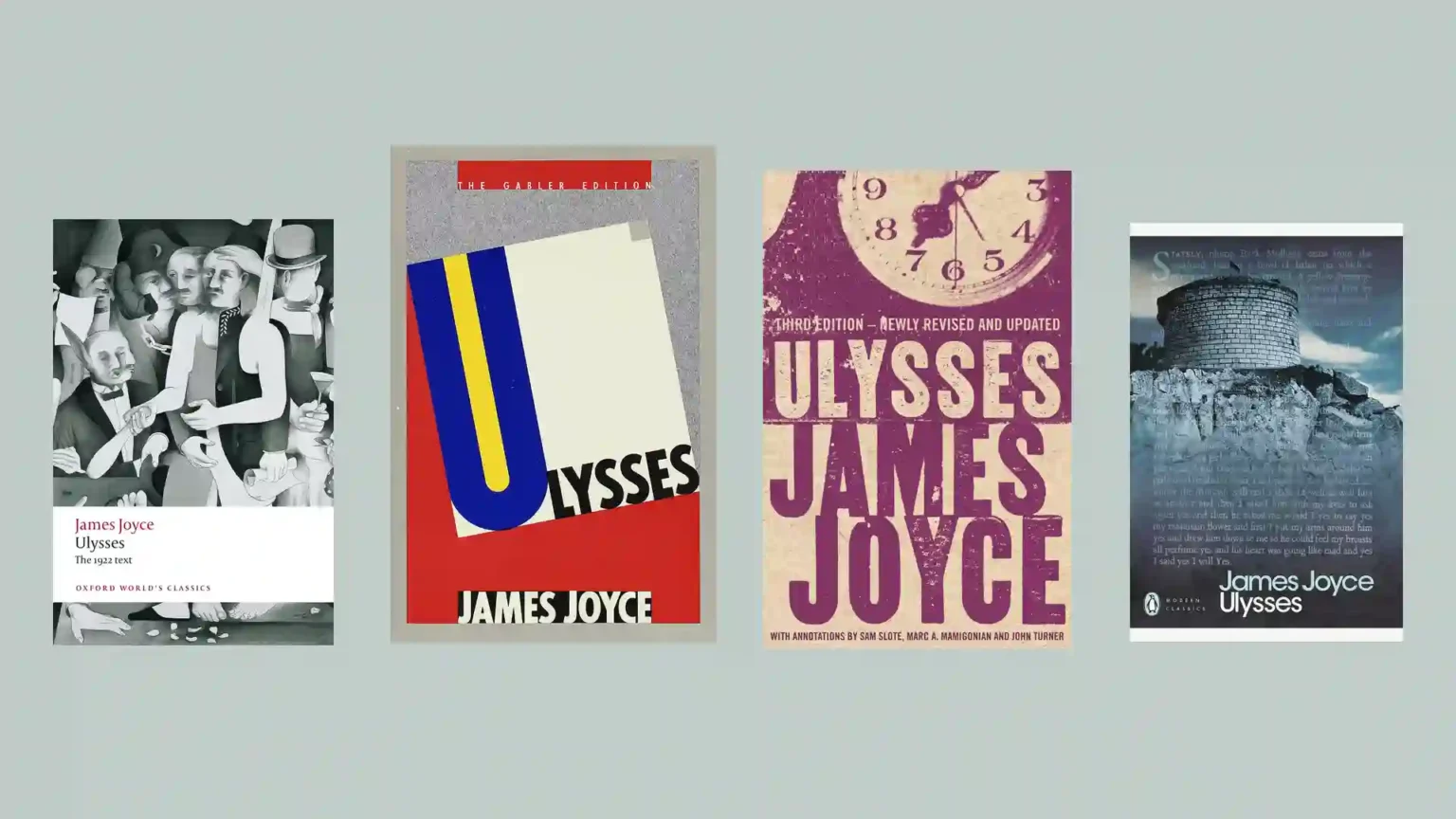
Three things are routinely collapsed when readers ask for the “best” Ulysses: the underlying text, the explanatory apparatus, and the physical reading experience. Separate them first. A book can have an excellent text and minimal notes; another can have thousands of notes while reproducing a different textual state; a critical edition can be historically important and still be a poor first-reading object. BookInLight’s Ulysses preparation guide recommends the 2022 Oxford World’s Classics edition edited by Jeri Johnson for first-time readers precisely because it makes its 1922 textual basis visible while supplying substantial reader-oriented apparatus. The Oxford University Press catalogue confirms the 2022 edition, editor Jeri Johnson, and its basis in the 1922 text.
The Oxford route: Ulysses as a 1922 text
The Oxford route is for the reader who wants to encounter the novel as a 1922 textual object with modern scholarly help. That choice is not the declaration of a final, uncontested Ulysses. It is an editorial philosophy: return to the first-edition text, explain its history, and make the apparatus usable. BookInLight’s Oxford World’s Classics series guide highlights this volume as a case in which the series’ notes and bibliography are part of the reason to choose the paperback rather than a bare public-domain reprint.
The Gabler critical text
The Gabler edition answers a different question. Hans Walter Gabler and his team used manuscripts, typescripts, proofs, and other evidence to construct a critically edited text; the current Vintage page describes thousands of corrections to earlier editions and includes Gabler’s note on the text. For textual scholarship, the edition is historically unavoidable. For a first read, however, “more corrected” should not be treated as a magic phrase that ends the editorial debate. Its method is itself part of Joyce studies.
The Alma Classics annotated edition
The Alma Classics annotated edition solves the apparatus problem more aggressively. It uses the 1939 Odyssey Press text and supplies more than 9,000 notes by Sam Slote, Marc A. Mamigonian, and John Turner. Trinity College Dublin’s account of the edition makes its audience explicit: casual readers and specialists alike, with annotations covering the dense strata of Joyce’s allusions. Buy Alma when you want one volume to answer many local reference questions and you do not mind moving constantly between text and notes.
Penguin as a reading edition
Penguin’s current Ulysses is best understood as a reading-copy ecosystem rather than the end of textual scholarship. Its Declan Kiberd introduction gives a strong literary frame, and Penguin offers multiple formats. Choose it when portability, familiarity of series design, or an introduction you want to read matters more than maximizing annotation.
| Reader | Best fit | Why |
|---|---|---|
| First serious reading | Oxford World’s Classics (Jeri Johnson) | 1922 textual basis, substantial notes, map/chronology, clear textual history |
| Textual-scholarship project | Gabler/Vintage | Critical editing history and extensive emendation are themselves research objects |
| Allusion-heavy read with one-volume help | Alma annotated | 1939 Odyssey Press text plus 9,000+ annotations |
| Portable/general reading copy | Penguin Classics | Strong literary framing and familiar reader-facing format |
Beware editions with an unidentified textual basis
The edition you should not buy is the one whose textual basis you cannot identify. Ulysses entered the public domain in some jurisdictions and exists in innumerable inexpensive reprints. Price is not the problem. Opacity is. If a publisher cannot tell you which text it reproduces, who prepared it, and what the notes are doing, the book may be adequate for casual sampling but it is a weak object for citation or serious study.
Which edition should each reader choose?
Two reader routes follow. If this is your first Ulysses, use Oxford and read notes selectively after an episode or when a reference blocks the sentence; then consult BookInLight’s James Joyce reading path for the larger sequence from Dubliners and Portrait. If Ulysses is already familiar and the textual problem is now the attraction, compare Oxford’s 1922 orientation, Gabler’s critical reconstruction, and Alma’s 1939-based annotated text side by side. The “best edition” then stops being a consumer verdict and becomes a controlled comparison of editorial decisions.
There is one more practical distinction: annotations can either support rhythm or destroy it. Ulysses depends on comic timing, sound, recurrence, and the pressure of a sentence moving faster than a reader’s certainty. An edition with 9,000 notes is invaluable only if you can resist consulting all 9,000 on first contact. The Alma/Bloomsbury description makes the density of its apparatus a feature; treat that feature as optional depth, not an instruction to interrupt every line.
For citation-heavy academic work, record edition, editor, publication year, and textual basis in your notes from the beginning. Page numbers migrate across printings, and claims about “Joyce’s wording” can become claims about an editor’s intervention if the textual object is left unnamed. The same discipline that makes a purchase decision clearer also makes later scholarship more reproducible.
A final rule follows: do not ask an edition to remove difficulty that belongs to the novel. Good notes can identify a song, a Dublin address, a theological phrase, or a textual variant. They cannot make every stylistic experiment transparent without changing the experience of reading it. Choose the edition that gives you the right amount of friction.
Cover artwork: credits and source records
- Ulysses — Oxford University Press (source record)
- Ulysses — Vintage (source record)
- Ulysses — Alma Classics (source record)
- Ulysses — Penguin Classics (source record)