Best Edition of The Three Musketeers is primarily a translation question disguised as a purchasing question. Alexandre Dumas’s Les Trois Mousquetaires moves through dialogue, jokes, sexual intrigue, theatrical bravado and abrupt shifts between comedy and cruelty, and English editions do not preserve those qualities equally. For most readers, Richard Pevear’s 2007 Penguin Classics Deluxe Edition is the strongest default: modern, vigorous, identifiable, and substantially freer from the Victorian bowdlerization that shaped generations of English Dumas. David Coward’s Oxford edition is better annotated but uses William Barrow’s nineteenth-century translation; Lawrence Ellsworth is especially attractive if you intend to continue through the wider Musketeers cycle; and Will Hobson is the most buoyant alternative for readers who value conversational speed.


If You Just Want the Answer: Best Edition of The Three Musketeers
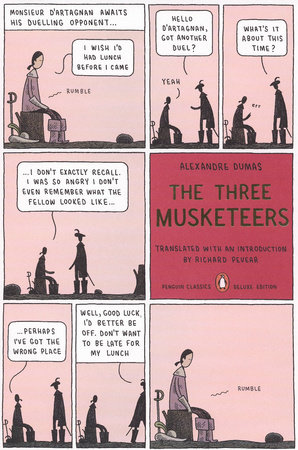
Best overall and best for most first-time readers: Richard Pevear’s Penguin Classics Deluxe Edition, ISBN 9780143105008. It gives Dumas a quick, candid modern English voice without reducing the novel to simplified adventure fiction.
Best annotated edition: David Coward’s Oxford World’s Classics, ISBN 9780199538461. Coward’s explanatory material is outstanding, but the underlying translation is William Barrow’s 1846 English and carries Victorian censorship. Buy Oxford for the apparatus, not because it contains the most textually candid English Dumas.
Best modern alternative: Lawrence Ellsworth’s Pegasus Books edition, ISBN 9781643130408, especially if you plan to continue through Dumas’s Musketeers sequence in the same modern translator.
Best for sheer conversational momentum: Will Hobson’s BBC Books paperback, ISBN 9781849907491. The television tie-in cover makes it look less serious than the translation actually is.
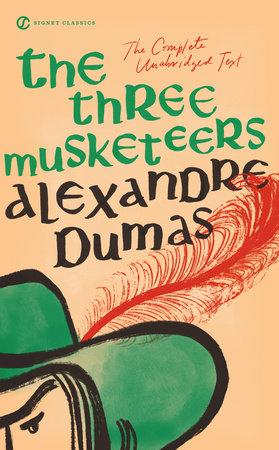
Best inexpensive student option: Eleanor Hochman’s Signet Classics edition, ISBN 9780451530035. It is named, identifiable, inexpensive, and supplied with introductory material, though readers doing textual comparison should still prefer Pevear or Ellsworth.
How to Choose the Right Edition or Translation
Les Trois Mousquetaires first appeared in French in 1844, serialized in Le Siècle, and was produced through Dumas’s famous collaboration with Auguste Maquet. The novel’s speed is partly a product of that serial environment: short dramatic scenes, rapid entrances and exits, argumentative dialogue, mysteries deferred from one installment to the next, and frequent reversals of allegiance or knowledge.
That makes translation unusually important. Dumas is not difficult because his syntax is forbidding. He is difficult because apparently effortless writing can be damaged very easily. A translator who stiffens the dialogue turns the musketeers into waxwork aristocrats. A translator who modernizes indiscriminately erases the distance between a seventeenth-century setting, an 1844 narrator, and a twenty-first-century reader. A translator who removes sexual implications can make later revelations confusing. A translator who compresses the narrative may improve apparent speed while quietly changing how characters accumulate moral weight.
The largest historical problem is bowdlerization. Early English translations were produced under Victorian assumptions about sexual propriety. William Barrow’s 1846 version remains important and readable, but sensitive material involving d’Artagnan, Milady and sexual deception was altered or suppressed. Because Barrow remained widely reprinted, a handsome modern paperback can contain decidedly non-modern textual choices.
Apparatus is the second issue. The plot uses real historical actors—Louis XIII, Anne of Austria, Cardinal Richelieu and the Duke of Buckingham—but Dumas’s relationship to history is opportunistic and theatrical. Useful notes distinguish historical offices, geography, military events and political factions from Dumas’s inventions without correcting the novel to death. Coward’s Oxford edition is strongest here. Pevear and Hobson give enough framing for most independent readers. Mass-market editions are lighter.
Finally, verify the exact ISBN rather than buying by cover alone. The Three Musketeers exists in children’s adaptations, shortened collector’s versions, anonymous public-domain reprints, film tie-ins, revised older translations and modern complete translations. Two books with nearly identical titles may contain materially different texts.
Main Comparison Table
| Edition | Translation / Editor | Best For | Principal Strength | Main Limitation |
|---|---|---|---|---|
| Penguin Deluxe, 2007 9780143105008 | Richard Pevear | Most first readings | Modern, candid, rhythmically controlled English | Notes lighter than Oxford; no single-translator route through the whole cycle |
| Oxford World’s Classics, 2009 9780199538461 | William Barrow; David Coward | Annotation and teaching | Exceptional historical and literary apparatus | Victorian bowdlerization in the underlying 1846 translation |
| Pegasus, 2019 9781643130408 | Lawrence Ellsworth | Whole Musketeers cycle | Energetic modern translation and sequence continuity | Large physical volume; lighter academic apparatus |
| BBC Books, 2014 9781849907491 | Will Hobson | Fast leisure reading | Excellent dialogue, humor and momentum | Tie-in presentation; less scholarly framing |
| Signet, 2006 9780451530035 | Eleanor Hochman revision | Budget students | Named text, low-cost format, useful introductory material | Small mass-market page and weaker value for translation comparison |
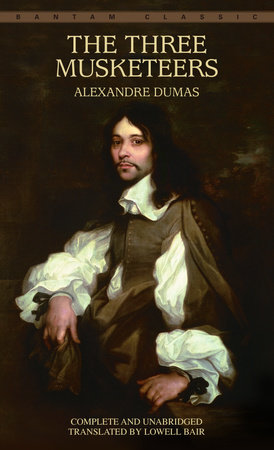
| Bantam Classics, 1984 9780553213379 | Lowell Bair | Portable low-cost reading | Straightforward prose and long availability | Minimal apparatus; completeness claims should be treated cautiously |
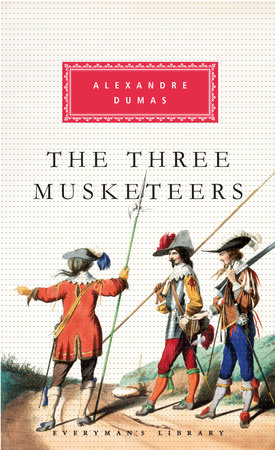
| Everyman’s Library, 2011 9780307594990 | Introduction by Allan Massie | Durable shelf ownership | Handsome hardcover and substantial introduction | Current publisher record does not identify the translator |
Individual Edition Profiles
Richard Pevear · Penguin Classics Deluxe Edition
Author: Alexandre Dumas. Translator and introducer: Richard Pevear. Cover illustration: Tom Gauld. Publisher: Penguin Classics. Year: 2007. ISBN: 9780143105008. Format: paperback, 736 pages. Status: complete modern translation.
Best audience: first-time adult readers, book clubs, general literary readers and anyone buying one English copy. Principal strength: Pevear restores adult implications and verbal energy while resisting fake antiquarian diction. Main limitation: the notes are useful but not as comprehensive as Coward’s Oxford apparatus.
Pevear’s central insight is that Dumas should not sound slow merely because he is old. Dialogue snaps forward, irony survives, and morally uncomfortable material is allowed to remain uncomfortable. That matters especially in the Milady sequence, where older censored translations can alter not merely explicit detail but readers’ understanding of motive, deception and responsibility.
Pevear is better known for translations made with Larissa Volokhonsky, but this Dumas translation is his alone. His introduction also treats the novel as more than a children’s adventure, placing its historical imagination, collaboration with Maquet and serial form in context.
Who should avoid it: readers needing the densest explanatory notes, or anyone planning a systematic read through all Musketeers sequels in one translator. For almost everyone else, this is the benchmark against which the alternatives should be judged.
William Barrow / David Coward · Oxford World’s Classics
Author: Alexandre Dumas. Translator: William Barrow, 1846. Editor, introduction and notes: David Coward. Publisher: Oxford University Press. Year: 2009 edition. ISBN: 9780199538461. Format: paperback, 704 pages.
Best audience: students, teachers and readers who want historical explanation. Principal strength: Coward’s edition is exceptionally well annotated. Oxford describes it as its most fully annotated English edition, and the supporting material addresses historical figures, institutions, locations, literary references and Dumas’s manipulation of seventeenth-century France.
The paradox is the translation. Oxford’s scholarly apparatus surrounds William Barrow’s 1846 English, not a new translation by Coward. Barrow can be fluent and enjoyable, and its historical importance should not be underestimated, but it was produced under Victorian standards of sexual decorum. References and implications were suppressed or softened. That is particularly consequential in a novel where seduction, sexual bargaining and concealed biography are structurally important.
Coward, a scholar of French literature, supplies exactly the contextual intelligence Barrow lacks. For classroom use, this creates an unusually productive edition: students can read Dumas with excellent notes while also confronting translation history directly.
Who should avoid it: anyone assuming that “Oxford World’s Classics” automatically means the least censored or most modern underlying translation. For a first uninterrupted reading, Pevear or Hobson is preferable; for study, Oxford may be the most useful second copy.
Lawrence Ellsworth · Pegasus Books Trade Paperback
Author: Alexandre Dumas. Translator: Lawrence Ellsworth. Publisher: Pegasus Books. Year: 2019. ISBN: 9781643130408. Format: trade paperback, 816 pages. Status: complete modern translation.
Best audience: readers who expect The Three Musketeers to become the beginning of a much larger Dumas project. Principal strength: Ellsworth’s work belongs to a sustained effort to translate the broader Musketeers sequence into a coherent contemporary English voice.
Ellsworth emphasizes energy, humor and the collision between heroic pose and ribald comedy. The publisher’s reception file is unusually useful: contemporary reviews repeatedly single out the restoration of racier material omitted from Victorian versions and the translation’s ability to reproduce Dumas’s humor without making the novel feel like modern historical fiction.
There is also an editorial advantage to continuity. Readers who proceed to Twenty Years After and the later d’Artagnan material do not have to rebuild their sense of names, registers and character voices around a different translator’s habits.
Main limitation: this is a physically large book, and its scholarly apparatus is lighter than Oxford’s. Ellsworth is also a visibly energetic translator; readers who want the most restrained possible mediation may prefer Pevear.
Who should avoid it: readers wanting a compact volume or a university-style annotation system. Everyone considering the entire sequence should compare a few pages of Ellsworth directly with Pevear before choosing.
Will Hobson · BBC Books Paperback
Author: Alexandre Dumas. Translator: Will Hobson. Publisher: BBC Books. Year: 2014 edition. ISBN: 9781849907491. Format: paperback, 752 pages.
Best audience: readers who want Dumas to move as quickly as possible without buying an adaptation. Principal strength: Hobson has an exceptionally good ear for conversation. Challenges, boasting, deception and comic interruption feel immediate, which matters because much of the novel’s narrative propulsion is carried by speech rather than descriptive prose.
The edition’s biggest marketing disadvantage is its BBC-series jacket. It can look like a novelization or television adaptation, but it is Dumas’s novel in Hobson’s translation. Penguin identifies Hobson explicitly as translator and supplies a stable ISBN and full 752-page paperback record.
Hobson has translated literary fiction and nonfiction from French and German. Here he avoids both pseudo-seventeenth-century stiffness and the opposite problem of making everybody sound casually contemporary. The result is often funnier than Pevear and particularly strong when d’Artagnan is bluffing his way through a social situation he barely understands.
Main limitation: the edition is not designed as a scholarly teaching package. Who should avoid it: readers needing detailed historical annotation or collectors who dislike photographic tie-in covers. As a pure reading copy, however, Hobson is the strongest challenger to Pevear.
Eleanor Hochman Revision · Signet Classics
Author: Alexandre Dumas. Translation: revised and updated by Eleanor Hochman. Introduction: Thomas Flanagan. Afterword: Marcelle Clements. Publisher: Signet. Year: 2006. ISBN: 9780451530035. Format: mass-market paperback, 672 pages.
The current Penguin Random House record explicitly describes this as an “Unabridged Translation, Revised and Updated by Eleanor Hochman.” That makes it much safer than an anonymous bargain edition because the textual responsibility is visible and the ancillary material is identified.
Best audience: students who need an affordable, portable, clearly identifiable edition. Principal strength: cost-conscious practicality without surrendering basic bibliographical transparency. Flanagan’s introduction and Clements’s afterword provide enough framing to make the edition more useful in discussion than a bare public-domain reprint.
Main limitation: mass-market dimensions compress an already long novel, and readers doing serious translation comparison should not treat the word “unabridged” on any legacy translation line as a substitute for comparison with the French or with recent translations.
Who should avoid it: readers with visual fatigue, heavy annotators, and anyone buying a lifetime reading copy. If the price difference is modest, Pevear’s larger format is a better long-session reading object.
Lowell Bair · Bantam Classics Mass-Market Edition
Author: Alexandre Dumas. Translator: Lowell Bair. Publisher: Bantam Classics. Year: 1984. ISBN: 9780553213379. Format: mass-market paperback, 656 pages.
Bair’s Bantam has been circulating for decades and remains one of the easiest inexpensive editions to identify. Its cover advertises “Complete and Unabridged,” and the publisher clearly names Bair as translator. That already places it above the worst budget reprints, which may obscure or omit the translator entirely.
Principal strength: straightforward, serviceable English in a cheap and portable format. Bair does not make Dumas sound difficult, and the book works perfectly well for a reader whose main priority is simply following the story.
The difficulty is textual confidence. Comparative readers have long questioned how safely claims of completeness on older English Dumas can be taken at face value. Even where the publisher understands the edition as complete, the translation tradition itself may incorporate condensation or inherited intervention.
Main limitation: minimal apparatus and small typography. Who should avoid it: scholars, translation students and readers wanting to quote Dumas closely. It is a practical travel or budget copy, not the edition on which to build an argument about exact French wording.
Everyman’s Library · Allan Massie Introduction
Author: Alexandre Dumas. Introducer: Allan Massie. Publisher: Everyman’s Library. Year: 2011. ISBN: 9780307594990. Format: hardcover, 680 pages.
Best audience: readers who want a durable, traditional library object. Principal strength: physical presentation. Everyman’s Library bindings are designed for repeated shelf use, and Massie’s introduction gives the novel serious literary framing.
The bibliographical caution is important: the current publisher record identifies Dumas and Massie but does not name the translator. That does not make the edition illegitimate, but it makes it a weak choice for translation study. A beautiful binding should never be mistaken for textual transparency.
For a collector who already owns Pevear, Hobson or Ellsworth, that may not matter. The Everyman’s copy can serve as the durable shelf edition while a named modern translation remains the reading and citation text.
Who should avoid it: students who must identify the translator in written work, comparative-translation readers, and anyone buying only one copy of the novel. The fact that a book is handsomely bound is not evidence that it contains the English version best suited to your purpose.
Translation Philosophy: What Changes Between Versions
The Best Edition of The Three Musketeers cannot be chosen by asking which translator follows the French word for word. Fidelity operates at several levels simultaneously: information, implication, tone, rhythm, social register and dramatic timing. Dumas often makes a character reveal himself through how he speaks. If the English preserves the literal proposition but loses the swagger, hesitation, insolence or seduction, something important has still been mistranslated.
Pevear’s strength is controlled modernity. His prose does not advertise itself as “period language,” but neither does it turn the musketeers into contemporary roommates. The result preserves distance while allowing jokes and threats to arrive quickly.
Hobson moves further toward theatrical immediacy. His dialogue tends to feel airborne: one speaker provokes another, a misunderstanding changes direction, and a comic exchange reaches its point before the reader begins noticing translation technique. That is particularly appropriate to Dumas because conversation frequently functions as action.
Ellsworth emphasizes another dimension: continuity and expansiveness. He is translating not merely one famous adventure but a large narrative sequence. His choices therefore have consequences across later books, where characters age, politics change and old jokes acquire retrospective weight.
Barrow demonstrates why historical translations remain valuable even when they are no longer the default recommendation. His 1846 English belongs almost to Dumas’s own period, but its standards of propriety are not Dumas’s standards. The omissions show how translation can become cultural editing. Reading Barrow beside Pevear is therefore more illuminating than simply declaring one “bad” and one “good.”
Hochman and Bair occupy the practical middle ground of twentieth-century mass-market Dumas: accessible, inexpensive and culturally influential. They are useful reading texts, but when precision matters, a modern translation with transparent textual framing is the safer basis for quotation.
Annotated, Scholarly, and Companion Editions
There is no ordinary English-language Three Musketeers equivalent to a full variorum critical edition designed for specialist textual scholarship. For practical English study, Coward’s Oxford World’s Classics is the strongest annotated volume in this comparison. Its introduction, chronology, select bibliography and explanatory notes make it especially good for students trying to understand the political and cultural scaffolding beneath the adventure.
The important qualification remains textual: Coward edits and annotates Barrow rather than replacing him with a modern translation. For advanced work, the most productive combination is therefore Oxford plus a modern version—Pevear or Ellsworth—and, where possible, the French text itself.
French-reading students can consult public-domain digital texts of Les Trois Mousquetaires for comparison, while authoritative French bibliographical institutions help establish the work’s publication context. That three-layer method—French text, modern English translation, annotated historical English edition—is more intellectually reliable than asking one trade paperback to perform every function.
What to Avoid
Anonymous public-domain reprints are the clearest risk. A low price does not compensate for not knowing who translated the book, whether the text has been altered, or which nineteenth-century English source was copied.
Undisclosed or casually disclosed abridgments are worse. Dumas is long because serial narrative builds through repetition, secondary characters, detours and delayed consequences. A shortened text may preserve the headline plot while altering the experience of the novel.
Children’s editions sold beside adult editions deserve careful checking. The story has been adapted for young readers for more than a century, and retailer metadata can group adaptations, full translations and illustrated retellings under the same generic title.
Wrong-translator purchases are common. Verify ISBN, translator and publisher before ordering. A listing photograph can be reused across formats or editions.
Specialist historical editions as a first and only copy are also a mistake unless historical English is the point. Barrow is worth studying; it is not the most transparent way to encounter everything Dumas wrote.
Collector’s editions without translator identification should be bought as objects, not as presumed textual authorities. Binding quality and translation quality are separate variables.
Reader Pathways
I am reading Dumas for the first time
Choose Pevear. Do not stop every few pages to compare notes or translations. Let Dumas’s narrative machinery work at full speed first.
I want the liveliest possible English
Try Hobson. If Pevear feels slightly too controlled, Hobson’s dialogue may suit you better.
I want to continue through the Musketeers cycle
Choose Ellsworth. Translation continuity becomes more valuable as the sequence grows beyond the first famous novel.
I am teaching the novel
Use Coward’s Oxford edition for apparatus, but tell students explicitly that the text is Barrow’s 1846 translation. For translation-sensitive teaching, pair selected passages with Pevear or Ellsworth.
My budget is very limited
Hochman’s Signet is the more attractive student compromise; Bair’s Bantam remains serviceable when price and portability dominate every other consideration.
I want a handsome hardcover
Everyman’s Library is the best object among these seven, but keep a named modern translation nearby if textual precision matters.
Best Choice by Reader Type
Richard Pevear
Best overall balance of modern English, textual candor and readability.
Will Hobson
Dialogue-led, witty and immediately theatrical.
Barrow / Coward
Best apparatus, with a crucial censorship caveat.
Lawrence Ellsworth
Modern translation continuity across later Musketeers books.
Eleanor Hochman / Signet
Named, affordable and supplied with useful framing.
Lowell Bair / Bantam
Serviceable mass-market reading edition.
Everyman’s Library
Durable shelf copy; weak translator transparency.
FAQ
What is the Best Edition of The Three Musketeers for a first reading?
Richard Pevear’s Penguin Classics Deluxe Edition, ISBN 9780143105008. It is modern, substantially unbowdlerized, clearly identified and supplied with enough introductory material for a serious general reader.
Is the Oxford World’s Classics edition the most accurate?
Not in the simple sense that buyers often assume. David Coward’s scholarship and annotation are excellent, but the English text is William Barrow’s 1846 translation. Its Victorian censorship makes it a problematic sole basis for claims about everything present in Dumas’s French.
Can I just read a free public-domain translation?
Yes if your purpose is casual access to the plot, but first identify the translator. Public-domain status says nothing about completeness, censorship or editorial quality. For serious reading, the cost of a named modern translation is usually justified.
Is an abridged version acceptable?
Only when you knowingly want an adaptation or shortened introduction to the story. For an adult literary first reading, no. Dumas’s repetitions, side episodes and gradual character accumulation belong to the design of the serial novel.
Related BookInLight Reading Guides
Choosing Don Quixote: Wit, Fidelity, and the Editions Worth Owning — a comparable guide to translation history, completeness and edition choice in another major European prose classic.
Best Translation of the Iliad: A Practical Reader’s Guide to Editions and Translations — useful for seeing how reader purpose changes the meaning of “best translation.”
Barnes & Noble Classics and the Limits of the Bargain Edition — an examination of translator visibility, abridgment, apparatus and the compromises hidden inside inexpensive classics.
Professional Editorial Note
BookInLight’s scholarly department prepared this guide through bibliographical research, publisher-record verification, comparison of translation histories, editorial assessment of apparatus and intended readership, and separate checking of the selected edition identities. Research and authorship were followed by bibliographical verification, source review, image-source checking and fact-checking. Corrections, newly documented edition information and reader suggestions are welcome where they can be supported by reliable evidence.
The BookInLight Art Department treats third-party book covers as editorially necessary identification images, not as BookInLight-owned artwork. Copyright and other rights in individual covers remain with their respective publishers, designers, artists and rights holders. Full republication, reproduction, translation, redistribution or reuse of this article or its editorial design requires permission from BookInLight and, where applicable, separate permission from third-party rights holders.
Sources and Further Reading
- Penguin Random House — Richard Pevear, Penguin Classics Deluxe Edition.
- Oxford University Press — Oxford World’s Classics, ISBN 9780199538461.
- Oxford University Press Japan — accessible bibliographical record for the Coward edition.
- Simon & Schuster / Pegasus Books — Lawrence Ellsworth edition.
- Penguin UK — Will Hobson / BBC Books edition.
- Penguin Random House — Eleanor Hochman / Signet Classics edition.
- Penguin Random House — Lowell Bair / Bantam Classics edition.
- Penguin Random House — Everyman’s Library edition with Allan Massie.
- Google Books bibliographical record — Oxford World’s Classics / David Coward.
- Google Books bibliographical record — Lowell Bair / Bantam.
- Project Gutenberg — French text of Les Trois Mousquetaires.
- The Great Books Podcast — episode on The Three Musketeers with Lawrence Ellsworth.
- Wordsworth Editions — publisher confirmation that its edition uses William Barrow’s 1846 translation.
- Modern Library — Jacques Le Clercq translation record, consulted for historical comparison but not retained as a major profile after final image-selection review.
Image Credits
- Richard Pevear, Penguin Classics Deluxe Edition, ISBN 9780143105008. Cover identified and supplied through the official Penguin Random House edition page.
- William Barrow translation, edited by David Coward, Oxford World’s Classics, ISBN 9780199538461. Exact edition verified through the official Oxford University Press edition record; displayed asset cross-checked to the exact edition.
- Lawrence Ellsworth, Pegasus Books trade paperback, ISBN 9781643130408. Exact edition verified through the official Simon & Schuster / Pegasus Books edition page.
- Will Hobson, BBC Books paperback, ISBN 9781849907491. Cover supplied on the official Penguin UK edition page.
- Eleanor Hochman revision, Signet Classics, ISBN 9780451530035. Cover supplied through the official Penguin Random House edition page.
- Lowell Bair, Bantam Classics, ISBN 9780553213379. Cover supplied through the official Penguin Random House edition page.
- Everyman’s Library hardcover, introduction by Allan Massie, ISBN 9780307594990. Cover supplied through the official Penguin Random House / Everyman’s Library edition page.